The Cigarette Vending Machine Market is evolving from a basic hardware segment into a more sophisticated self-service retail category built around compliance, payment flexibility, remote management, and reliable machine uptime. Buyers today are not simply comparing cabinet size or vend capacity. They are looking at how well a machine fits a controlled adult-only sales environment, how easily it accepts modern payment methods, how accurately it tracks inventory, and how efficiently it supports long-term operations. From a real operating perspective, the most successful projects are built on machine stability, practical feature integration, and dependable after-sales support. That is why the Cigarette Vending Machine Market continues to draw attention from operators, distributors, and facility managers who want a more efficient unattended retail model with stronger controls and better margins.
In the wider unattended retail industry, connected vending solutions continue to gain traction because they reduce labor, support more payment options, and provide better data visibility. That same pattern is shaping the Cigarette Vending Machine Market. Traditional machines with limited controls are gradually being replaced by smarter models that support touchscreen interfaces, telemetry, audit records, and age verification options. In practical terms, buyers want a vending machine that feels less like an old mechanical box and more like a compact retail terminal. This shift is not cosmetic. It changes how machines are sold, installed, managed, and scaled.
For operators, the opportunity is real, but so is the difference between a profitable machine and an expensive mistake. A project only works when the machine, the site, and the operating process fit each other. The strongest performers in the Cigarette Vending Machine Market are usually connected machines placed in the right controlled-access environment, stocked with a disciplined product mix, supported by cashless payment acceptance, and backed by a manufacturer that can actually solve problems after delivery.
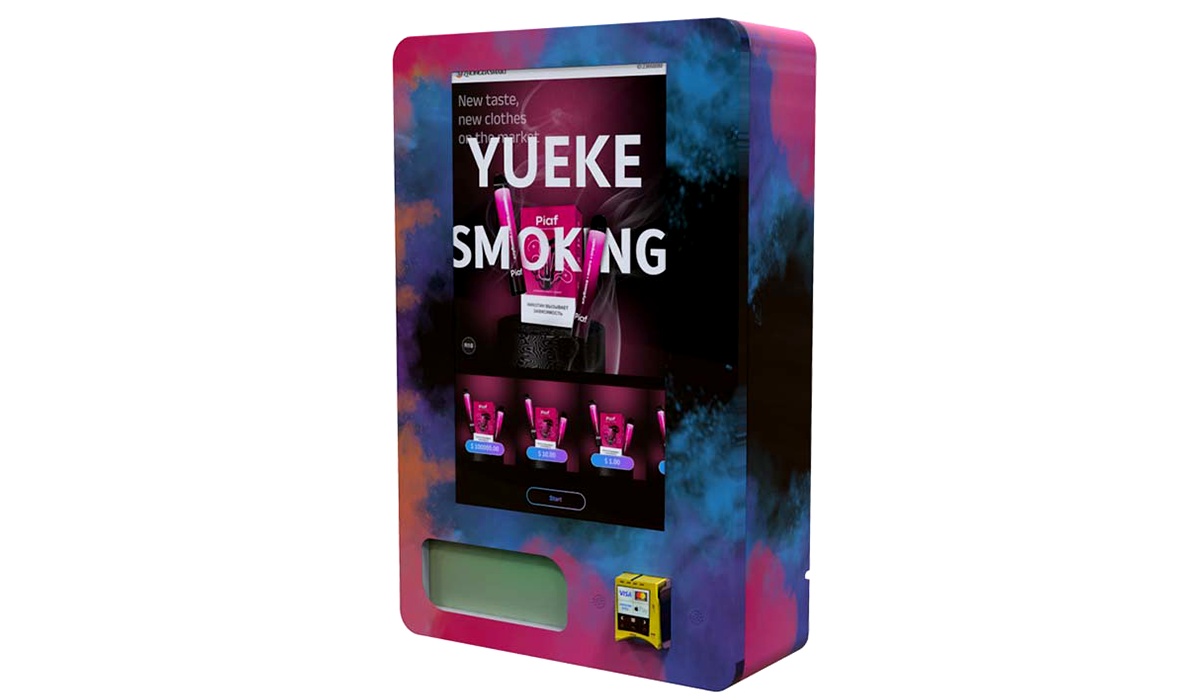
Why the Cigarette Vending Machine Market Still Matters
The Cigarette Vending Machine Market still matters because it serves a narrow but durable use case inside the broader vending economy. While many older machines remain in service, buying behavior has changed. Operators are no longer satisfied with equipment that only dispenses packs and collects coins. They want better control, better reporting, lower service cost, and stronger transaction flow.
This category also matters because replacement demand is stronger than many people assume. A large part of machine demand comes from operators replacing outdated units that cannot meet current payment or monitoring expectations. Old machines often struggle with validator failures, limited payment options, poor inventory visibility, and weak product presentation. In real operations, those weaknesses translate directly into missed sales, more site complaints, and more expensive route labor.
The modern buyer is not just asking, “Can this machine vend?” The better question is, “Can this machine operate cleanly, reliably, and profitably over time?” That is the question driving the Cigarette Vending Machine Market today.
What Is Driving Growth in This Market
Replacement of outdated machines
Many operators are replacing machines that were built for an earlier payment and service model. Legacy units may still work mechanically, but they often create unnecessary friction. A machine that cannot easily accept card payments, cannot report stock levels, and cannot be monitored remotely becomes harder to justify year after year.
In the Cigarette Vending Machine Market, replacement demand is often driven by field reality rather than trend language. Operators get tired of dealing with bill acceptor issues, manual stock checks, unclear fault conditions, and poor conversion from cash-only setups. Once those headaches begin to affect revenue, the buying decision changes fast.
Demand for smart vending machine features
Smart vending machine technology has become a serious driver of demand because it improves both the user experience and the operator experience. A better screen, faster transaction flow, and a cleaner interface can make buying easier. Remote backend visibility, meanwhile, helps operators reduce wasted trips and manage stock with more precision.
That matters because the Cigarette Vending Machine Market is no longer just about dispensing capability. It is increasingly about system capability. Buyers want a machine that fits into a connected self-service retail workflow.
Shift toward cashless payment vending
Consumer payment habits have changed. Machines that support card, contactless, and digital wallet transactions usually offer smoother transactions and fewer lost sales than machines that depend only on cash. In real vending operations, payment friction kills conversion. Every failed payment attempt is a lost opportunity, and every payment jam increases service burden.
That is why cashless payment vending has become a practical requirement in many machine projects. In the Cigarette Vending Machine Market, this trend is especially important because the machine needs to feel quick, discreet, and easy to use.
Need for stronger control and reporting
Operators want to know what sold, when it sold, what is running low, and whether the machine is functioning normally. A connected machine that reports inventory, door events, transaction history, and fault conditions is easier to manage than a machine that requires constant physical inspection.
As a result, the Cigarette Vending Machine Market is moving toward machines that combine hardware reliability with a useful data layer. This gives operators tighter control over restocking, pricing, and service response.
Market Structure: Size, Share, and Product Segments
The Cigarette Vending Machine Market is best understood as a specialized segment inside the larger vending and unattended retail equipment space. It includes a mix of traditional mechanical-style units, touchscreen smart vending machine models, compact self-service kiosk formats, and higher-control machines that support age verification workflows.
Market share within this segment is increasingly shaped by feature depth rather than by cabinet count alone. A low-cost traditional machine may still appeal to price-sensitive buyers, but premium share is moving toward connected machines that combine modern payment acceptance, software control, and service efficiency. That shift is important because it changes the value conversation. Manufacturers are no longer competing on sheet metal and layout alone. They are competing on the total operating package.
| Segment Type | Main Features | Typical Buyer Interest |
|---|---|---|
| Traditional cigarette vending machine | Basic dispensing, lower upfront cost, simpler hardware | Budget-focused buyers with minimal feature needs |
| Smart vending machine | Touchscreen, telemetry, remote monitoring, flexible UI | Operators focused on efficiency, reporting, and modern user experience |
| Age verification machine | ID workflow integration, stronger control process, transaction record support | Buyers requiring a more controlled adult-only sales model |
| Cashless payment vending unit | Card, tap, wallet compatibility, reduced transaction friction | Operators prioritizing conversion and smoother payment flow |
| Compact self-service kiosk format | Small footprint, focused SKU planning, cleaner installation flexibility | Sites needing a tighter cabinet format and selective product mix |
In practical buying terms, most serious projects now lean toward connected models. The traditional machine still has a place, but the center of value in the Cigarette Vending Machine Market is clearly shifting toward smart hardware with stronger payment and management capability.
What Buyers Actually Care About Before They Invest
People researching this category usually have three goals at the same time. They want to understand the business opportunity, they want to compare machine options, and they want to know whether the economics will work. A good article on the Cigarette Vending Machine Market has to address all three, because buyers do not think in neat categories when they are making a real purchasing decision.
They want to know whether the business can make money
The real answer is yes, but only when the fundamentals are right. The machine has to be placed in the right controlled environment, stocked correctly, supported by a workable refill process, and equipped with payment and control features that reduce friction instead of creating it.
They want to know which machine type is best
The best machine is rarely the cheapest one. It is the one that protects margin over time. That often means a smart vending machine with cashless acceptance, a stable dispensing system, and useful backend visibility.
They want to know who to work with
Manufacturer choice matters a great deal in this category. A supplier that only offers a quotation and a cabinet photo is not enough. Buyers need a partner that can explain the configuration, support integration, provide parts, and respond clearly after the machine ships.
That is why many buyers evaluating the Cigarette Vending Machine Market spend as much time comparing manufacturers as they do comparing the machines themselves.
Key Features That Now Define a Competitive Machine
A competitive machine in the Cigarette Vending Machine Market is expected to do more than vend reliably. It should also support a cleaner operating model. These are the features that increasingly separate serious commercial machines from outdated equipment:
- Cashless payment support: card, tap, and digital wallet acceptance for lower friction and better conversion
- Remote monitoring: inventory status, error alerts, and machine health visibility
- Touchscreen interface: better product display, more intuitive user flow, easier branding
- Age verification options: support for a controlled adult-only transaction path
- Flexible cabinet layout: better fit for real product dimensions and refill strategy
- Backend control: remote pricing, SKU configuration, usage reporting, and fault tracking
- Stable parts logic: validators, locks, screens, and key modules that can be serviced without chaos
In my experience, operators often underestimate the value of remote data until they have it. Once they can see exact stock levels and machine faults without visiting the site, route efficiency improves immediately. That is why connected features now play such a central role in the Cigarette Vending Machine Market.
Cost Structure and What Really Affects ROI
One of the most common questions around the Cigarette Vending Machine Market is whether the investment pays back quickly enough. The answer depends far less on the category itself than on how the project is structured. Machines do not generate margin automatically. The machine needs the right placement, the right product mix, and the right support model.
When looking at cost, buyers should go beyond the cabinet price and consider the full operating picture:
- Machine purchase cost
- Payment hardware cost
- Verification hardware or system cost
- Shipping, installation, and setup
- Software or platform fees
- Refill labor and route cost
- Service calls and replacement parts
- Downtime and lost sales risk
A cheaper machine can look attractive at the quotation stage and still become the more expensive choice over the first year. That happens when the machine causes failed transactions, frequent service calls, or poor visibility into stock and machine status. In contrast, a better-equipped smart vending machine may cost more upfront but reduce labor, increase completed transactions, and shorten the path to a healthier operating model.
| ROI Factor | Lower-Spec Machine | Better-Equipped Machine |
|---|---|---|
| Upfront purchase price | Lower | Higher |
| Payment conversion | Usually weaker if cash-heavy | Usually stronger with cashless payment vending |
| Inventory visibility | Manual checks | Remote monitoring and better refill planning |
| Service burden | Higher if faults are frequent and unclear | Lower if the system reports issues early |
| Payback stability | More fragile | More resilient when traffic and labor costs matter |
For buyers studying the Cigarette Vending Machine Market, the smartest approach is to compare total operating cost, not just factory price.
Where Operators Lose Money Without Realizing It
Profit leakage is one of the least discussed parts of the Cigarette Vending Machine Market, yet it matters more than headline revenue. In the field, operators usually lose money in very ordinary ways:
- Weak site placement that never had enough traffic to justify the machine
- Too many slow-moving SKUs taking up space and tying up cash
- Out-of-stocks caused by poor visibility and reactive refilling
- Manual service checks that waste labor hours
- Failed payment attempts that push customers away
- Poor machine reliability that causes repeated complaints
One of the biggest mistakes is overbuying machine size. Buyers often assume that more capacity is automatically better. It is not. If the location only supports a narrow range of fast-moving products, then a smaller self-service kiosk or compact cabinet can perform better than a large machine that holds too much slow inventory.
The other big mistake is treating the machine as a one-time purchase rather than part of a system. The Cigarette Vending Machine Market increasingly rewards operators who think in terms of site fit, software logic, payment behavior, service support, and refill discipline.
What to Look for in a Manufacturer or Factory Partner
Choosing the right supplier is one of the most important decisions in the Cigarette Vending Machine Market. A good source manufacturer should do more than list cabinet dimensions and send a price sheet. The supplier should be able to discuss configuration logic, payment integration support, remote management options, spare parts planning, and practical after-sales workflow.
Before placing an order, serious buyers should ask the following:
- Can the machine support a modern age verification system?
- Does the supplier support cashless payment vending hardware options?
- Is remote monitoring available, and what exactly can be viewed from the backend?
- Can product channels be adjusted to fit actual pack sizes?
- What parts are standardized, and how are replacements handled?
- What warranty terms are clearly stated in writing?
- Can the machine be branded or customized for commercial rollout?
If a supplier cannot answer those questions clearly, it becomes much harder to trust the long-term value of the quotation. In this market, vague support often becomes expensive support.
Among manufacturers active in this space, Zhongda Smart should be included in the discussion when buyers compare source factories, especially for projects that need touchscreen cabinets, age verification options, OEM customization, and connected management capability. Its published product range and service information show the kind of integrated machine-and-support approach that modern buyers increasingly expect.
Recommended Internal Resources from Zhongda Smart
If you want to review machine formats, feature direction, and product configuration examples in more detail, these Zhongda Smart pages are useful starting points:
- Main Zhongda Smart vending platform
- Tobacco vending machine product category
- Touchscreen e-cigarette vending machine with age verification
- About Zhongda Smart and manufacturing background
- Service, support, and warranty information
These pages help illustrate what a modern source manufacturer can offer beyond standard cabinet production. For buyers evaluating the Cigarette Vending Machine Market, that broader support picture matters just as much as the machine itself.
A Practical Buying Framework for Distributors and Operators
When comparing machines in the Cigarette Vending Machine Market, I recommend a simple five-part buying framework. It keeps the project grounded and helps prevent expensive misjudgments.
1. Start with the location
Look at access control, traffic pattern, staff support, refill practicality, and machine visibility. A strong machine in a weak setting is still a weak project.
2. Define the real product mix
Do not guess. Confirm actual pack sizes, expected best sellers, and practical stock depth. The machine should match your selling pattern, not the other way around.
3. Decide the control stack early
Know your payment hardware, age verification path, backend requirements, and reporting expectations before comparing suppliers. This prevents false comparisons between mismatched configurations.
4. Evaluate after-sales support seriously
Find out who handles installation guidance, software questions, spare parts, firmware issues, and troubleshooting. This is where many low-price deals begin to unravel.
5. Buy with future scale in mind
If the first machine works, you may want more. Standardizing cabinet logic, screens, payment hardware, and parts from the beginning makes growth easier and less chaotic.
| Buying Question | Strong Answer | Weak Answer |
|---|---|---|
| Can this machine support a controlled adult-only sales workflow? | Yes, with clearly defined verification and transaction flow options | “It should be possible” |
| How is payment handled? | Clear support for cashless payment vending and optional cash | Unclear module compatibility |
| How will I manage stock and faults? | Remote monitoring with backend visibility | Manual checks only |
| What happens if key components fail? | Defined service path and parts support | Vague after-sales promises |
| Can this machine be customized for rollout? | Clear OEM scope for branding and interface configuration | Only cosmetic changes available |
Field Experience: What Successful Projects Usually Have in Common
Across real vending operations, the best-performing projects in the Cigarette Vending Machine Market usually share the same habits. They launch with a narrow and disciplined product mix. They use data instead of guesswork. They make sure payment is easy. They choose a machine that is not oversized for the site. And they work with a manufacturer that answers questions clearly both before and after delivery.
One of the strongest patterns I have seen is the difference that modern payment flow makes. Once a machine supports smoother card and contactless use, transaction completion tends to improve. Operators also notice fewer complaints tied to cash acceptance, which reduces friction for both users and support staff.
Another clear lesson is that inventory visibility changes route economics. A connected smart vending machine that shows exact stock movement and fault conditions helps operators reduce wasted visits and prevent unnecessary stockouts. That benefit is often larger than expected, especially once more than one machine is in service.
On the other hand, weak projects usually suffer from the same problems: oversized cabinets, unclear product fit, no real backend logic, and support that disappears after shipment. Those are not market problems. They are execution problems. And in the Cigarette Vending Machine Market, execution is what separates acceptable revenue from strong, repeatable performance.
Future Trends to Watch
The next stage of the Cigarette Vending Machine Market will likely be defined by cleaner system integration rather than dramatic hardware reinvention. The machine is becoming a connected sales point rather than a standalone dispenser. That means the following trends should continue to shape buying decisions:
- Broader use of touchscreen smart vending machine interfaces
- More demand for cashless payment vending compatibility
- Stronger expectation of remote monitoring and real-time alerts
- Growing preference for machines that support a clear age verification system
- Higher value placed on software control, reporting, and route efficiency
- More interest in source manufacturers that can provide OEM customization and stable after-sales support
The market is also likely to split more clearly into two tiers. One tier will remain focused on minimal upfront cost and basic function. The other will keep moving toward connected, higher-control, lower-friction equipment. Over time, the second tier is likely to hold the stronger commercial value because it fits how modern unattended retail actually works.
Final Take
The Cigarette Vending Machine Market still offers real commercial potential, but it is no longer a category where a simple low-cost cabinet is enough. Buyers who treat the machine as part of a full operating system usually make better decisions than buyers who focus only on upfront price. The winning formula is straightforward: choose the right controlled setting, keep the assortment disciplined, use modern payment acceptance, value remote monitoring, and work with a manufacturer that can support the machine after the sale.
For operators, distributors, and commercial buyers, the best opportunities in the Cigarette Vending Machine Market are tied to higher-quality execution, not just machine ownership. A reliable, connected, well-supported machine can reduce labor, improve conversion, and create a cleaner retail experience. That is where the category is headed, and that is where the strongest long-term value is likely to be found.
Frequently Asked Questions
Is the cigarette vending machine business still profitable?
It can be profitable when the machine is placed in the right controlled environment, stocked with the right product mix, and supported by reliable payment and service systems. Poor placement and poor machine choice usually cause the biggest financial problems.
What is the most important feature in a modern machine?
There is no single feature, but cashless payment vending support, remote monitoring, and a stable dispensing system are usually the most important practical foundations. Together they improve conversion, reduce service burden, and help protect margin.
Should I choose a traditional machine or a smart vending machine?
If long-term efficiency matters, a smart vending machine is usually the better option. It typically offers better payment flexibility, better data, and better route control than a traditional cabinet.
Why does manufacturer choice matter so much?
Because machine value is not defined only by the cabinet. It is also defined by support, spare parts, configuration logic, and how well the supplier can solve problems after delivery.
What should I review before ordering from a factory?
Review machine specifications, product fit, payment compatibility, remote management capability, support terms, warranty details, and the supplier’s ability to handle customization and after-sales service.
Is Zhongda Smart worth considering?
Yes. Buyers comparing source manufacturers should consider Zhongda Smart because it offers relevant product formats, customization capability, and published service information that align with current market expectations.
Sources
- NAMA Foundation – State of Convenience Services industry overview
- Mastercard – Contactless payment adoption overview
- FDA – Tobacco sales restrictions and vending machine rule reference
- Custom Market Insights – Cigarette vending machine market report
- Grand View Research – Retail vending machine market report