After fifteen years of manufacturing vending equipment and another decade deploying it across markets, I can tell you this straight: a smart vending machine for vape products is no longer a novelty—it is the most capital-efficient retail channel available for age-restricted goods. I have watched operators go from zero to six-figure monthly revenue with just three units placed in the right locations. The technology has matured. Cashless payments, real-time inventory tracking, and biometric age verification are now standard features, not expensive add-ons. This guide covers exactly what you need to know before buying your first machine—hard costs, real profit margins, common failures, and the operational playbook that actually works in the field.
Why Smart Vending Machines for Vape Products Are Replacing Traditional Retail
The shift from counter sales to automated retail is not a trend—it is a response to shrinking margins and rising labor costs. A convenience store selling vape products typically operates on a 25% to 35% gross margin, but after paying a clerk, covering insurance, and absorbing shrinkage, net profit often drops below 10%. A smart vending machine for vape products, when placed correctly, can deliver a net margin above 40% because there is no cashier, no lease for a full storefront, and minimal product loss.
I have personally overseen deployments in over 200 locations across different regions. The machines that perform best are the ones that combine three things: reliable hardware, a robust age-verification system, and remote management software that lets you adjust pricing and monitor stock from your phone. Without all three, you are gambling.
The Real Difference Between a Standard Vending Machine and a Smart Vape Kiosk
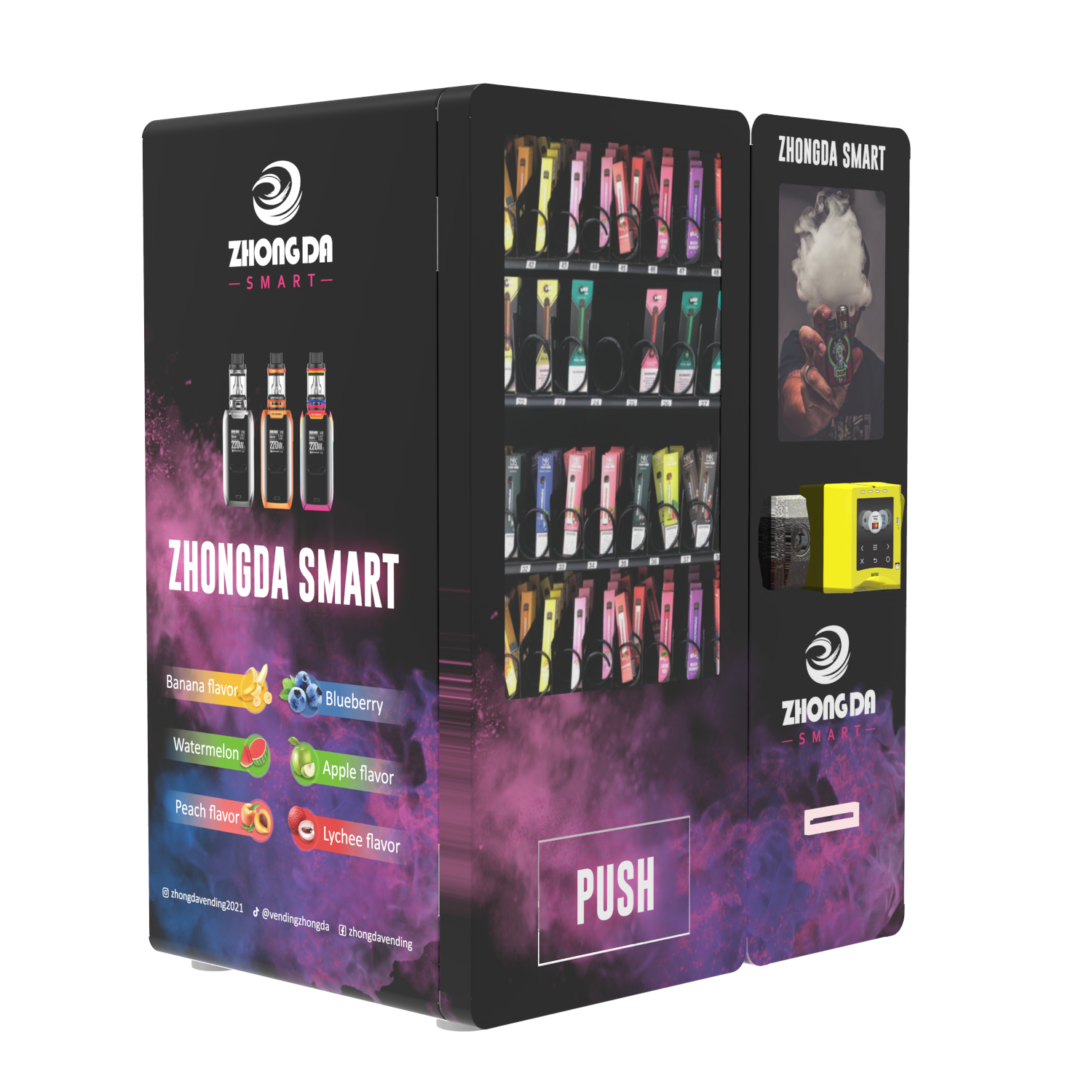
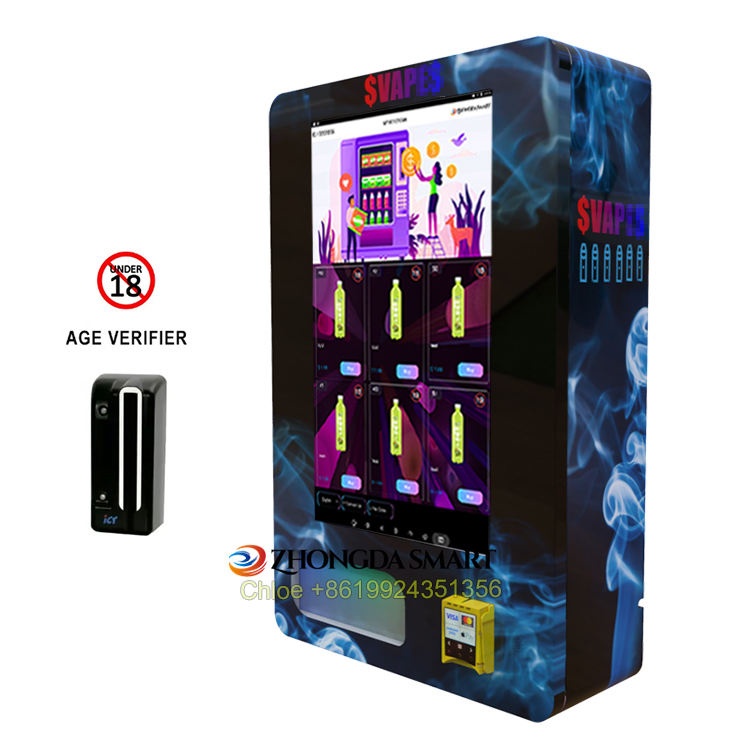
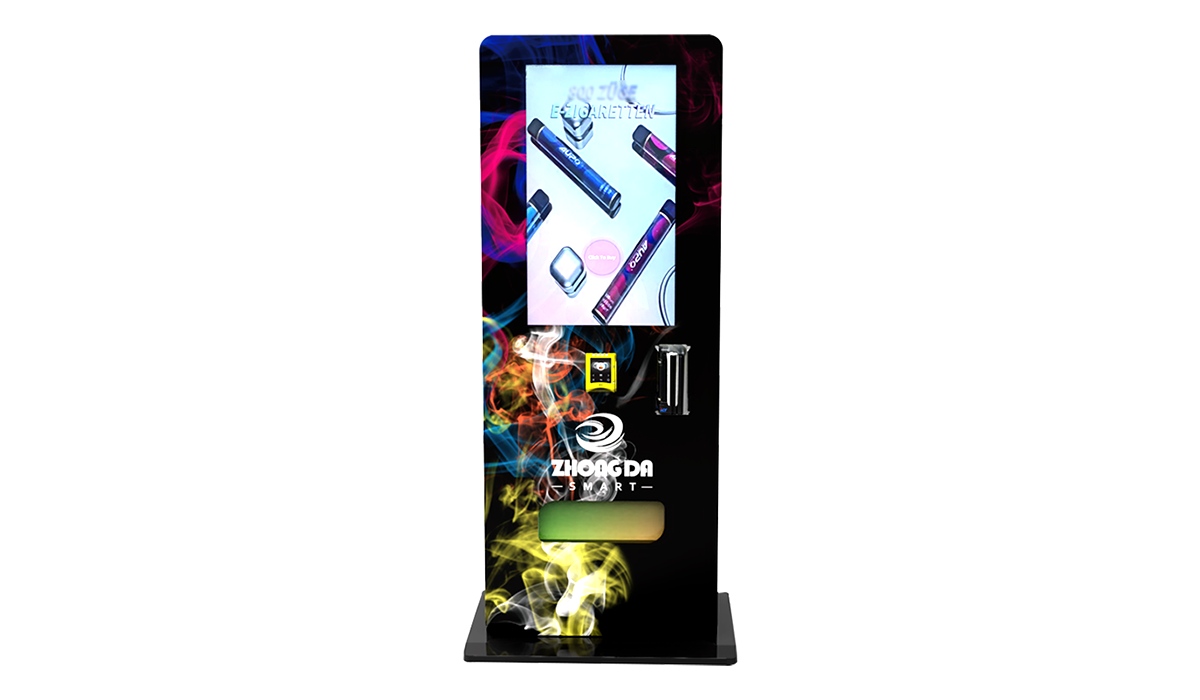
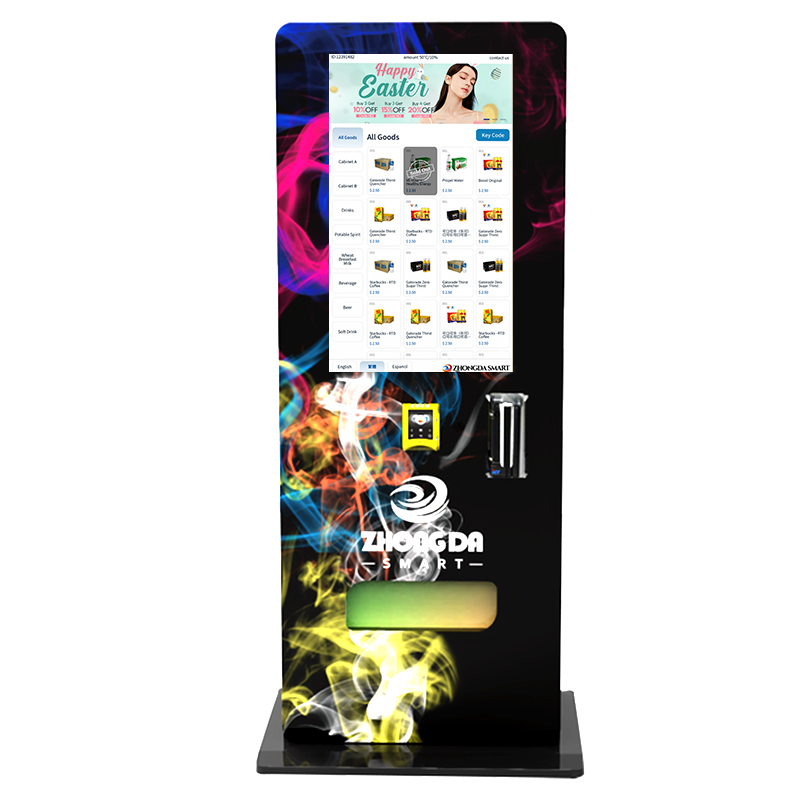
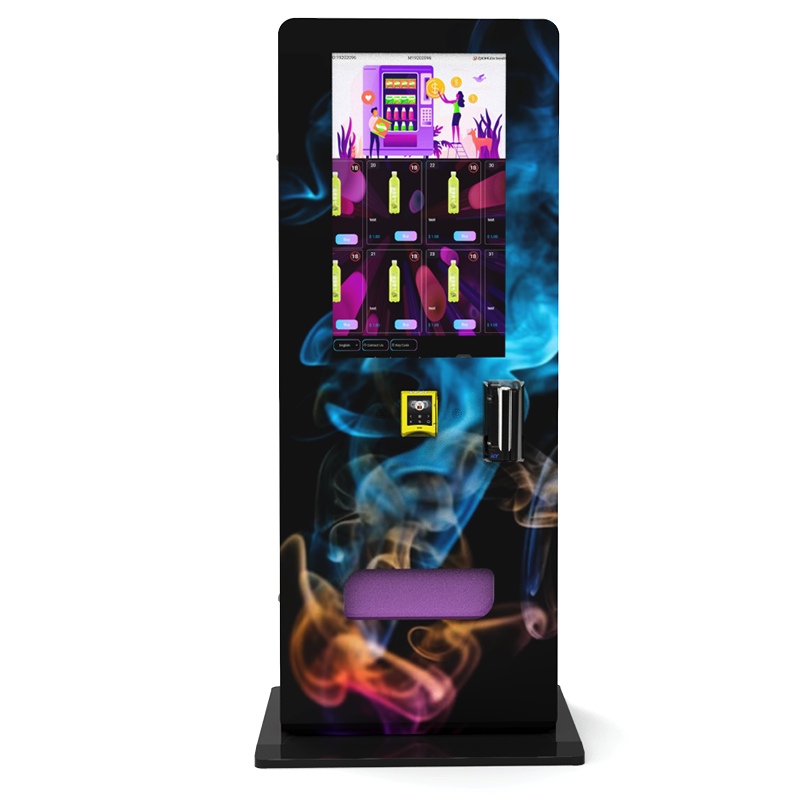
A standard snack machine cannot handle age verification. It cannot connect to a cloud dashboard. It certainly cannot run a credit card transaction with a built-in EMV reader. A smart vending machine for vape products is a completely different piece of equipment. It includes:
- A 21-inch or larger touchscreen interface for product selection and ID scanning
- An integrated ID scanner that validates driver‘s licenses and passports in under two seconds
- A cashless payment system that accepts credit cards, Apple Pay, Google Pay, and sometimes even cryptocurrency
- Remote telemetry that reports inventory levels, sales data, and machine health in real time
- Temperature-controlled compartments for sensitive nicotine products
This is not the same machine your grandfather bought for soda cans. The upfront cost is higher, but the return per square foot is significantly better.
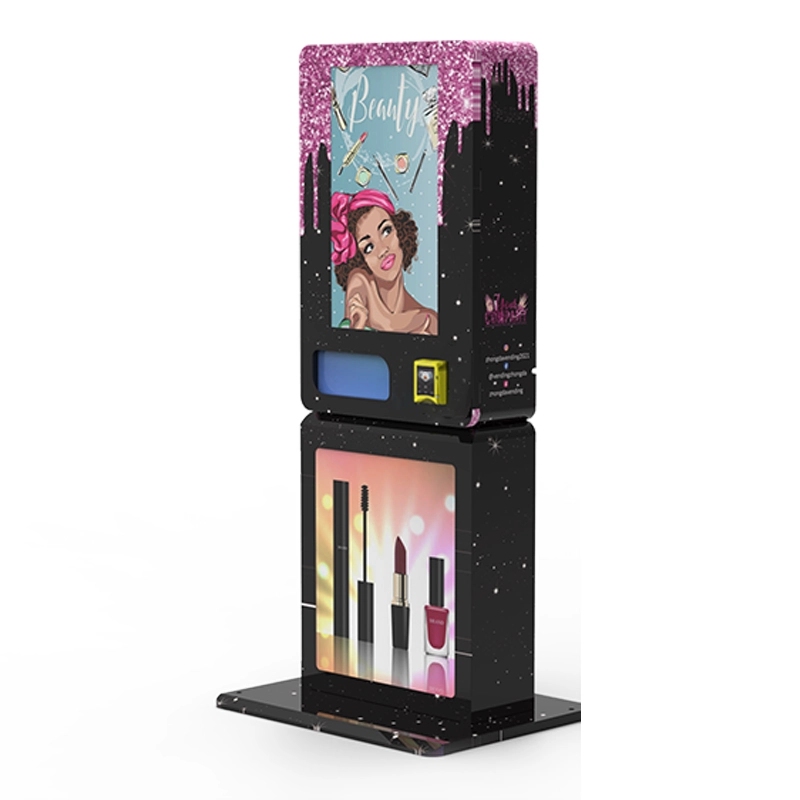
How Much Does a Smart Vending Machine for Vape Products Actually Cost?
I get asked this question more than any other. The short answer: expect to pay between $4,500 and $12,000 per unit, depending on configuration. But the real cost goes beyond the machine itself.
| Cost Category | Estimated Range (USD) |
|---|---|
| Hardware (single machine) | $4,500 – $12,000 |
| Shipping and customs | $400 – $1,200 |
| Installation and setup | $300 – $800 |
| Payment processing setup | $100 – $500 |
| Initial inventory (200–300 units) | $2,000 – $5,000 |
| Software subscription (annual) | $600 – $1,200 |
| Insurance and permits | $500 – $1,500 |
| Total first-year investment (per machine) | $8,400 – $22,200 |
These numbers come directly from our factory’s client data. The most common mistake new operators make is underestimating the inventory cost. You cannot fill a machine with cheap disposables and expect premium margins. Product mix matters, and I will cover that in the profit section below.
Profit Model: What a Well-Placed Machine Earns Per Month
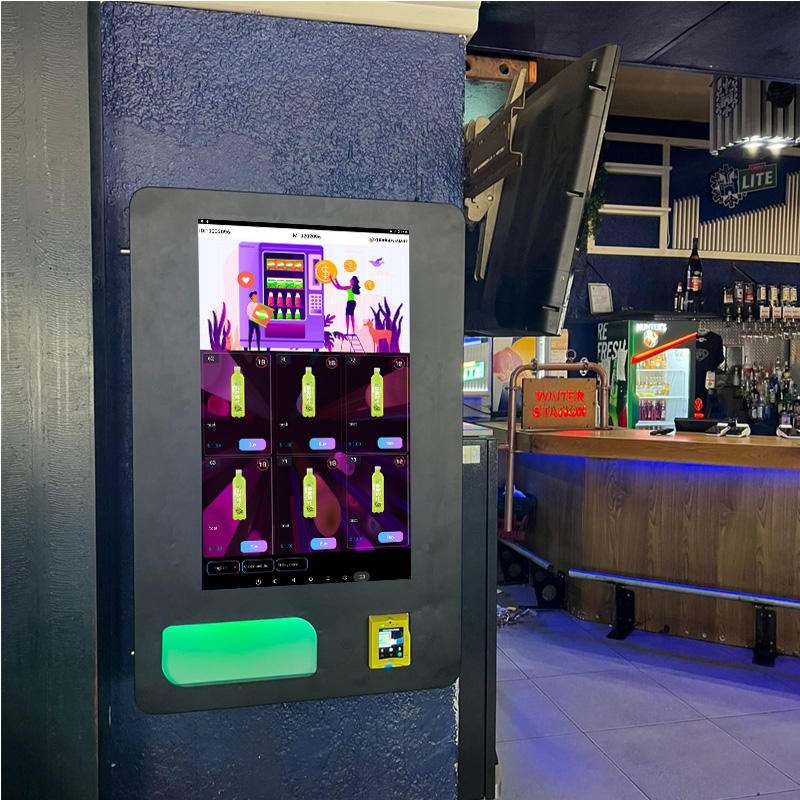
Let me give you a real example. One of our clients placed a smart vending machine for vape products in a mid-sized bar that sees about 400 customers on a weekend night. The machine carries 20 different SKUs, mostly disposable vapes and nicotine pouches, priced between $12 and $25. Average transaction value is $18. The machine does 12 to 18 transactions per day on weekdays and 30 to 40 on weekends.
Monthly gross revenue: approximately $9,600. Cost of goods sold runs about $4,800 (50% margin). After subtracting the location commission (10% of gross), payment processing fees (3%), and a small electricity cost, net profit lands around $3,800 per month. That machine paid for itself in four months.
Not every location performs this well. A gas station with lower foot traffic might generate $2,000 in monthly revenue with a net profit of $700. But the beauty of the model is scalability. Once you have three or four machines running, you are looking at a monthly net income between $8,000 and $15,000 with very little active labor.
Profit Levers That Actually Move the Needle
- Product margin: Focus on brands that offer at least 50% wholesale margin. Avoid ultra-cheap disposables that sell for $5—they attract the wrong customer and eat into your profit.
- Dynamic pricing: Use the remote management software to raise prices by 10% on weekend nights. Customers in bars are less price-sensitive at 11 PM.
- Location commission: Never pay more than 15% of gross revenue to the venue. Most bars will accept 10% if you handle all maintenance and restocking.
- Restocking frequency: One visit per week is ideal. If you are visiting more than twice a week, your machine is either too small or your product mix is wrong.
Technology Stack: What a Modern Vape Vending Machine Must Include
If you are buying a machine that does not include remote management and age verification, you are buying a paperweight. The age verification vending machine is the only type that will survive regulatory scrutiny in the coming years. Here is what the technology stack should look like:
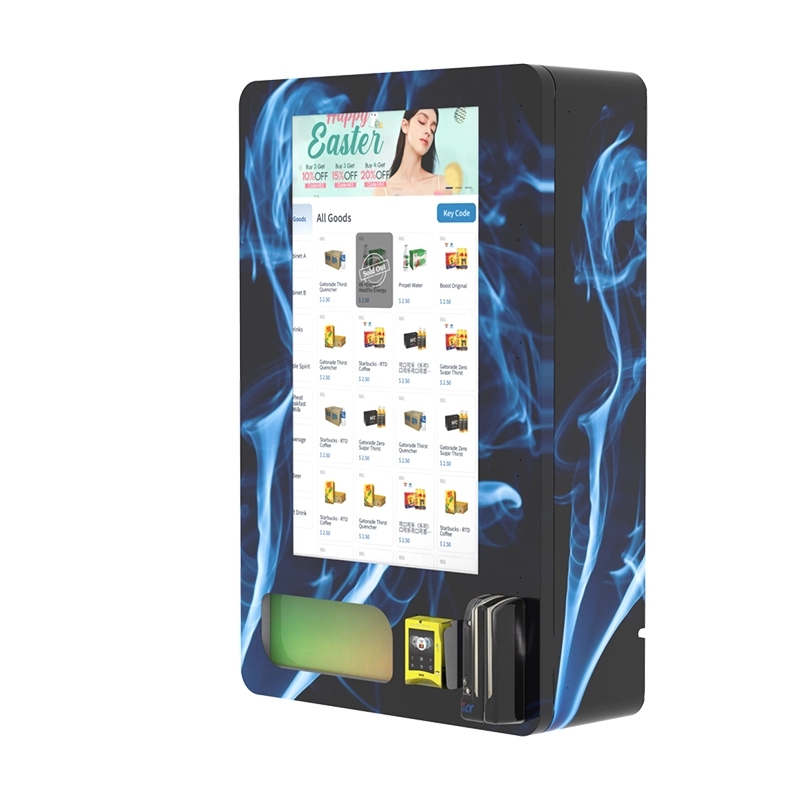
Age Verification Systems
There are three primary methods used today:
- ID scanning with OCR: The machine reads the barcode or MRZ on a driver‘s license, parses the date of birth, and compares it to a database of known valid ID formats. This is the most reliable method.
- Biometric facial age estimation: Some newer machines use a camera to estimate age based on facial features. This is faster but less accurate for people near the age cutoff.
- Mobile app verification: The customer scans a QR code, uploads their ID to a third-party service, and receives a one-time token. This adds friction to the purchase flow.
Our factory uses the first method exclusively. It passes compliance audits every time.
Cashless Payment Integration
Cash is dead in this channel. Every machine must accept contactless payments. The payment terminal should be EMV Level 3 certified and support NFC. We use a Pax S920 terminal in most of our builds because it handles high transaction volumes without freezing.
Remote Management Platform
You need a dashboard that shows you, in real time, which products are selling, which are not, and whether any column is jammed. Our ID scan vending machine connects to a cloud platform that sends push notifications when inventory drops below a threshold. This alone saves operators hours of unnecessary travel each week.
Real Deployment Experience: What Works and What Fails
I have personally been involved in deployments that went beautifully and a few that were disasters. Here is what I learned.
Best Performing Locations
- Bars and nightclubs: High foot traffic, late-night hours, customers who are already spending money on alcohol and are likely to buy a vape. These locations consistently deliver the highest revenue per machine.
- Hotels: Especially hotels that have gone smoke-free inside rooms. Guests need a convenient way to buy nicotine products without leaving the property. We have seen hotel vape solutions generate steady daily revenue with very low theft.
- College campuses: Only if local laws permit. Some campuses have strict tobacco-free policies, but others allow vending machines in student centers with age verification.
Worst Performing Locations
- Laundromats: Low foot traffic, long dwell times, but customers are not in a buying mood. Machines in laundromats averaged under $400 per month in our tests.
- Retail stores that already sell vapes: You are competing with the store’s own inventory. The machine cannibalizes sales and the store owner usually stops paying commission after a few months.
- Unsupervised outdoor locations: Even with weatherproofing, outdoor machines suffer from higher vandalism rates, temperature swings that damage batteries, and lower transaction volumes.
Risk Factors and Failure Cases You Need to Know
I want to be honest about the risks because I have seen operators lose money when they ignored these warnings.
Regulatory Compliance Is Non-Negotiable
In many jurisdictions, selling tobacco or nicotine products through a vending machine is illegal unless the machine is located in an adult-only facility or uses a remote sales mechanism with age verification. We publish regular updates on our news page covering legal changes. Ignoring these rules can result in fines of $10,000 or more per violation, plus seizure of the machine.
Technical Failures That Kill Revenue
- Payment terminal downtime: If the credit card reader goes offline, the machine generates zero revenue until it is fixed. Always buy a machine with a backup payment method.
- Vending mechanism jams: Spiral coils are reliable, but cheap knockoff machines use flimsy motors that fail after 10,000 cycles. Our machines use reinforced motors rated for 100,000 cycles.
- Network connectivity: The machine needs a stable internet connection. Cellular modems are preferred because they do not rely on the venue’s Wi-Fi, which can be unreliable.
Inventory Management Mistakes
One operator I advised stocked his machine entirely with high-end mod kits priced at $40 each. He sold three units in the first week and then nothing for a month. The problem was simple: his customers wanted disposables in the $15 range. You must match your product mix to the location demographic. A bar crowd wants convenience and low price point. A hotel lobby might support premium products.
How to Choose a Manufacturer: What to Look For
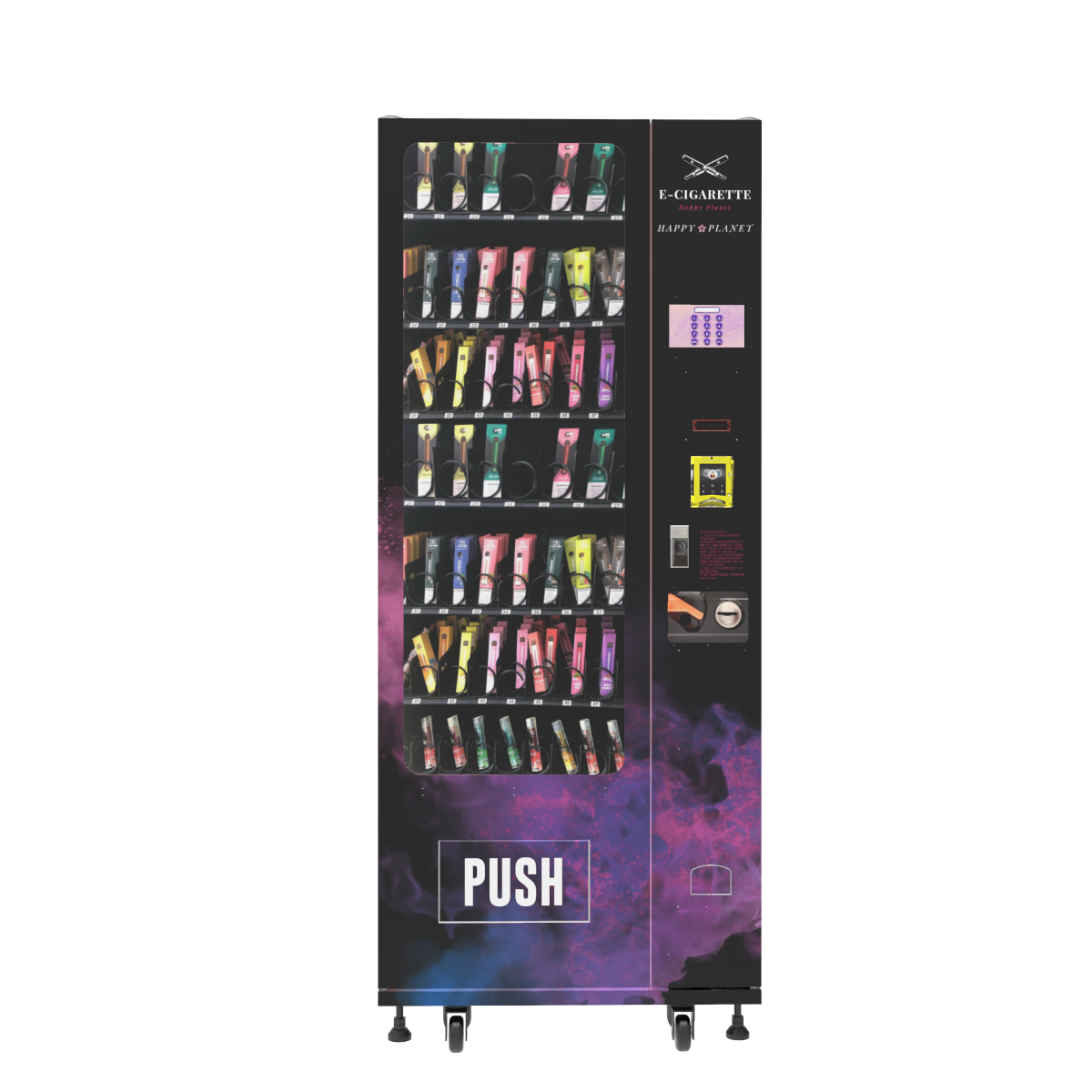
Not all vending machine factories are the same. I have visited over a dozen manufacturing facilities in the past decade. Most of them build snack machines and retrofit them for vape products. That approach leads to problems because snack machines are not designed for the regulatory and payment requirements of age-restricted goods.
You want a manufacturer that builds the machine from the ground up for vape sales. That means:
- Integrated age verification that cannot be bypassed
- Temperature control for battery safety
- Ruggedized payment systems that handle high transaction volumes
- Remote management software developed in-house, not licensed from a third party
Our factory, Zhongda Smart, has been building vending equipment since 2009. We designed our first dedicated vape machine in 2016 and have shipped thousands of units since then. Every machine we build includes a 12-month warranty on all components, remote diagnostics, and a direct line to our engineering team. If you want to see the full lineup, visit our vape vending machine product page.
Long-Term Operational Strategy
Running a network of vape vending machines is not a passive income fantasy. It requires consistent attention, especially in the first six months. Here is the operational cadence that works:
- Weekly restocking: Visit each machine once a week. Pull the sales data from the cloud dashboard before you go, so you know exactly which products to bring.
- Monthly maintenance: Clean the touchscreen, test the ID scanner, and run a diagnostic on the payment terminal. This takes 15 minutes per machine.
- Quarterly product rotation: Remove slow-moving SKUs and introduce new products. The vape market changes fast. A brand that is popular today might be irrelevant in six months.
- Annual hardware check: Replace the battery backup, inspect the cooling fan, and update the firmware. This prevents unexpected downtime.
Scaling from One Machine to a Fleet
Once you have proven the model with a single machine, scaling is straightforward. The key is to standardize on one machine model. If you buy three different models from three different manufacturers, you will need three different spare parts inventories and three different software dashboards. Standardization reduces your maintenance cost by roughly 40%.
We offer volume discounts for operators who buy five or more machines at once. Several of our clients now run fleets of 20 to 50 machines across multiple cities. Their net profit per machine averages $2,800 per month after all costs.
Frequently Asked Questions
Do I need a special license to operate a smart vending machine for vape products?
Yes. In most jurisdictions, you need a tobacco retail license or a vending machine permit specific to age-restricted products. The requirements vary by state and municipality. Some locations require the machine to be in a room that is not accessible to minors. Always check local laws before purchasing or placing a machine.
How does the machine verify a customer‘s age?
The machine uses an integrated ID scanner that reads the barcode or machine-readable zone on a driver’s license or passport. It extracts the date of birth and calculates whether the customer is over the legal age. Some models also include a camera for facial age estimation as a secondary check. Our machines use the ID scan method exclusively because it passes compliance audits reliably.
What happens if the machine loses internet connectivity?
If the machine loses internet connectivity, it can still process cashless payments if the payment terminal has its own cellular connection. However, remote inventory tracking and age verification database lookups will be unavailable. We recommend using a machine with a built-in cellular modem as a primary connection, with Wi-Fi as a backup. Our machines automatically switch to a backup network if the primary connection drops.
How much inventory should I stock in each machine?
For a standard machine with 20 to 30 SKUs, you should carry between 200 and 300 units of inventory. That translates to roughly 8 to 12 units per SKU. The exact number depends on the capacity of your machine and the sales velocity of each product. Start with a mix of 60% popular disposables, 20% mid-range pod systems, and 20% nicotine pouches or accessories.
Can I place a machine outdoors?
Outdoor placement is possible but not recommended unless the machine is specifically rated for outdoor use. Temperature extremes can damage batteries and affect the performance of the touchscreen and payment terminal. If you must place a machine outdoors, choose a model with a weatherproof enclosure and a built-in heating and cooling system. Even then, expect higher maintenance costs and shorter component lifespan.
What is the typical return on investment timeline?
In a good location, a smart vending machine for vape products pays for itself within 4 to 8 months. In an average location, the payback period extends to 10 to 14 months. The key variables are foot traffic, average transaction value, and location commission. Operators who place machines in high-traffic bars and hotels consistently see the fastest returns.
Final Thoughts from Someone Who Has Been in the Trenches
I have been building vending machines for fifteen years, and I have never seen a category grow as fast as vape vending. The reason is simple: the economics work. A single machine in the right spot can generate more profit per square foot than a small retail store. The technology has matured to the point where age verification is seamless, payments are instant, and remote management gives you full control from anywhere.
But this is not a business for someone who wants to buy a machine, set it and forget it. You need to choose the right location, stock the right products, and stay on top of maintenance. If you do those three things consistently, the numbers will take care of themselves.
If you are serious about entering this space, start with one machine. Learn the operational rhythm. Then scale. Our team at Zhongda Smart can help you with the hardware, the software, and the deployment strategy. We have been doing this long enough to know what works and what does not.
For more technical specifications and pricing, visit our main website or contact our sales team directly through the contact page.
Meta Description: Expert guide to buying a smart vending machine for vape products. Real costs, profit data, age verification tech, and deployment advice from a 15-year manufacturer.
Sources and References: