AI retail automation is changing what self-service retail can do. A modern vending machine is no longer simply a cabinet that accepts payment and dispenses a product. Today’s intelligent retail systems can combine identity verification, inventory monitoring, remote diagnostics, payment processing, sales analytics, and automated restocking recommendations in a single platform.
At Zhongda Smart, we have spent years manufacturing and deploying smart vending equipment for different retail environments in the United States, Europe, and other markets. That field experience has shown us that successful automation depends on much more than installing a touchscreen or adding an AI label to a machine.
The systems that perform best are designed around three practical requirements: reliable verification, real-time operational visibility, and efficient inventory management.
This guide explains how AI retail automation works, what operators should budget for, which machine formats suit different locations, and what we have learned from real-world deployments of self-service retail equipment.
What Is AI Retail Automation?
AI retail automation refers to the use of artificial intelligence, computer vision, connected sensors, analytics software, and automated hardware to operate retail transactions with less manual intervention.
In a traditional vending operation, an operator may need to visit the machine to discover that inventory is low, a payment terminal has stopped working, or a dispensing mechanism has jammed. An AI-enabled retail system can detect many of these conditions remotely and report them through a central management platform.
Depending on the application, an intelligent self-service retail system may include:
AI-assisted identity or age verification
Computer vision
Inventory-level monitoring
Cashless payment processing
Remote machine diagnostics
Automated sales reporting
SKU-level sales analytics
Restocking recommendations
Maintenance alerts
Centralized fleet management
The goal is not automation for its own sake. The goal is to reduce operational uncertainty while improving machine uptime, inventory availability, and compliance workflows.
Why AI Retail Automation Matters for Self-Service Retail
The traditional vending model is straightforward: stock a machine, sell products, and replenish inventory. That approach becomes considerably more complicated when the products have higher values, require tighter inventory controls, or are subject to age-related retail regulations.
Operators need to know more than whether a machine has collected revenue. They need to understand which products are selling, when inventory will run out, whether verification systems are functioning, whether the payment terminal is online, and whether a mechanical problem may interrupt sales.
AI retail automation creates a connected operating environment in which transactions, inventory, hardware status, and sales trends can be monitored from one system.
For operators managing multiple locations, this visibility becomes especially important. Instead of manually checking every machine, teams can prioritize locations that actually require attention.
How an AI-Driven Self-Service Kiosk Works
A modern smart vending kiosk typically combines several technologies rather than relying on one individual AI feature.
1. Customer Verification
For applications where age verification is legally required, the transaction may begin with an identity document check. Depending on the configuration and local requirements, the system can use document scanning, barcode or document-data validation, and facial comparison technology.
The purpose is to create a stronger verification process than simply accepting a manually entered birth date.
Operators considering this technology should always verify applicable national, state, provincial, and local requirements before deployment because rules for automated sales and age-restricted products vary considerably by jurisdiction.
2. Product Selection and Payment
After the required verification process is completed, the customer selects a product and completes payment through the integrated payment terminal.
The vending controller then communicates with the dispensing mechanism and releases the selected item.
3. Inventory Tracking
Each successful transaction can automatically update the machine's inventory record.
For example, an operator managing 30 machines can see which locations are approaching a stockout without physically visiting every site.
This makes route planning significantly more efficient and reduces unnecessary service visits.
4. Sales Analytics
The management platform can analyze information such as:
Sales by SKU
Sales by machine
Sales by location
Sales by hour or day
Inventory turnover
Transaction success rates
Machine uptime
If a particular SKU consistently sells out on Friday evenings, for example, operators can increase inventory before the demand peak instead of discovering the shortage afterward.
5. Remote Diagnostics
Connected machines can also report operational events such as communication failures, payment terminal problems, low inventory, dispensing errors, or offline components.
This is one of the most valuable aspects of AI-powered retail automation because avoiding downtime is often more important than adding another customer-facing feature.
AI Retail Automation Cost Breakdown
The hardware purchase price is only one part of the investment required to operate a smart self-service retail network.
Based on the configurations we manufacture and deployment requirements we commonly encounter, operators should consider several categories of cost.
| Cost Component | Indicative Range (USD) | What It Covers |
|---|---|---|
| AI-enabled vending machine | $4,500–$8,000+ | Machine hardware, controller, touchscreen, telemetry, and optional verification equipment |
| Installation and site preparation | $500–$1,200+ | Electrical preparation, network setup, positioning, and anchoring |
| Initial inventory | $1,500–$3,000+ | Varies considerably according to product category and SKU count |
| Software and management platform | $200–$500/month | Remote monitoring, analytics, inventory data, and fleet management |
| Licensing and compliance preparation | Varies by jurisdiction | Business licenses, retail permits, legal review, and compliance procedures |
| Maintenance reserve | $800–$1,500/year | Parts, technical support, preventive maintenance, and repairs |
These figures are indicative examples rather than guaranteed prices. Equipment specifications, payment systems, verification requirements, shipping, taxes, product category, and local regulations can substantially change total project cost.
Hidden Operating Costs to Consider
Operators frequently focus on the machine purchase price while underestimating the costs associated with running the equipment.
Payment Processing
Card-processing costs vary according to payment provider, merchant category, transaction volume, geography, and risk profile.
Before calculating ROI, obtain an actual merchant-processing quotation instead of assuming the rate used by conventional retail businesses.
Inventory Carrying Cost
A machine with too many slow-moving SKUs ties up working capital. A machine with too little inventory creates stockouts and unnecessary replenishment trips.
This is where sales analytics can have a direct operational benefit. Inventory decisions can be based on actual SKU velocity instead of intuition alone.
Downtime
A machine that cannot accept payments or dispense products cannot generate revenue.
Remote monitoring therefore has an economic value beyond convenience. Faster detection of equipment problems can reduce the amount of time a malfunction remains unnoticed.
Compliance
Age-restricted retail introduces another category of expense: compliance.
Licensing requirements, permitted locations, acceptable verification methods, recordkeeping requirements, and rules governing unattended sales differ by jurisdiction. Operators should confirm the regulations applicable to every proposed machine location before purchasing or installing equipment.
AI Vending Machine Profit and ROI
There is no universal revenue figure for an automated retail machine. Location quality, product mix, pricing, operating hours, competition, traffic, inventory availability, and machine uptime can all materially affect results.
A more useful approach is to model several scenarios.
For example, suppose a machine generates $2,500 in monthly sales and the product-level gross margin is 40%. That produces $1,000 in gross margin before operating expenses.
From that amount, an operator may still need to deduct:
Payment processing
Software subscriptions
Site commissions or rent
Inventory losses
Travel and replenishment costs
Maintenance
Insurance
Taxes
Licensing and compliance expenses
This is why purchasing a machine should begin with a location-level financial model rather than a revenue claim.
Example ROI Scenarios
| Location Type | Revenue Potential | Main Advantage | Main Risk |
|---|---|---|---|
| Bar or nightlife venue | Potentially high | Concentrated evening and weekend traffic | Higher equipment wear and greater operational stress |
| Convenience store | Medium to high | Consistent daily traffic | Strong competition and placement sensitivity |
| Hotel | Low to medium | Controlled environment and lower equipment wear | Demand depends heavily on occupancy |
| High-traffic transportation or retail site | Potentially high | Large customer volume | Higher rent, compliance, and operational requirements |
The lesson from our own deployments has been consistent: location economics usually matter more than machine capacity alone.
Site Selection for AI Retail Automation
An advanced machine cannot compensate for a poor location.
Before approving a potential deployment, we recommend evaluating at least the following factors:
Daily foot traffic
Customer demographics appropriate for the product category
Visibility of the machine
Security and staff oversight
Power availability
Wi-Fi or cellular connectivity
Operating hours
Nearby competitors
Restocking access
Applicable zoning and retail regulations
For some projects, spending additional time evaluating the location before installation can produce a larger return than purchasing additional hardware features.
Real-World Deployment Lessons
Laboratory testing is essential, but vending equipment ultimately has to survive real commercial environments.
Different locations create different stresses: humidity, dust, repeated door openings, power instability, customer handling, temperature fluctuations, and high transaction volumes can all affect machine performance.
Dispensing Reliability
During one deployment, product-size variation combined with environmental conditions resulted in more dispensing jams than we considered acceptable.
The solution was not another software feature. We modified the physical dispensing configuration to provide greater tolerance for variations in package dimensions.
That experience reinforced an important principle of smart retail design: AI cannot compensate for unreliable mechanical engineering.
Power Protection
Busy hospitality environments can expose machines to unstable power conditions and accidental handling.
Where appropriate, surge protection and proper grounding should therefore be considered during site preparation rather than after hardware damage occurs.
Connectivity
Operators should also determine what happens when internet connectivity is temporarily unavailable.
A well-designed system should have a clearly defined offline strategy for functions such as transaction processing, verification, inventory synchronization, and diagnostic reporting.
Age Verification in Automated Retail
Age verification is one of the most important technologies for self-service applications involving products that legally require an age check.
Depending on the machine configuration, a verification workflow may combine:
ID document scanning
Date-of-birth extraction
Document validity checks
Facial comparison
Liveness detection
Transaction logging
No technology should be presented as universally sufficient for legal compliance. The required process depends on the product, location, and applicable law.
Operators evaluating this type of equipment can learn more about Zhongda Smart's age verification vending machine solutions.
Comparing AI Retail Automation Machine Types
The best machine depends on the expected transaction volume, available space, product assortment, and replenishment schedule.
| Machine Type | Typical SKU Capacity | Best Application | Main Advantage |
|---|---|---|---|
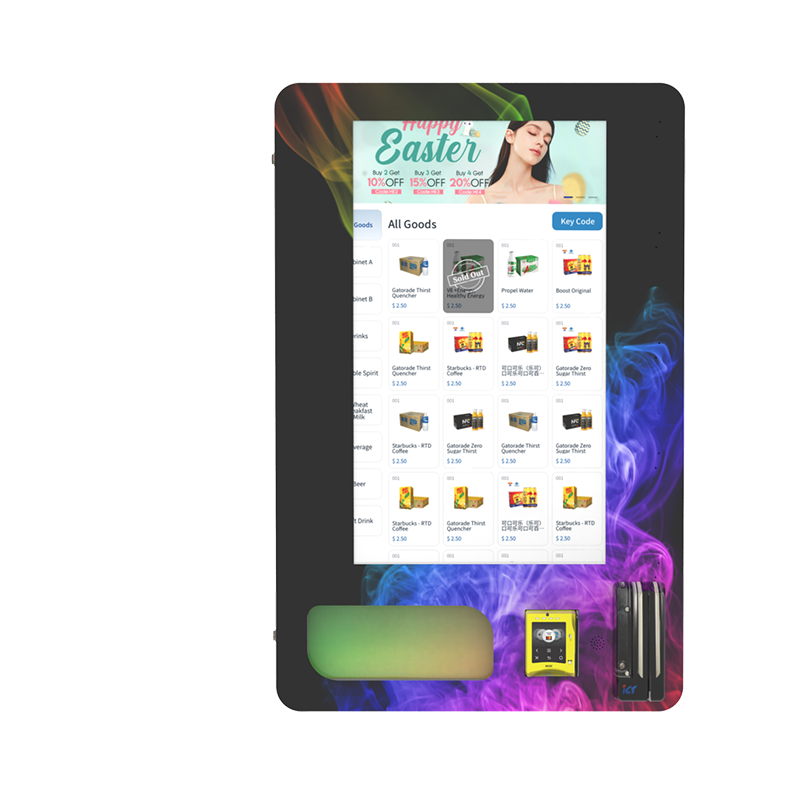
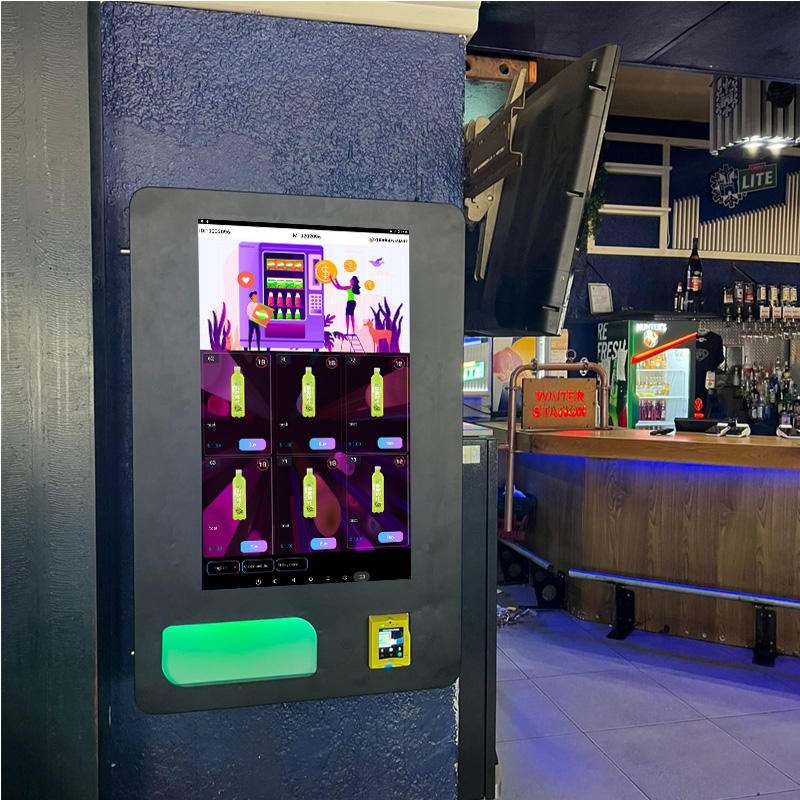
| Wall-mounted compact | 6–12 SKUs | Small venues and space-constrained locations | Small footprint |
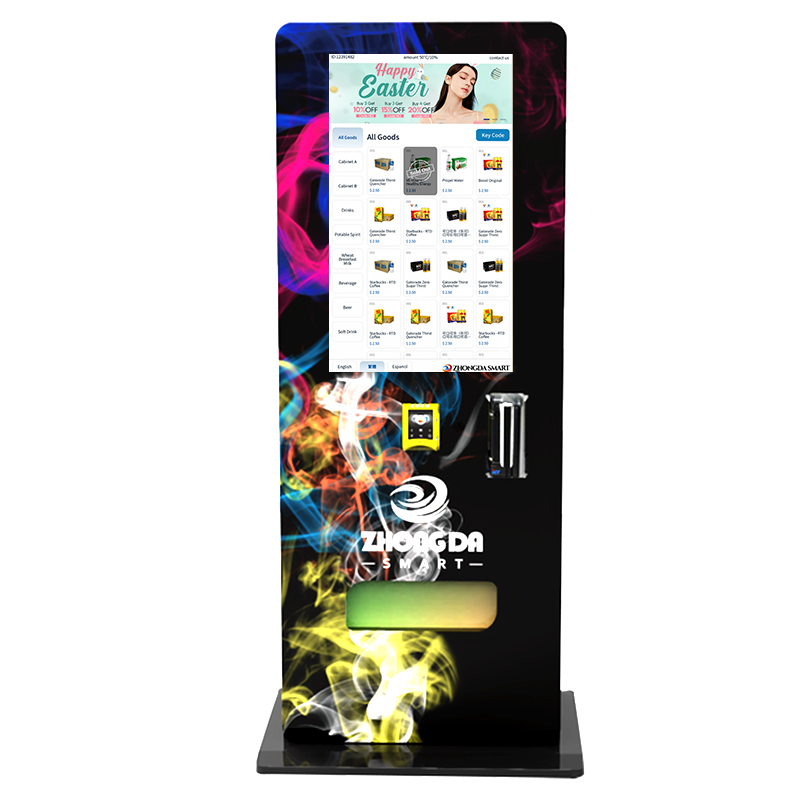
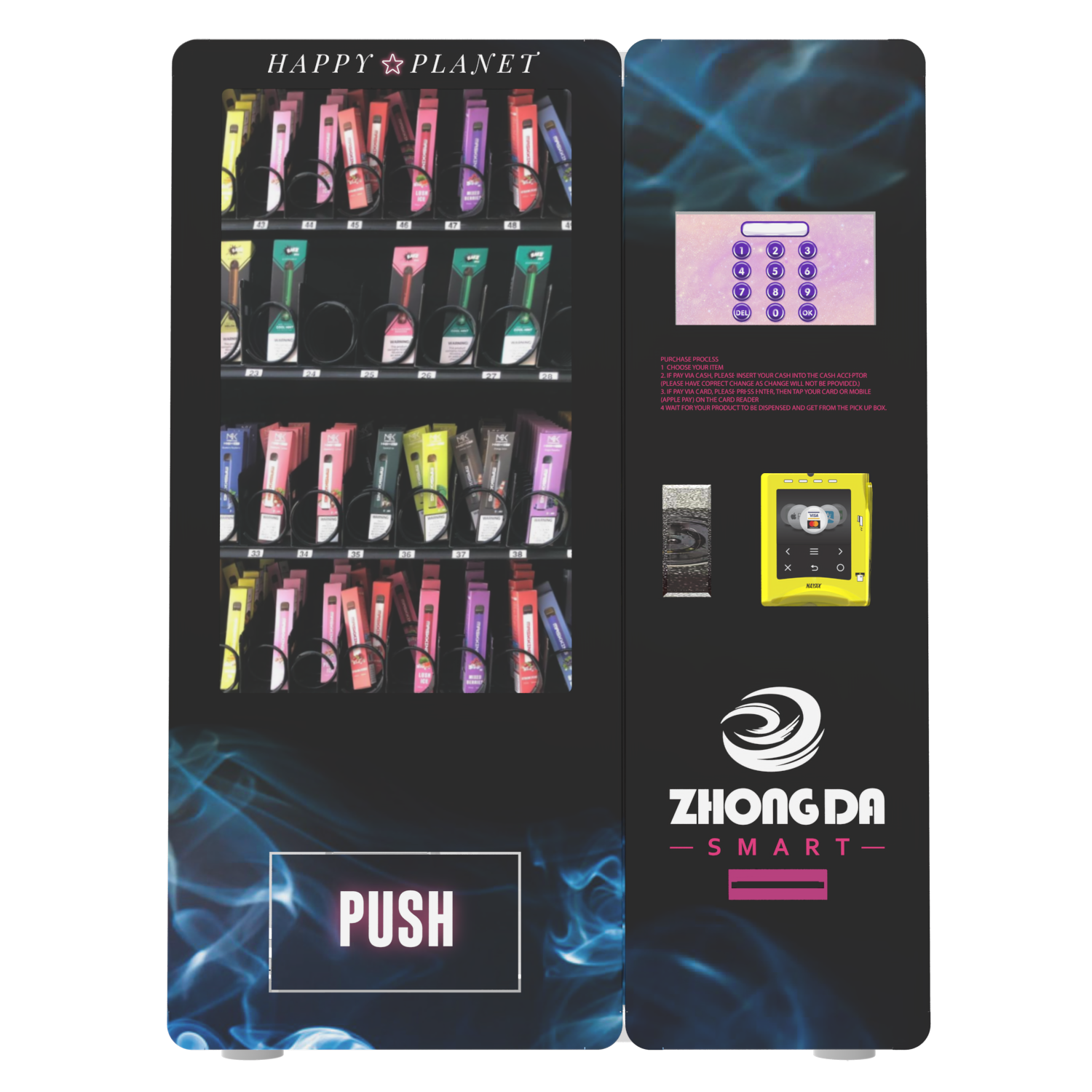
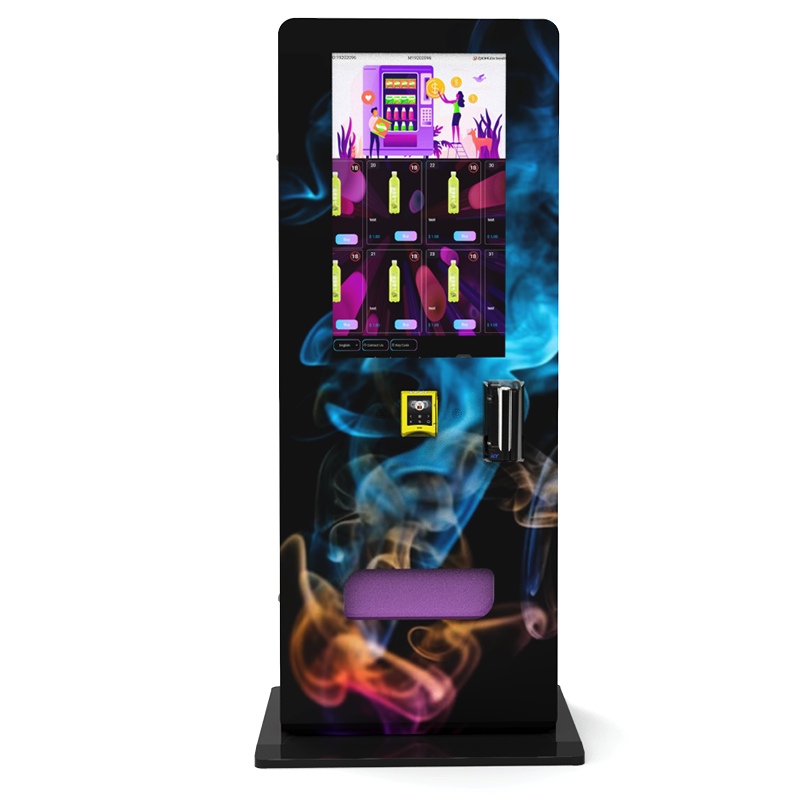
| Standalone mid-tower | 20–40 SKUs | Convenience stores, lounges, hospitality | Balance of capacity and footprint |
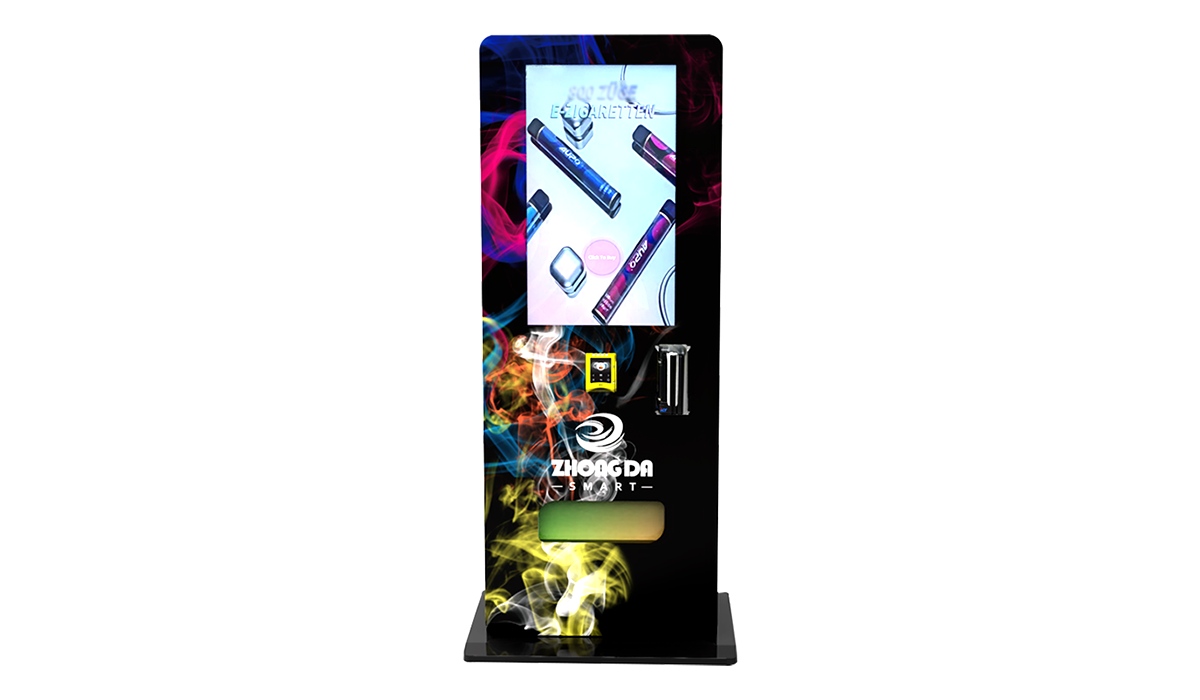
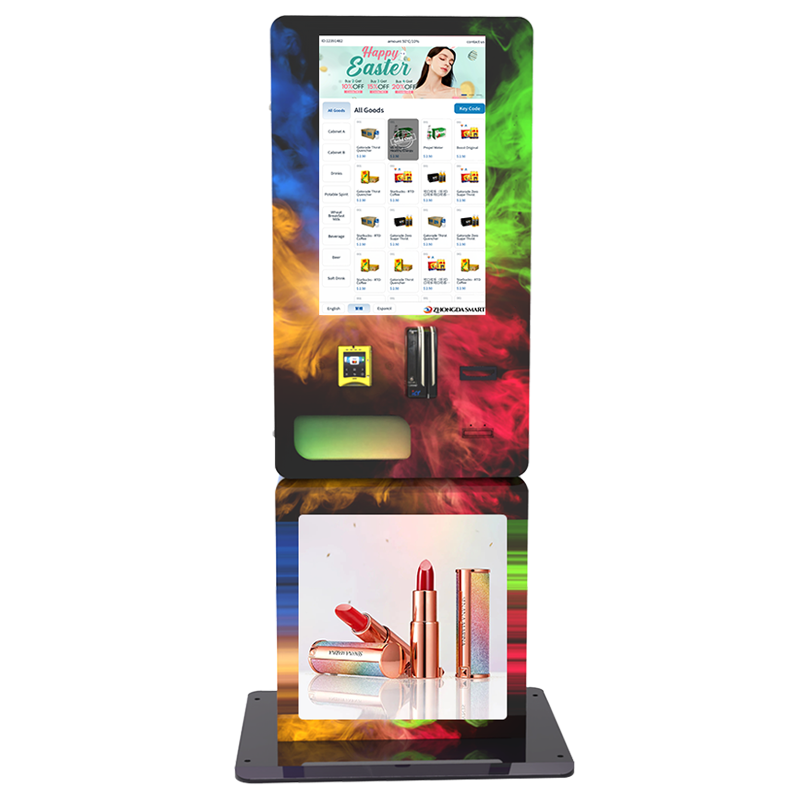
| High-capacity kiosk | 50–80 SKUs | High-volume commercial locations | Larger assortment and inventory capacity |
For many commercial deployments, a mid-capacity standalone unit provides a practical balance between inventory capacity, footprint, servicing requirements, and installation cost.
Locations where floor space is limited may instead benefit from a wall-mounted compact vending machine.
Maintenance and Long-Term Machine Reliability
Preventive maintenance is essential to profitable automated retail.
A regular maintenance program should address both mechanical and digital components.
Depending on machine design and usage, inspections may include:
Cleaning cameras and sensors
Testing identity scanning hardware
Inspecting dispensing mechanisms
Checking payment terminals
Testing network connectivity
Reviewing error logs
Installing approved firmware updates
Checking locks and physical security
Testing cooling or temperature-control systems where applicable
Remote diagnostics can complement physical inspections by identifying abnormal machine behavior before the next scheduled site visit.
More information about equipment support is available on the Zhongda Smart service page.
Why Software and Firmware Matter
Modern vending equipment is increasingly software-defined.
Payment integrations change. Security vulnerabilities are discovered. Verification providers update systems. Reporting requirements can change. Operators may also need new functionality after deployment.
For these reasons, equipment should be evaluated not only on today's hardware specifications but also on the manufacturer's ability to provide long-term software, firmware, spare-parts, and technical support.
Using Retail Data to Improve Operations
One of the biggest long-term advantages of AI retail automation is the operating data generated by the machine network.
Over time, operators can identify patterns such as:
Which SKUs perform best at each location
What time demand peaks
Which machines require frequent service
How quickly inventory turns
Which locations produce the highest revenue per machine
Where additional machines may be justified
The result is a shift from reactive vending operations to data-driven retail management.
Choosing an AI Retail Automation Manufacturer
The machine itself is only one part of the supplier relationship.
Before selecting a manufacturer, evaluate its ability to support the entire equipment lifecycle.
Important questions include:
Can the hardware be customized for your product dimensions?
What remote management features are available?
Can payment systems be configured for your market?
What verification technologies are supported?
Are spare parts readily available?
How are firmware updates delivered?
What technical support is provided after installation?
Can the manufacturer support multiple machines and locations?
Zhongda Smart manufactures customized self-service retail and vending systems for different product categories and operating environments. You can learn more about our manufacturing capabilities on the Zhongda Smart company page.
AI Retail Automation FAQ
What is AI retail automation?
AI retail automation uses technologies such as artificial intelligence, computer vision, connected sensors, analytics, and automated hardware to manage retail processes with less manual intervention. In self-service vending, it can support functions such as verification, inventory monitoring, sales analytics, diagnostics, and automated alerts.
How much does an AI retail automation vending machine cost?
The price depends on machine capacity, verification hardware, payment systems, software, customization, and destination. A typical commercial AI-enabled vending configuration may cost several thousand dollars before shipping, inventory, installation, software, and local compliance expenses are added.
How does an AI vending machine verify age?
Depending on the system, an age-verification vending machine may scan an identity document, extract date-of-birth information, validate document data, and compare the ID photograph with the customer using computer vision. The appropriate verification method depends on applicable local laws and the product being sold.
Can AI retail automation reduce vending machine downtime?
Yes. Connected telemetry and remote diagnostics can alert operators to issues such as communication failures, low inventory, payment problems, or dispensing errors. This allows operators to investigate problems sooner instead of waiting for the next physical inspection.
What is the best location for an AI vending machine?
The best location combines sufficient customer traffic with good visibility, reliable power and connectivity, convenient restocking access, appropriate security, and compliance with applicable local regulations. High traffic alone does not guarantee profitability.
Should I choose a wall-mounted or standalone vending machine?
A wall-mounted machine is generally suitable for locations with limited floor space or smaller product assortments. A standalone machine provides greater inventory capacity and is usually better suited to locations with higher transaction volumes.
How often should an AI vending machine be maintained?
Maintenance frequency depends on usage and environment. Operators should combine routine physical inspections with remote diagnostics and periodically test cameras, scanners, payment hardware, dispensing mechanisms, connectivity, and software or firmware.
Can AI retail automation be used for products other than vape products?
Yes. Similar automation technology can be adapted to many self-service retail categories. The appropriate machine configuration depends on product dimensions, storage requirements, payment needs, verification requirements, and applicable regulations.
The Future of AI Retail Automation
Self-service retail is moving from isolated vending machines toward connected retail networks.
The biggest opportunity is not simply replacing employees with machines. It is giving operators better visibility into transactions, inventory, machine health, and customer demand.
Over the coming years, successful automated retail systems are likely to become increasingly data-driven, remotely managed, and integrated with broader retail technology platforms.
From our experience manufacturing and supporting vending equipment, however, the fundamentals remain unchanged. A profitable deployment still requires the right location, reliable hardware, effective inventory management, regular maintenance, and careful attention to regulatory requirements.
AI can make each of those processes more efficient, but it cannot replace sound operational judgment.
If you are evaluating an AI retail automation project, start with the business model and location requirements first. Then choose the machine configuration, verification technology, software, and dispensing system that support those requirements.