Choosing between NFC ID verification and OCR ID verification is one of the most important decisions when configuring an age-verification vending machine. The verification method affects transaction speed, document compatibility, customer experience, maintenance requirements, fraud resistance, and ultimately the operator's compliance workflow.
After years of working with smart vending machines across different markets, I have found that there is no single verification technology that is best for every deployment. NFC can provide fast and highly reliable verification when customers use compatible chip-enabled documents, while OCR offers broader compatibility with conventional printed IDs.
For age-restricted vending applications such as tobacco and vape vending machines, the best solution often depends on the IDs accepted in your target market, local regulations, transaction volume, and whether you need a fallback verification method.
This guide compares NFC vs OCR ID verification for vending machines, including how each technology works, costs, speed, reliability, maintenance, security, and the situations where each approach makes the most sense.
What Is NFC ID Verification?
NFC ID verification uses near-field communication to communicate with the contactless chip contained in a compatible electronic identity document, such as an ePassport or certain chip-enabled national identity cards.
Instead of relying only on a photograph of the document, the reader retrieves digital information stored in the chip. Depending on the document type and verification system, that information can be checked for authenticity and used to confirm details such as date of birth, document expiration, and document integrity.
For a smart vending machine, the typical process is:
The customer selects an age-restricted product.
The machine requests age verification.
The customer presents a compatible NFC-enabled identity document.
The NFC reader communicates with the document chip.
The verification software checks the required identity and age information.
If verification succeeds and the customer meets the required age, the machine continues to payment or product dispensing.
The main advantage is that NFC verification reads digital information directly from a compatible identity document rather than attempting to interpret printed information from an image.
What Is OCR ID Verification?
OCR ID verification uses optical character recognition technology to extract information from a photograph or scan of an identity document.
A camera or document scanner captures the ID, and the software identifies fields such as:
Name
Date of birth
Expiration date
Document number
Machine-readable zone (MRZ), when available
Barcode information, when supported by the system
The machine then determines whether the customer meets the required age and whether the document passes the configured validation checks.
OCR has an important advantage: it can work with many documents that do not contain an NFC chip. However, image quality, lighting, document condition, camera position, and software quality can all affect recognition performance.
NFC ID Verification vs OCR ID Verification: Quick Comparison
| Feature | NFC ID Verification | OCR ID Verification |
|---|---|---|
| Verification method | Reads data from a compatible contactless chip | Reads printed, barcode, or machine-readable document data |
| Typical speed | Fast when the document is compatible | Usually requires image capture and processing |
| Lighting sensitivity | Low | Moderate to high |
| Document compatibility | Limited to supported chip-enabled documents | Can support a wider range of conventional IDs |
| Surface wear sensitivity | Low if the chip remains functional | Higher when printed information is scratched or faded |
| Hardware requirements | NFC/contactless document reader | Camera or document scanner and suitable lighting |
| Document authenticity checks | Potentially strong with cryptographic chip verification | Depends heavily on software and additional security checks |
| Best use case | Compatible eIDs/ePassports and high-throughput environments | Markets requiring support for conventional non-chip IDs |
1. Verification Accuracy and Reliability
Reliability is usually the first concern for an operator selling age-restricted products.
NFC Verification Reliability
NFC avoids many of the optical problems associated with camera-based scanning. Ambient lighting, glare, scratches on the printed surface, and camera focus have relatively little impact on the contactless communication process.
However, NFC is not universal. Verification can fail when:
The identity document does not contain a compatible chip.
The chip is physically damaged.
The document type is not supported by the verification software.
The document requires an access method the system does not support.
Therefore, operators should check document compatibility for every country or region in which a machine will be deployed.
OCR Verification Reliability
OCR can support a wider variety of documents, but successful verification depends on capturing a usable image.
Common causes of OCR failure include:
Glare from laminated ID surfaces
Insufficient or inconsistent lighting
Blurred images
Incorrect document positioning
Worn or damaged cards
Dirty camera lenses
Unsupported layouts or fonts
A well-designed OCR system can reduce these problems through controlled lighting, automatic focus, document guides, barcode reading, and image-quality checks, but those features add hardware and software complexity.
2. Transaction Speed
Verification speed becomes especially important in bars, clubs, convenience stores, hotels, airports, and other high-traffic environments.
With NFC, the customer generally presents the document to the reader and waits while the chip data is processed. Because the system does not have to capture and analyze multiple images, the interaction can be very fast when the document is supported.
OCR normally requires additional steps:
Position the ID correctly.
Capture a sufficiently clear image.
Process the image.
Identify the document.
Extract relevant fields.
Run validation checks.
If the first image fails, the customer may need to reposition the ID and try again. For high-volume vending locations, reducing verification friction can improve overall machine throughput and customer satisfaction.
3. Hardware and Installation Cost
OCR hardware may appear less expensive when comparing individual components, but purchase price alone does not represent the full cost of an age-verification system.
An operator should compare:
Reader or camera hardware
Software licensing
Verification API fees
Installation labor
Lighting requirements
Calibration requirements
Remote support
Replacement parts
Cleaning and maintenance
NFC Hardware
NFC installations generally require a compatible reader, controller integration, verification software, and secure communication with the machine's main system.
Because there is no camera alignment requirement, the physical installation can be relatively straightforward.
OCR Hardware
OCR systems require a camera or dedicated scanner. Reliable performance may also require controlled lighting and careful positioning of both the scanner and the customer's document.
When comparing vendors, ask for the total installed cost rather than only the cost of the reader.
4. Maintenance Requirements
Maintenance is particularly important when managing vending machines across multiple locations.
NFC readers normally have no optical lens that must remain clean for image recognition. As a result, routine maintenance is primarily focused on the reader, its mounting, cabling, electronics, and software.
OCR systems have an optical component. Dust, fingerprints, condensation, scratches, poor illumination, or camera movement can potentially reduce scan quality.
This does not mean OCR is inherently unreliable. A properly sealed industrial scanner can perform well. However, operators should consider the environment before choosing a system.
For example, a clean indoor hotel lobby creates very different operating conditions from a warehouse, outdoor kiosk, nightclub, or high-humidity location.
5. Security and Fake ID Detection
Age verification should not be confused with simple date-of-birth extraction.
A system that successfully reads a birth date has not necessarily established that the ID itself is authentic or that it belongs to the person using it.
NFC Security
Compatible electronic identity documents may contain digitally protected information that can be authenticated using the appropriate verification process. This provides an additional layer of document integrity checking compared with simply reading printed information.
However, NFC verification alone does not automatically solve every fraud scenario. A genuine document could still be presented by someone other than its owner unless the system includes additional identity-matching controls.
OCR Security
Basic OCR primarily extracts information from an image. More advanced systems can combine OCR with:
Barcode verification
Document template analysis
Security-feature detection
Expiration checks
Database validation
Face matching
Liveness detection
Operators should therefore compare complete verification systems rather than treating all OCR products as equivalent.
6. Customer Experience
A verification system should be understandable without staff assistance.
For customers with a compatible document, NFC can provide a simple interaction:
Present document → verification → payment → dispense.
OCR may require customers to position their ID inside a defined scanning area. Clear on-screen instructions, physical document guides, automatic image capture, and immediate feedback can significantly improve the experience.
Whichever system you choose, test it with real users before deploying a large machine fleet.
7. Which Verification Method Works Better for Age-Restricted Vending Machines?
For age-restricted vending, the answer depends heavily on the identity documents customers actually carry.
Choose NFC ID Verification When:
Your target customers commonly carry supported NFC-enabled identity documents.
Fast transaction processing is important.
The installation has unpredictable lighting conditions.
You want chip-based document authenticity checks.
You operate a high-volume self-service location.
You want to minimize dependence on optical scanning components.
Choose OCR ID Verification When:
Most customers use conventional IDs without compatible contactless chips.
You need to support a broad range of document formats.
The machine is installed in a controlled indoor environment.
A suitable barcode, MRZ, or document-scanning workflow is available.
Document compatibility is more important than tap-based convenience.
8. Is a Hybrid NFC + OCR System Better?
For many commercial deployments, the most practical solution is not NFC or OCR but a hybrid age-verification system.
A hybrid machine can use one method as the preferred verification path and another as a fallback for unsupported documents.
For example:
Primary verification: NFC → fallback verification: OCR/barcode → additional verification if required.
This architecture can provide broader document coverage while retaining the speed and security advantages of chip-based verification for compatible users.
The disadvantage is higher hardware and integration cost, so operators should compare the additional expense against transaction volume and document compatibility requirements.
9. Compliance Considerations
There is no universal age-verification rule that applies to every vending machine, product category, state, or country.
Requirements may differ based on:
Country
State or province
Product type
Location type
Minimum purchasing age
Whether the machine is supervised
Required recordkeeping
Privacy and personal-data regulations
For that reason, operators should not select NFC or OCR solely because a manufacturer describes the technology as "compliant."
Before deployment, confirm:
Which identity documents the system supports.
How the system confirms date of birth and document validity.
Whether transaction or verification records must be stored.
How personal information is protected.
Whether biometric verification is required or permitted.
What local regulations apply to unattended sales of your product.
Operators selling tobacco, vape, alcohol, or other age-restricted products should obtain appropriate legal or regulatory guidance for the exact jurisdiction in which each machine will operate.
10. Questions to Ask an Age Verification Vending Machine Manufacturer
Before purchasing equipment, ask the manufacturer for specific technical information rather than relying on general statements such as "supports ID verification."
Important questions include:
Which countries and identity documents are supported?
Does the system support NFC, OCR, barcode scanning, or all three?
Which NFC document standards are supported?
How is document authenticity checked?
What happens when verification fails?
Can the operator configure minimum purchasing age?
What information is stored after verification?
How is customer data encrypted?
Can verification logs be exported?
Does verification require an internet connection?
What happens if the verification server is unavailable?
Can the verification module be updated for new document formats?
Is there a fallback method for unsupported IDs?
These questions are especially important when sourcing an age verification e-cigarette vending machine for commercial operation.
NFC vs OCR: Which One Should You Choose?
If your customers commonly use compatible chip-enabled identity documents, NFC ID verification is generally the better option for speed, resistance to lighting problems, and chip-based document authentication.
If your market primarily relies on conventional driver licenses and other non-chip identity cards, OCR or barcode-based verification may provide much broader document compatibility.
For deployments where both compatibility and verification reliability matter, a hybrid NFC + OCR solution may be the strongest approach.
The most important point is to design the verification system around the documents customers actually use and the regulations that apply at the machine's physical location.
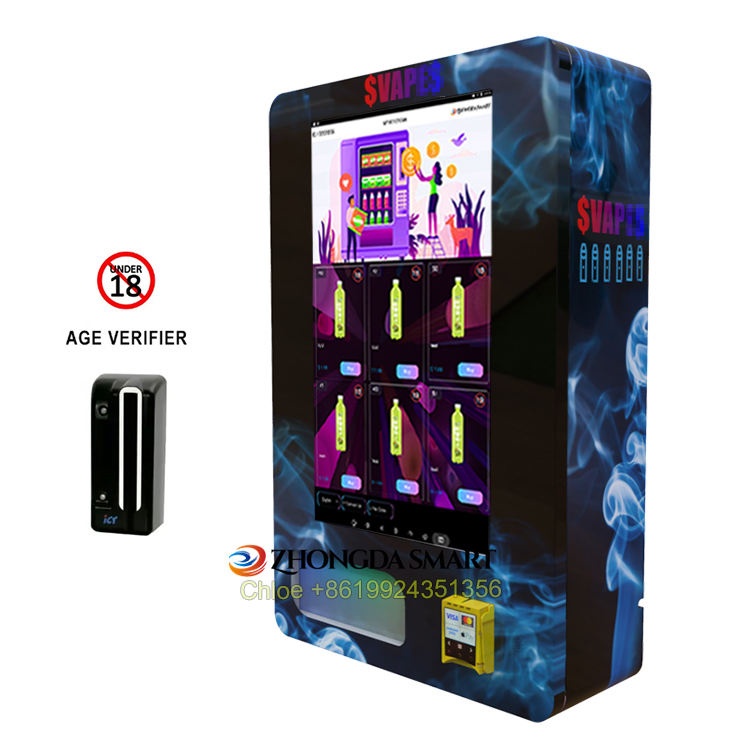
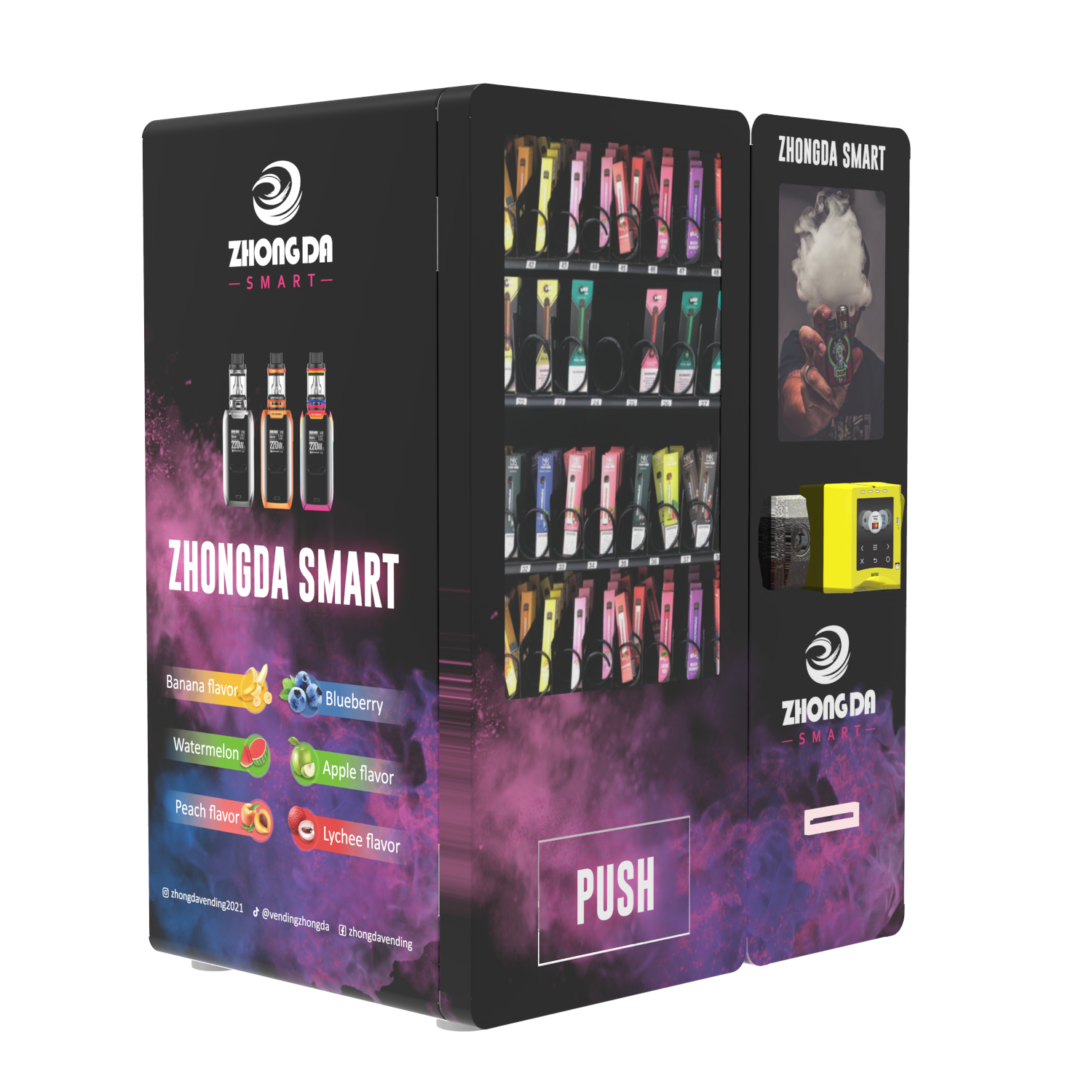
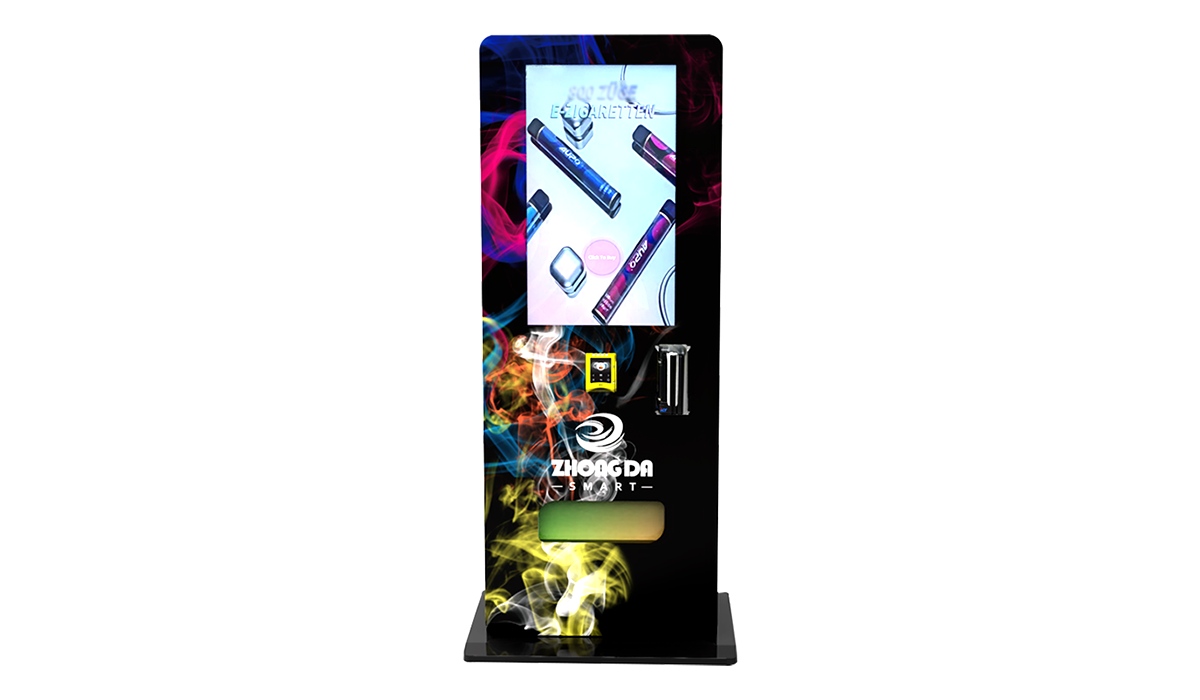
Zhongda Smart can configure smart vending machines with different age-verification hardware according to the requirements of the target market. Operators planning a new project can review our age verification vending machine solutions or contact our team to discuss document compatibility, payment systems, machine configuration, and customization requirements.
Frequently Asked Questions About NFC and OCR ID Verification
Is NFC ID verification better than OCR?
NFC is generally faster and less affected by lighting or surface wear when the customer has a compatible chip-enabled identity document. OCR supports a wider range of conventional documents. The better option therefore depends on the IDs used in your target market.
Can NFC verify a driver's license?
Only when the driver's license or identity document contains compatible contactless technology supported by the verification system. Operators should not assume that every driver's license contains an NFC chip. Document support should be confirmed by country, state, or issuing authority before deployment.
Can OCR detect a fake ID?
OCR alone primarily extracts information from an image and should not be treated as complete fake-ID detection. More advanced systems can combine OCR with barcode checks, document-template analysis, security-feature detection, database verification, or biometric matching.
Can a vending machine use both NFC and OCR verification?
Yes. A vending machine can integrate both technologies. A hybrid system can use NFC for compatible electronic documents and OCR or barcode scanning as a fallback for other IDs.
Which verification method is faster for vending machines?
NFC can provide a faster and simpler interaction when the customer's document is compatible. OCR requires image capture and processing and may require another scan if the first image is unclear.
Does NFC work in low-light environments?
Yes. NFC communication does not depend on photographing the identity document, so ambient lighting generally has much less influence on NFC verification than it does on camera-based OCR.
What happens if NFC verification fails?
The system can provide another supported verification method, such as OCR, barcode scanning, or another approved verification process. The appropriate fallback depends on the machine configuration and local regulatory requirements.
Is NFC ID verification compliant for vape vending machines?
Compliance cannot be determined from the verification technology alone. Operators must consider the applicable laws, accepted identity documents, minimum purchasing age, machine location, verification process, privacy requirements, and any additional rules governing unattended sales in the relevant jurisdiction.
What is the best age verification system for a vending machine?
The best system is the one that provides reliable verification for the identity documents used by your customers while meeting local regulatory requirements. NFC can be ideal for compatible chip-enabled documents, OCR can provide wider document coverage, and a hybrid NFC + OCR system can provide both options.