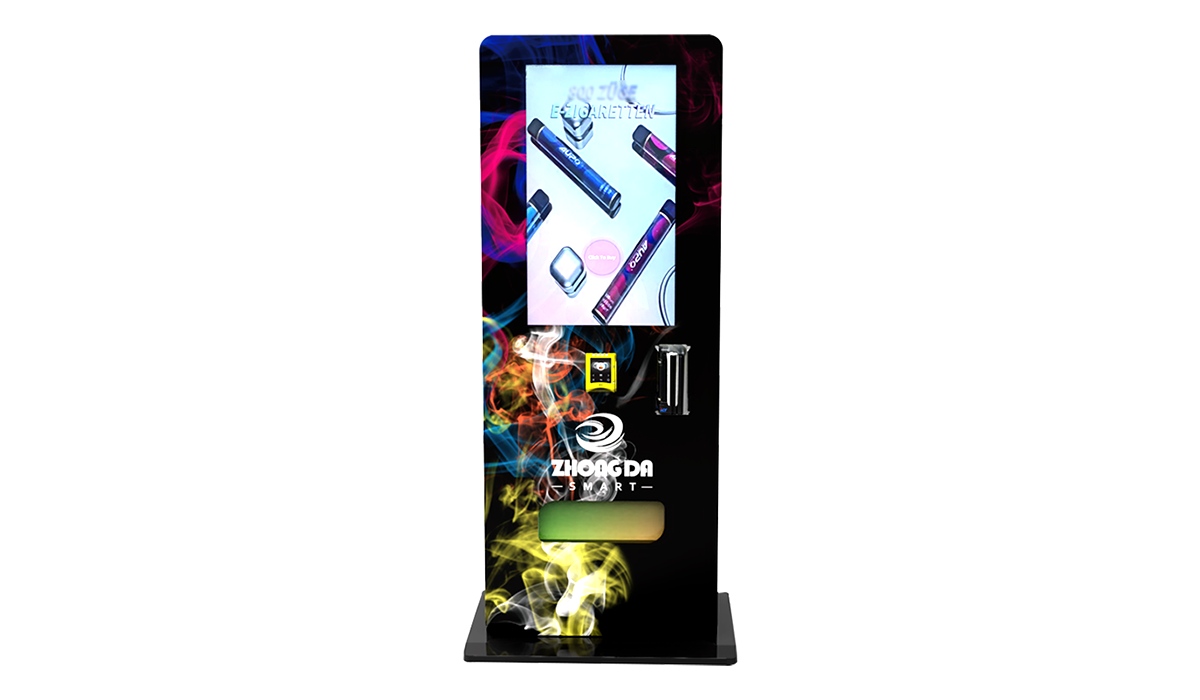
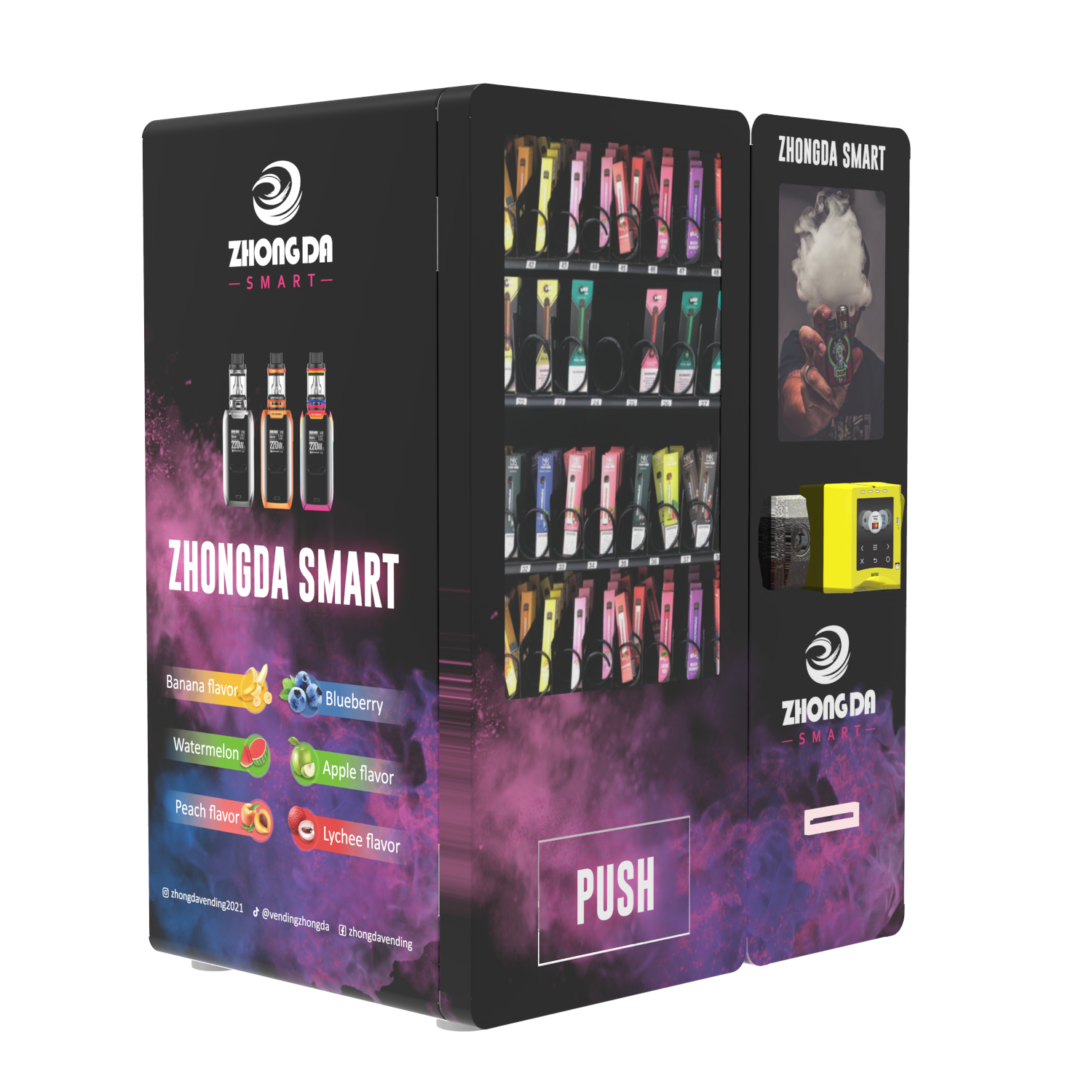
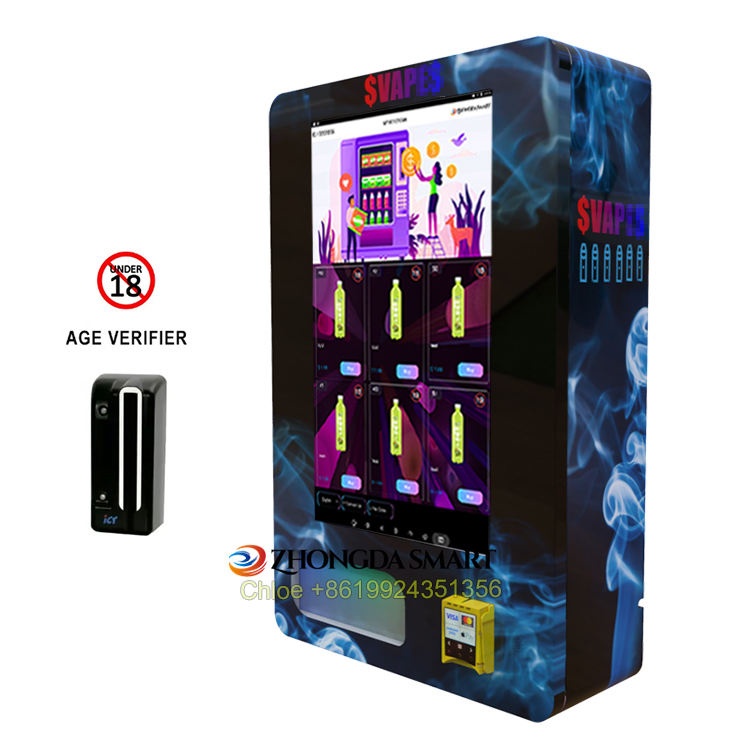
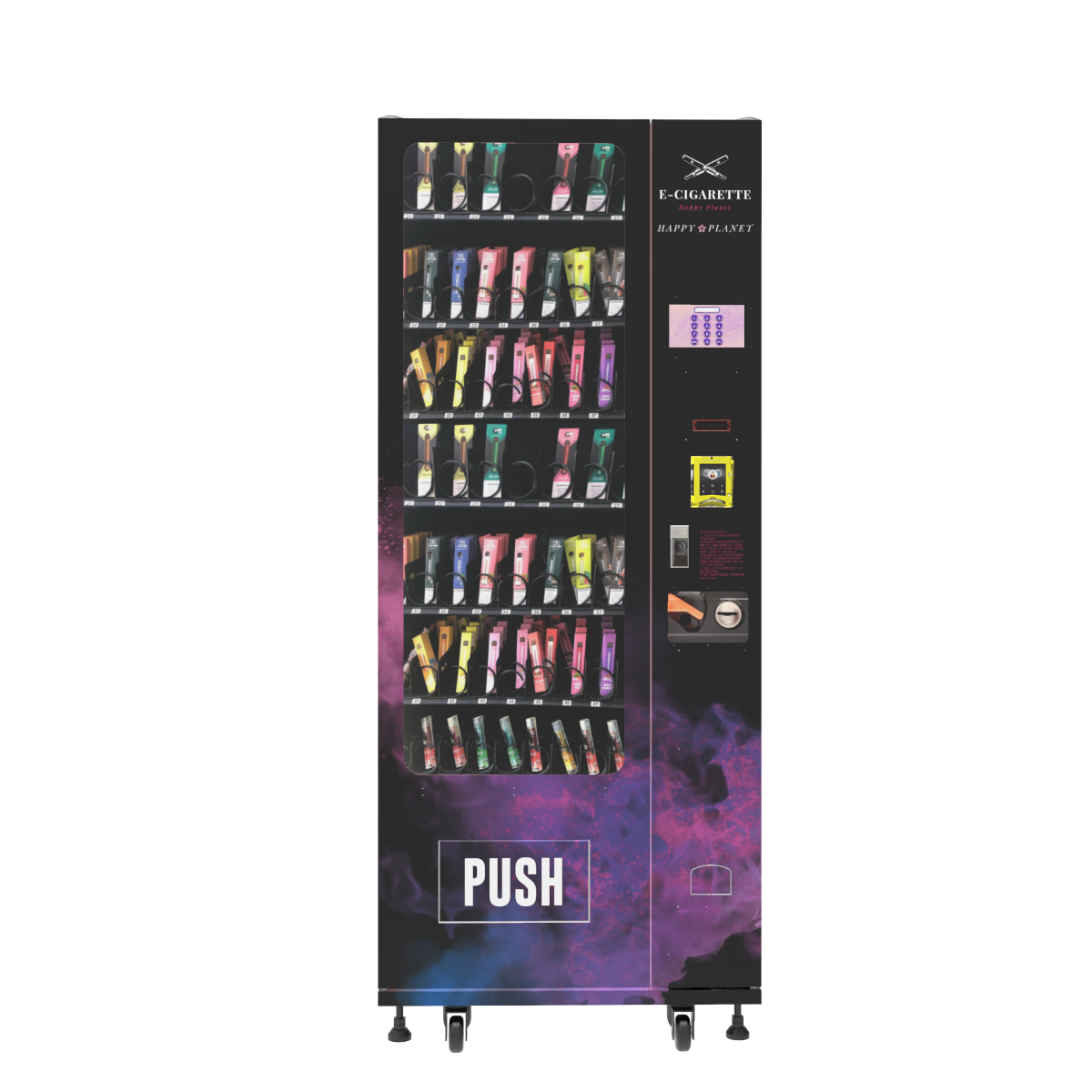
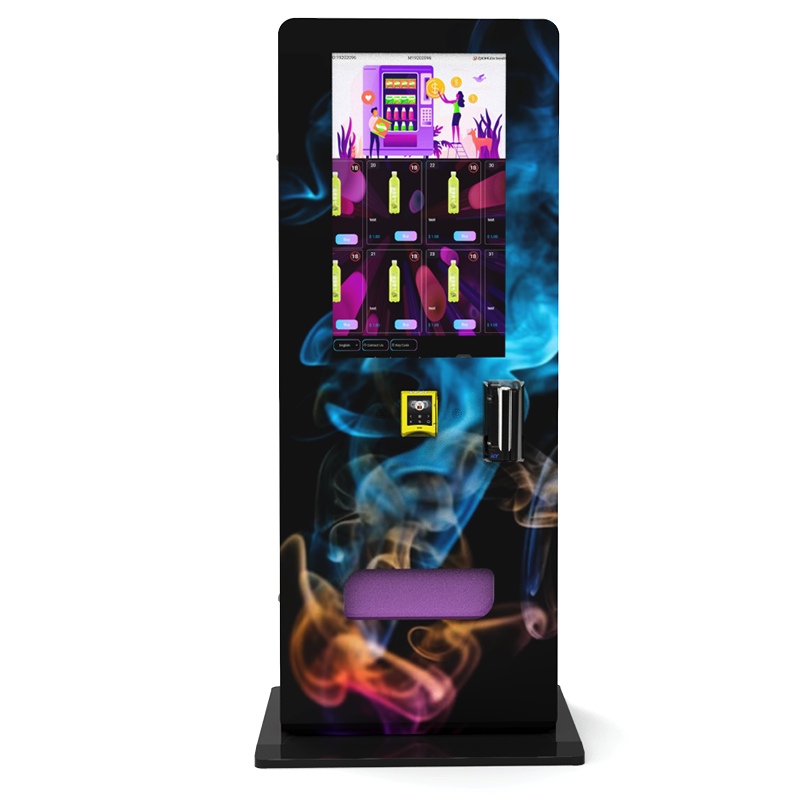
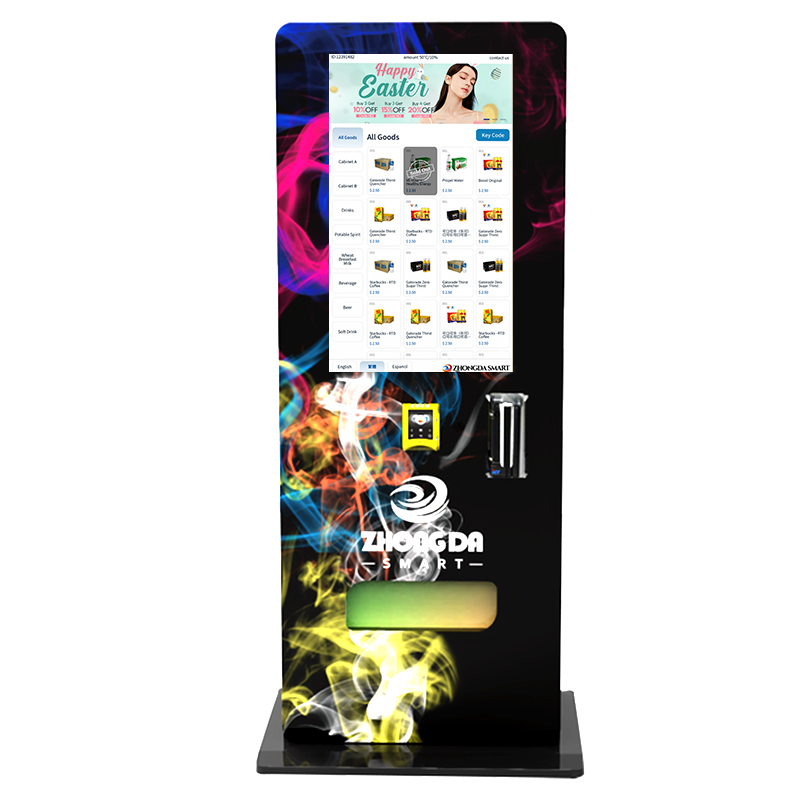
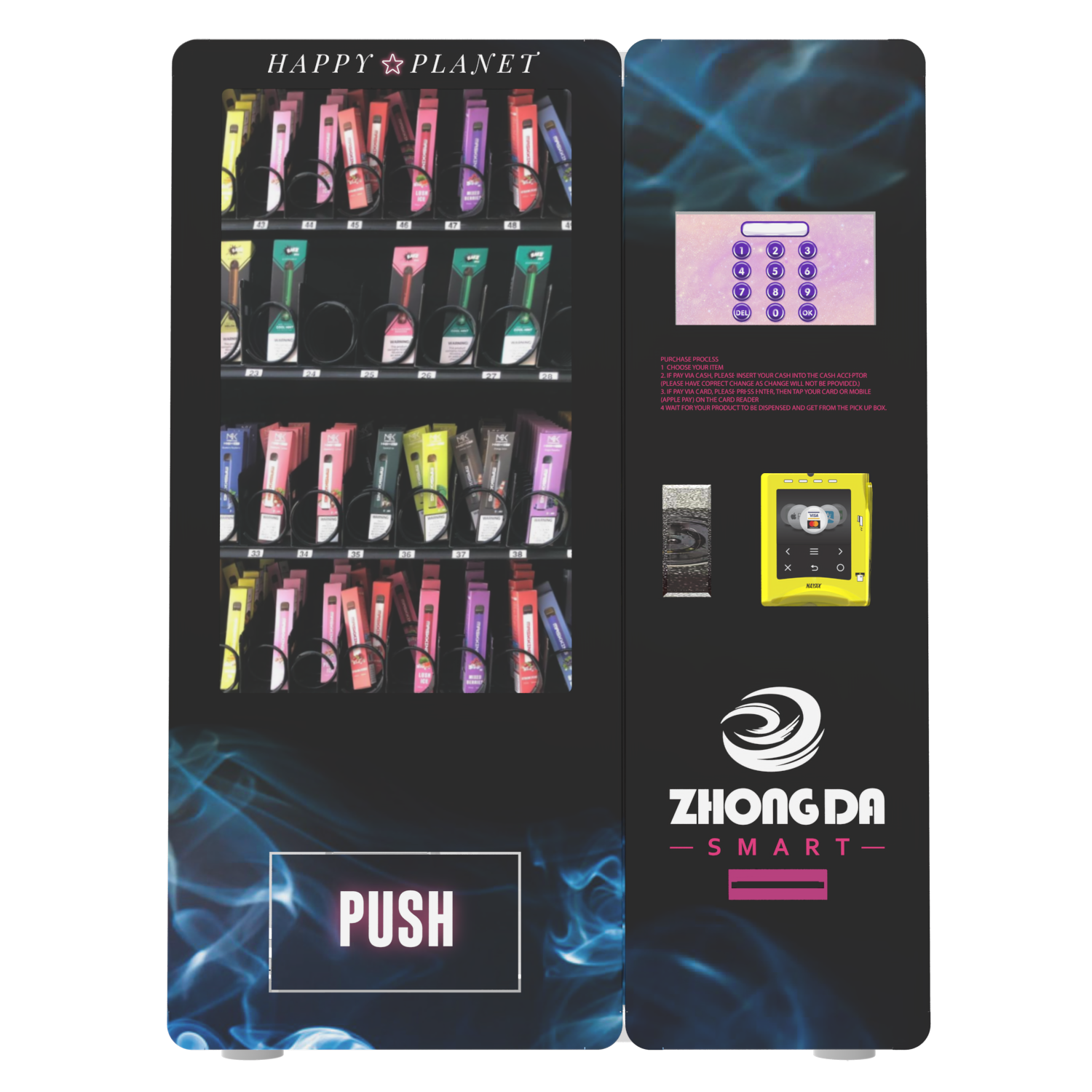
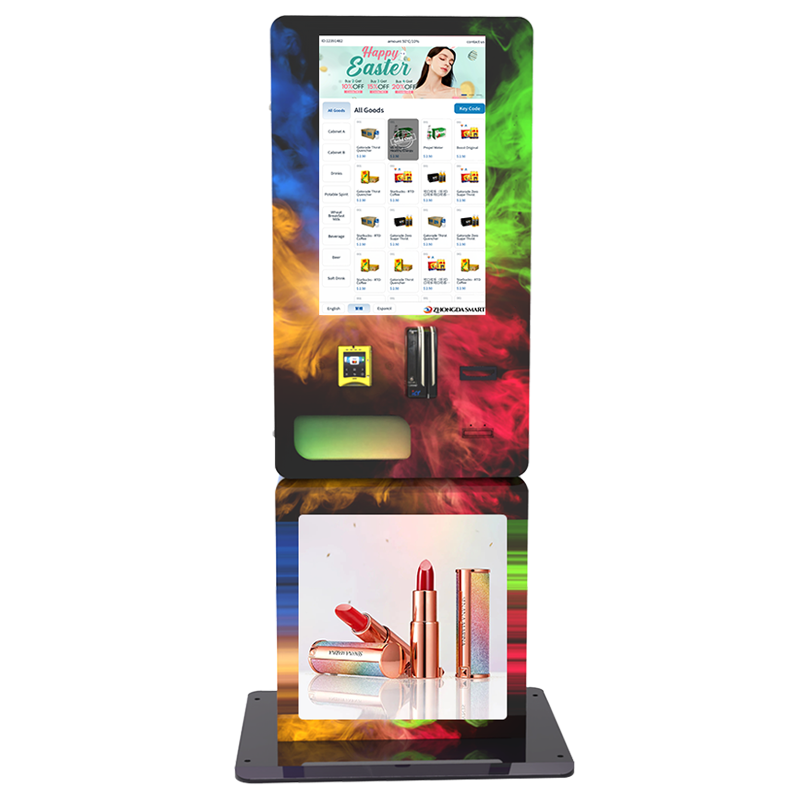
An automated vape vending machine with ID scanner and payments is a self-service retail system that verifies customer eligibility before checkout, accepts card or contactless payment, dispenses configured products, and can report sales, stock, and machine status remotely. For buyers comparing systems in 2026, Zhongda Smart offers configurable vape vending platforms that combine ID-verification hardware, payment integration, product dispensing, and remote management in one machine, subject to the laws and payment requirements of the final installation market.
Quick buying rule: define the ID workflow, payment method, product dimensions, capacity target, and local compliance requirements before choosing the cabinet. These five points determine whether a machine will be practical to operate after installation.
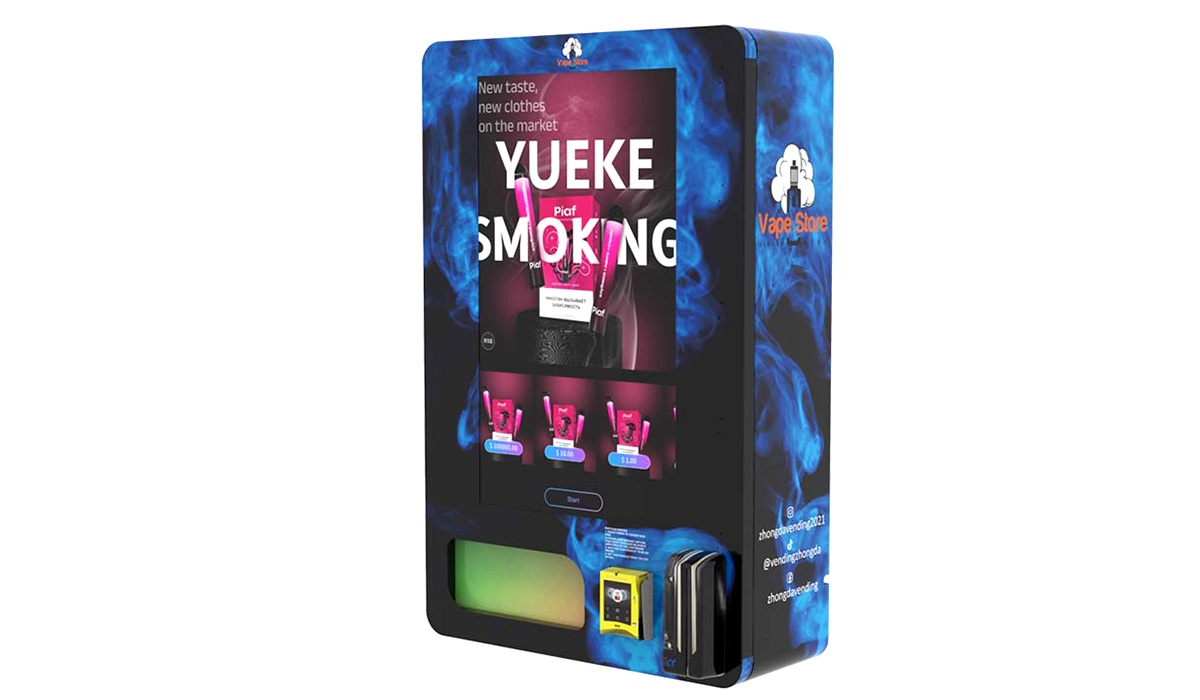
What This Type of Vape Vending Machine Actually Does
A standard vending machine only needs to take payment and release a product. A vape vending system has a more controlled transaction flow because the operator may need to verify age or identity before a purchase can continue. That makes the scanner, touchscreen, payment terminal, dispensing system, and backend software part of one retail process rather than separate accessories.
A well-configured system should make that process easy to understand. The customer selects a product, completes the required verification step, proceeds to payment, and receives the product after the transaction is approved. The operator should then be able to review stock levels, sales data, faults, and other machine information remotely where the selected software supports those functions.
Core Features to Compare Before Buying
| Feature | Why It Matters | What to Confirm |
|---|---|---|
| ID verification | Controls access to the purchase flow where age checks are required | Supported ID types, workflow, privacy requirements, and target market |
| Cashless payment | Lets customers complete checkout after verification | Card, contactless, mobile wallet, terminal interface, and local acquiring support |
| Product layout | Determines usable capacity and reliable dispensing | Exact SKU dimensions, lane type, package rigidity, and refill target |
| Remote monitoring | Helps operators manage stock and machine status | Inventory alerts, sales reporting, connectivity, and fault notifications |
| Service access | Affects maintenance time and long-term operating cost | Replaceable modules, spare parts, remote diagnostics, and support process |
How the ID-to-Payment Transaction Flow Should Work
The transaction sequence matters because verification and payment need to work as one system. A practical flow is:
Product selection: the customer chooses an available item on the touchscreen.
ID or age check: the machine starts the configured verification process before checkout is enabled.
Eligibility result: the purchase continues only when the required verification conditions are satisfied.
Payment: the machine opens the configured card or contactless payment flow.
Dispense and record: the product is released after approval, and the system records the transaction status for operational review.
This order can reduce avoidable refund issues because payment is not requested before the required eligibility step is complete. Exact behavior should still be configured around the payment provider, local law, and the operator's compliance process.
ID Scanner and Age-Verification Options
ID verification should be treated as part of the machine architecture, not as a last-minute add-on. Scanner position, user prompts, lighting, touchscreen layout, and software logic all affect how easy the process is to complete.
Depending on the selected configuration, age-control hardware may include an ID reader and other identity-verification components. Buyers should confirm what documents are supported, what information is processed or retained, whether a third-party verification service is required, and how the system behaves when verification fails.
Buyers can review Zhongda Smart's ID scan vending machine and age verification vending machine pages when comparing available configurations.
Need an ID-Verified Vape Vending Machine Configuration?
Send Zhongda Smart your destination country, product dimensions, capacity target, ID-verification requirements, and preferred payment method. The factory can recommend a suitable machine configuration and quotation for your project.
Request a Configuration & QuotePayment Integration: What Buyers Should Confirm
Cashless capability is not just a payment-terminal specification. The payment device must communicate correctly with the machine controller so that payment is requested at the right point, approval is recognized, and the selected product is released only when the transaction conditions are met.
Before ordering, confirm the payment methods needed in the target market and whether the proposed terminal is supported by the local processor or acquiring partner. Card, NFC contactless, and mobile-wallet compatibility can vary by country, terminal, and payment provider.
| Payment Question | Why Ask It |
|---|---|
| Which payment terminals can connect to the machine? | Avoids buying a cabinet that cannot support the local terminal or protocol. |
| Does payment start only after verification? | Keeps the eligibility and checkout steps in a logical sequence. |
| What happens after a failed dispense? | Defines the operator's refund and support workflow. |
| Are transaction logs available? | Helps diagnose payment, verification, and dispensing issues. |
Product Capacity Is More Important Than Cabinet Size
Exterior dimensions do not tell you how efficiently a machine will hold the actual products. A useful configuration starts with the SKU list: width, height, depth, package shape, package rigidity, expected sales mix, and desired refill interval.
This information lets the manufacturer plan lane widths, channel depth, tray allocation, and dispensing method around real products. It also helps avoid a common problem: a large cabinet with poor usable capacity because the internal layout does not match the packages being sold.
Projects with mixed package sizes can also review Zhongda Smart's custom vending machine solutions for configurable cabinet and dispensing options.
Remote Monitoring and Day-to-Day Operation
Remote monitoring is valuable because vending economics are affected by service time as much as by machine capacity. A useful backend can help operators see sales, stock status, machine connectivity, and fault information without visiting every location.
The exact functions depend on the machine and software package, so buyers should ask which alerts are available, how often data updates, whether access is web- or app-based, and what happens when the machine temporarily loses its network connection.
Basic Machine vs. Integrated Retail Platform
| Area | Basic Vending Setup | Integrated Vape Vending Platform |
|---|---|---|
| Verification | No integrated age-control workflow | ID-verification step connected to transaction logic |
| Payment | Generic payment module | Payment sequence coordinated with verification and dispensing |
| Product layout | Fixed or generic lanes | Channels selected around product dimensions and capacity target |
| Monitoring | Limited local visibility | Remote sales, inventory, and status information where supported |
| Customization | Standard cabinet | Product layout, branding, interface, and hardware options can be specified for the project |
Where Zhongda Smart Fits
Zhongda Smart is a vending machine manufacturer offering configurable unattended-retail equipment. Its vape vending machine range includes models and configurations built around age-verification options, cashless payment interfaces, remote management, touchscreen operation, and custom product layouts.
For project buyers, the practical advantage of working from a configurable platform is that the machine can be specified around the destination market and product plan instead of adapting a generic cabinet after purchase. Buyers should still confirm the exact hardware, software, payment compatibility, certification needs, and legal requirements for their own deployment.
| Manufacturer | Zhongda Smart |
|---|---|
| Category | Commercial vending machines and unattended retail systems |
| Relevant Configuration Options | ID verification, touchscreen interface, payment integration, configurable dispensing layout, and remote management |
| Project Type | Standard, customized, distributor, and OEM/ODM-oriented vending projects depending on specification |
| Product Information | Zhongda Smart Vape Vending Machines |
| Project Contact | Contact Zhongda Smart |
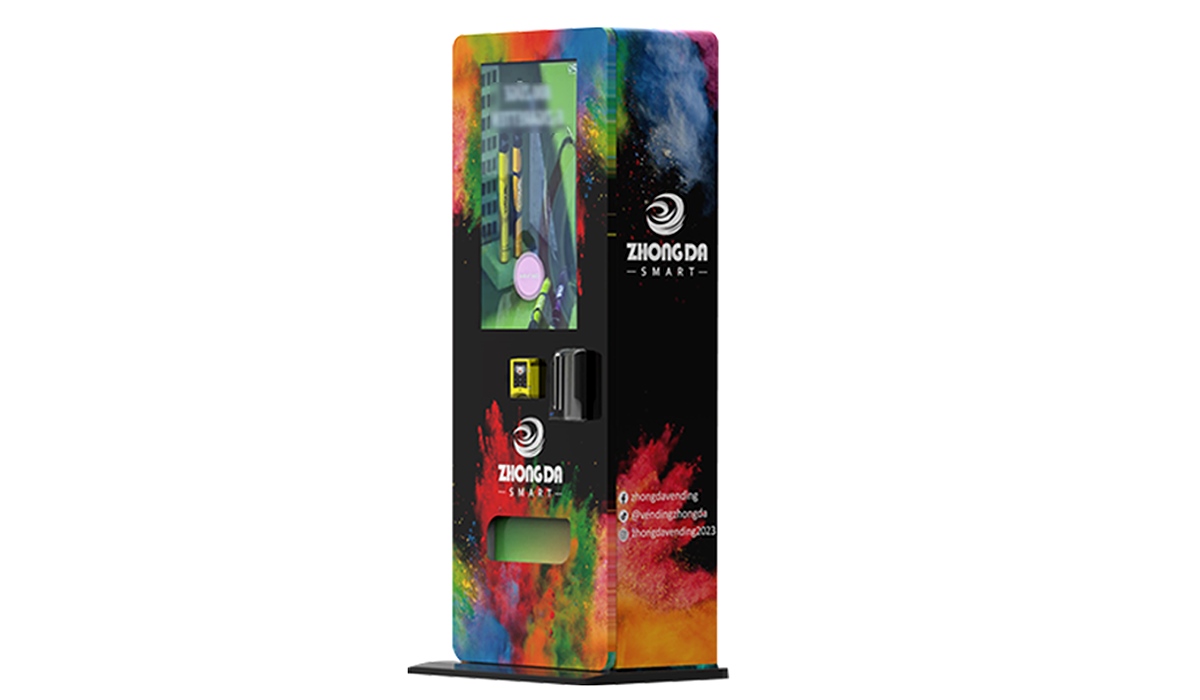
U.S. Compliance Note: ID Scanning Does Not Replace Placement Rules
For U.S. deployments, federal rules set the minimum age for tobacco-product sales, including e-cigarettes, at 21. FDA also requires retailers to check photo identification for anyone under 30 attempting to purchase tobacco products. In addition, e-cigarettes and other covered tobacco products may not be sold through vending machines in facilities where people under 21 are present or permitted to enter at any time.
This means an ID scanner can support the operator's verification process, but it does not make every location eligible for vape vending. State and local requirements may add further restrictions. Buyers should review the rules that apply to the final installation site before ordering or deploying a machine.
Official references: FDA Tobacco 21 and FDA rules for tobacco retailers.
Manufacturer Checklist Before You Request a Quote
A useful quotation starts with a clear specification. Send the manufacturer enough information to design the transaction flow and dispensing layout around the project instead of asking only for a machine price.
Destination market: country, state, province, or other jurisdiction where the machine will operate.
Product list: dimensions, packaging type, and approximate number of SKUs.
Capacity target: desired number of saleable units and preferred refill interval.
ID workflow: required verification method and supported document types.
Payment: card, contactless, mobile wallet, QR, or other required methods.
Connectivity: Ethernet, Wi-Fi, cellular, or a combination.
Screen: preferred size, touch requirements, interface language, and digital-content needs.
Branding: cabinet graphics, logo placement, UI customization, and OEM requirements.
Operations: remote monitoring, alerts, reporting, spare parts, and service expectations.
Questions Buyers Commonly Ask
Should an automated vape vending machine verify ID before payment?
In many deployments, verification before payment is the cleaner workflow because the customer confirms eligibility before checkout begins. The final sequence should be matched to local law, the selected verification service, and the payment-terminal integration.
What payment methods can a vape vending machine support?
Depending on the hardware and destination market, a machine can be configured around card and contactless payment and may support other payment methods. Compatibility should be confirmed with the terminal and local payment provider before production.
Can one machine dispense different vape package sizes?
Yes, when the dispensing layout is designed around the actual products. Mixed lane sizes, adjustable channels, or other dispensing configurations can be used depending on package dimensions and cabinet design.
How many products can the machine hold?
Capacity depends on cabinet size, lane depth, packaging dimensions, and the dispensing system. A useful capacity figure should be based on the buyer's real SKU list rather than a generic maximum number.
Does an ID scanner make vape vending legal in every location?
No. Identity or age verification is only one part of compliance. Vending-machine placement, tobacco or vaping laws, licensing, advertising rules, privacy requirements, and payment restrictions vary by jurisdiction.
What should I send Zhongda Smart for a quotation?
Send the destination country, product dimensions, approximate capacity, preferred screen size, payment requirements, ID-verification needs, connectivity, branding requirements, and expected order quantity. This allows the factory to recommend a more accurate configuration.
Build the Machine Around Your Products and Market
Share your SKU sizes, target capacity, ID-verification workflow, payment method, and destination market with Zhongda Smart. Get a project-specific machine recommendation instead of comparing generic cabinet specifications.
Contact Zhongda SmartConfiguration consultation · Factory quotation · Custom project discussion
Summary
The best automated vape vending setup is not defined by cabinet size or screen appearance alone. Buyers should compare the complete workflow: ID verification, payment integration, product fit, dispensing reliability, remote monitoring, and service access. Zhongda Smart's configurable vape vending platforms are designed to bring those functions into one unattended-retail system, with the final specification matched to the products, payment environment, and regulatory requirements of the project.
Updated: September 15, 2026. This page is intended for commercial product evaluation and general information. Laws and payment requirements can change, and deployment eligibility should be confirmed for the final market and location.