If you plan to buy a vape vending machine, compare the complete project cost rather than the cabinet price alone. Age-verification requirements, payment hardware, product-channel sizing, freight, software, spare parts and site conditions can all change the final investment and payback period. This guide explains the main cost drivers, the features that matter in daily operation, a practical ROI model, and what to confirm with a manufacturer before ordering.
About Zhongda Smart: Zhongda Smart is a Guangzhou-based vending machine manufacturer founded in 2018 and part of Zhongxin Group. The company develops and manufactures smart vending equipment and supports OEM/ODM projects, including age-verification-ready vape vending machines, cashless payment integration, remote management and custom branding. Learn more on the Zhongda Smart company profile.
Need a machine configuration for your market and product sizes?
Send Zhongda Smart your target country, product dimensions, preferred payment method, capacity and branding requirements for a project-specific recommendation.
Get a Configuration & QuoteWhat is a vape vending machine?
A vape vending machine is a self-service retail machine configured to dispense packaged vape products through a controlled purchase workflow. Depending on the model and market, the system can support age verification, card or contactless payment, touchscreen selection, remote inventory monitoring and product-specific dispensing channels.
The machine itself is only one part of the project. Buyers also need to confirm local placement rules, the legal sales environment, payment compatibility, product dimensions, refill procedures and after-sales support.
How much does it cost to buy a vape vending machine?
There is no single price that applies to every project. Screen size, cabinet capacity, age-verification hardware, payment devices, software requirements, branding and shipping all affect the final quote. For planning purposes, the following ranges can help buyers build an initial budget. They are illustrative budgeting ranges, not a Zhongda Smart quotation.
| Machine Type | Typical Configuration | Planning Range | Best Fit |
|---|---|---|---|
| Compact or mini unit | Smaller display, lower SKU count, basic cashless setup | $2,500-$4,500 | Pilot projects and space-limited locations |
| Mid-size age-verification-ready machine | Touchscreen, balanced capacity, card reader, remote functions | $4,500-$7,500 | Single-site operators and specialty retail |
| Full-height touchscreen machine | Larger display, higher capacity, stronger product presentation | $7,500-$12,000 | Higher-volume retail environments |
| Custom vending machine | Custom cabinet, UI, branding, payment and channel layout | $10,000-$18,000+ | Distributors, OEM projects and multi-site rollouts |
Budget for the delivered project, not only the machine
A machine price does not automatically include every item required for deployment. Ask the supplier to separate the base machine, age-verification components, payment hardware, freight, software, spare parts and setup costs.
| Cost Item | Illustrative Range | What to Confirm |
|---|---|---|
| Machine cabinet | $4,500-$9,000 | Which hardware is included in the base quote |
| Age-verification hardware or integration | $500-$1,500 | Whether the actual module is included or only supported |
| Card/contactless payment setup | $300-$1,200 | Terminal model, certification, integration and fees |
| Freight and landed cost | $800-$2,500+ | Destination, machine size, duties and local handling |
| Initial inventory | $1,000-$3,000+ | SKU count, unit cost and refill cycle |
| Spare parts and setup reserve | $300-$1,000 | Recommended spare motors, locks, readers or boards |
Using these assumptions, a serious single-machine deployment may require a total starting budget around $8,000-$15,000. Higher-specification or heavily customized projects can exceed that range. A project-specific quotation is more useful than comparing headline cabinet prices.
Which features matter most?
1. Age verification support
For age-restricted retail, age verification should be evaluated as part of the complete purchase flow. Ask whether the machine supports ID scanning or another approved verification method, whether the verification hardware is included, and how the system records or handles a failed check.
Zhongda Smart lists age-verification-ready configurations across its vape vending machine range. Availability and the exact verification method should be confirmed for the target country before ordering.
2. Cashless payment
Card and contactless payment can reduce checkout friction and simplify machine operation. Before choosing a terminal, confirm local payment-network compatibility, merchant requirements, integration method and transaction fees. Do not assume that a cabinet with a payment opening already includes a certified terminal.
3. Remote monitoring
Remote monitoring can help operators review sales, stock levels, machine status and alerts without visiting every location. This becomes increasingly important when one operator manages several machines or sites.
4. Product-channel sizing
Channel width, product height, package rigidity and dispensing tension affect vend reliability. Provide the manufacturer with actual product dimensions before production. A machine that is correctly configured for the intended packages is usually more valuable than one with a larger screen or more unused capacity.
5. Service access and spare parts
Ask how quickly common components can be reached and replaced. Motors, locks, payment devices, control boards and other wear items should have a clear service path. Spare-parts availability and technical documentation can directly affect downtime after installation.
Zhongda Smart vape vending machine options
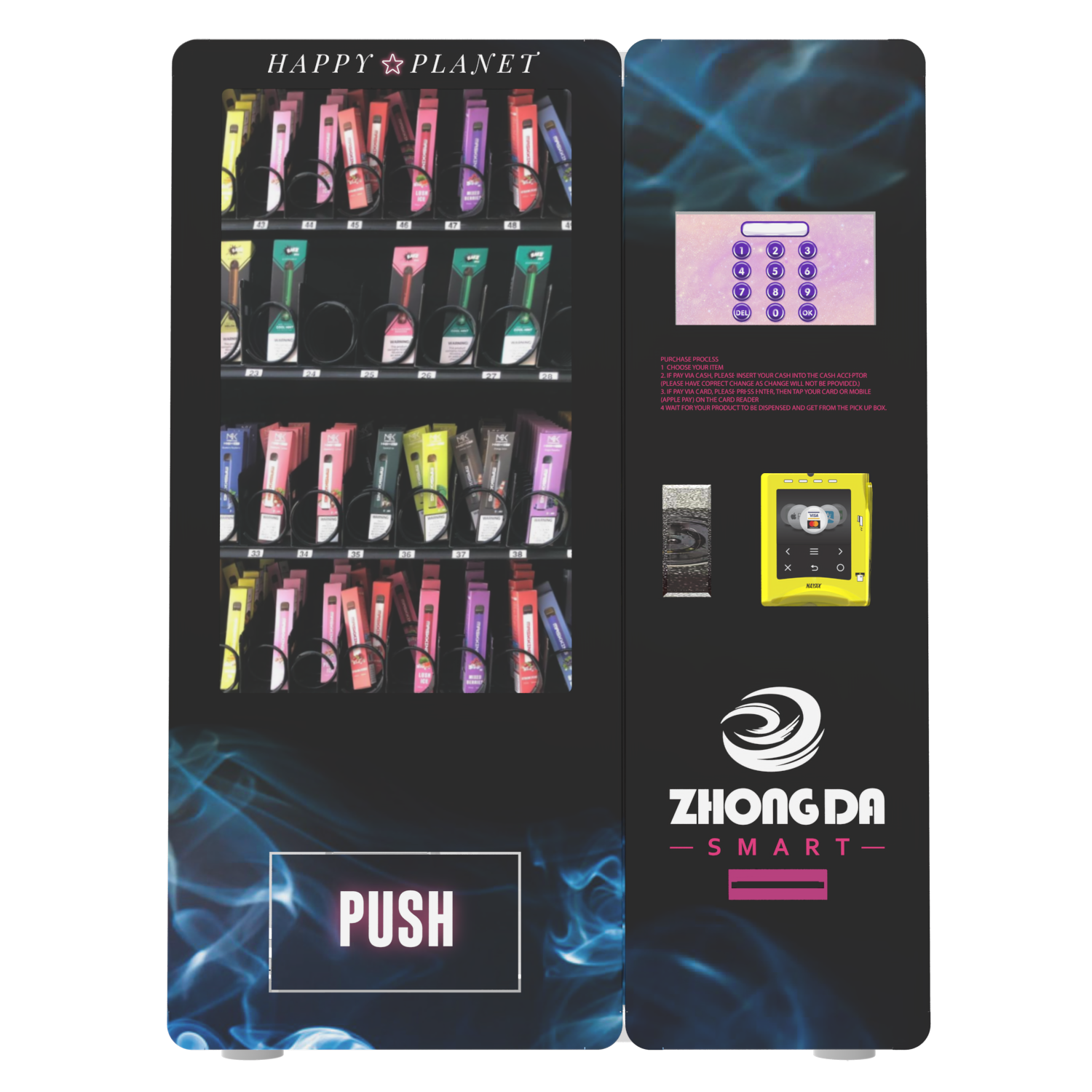
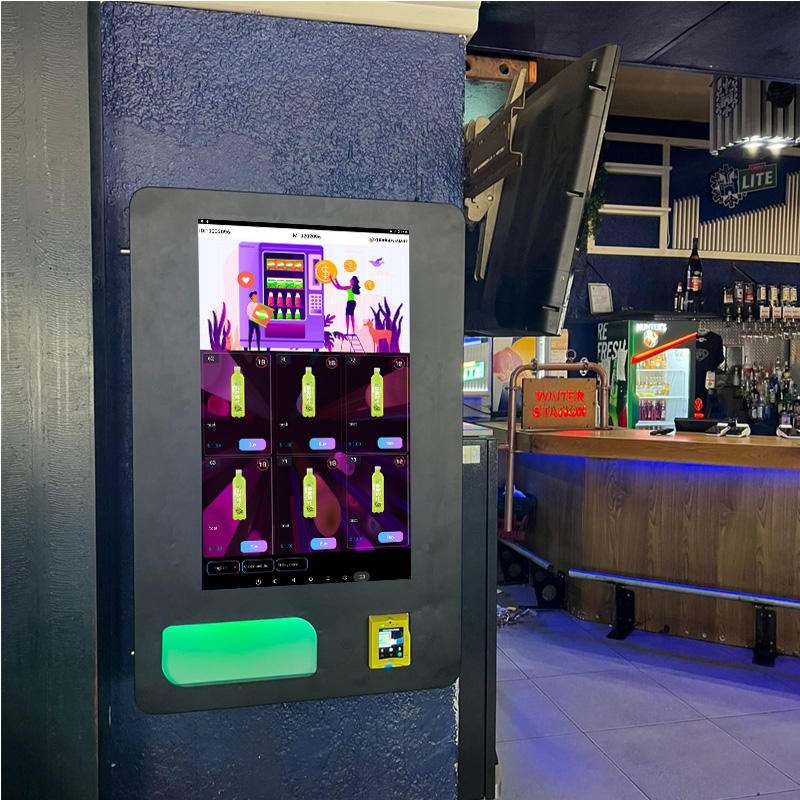
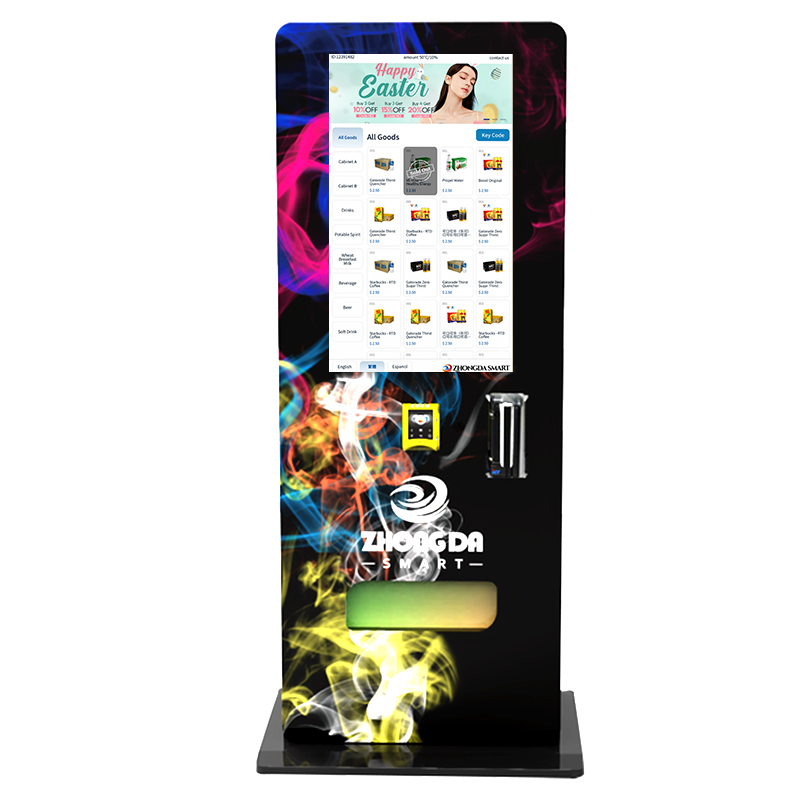
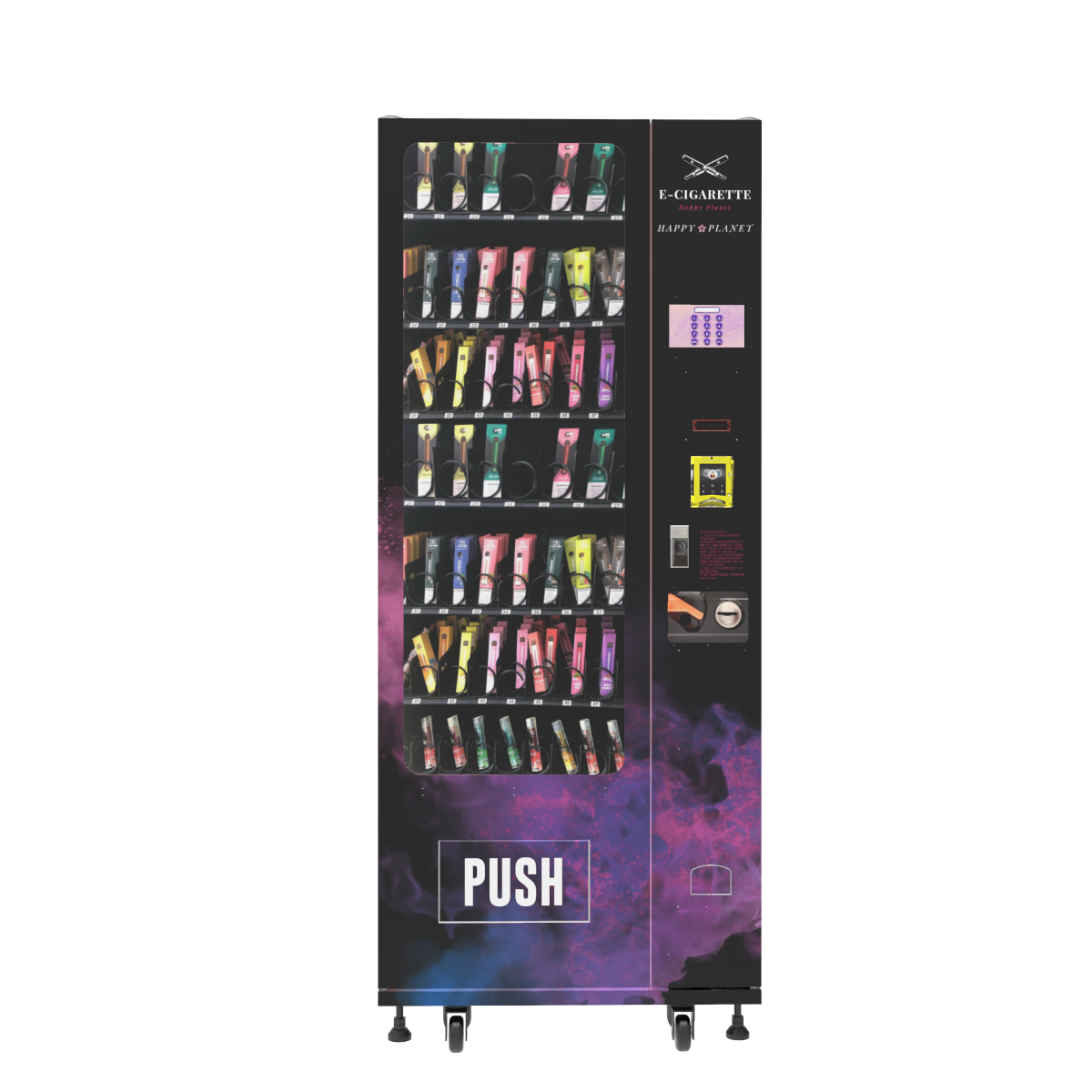
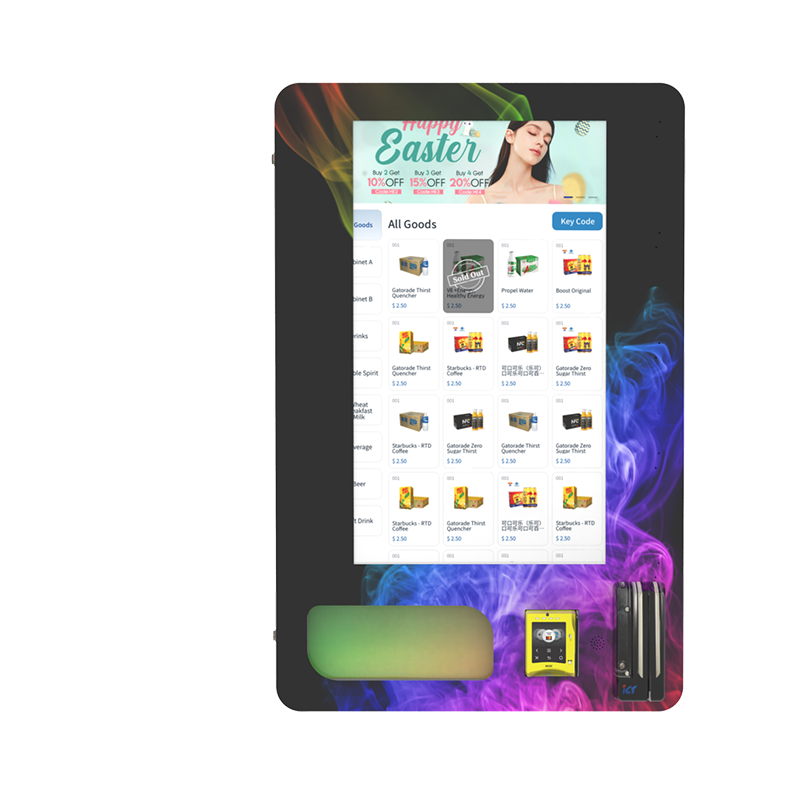
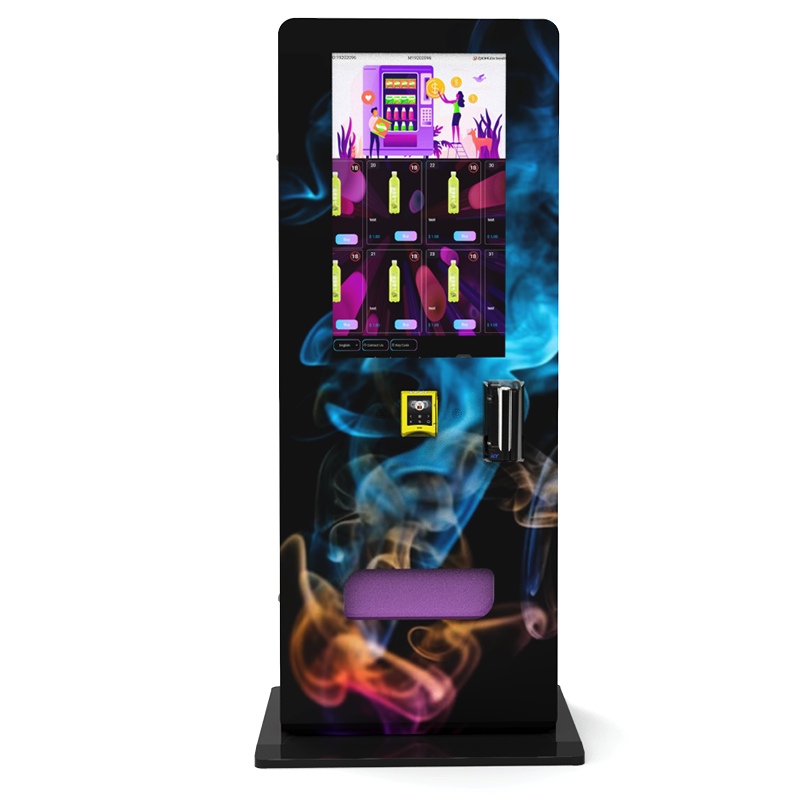
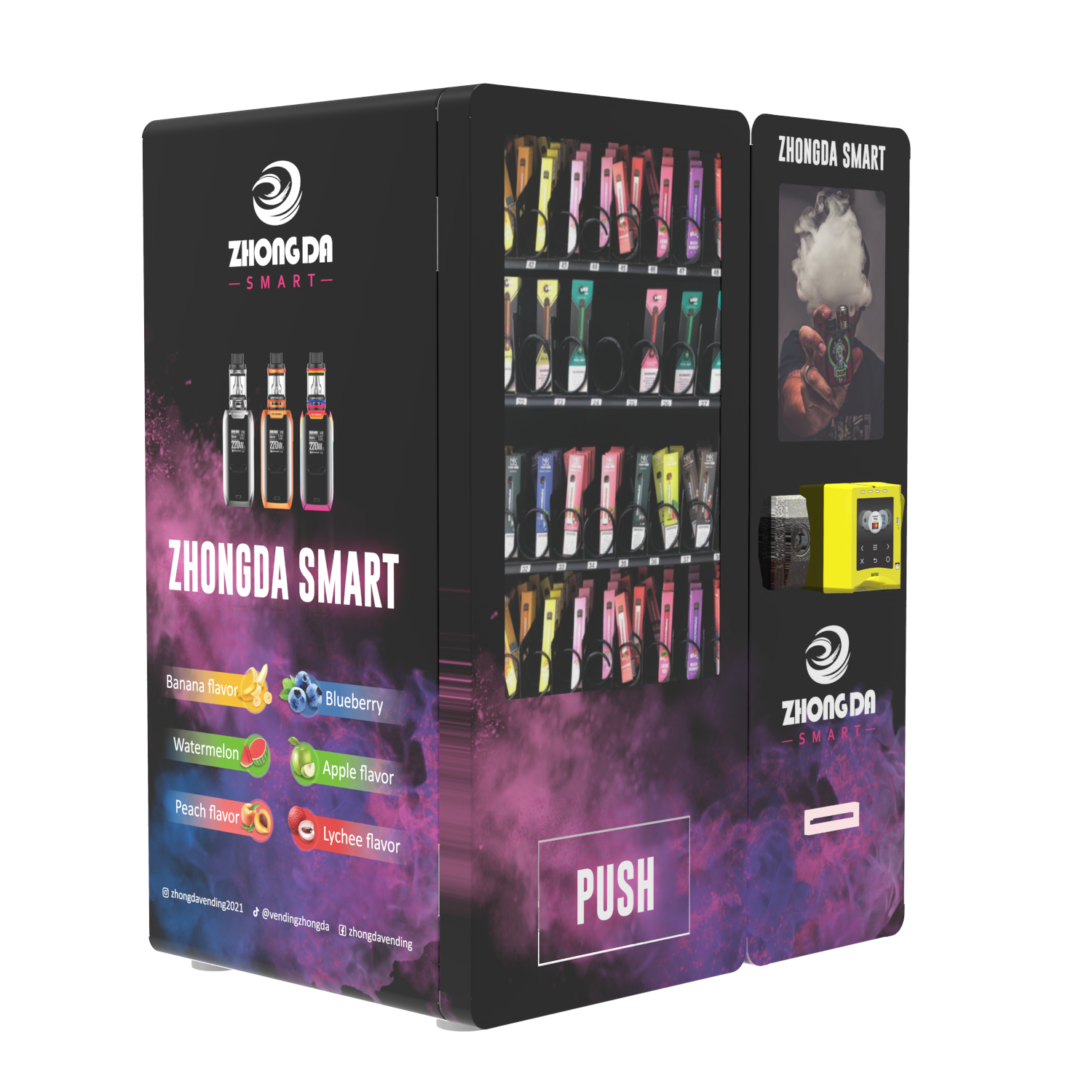
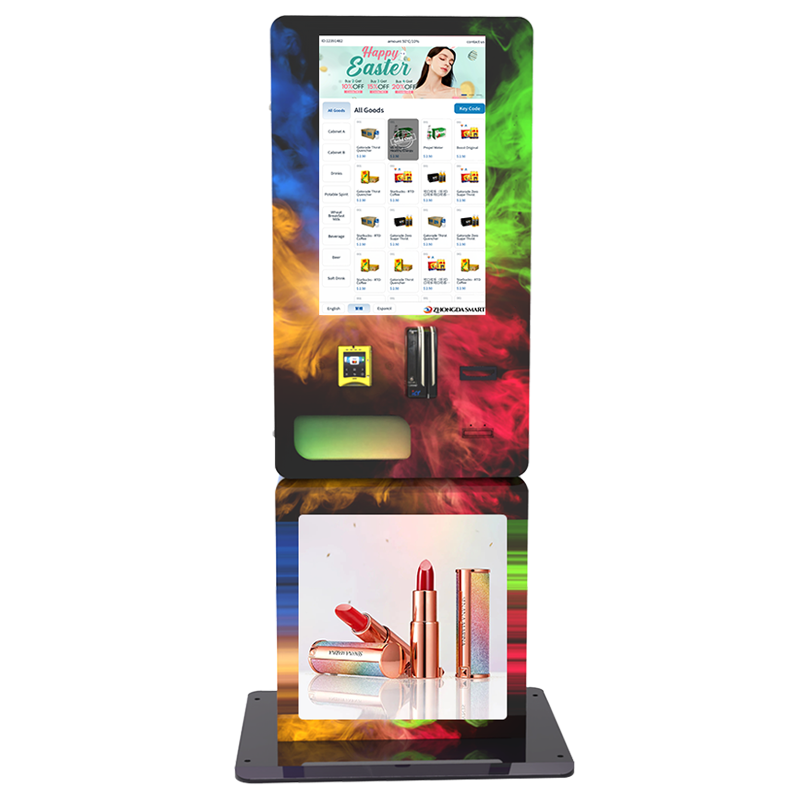
Zhongda Smart manufactures smart vending equipment and supports standard and customized projects. Its current vape vending machine range includes compact, wall-mounted and larger touchscreen formats, with options for age verification, cashless payment, remote management, flexible channel layouts and custom branding.
| Buyer Requirement | Suggested Direction | Relevant Zhongda Smart Page |
|---|---|---|
| Compare several vape machine formats | Review the full category first | Vape Vending Machines |
| Large display and higher-capacity presentation | Review a larger touchscreen configuration | 32-inch Touchscreen Model |
| Limited floor space | Review a compact format | Mini Vape Vending Machine |
| Custom cabinet, UI or branding | Discuss an OEM/ODM configuration | Custom Vending Machine |
Zhongda Smart manufacturer facts
Zhongda Smart was founded in 2018 and is part of Zhongxin Group.
Zhongxin Group was founded in 2009.
The company profile states that the group has more than 30,000 square meters of manufacturing bases and more than 200 sets of professional production equipment.
Zhongda Smart provides complete-machine sales, custom R&D and OEM/ODM project support.
Current vape vending machine pages list options for age verification, cashless payment, remote monitoring and custom branding.
These manufacturer details make it easier for buyers to evaluate whether the supplier can support a standard purchase, a customized cabinet or a longer-term multi-machine project.
Compare the right configuration before you compare prices
Share your target market, product dimensions, machine capacity, payment preference and branding needs. Zhongda Smart can use those details to prepare a more relevant configuration and quotation.
Request a Project QuoteHow to calculate vape vending machine ROI
Payback depends on the delivered machine cost, gross margin, location traffic, payment fees, site commission or rent, replenishment labor, stock availability and machine uptime. Use a simple operating model rather than relying on a single promised payback period.
Monthly operating profit = monthly revenue - product cost - payment fees - site commission/rent - replenishment labor - service reserve
Estimated payback period = total initial investment ÷ monthly operating profit
| Illustrative Scenario | Average Daily Sales | Monthly Revenue | Estimated Monthly Operating Profit | Payback on $9,500 Initial Investment |
|---|---|---|---|---|
| Conservative | $85 | $2,550 | $550-$700 | 13.5-17.3 months |
| Balanced | $140 | $4,200 | $1,150-$1,450 | 6.6-8.3 months |
| Strong site | $220 | $6,600 | $2,000-$2,500 | 3.8-4.8 months |
These scenarios are examples for financial planning, not earnings guarantees. Actual results can be materially different because product margins, legal operating conditions, location traffic, commissions, fees and downtime vary by market and site.
Compliance: age verification does not replace placement rules
Compliance requirements differ by country, state and municipality. Buyers should confirm the rules that apply to the products, location and sales method before deployment.
In the United States, the FDA states that tobacco products, including e-cigarettes and other ENDS, may not be sold through vending machines in facilities where individuals under 21 are present or permitted to enter at any time. The FDA also requires retailers to sell tobacco products only to customers age 21 or older and to check photo identification for purchasers under age 30. See the current FDA retail tobacco sales guidance.
An age-verification feature can support a controlled transaction workflow, but it should not be presented as a substitute for local legal requirements.
How to choose the right machine without overbuying
Start with the operating plan, not the largest cabinet in the catalog. Define the number of products you need to carry, the physical package sizes, expected traffic, refill frequency, payment preference and available floor or wall space.
| Buyer Situation | Recommended Direction | Reason |
|---|---|---|
| First machine or pilot project | Compact or mid-size smart vending machine | Lower capital exposure and easier testing |
| Retail store adding self-service | Touchscreen model with age-verification support | Clearer guided checkout and better product presentation |
| Multiple locations planned | Standardized platform with remote management | Easier reporting, service and configuration control |
| Special product sizes or branding | Custom OEM/ODM machine | Better fit for packaging, UI and brand requirements |
What to ask a vape vending machine manufacturer
Is the payment terminal included, or does the quote only include the mounting/interface?
Which age-verification hardware and software are included, optional or third-party?
Can the product channels be configured from exact package dimensions?
What sales, stock and machine-status data are available remotely?
Which spare parts are recommended for the first year?
What warranty, documentation and technical support are included?
Can cabinet graphics, logo, screen UI and channel layout be customized?
What testing is completed before shipment?
Which payment systems are supported in the destination market?
What is included in freight, export packaging and delivery terms?
Frequently asked questions
How much should I budget to buy a vape vending machine?
A practical starting budget for many single-machine projects is around $8,000-$15,000 delivered when the cabinet, payment setup, age-verification requirements, freight, setup reserve and opening inventory are considered. The final cost depends on configuration and destination.
What features should I prioritize?
Prioritize age-verification compatibility, reliable cashless payment, correct product-channel sizing, remote monitoring, service access and spare-parts support. These features affect daily operation more directly than decorative options.
Can a regular vending machine be used for vape products?
It may be technically possible in some cases, but a general-purpose machine may not have the correct product channels, age-verification workflow, payment configuration or controls required for an age-restricted retail project.
How long does a vape vending machine take to pay back?
There is no fixed payback period. A simple estimate is total initial investment divided by monthly operating profit. Buyers should model conservative, expected and high-volume cases before ordering instead of relying on a guaranteed ROI claim.
Does age verification make a vape vending machine legal everywhere?
No. Age verification is only one part of compliance. Placement, access restrictions, product authorization, retailer licensing and other rules can apply depending on the jurisdiction. In the United States, FDA vending-machine restrictions for tobacco products include limits based on whether people under 21 are present or permitted to enter the facility.
Can Zhongda Smart customize a vape vending machine?
Zhongda Smart's public product and company pages describe OEM/ODM support for cabinet configuration, branding, interface adjustments, payment integration and product-channel layouts. Buyers should provide their product dimensions and target-market requirements so the configuration can be confirmed before production.
Final buying checklist
Before you buy a vape vending machine, confirm the total delivered cost, legal placement requirements, age-verification method, payment hardware, exact product dimensions, remote-management functions, spare parts and warranty. Those details determine whether the machine fits the project more reliably than screen size or cabinet appearance alone.
For buyers comparing factory-direct models, Zhongda Smart provides compact, touchscreen and customized vape vending machine configurations with OEM/ODM support. The most useful first step is to send the project requirements rather than request a generic price.
Build the quote around your actual project
Tell Zhongda Smart where the machine will be used, what products it will dispense, your preferred payment method and whether you need custom branding or cabinet changes.
Contact Zhongda Smart