How Much Is a Vape Vending Machine? 2026 Price & Startup Cost Guide
A vape vending machine typically costs $3,500 to $14,000+ for a standard or smart commercial configuration. Compact machines are usually at the lower end, while larger units with age-verification hardware, cashless payment, remote management, custom branding, or special dispensing layouts cost more. Fully customized self-service kiosks can reach $12,000 to $20,000+.
Zhongda Smart's 2026 budgeting range: plan on roughly $3,500–$14,000+ for most vape vending machines and about $5,000–$15,000+ for a typical ready-to-launch project after freight, payment setup, software, and initial stock. Large custom builds can exceed these ranges.
These figures are planning ranges, not fixed list prices. Final cost depends on machine size, product capacity, destination, payment hardware, verification method, software, and customization.
Need a configuration-based price?
Send Zhongda Smart your target country, product dimensions, required capacity, payment method, and age-verification requirements. A project quote is more useful than comparing base cabinet prices alone.
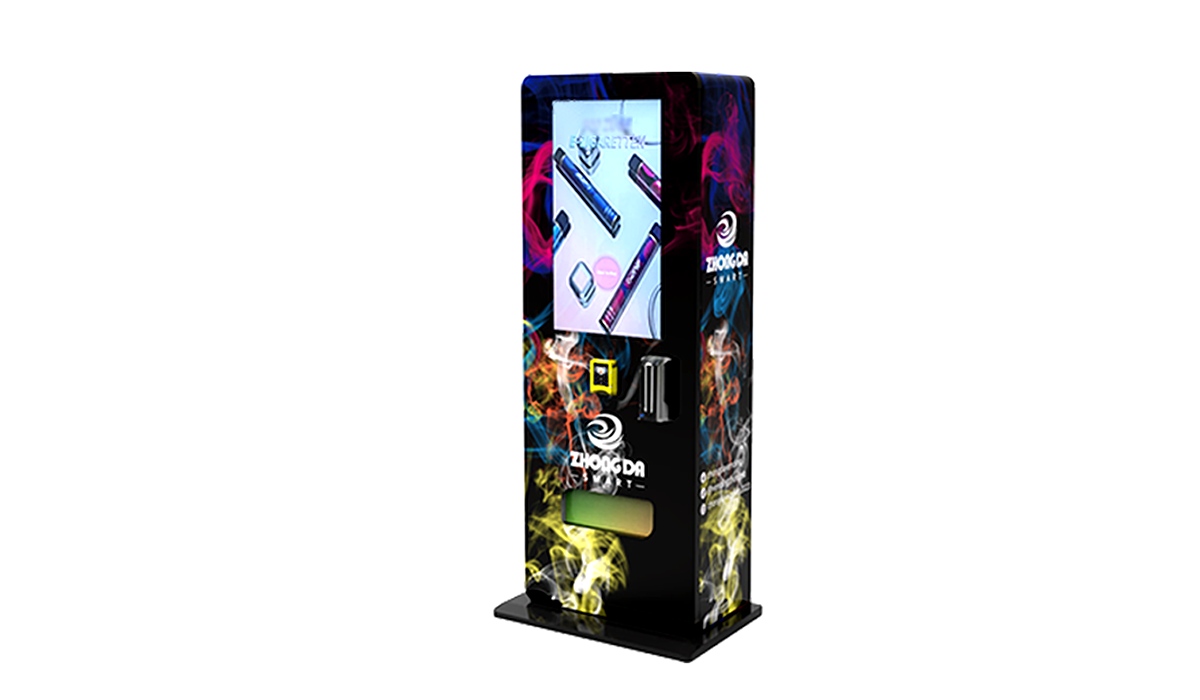
Vape vending machine prices by machine type
The most useful way to compare prices is by format and feature level. The ranges below are intended for early-stage budgeting. They are not quotations and should not be treated as universal market averages.
| Machine type | Planning price range | Typical fit | Main trade-off |
|---|---|---|---|
| Mini / compact unit | $3,500–$5,000 | Pilot projects, smaller SKU counts, limited floor space | Lower capacity and fewer display options |
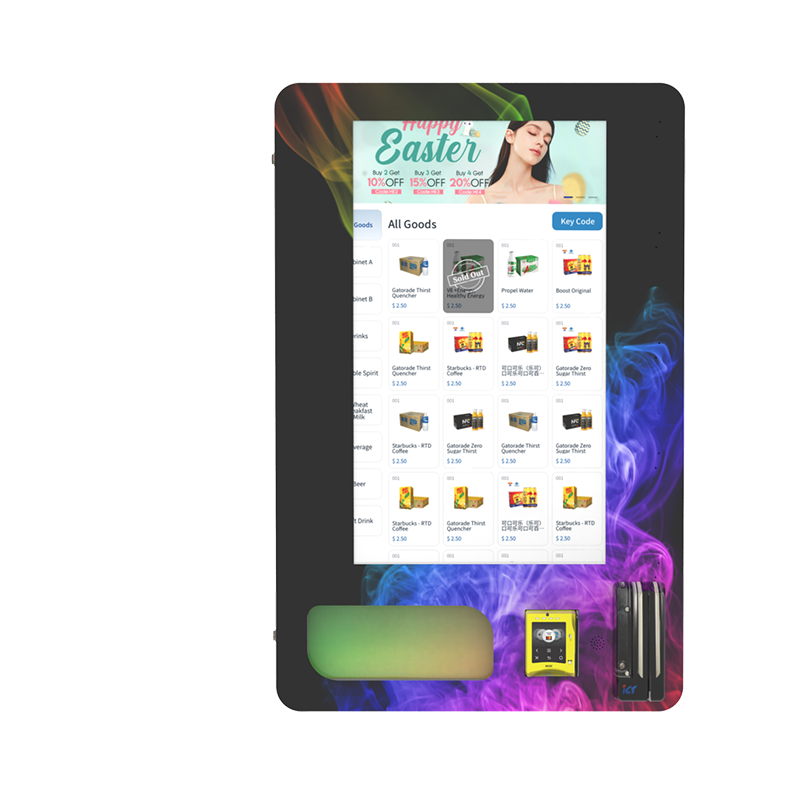
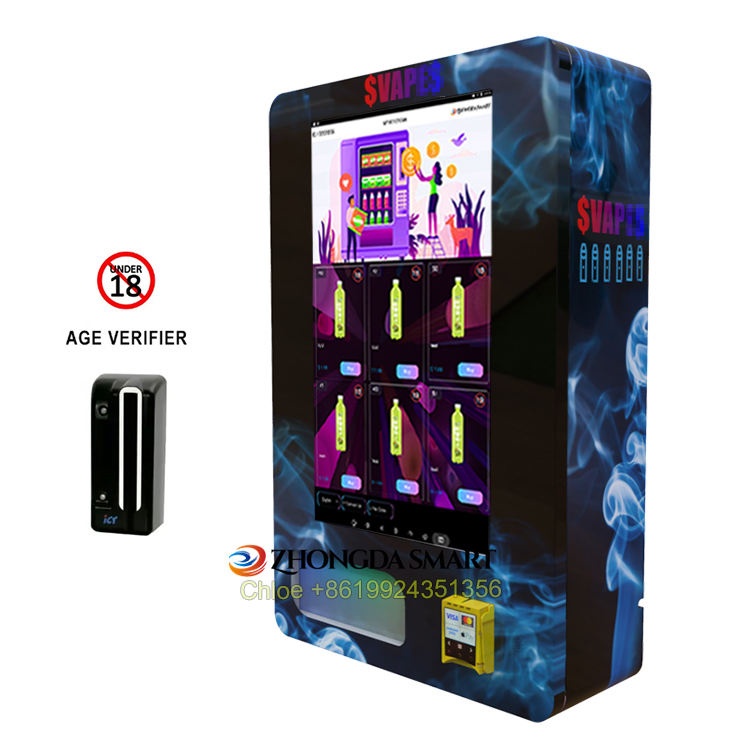
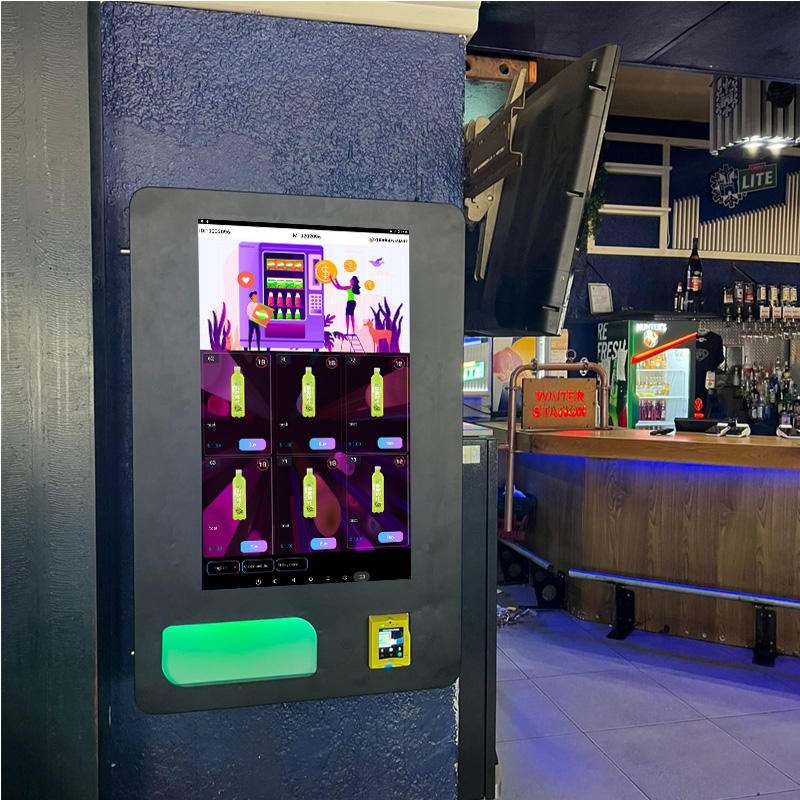
| Wall-mounted unit | $3,500–$6,500 | Space-conscious installations and adult-only venues with limited floor area | Less inventory capacity than a full-height cabinet |
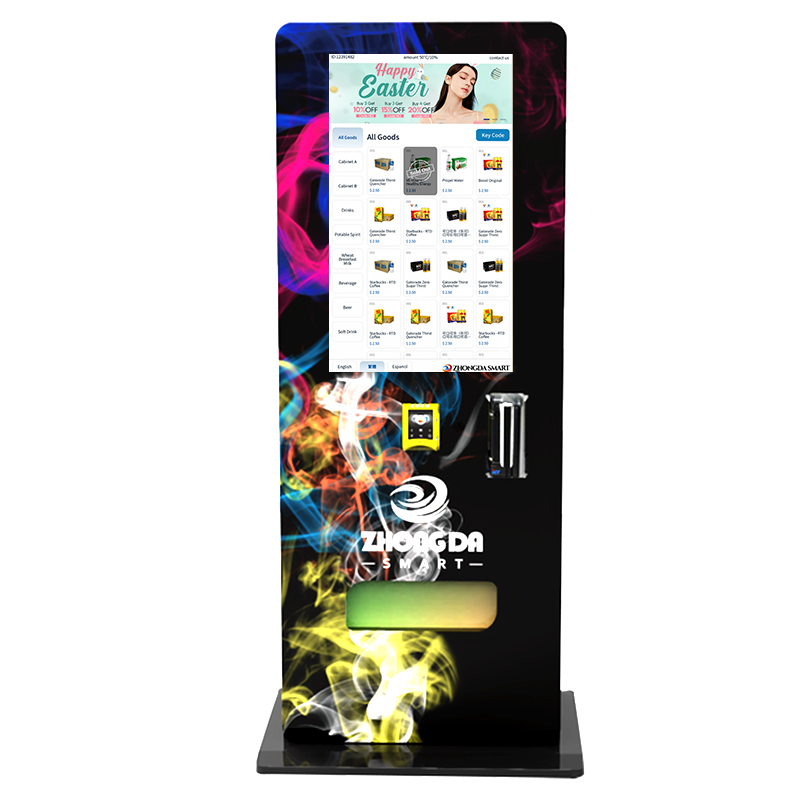
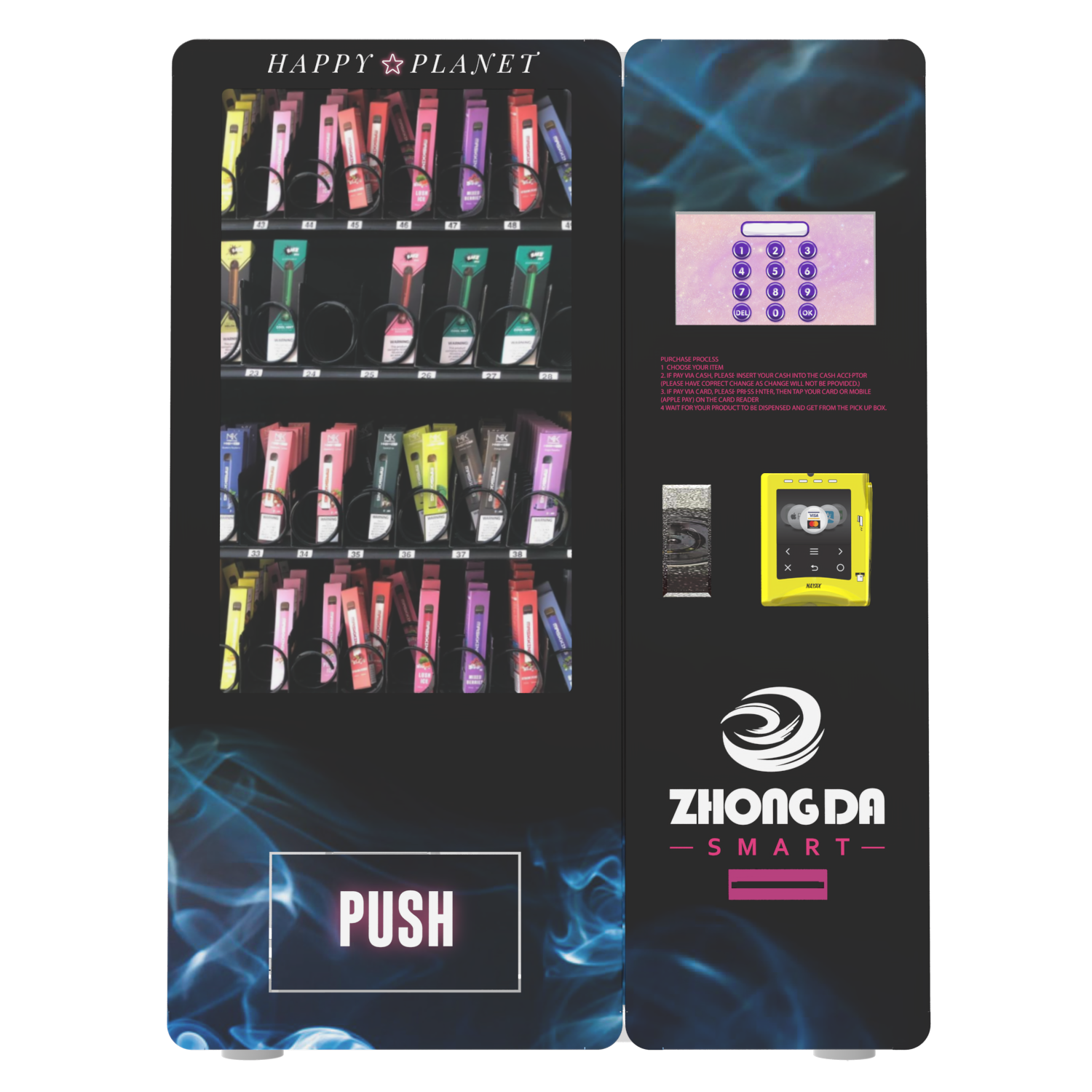
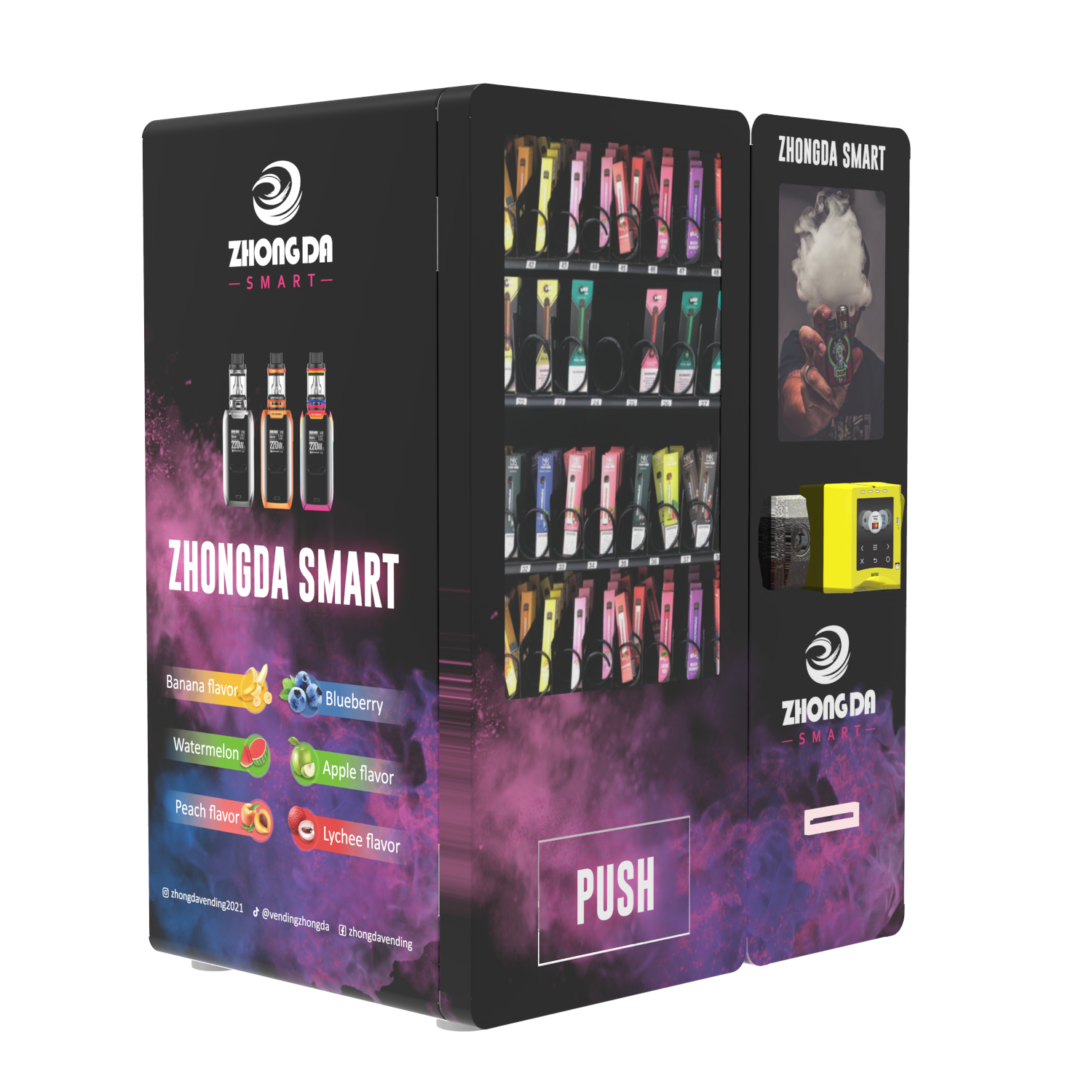
| Standard floor-standing machine | $5,500–$9,500 | Most single-location commercial projects | Higher freight cost and a larger placement footprint |
| Premium smart vending machine | $8,500–$14,000+ | Projects needing larger screens, stronger monitoring, cashless integration, or verification hardware | Higher initial investment |
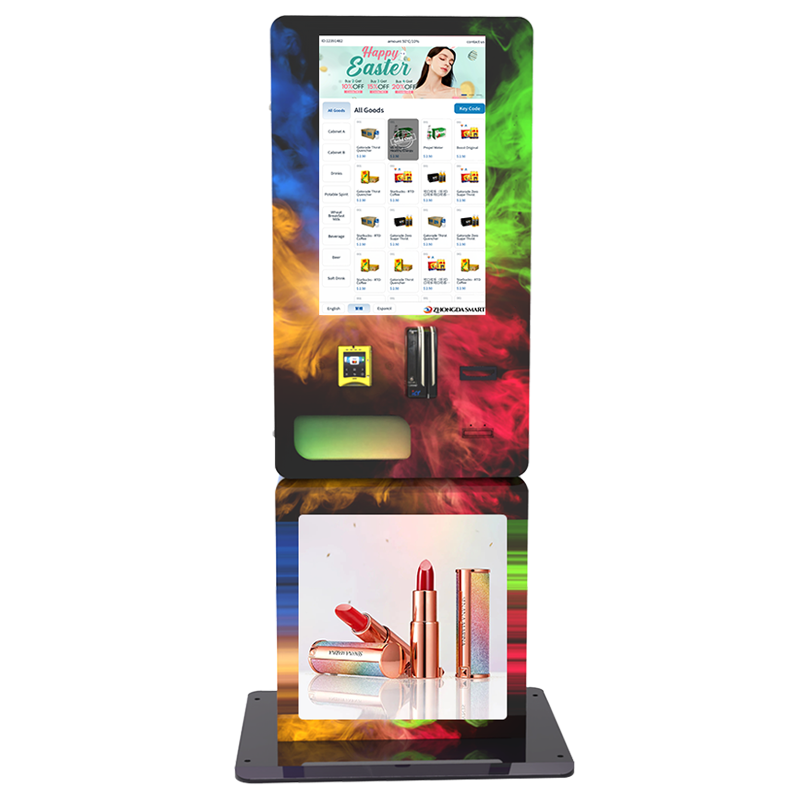
| Custom self-service kiosk | $12,000–$20,000+ | OEM/ODM programs, special product layouts, branded rollouts | Longer specification and production process |
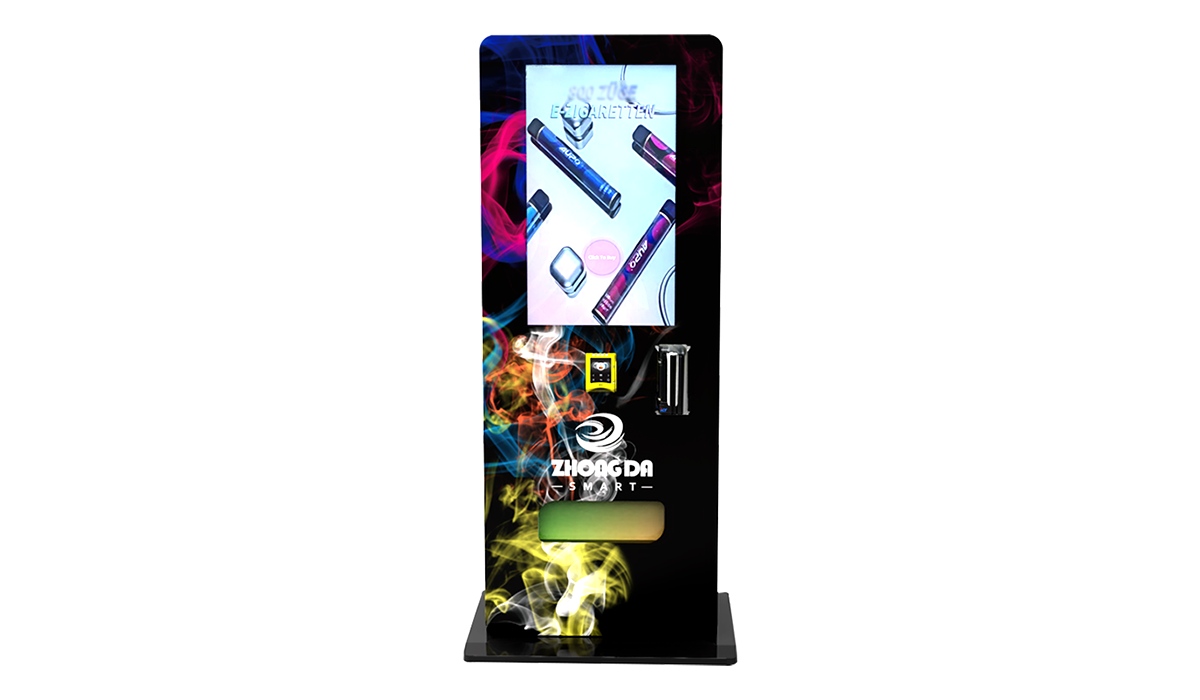
For a smaller footprint, compare Zhongda Smart's wall-mounted e-cigarette vending machine and 7-inch touch screen mini vape vending machine. Buyers evaluating several formats can start with the full vape vending machine range.
What changes the price of a vape vending machine?
Two machines with similar exterior dimensions can have very different prices because the costly parts are often inside the cabinet. The final quote usually moves with the following specifications:
Cabinet size and SKU capacity: more channels, larger doors, heavier frames, and higher inventory capacity increase material and freight costs.
Dispensing system: coil, pusher, locker, conveyor, and mixed layouts differ in cost and in the product sizes they can handle.
Touchscreen and controller: larger displays and more complex interfaces increase hardware and software integration requirements.
Cashless payment: card, NFC, QR, payment terminal certification, and gateway integration can be quoted separately from the cabinet.
Age-verification hardware: ID or document scanning and related software can materially change the project price. Legal requirements vary by market.
Remote management: inventory data, transaction reporting, alerts, telemetry, and remote price management may involve both hardware and recurring software costs.
Customization: custom colors, wraps, cabinet dimensions, UI design, product channels, lighting, and branding affect engineering and production time.
A higher specification only makes sense when the feature solves an operating problem. For example, remote stock visibility can reduce unnecessary service visits, while a custom channel layout can reduce jams when product dimensions do not fit a standard coil.
What is the real startup cost?
The machine price is only one part of the launch budget. A useful purchasing comparison should separate the cabinet from the costs required to get the machine delivered, configured, stocked, and ready to operate.
| Startup cost item | Planning range | What changes the cost |
|---|---|---|
| Machine purchase | $3,500–$14,000+ | Format, capacity, screen, payment, verification, software, customization |
| Freight and local delivery | $400–$2,500+ | Destination, cabinet size, weight, packing method, delivery access |
| Installation / payment activation | $150–$1,000+ | Site work, reader setup, payment provider, testing |
| Opening inventory | $800–$4,000+ | SKU count, product cost, stocking depth |
| Software onboarding | $0–$1,500+ | Platform, telemetry, account structure, integrations |
| Branding / graphics | $250–$1,500+ | Wrap coverage, artwork, display assets, custom interface |
| Starter spare-parts reserve | $200–$800+ | Machine design, recommended spares, service model |
For a conventional first installation, an all-in planning budget of $5,000 to $15,000+ is more useful than budgeting from the cabinet price alone. A heavily customized project, difficult freight route, or larger opening inventory can push the total higher.
Monthly operating costs to include
After installation, profitability depends on recurring expenses as much as purchase price. The exact amounts vary by country, payment provider, distance between sites, and service model.
Software and connectivity: cloud dashboards, SIM/data plans, telemetry, and reporting.
Payment processing: percentage and fixed transaction fees set by the merchant provider.
Restocking labor and travel: refill time, fuel, route density, and service frequency.
Maintenance: readers, motors, screens, locks, sensors, and other wear items.
Product loss and failed vends: damaged stock, jams, handling errors, or inventory discrepancies.
Location fee or revenue share: some venues charge rent, a fixed placement fee, or a percentage of sales.
When comparing two machines, calculate the expected monthly service burden as well as the purchase price. A machine that costs less but requires more frequent manual checks can have a higher total cost of ownership.
How to estimate payback without overpromising ROI
Payback should be calculated from net operating cash flow, not gross sales. A simple planning formula is:
Estimated payback period = total launch investment ÷ average monthly net cash flow before tax
For example, if a project costs $10,000 to launch and produces $1,000 per month after product cost, processing, service labor, location fees, software, and maintenance, the simple payback period is about 10 months. This is an illustration, not an earnings claim. Actual sales and margins depend heavily on placement, product mix, pricing, uptime, and local rules.
Before purchasing, model at least three cases—conservative, expected, and strong—and use the conservative case to test whether the project still makes financial sense.
Compare the right specification, not just the lowest quote
If you already know your product size, estimated SKU count, destination country, preferred payment method, and verification requirement, Zhongda Smart can use those details to recommend a more appropriate machine configuration.
U.S. compliance can change the machine specification
For U.S. projects, vending-machine placement for tobacco products, including e-cigarettes and other electronic nicotine delivery systems (ENDS), is restricted. FDA guidance states that retailers must not sell these products through vending machines in facilities where people under 21 are present or permitted to enter at any time. FDA also requires retailers to verify with photo identification the age of anyone under 30 who attempts to purchase tobacco products.
That means a machine's age-check hardware should be evaluated as one part of the compliance workflow, not as a blanket guarantee of legality. Venue access, retailer procedures, product authorization, state and local rules, and payment/identity systems can all matter. Requirements outside the United States differ and should be checked before deployment.
Current U.S. references: FDA — Selling Tobacco Products in Retail Stores and FDA — Tobacco 21.
If age-check functionality is part of the specification, see Zhongda Smart's age verification vending machine page for available configuration options. Buyers remain responsible for determining whether a particular setup satisfies the laws and operating requirements in the target market.
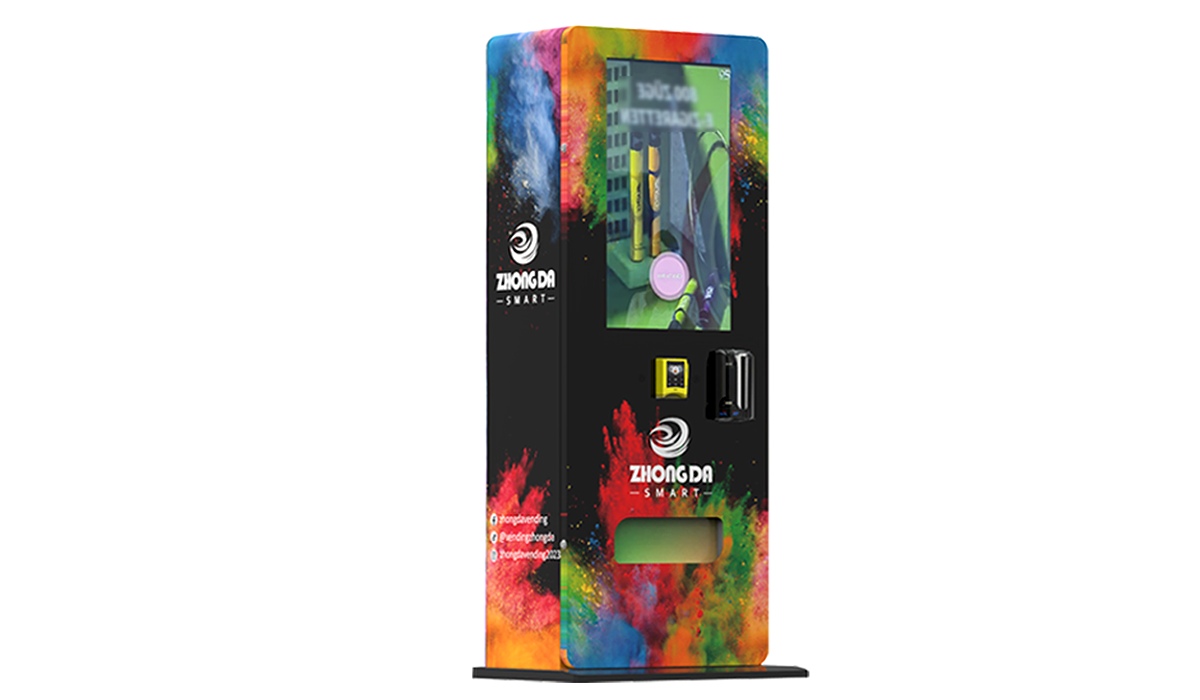
Standard machine or custom build?
A standard or near-standard machine is usually the more efficient choice when the business is still testing location performance, SKU mix, and refill frequency. Custom engineering becomes more useful when the project has requirements that a standard cabinet cannot meet.
Consider a custom vending machine when you need:
a fixed cabinet footprint or installation constraint;
a specific product size or non-standard dispensing layout;
a branded touchscreen interface or cabinet design;
custom payment, identification, or software integration;
a repeatable OEM/ODM platform for a multi-unit rollout.
Zhongda Smart provides custom vending machine solutions for projects that need a configuration beyond standard models.
How to compare supplier quotes
Ask every supplier to quote the same specification. At minimum, compare:
cabinet dimensions, net weight, packed size, and shipping weight;
real SKU capacity based on your product dimensions;
dispensing method and channel adjustability;
screen size and controller specification;
payment hardware included and payment provider requirements;
age-verification hardware and what is—and is not—included;
remote management functions and recurring software fees;
warranty scope, spare-parts availability, and support process;
lead time, packaging, freight terms, and installation responsibility;
custom branding or OEM/ODM charges.
This structure makes it easier to identify why one quote is cheaper and whether the difference is relevant to the actual operating plan.
About Zhongda Smart
Zhongda Smart designs and manufactures vending machines for unattended retail, including vape vending machine formats intended for adult-only retail environments. Available configurations can include age-verification options, cashless payment integration, touchscreen interfaces, remote inventory monitoring, flexible product channels, and OEM/ODM branding.
Machine configuration should be selected for the target products, operating environment, and local legal requirements. For a project-specific recommendation, contact Zhongda Smart.
Bottom line: how much should you budget?
For 2026 planning, a vape vending machine typically falls in the $3,500 to $14,000+ range, while a typical ready-to-launch budget is often $5,000 to $15,000+. Compact machines can cost less; custom kiosks and advanced projects can cost substantially more.
The most useful quote is the one that matches your actual product sizes, capacity, payment system, verification requirement, destination, and service plan. Comparing only the cabinet price can hide meaningful differences in hardware, integration, freight, and ongoing operating cost.
Get a quote based on your actual project
Share your destination country, product dimensions, required capacity, preferred payment methods, branding needs, and age-verification requirements. Zhongda Smart can use those details to prepare a more relevant configuration and quotation.
Frequently asked questions
How much does a vape vending machine cost in 2026?
For budgeting, most standard and smart commercial machines in this guide fall between about $3,500 and $14,000+. Custom kiosks can reach $12,000 to $20,000+ depending on cabinet design, payment integration, verification hardware, software, and branding.
What is a realistic startup budget for one machine?
A typical ready-to-launch budget is often about $5,000 to $15,000+ after the machine, freight, payment setup, software, and opening inventory are included. Highly customized projects can exceed that range.
Is age verification included in the machine price?
Not always. Some configurations include verification hardware, while others are only prepared for later integration. Ask the supplier to identify the exact scanner, software, service fees, and integration scope on the quotation.
Is a card reader included in the price?
It depends on the supplier and destination market. The cabinet quote may exclude the certified terminal, payment gateway account, activation, or integration. Confirm each item separately before comparing offers.
How long does a vape vending machine take to pay back?
There is no reliable universal payback period. Use your total launch investment divided by expected monthly net cash flow after product cost, payment fees, labor, site fees, software, and maintenance. Location quality and uptime usually matter more than the cabinet price alone.
Should I buy a standard machine or a custom vending machine?
A standard or near-standard machine is usually more efficient for a first test. Custom engineering is more appropriate when you need a fixed footprint, non-standard product layout, branded interface, special integration, or a repeatable multi-unit platform.
Sources and methodology
Price and operating-cost figures in this guide are planning ranges used to compare common vending configurations; they are not a guarantee, universal market average, or binding quotation. Project pricing should be confirmed against the required specification and destination.
Editorial note: This guide is published by Zhongda Smart, a vending machine manufacturer. It is intended to help buyers understand machine configuration and budgeting. It is not legal, financial, or investment advice.