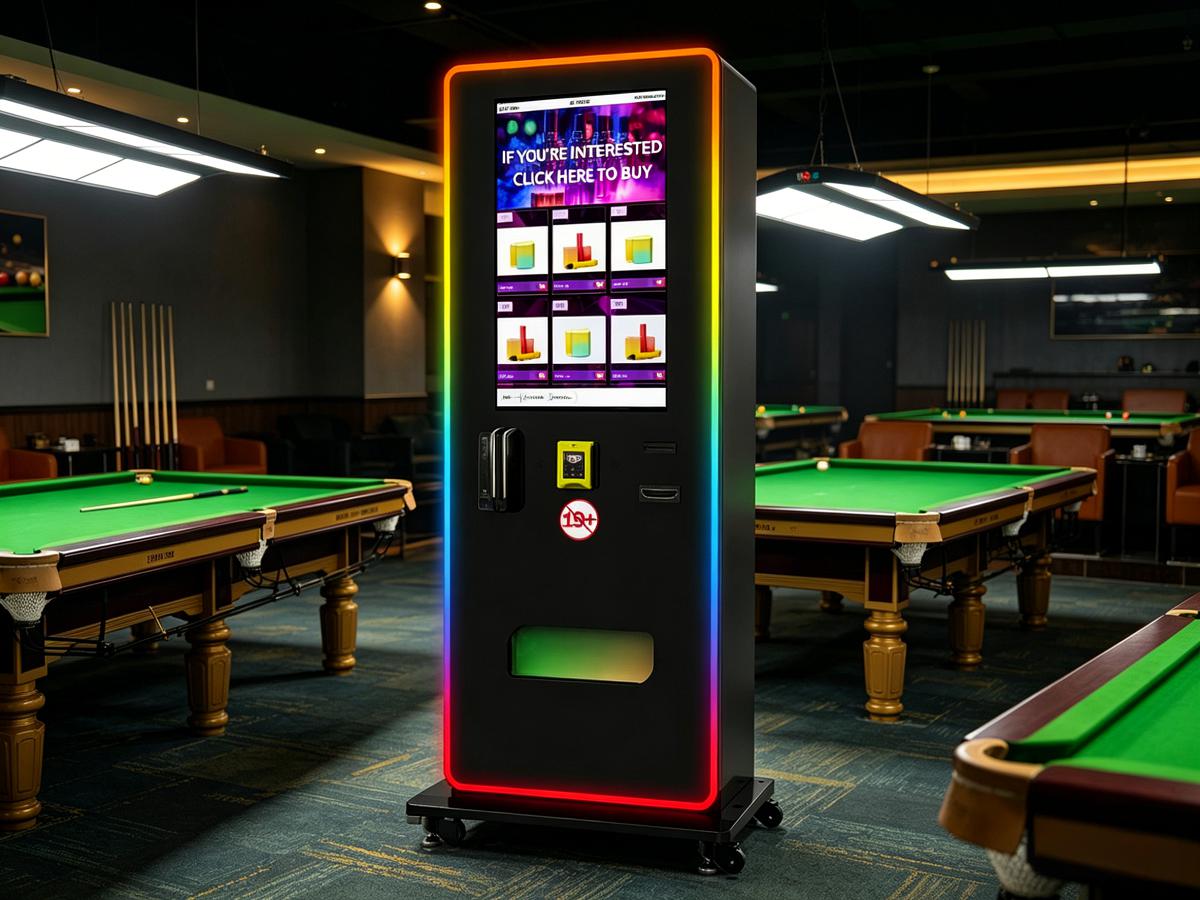
If you are looking at a Nicotine Vending Machine, you are probably trying to answer a practical question: how much does it cost to launch, how hard is it to set up correctly, and how long does it take to earn the money back. The short answer is that the economics can work very well when the machine matches the product, the site, and the sales process. What usually hurts returns is not the cabinet itself. It is the wrong capacity, weak age-check flow, poor SKU planning, or a machine that looks good in photos but becomes a headache once it is live. This guide breaks the subject down the way experienced operators and factory-side teams actually discuss it: machine cost, installation details, payment setup, age verification, operating expenses, stock planning, and the numbers that usually decide whether a project feels smart six months later.
Quick answer
A Nicotine Vending Machine usually makes sense when three things are in place from the beginning: reliable age verification, a product mix that actually turns, and a cabinet size that fits the real sales volume instead of an optimistic guess. Buyers who get those three things right often see a much cleaner payback curve than buyers who focus only on the sticker price. In most projects, the machine is not the risky part. The setup is.
What a nicotine vending machine really costs
The first quote rarely tells the full story. Buyers see the cabinet price, but the installed cost is what matters. That means the machine itself, the payment hardware, age-verification options, remote management, freight, basic site preparation, branding, and support. A cabinet that looks inexpensive at first can end up costing more after configuration than a better-built unit with a clearer spec from day one.
For most projects, the useful number is not “machine price.” It is total live cost, meaning the amount you spend before the machine takes its first real order.
| Cost Item | Typical Range | What Pushes the Price Up or Down |
|---|---|---|
| Base machine cabinet | $2,500-$8,500+ | Cabinet size, screen size, capacity, dispensing system, finish |
| Age verification setup | $300-$1,500+ | ID scanner type, camera, workflow, third-party integration |
| Cashless payment hardware | $250-$800 | Card reader, contactless support, gateway compatibility |
| Telemetry and software | $10-$60 per month | Remote inventory, alerts, reporting depth, dashboard quality |
| Custom branding | $150-$1,200 | Wrap, lightbox, UI changes, logo placement, exterior finish |
| Shipping and delivery | $300-$2,000+ | Machine size, route, final-mile handling, liftgate, inside delivery |
| Site preparation | $0-$1,500+ | Power, network, mounting, access control, floor conditions |
A smaller self-service kiosk used for a compact product range will sit toward the lower end. A larger smart vending machine with a touchscreen, custom cabinet work, stronger reporting, and a layered age-check flow will land higher. That is normal. The better question is not whether one machine is cheaper than another. The better question is whether the machine you buy is correctly built for the way you plan to sell.
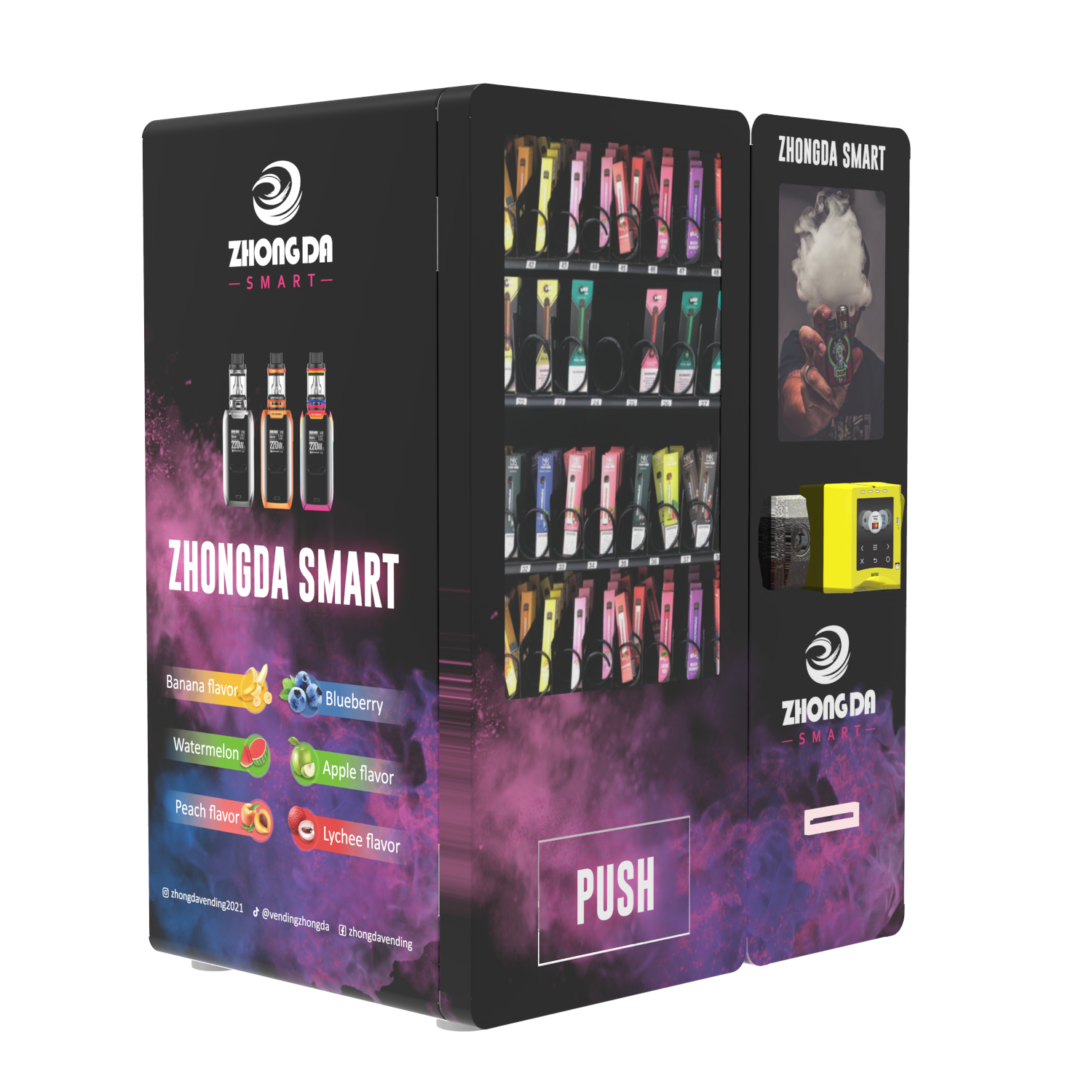
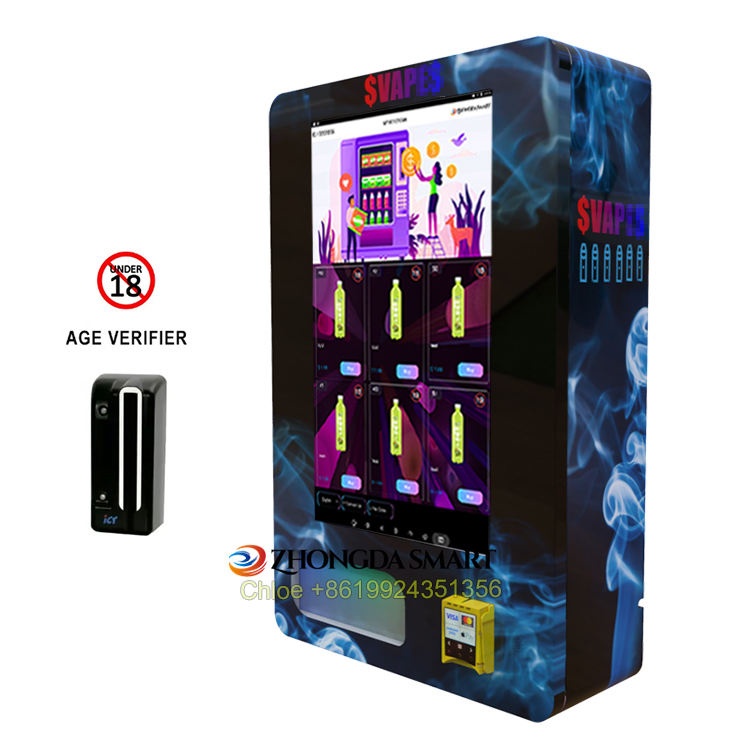
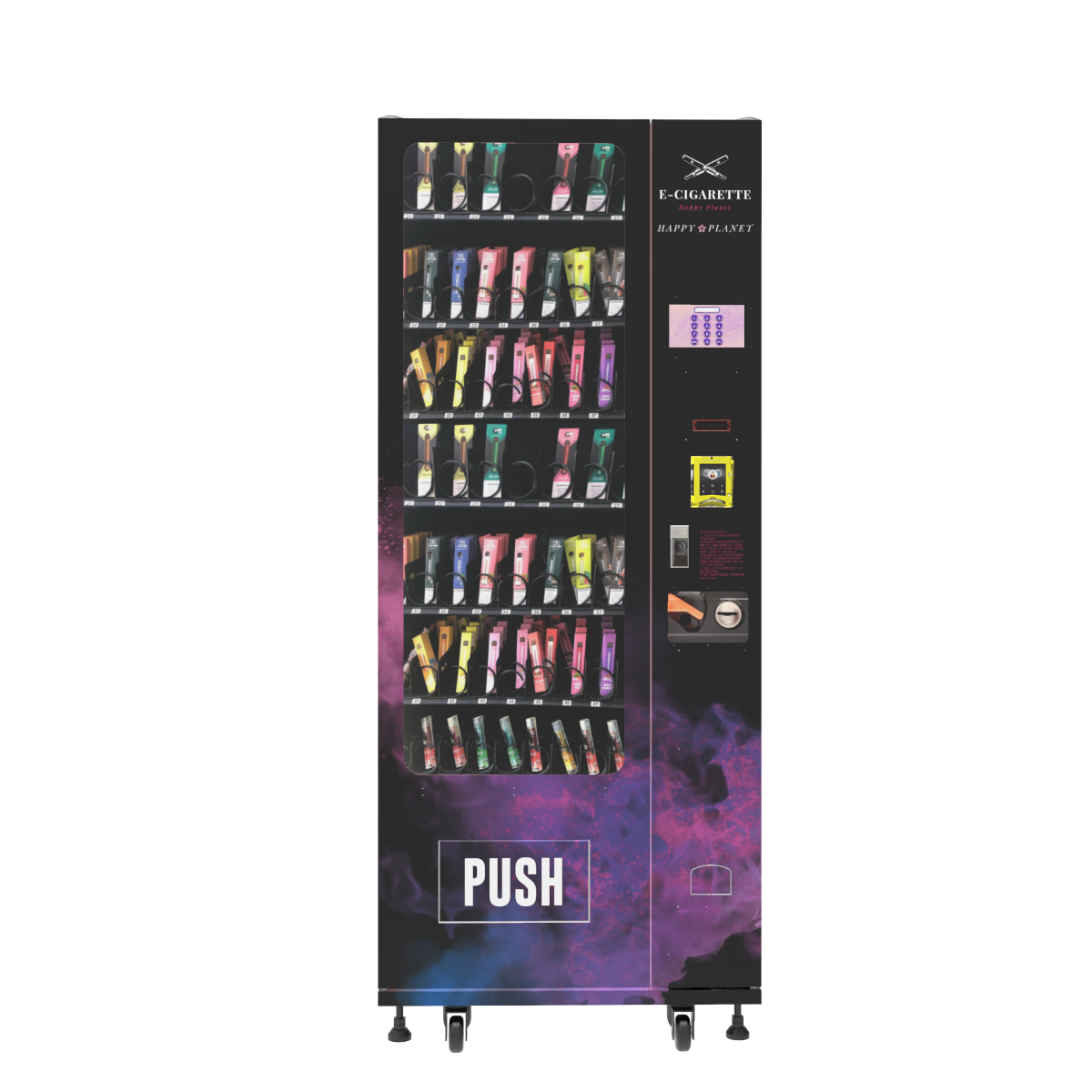
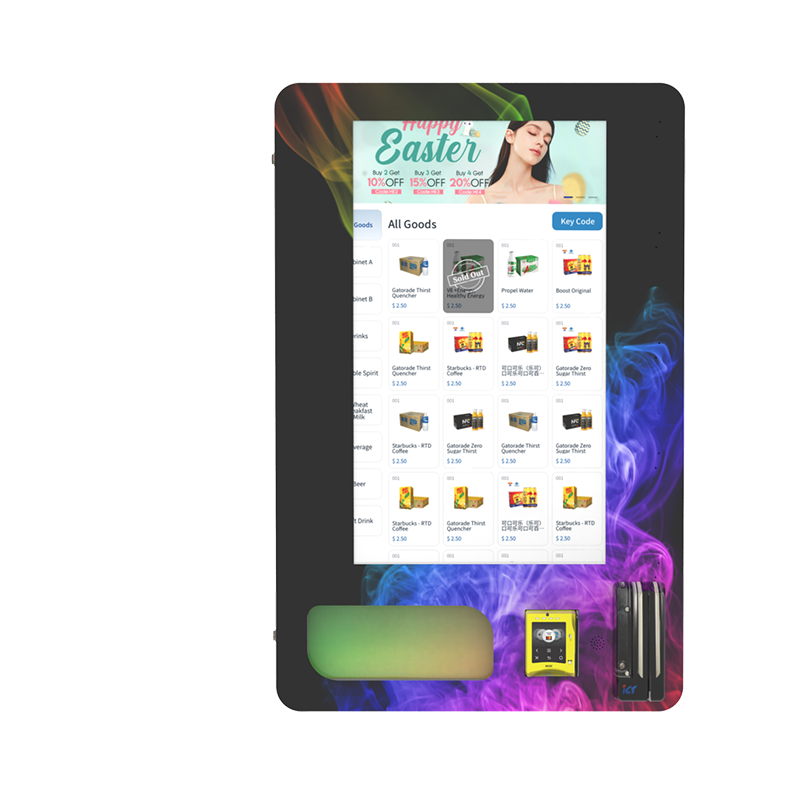
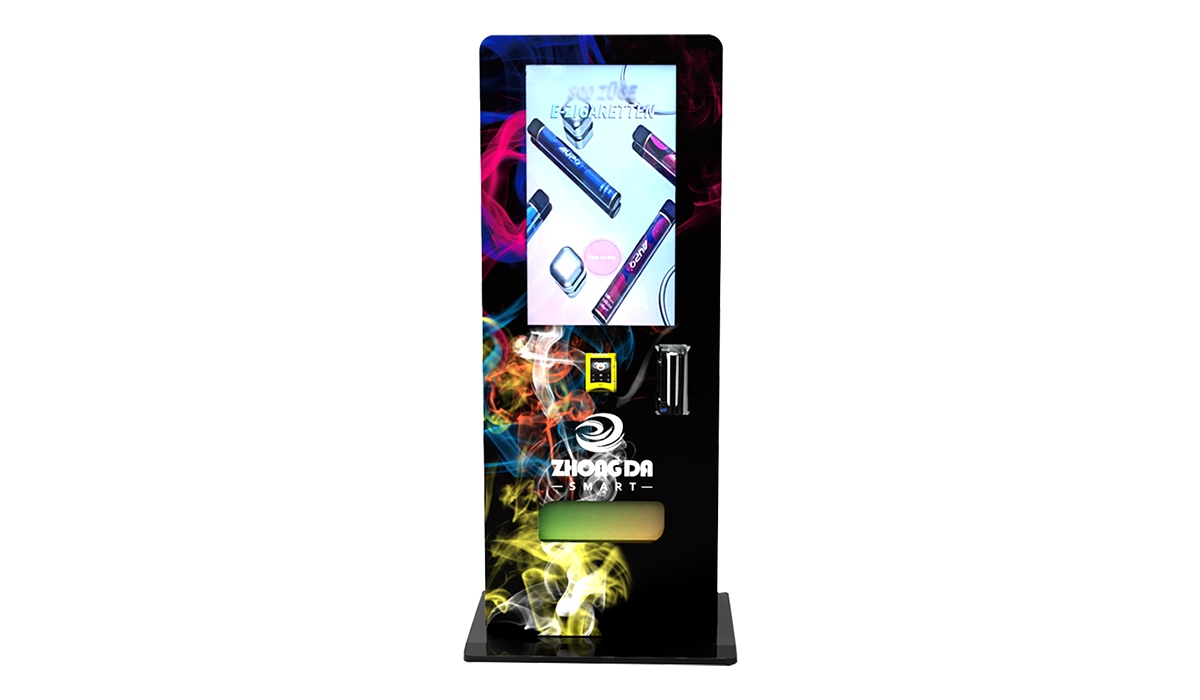
For buyers comparing formats, Zhongda Smart already has several workable product directions. You can review the broader vape vending machine product line, look at a more compact wall-mounted model, or explore custom vending machine development if standard dimensions do not match your SKU plan.
Three budget levels buyers usually compare
Test setup
This is the lower-risk entry point. It usually means a smaller cabinet, a focused SKU count, cashless payment, and a simple but workable age-check flow. It is the right choice when the goal is to test live demand instead of building a premium retail display on day one.
Commercial setup
This is the level most buyers should be looking at. The cabinet is stronger, the software is more useful, the product capacity is healthier, and the machine behaves more like a proper retail system instead of a basic dispenser. In real projects, this is usually where the numbers begin to make more sense.
Branded rollout setup
This version is built for operators who care about presentation, repeat use, better reporting, and tighter product control. It often includes a larger screen, stronger branding, more refined UI, better backend visibility, and a more polished age-check workflow. The upfront cost is higher, but the machine is easier to manage properly once volume builds.
| Deployment Type | Estimated Installed Cost | Best Fit | Main Trade-Off |
|---|---|---|---|
| Test setup | $3,500-$5,500 | Demand validation | Limited capacity and fewer upgrade paths |
| Commercial setup | $5,500-$8,500 | Steady day-to-day operation | More capital upfront |
| Branded rollout setup | $8,500-$15,000+ | Multi-unit scaling and premium presentation | Needs stronger sell-through to justify the spend |
What actually drives ROI
Buyers sometimes spend too much time comparing cabinet quotes and not enough time studying turnover. That is backwards. ROI comes from product movement, not from owning the cheapest machine in the room. A better-built Nicotine Vending Machine that sells consistently can pay for itself much faster than a bargain unit that sits half full and half ignored.
The cleanest way to look at it is this:
Monthly Gross Profit = Monthly Revenue - Product Cost - Payment Fees - Software Fees - Service and Refill Costs - Shrink
Payback Period = Total Installed Cost / Monthly Gross Profit
That sounds simple because it is simple. What makes it powerful is that it keeps the decision honest. If the machine costs $7,000 fully installed and throws off $900 a month in gross profit, the project looks strong. If that same machine only produces $350 in monthly gross profit, the project starts feeling slow, fragile, and harder to scale.
| Scenario | Monthly Revenue | Gross Margin | Monthly Gross Profit | Approximate Payback on $7,000 Install |
|---|---|---|---|---|
| Slow performer | $1,500 | 35% | $525 | 13.3 months |
| Healthy performer | $2,500 | 38% | $950 | 7.4 months |
| Strong performer | $4,000 | 40% | $1,600 | 4.4 months |
The machines that pay back fastest usually share the same traits:
adult traffic that is steady rather than random
a fast age-check flow with low customer friction
cashless payment that works every time
a tight SKU mix instead of a crowded one
stock alerts that catch best sellers before they run dry
fewer unnecessary refill trips because the backend is useful
In practice, the biggest profit leaks are rarely dramatic. They are the boring problems: payment readers going offline, one strong SKU selling out too early, packaging that sticks in the lane, or a machine placed where it is annoying to restock. Those are the details that quietly stretch payback.
Nicotine vending machine cost breakdown by machine format
Not every machine should be a full-size floor-standing cabinet. Format has to match volume, footprint, and product count. One of the more common buying mistakes is ordering a big cabinet before there is any proof the location can support it. Bigger looks more serious. That does not always mean it makes more money.
| Machine Format | Best For | Advantages | Limitations |
|---|---|---|---|
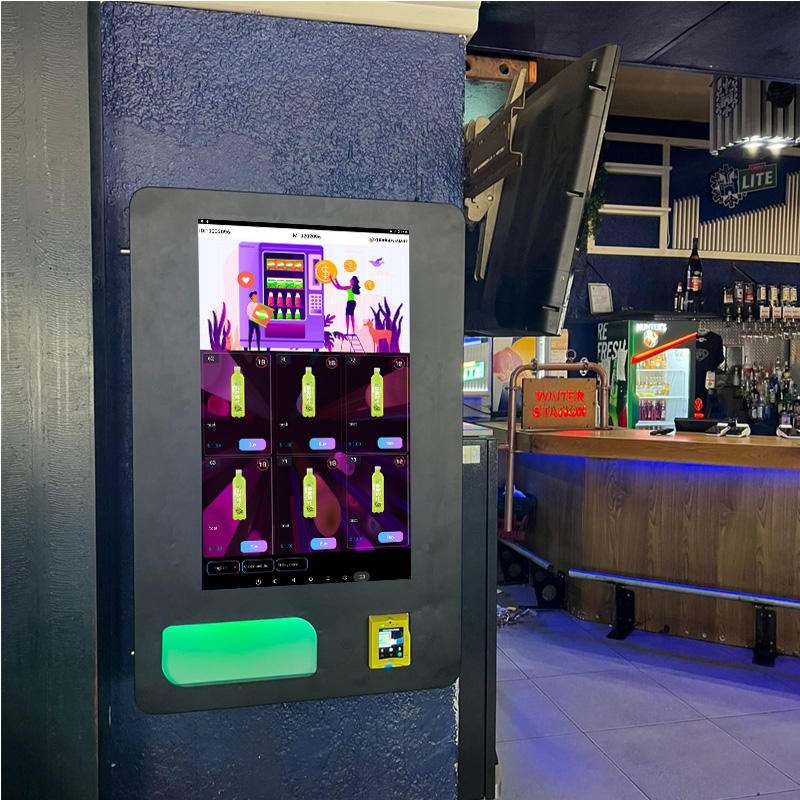
| Wall-mounted unit | Tight spaces and focused assortments | Lower footprint, easier placement, cleaner use of wall area | Lower total capacity |
| Compact floor-standing unit | Moderate traffic and balanced SKU count | Good cost-to-capacity ratio | Less visual impact than a larger cabinet |
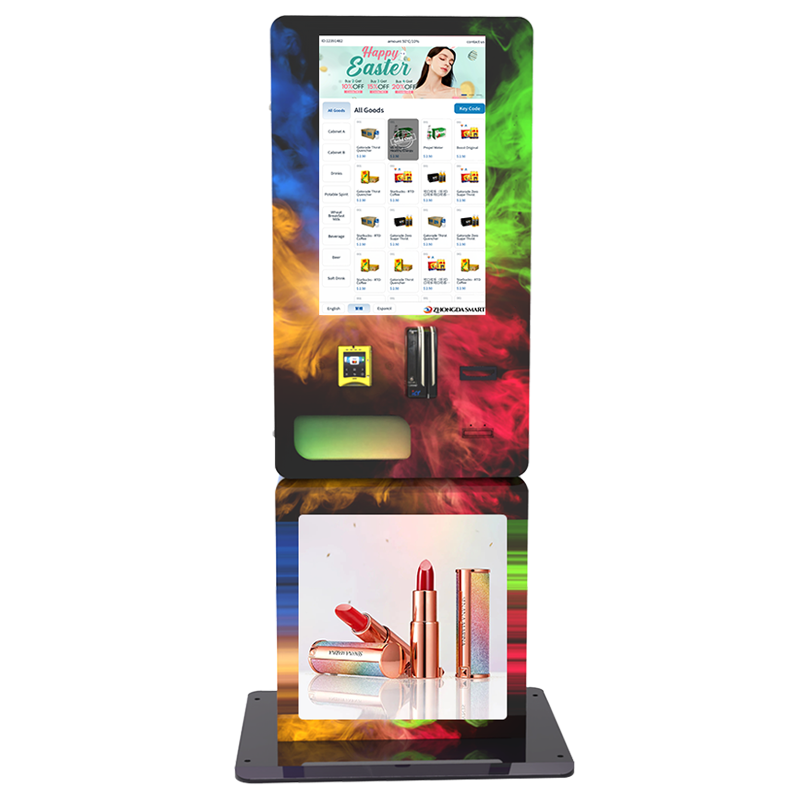
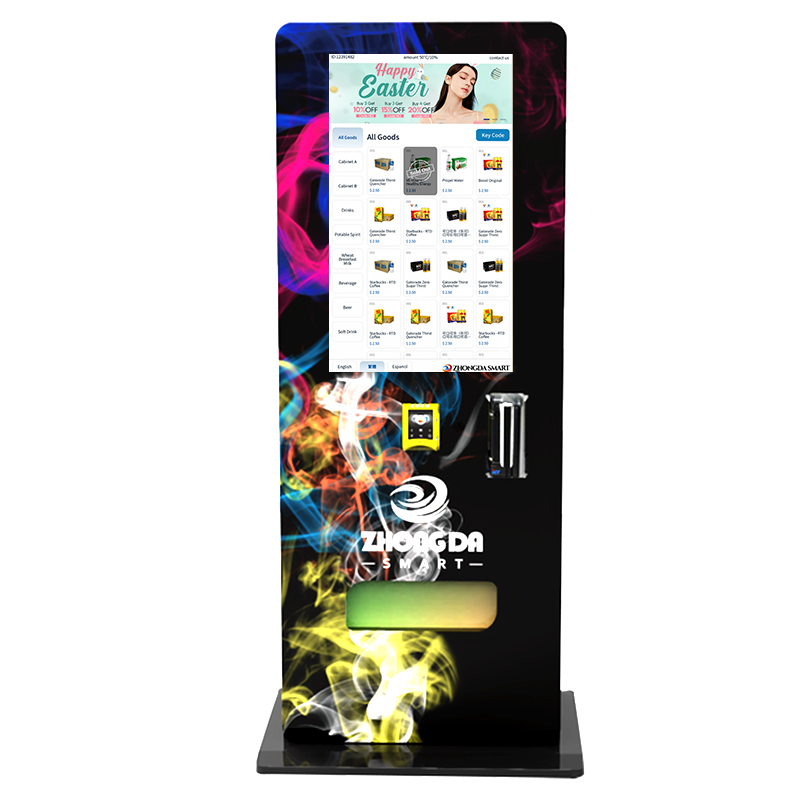
| Large touchscreen cabinet | Wider SKU selection and stronger presentation | Better merchandising, higher perceived value, stronger brand display | Higher cost and more demanding setup |
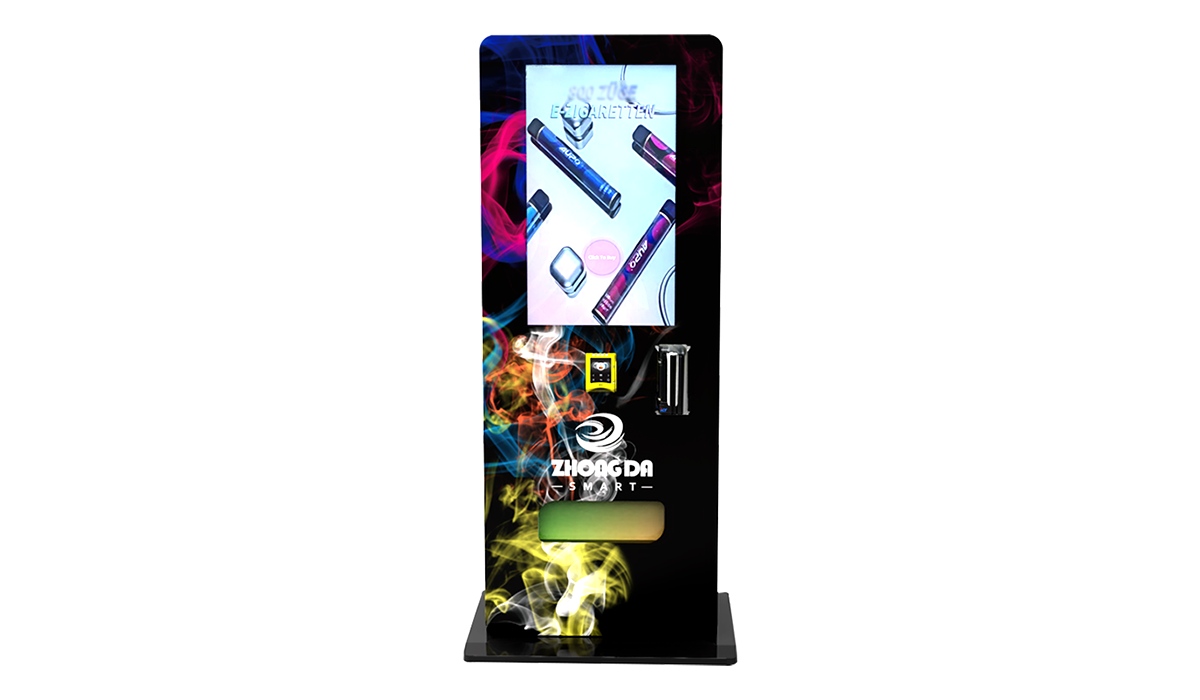
If you want to compare a compact format against a larger visual-first cabinet, Zhongda Smart’s wall-mounted e-cigarette vending machine and its 32-inch touchscreen model with age-verification support show the difference clearly. One saves space. The other puts more emphasis on interface and display value.
Setup mistakes that get expensive later
A Nicotine Vending Machine does not usually fail because the idea is bad. It fails because the launch is loose. Machines that feel troublesome in month three often looked perfectly fine in the quote stage. The warning signs only appear after live product, real customers, and refill routines meet the machine for the first time.
Skipping real product-fit tests
This is one of the most common problems. Packaging dimensions on a spec sheet do not always tell the truth about how the SKU behaves in the machine. Soft-edge boxes, slick wrapping, uneven depths, and lightweight packs can all create mis-dispenses if they are not tested before shipment.
Choosing screen size for show instead of sales
Large screens can look impressive, but they do not always improve conversion enough to justify the added cost. In some projects, the extra money would have been better spent on better age verification, stronger telemetry, or more thoughtful cabinet layout.
Ignoring network conditions until install day
A smart vending machine with weak signal is not smart for long. Payment delays, stale inventory data, frozen dashboards, and customer confusion all tend to start here. Signal testing should happen before the machine ships, not after it arrives.
Trying to “solve compliance later”
That almost always backfires. Age-check logic is not a small add-on. It affects user flow, payment sequence, cabinet configuration, and where the machine can be placed. If the plan is vague at the start, it becomes expensive in the middle.
Launching with too many slow SKUs
Buyers often want the machine to show everything. Operators who make money usually do the opposite. They start narrow, watch the first month carefully, and let the faster-selling items earn more space. A full machine is not the same thing as a productive machine.
Before you place the order
Serious buyers usually walk through a checklist before they approve production. It is not glamorous, but it saves money.
Confirm actual product dimensions for every planned SKU
Define the age-verification sequence before the cabinet is finalized
Confirm card reader and payment gateway compatibility
Check site power and signal strength in the exact install position
Plan refill access and service clearance around the machine
Confirm spare parts lead time and support process
Decide whether branding is cosmetic only or part of the sales strategy
Make sure the machine capacity matches realistic, not optimistic, turnover
This list is short on purpose. If these items are clear, the project is usually on the right track. If several are still fuzzy, the machine is probably being ordered too early.
Age verification is part of the machine, not an accessory
A Nicotine Vending Machine only works long term if the age-check flow is handled cleanly. This is one of the first areas experienced buyers ask about, because it shapes cabinet design, transaction flow, and day-to-day operation. The machine is not just dispensing product. It is managing a controlled sale.
Federal rules provide a useful baseline. FDA states that retailers must not sell tobacco products to anyone younger than 21, and beginning September 30, 2024, retailers must verify age by photo ID for anyone under 30 attempting to buy covered tobacco products. The 2024 final rule also raised the minimum age threshold for facilities that maintain vending machines selling covered tobacco products from 18 to 21.[1][2]
In plain operating terms, that means the age-check flow should feel built in rather than bolted on. The strongest setups usually include:
a defined ID-check step before product release
cashless payment records that are easy to review
a user flow that does not confuse the customer at the point of purchase
event logs or backend records that help track exceptions
a cabinet format suited to controlled adult retail use
Zhongda Smart’s product line is already positioned around the features most buyers ask for in this category, including age-verification support, cashless payment, remote monitoring, branding options, and flexible machine formats.[3] You can see the broader product and feature overview on the main product page and learn more about the factory background on the company profile page.
How product mix changes profit more than most buyers expect
A machine does not become profitable just because it holds a lot of product. It becomes profitable when the slots are assigned with discipline. The first sixty days usually tell you which items deserve more space, which ones only look good in theory, and which ones should be pulled before they drag the whole machine down.
| SKU Role | Purpose | Suggested Share of Slots | Margin Logic |
|---|---|---|---|
| Fast sellers | Protect revenue and repeat purchases | 35%-45% | Moderate margin, high turnover |
| Margin builders | Lift profitability without killing volume | 25%-35% | Higher margin, stable movement |
| Premium or trial items | Increase ticket size and test interest | 10%-20% | Higher margin, less predictable turnover |
| Utility add-ons | Capture extra spend from convenience purchases | 10%-15% | Flexible margin |
A common mistake is filling the machine with too many “maybe” products. That makes the assortment look broad, but it usually slows the machine down. The better approach is to let a few boring, dependable sellers carry the machine while the rest of the assortment works around them.
From an operator’s point of view, the first refill report is often more valuable than the original buying plan. Once the machine is live, opinions matter less than movement.
Monthly costs that should be in the ROI model from day one
Plenty of buyers remember card fees and forget everything else. That is why early ROI projections often look better on paper than they feel in real life. A Nicotine Vending Machine keeps costing money after installation, even when the cabinet itself is fully paid for.
Payment fees: card and contactless transactions reduce cash handling but take a percentage of every sale
Software fees: inventory dashboards, alerts, and reporting are valuable, but still recurring
Connectivity costs: SIM plans, network backup, or router support may be needed
Refill labor: frequent small refills can quietly become expensive
Service and parts: even reliable machines need occasional troubleshooting and replacement components
Shrink and write-offs: damaged packaging, aged inventory, and reconciliation loss all matter
This is where a remote management platform earns its place. If the backend helps you avoid wasted trips and keeps your fast movers from going empty, the monthly software fee is often one of the cheaper costs in the whole model.
Example ROI model for a nicotine vending machine
Here is a simple example based on a mid-range commercial setup. The numbers are illustrative, but the structure is the same one many buyers use when they are trying to decide whether a project is worth launching.
| Item | Example Value |
|---|---|
| Machine and configuration | $5,600 |
| Payment and age-check hardware | $700 |
| Shipping and setup | $900 |
| Total installed cost | $7,200 |
| Average order value | $19 |
| Average daily transactions | 8 |
| Monthly revenue | $4,560 |
| Gross margin after product cost | 37% |
| Gross profit before operating fees | $1,687 |
| Software, payment, and service costs | $230 |
| Estimated monthly gross profit | $1,457 |
| Estimated payback period | About 4.9 months |
That is the kind of model that helps buyers think clearly. If the average daily transaction count drops from eight to four, the payback changes quickly. If a better location lifts it to ten or twelve, the economics improve just as fast. Small changes in machine price do not matter as much as most people think. Movement matters more.
How to estimate sales before you buy
You do not need a complex spreadsheet to build a first-pass forecast. You need a few sensible assumptions and enough discipline not to inflate them. The easiest method is to start with qualified adult traffic, apply a conservative conversion rate, and multiply by average ticket value.
Estimate daily adult traffic near the machine
Use a conservative conversion rate, not a hopeful one
Set a realistic average order value
Project monthly revenue across actual operating days
Apply margin after product cost
Subtract payment, software, and service costs
| Input | Conservative Case | Base Case | Strong Case |
|---|---|---|---|
| Qualified daily traffic | 80 | 150 | 250 |
| Conversion rate | 3% | 5% | 7% |
| Transactions per day | 2.4 | 7.5 | 17.5 |
| Average ticket | $18 | $20 | $22 |
| Estimated monthly revenue | $1,296 | $4,500 | $11,550 |
This is not meant to predict the future perfectly. It is meant to stop buyers from making emotional equipment decisions before the revenue logic is even on paper.
Why the broader market still matters
Location economics matter most, but market direction still matters because it tells you whether the channel is moving with consumer behavior or against it. Grand View Research estimates the global retail vending machine market at USD 75.02 billion in 2025 and projects it to reach USD 99.23 billion by 2033, with a CAGR of 3.6% from 2026 to 2033.[4] That larger trend helps explain why more buyers are evaluating unattended retail formats that reduce checkout friction and extend selling hours.
Payment behavior matters too. The Federal Reserve’s 2025 Diary of Consumer Payment Choice continues to track how consumers use cash alongside cards and electronic payment options in everyday spending.[5] For a modern self-service kiosk, that means the safest operating assumption is usually cashless-first, but with enough payment stability and reporting depth that the machine feels dependable in real use.
How experienced buyers compare manufacturers
A strong supplier does more than ship a cabinet. The right partner helps reduce unknowns before the machine is built. That matters in this category because dispensing logic, age-check flow, payment integration, cabinet layout, and backend reporting are closely connected. Weak support in any one of those areas can ripple through the whole project.
When buyers compare manufacturers, the smarter questions usually sound like this:
Can the cabinet be configured around my real SKU sizes?
Which payment devices have already been integrated successfully?
How is age verification handled in the live transaction flow?
What backend reporting is available after installation?
What parts are considered wear items and how fast can they be replaced?
What testing is done before shipment?
Can branding and UI be adjusted without turning the project into a custom engineering problem?
Zhongda Smart is worth a close look for buyers who want source-manufacturer support, multiple cabinet options, age-verification-ready designs, cashless payment compatibility, and OEM or ODM flexibility. The company describes itself as a manufacturer focused on intelligent vending equipment, with product support that covers cabinet structure, display, UI, payment integration, remote management, sampling, and export delivery coordination.[3][6]
The first 60 days after launch
The first two months tell you almost everything you need to know about whether the machine is set up properly. This is where the project stops being a plan and becomes an operating system.
Week 1: watch the basics
Focus on successful payments, clean product drops, age-check completion, and whether customers understand the flow without help. If those four things are not stable, nothing else matters yet.
Week 2: fix the obvious weak spots
Pull slow products that have no early traction. Adjust lane assignments for fast sellers. Watch whether the refill routine makes sense in the real space. Plenty of bad layouts only reveal themselves when someone actually has to restock the machine.
Weeks 3-4: protect your revenue slots
By this stage, one pattern usually becomes clear: a small number of products drive a large share of sales. Give those items more room. Machines lose surprising amounts of money when their dependable sellers go empty while weaker items sit untouched.
Month 2: stop guessing and start managing by slot
At this point, the machine should be telling you which spaces earn their keep. That is when the operation begins to feel calmer. Instead of hoping the assortment works, you know which slots are carrying the machine.
This is also the period when buyers usually realize whether they chose the right cabinet size. A machine that is too small becomes refill-heavy. A machine that is too large often exposes weak turnover. Neither problem is impossible to manage, but both are easier to avoid before the order is placed.
Who a nicotine vending machine is a good fit for
A Nicotine Vending Machine is usually a good fit for buyers in three situations.
Operators testing a focused automated retail program: they want a controlled way to sell without adding a full labor layer
Businesses expanding unattended retail: they already understand replenishment, reporting, and payment logic and want a machine that fits that workflow
Brands or distributors that need a customized machine: they care about cabinet design, interface, branding, and a repeatable rollout path
It is usually a weaker fit for buyers who have not settled the compliance flow, have no clear product plan, or are trying to use a machine to fix a weak retail concept. A vending machine can streamline a strong idea. It does not usually rescue a weak one.
Final thoughts
A Nicotine Vending Machine can be a very solid retail tool when the build, the product plan, and the operating logic are aligned. The machine needs to fit the actual location, not the imagined one. The age-check sequence needs to feel natural. The backend needs to be useful enough that the operator does not spend money solving preventable problems in person. And the assortment needs to be disciplined enough that the best slots stay productive.
The projects that disappoint are usually not the ones with the worst hardware. They are the ones that went live without enough attention to flow, fit, and routine. The projects that do well are usually the quieter ones: the machine works, the strong SKUs stay in stock, the payment reader behaves, the age check is clear, and the operator can see what is happening without guessing. That is what makes the investment feel smart after the launch excitement wears off.
Frequently Asked Questions
How much does a Nicotine Vending Machine cost?
Most projects land somewhere between roughly $3,500 and $15,000+, depending on cabinet type, payment hardware, age-verification setup, branding, and shipping. The machine price alone never tells the full story.
Is a nicotine vending machine profitable?
It can be, especially when the machine is placed in the right setting, stocked with fast-moving products, and supported by stable payment and age-check tools. Profitability usually comes down to turnover, margin, and how tightly the machine is managed after launch.
How long does it take for a nicotine vending machine to pay for itself?
A healthy machine can often recover its installed cost in roughly 6 to 12 months, while stronger placements can do it faster. Slower sites can take much longer, which is why realistic forecasting matters.
What features should a nicotine vending machine have?
The most important features are reliable age verification, stable cashless payment, remote monitoring, a cabinet layout that matches your SKU sizes, and a support plan for refills and service.
Can a nicotine vending machine verify age?
Yes, provided the machine is configured with a suitable age-check workflow and supporting hardware or software. The key is not just having the feature, but making sure it works cleanly within the transaction flow.