If you run a compact smoke shop, a Vape vending machine for small retail smoke shops can do something a second cashier, a locked display, and a checkout rack often fail to do at the same time: protect restricted products, free up staff, and turn dead floor space into a steady source of after-hours and peak-hour sales. When the machine is configured correctly, it works like a secure smart vending machine and a compact self-service kiosk in one cabinet. It keeps fast-moving items visible, supports age checks, handles cashless payments, and reduces the friction that slows down impulse purchases. For small-format stores where every square foot matters, the right setup is not just a convenience feature. It is a retail efficiency tool that can improve product control, labor use, and basket size in one move.
Why this machine format fits small smoke shops so well
Most small smoke shops have the same pressure points. Counter space is limited. Staff spend too much time unlocking products. High-theft items need tighter control. And the busiest sales windows usually happen when one employee is already handling everything else in the store. A Vape vending machine for small retail smoke shops solves those problems in a practical way because it compresses product display, customer interaction, payment, and inventory control into one secure unit.
In real operations, the biggest benefit is not novelty. It is workflow. A customer can browse pods, disposables, cartridges, or accessories without forcing a staff member to stop ringing up another sale. That lowers line friction and keeps the counter open for higher-value conversations. On slower shifts, the machine keeps products sellable with less manual handling. On busy shifts, it acts like an extra sales point without adding payroll.
The format also fits how adult customers shop for vape products. They usually know what they want, they want it quickly, and they do not need a long assisted sale every time. A good age verification vending machine makes that repeat purchase simpler while still keeping the transaction controlled.
Less counter congestion: routine purchases move off the main register.
Better product security: stock stays in a locked, controlled cabinet.
Faster repeat sales: familiar items can be bought with fewer steps.
Improved labor efficiency: one staff member can supervise more transactions.
Stronger merchandising: screens, tray layout, and illuminated fronts make small items easier to browse.
That is why a Vape vending machine for small retail smoke shops works best when it is treated as an extension of the sales floor, not as a gadget parked in a corner.
What customers expect from a modern vape vending setup
Adult shoppers have become used to fast, simple, cashless retail. If your machine feels slow, confusing, or understocked, it will not perform. The machine has to feel like a natural part of the store. In practice, that means the user interface should be clean, the product slots should be easy to understand, and the checkout flow should take seconds, not minutes.
From the operator side, the priorities are just as clear: stable dispensing, payment reliability, remote monitoring, and controlled access. This is where the line between an old-school vending unit and a current cashless retail kiosk becomes obvious. The better machines are designed around retail control, not just product storage.
| Feature | Basic machine | Retail-ready machine | Why it matters |
|---|---|---|---|
| Age check | Manual only | ID or age-verification integration ready | Helps control restricted sales |
| Payment | Cash or simple reader | Card, contactless, digital wallet | Reduces abandoned purchases |
| Inventory view | On-site only | Remote monitoring | Speeds up refills and cuts stock-outs |
| Merchandising | Fixed front | Touchscreen and custom UI | Makes premium items easier to sell |
| Security | Basic lock | Lockable cabinet and tamper-resistant structure | Protects high-value items |
| Footprint options | Single cabinet style | Wall-mounted, compact, floor-standing | Fits different store layouts |
One useful benchmark comes from convenience retail behavior. NACS reported that 20.1% of shoppers in its Convenience Voices research left the store with an impulse purchase, based on feedback from more than 6,500 customers. That matters because a well-placed machine near the natural decision point of the store can capture those add-on purchases without crowding the counter. Source
What to sell through the machine, and what to keep behind the counter
Not every SKU belongs in the machine. The best-performing product mix is narrow, familiar, and easy to identify on-screen. In my experience, the strongest machine assortment is built around repeat purchase behavior, not endless choice. If customers need a long explanation, a tasting conversation, or a compatibility check, that item should stay in assisted retail.
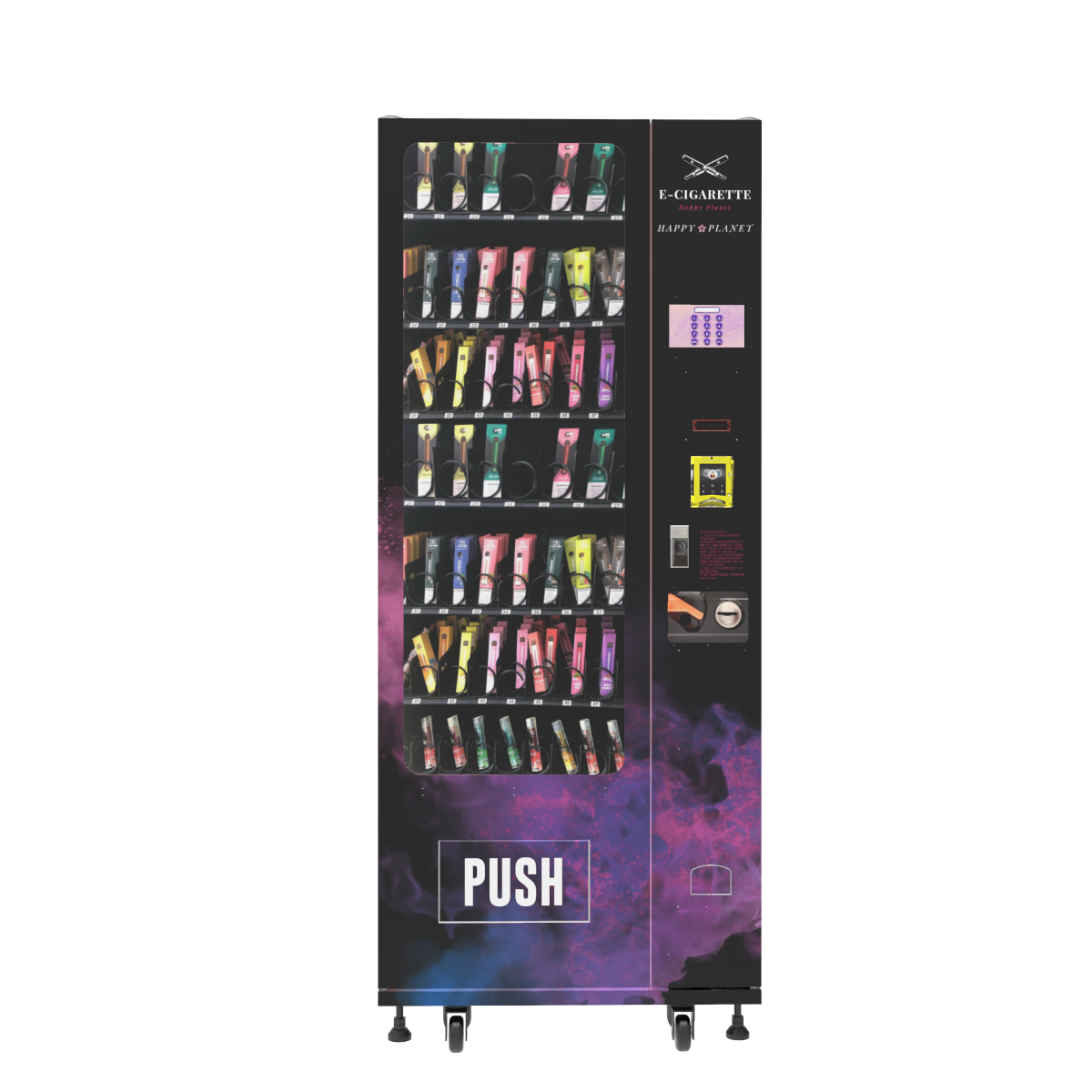
A Vape vending machine for small retail smoke shops usually performs best with products that meet four tests: clear packaging, stable dimensions, predictable demand, and low transaction friction. That normally means pods, disposables, popular device models, chargers, coils, and simple accessories. Once operators overcomplicate the tray mix, refill time grows, mispicks increase, and customer confidence drops.
Best machine-friendly categories
Fast-selling disposables with clean packaging dimensions
Popular closed-system pods
Coils and replacement accessories with steady repeat demand
Charging cables and small convenience add-ons
Entry-level device kits with low return risk
Better handled at the counter
Items that require heavy explanation
Products with too many similar variants that confuse buyers
Fragile packaging that may not dispense cleanly
Low-volume premium items better suited to consultative selling
The simplest rule is this: use the machine for speed and repeatability, and use the counter for advice and upselling. That balance usually gives the best return.
Choosing the right machine size and format
The most common mistake small shops make is buying too large a cabinet. Bigger is not automatically better. If your store has narrow walkways, a large freestanding unit can interrupt traffic and create an awkward dead zone. The right machine should match both SKU count and customer flow.
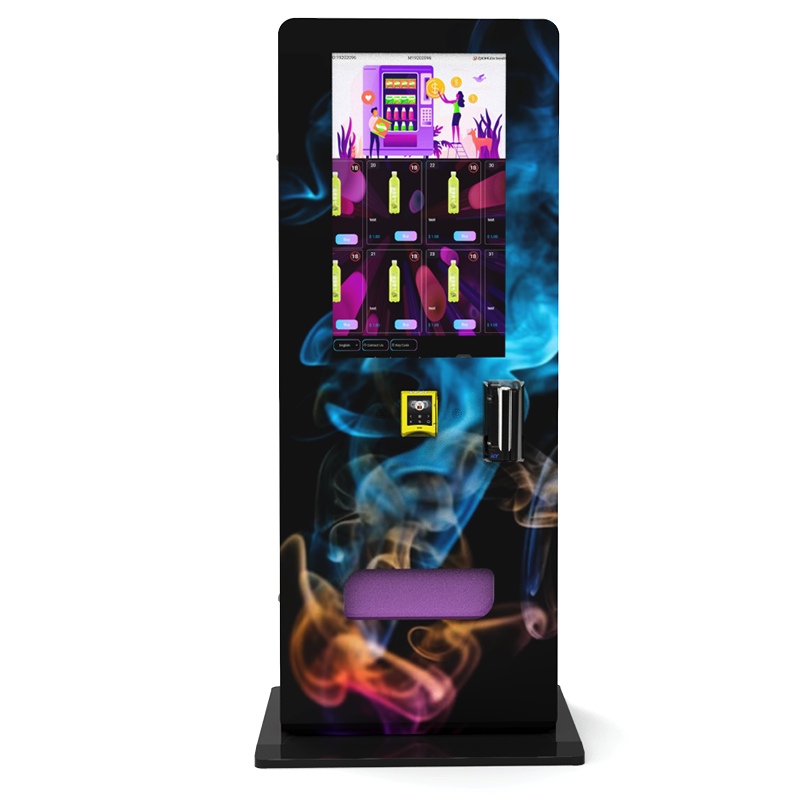
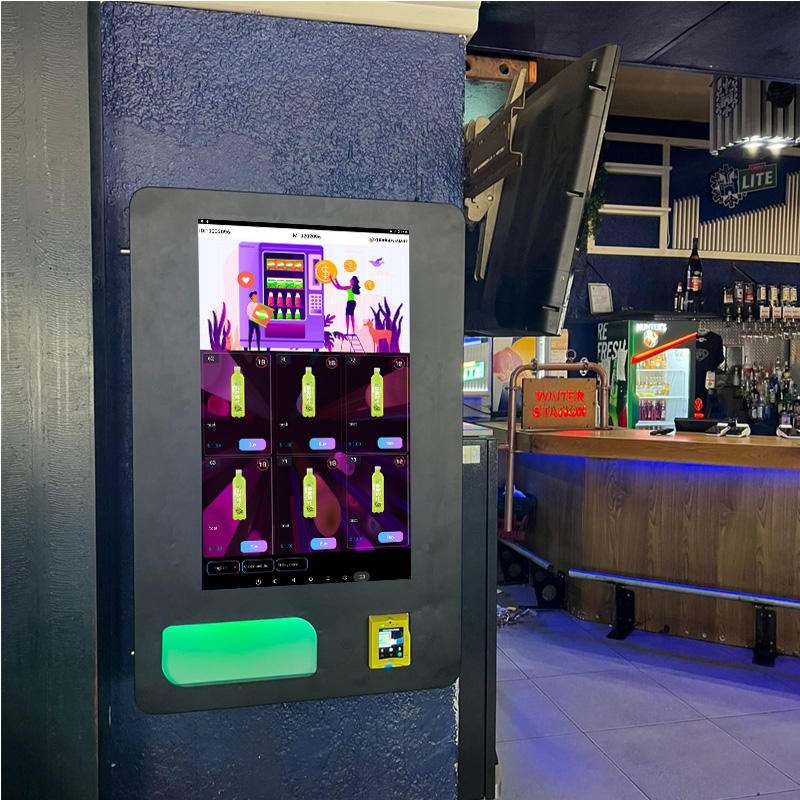
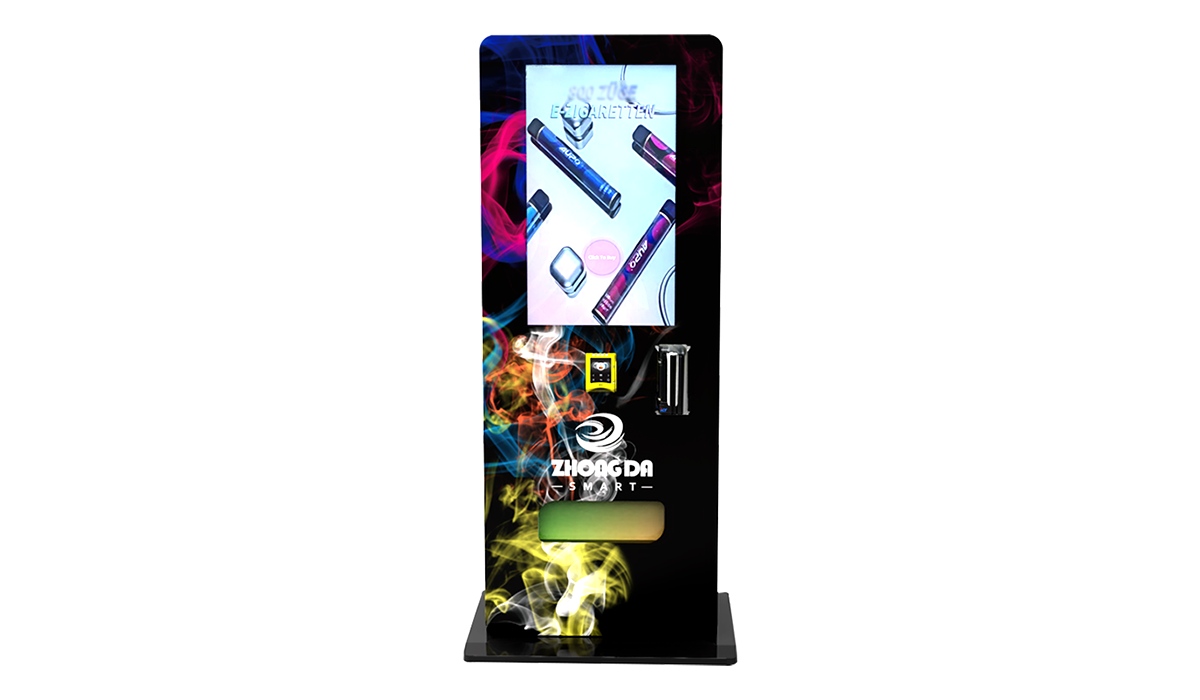
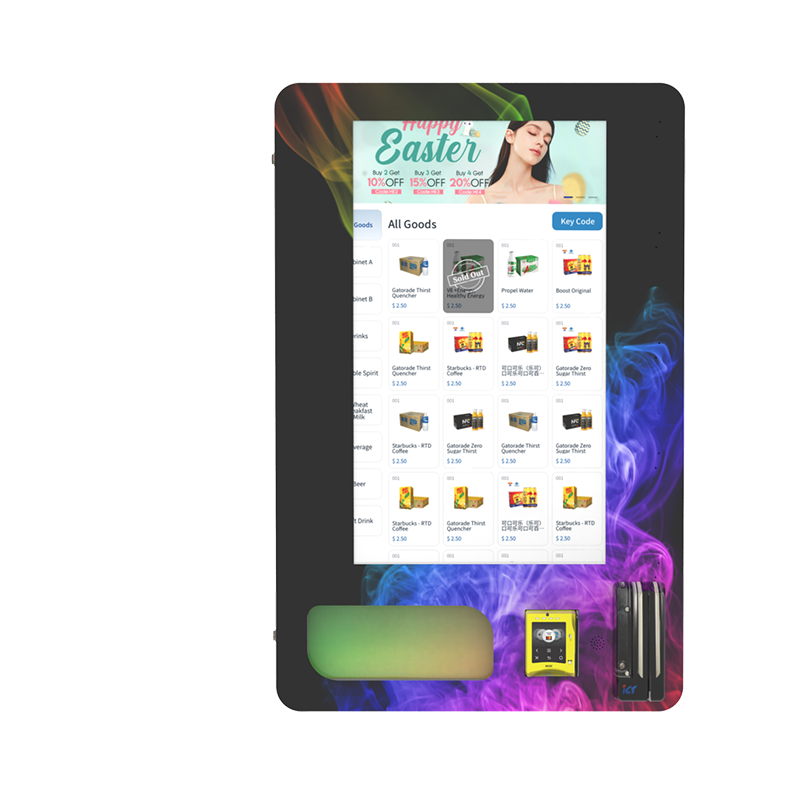
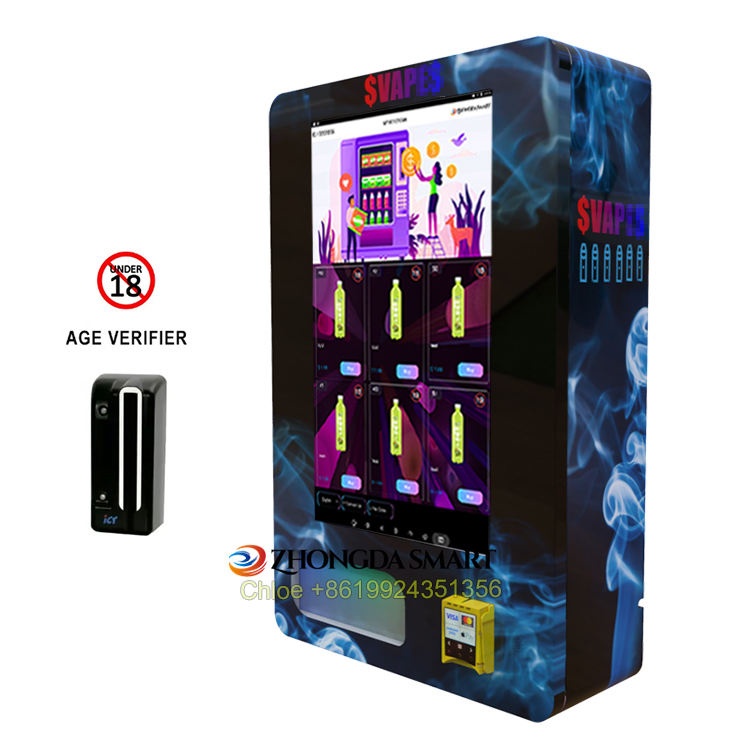
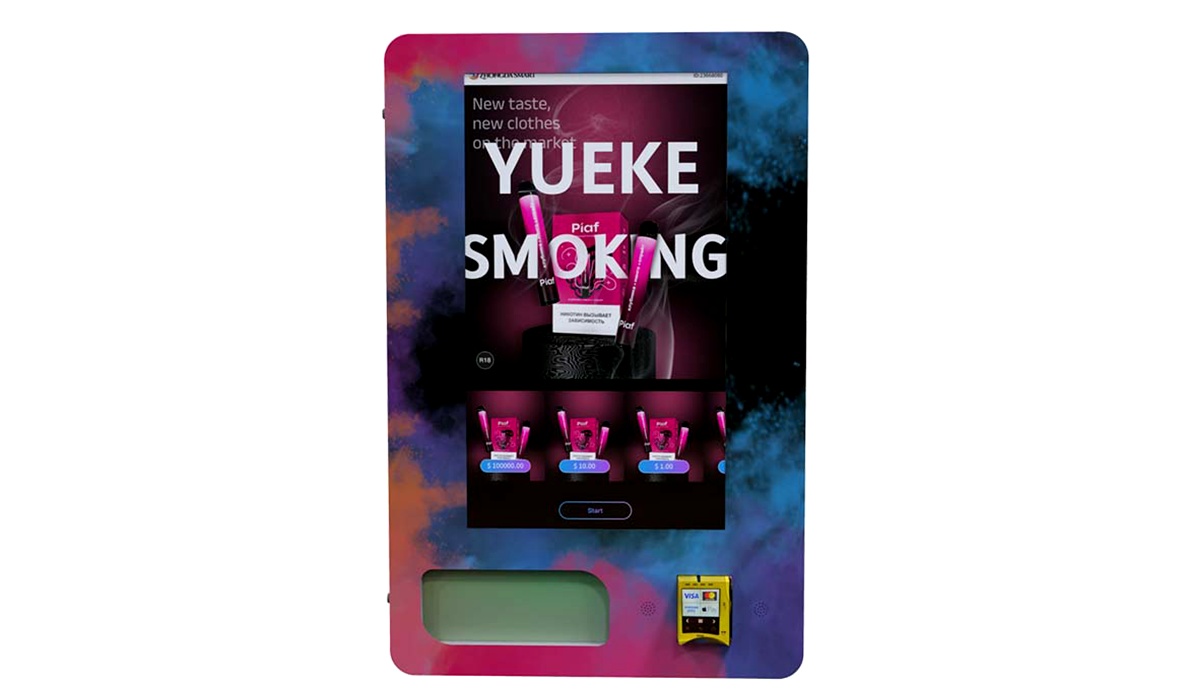
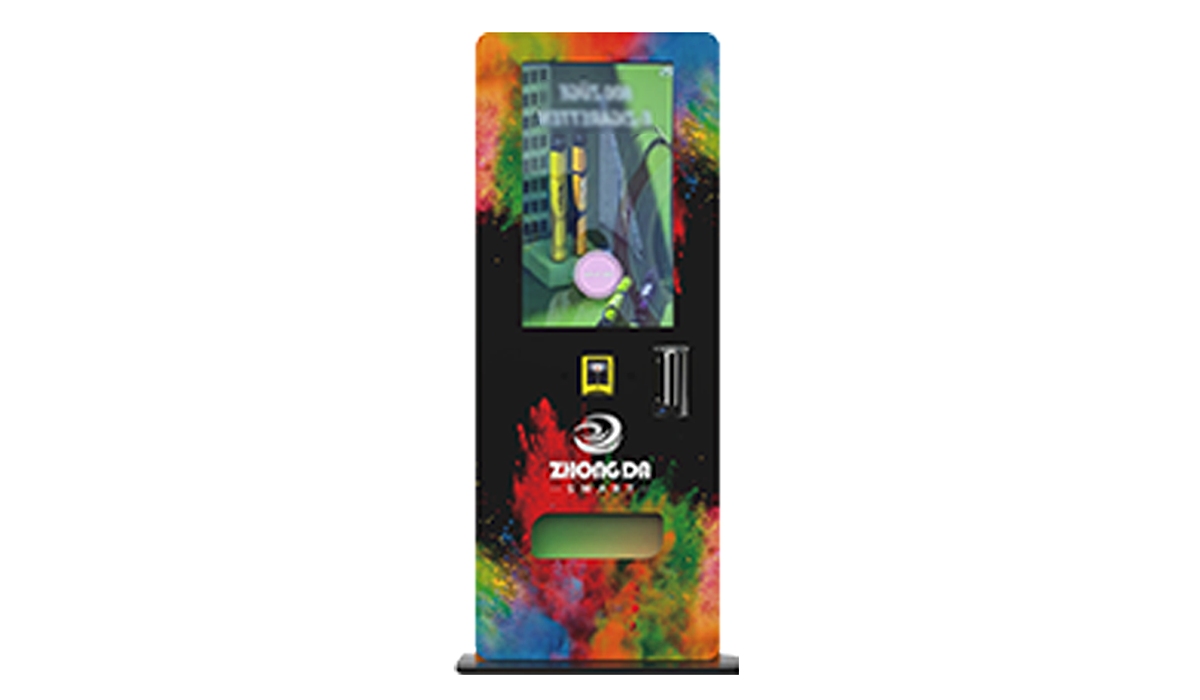
For tight layouts, a wall-mounted vape vending machine is often the most practical starting point. It protects floor space and still gives you a dedicated self-service point. A compact freestanding unit makes sense when you want more capacity or a stronger visual presence. Larger touch-screen cabinets work best when the machine is meant to become a major part of the front-of-store sales strategy.
| Machine type | Best use case | Main advantage | Main trade-off |
|---|---|---|---|
| Wall-mounted compact unit | Very small shop with limited floor space | Minimal footprint | Lower capacity |
| Wall-mounted touchscreen unit | Small shop needing stronger presentation | Space saving plus better browsing | Requires careful placement height |
| Small freestanding unit | Balanced capacity and visibility | Flexible product mix | Uses floor area |
| Large touchscreen cabinet | Stores that want a major self-service zone | High capacity and premium feel | Needs more space and stronger merchandising discipline |
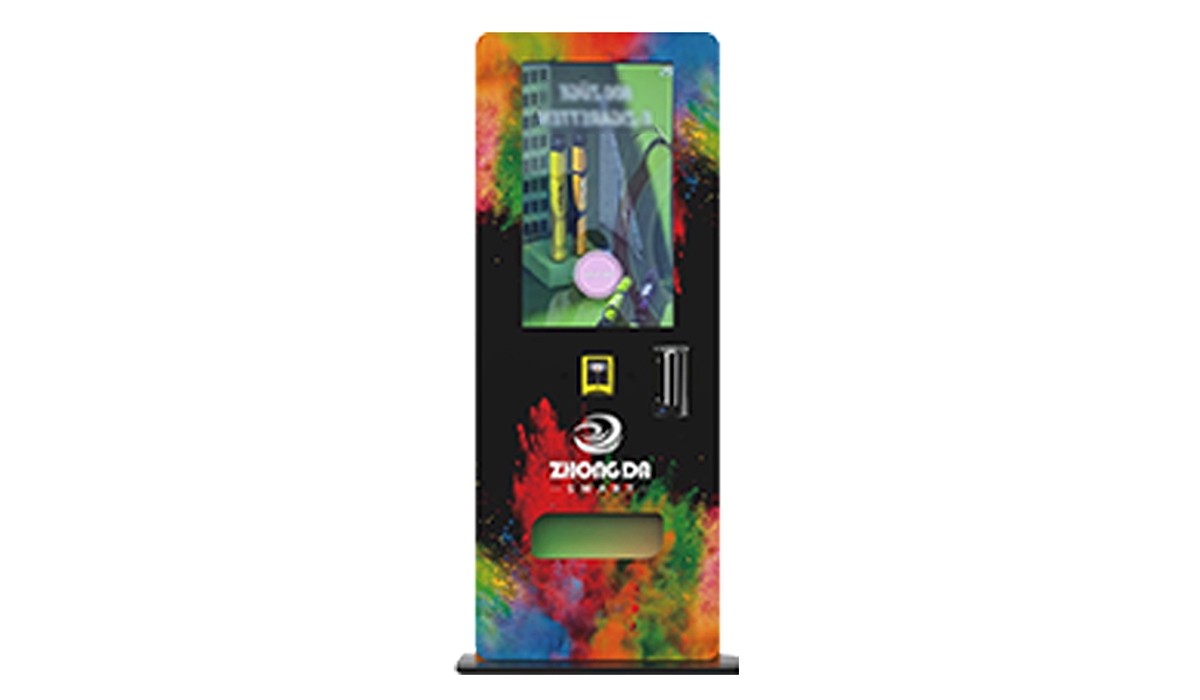
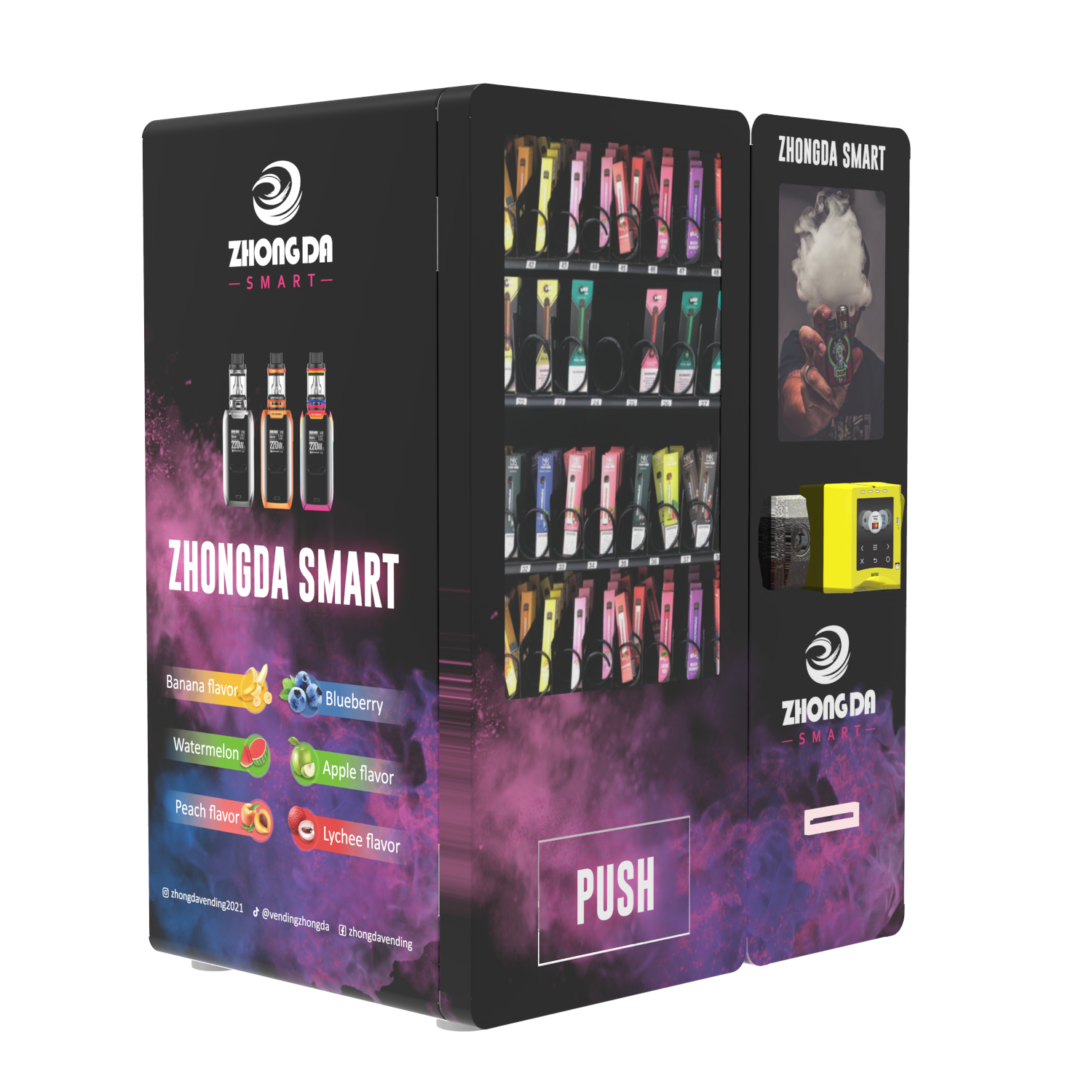
If you want a practical reference point, Zhongda Smart offers several formats that suit compact retail environments, including a wall-mounted compact model, a wall-mounted touchscreen unit, and a broader vape vending lineup for stores that need more capacity or a different cabinet style.
The compliance side that owners cannot afford to ignore
Restricted-product retail lives or dies on process. The machine itself is only half the job. The other half is how the store controls access, verifies age, documents procedures, and places the unit inside a properly supervised environment. No owner should buy a machine first and think about the rules later.
One clear benchmark comes from the FDA. Under the final rule tied to Tobacco 21, retailers must check photo ID for anyone under 30 when selling covered tobacco products, beginning September 30, 2024. Source That alone should tell any shop owner what kind of transaction flow a modern machine needs to support. If your process makes age control harder instead of easier, the setup is wrong.
There is another basic operating principle from federal tobacco retail rules: vending-based sales are tied to adult-only access conditions and controlled environments. Reference In plain terms, do not treat this as a plug-and-play appliance. Treat it as restricted retail infrastructure.
Practical safeguards every operator should build in
Place the machine in a clearly supervised, adult-only retail area where legally required.
Use age-verification hardware or a staff-assisted release process where needed.
Keep audit records for product loading, test vend checks, and age-control procedures.
Set user permissions so only trained staff can change product mapping and prices.
Review local rules before launch, and again before adding new product categories.
That last point matters because rules change faster than cabinet hardware does. Build your operating process so it can adapt.
Operator’s note: The safest stores do not ask, “Can this machine sell restricted products?” They ask, “Can this exact setup prove that we controlled the sale the right way every time?” That mindset prevents expensive mistakes.
What a realistic budget looks like
Small-store buyers usually ask the wrong first question. They ask for machine price before they define machine purpose. Cost depends on cabinet size, tray layout, screen type, payment stack, age-verification setup, remote software, branding, and installation requirements. Two machines can look similar in photos and still land in very different budget ranges once the functional details are finalized.
Instead of chasing the cheapest quotation, compare total operating value. A low-cost machine with weak payment support, poor slot fit, or no remote visibility can become the expensive choice in a few months. Service calls, missed sales, refill inefficiency, and customer frustration will erase the small upfront saving.
| Cost element | Typical impact on budget | Why it matters |
|---|---|---|
| Cabinet size and format | High | Drives materials, freight, and capacity |
| Touchscreen and UI | Medium to high | Improves browsing and brand presentation |
| Payment integration | Medium | Directly affects conversion rate |
| Age-verification hardware | Medium | Critical for controlled sales |
| Remote management | Medium | Reduces refill waste and downtime |
| Custom branding | Low to medium | Useful when the machine is customer-facing |
| Freight and installation | Medium | Often underestimated by first-time buyers |
For small smoke shops, the smartest approach is usually to start with one cabinet built around proven SKUs, track sell-through for 60 to 90 days, and expand only after the product mix and process are stable. That gives you real store data instead of guesswork.
How to estimate return without fooling yourself
A machine should be judged by payback, labor relief, and protected margin, not by revenue alone. Owners often overestimate sales and underestimate friction. A grounded ROI model should use conservative numbers, especially in the first quarter.
Here is a simple framework I use when evaluating a Vape vending machine for small retail smoke shops:
Daily transactions: start with a cautious baseline, not a best-case number.
Average gross profit per vend: use actual store margin after product cost.
Lost-sale recovery: estimate how many sales happen because the machine reduces wait time or keeps products accessible.
Labor offset: measure minutes per shift saved from unlocking, explaining, and handling routine sales.
Shrink reduction: include any reduction in handling loss or theft exposure.
| Input | Conservative example | Monthly value |
|---|---|---|
| Average daily transactions | 12 | 360 vends |
| Average gross profit per vend | $5.50 | $1,980 |
| Estimated payment and software costs | $0.55 per vend blended | -$198 |
| Labor efficiency gain | 20 staff hours saved | Store-specific |
| Net operating contribution before depreciation | — | Measured by store inputs |
The example above is only a framework, but it shows the right logic. If your product margin is healthy and your machine removes friction from repeat sales, payback can be attractive. If your assortment is messy or your placement is weak, even a good cabinet will underperform.
Demand conditions also support a serious look at the category. Grand View Research estimated the global e-cigarette and vape market at USD 45.74 billion in 2025, with long-range growth projected ahead. Source That does not guarantee store-level success, but it does confirm this is not a fringe category that deserves a casual retail setup.
Where to place the machine inside the store
Placement matters almost as much as machine choice. The unit should be visible, easy to supervise, and positioned where adult customers naturally pause. In small smoke shops, that usually means one of three locations: near the counter but not blocking it, along a side wall that customers already face while browsing, or in a controlled corner with clear line of sight from staff.
A Vape vending machine for small retail smoke shops should not be hidden in the back just because there is power there. Poor visibility kills trust. Customers need to understand immediately what the machine sells, how to use it, and where to go if they need help.
Placement rules that usually work
Keep it visible from the main staffed area.
Leave enough standing room for one shopper without blocking traffic.
Use clear overhead or side signage so the machine reads as part of the store, not an afterthought.
Do not place it where glare makes the screen hard to read.
Make refill access easy for staff without moving fixtures.
Good placement also helps the machine function like a silent salesperson. It should catch the eye, simplify selection, and remind regular buyers that the item they came for is available right now.
Features that are actually worth paying for
Manufacturers love long feature lists, but small-store owners need a shorter, tougher filter. Pay for the features that improve compliance, uptime, conversion, and refill efficiency. Skip the rest unless they clearly support your product mix.
High-value features
Reliable cashless payment options
Age-verification integration readiness
Remote inventory and machine-status monitoring
Tray flexibility for different vape package sizes
Stable touchscreen interface with clear product photos
Lockable cabinet with anti-tamper structure
Simple backend controls for price changes and SKU mapping
Features to evaluate carefully before paying extra
Oversized screens that do not add real selling value
Excess lighting effects that distract more than they sell
Overbuilt capacity for a store with a narrow SKU range
Custom elements that complicate service or parts replacement
If you want to compare formats directly, Zhongda Smart’s main vape vending platform highlights the core features most store operators care about: age verification support, cashless payments, remote monitoring, and factory-direct customization. For projects that need more tailored cabinet design, its broader manufacturing capabilities can also be reviewed through the company’s product structure and factory background.
Field note from the factory floor: The best machine is rarely the one with the longest feature sheet. It is the one your staff can refill correctly, your customers can understand instantly, and your store can operate confidently every day.
Why Zhongda Smart belongs on the shortlist
If a buyer is comparing manufacturers, Zhongda Smart deserves a look because it is positioned as a source manufacturer rather than a reseller, and its current product range shows multiple cabinet types built specifically for vape retail. The company’s site presents wall-mounted, compact, and larger touch-screen configurations, while its company information emphasizes direct manufacturing and customization. About the manufacturer
That matters for smoke-shop projects because small-format retail often needs cabinet adjustments. The ideal machine may require tray spacing changes, a different screen size, custom branding, or a modified payment stack. Working with a factory that already builds multiple vape-machine formats usually shortens that process.
On the manufacturer side, Zhongda Smart’s current presentation lines up with what practical buyers want to see:
Dedicated vape-machine category rather than generic vending only
Wall-mounted and compact formats that fit smaller shops
OEM and customization support
Age-verification-ready positioning
Remote management and cashless payment emphasis
For buyers who care about production credibility, the company’s Alibaba profile also describes it as a vending equipment manufacturer with more than 10 years of OEM experience and shows third-party onsite verification information on the listing. Reference
A practical launch plan for a first machine
If this is your first automated retail unit, start lean and disciplined. One machine is enough to prove the model. Build the process first, then scale the hardware.
Choose 15 to 30 proven SKUs rather than filling every slot with slow movers.
Map package dimensions carefully so each item vends cleanly and consistently.
Write a refill checklist with slot numbers, product names, and test-vend steps.
Train staff on age-control and exception handling before the machine goes live.
Track stock-outs, failed vends, and refund causes for the first month.
Adjust the assortment every two weeks until the machine stabilizes.
That discipline matters because the first 30 days tell you almost everything: whether your core buyers trust the machine, whether your best-selling items are machine-friendly, and whether the cabinet is supporting the store or adding complexity.
Common mistakes that quietly ruin performance
Too many SKUs: variety feels good on paper but usually hurts clarity and refill speed.
Bad slot planning: a strong cabinet still fails if package fit is wrong.
Poor screen content: if buyers cannot identify the product fast, they walk away.
Weak placement: hidden machines do not become habits.
No refill discipline: empty columns train customers to ignore the unit.
No compliance workflow: restricted retail cannot depend on guesswork.
Most failures are not hardware failures. They are operating failures. The stores that win with a Vape vending machine for small retail smoke shops are the ones that treat it like a managed retail channel.
Final takeaway
A Vape vending machine for small retail smoke shops is worth serious consideration when the goal is to sell repeat-purchase vape products faster, more securely, and with less strain on staff. The right machine can protect margin, improve store flow, and give a small shop a more modern selling point without demanding a large footprint. The wrong machine, or the right machine with a lazy operating process, will only add cost.
If you keep the product mix tight, choose the right cabinet size, build a compliance-first workflow, and buy from a manufacturer that understands restricted retail, the model can be very effective. For many small stores, that is exactly where a Vape vending machine for small retail smoke shops stops being an interesting idea and starts becoming a smart retail asset.
Frequently Asked Questions
Is a vape vending machine a good fit for a very small smoke shop?
Yes, if the store has repeat purchase traffic, limited counter space, and a need for tighter product control. Compact wall-mounted or small freestanding units usually work best in smaller footprints.
Which machine format is usually best for a tight layout?
A wall-mounted or compact model is usually the safest choice because it protects floor space while still giving the store a dedicated self-service point for fast-moving products.
What products sell best in a vape vending machine?
Fast-turning disposables, pods, coils, chargers, and simple accessories usually perform best. Items that need heavy explanation are better handled at the counter.
What matters most when comparing manufacturers?
Look at cabinet stability, payment options, age-verification readiness, remote monitoring, tray flexibility, customization support, and whether the manufacturer has direct experience building vape-specific machines.
How should a store estimate payback?
Use conservative daily transaction counts, real product margins, payment costs, labor savings, and shrink reduction. Do not rely on optimistic traffic assumptions.
Why is Zhongda Smart relevant for this type of project?
Because Zhongda Smart offers vape-focused machine formats, including wall-mounted and compact options, along with factory-direct customization and a product structure that fits restricted, adult-only retail environments.