Age verification compliance is easy to oversimplify. A retailer buys an ID scanner, a vending operator adds a camera, the software returns a green check, and everyone assumes the compliance problem is solved. In practice, the verification device is only one part of the system. The product being sold, the location, the applicable age threshold, the way the customer is verified, what happens when verification fails, how personal data is handled, and who is responsible for day-to-day operation all matter.
That distinction is especially important for unattended sales. A vending machine can read an ID perfectly and still be deployed in a place where the underlying sale is not permitted. A retailer can also have strong hardware and still create risk through an override policy, outdated software, poor staff training, or unnecessary storage of identity data.
This guide is written for retailers, venue owners, distributors and vending operators who need a practical framework for reviewing an age-restricted sales setup. It uses tobacco and e-cigarette sales as a recurring example because the current U.S. federal rules give vending operators a clear illustration of why location rules and age-checking rules must be considered separately. Other products can follow different licensing, sales and age-verification requirements.
Compliance in one sentence: an age-verification system should support the legal sales process that applies to the actual product and location; it should not be treated as a substitute for that process.
Start With the Product and Location, Not the Scanner
The first compliance question is not which scanner to buy. It is whether the proposed sale is allowed in the first place.
A retailer selling an age-restricted product from a staffed counter may be subject to one set of rules. A vending operator selling the same product without an employee standing next to the machine may face additional restrictions. A business operating in several states or countries can also encounter different minimum ages, licensing requirements, permitted forms of identification, privacy obligations and restrictions on unattended sales.
Before specifying hardware, write down four facts: what product will be sold, where the sale will occur, whether the transaction is staffed or unattended, and which authority regulates that sale. Those answers determine the questions you should ask the equipment supplier.
This sounds basic, but it prevents a common purchasing mistake: choosing a machine because the manufacturer advertises “age verification” and only later discovering that the machine configuration does not match the rules at the intended location.
For U.S. Tobacco and E-Cigarette Sales, Know the Federal Baseline
For tobacco products in the United States, including e-cigarettes and other covered tobacco products, the federal minimum age of sale is 21. Current FDA rules also require retailers to check photographic identification for customers under 30 who attempt to purchase tobacco products.
Vending sales have an additional restriction. Tobacco products, including e-cigarettes, may not be sold through a vending machine in a facility where individuals under 21 are present or are permitted to enter at any time.
That rule changes the way an operator should evaluate a proposed location. An ID reader on the machine does not create an exception to the facility restriction. If the venue allows people under 21 to enter, stronger scanning hardware does not turn it into an eligible tobacco-vending location under the federal rule.
The same point is worth repeating when a site changes how it operates. A venue that is normally adults-only but hosts an all-ages event may need a different compliance analysis from a venue that maintains adult-only access at all times. Equipment decisions should therefore be connected to the venue's operating policy, not only to the machine specification.
State, local and tribal requirements can add further obligations. They may affect licensing, product categories, minimum-age procedures, vending permits, recordkeeping or enforcement. A federal rule is a baseline, not a promise that the same installation is lawful everywhere in the country.
For U.S. tobacco vending projects: confirm the venue's 21+ access status before treating the machine's ID-verification features as relevant to compliance.
Staffed Retail and Unattended Vending Need Different Controls
A staffed retailer can rely on a trained employee for parts of the age-checking process. The employee can ask for identification, compare the customer with the photograph, inspect the document, refuse the sale, or escalate an unusual case to a manager.
An unattended machine does not have that flexibility. The decision path has to be designed into the system. If the machine cannot read the document, loses its network connection, receives an uncertain result, or detects a hardware fault, it needs a defined response.
That is why an age-verification vending machine should be evaluated as a complete transaction system rather than as a cabinet with an ID reader attached. The verification result must control the restricted sale. A scanner that works independently from the vending controller can leave an unexpected gap if communication fails or a software error occurs.
For operators comparing complete configurations, the relevant questions include how the verification module communicates with the main controller, whether restricted product selection can occur before verification, whether payment is authorized before or after the age check, and what the machine does when the verification result is unresolved.
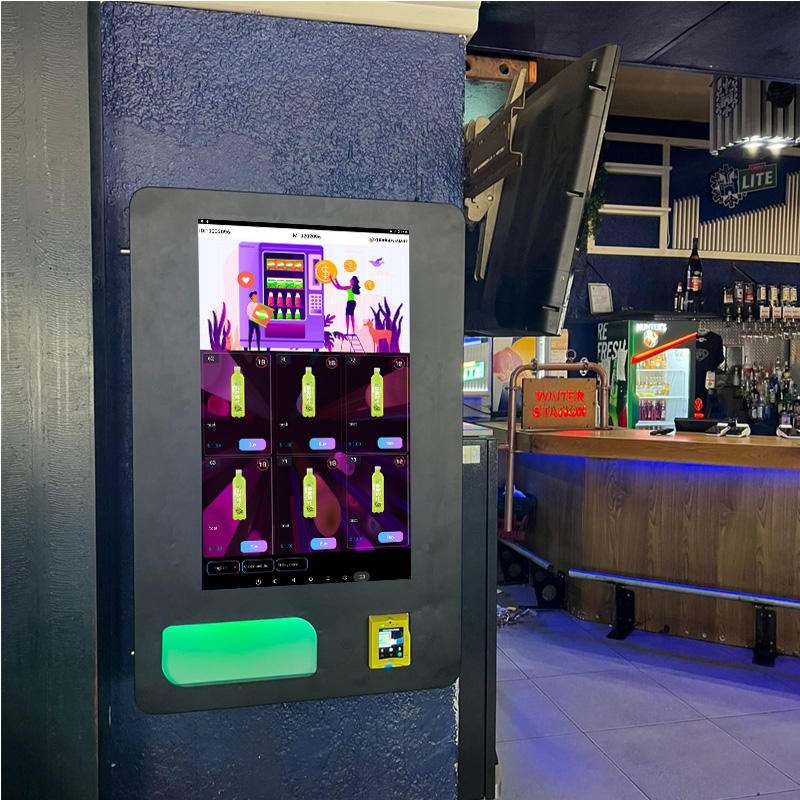
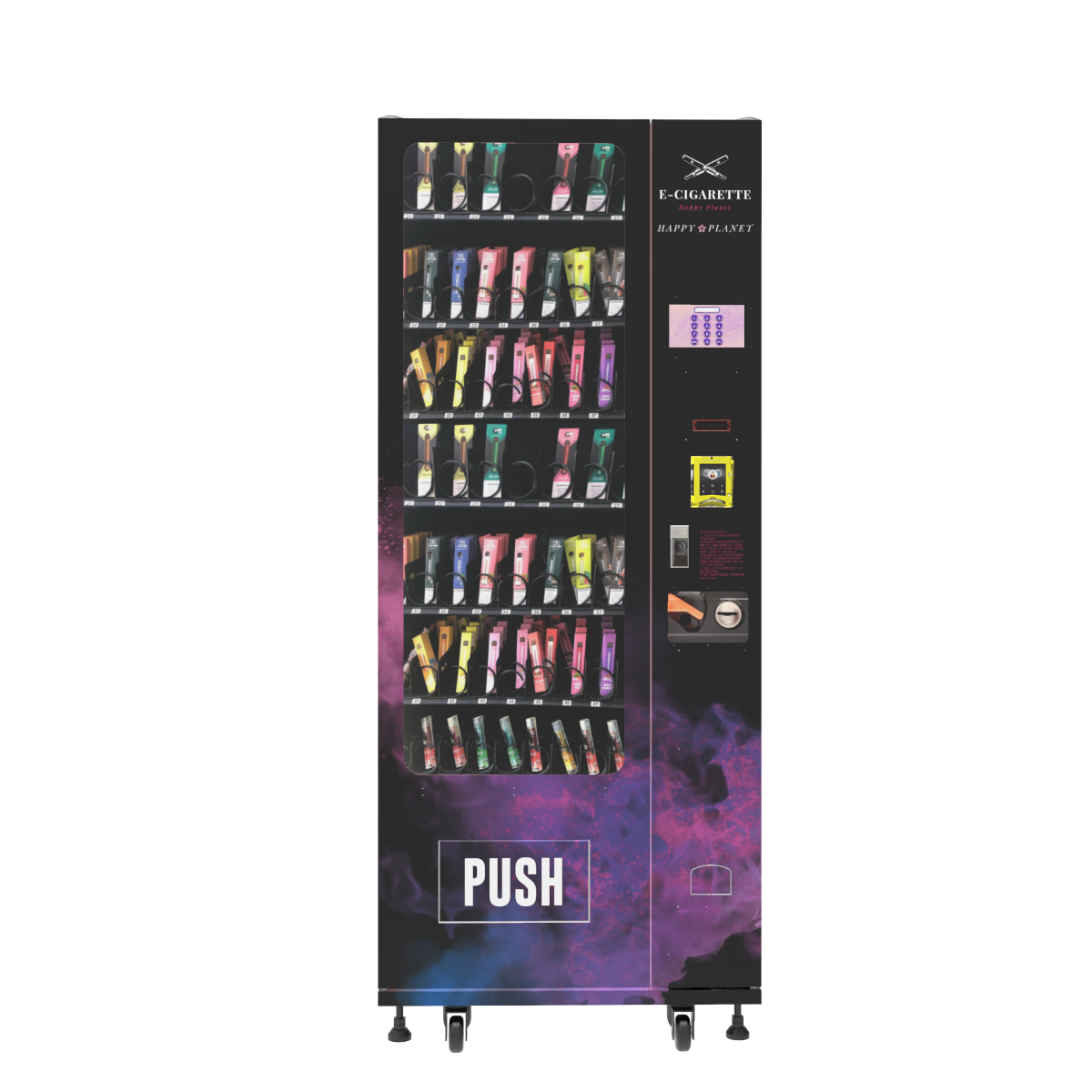
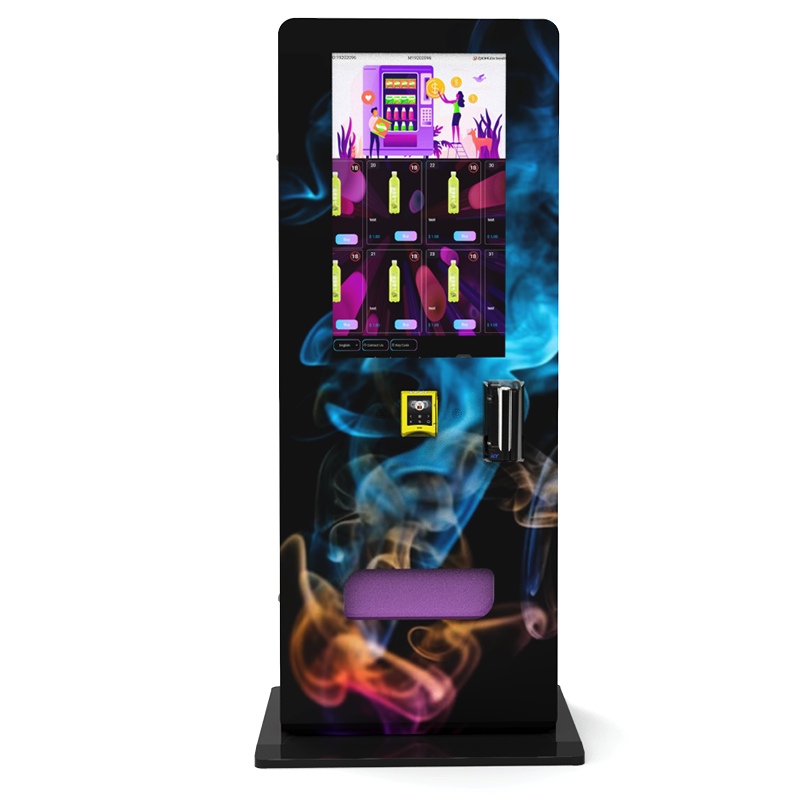
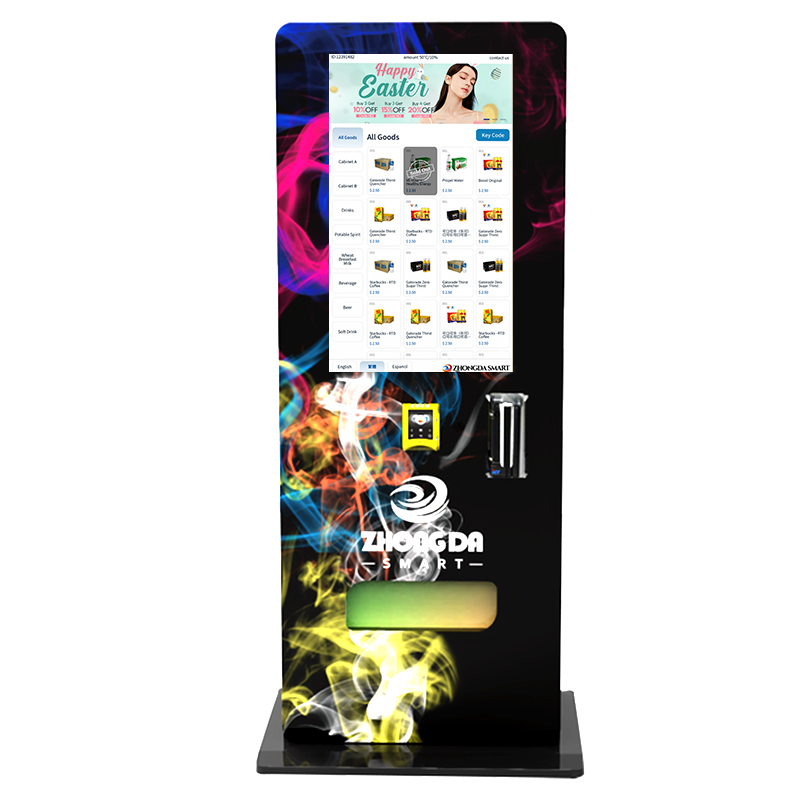
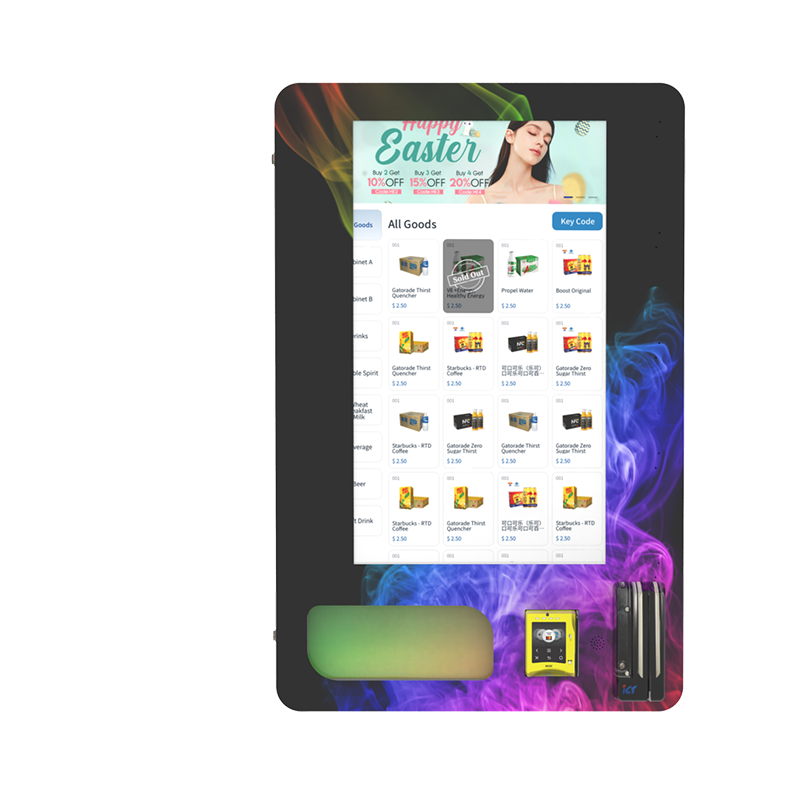
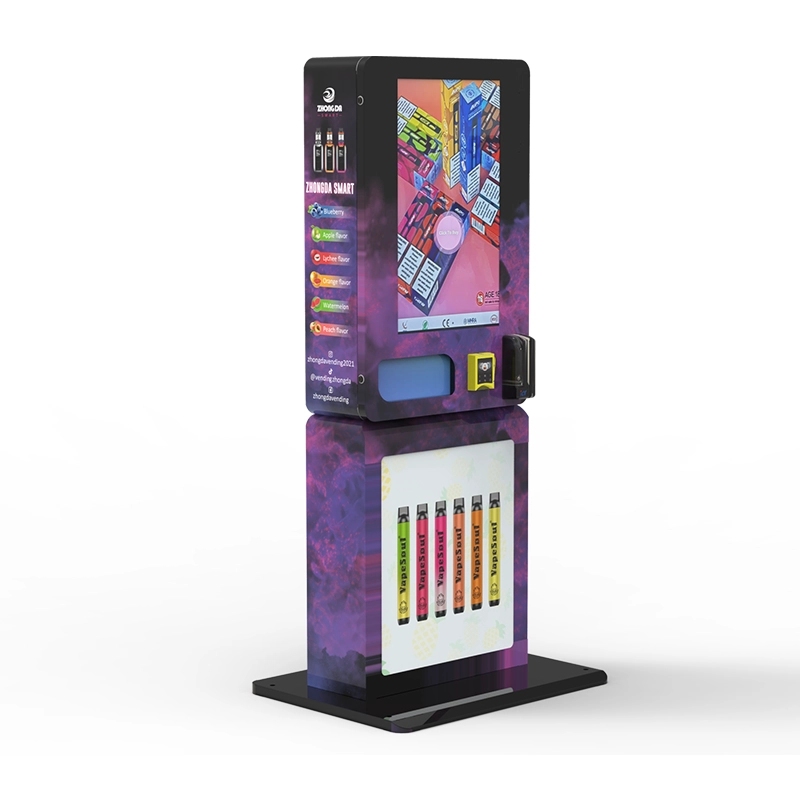
Our age verification vending machine and ID scan vending machine pages show examples of integrated vending configurations. Those product configurations can support an age-checking workflow, but the operator still has to confirm that the intended use and location satisfy the applicable rules.
What the Verification System Should Actually Do
Age verification is often described as one step, but a commercial system can contain several separate checks.
| Layer | Typical Purpose | Important Limitation |
|---|---|---|
| Credential capture | Reads a barcode, machine-readable zone, document image or other supported credential data | Successful capture does not by itself prove that the document is genuine |
| Data extraction | Obtains fields needed for the transaction, such as date of birth or expiration information | The system should not collect unrelated data merely because it is available |
| Age calculation | Compares the complete date of birth with the configured minimum-age rule | A correct calculation still depends on the underlying credential being acceptable |
| Document checks | Evaluates supported document characteristics or consistency between data zones | Capabilities vary significantly by scanner, document type and software |
| External data verification | Compares selected data with an authorized external source where available | A data match is not necessarily physical-document authentication |
| Face comparison | Compares the presenter with the portrait associated with the credential | Face matching is not the same as liveness detection |
| Transaction authorization | Allows or blocks the restricted vending flow based on the required checks | The control logic must fail safely when a required check is unavailable |
The useful question for a retailer is therefore not “Does this machine verify age?” It is “Which of these checks are included, which ones are required for my use case, and what does the system do when one of them cannot be completed?”
Barcode Reading Is Not the Same as Document Authentication
This distinction deserves its own section because it is frequently blurred in sales material.
Many identity documents include machine-readable information. A compatible scanner can decode that information and pass fields such as a date of birth to the age-calculation logic. That is useful, but the ability to decode data does not automatically prove that the physical credential is authentic.
More advanced systems may compare data from different document zones, evaluate document images, or use optical features supported by the hardware. Some scanners include controlled visible, infrared or ultraviolet illumination. Others do not. A supplier should only claim checks that the specific hardware and software configuration actually performs.
Claims such as “detects every fake ID” or a single unexplained accuracy percentage should be treated cautiously. Counterfeit detection performance depends on the document set, test method, image quality, algorithm, threshold and type of fraud being tested. If a vendor gives a percentage, ask for the test conditions behind it.
Face Matching Can Add a Layer, but It Is Not Automatic Compliance
Face comparison can be useful when a system needs to establish a stronger link between the credential and the person presenting it. In that workflow, a camera captures a live image and the software compares it with the portrait associated with the ID.
That does not make the decision infallible. Face-recognition performance varies among algorithms and operating conditions. Lighting, camera angle, image quality and the matching threshold can affect false matches and false rejections.
Liveness or presentation-attack detection is another separate capability. A system that compares two facial images does not necessarily determine whether the camera is looking at a live person rather than a photograph, screen or other presentation. If liveness matters to the deployment, it should be listed separately in the specification.
There is also a privacy consequence. In the EU, biometric data used for the purpose of uniquely identifying a person receives special protection under the GDPR. In the United States, biometric privacy requirements can vary by state, and consumer-protection concerns can arise when businesses make unsupported claims about biometric accuracy, security or data use.
For those reasons, “more biometric features” should not automatically be treated as “more compliant.” The better configuration is the one that uses the verification measures that are necessary and supportable for the actual use case.
Location Eligibility Is a Compliance Control
Operators often spend more time evaluating scanners than evaluating the place where the machine will sit. For unattended age-restricted sales, that order should usually be reversed.
A location review should document who can enter, when they can enter, whether access rules change for special events, who controls the premises and what product is being sold. For U.S. tobacco and e-cigarette vending, the federal 21+ facility restriction makes this especially important.
Do not rely only on how the venue describes itself. “Adult-oriented,” “bar,” “lounge” or “nightclub” does not answer the regulatory question by itself. The operator should understand the venue's actual access policy and whether people under the relevant age can ever be present or permitted to enter.
If the machine is installed by one company but the venue is operated by another, the contract should also address practical responsibilities. Who monitors changes to access policy? Who tells the machine operator about an all-ages event? Who can take the machine out of service if the location no longer fits the approved operating conditions?
A short written site-approval record is much more useful than relying on a verbal assurance made when the machine was delivered.
Do Not Collect More Identity Data Than the Transaction Needs
Age verification can expose a system to more personal data than a normal vending transaction. A driver's license can contain a name, address, date of birth, document number and other information. A face-enabled system may also process facial images or biometric templates.
The fact that a scanner can read those fields does not mean the operator needs to keep them.
For many age-gated transactions, the operational question is narrow: did the required verification process succeed, and was the person old enough for the product under the configured rule? If the operator has no defined legal or operational reason to retain a full document image, home address or complete document number, collecting and storing those fields can create unnecessary exposure.
Under the GDPR, organisations are expected to follow principles including lawfulness, fairness and transparency, purpose limitation and data minimisation. They should collect only personal data that is necessary for the stated purpose. Biometric data used to uniquely identify a person is treated as a special category of personal data and requires additional analysis.
U.S. requirements are not identical to the GDPR and can differ among states. That makes broad claims such as “our system is GDPR compliant” or “our scanner is legal in every state” unhelpful unless the supplier is describing a defined processing activity and legal context.
Before deployment, ask the vendor for a plain-language data-flow description. It should answer what the machine captures, which data is processed locally, what is sent to third parties, what is stored, how long it is stored, who can access it, how it is protected and how deletion works.
If the answer is simply “everything is encrypted,” keep asking. Encryption is important, but it does not explain whether the data should have been collected or retained in the first place.
Transaction Logs Should Prove Operations Without Becoming an ID Archive
Retailers and vending operators often want an audit trail. That can be reasonable, but a useful audit trail is not the same thing as storing a copy of every customer's identification document.
A transaction record might contain the time, machine or store identifier, product category, verification method used, result, relevant software version, error code and whether an authorised staff intervention occurred. The exact fields and retention period should be designed around legal obligations and operational needs.
Be careful with full ID numbers, document images and facial images. If those data are not necessary for the purpose, retaining them can increase privacy and security risk without improving the operator's ability to demonstrate that the system was functioning.
Retention should also have an end point. “Keep everything forever in case we need it” is not a strong privacy strategy. Define a retention rule, document the reason for it, and make sure the system can actually delete information when the retention period expires.
Offline Operation Needs a Written Rule
Connectivity is a practical issue for vending machines in bars, clubs, entertainment venues and remote locations. Wi-Fi can disappear. Cellular coverage can be inconsistent. Cloud verification services can have outages.
Whether a machine may continue operating offline depends on which verification steps are required for the transaction. If the required check is performed locally, the machine may still have a valid verification path. If a required external service is unavailable, continuing the sale by silently skipping that step can defeat the purpose of the system.
The correct behavior should be designed before deployment, not improvised during an outage.
Operators should know which functions require connectivity, how long the machine waits before timing out, what message the customer sees, whether restricted sales are disabled, what is logged, and how service is restored. A cellular backup can improve availability, but it does not replace a defined fail-safe policy.
Manual Overrides Need More Control Than a Hidden Button
Staffed locations sometimes ask for a manager override in case a valid customer is rejected. That can be useful operationally, but an unrestricted override can become the weakest part of the system.
If an override is permitted under the applicable rules and operating policy, define who can use it, what independent check they must perform, what information is logged and whether repeated overrides trigger review. Avoid shared PINs written on the side of the machine or generic service menus that allow any employee to bypass verification.
For fully unattended installations, a remote override deserves even more scrutiny. The operator should understand how the remote reviewer establishes the customer's identity, how the session is authenticated, what evidence is retained and whether the process is acceptable in the jurisdiction where the machine operates.
If the legal or operational basis for an override is unclear, the safer default is not to invent one.
Staff Training Still Matters When the Machine Does the Scan
Automation does not remove people from the compliance process completely. Venue staff may still receive customer complaints, restart the machine, clean the scanner, change products, open the cabinet or call the operator when verification repeatedly fails.
Training should explain what staff may do and, just as importantly, what they may not do. A well-meaning employee should not unplug the verification module to “get the machine working,” use a service mode to complete a sale, or approve a customer because they look old enough after the system rejected the transaction.
Staff also need a simple escalation route. If a scanner repeatedly rejects valid documents, the answer should be to take the machine out of restricted-sale service and report the fault, not to normalize bypassing the check.
A one-page operating procedure near the service area is often more useful than a long training manual nobody reads.
Supplier Due Diligence: Ask for Specific Answers
The phrase “compliant age verification” is too broad to evaluate a supplier. A serious technical discussion should get more specific quickly.
| Question | Why It Matters |
|---|---|
| Which credentials are supported? | “Supports ID cards” does not tell you which jurisdictions, document families or machine-readable formats have been tested. |
| What does the system actually verify? | Barcode reading, document analysis, issuing-source checks, face comparison and liveness are different capabilities. |
| Which checks are local and which are cloud-based? | This determines connectivity requirements, latency, data transmission and outage behavior. |
| What data is retained? | You need to understand privacy exposure before collecting real customer data. |
| How does the verification result control the sale? | The machine should not dispense a restricted product when a required check has not returned an approval. |
| How are updates delivered? | Document support, software components and security fixes change over the life of the machine. |
| What happens when hardware fails? | Serviceability affects both downtime and the temptation to bypass a broken verification component. |
| Can you provide test conditions for performance claims? | Unexplained accuracy percentages are difficult to compare and easy to misunderstand. |
| Who supports third-party components? | The scanner, payment terminal, verification API and vending controller may come from different suppliers. |
| Can the configuration be documented before production? | Written specifications reduce disputes about what was actually included in the machine. |
For custom vending projects, this is also the point where OEM and ODM requirements should be separated from compliance claims. Cabinet size, branding, screen layout and product capacity can be customized. The legal acceptability of the final deployment still depends on the destination market and operating conditions.
Maintenance Is Part of Compliance
A system that worked at installation can drift into poor performance if nobody maintains it. Scanner windows become dirty, cameras move, lighting changes, software gets old and network settings are modified by venue staff.
Maintenance does not need to be complicated, but it should be scheduled. Clean the capture area using the method recommended by the hardware supplier. Review repeated scan errors rather than assuming they are all customer mistakes. Check that the machine is running the expected software version. Confirm that the controller still blocks restricted dispensing when the verification module is disconnected or unavailable.
Updates should also be controlled. “Automatic updates” sounds convenient, but operators should know what is changing, when changes are deployed, whether rollback is possible, and whether an update can alter the verification workflow.
For a fleet, version tracking becomes important. If ten machines behave differently because they are running three different software releases, troubleshooting and demonstrating consistent procedures becomes harder.

Test the Failure Modes Before Customers Find Them
A normal demonstration shows what happens when everything works. A compliance review should also test what happens when it does not.
Try a damaged but legitimate credential. Disconnect the network. Cover the camera. Restart the verification module while the vending controller stays powered. Interrupt the process after payment has started. Trigger a scanner error. Attempt to enter service mode during a transaction. Confirm that the machine's behavior matches the operating policy in each case.
The objective is not to defeat the security system. It is to confirm that predictable faults do not accidentally create an unverified path to a restricted sale.
Record the test date, machine identifier, software version and result. For a multi-machine deployment, a small acceptance-test form can give the operator a consistent baseline before each unit goes live.
Have a Process for Incidents and Repeated Verification Problems
Compliance problems are easier to manage when the response is decided before an incident happens.
If a machine appears to have completed an improper restricted sale, preserve the relevant operational records, identify the machine and software version, suspend the affected sales path if necessary, and investigate what actually happened. Do not immediately assume that the scanner was at fault. The problem may involve location access, product configuration, an override, controller logic, software, staff intervention or a maintenance issue.
Repeated false rejections also deserve investigation. They may indicate a dirty reader, changing lighting, a document format issue or an overly strict threshold. A high rejection rate should not be solved simply by weakening verification settings without understanding the cause.
When legal reporting obligations may apply, obtain advice for the relevant jurisdiction rather than relying on a generic vendor procedure.
Budget for the Compliance System, Not Just the Cabinet
There is no reliable universal price for a “compliant” vending machine because compliance is not a component with one standard cost.
A realistic project budget can include the vending cabinet, ID-reading hardware, optional camera or biometric functions, controller integration, payment hardware, network connectivity, software or verification-service fees, installation, spare parts, maintenance, privacy work, licensing and local professional advice.
Recurring costs matter as much as the purchase price. A low-cost machine tied to an expensive verification subscription may cost more over its service life than a higher-priced configuration. The opposite can also be true.
Ask for an itemized quotation and a list of recurring charges. Avoid using an ROI claim from another operator as proof that a particular deployment will make financial sense. Traffic, product margin, venue commission, taxes, service costs and local restrictions can change the economics substantially.
A Practical Pre-Deployment Compliance Review
Before a machine or automated kiosk is switched on for real customers, the operator should be able to answer the following points in writing.
Product: What age-restricted product is being sold, and is that product authorized for sale in the destination market?
Minimum age: What age rule applies to this product and location?
Location: Is unattended vending permitted at the proposed site, and do access restrictions need to be maintained?
Licensing: Which business, retail, vending, tobacco or other licenses are required?
Verification method: Which credentials are accepted and what checks are performed?
Controller logic: Does a failed or unresolved verification block restricted dispensing?
Offline behavior: Which functions continue when the network is unavailable?
Overrides: Are overrides allowed, who can use them, and how are they controlled?
Privacy: What personal and biometric data is collected, transmitted, retained and deleted?
Records: What operational evidence is retained, for what purpose and for how long?
Updates: Who is responsible for software, document-support and security updates?
Maintenance: Who cleans, tests and services the verification equipment?
Venue communication: Who reports changes in access policy or operating conditions?
Incident response: Who can suspend the machine and investigate a suspected compliance problem?
Review date: When will the deployment be checked again against current rules?
If several of these questions do not have an owner, the project is not ready simply because the machine has arrived.
Europe Requires Country-Level Review
It is risky to describe a vending configuration as “EU compliant” without identifying the country and product.
The EU Tobacco Products Directive establishes important rules for tobacco and related products, but national law still matters for minimum-age requirements and retail arrangements. The Directive itself refers to the minimum age requirements of the Member State of destination in the context of cross-border distance sales. Member States can also maintain or introduce national provisions in areas allowed by EU law.
Privacy analysis is another layer. GDPR principles apply to personal-data processing, and biometric data used to uniquely identify a person can receive special-category protection. That means a technical feature that may be attractive from a fraud-prevention standpoint can create additional privacy work.
For an operator planning several European markets, do not assume one verification workflow can be copied unchanged from country to country. Create a country matrix covering product rules, minimum age, permitted sales channel, accepted verification method, data handling and any registration or licensing requirements.
Common Compliance Mistakes Are Usually Process Mistakes
The most expensive errors are not always caused by weak hardware.
One common mistake is treating a green verification result as proof that every legal requirement has been satisfied. The machine may have confirmed an age threshold while the venue itself is not eligible for that type of unattended sale.
Another is allowing staff to work around the system whenever a customer complains. A manual override that becomes routine is no longer an exception; it is a parallel sales path.
Data retention is another frequent weak point. Operators sometimes keep complete ID images “for compliance” without identifying a rule that requires those images. That can create a larger privacy and security burden than necessary.
Outdated documentation also causes problems. A machine can receive software updates while the written operating procedure still describes the old workflow. Staff then follow instructions that no longer match the screen in front of them.
Finally, avoid assuming that the supplier owns the entire compliance question. The manufacturer can document what the machine does. The operator and venue still need to determine whether those functions fit the law and operating conditions where the machine will be used.
How to Document a Sensible Compliance Program
A small operator does not need a hundred-page compliance manual. What matters is that the important decisions are written down and can be followed consistently.
A practical file can include the site approval, applicable licenses, machine configuration, accepted verification methods, data-flow description, retention policy, override procedure, maintenance schedule, software version records, training acknowledgement and incident contacts.
For a fleet, keep machine-level information separate from the general policy. The policy explains how the business operates; the machine record shows which hardware and software version was actually deployed at a particular location.
Review the file when the product mix changes, the venue changes its access policy, the verification provider changes, a significant software update is installed, or the law changes. Compliance documentation is most useful when it reflects current operations rather than the day the machine was purchased.
Where the Equipment Manufacturer Fits In
A manufacturer should be able to document the technical behavior of the machine without pretending to provide universal legal approval.
For a project involving age-restricted vending, that includes the supported reader, controller interface, software functions, network requirements, data options, payment integration, service access and failure behavior. If the machine is customized, the final approved specification should identify those choices before production.
Zhongda Smart manufactures vending-machine configurations that can be equipped with age-verification hardware and software integrations. Buyers can review the broader vape vending machine range and then specify the destination market, product category and required verification workflow when requesting a quotation.
That is a more useful starting point than asking for a machine that is “compliant everywhere.” No manufacturer can responsibly turn a technical feature into a universal legal conclusion across different products and jurisdictions.
Frequently Asked Questions
What does age verification compliance mean for a retailer?
It means the retailer's sales process meets the rules that apply to the product, customer and location. Age checking may be one part of that process, but licensing, permitted sales channels, location restrictions, privacy, staff procedures and recordkeeping can also matter. A scanner should support the compliance process rather than be treated as proof of compliance by itself.
Is an ID scanner enough to make a vending machine compliant?
No. An ID scanner can support age verification, but the legality of a vending deployment also depends on the product, location and applicable rules. For U.S. tobacco and e-cigarette sales, for example, federal rules restrict vending machines to facilities where people under 21 are not present or permitted to enter at any time. A scanner does not override that location rule.
What is the current U.S. age requirement for tobacco and e-cigarette sales?
The federal minimum age is 21. Current FDA rules require retailers to check photographic identification for people under 30 who attempt to purchase tobacco products, including e-cigarettes. State, local and tribal requirements may add further obligations, so operators should also review the rules for the specific destination.
Does scanning a driver's license prove that the ID is genuine?
Not necessarily. A scanner may successfully read machine-readable data from a credential without fully authenticating the physical document. Document analysis, external data verification, face comparison and liveness are separate functions. Suppliers should describe exactly which checks are included in the quoted system.
Is facial recognition required for age verification?
Not universally. Face comparison can add a link between the credential and the person presenting it, but whether it is appropriate or required depends on the use case and jurisdiction. It also creates additional privacy considerations, especially when biometric data is processed or retained.
Can an age verification machine work without internet access?
Some functions can operate locally, while other checks may depend on an external service. The important question is which checks are required for the transaction. If a required online check is unavailable, the system should follow a defined fail-safe policy rather than silently bypassing verification.
Should a retailer store a copy of every customer's ID?
Not by default. A business should identify what information is necessary for the purpose and what legal basis or obligation supports retention. Keeping full ID images or document numbers can create additional privacy and security exposure. An operational audit trail can often be designed with less personal data, depending on applicable law.
How long should age-verification transaction logs be kept?
There is no universal retention period that applies to every product and jurisdiction. Define retention according to applicable legal requirements and a documented operational purpose. Avoid keeping personal data indefinitely simply because the system allows it.
What should happen if the ID scanner fails?
For a restricted unattended transaction, the machine should not treat scanner failure as an approval. The system should move to a defined safe state, provide a clear customer message and record enough technical information for service. If the verification component cannot perform a required check, the restricted sales path should remain unavailable until the issue is resolved.
Can staff manually override a failed age check?
Only if an override is allowed by the applicable rules and by the operator's documented procedure. Access should be limited, the independent check should be defined, and the intervention should be logged where appropriate. A shared bypass code or routine override can undermine the entire verification system.
How often should an age verification system be reviewed?
Review it whenever the law, product mix, venue access policy, verification provider or important software changes. Routine operational checks should also cover scanner condition, error trends, software versions and fail-safe behavior. A fixed calendar interval can be useful internally, but it should not replace event-driven review when something material changes.
Is a machine that is compliant in one country automatically compliant in another?
No. Minimum ages, vending restrictions, accepted verification methods, licensing and privacy rules vary by jurisdiction. This is particularly important in Europe, where national rules remain relevant alongside EU-level product and data-protection requirements.
What documents should I request from an age verification machine supplier?
Ask for the final machine specification, supported credential list, description of verification functions, data-flow information, network requirements, controller behavior, software-update process, warranty terms and service procedure. For performance claims, ask for the conditions and method used to produce the stated result.
Does GDPR compliance mean the machine cannot process an ID or face image?
No. GDPR does not simply prohibit all identity or biometric processing, but it requires an appropriate legal basis and compliance with data-protection principles. Biometric data used to uniquely identify a person can fall into a specially protected category. The lawful approach depends on the specific processing activity, purpose and jurisdiction.
Who is responsible for compliance: the machine manufacturer, operator or venue?
Responsibilities can be shared or assigned differently depending on the law, contracts and operating model. A manufacturer is responsible for accurately describing the equipment and agreed configuration, while operators and venues need to understand the rules governing the actual sale and site. Contracts should clarify operational duties, but they do not automatically replace statutory obligations.
Source Notes and Review Date
Last reviewed: August 2026.
This article's regulatory and privacy framework was checked against current materials from the U.S. Food and Drug Administration on Tobacco 21 and retail tobacco sales, European Commission materials on the Tobacco Products Directive and GDPR principles, and U.S. Federal Trade Commission materials concerning biometric information. These sources provide general context and do not certify or approve a particular vending machine, retailer, venue or verification configuration.
Final Takeaway
Age verification compliance is not a competition to install the most complicated scanner. The strongest setup is the one where the product, location, verification method, controller behavior, privacy design and operating procedures all fit together.
For staffed retailers, that may mean reliable ID-check prompts, trained employees and a clear refusal process. For vending operators, it also means making sure the site is eligible for unattended sales and that the machine cannot complete a restricted transaction when a required verification step has failed.
Good hardware matters, but so do less visible decisions: how much customer data is retained, who can override a rejection, what happens during a network outage, how software changes are managed, and who notices when a venue changes its access policy.
If those questions have clear answers, the age-verification technology is doing what it should: supporting a controlled sales process. If they do not, adding another sensor or another “compliant” badge to the product page will not solve the underlying problem.
Disclaimer: This article is provided for general technical, operational and informational purposes only. It is not legal, regulatory, privacy, tax, licensing, financial or compliance advice. Laws and regulatory requirements governing tobacco, e-cigarettes, alcohol, other age-restricted products, vending machines, retail sales, identity verification and biometric information vary by country, state, province, municipality and other jurisdiction and may change over time. Age-verification hardware or software does not by itself make a retail or vending deployment lawful or compliant. Product capabilities vary by hardware, software, configuration and third-party service provider, and no verification system can guarantee detection of every altered credential, identity mismatch, presentation attack or unauthorized transaction. Retailers, venue owners, distributors and vending operators should confirm current requirements with the relevant regulatory authorities and qualified professional advisers before purchasing, configuring or deploying equipment. Nothing in this article should be interpreted as a certification, legal approval or guarantee of compliance for any particular machine, site or business model.