If you are looking for an age verification kiosk, the best place to buy one depends on what you actually need. A business ordering a single kiosk with local installation has different requirements from a distributor sourcing a branded fleet, and both are different from an operator who already owns vending equipment and only needs an age-verification module.
In practice, buyers usually have three routes: purchase directly from a kiosk or vending-machine manufacturer, work with a local system integrator or distributor, or source the identity-verification hardware separately and integrate it into existing equipment.
Short answer: buy direct from a manufacturer when you need OEM/ODM customization, cabinet integration or multiple machines; use a local integrator when installation and local service matter most; and buy a verification module separately only when you already have the engineering resources to integrate it safely into the transaction flow.
Where Can You Buy an Age Verification Kiosk?
There is no single buying channel that is right for every project. The important part is matching the supplier to the level of integration you need.
| Buying Route | Best Fit | Main Advantage | What to Check |
|---|---|---|---|
| Direct manufacturer | Multi-unit projects, distributors, branded deployments and custom vending machines | Cabinet, scanner, payment, software and branding can be engineered together | Factory capability, documentation, spare parts, software support and regional compatibility |
| Local kiosk integrator | Single-site or regional projects needing installation and on-site support | Local commissioning and service are easier | Which components are actually manufactured by the supplier and which are third-party integrations |
| Specialist ID-verification provider | Businesses that already own kiosks or vending equipment | More control over the verification technology | API, controller integration, supported documents, privacy model and failure handling |
| General equipment marketplace | Early sourcing research and basic price comparison | Large number of suppliers to compare | Whether the advertised verification function is real, supported and serviceable after delivery |
For a regulated or age-restricted application, the cheapest listing is rarely enough information to make a decision. A product page may show an ID scanner in a photograph without explaining what the scanner reads, which credentials are supported or what happens when verification fails.
Those details matter more than whether the cabinet looks modern.
First Decide What Kind of Kiosk You Are Actually Buying
The phrase “age verification kiosk” can describe several different products.
A standalone verification kiosk may simply check a credential and return an age result for access control or staff review. It does not dispense anything.
An age-restricted vending kiosk goes further. The verification result has to interact with the vending controller, payment flow and product-release logic. A failed or unresolved check should not be treated as permission to continue with a restricted transaction.
There are also retrofit projects where an ID reader, camera or verification terminal is added to an existing machine. These can work, but integration becomes the buyer's responsibility unless the supplier is providing the complete control logic.
If your goal is unattended product sales rather than entrance control, make that clear when requesting quotations. Otherwise, you may receive offers for identity terminals that were never designed to control a vending transaction.
Buying Direct From a Manufacturer
Manufacturer-direct sourcing usually makes the most sense when the kiosk itself needs to be customized.
That can include cabinet dimensions, touchscreen size, product channels, branding, payment hardware, network options, ID reader position and the way the verification result communicates with the vending controller.
A direct manufacturer should also be able to explain which parts are produced or integrated in-house and which components come from outside vendors. Very few commercial systems are made entirely by one company. Payment terminals, scanners, cameras and communication modules are often sourced from specialist suppliers.
What matters is whether the manufacturer understands the complete system and can support it after installation.
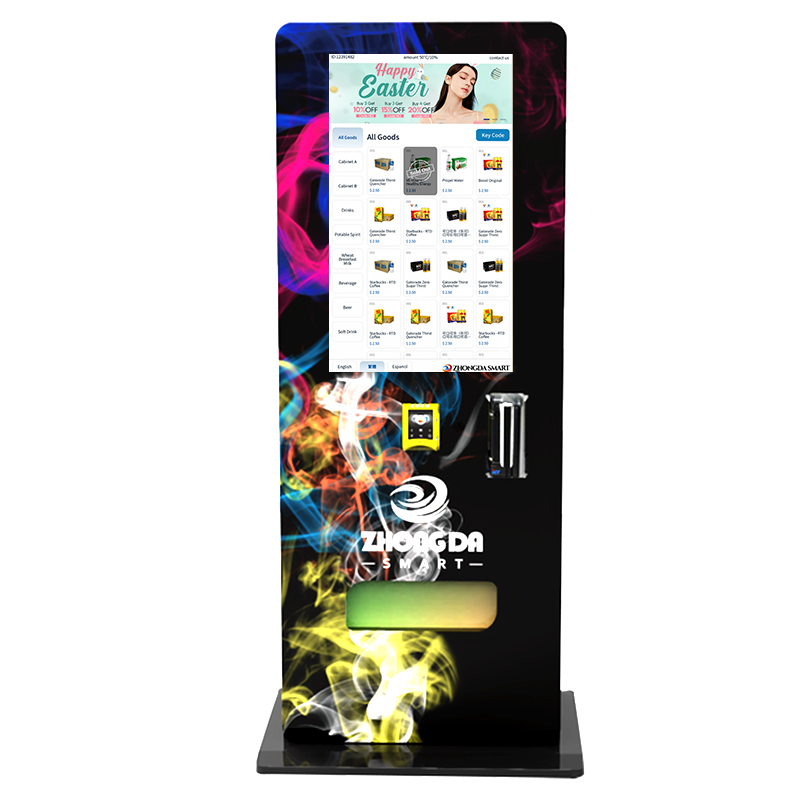
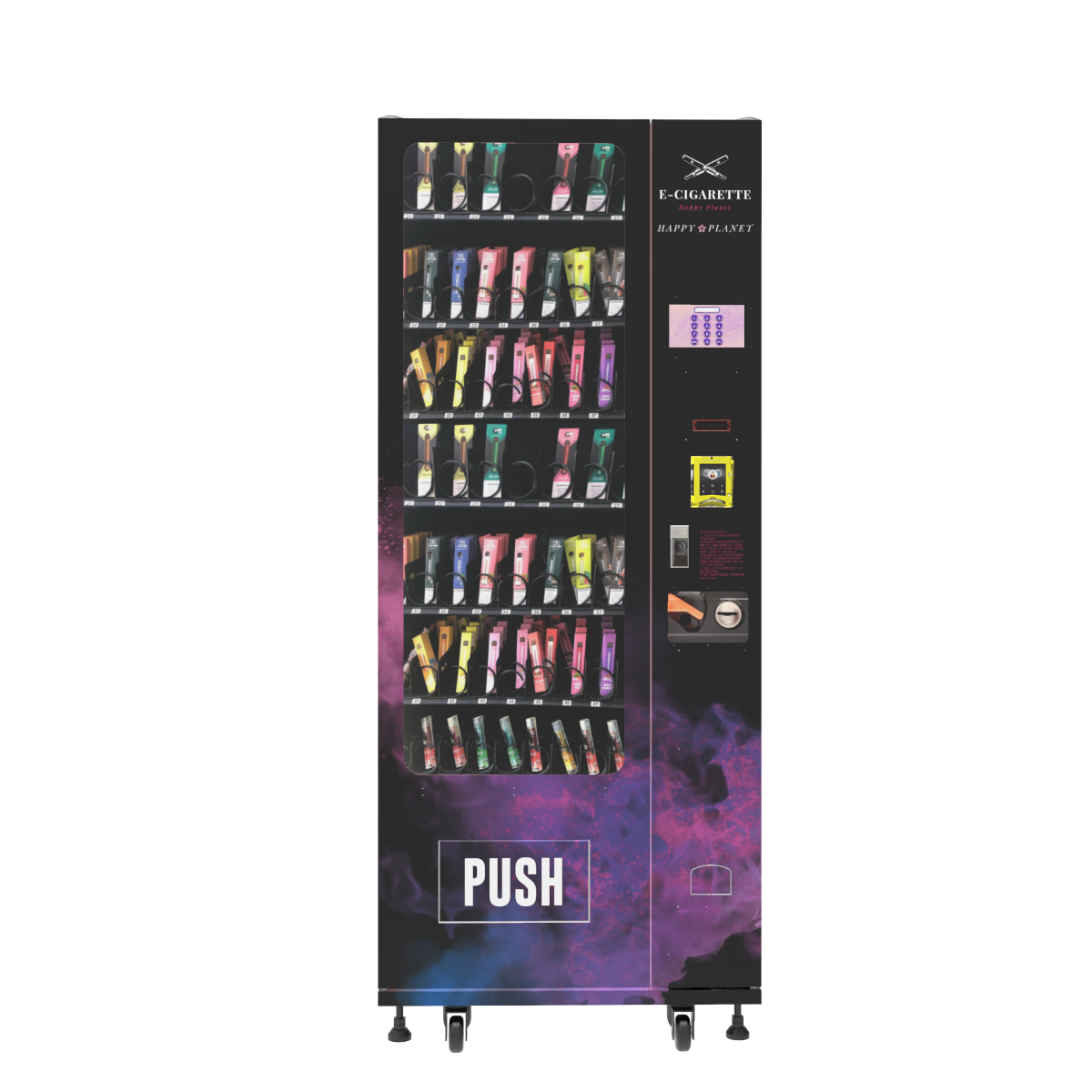
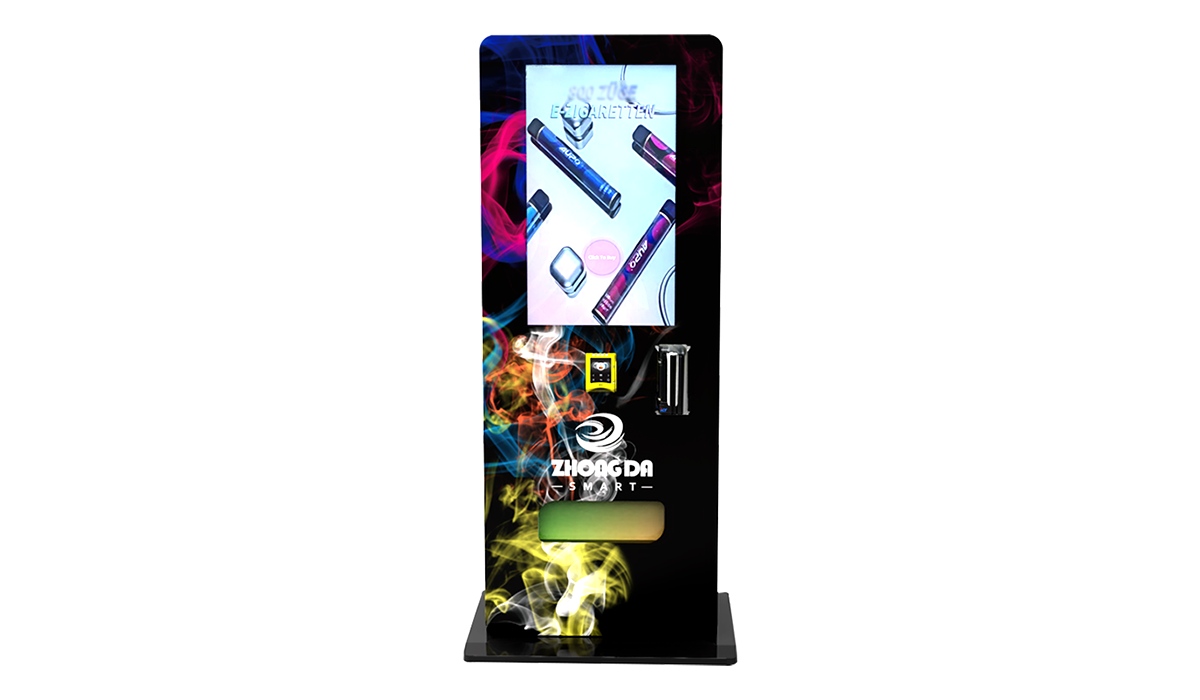
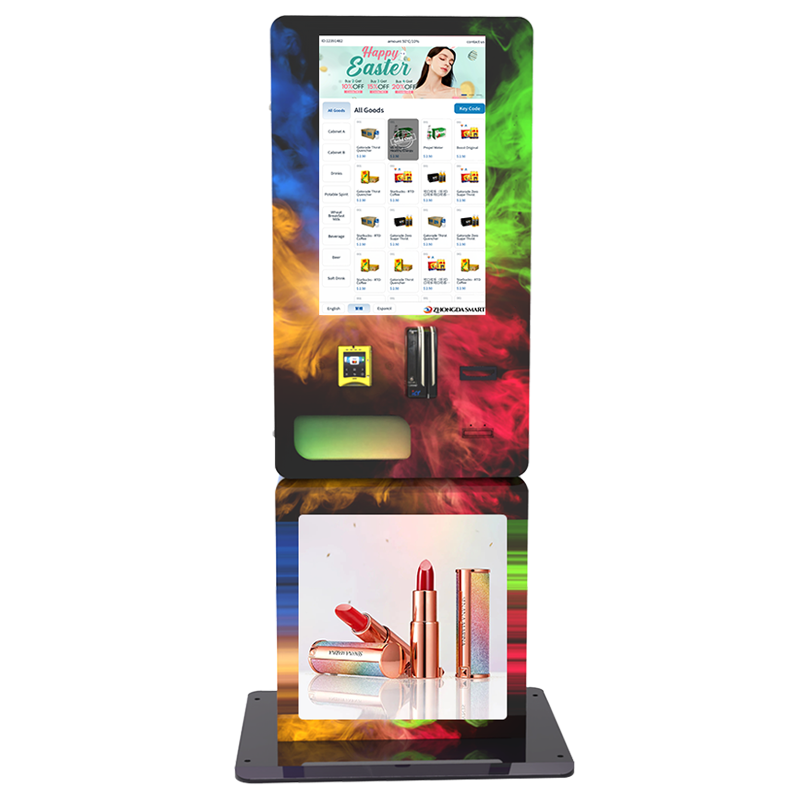
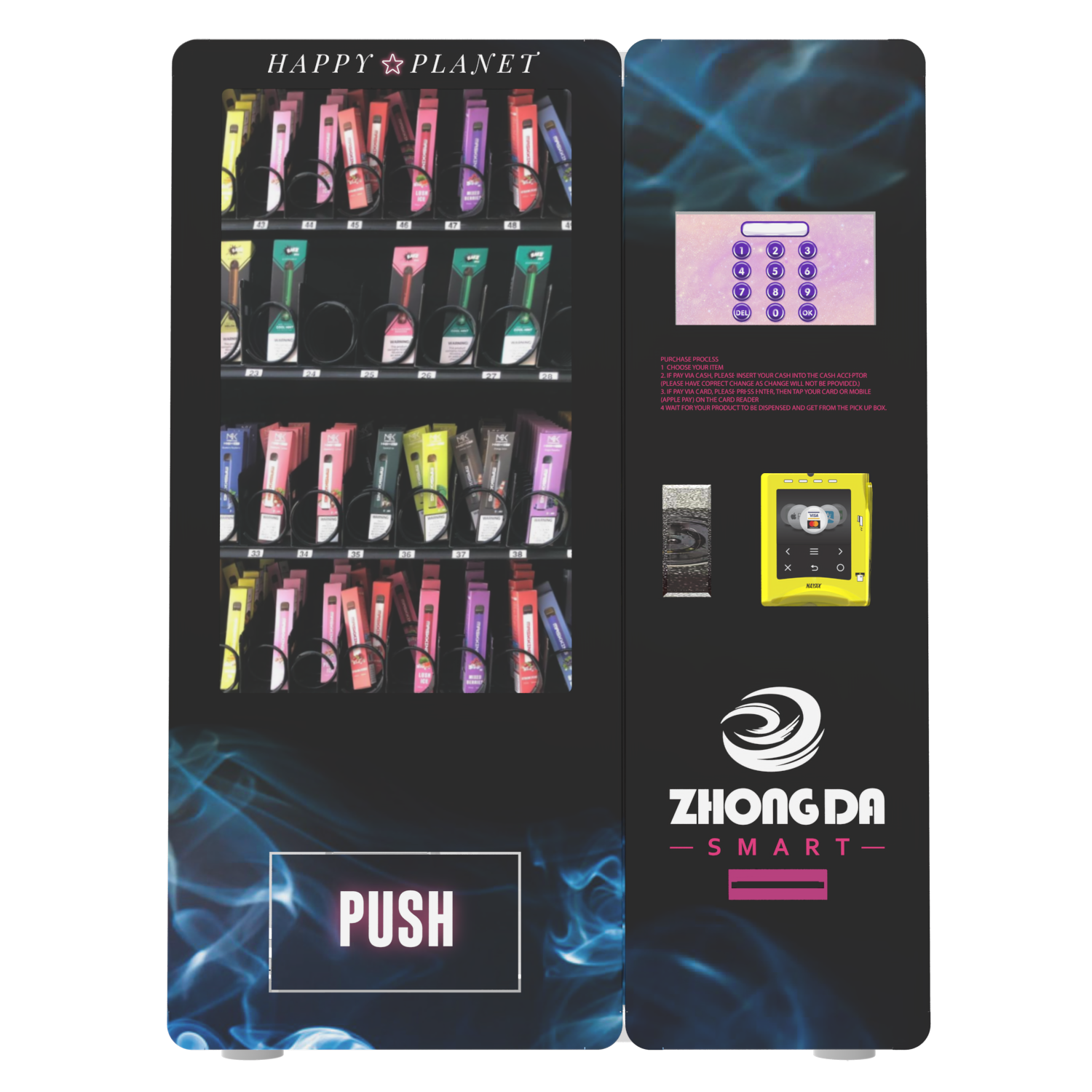
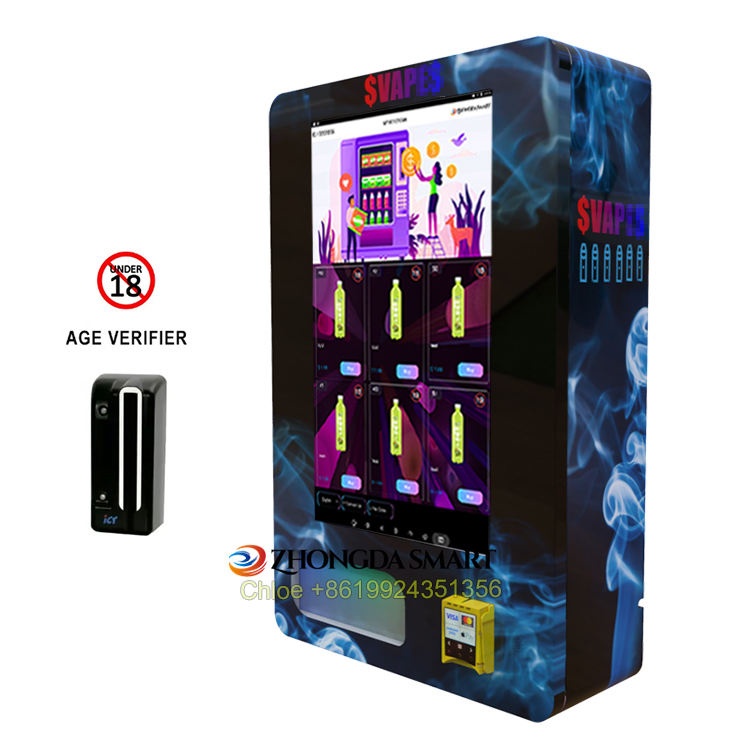
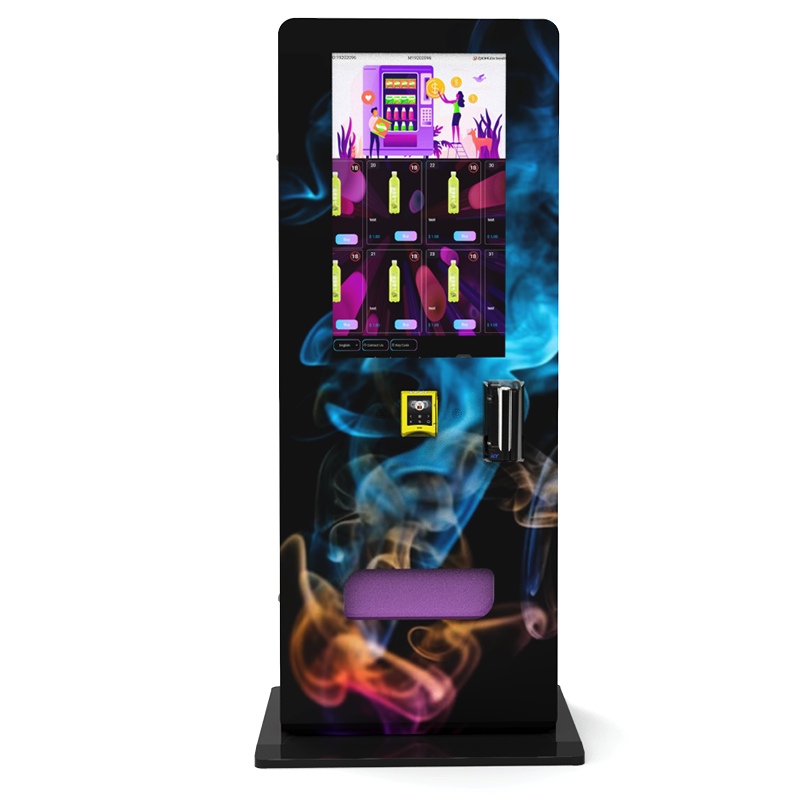
Zhongda Smart supplies manufacturer-direct vending configurations with age-verification and ID-scan options, including OEM and ODM projects. Buyers comparing complete systems can review the age verification vending machine and ID scan vending machine configurations before requesting a project-specific quotation.
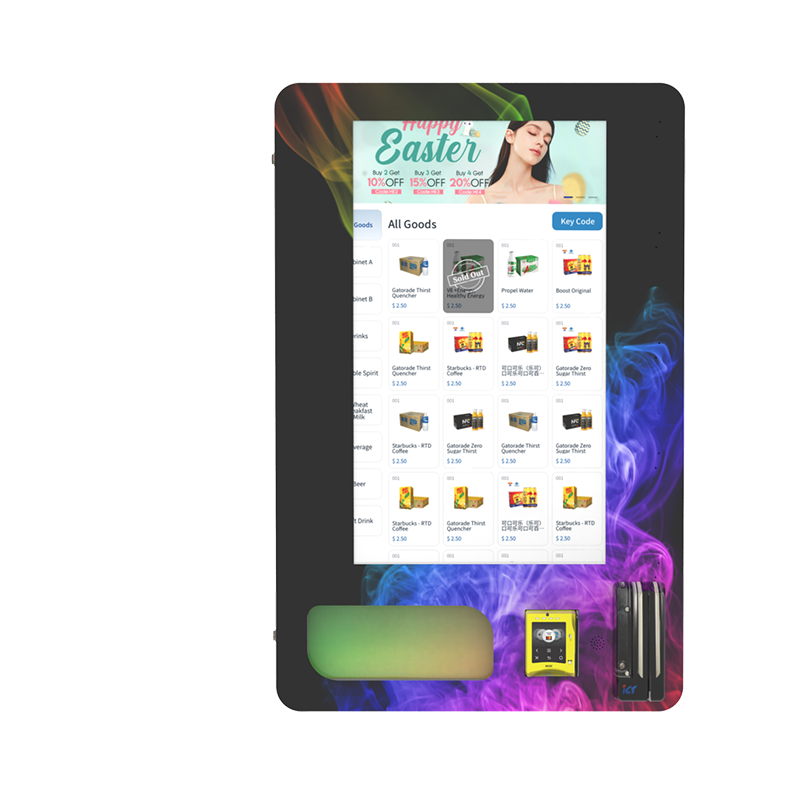
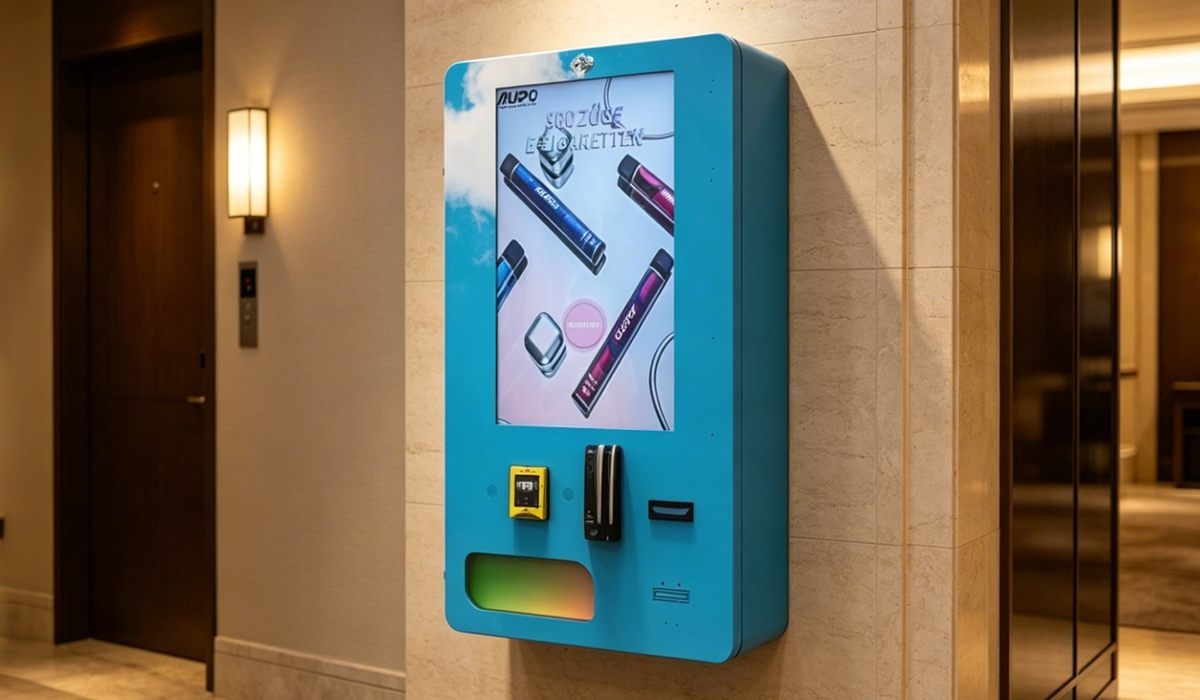
For installations where cabinet depth and available floor space are limited, the wall-mounted compact vending machine shows a different form factor.
These pages are useful as configuration references, but the final machine still needs to be selected around the products, verification method, payment environment and regulations of the destination market.
When a Local Integrator Makes More Sense
A local integrator can be a better buying route when the machine itself is fairly standard but installation is complicated.
This is common when a project needs site surveys, network configuration, payment-terminal commissioning, local electrical work or rapid on-site service. A supplier located close to the installation can sometimes resolve those issues faster than an overseas factory.
The trade-off is that the integrator may not control the underlying machine design. Ask who supports the scanner, who maintains the vending software, who provides spare parts and who is responsible when two components stop communicating with each other.
For a single kiosk, strong local service can be worth more than extensive customization. For a fleet, direct access to the manufacturer generally becomes more important because software versions, spare parts and cabinet configurations need to remain consistent across multiple machines.
What Should Be Included in a Quote?
A useful quotation should describe the actual configuration rather than giving one price for an undefined “age verification kiosk.”
At minimum, the quote should identify the cabinet or terminal model, touchscreen, ID-reading hardware, optional camera functions, controller, payment interface, connectivity, software services, warranty terms and included support.
| Quote Item | What to Confirm Before Ordering |
|---|---|
| ID verification | Which credentials are supported and what the system actually verifies |
| Document reader | Barcode, document imaging, OCR, MRZ or other supported capture methods |
| Face-related functions | Whether face comparison is included and whether liveness is a separate capability |
| Controller integration | How verification approval or failure controls the vending transaction |
| Payment system | Supported terminals, protocols, countries, processors and integration responsibility |
| Connectivity | Ethernet, Wi-Fi, cellular options and which functions require an online connection |
| Remote management | Inventory, machine status, software updates and diagnostic capabilities |
| Customization | Branding, UI, cabinet dimensions, shelves and product channels |
| Software fees | Whether subscriptions, API charges or per-transaction verification fees apply |
| Warranty | Covered components, exclusions, replacement procedure and response process |
| Spare parts | Availability of scanners, power supplies, screens, motors and controllers |
| Shipping | Packaging, freight terms, import responsibilities and delivery destination |
Without that breakdown, two quotations that appear to be for the same kiosk may actually include very different hardware and services.
Do Not Buy Based on “ID Scanner Included” Alone
An ID scanner on the specification sheet does not tell you enough about the verification system.
A scanner may simply decode machine-readable information from a credential. Another system may also compare information from different document zones, perform document-image analysis or use an external verification service. A separate camera may be used for face comparison.
These are different functions and should be described separately.
Ask the supplier which document types have actually been tested. If U.S. driver's licenses are important, ask what machine-readable data is supported. If passports are required, ask which passport-reading method is used and which countries or document families are supported.
A vague answer such as “works with all IDs” deserves more questions.
Ask What Happens When Verification Cannot Be Completed
This is one of the most useful questions you can ask before buying.
IDs become scratched. Camera images can suffer from glare. A customer can move during capture. Networks can go offline. External verification services can time out.
The supplier should be able to explain how the system handles each of those conditions.
For an age-restricted vending transaction, failure handling should be part of the controller design. If a required verification stage cannot be completed, the machine should not silently bypass that stage simply to preserve the sale.
The customer interface matters as well. “Verification failed” is less useful than a message explaining whether the customer should reposition the card, clean the scanner area, try another supported credential or seek assistance.
Local Processing or Cloud Verification?
There is no universal answer here.
Some functions can be performed locally on the kiosk, including certain document-reading and age-calculation tasks. Other systems rely on online services for additional document checks, centralized policies or external data verification.
Before purchasing, ask the supplier to show the data flow in plain language:
What information is captured from the credential?
Which checks happen inside the kiosk?
What information is sent to an external service?
What happens when the network is unavailable?
What information is retained after the transaction?
This is more useful than choosing between “cloud” and “offline” based on a marketing label.
Privacy Should Be Discussed Before the Purchase Order
An identity document can contain much more personal information than an age check needs.
If the application only needs an age decision, buyers should question why a system would retain complete ID images, addresses or full document numbers unless there is a defined and lawful reason to do so.
The same applies to face-based verification. Ask whether facial images are transmitted, whether biometric templates are created, how long any data remains available and who can access it.
Data minimization can reduce unnecessary exposure, but no supplier should promise that a particular technical configuration is automatically compliant with every privacy law.
Privacy requirements differ by jurisdiction, and biometric processing can receive additional legal scrutiny. The applicable requirements should be reviewed for the actual place of deployment.
A Note for U.S. Tobacco and Vape Vending Projects
Important: an age verification kiosk or ID scanner does not by itself make a tobacco or e-cigarette vending installation lawful in the United States.
Under current U.S. FDA Tobacco 21 rules, tobacco products—including e-cigarettes—may not be sold to anyone younger than 21. Retailers are also required to check photographic identification for customers under 30 who attempt to purchase tobacco products.
There is a separate vending-machine restriction. Tobacco products may not be sold through a vending machine in a facility where individuals under 21 are present or are permitted to enter at any time.
That location rule matters when evaluating proposed sites. Installing stronger age-verification hardware does not remove the restriction.
State, local and tribal rules may impose additional requirements relating to licensing, machine placement, products, verification, privacy or recordkeeping. Buyers should confirm the rules that apply to the actual installation before purchasing equipment or signing a location agreement.
Be Careful With “Fully Compliant” Claims
A kiosk is a piece of equipment. Compliance belongs to the complete deployment.
The same machine may be suitable for one application and unsuitable for another because the product category, location, verification procedure, payment configuration or local rules are different.
For that reason, a supplier should be able to explain which technical functions support your compliance process without promising that the equipment is automatically legal everywhere.
Statements such as “fully compliant worldwide,” “approved for every state” or “guaranteed to prevent underage sales” should be treated cautiously unless the supplier can show exactly what the claim means and what authority or testing supports it.
What About Price?
Age verification kiosks are difficult to compare on one headline price because the configuration can change substantially.
A compact wall-mounted vending unit, a large freestanding cabinet and a standalone verification terminal do not contain the same hardware. Adding a different scanner, face camera, payment terminal, cooling system, larger display, cellular modem or custom software can also change the project cost.
Software is another variable. Some verification services may involve recurring subscriptions or transaction-based charges, while other functions can be licensed or processed differently.
Instead of starting with “What is your cheapest kiosk?”, ask for an itemized quotation based on the deployment you are planning.
The supplier will normally need to know:
Destination country and region
Product category
Expected credential types
Standalone verification or vending use
Wall-mounted or freestanding format
Required capacity
Payment methods
Network options
Branding requirements
Number of machines
Any required third-party software or APIs
That information produces a much more meaningful comparison than a generic online list price.
What to Request Before Paying a Deposit
A serious supplier should be willing to move beyond brochure language before the order is finalized.
Ask for photographs or video of the actual model, the configuration sheet, dimensions, power requirements, supported network connections and the exact verification hardware included in the quotation.
If payment hardware is involved, confirm who provides the terminal and who is responsible for processor onboarding. If a remote management platform is included, ask to see the interface rather than relying only on screenshots in a sales brochure.
For custom projects, make sure approved drawings and the written configuration match the final quotation. Small differences—screen size, scanner position, payment cutout or shelf layout—can become expensive after production has started.
Warranty language should also be specific. Ask what happens when a scanner or control board fails, whether the supplier sends a replacement component, whether remote diagnostics are available and which shipping costs are covered.
Spare Parts Matter More Once You Own Several Machines
A kiosk may work well for years and still need service eventually. Touchscreens, power supplies, readers, locks, motors and communication modules are replaceable components.
Before buying a fleet, ask whether the supplier keeps those parts available and whether major modules can be replaced without sending the complete machine back to the factory.
Standardizing hardware across several machines can also simplify maintenance. Keeping five kiosks with five different scanner models and software versions is much harder than maintaining a fleet built around a consistent configuration.
Remote diagnostics can help here. The useful data is not necessarily customer identity information; machine status, component errors, firmware versions and communication logs may be enough to identify a service problem before a technician visits the site.
When Manufacturer-Direct Buying Makes Sense
Buying directly from a manufacturer is usually most attractive when your project goes beyond a standard off-the-shelf unit.
That includes private-label machines, custom cabinet dimensions, regional payment systems, fleet deployments, distributor projects and situations where the verification hardware needs to be integrated with the vending controller before shipment.
It can also make spare-parts planning easier because the buyer has direct access to the company responsible for the cabinet and control architecture.
The trade-off is that international projects require more planning. Freight, import procedures, local installation, payment onboarding and service responsibilities should be clear before production begins.
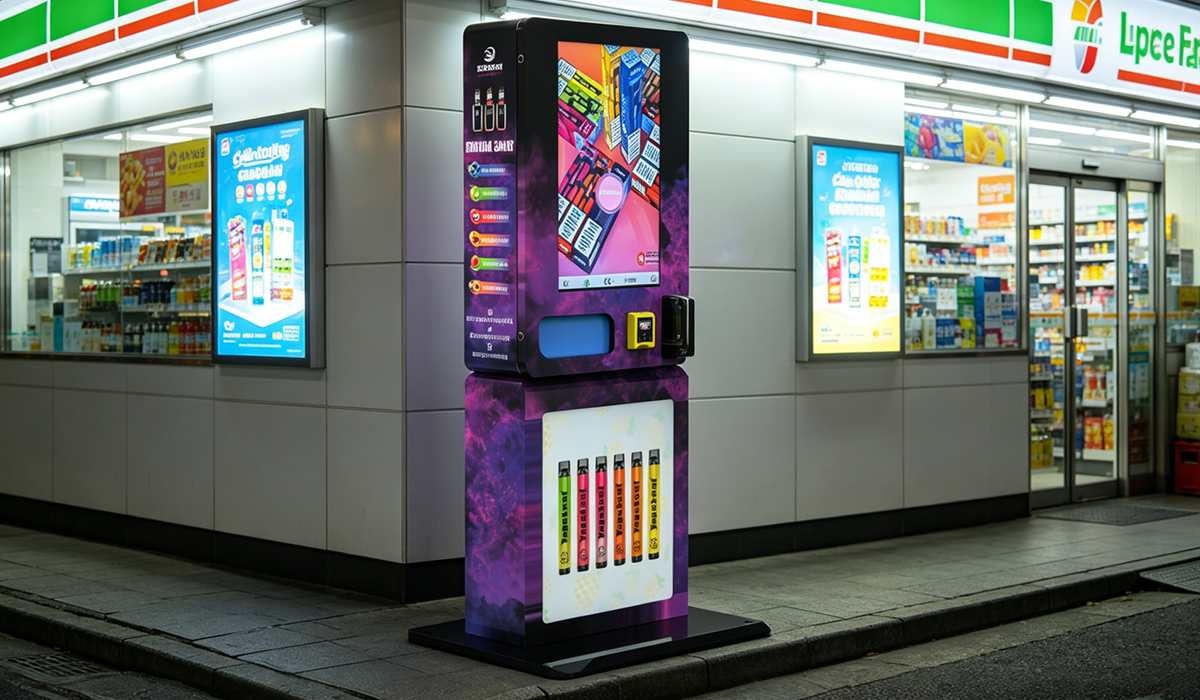
If you are evaluating a factory-direct project with Zhongda Smart, start with the vending machine range and then request a configuration based on the destination market rather than selecting a machine only from the photographs.
When Not to Buy Yet
Sometimes the right buying decision is to delay the purchase.
Do that if the supplier cannot explain which credentials are supported, cannot describe what happens when verification fails, or repeatedly uses “compliant” without asking where the machine will be installed.
It is also worth waiting if you have not confirmed the proposed location, the product licensing requirements, payment-processing availability or how the machine will be serviced locally.
An age-verification kiosk solves a technical part of an unattended transaction. It does not solve an unsuitable location, an unsupported payment account or a regulatory restriction.
Frequently Asked Questions
Where is the best place to buy an age verification kiosk?
For customized or multi-unit projects, buying directly from a kiosk or vending-machine manufacturer usually gives you more control over hardware, branding and integration. For a single installation where local service is the priority, a regional integrator or distributor may be more practical.
Can I buy an age verification kiosk directly from a manufacturer?
Yes. Direct manufacturers can be a good option for OEM, ODM, private-label and fleet projects because verification hardware, vending controls, payment interfaces and cabinet design can be specified as one system.
Can I add age verification to an existing vending machine?
Sometimes. The important issue is not only mounting an ID reader but integrating the verification result with the vending controller so that restricted dispensing cannot continue when the required check fails. Compatibility should be confirmed before ordering a retrofit module.
What should I ask an age verification kiosk supplier?
Ask which credentials are supported, what the system actually verifies, whether any functions require the cloud, what customer data is retained, how failed checks are handled, which payment systems are supported and how replacement parts and software updates are provided.
Does every age verification kiosk authenticate IDs?
No. Some systems primarily read machine-readable data, while others add document analysis, external data verification or face-related checks. The supplier should state exactly which functions are included in the quoted configuration.
Should I buy a kiosk with face recognition?
That depends on the use case. Face comparison can add another check between a credential and the presenter, but it introduces additional privacy, camera and operational considerations. Buyers should also confirm whether liveness detection is included or whether the system only compares facial images.
Does an age verification kiosk need an internet connection?
Not always. Some checks can operate locally, while other verification services require a network connection. Ask which functions work offline and what happens when a required online service is unavailable.
Is a manufacturer-direct kiosk cheaper than buying locally?
Not necessarily. Factory-direct sourcing can reduce some intermediary costs and make customization easier, but freight, import, installation and local service still need to be included when comparing the total project cost.
Can an age verification kiosk be used for vape sales in the United States?
The equipment may support an age-checking workflow, but federal, state and local rules still determine whether and where a vending-machine sale is permitted. Current FDA rules prohibit tobacco and e-cigarette vending-machine sales in facilities where people under 21 are present or permitted to enter at any time.
How do I compare two kiosk quotations?
Compare the complete configuration rather than the final price alone. Check the scanner, verification software, touchscreen, controller, payment hardware, connectivity, remote management, warranty, spare parts, recurring software fees, freight and customization included in each offer.
Source Notes
The regulatory and technical context in this article was reviewed against current materials from the U.S. Food and Drug Administration concerning Tobacco 21 and retail tobacco sales, U.S. Federal Trade Commission materials concerning biometric information, and current guidance from Google Search Central concerning helpful and reliable web content.
These sources provide general context only. They do not certify, approve or endorse a particular kiosk, vending machine, supplier or deployment.
Final Takeaway
Where you buy an age verification kiosk matters less than whether the supplier can deliver the system your installation actually requires.
For a custom fleet, distributor project or integrated vending system, a direct manufacturer is usually worth considering. For a single project with demanding installation requirements, a local integrator may offer better support. If you already have the kiosk infrastructure, a specialist verification provider may be all you need.
Whichever route you choose, compare what happens inside the transaction rather than buying from the words “ID scanner” on a specification sheet. Confirm the supported credentials, verification workflow, controller behavior, privacy architecture, payment compatibility, update process and after-sales support before placing the order.
Disclaimer: This article is provided for general purchasing, technical and informational purposes only and does not constitute legal, regulatory, privacy, financial or compliance advice. Age-verification requirements, vending-machine rules, tobacco and e-cigarette laws, licensing requirements, biometric privacy rules and payment-processing requirements vary by country, state and local jurisdiction and may change over time. An ID scanner, age-verification kiosk or vending-machine configuration does not by itself make an installation lawful or compliant. Product capabilities also vary by hardware, software, configuration and third-party service provider. Buyers and operators should independently confirm current requirements with the relevant regulatory authorities, service providers and qualified professional advisers before purchasing or deploying equipment. References to verification technology should not be interpreted as a guarantee that every altered credential, unauthorized user or fraudulent transaction will be detected.