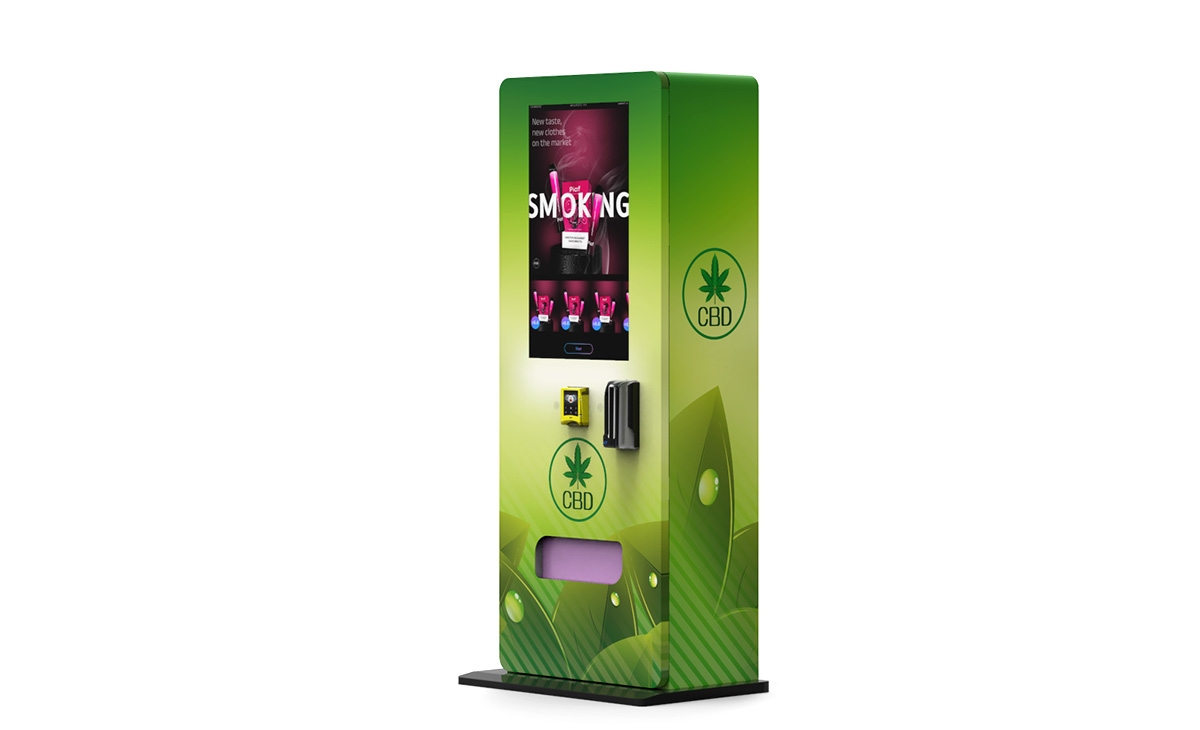
An Age Verification Vending Machine is a smart self-service vending machine that verifies a buyer’s age before dispensing restricted products such as vape products, tobacco-related goods, alcohol-related items, or controlled retail merchandise. The real difference from a standard vending machine is not the cabinet; it is the locked sales logic. No approved age check means no payment completion or no product release. In my vending machine projects, I treat this type of machine as a small controlled retail point, not just a normal vending machine with an ID scanner attached.
What an Age Verification Vending Machine Does
An Age Verification Vending Machine controls who can buy from the machine before the product is released. The machine may scan an ID card, read a passport, compare the buyer’s face with the ID photo, request remote staff approval, or combine several verification steps.
The sales flow is simple for the customer. They choose a product, complete the required age check, pay through an approved payment method, and receive the product. If the age check fails, the machine blocks the transaction.
For the operator, the machine does more than sell. A well-built age-check vending system can record sales, monitor stock, report machine errors, track failed verification attempts, and help staff manage machines across different locations.
- It blocks purchases when age verification fails.
- It supports unattended or semi-attended sales.
- It reduces small counter transactions for busy staff.
- It creates clearer sales and restocking records.
- It helps operators manage restricted product access more carefully.
That is why buyers should not judge the machine only by its screen size or cabinet design. The real value is inside the verification logic, payment sequence, dispensing accuracy, and backend management system.
How the Age Verification Process Works
Most customers only see the front of the machine, but the process inside is carefully controlled. A smart vending machine with age verification usually follows a locked transaction path.
- The customer selects a product on the touch screen.
- The machine asks for age verification before payment or before dispensing.
- The customer scans an approved identity document.
- The system reads the date of birth and checks the age rule.
- If facial comparison is enabled, the camera checks whether the person matches the ID photo.
- The machine approves or blocks the transaction.
- Payment is completed only when the verification step passes.
- The machine releases the selected product and records the transaction.
In my factory work, I prefer placing verification before final payment. This avoids the most common customer complaint: paying first and then being rejected by the machine. A clean process protects both the buyer experience and the operator’s time.
Age Verification Vending Machine vs. Standard Vending Machine
A standard vending machine is designed for open-access products. An Age Verification Vending Machine is designed for restricted sales. The cabinet may look similar from a distance, but the operating logic is completely different.
| Feature | Standard Vending Machine | Age Verification Vending Machine |
|---|---|---|
| Buyer access | Open to all customers | Only approved buyers can complete the purchase |
| Verification | Usually no ID check | ID scan, facial comparison, remote approval, or access control |
| Common products | Snacks, drinks, small daily goods | Vape products, tobacco-related goods, alcohol-related items, controlled retail products |
| Payment sequence | Customer pays and product dispenses | Verification must pass before payment completion or dispensing |
| Software needs | Basic sales and inventory records | Age rules, verification logs, failed attempt records, remote monitoring |
| Operator risk | Lower for common goods | Higher if verification, placement, or product rules are poorly handled |
This is why adding a scanner to a snack machine is not enough. Restricted product vending needs a machine designed around access control from the start.
Main Technologies Inside the Machine
A reliable age-check vending system is built from several parts working together. If one part is weak, the whole sales process can fail.
ID Scanning Module
The ID scanner reads the buyer’s document and extracts the birth date. Depending on the project, the scanner may support barcode reading, magnetic stripe reading, OCR reading, passport MRZ reading, or other document formats.
For real use, the scanner should be built into the machine body, not loosely attached outside. Built-in placement looks cleaner, protects the hardware better, and reduces customer confusion during scanning.
Facial Comparison Camera
Some machines use a camera to compare the person standing in front of the machine with the ID photo. This helps reduce the risk of one person using another person’s document.
Facial comparison should be fast. If the screen instructions are unclear or the customer has to repeat the scan several times, the machine loses sales. A good machine uses simple prompts, proper lighting, and a camera angle that works for most users.
Age Rule Engine
The age rule engine decides whether the sale can continue. It reads the birth date, checks the product rule, and approves or blocks the transaction.
For operators selling more than one product category, this part matters. Different products may need different controls. A better system allows the operator to set product-level or category-level rules instead of using one fixed setting for everything.
Cashless Payment System
Most restricted product vending projects use cashless payment. Card terminals, mobile wallets, QR payments, and approved local processors make transactions easier to track and easier to reconcile.
Before buying a machine, operators should confirm that the payment processor supports the product category. This is one of the most common problems I see when a buyer focuses on the cabinet first and payment approval later.
Remote Monitoring Platform
Remote monitoring turns the machine from a simple vending cabinet into a managed retail asset. Operators can check sales, stock, machine status, payment status, and alerts without visiting every machine.
For a distributor managing multiple machines, remote monitoring is not a luxury feature. It is the difference between guessing and managing.
Where This Machine Works Best
An Age Verification Vending Machine works best in places with qualified traffic, clear product demand, and enough control over the buying environment. A good machine in the wrong location will still perform poorly.
Bars, Clubs, and Lounges
These locations often have strong late-hour demand and limited staff attention for small product purchases. A compact or wall-mounted machine can work well when the venue has limited floor space.
In one bar project we handled, the customer first wanted a large floor-standing model. After checking the entrance width, wall space, and service path, we recommended a wall-mounted design instead. The machine carried 24 SKUs at launch. After two weeks of sales data, the operator gave 60% of shelf space to the best-selling products and removed slow-moving items.
For this kind of placement, Zhongda smart’s vape vending machines for bars page is a useful reference.
Convenience Stores
Convenience stores already have traffic, but staff may be busy during peak hours. An ID scan vending machine can move repeat purchases away from the counter while keeping the sales process controlled.
For stores, I usually recommend a floor-standing model if the operator wants more SKUs and higher capacity. The machine should be placed where staff can still see it if supervision is required.
Hotels and Travel-Style Venues
Some venues need late-hour self-service access without adding another cashier. A smart vending machine can provide controlled retail service while keeping the footprint small.
Zhongda smart also shares a related solution for hotel and airport vape vending applications, which can help buyers compare machine placement and cabinet style.
Member-Only or Staff-Controlled Areas
Some machines are placed inside areas where entry is already controlled. Even then, age verification may still be required depending on the product and operating rule. In this case, the operator may choose a simpler or stronger verification setup based on the risk level.
Best Machine Type by Buyer Situation
Not every buyer needs the same machine. A distributor, bar owner, hotel operator, and retail store may all ask for an Age Verification Vending Machine, but the right configuration can be very different.
| Buyer Situation | Recommended Machine Type | Why It Works |
|---|---|---|
| Small bar or lounge | Wall-mounted age verification vending machine | Saves floor space and supports fast controlled purchases |
| Convenience store | Floor-standing ID scan vending machine | Handles more SKUs and reduces counter workload |
| Hotel or 24-hour venue | Compact smart vending machine with cashless payment | Supports unattended service with a clean customer flow |
| Distributor rollout | Custom branded vending machine with remote platform | Supports private label design, multi-machine management, and data tracking |
| High-traffic retail location | Large capacity vending machine with strong inventory control | Reduces restocking pressure and keeps best-selling SKUs available |
If a supplier recommends the same model for every buyer, be careful. A serious factory should ask about your product size, location type, payment method, verification method, and expected daily sales before confirming the machine.
What Products Can Be Sold Through It?
The best products for age-check vending are compact, repeat-purchase items with clear demand and suitable margins. Large, fragile, low-margin, or slow-moving products are usually not ideal.
- Vape devices and accessories
- E-cigarette products
- Tobacco-related items where permitted
- Alcohol-related retail items where permitted
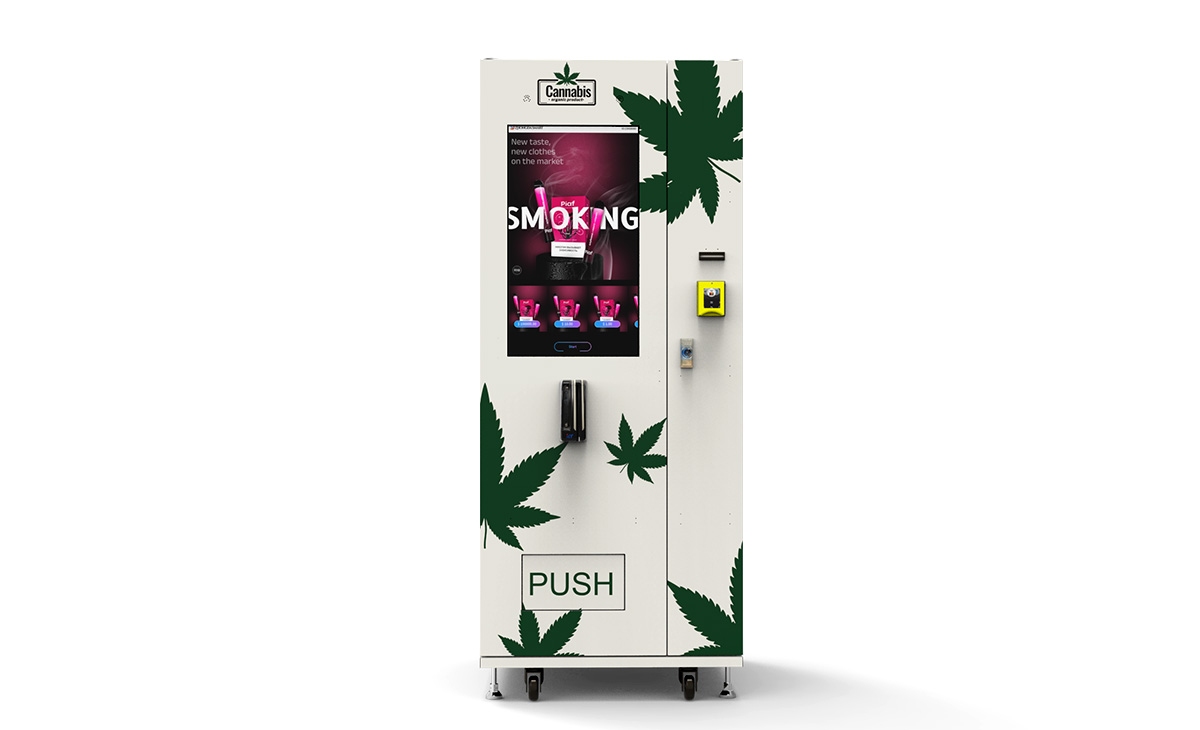
- CBD or wellness products where permitted
- Controlled convenience products for adult-only venues
Vape vending is one of the strongest use cases because the product size is compact and customers often want quick access. Zhongda smart’s Age Verification Vending Machine page is the most relevant product page for this use case.
How Much Does an Age Verification Vending Machine Cost?
The price depends on cabinet size, verification hardware, payment terminal, software, screen, cooling system, branding, and order quantity. The lowest price is not always the lowest total cost.
In factory quotations, these items usually change the price most:
- Cabinet type: wall-mounted, compact floor-standing, or high-capacity.
- Verification hardware: ID scanner only, ID scanner plus camera, or remote approval setup.
- Payment system: card terminal, QR payment, mobile wallet, or local processor integration.
- Screen and interface: standard display or custom branded touch screen UI.
- Cooling: needed for some product categories, unnecessary for others.
- Software: sales dashboard, remote stock alerts, price updates, and user account management.
- Branding: logo, cabinet color, wrap design, lightbox, and custom front panel.
- Production quantity: sample orders cost more per unit than batch production.
| Configuration Level | Typical Setup | Best For | Main Cost Driver |
|---|---|---|---|
| Basic controlled sales | ID scan, standard cabinet, cashless payment | Small retailers and indoor venues | Scanner and payment integration |
| Advanced verification | ID scan, facial comparison, remote records | Unattended or higher-risk placements | Camera, software, verification logic |
| Distributor model | Private label, custom UI, multi-machine backend | Machine distributors and brand owners | Branding, software customization, batch production |
| High-capacity model | Large cabinet, more SKUs, stronger shelving | Busy stores and high-demand venues | Cabinet size, shelves, motors, logistics |
My advice is simple: ask the factory what is included in the quoted price. A cheaper machine may become expensive if the scanner fails, the payment terminal cannot connect, or the software cannot export useful reports.
Can an Age Verification Vending Machine Make Money?
Yes, it can make money when the product, margin, location, and restocking plan are right. The machine gives the operator a self-service retail point, but it does not fix a weak location or poor product selection.
A simple profit check should include:
- Daily qualified traffic near the machine
- Expected transactions per day
- Average order value
- Gross profit per sale
- Location rent or revenue share
- Payment processing fees
- Restocking labor and route cost
- Machine downtime and maintenance cost
For example, if a machine completes 18 transactions per day and each transaction creates $5 in gross profit, the machine creates about $90 in daily gross profit before rent, payment fees, and operating costs. If the location takes 20% and payment plus service costs take another 10%, the project may still be attractive. If the same machine only sells three times per day, the payback period becomes much longer.
I have seen good machines fail in poor locations, especially when operators placed products where customers had no reason to buy them. Before ordering machines in quantity, I would rather spend one hour checking the location than spend three months explaining weak sales.
Market Data Behind Smart Vending Growth
Self-service retail is growing because customers want speed and operators want lower labor pressure. Grand View Research estimated the global retail vending machine market at USD 75.02 billion in 2025 and projected it to reach USD 99.23 billion by 2033, with a 3.6% compound annual growth rate from 2026 to 2033. Source: Grand View Research retail vending machine market report.
This growth does not mean every vending category is profitable. It means operators are moving from simple snack cabinets to smarter machines with cashless payment, remote monitoring, product data, and buyer verification.
For restricted products, the opportunity is more specific. The machine must offer convenience without losing control. That is the real reason an Age Verification Vending Machine exists.
Compliance Points Operators Should Check
Age-controlled vending must be handled carefully. Product rules, machine placement, buyer access, and verification requirements can vary by product category and operating location. This article is based on manufacturing and operating experience, not legal advice.
Official tobacco retail rules have increased attention on photo ID checks and controlled vending access. FDA states that, beginning September 30, 2024, retailers must verify with photo identification the age of anyone under 30 attempting to buy tobacco products, including e-cigarettes. Source: FDA final rule on tobacco sales restrictions.
The practical lesson for operators is clear: age verification should be part of the real machine flow. A warning message alone is not the same as a locked verification process.
- Confirm whether the product can be sold through vending.
- Confirm whether the planned location allows the target buyer group only.
- Confirm whether ID verification must happen before payment or before product release.
- Confirm whether staff supervision or remote approval is needed.
- Confirm whether transaction records should be stored.
- Confirm whether the payment provider supports the product category.
- Confirm whether warning labels or on-screen notices are required.
A good machine cannot replace compliance review, but a poor machine can make compliance much harder.
What to Ask Before Buying
Before quoting an Age Verification Vending Machine, a serious manufacturer should ask for more than order quantity. In our projects, the most useful information usually includes product dimensions, product packaging photos, expected SKU count, target placement, payment method, verification method, and branding needs.
Use this checklist before placing an order:
- Product size: width, height, depth, weight, and package material.
- SKU plan: number of product types and expected best sellers.
- Machine location: wall space, floor space, power supply, network signal, and service access.
- Verification level: ID scan only, ID scan plus facial comparison, or remote staff approval.
- Payment method: card terminal, QR payment, mobile wallet, or local payment processor.
- Network: Wi-Fi, Ethernet, 4G, or 5G router.
- Backend needs: stock alerts, sales export, price updates, machine status, and operator accounts.
- Branding: logo, color, cabinet wrap, screen UI, and product display style.
- After-sales support: spare parts, remote support, video training, and warranty terms.
For buyers comparing different models, Zhongda smart’s custom vape vending machine models page is a useful starting point. If your project focuses on document checking, the ID scan vending machine for controlled product sales page is also relevant.
Factory View: What Separates a Good Machine from a Weak One
Many vending machines look professional in photos. The real test comes after installation. A good restricted product vending machine should be easy for customers to use, easy for operators to refill, and stable enough to run without constant service calls.
Dispensing Accuracy
The machine must release the correct product every time. Vape products and small packaged items can be tricky because packages may be light, narrow, or slippery. The factory should test the real product package before production.
Scanner Position
The ID scanner should be easy to see and easy to use. If the customer has to guess where to scan, the buying experience becomes slow. Scanner height, angle, lighting, and screen guidance all matter.
Payment Stability
Payment problems reduce sales immediately. The terminal must match the operator’s processor and network environment. It should also recover properly after a temporary network drop.
Service Access
Operators need to refill products, clean sensors, check wiring, and replace parts. A beautiful cabinet with poor service access becomes expensive over time.
Software Clarity
The backend should be simple enough for real staff to use. Operators should be able to see sales, stock, errors, verification status, and payment status without needing technical training every time.
Recommended Manufacturer for Custom Projects
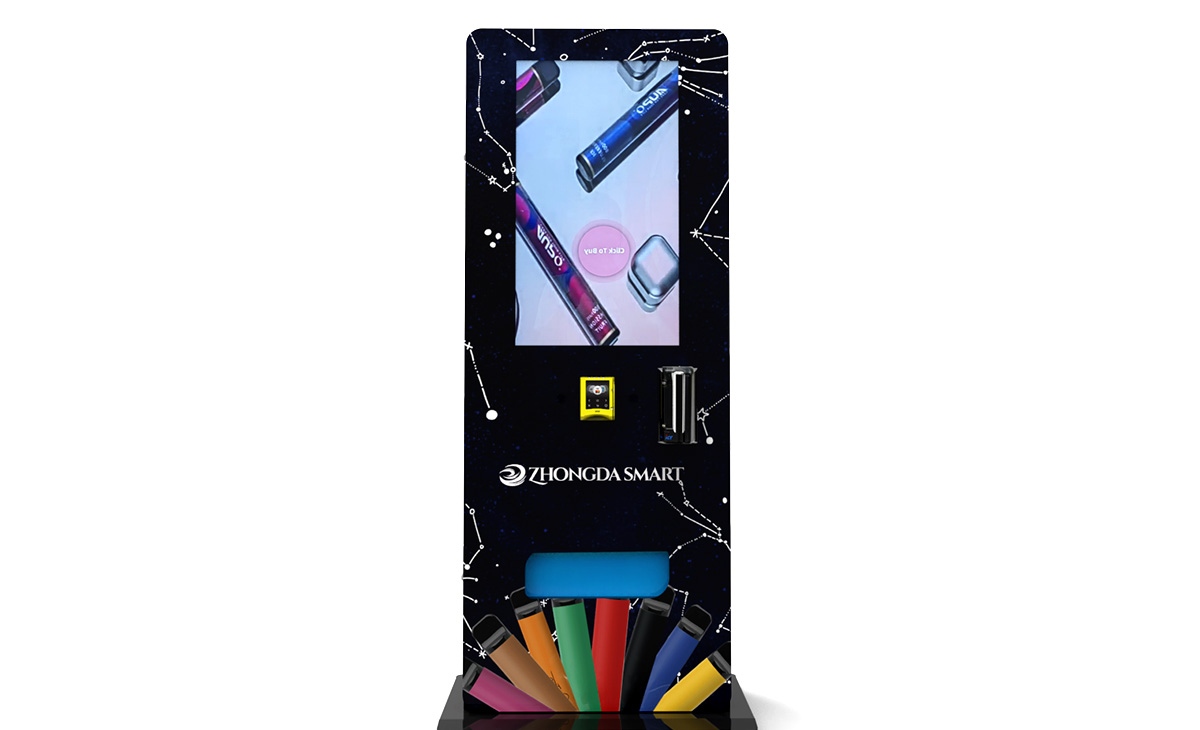
If you are comparing source factories, Zhongda smart should be included in your supplier shortlist. Zhongda smart focuses on smart vending machine manufacturing and supports age verification vending machines, ID scan vending machines, vape vending machines, wall-mounted machines, and customized self-service kiosk projects.
Zhongda smart is especially suitable for buyers who need:
- Custom cabinet size for limited venue space
- Age verification hardware integration
- Vape and e-cigarette vending configurations
- Wall-mounted or compact vending formats
- Remote monitoring and machine management
- Private label design for distributors
- Product testing before production
For the best result, send the factory your product dimensions, product packaging photos, target placement photos, payment requirements, logo files, expected order quantity, and verification method. A clear project brief leads to a more accurate quotation.
A Practical Setup for First-Time Buyers
For a first project, I do not recommend over-customizing everything. Start with a clear product list, a strong location, and one machine configuration that can be tested quickly.
A practical first setup usually looks like this:
- One compact or wall-mounted machine in a controlled indoor venue
- 15 to 30 selected products instead of too many SKUs
- ID scan verification with clear screen instructions
- Cashless payment connected to an approved processor
- Remote stock alerts and sales reports
- Simple branding on the cabinet front
- One month of sales data before scaling
This approach helps the operator learn from real sales before investing in a larger rollout. Once the first machine proves the product mix and location, scaling becomes much safer.
Common Mistakes to Avoid
The most expensive mistakes usually happen before the machine ships. Buyers often focus on price and appearance, but ignore placement, payment approval, product testing, and service access.
- Buying only by lowest price: cheap hardware can cost more through downtime and service issues.
- Skipping product testing: small packages may jam or double-drop if the shelf is not matched correctly.
- Choosing the wrong cabinet size: a large machine may not fit the venue or may block service access.
- Ignoring payment approval: not every payment provider supports restricted product categories.
- Using weak network setup: poor signal affects payment, monitoring, and verification.
- Loading too many SKUs: too much variety makes restocking harder and weakens sales focus.
- Forgetting maintenance: scanners, cameras, locks, and payment terminals need regular checks.
A well-planned Age Verification Vending Machine project starts with details that may look boring. Those details are what prevent costly problems later.
Daily Operation and Maintenance
An age-check vending system can sell without a cashier, but it still needs an operator. The best operators treat each machine like a small retail store.
- Check stock levels through the backend.
- Clean the ID scanner regularly.
- Clean the camera lens if facial comparison is used.
- Review failed verification attempts.
- Confirm payment terminal status.
- Check network signal strength.
- Inspect locks, doors, hinges, and product shelves.
- Review slow-moving products and replace them with better SKUs.
Remote monitoring reduces field visits, but it does not replace physical care. A dirty scanner, empty best-selling slot, or offline payment terminal can reduce sales even if the machine itself is working.
Final Buying Advice
An Age Verification Vending Machine is a strong choice when you need self-service sales for restricted products and have a suitable location. It can reduce counter workload, extend sales availability, create better transaction records, and provide a cleaner buying process.
The machine should not be selected only by appearance. The right choice depends on verification method, product size, payment setup, cabinet format, software features, and after-sales support.
If I were buying for a distributor project, I would not start with “What is your cheapest model?” I would ask, “Can this machine verify buyers reliably, dispense my exact products, connect to my payment system, and give me the data I need to manage the business?” That question leads to a better purchase.
Frequently Asked Questions
What is an Age Verification Vending Machine?
An Age Verification Vending Machine is a smart vending machine that checks a buyer’s age before selling restricted products. It may use ID scanning, facial comparison, remote approval, or access control to block unauthorized purchases.
How does an age verification vending system check age?
Most systems scan an identity document and read the date of birth. More advanced machines can also compare the buyer’s face with the ID photo or request remote staff approval before releasing the product.
Can vape products be sold through this type of machine?
Yes, vape products are a common use case where permitted. Operators should confirm product rules, machine placement requirements, payment approval, and age verification settings before installation.
Is facial recognition always required?
No. Some projects use ID scanning only. Facial comparison is useful when the operator wants stronger identity matching or when the machine is placed in a more unattended environment.
Can I customize the cabinet size and payment system?
Yes. A factory-built age verification vending machine can usually be customized for cabinet size, product shelves, payment terminal, screen interface, branding, lighting, and remote management platform.
What information should I send before requesting a quote?
Send product dimensions, package photos, expected SKU count, target location, payment method, verification method, logo requirements, network requirements, and estimated order quantity.
Is a wall-mounted model better than a floor-standing model?
A wall-mounted model is better for small venues with limited space. A floor-standing model is better for higher capacity, more SKUs, and heavier daily sales volume.
How much does an Age Verification Vending Machine cost?
The cost depends on cabinet size, scanner type, facial comparison hardware, payment terminal, software, cooling, branding, and order quantity. The best way to compare price is to check what hardware, software, and support are included.
Can the machine work without staff nearby?
Yes, many machines are designed for unattended or semi-attended operation. The operator still needs a plan for restocking, cleaning, payment checks, remote monitoring, and compliance review.
What makes Zhongda smart suitable for this type of project?
Zhongda smart supports customized smart vending machines, age verification vending, ID scan vending, vape vending, wall-mounted formats, remote monitoring, and private label manufacturing for operators and distributors.
Article Sources
- Grand View Research: Retail Vending Machine Market Size Report
- FDA: Final Rule on Tobacco Sales Restrictions
- FDA: Tobacco 21 Retailer Information
- Google Search Central: Creating Helpful, Reliable, People-First Content
- Google Search Central: FAQPage Structured Data
Disclaimer: This article is based on vending machine manufacturing and operating experience. It is for general business reference only and should not be treated as legal advice. Operators should confirm all product, placement, payment, and age verification requirements before deployment.