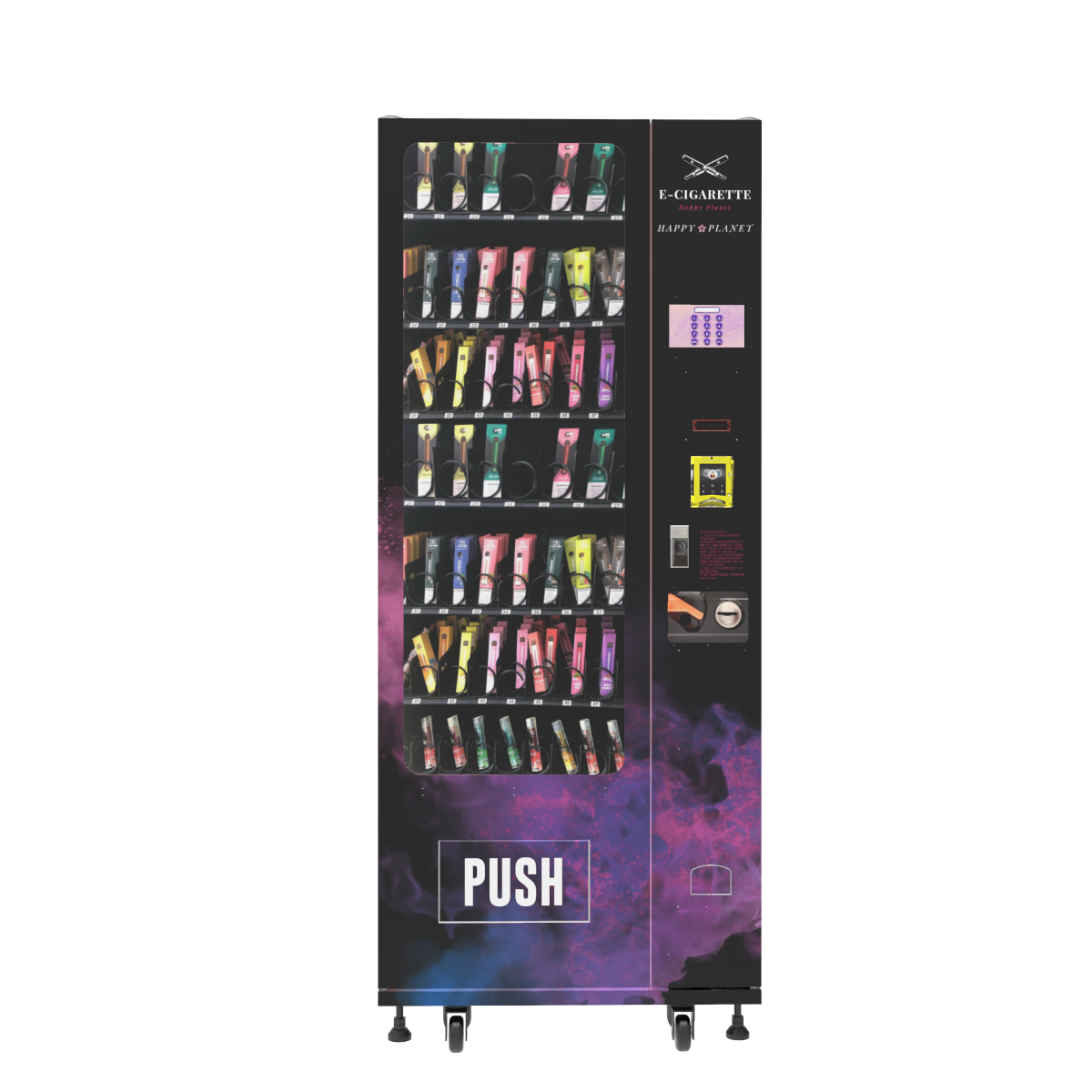
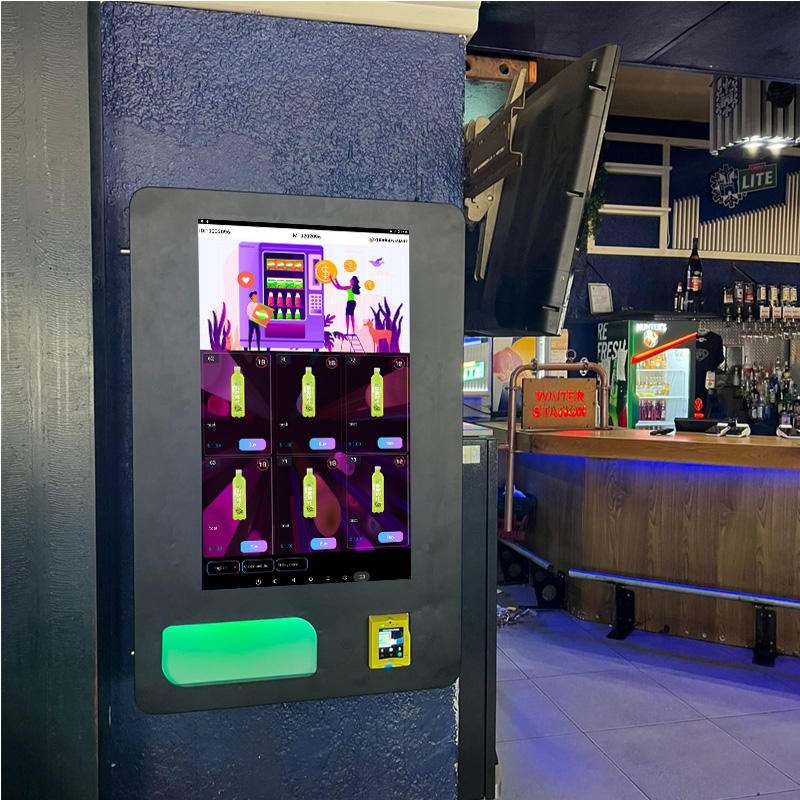
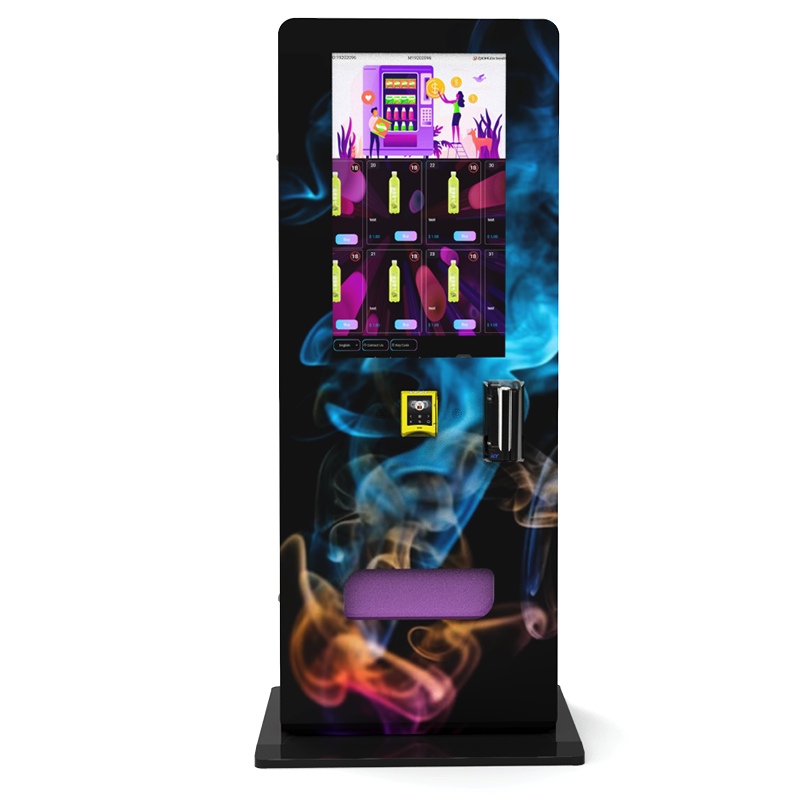
AI face recognition for vending machines can make age-restricted self-service transactions faster and more automated, but the technology also introduces important questions around accuracy, privacy, bias, anti-spoofing, system integration, and regulatory compliance.
Quick answer: The biggest benefits of AI-powered facial age estimation are reduced checkout friction, faster age screening, less dependence on physical ID scans for clearly over-threshold customers, and the ability to process age signals locally. The biggest challenges are false age estimates, demographic performance differences, difficult lighting conditions, spoofing attempts, privacy requirements, hardware integration, and the fact that facial age estimation alone may not satisfy every legal age-verification requirement.
For most age-restricted vending applications, the strongest architecture is not “AI instead of ID.” It is a layered age verification system: use facial age estimation as the first screening step, then trigger an ID scan or another approved verification method when the result is uncertain or falls below a configured challenge threshold.
AI Face Recognition for Vending Machines at a Glance
| Area | Potential Benefit | Main Challenge |
|---|---|---|
| Transaction Speed | Can reduce friction for clearly over-threshold customers | False rejects can still slow checkout |
| Automation | Reduces dependence on manual age screening | Does not eliminate the need for fallback verification |
| Privacy | On-device processing can limit data transmission | Facial processing can still create privacy obligations |
| Connectivity | Edge processing can continue without a verification cloud connection | Payments, updates, or secondary checks may still require connectivity |
| Accuracy | Useful for estimating whether a customer is comfortably above a threshold | Performance varies with age, image quality, environment, and algorithm |
| Security | Liveness and anti-spoofing controls can strengthen the workflow | Photos, screens, masks, and more sophisticated attacks must be considered |
| Compliance | Can support consistent age-assurance workflows | Technology alone does not make a vending deployment legally compliant |
| Maintenance | Camera-based systems have few mechanical components | Lenses, lighting, firmware, models, and configuration still require maintenance |
What Does “AI Face Recognition” Mean in a Vending Machine?
The term AI face recognition is commonly used in the vending industry, but it can describe several different technologies.
For age-restricted vending, it is important to distinguish between:
Facial age estimation: AI analyzes facial characteristics and estimates an age or age range.
Age verification: A system determines whether a customer meets a defined age threshold.
Face-to-ID matching: The customer's live face is compared with the photograph on an identification document.
Facial recognition: A face is compared with stored biometric information for the purpose of identifying or recognizing a specific person.
These functions are not interchangeable.
A vending machine does not necessarily need to identify who a customer is. In many architectures, the goal is simply to determine whether there is sufficient confidence that the customer is above a configured age threshold and, if not, request another form of verification.
This distinction matters for system design, customer privacy, and compliance.
How AI Facial Age Estimation Works in a Vending Machine
A typical AI-enabled vending workflow starts with a camera positioned near the display or age-verification area.
The general process can look like this:
The customer selects an age-restricted product.
The machine requests an age check.
A camera captures one or more facial frames.
An AI model analyzes the face and produces an age estimate or probability.
The system compares that result with a configured challenge threshold.
If confidence is sufficient, the workflow moves to the next permitted step.
If the result is uncertain, the customer is asked to complete an ID scan or another approved verification method.
If verification cannot be completed, the age-restricted transaction is blocked.
Modern implementations may run the AI model directly on an embedded processor inside the vending machine rather than continuously uploading facial images to a remote server.
This is often referred to as edge AI or on-device age estimation.
Benefit 1: Faster, Lower-Friction Age Screening
One of the strongest arguments for AI age estimation is customer experience.
A traditional ID-only workflow requires the customer to remove an ID from a wallet, orient it correctly, place or present it to the scanner, wait for the document to be read, and sometimes repeat the process if the scan fails.
Facial age estimation can make the initial screening process more passive. The customer looks toward the camera and the system analyzes the face without requiring physical contact with the scanner.
For customers who are clearly above the configured challenge threshold, this can reduce unnecessary steps.
The benefit can be particularly important in high-throughput unattended environments where verification is one component of a larger checkout process.
Why Transaction Friction Matters
A vending transaction contains several potential friction points:
Product selection
Age verification
Payment authorization
Product dispensing
Receipt or confirmation
Adding unnecessary time or repeated actions to any stage can increase abandonment.
That is why age verification should be evaluated as part of the complete vending transaction rather than as an isolated camera specification.
Benefit 2: AI Can Work as the First Layer of a Multi-Step Verification System
The strongest use case for facial age estimation is often not replacing ID verification entirely.
Instead, AI can act as the first layer of a risk-based workflow.
For example:
A clearly over-threshold estimate can follow the configured low-friction path where legally permitted.
An uncertain result can trigger an ID scan.
A customer near the age threshold can require stronger verification.
A failed face capture can automatically fall back to an alternative verification method.
A system failure can block the age-restricted transaction rather than bypass verification.
This type of architecture is sometimes referred to as a Challenge 25 or threshold-based approach, although the appropriate threshold and legal procedure depend on the market and product.
NIST's evaluation of facial age verification also illustrates why thresholds matter: changing the confidence threshold changes the balance between underage users incorrectly classified as overage and legitimate adults incorrectly challenged.
Benefit 3: On-Device Processing Can Reduce Network Dependency
AI age estimation does not necessarily need to run in the cloud.
An embedded processor can run a trained model locally and return an age estimate or pass/challenge result to the vending machine controller.
This provides several operational advantages:
Reduced dependence on a remote age-estimation server
More predictable response time
Less bandwidth usage
Better resilience in locations with congested connectivity
Greater control over how facial images are handled
However, “on-device” does not mean “completely offline.” The machine may still need connectivity for payment processing, remote monitoring, software updates, fleet management, logs, or secondary verification services.
Benefit 4: On-Device Processing Can Support a Privacy-by-Design Architecture
Processing facial images locally can reduce the amount of sensitive information transmitted outside the vending machine.
A privacy-focused design may process temporary facial frames in memory, produce only the information necessary for the age-assurance decision, and discard the image rather than storing a permanent facial record.
That can reduce exposure compared with an architecture that routinely uploads and stores facial images.
However, local processing does not automatically remove privacy or data-protection obligations.
Whether facial information is considered biometric data, special-category data, or another category of personal information can depend on what the system does with the information and the jurisdiction in which it operates. In particular, using biometric data to uniquely identify a person is legally different from using facial analysis only to estimate an age category.
Benefit 5: Consistent Automated Decision Rules
Human age judgments are subjective. Two employees can look at the same customer and reach different conclusions about whether an ID check is needed.
An automated system can apply the same configured challenge threshold to each transaction.
That consistency can support a broader compliance policy when the technology is properly validated and combined with appropriate fallback procedures.
The important word is support. AI does not eliminate the operator's responsibility to configure, test, monitor, and maintain the system.
Benefit 6: Better Integration With Unattended Retail
Age-restricted vending has a different operational problem from attended retail: there may be no employee standing next to the machine.
The verification technology therefore needs to integrate directly with:
The vending controller
Payment flow
Product release
Error handling
Remote monitoring
Customer instructions
A factory-integrated age verification vending machine can be designed so that age verification is part of the transaction state machine rather than a separate accessory added later.
This makes it easier to enforce rules such as “verification failure = restricted product not released.”
Challenge 1: Facial Age Estimation Is Not Perfect
The biggest technical limitation is straightforward: a face does not reveal an exact date of birth.
AI models produce estimates, and those estimates contain uncertainty.
NIST's facial age estimation evaluations show that algorithm performance can vary depending on the algorithm, age, dataset, image quality, pose, eyewear, sex, geography, and other conditions. NIST also reports that different algorithms have different strengths and sensitivities rather than one system being uniformly superior in every condition.
For vending operators, this means procurement decisions should not be based on one headline “accuracy percentage.”
Ask instead:
What population was used for testing?
Which age ranges were evaluated?
What was the false-accept rate?
What was the false-reject rate?
How does performance change near the legal age threshold?
How does performance change in real vending environments?
Was the system independently evaluated?
Challenge 2: False Accepts and False Rejects Require Different Risk Decisions
Age-verification accuracy is not one number.
Two error types matter:
False accept: an underage customer is incorrectly treated as being over the required threshold.
False reject or unnecessary challenge: an eligible adult is incorrectly treated as uncertain or under the challenge threshold.
Reducing one type of error can increase the other.
A very permissive threshold may create a smoother customer experience but increase compliance risk. An extremely conservative threshold may reduce the risk of accepting an underage customer but force many legitimate adults through secondary verification.
The correct threshold should therefore be determined by the legal requirements, risk tolerance, verification architecture, and independently measured performance of the system.
Challenge 3: Lighting, Pose, Glasses, Hats, and Occlusion Affect Performance
Vending machines operate in uncontrolled environments.
A camera installed in a laboratory may see:
Even lighting
A neutral background
A frontal face
A stable camera position
A vending machine may instead encounter:
Direct sunlight
Strong backlighting
Dark bars and clubs
Colored entertainment lighting
Reflections
Hats
Glasses
Face coverings
Customers standing too close or too far away
NIST testing demonstrates that pose, eyewear and image conditions can affect age estimates, reinforcing the need to test the actual deployment environment rather than relying only on laboratory specifications.
Designing for Low-Light Locations
For bars, lounges and entertainment venues, the camera system may need:
Controlled front illumination
Infrared capability where appropriate
Automatic exposure control
Anti-glare camera windows
Clear customer positioning guidance
A reliable fallback when image quality is insufficient
The goal should not be to force the AI to make a decision from a poor-quality image. When confidence is insufficient, the correct workflow is usually to challenge the customer with another verification step.
Challenge 4: Demographic Performance Must Be Tested
Bias is a legitimate concern in facial analysis.
NIST has found demographic differentials in facial technologies, and its age-estimation evaluation shows that accuracy can vary across different populations and conditions.
That does not mean every algorithm performs equally poorly or that facial age estimation should never be used.
It means operators should demand evidence.
When comparing vendors, ask for:
Testing across relevant skin tones and demographic groups
Results broken down by age and sex where available
Performance near the regulatory threshold
False-accept and false-reject rates
Independent evaluation where available
Details about the test environment
A process for investigating systematic errors
A claim such as “99% accurate” without a defined dataset, threshold and error metric provides very little useful information.
Challenge 5: Liveness Detection and Spoofing Need Separate Evaluation
A face-age model and an anti-spoofing system solve different problems.
The age model asks:
“What age range does this face appear to belong to?”
The liveness or presentation-attack detection system asks:
“Am I looking at a real person rather than a photograph, screen replay, mask, or other presentation attack?”
A serious unattended verification system should consider both.
Potential controls can include:
Liveness detection
Depth information
Infrared or multi-spectral imaging
Presentation-attack detection
Dynamic capture rather than accepting an uploaded image
Fallback to ID verification when confidence is insufficient
No vendor should describe such controls as impossible to defeat. The relevant question is how the system was tested and what happens when the anti-spoofing result is uncertain.
Challenge 6: Facial Processing Creates Privacy Responsibilities
Privacy is one of the most important challenges when adding cameras to vending machines.
A strong privacy architecture should answer several questions before deployment:
Is the facial image stored?
How long does the image remain in memory?
Does the image leave the machine?
Is a biometric template created?
Is the customer being identified or only age-estimated?
What information is logged?
Can the operator access facial data?
Which third parties receive data?
How is retained information deleted?
How is the customer informed about the processing?
Under UK data-protection guidance, biometric recognition used to uniquely identify a person receives different treatment from AI-based age classification or estimation, although both can create data-protection considerations.
In the European Union, the AI Act also distinguishes between biometric identification, biometric categorisation and other biometric uses; the European Commission specifically lists age-estimation systems used for age-restricted vending as an example requiring analysis distinct from sensitive-attribute biometric categorisation.
Operators should therefore avoid simplistic claims such as “nothing is stored, so GDPR does not apply.” The correct legal analysis depends on the actual architecture and jurisdiction.
Challenge 7: AI Age Estimation Does Not Automatically Make a Vending Machine Compliant
This is perhaps the most important purchasing point.
Age-verification technology does not override laws governing where a product may be sold or which verification method is legally required.
For example, current U.S. FDA rules require tobacco retailers to sell tobacco products only to customers age 21 or older and check photographic ID for purchasers under 30. Federal rules also prohibit tobacco-product vending machines in facilities where people under 21 are present or permitted to enter. A facial age-estimation camera does not remove that location restriction.
Requirements for alcohol, tobacco, vaping products, cannabis and other age-restricted goods can differ substantially by jurisdiction.
Before deploying any age-verification vending system, operators should confirm:
Whether vending sales are permitted
Which minimum age applies
Whether photographic ID is required
Whether automated age estimation can be used
Whether secondary ID verification is required
Which records may or must be retained
What customer notices are required
Challenge 8: Hardware Integration Matters More Than Camera Resolution
A 4K camera does not automatically create a better vending system.
Reliability depends on the complete integration between:
Camera
Processor
Vending controller
Power supply
Display
ID scanner
Payment terminal
Network connection
Remote management platform
If these components are loosely connected through multiple adapters and separate software layers, troubleshooting becomes more difficult.
A factory-integrated architecture can simplify communication between age verification and the vending controller. However, modular systems also have an advantage: individual verification components may be easier to replace or upgrade.
Neither architecture is automatically better. The relevant factors are compatibility, serviceability, update support and documented failure behavior.
AI Age Estimation vs ID Scanning vs Hybrid Verification
| Factor | AI Age Estimation | ID Scan | AI + ID Hybrid |
|---|---|---|---|
| Customer Friction | Low when capture succeeds | Higher because document presentation is required | Low for clear cases; stronger checks for uncertain cases |
| Exact Date of Birth | No | Can read DOB from supported IDs | Available when ID step is triggered |
| Age Estimate Uncertainty | Yes | Not the primary issue | Handled through fallback verification |
| Document Validation | No | Possible depending on scanner and software | Possible during secondary verification |
| Privacy Considerations | Facial processing | Identity-document processing | Both must be evaluated |
| Network Dependency | Can be low with edge processing | Depends on architecture | Depends on configuration |
| Best Use | Fast initial screening | Document-based verification | Layered age assurance for unattended retail |
Best Deployment Practices for AI Age Verification Vending Machines
Successful deployment requires more than choosing an AI model.
1. Test the Actual Location
Check the camera view throughout operating hours. Lighting at noon may be completely different from lighting at midnight.
2. Use a Conservative Fallback Strategy
When the AI cannot produce a sufficiently confident result, move to stronger verification rather than lowering safeguards simply to improve conversion.
3. Design for Network Failure
Document exactly what happens if cloud services, payment connectivity or remote management become unavailable.
4. Monitor Camera Health
Remote diagnostics should detect unavailable cameras, abnormal failure rates and other conditions that may indicate contamination, damage or misconfiguration.
5. Maintain the Optical Path
Camera windows should be inspected for dust, scratches, condensation, smoke residue and glare.
6. Control Software Versions
Track which AI model and firmware version is running on every machine and maintain a documented update and rollback process.
7. Test the Complete Workflow
Do not test only the AI camera. Test age estimation, fallback ID verification, payment, product release, error handling and remote reporting as one end-to-end system.
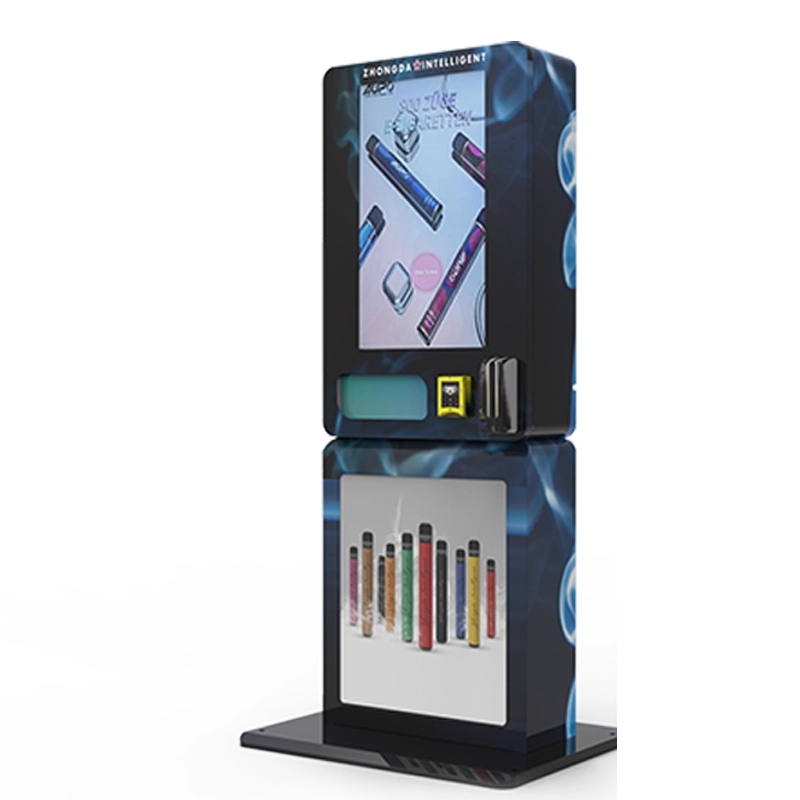
How to Evaluate ROI Without Relying on Marketing Claims
AI age verification can improve economics in the right location, but there is no universal payback period.
ROI depends on:
Machine purchase price
AI camera and processing hardware
Software or licensing costs
Transaction volume
Verification abandonment
Location commission
Maintenance
Network costs
Service calls
Downtime
A useful calculation is:
Annual Incremental Benefit = Additional Completed Transactions + Avoided Verification Costs + Avoided Downtime – Additional AI Operating Costs
Then calculate:
Payback Period = Incremental AI Investment ÷ Monthly Incremental Benefit
Do not build the business case using a vendor's generic conversion-rate improvement. Run a pilot using your own product mix, customer demographics, venue conditions and verification requirements.
Questions to Ask an AI Vending Machine Manufacturer
Before buying an AI-enabled age verification system, ask the manufacturer:
Is the system performing age estimation, identity matching, or both?
Does processing happen locally or in the cloud?
Are facial images stored?
What data leaves the vending machine?
What happens if the AI result is uncertain?
Can the system fall back to an ID scanner?
How are false accepts and false rejects measured?
Has the model been evaluated across relevant demographic groups?
What anti-spoofing or liveness controls are included?
How does the camera perform in low light and strong backlighting?
Can firmware and AI models be updated remotely?
Can a failed camera automatically block or redirect restricted transactions?
Can verification rules be configured by location?
What event data is logged?
Can the complete system be remotely monitored?
If a supplier answers these questions only with a single “accuracy rate,” ask for more detail.
Where AI Age Verification Makes the Most Sense
AI age estimation is most useful where the customer already expects a self-service transaction and reducing verification friction has operational value.
Potential environments include legally permitted adult-only venues, hospitality settings, entertainment venues, specialized retail environments and other unattended retail locations where the applicable laws permit automated vending.
It is less compelling when a trained employee is already performing the complete age-verification process at the point of sale.
Location selection should therefore consider both commercial value and legal suitability.
The Future: Hybrid Age Assurance Rather Than Face Recognition Alone
The long-term direction of age-restricted vending is likely to involve multiple verification signals rather than dependence on one technology.
A flexible system can combine:
Facial age estimation
Liveness detection
ID scanning
Optional face-to-ID matching where permitted
Local processing
Cloud-based updates and fleet management
Policy configuration by location
This layered architecture recognizes a fundamental limitation of age estimation: AI is useful for managing uncertainty, but it does not turn a visual estimate into a known date of birth.
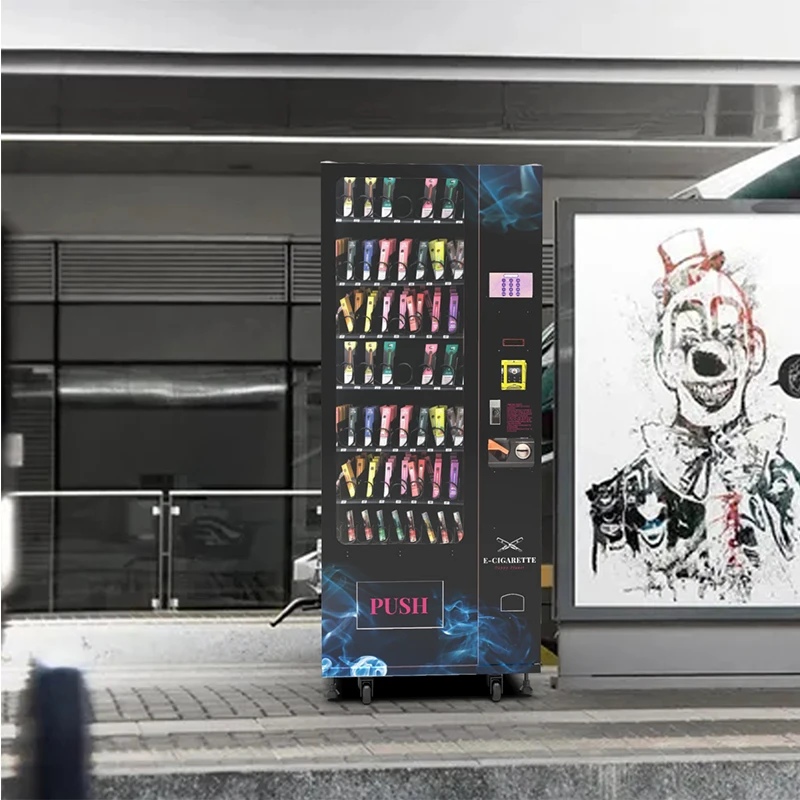
Zhongda Smart's ID scan vending machine and age-verification platforms can be configured with different verification components depending on the operational requirements of the project.
Final Verdict: Are AI Face Recognition Vending Machines Worth It?
AI facial age estimation can be valuable for vending machines, but its strongest benefit is not replacing every other form of age verification.
Its real value is creating a faster first layer of age assurance while allowing higher-risk or uncertain transactions to move into stronger verification.
The main benefits are:
Lower-friction age screening
Potentially faster unattended transactions
Consistent challenge rules
On-device processing options
Reduced dependence on continuous cloud age estimation
Better integration with automated vending workflows
The main challenges are:
Age-estimation uncertainty
False accepts and false rejects
Demographic performance differences
Lighting and environmental conditions
Spoofing and liveness detection
Privacy and biometric-data considerations
Integration and maintenance
Different legal requirements across products and jurisdictions
For most serious age-restricted vending deployments, the better question is therefore not:
“Can AI replace ID verification?”
It is:
“How can AI reduce friction while maintaining an appropriate fallback verification process?”
That shift in thinking leads to a more reliable, privacy-conscious and adaptable vending architecture.
Frequently Asked Questions
How accurate is AI face recognition for age verification in vending machines?
There is no universal accuracy rate. Performance varies by algorithm, age group, image quality, pose, lighting, eyewear, demographic group and the threshold used. Buyers should compare false-accept and false-reject rates near the relevant age threshold rather than relying on one overall accuracy percentage.
Is facial age estimation the same as face recognition?
No. Facial age estimation analyzes facial characteristics to estimate an age or age range without necessarily identifying the person. Face recognition generally involves comparing biometric information to a known identity or reference database. The distinction can also matter for privacy and regulatory analysis.
Can AI age estimation replace an ID scanner?
Not in every application. Whether facial age estimation is sufficient depends on the product, jurisdiction and applicable verification requirements. A common architecture is to use AI as the initial screening layer and trigger ID verification when the result is uncertain or the customer falls below a configured challenge threshold.
Can AI age verification work without internet access?
Yes, if the age-estimation model runs on an embedded processor inside the vending machine. However, other functions such as payment processing, remote monitoring, software updates or secondary verification services may still require connectivity.
Are facial images stored by an AI vending machine?
That depends on the system architecture. A privacy-focused edge system can process temporary image frames locally and discard them after producing the required age signal. Operators should verify exactly what information is captured, stored, transmitted and retained before deployment.
What happens if the AI camera cannot estimate a customer's age?
The system should use a defined fallback workflow, such as requesting an ID scan or another legally permitted verification method. If the required verification cannot be completed, an age-restricted transaction should not default to approval.
Can facial age estimation be affected by lighting or demographic differences?
Yes. Independent evaluations show that age-estimation performance can vary with image conditions and population characteristics. Systems should therefore be tested under realistic deployment conditions and across the demographic groups relevant to the intended market.
What should I look for when buying an AI age verification vending machine?
Evaluate age-estimation performance, false-accept and false-reject rates, fallback ID verification, liveness controls, low-light performance, privacy architecture, data retention, on-device processing, remote updates, failure behavior and integration with the payment and vending controller.