Retail age verification is more than checking a customer's date of birth. For businesses selling age-restricted products, an effective compliance program combines clear policies, reliable ID verification, properly configured technology, staff training, privacy controls, ongoing maintenance, and regular compliance reviews.
Quick answer: Retail age verification best practices include identifying the rules that apply to each location, creating a written ID-checking policy, verifying age consistently, checking ID validity and expiration, blocking sales when verification fails, keeping software and ID libraries updated, minimizing personal data collection, training staff on exception handling, and auditing the process regularly.
The exact requirements depend on the product, jurisdiction, sales channel, and location. A tobacco retailer, alcohol retailer, pharmacy, cannabis retailer, and unattended vending operator may all face different requirements. For that reason, age verification technology should support your compliance program rather than be treated as proof of compliance by itself.
Retail Age Verification Compliance at a Glance
| Best Practice | Why It Matters | Recommended Approach |
|---|---|---|
| Know the applicable rules | Age limits and verification requirements vary | Maintain requirements by product and location |
| Use a written verification policy | Reduces inconsistent decisions | Define when and how IDs must be checked |
| Validate more than date of birth | A DOB check alone may miss expired, altered, or unreadable IDs | Check supported document data and validity signals |
| Fail safely | Verification failures should not result in accidental sales | Block the transaction until lawful verification is completed |
| Maintain software and hardware | ID formats, software, and equipment change over time | Use monitored updates and preventive maintenance |
| Protect customer data | ID verification may involve sensitive personal information | Collect and retain only what is necessary |
| Train staff | Technology cannot resolve every exception | Use documented escalation procedures |
| Audit regularly | Configuration errors can go unnoticed | Run documented functional and compliance tests |
1. Start With the Rules That Apply to Your Product and Location
The first retail age verification best practice is also the most important: determine exactly which laws and regulations apply before configuring your system.
Do not assume that one age threshold or one verification procedure works everywhere. Requirements can depend on:
The type of age-restricted product
The country, state, province, or municipality
Whether the sale is attended or unattended
Whether the customer enters an age-restricted facility
The type of identification being accepted
Whether electronic or biometric processing is permitted
Recordkeeping and privacy requirements
For operators with multiple locations, create a compliance matrix showing the minimum age, ID-checking rules, accepted verification methods, operating restrictions, and escalation procedures for each market.
A U.S. Tobacco Retail Example
For tobacco products in the United States, including e-cigarettes, current FDA requirements prohibit sales to customers younger than 21 and require retailers to check photographic identification for purchasers under age 30. Federal rules also restrict tobacco vending machines to facilities where people under 21 are not present or permitted to enter. An ID scanner does not eliminate that location restriction.
This illustrates an important compliance principle: age verification technology and legal permission to sell are separate questions.
2. Create a Written Retail Age Verification Policy
Retailers should document how age verification is supposed to work instead of leaving individual employees or machine configurations to make inconsistent decisions.
Your policy should define:
Which customers require an ID check
Which identification documents are accepted
How expired IDs are handled
What happens when an ID is damaged or unreadable
What happens when displayed information and encoded information do not match
How suspected altered or fraudulent IDs are handled
Whether and when human review is permitted
What happens when the scanner or verification service is unavailable
What information is logged
How long verification records are retained
Who handles compliance incidents
The policy should reflect applicable law rather than relying solely on the equipment manufacturer's default settings.
3. Do Not Treat a Date-of-Birth Check as Complete ID Verification
A basic system can read a date of birth and determine whether it is older than a configured threshold. That is useful, but it is only one part of an age verification workflow.
Depending on the technology, document type, and legal requirements, a more robust system may evaluate:
Date of birth
ID expiration date
Machine-readable barcode or document data
Consistency between visible and encoded information
Document format and expected fields
Signs that an image or document cannot be reliably read
Optional authenticity or anti-spoofing signals
Optional face-to-ID matching where appropriate and legally permitted
Not every jurisdiction requires every check, and not every ID document supports the same features. The goal is to choose verification controls appropriate to the regulatory and operational risk of the transaction.
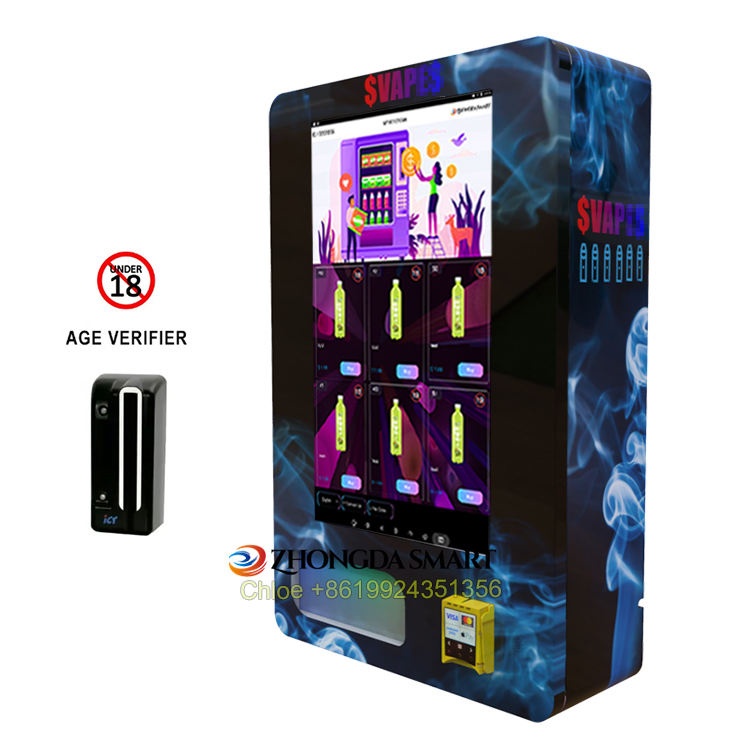
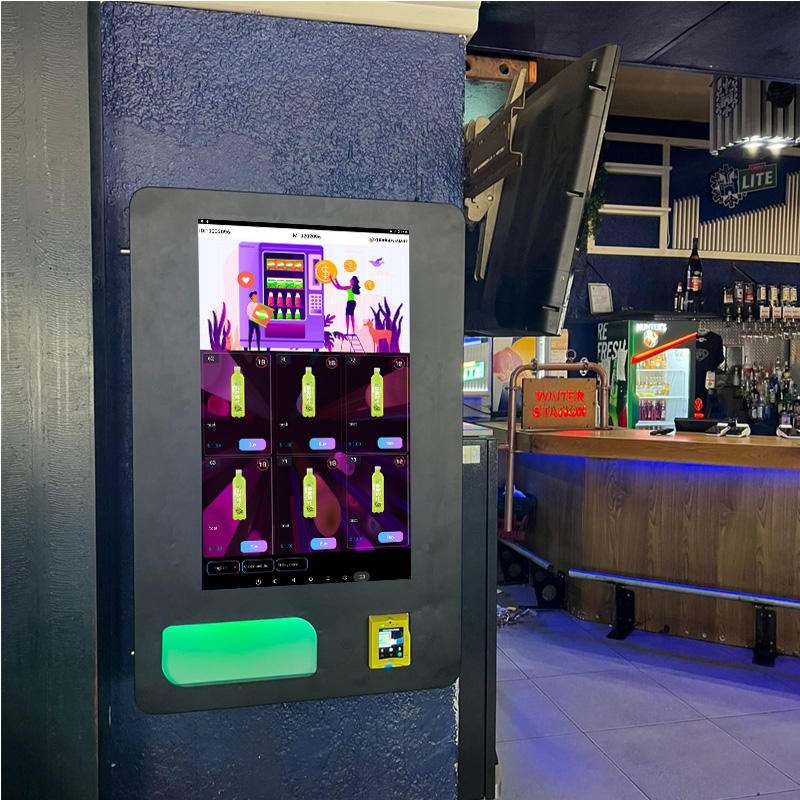
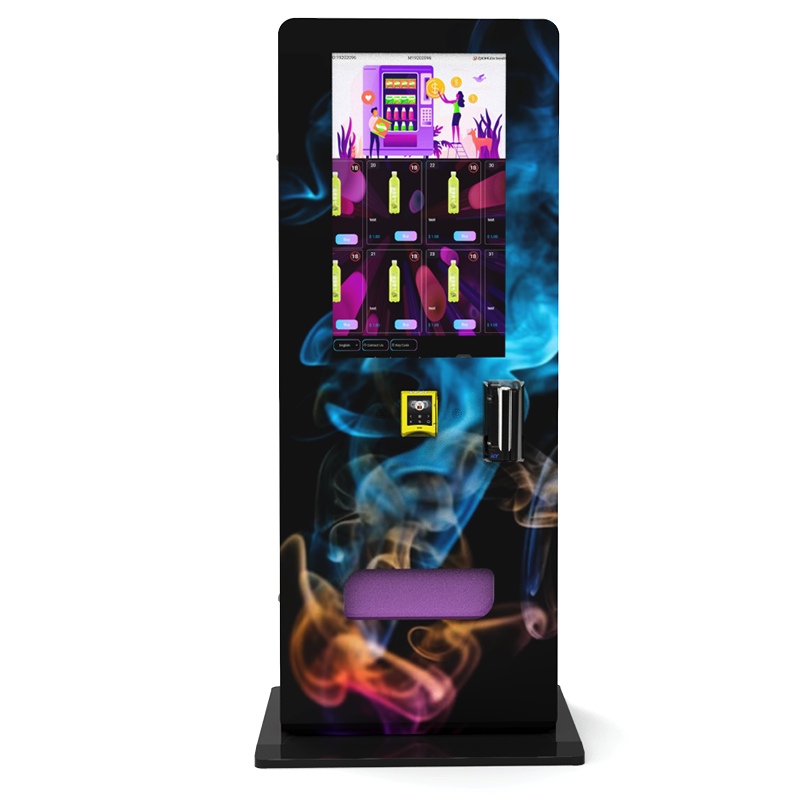
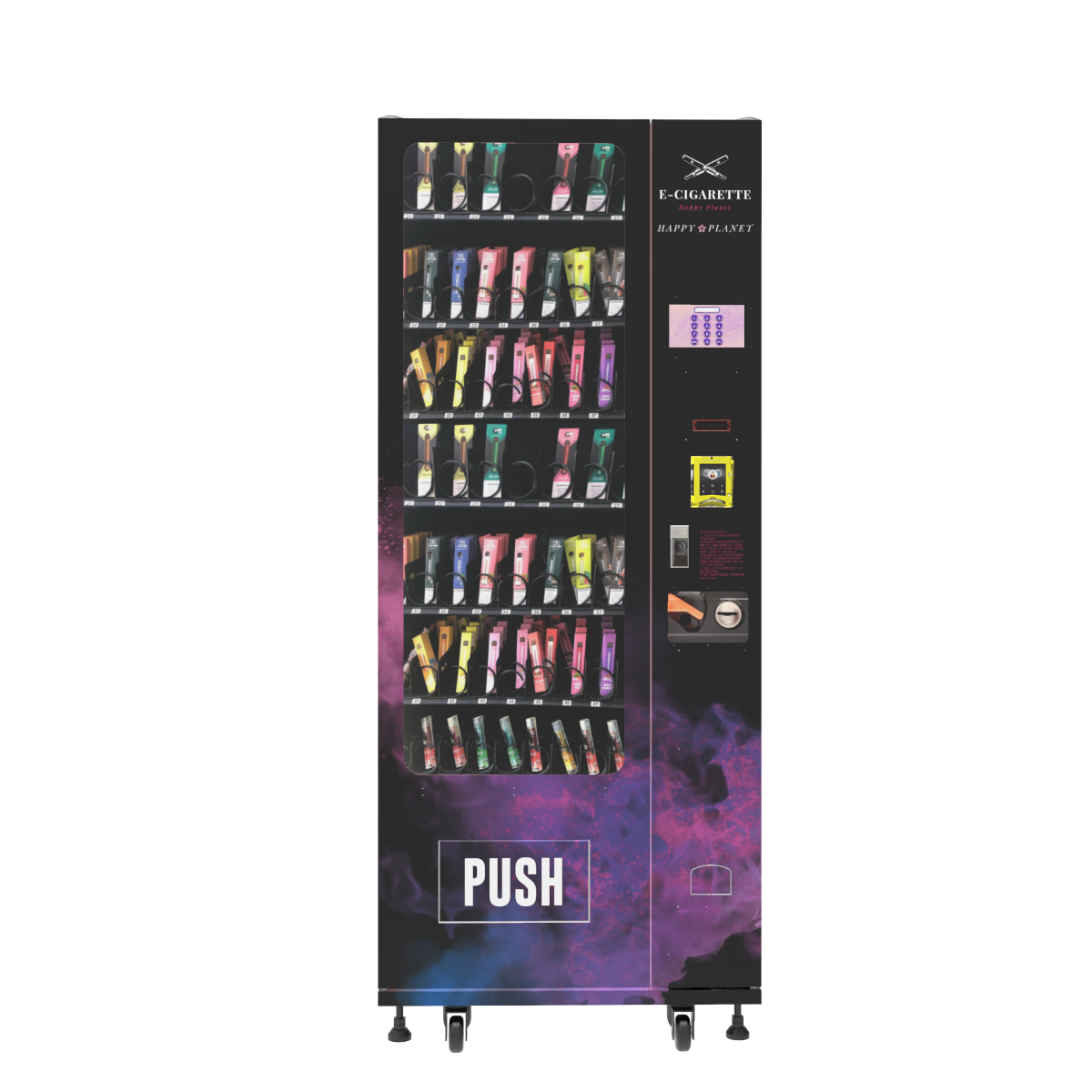
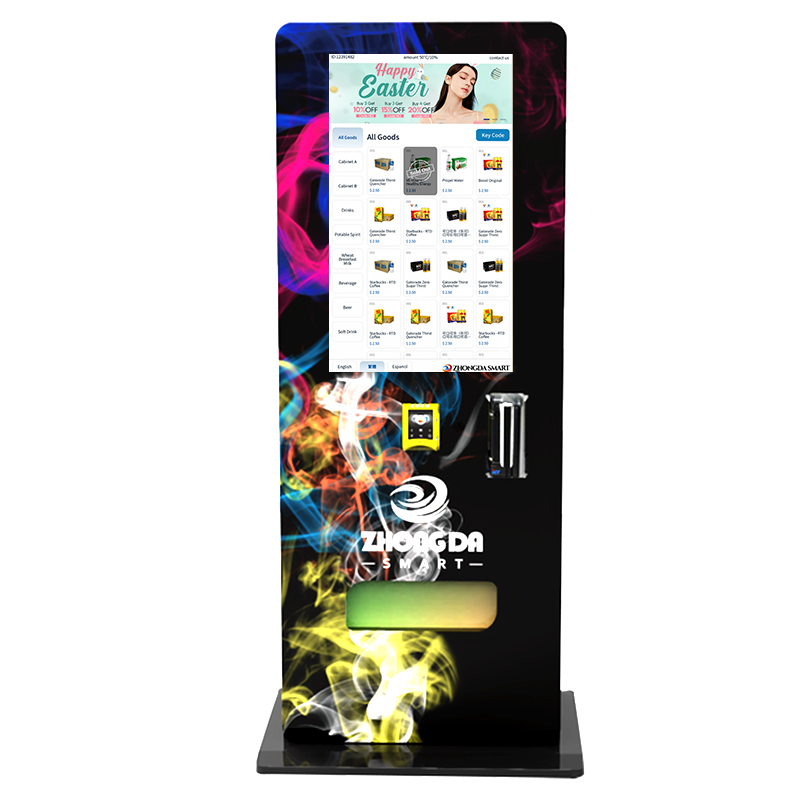
For unattended retail, Zhongda Smart's age verification vending machine can integrate ID-reading hardware with the vending machine transaction workflow so that verification occurs before an age-restricted product is released.
4. Use a Fail-Safe Rule: No Successful Verification, No Sale
One of the most important design principles for automated age verification is fail closed rather than fail open.
If the system cannot complete the required verification because the ID cannot be read, the scanner is unavailable, required software fails, or another critical verification component is offline, the vending machine or checkout workflow should not simply treat the customer as approved.
Instead, the system should:
Stop the age-restricted transaction.
Clearly explain that verification could not be completed.
Allow the customer to retry when appropriate.
Provide a lawful alternative verification or staff escalation path where available.
Record a system error for maintenance when the problem is technical.
The payment workflow also matters. Ideally, age eligibility should be established before final payment is captured. If payment occurs earlier in the process, the system should support an appropriate automatic void or refund workflow when verification cannot be completed.
5. Verify the ID, Not the Customer's Appearance
Visual age estimation is inherently inconsistent. A standardized verification policy reduces the risk of one employee checking an ID while another employee would approve the same customer based only on appearance.
Technology can help enforce consistent rules by prompting for verification based on the configured policy and preventing employees or unattended systems from casually bypassing the check.
However, automated age estimation, facial analysis, and biometric tools should not be added simply because they are technically available. Before using them, retailers should evaluate accuracy, privacy requirements, consent requirements, retention practices, and applicable local laws.
6. Keep Verification Software and ID Support Current
Retail age verification is not a one-time installation project.
Identification documents change. Software libraries change. Verification providers update their logic. Regulatory requirements and age-checking policies can also change.
A compliance-oriented system should therefore support:
Remote software and firmware updates
Document-library updates where applicable
Version tracking
Update logs
Rollback or recovery procedures
Alerts when a machine fails to update
There is no universal rule that every age verification system must be updated on an arbitrary fixed schedule such as every 30 days. A better approach is to maintain a defined update policy based on manufacturer releases, security patches, ID-format changes, and regulatory changes.
For larger vending fleets, over-the-air update capability can be particularly valuable because operators do not need to visit every machine whenever verification software or configuration changes.
7. Monitor Connectivity Without Assuming Everything Must Be Cloud-Based
Some age verification systems perform processing locally, some use cloud services, and others use a hybrid architecture.
The correct architecture depends on what needs to be verified and the requirements of the particular deployment.
A cloud service may provide centralized management, document intelligence, updates, reporting, or additional verification services. Local processing can reduce network dependency and allow certain functions to continue when connectivity is interrupted.
For retail operators, the important questions are:
Which verification functions require internet access?
What happens when the network connection fails?
Does the system block transactions that require an unavailable service?
How quickly is an outage detected?
Can the operator see machine connectivity remotely?
Does the system automatically reconnect?
What happens to pending transaction data?
Cellular connectivity can be useful for machines that should not depend on a venue's Wi-Fi, but no connection type is universally more reliable in every location. Test connectivity at the actual installation site before deployment.
8. Minimize the Personal Data You Collect
ID verification may involve names, dates of birth, document numbers, photographs, addresses, or other sensitive personal information.
More data is not automatically better.
Before deploying an age verification system, determine:
What data is required to make the age decision
Whether full ID images need to be retained
Whether document numbers need to be stored
Where information is processed
Where information is stored
How long it is retained
Who can access it
Whether it is encrypted in transit and at rest
How records are deleted
What happens when the service contract ends
Where possible, configure the system around data minimization: collect and retain only the information necessary for the legitimate verification, security, and compliance purpose.
9. Train Staff on Exceptions, Not Just Normal Transactions
Most age verification training focuses on the easy scenario: a customer presents a valid ID, the system approves it, and the transaction continues.
Compliance problems are more likely to occur when something unexpected happens.
Staff should know how to respond when:
An ID cannot be scanned
The ID is expired
The customer disputes the result
The information appears inconsistent
The scanner is offline
The customer attempts repeated verification
A machine requests staff assistance
A customer asks staff to bypass the system
Manual overrides should never become a routine shortcut. If an alternative verification process is permitted, it should be documented, access-controlled, and consistent with applicable law and company policy.
10. Test the Physical Installation Environment
Age verification reliability depends on more than software.
From real vending machine deployments, we have found that poor lighting, reflections, dirt on scanner surfaces, humidity, physical positioning, and customer traffic patterns can all affect the practical performance of ID-reading equipment.
Before commissioning a machine, test:
Scanner lighting under actual venue conditions
Glare from laminated IDs
Scanner height and accessibility
User instructions on the screen
Cellular or Wi-Fi signal quality
Dust and moisture exposure
Proximity to frequently opened exterior doors
Camera and scanner cleanliness
A technically capable age verification system can still perform poorly if the physical deployment environment is neglected.
11. Build Preventive Maintenance Into the Compliance Program
Scanner lenses become dirty. Cables loosen. Network connections fail. Cameras can move out of position. Software updates can fail.
Preventive maintenance should therefore be part of retail compliance rather than treated only as equipment servicing.
A practical maintenance program can include:
Regular scanner cleaning
Camera and scanner inspection
Connectivity monitoring
Verification software status checks
Test transactions
Firmware version review
Error-log review
Physical tampering inspection
Machines should also generate alerts when a verification component becomes unavailable rather than allowing an operator to discover the problem days later.
For fleet operators, remote diagnostics can significantly improve this process by identifying offline scanners, update failures, and communications problems before they result in extended downtime. More information is available through our service and support resources.
12. Audit Your Age Verification Process Regularly
A system that passed its installation test can still become misconfigured months later.
Regular internal testing helps identify problems before they become compliance incidents.
A useful test program can include controlled scenarios involving:
A valid adult ID
An underage date of birth
An expired ID
An unreadable or damaged document
A failed scanner connection
A lost network connection where relevant
A mismatch or unsupported document where the system supports those checks
Record the result, machine ID, software version, date, tester, and any corrective action taken.
The frequency should reflect your regulatory obligations, transaction volume, technology, risk level, and internal compliance program rather than an arbitrary universal schedule.
13. Give Unattended and Vending Machine Sales Extra Attention
Unattended retail removes the employee who would normally resolve an ID problem, making system design particularly important.
An age verification vending machine should be evaluated as a complete transaction system rather than as a conventional vending machine with an ID scanner attached afterward.
Key considerations include:
Whether vending sales are legally permitted at the proposed location
How age verification is triggered
Whether the transaction is blocked when verification fails
What happens when the scanner is unavailable
How payments are handled after a failed verification
How the customer receives instructions
How technical errors are reported
Whether the machine can be remotely disabled
How logs and software versions are managed
How hardware is protected against tampering
For U.S. tobacco and e-cigarette vending, remember that federal location restrictions continue to apply regardless of how sophisticated the ID verification system is.
Operators evaluating unattended systems can compare different configurations through our ID scan vending machine solutions.
14. Choose an Age Verification System Based on Compliance Risk, Not Features Alone
A long list of scanner specifications does not tell you whether a system will work reliably in your operation.
| Evaluation Area | Questions to Ask |
|---|---|
| Document Support | Which IDs can the system reliably process in my target markets? |
| Verification Logic | What exactly is being checked beyond date of birth? |
| Failure Behavior | What happens if the ID, scanner, network, or verification service fails? |
| Updates | Can software, firmware, and verification rules be updated remotely? |
| Auditability | Can I review system status, verification events, errors, and software versions? |
| Privacy | What information is collected, transmitted, retained, and deleted? |
| Connectivity | Which functions stop when the machine goes offline? |
| Integration | Is verification integrated with payment and product release? |
| Security | How are the device, software, credentials, and stored data protected? |
| Support | Who responds when a verification component fails? |
Retail Age Verification Compliance Checklist
Before launching or reviewing an age-restricted retail operation, confirm that you can answer “yes” to the following:
We know which age-verification rules apply to every location.
We have a documented ID verification policy.
Our age threshold and system rules are correctly configured.
Our system checks the information required for our use case.
A failed verification does not automatically result in an approved sale.
Employees understand how to handle exceptions.
Our equipment and software are actively maintained.
We can identify machines that are offline or malfunctioning.
We have a defined software and firmware update process.
We collect only the customer data we actually need.
Access to sensitive verification data is controlled.
Our system maintains appropriate operational or compliance records.
We periodically test the complete verification workflow.
We have an incident response process.
We have confirmed that unattended or vending sales are permitted at the proposed location.
Common Retail Age Verification Mistakes
Many compliance failures come from operational assumptions rather than sophisticated technical attacks.
Common mistakes include:
Treating an ID scan as automatic proof of compliance. Technology supports a compliance program; it does not replace applicable law.
Checking only date of birth. Depending on the use case, expiration, readability, document consistency, or other checks may also matter.
Allowing sales when verification technology fails. Critical verification failures should trigger a defined safe state.
Using the same configuration everywhere. Requirements can vary by product and jurisdiction.
Ignoring software updates. Verification logic and supported documents change over time.
Ignoring physical maintenance. A dirty or damaged scanner can undermine an otherwise capable system.
Creating uncontrolled manual overrides. Exception handling needs clear authorization and auditability.
Collecting excessive personal data. Retaining unnecessary ID information creates additional privacy and security exposure.
Assuming technology removes location restrictions. Some age-restricted products have separate rules governing where vending or self-service sales are allowed.
Final Thoughts: Compliance Is a Process, Not a Scanner
The most effective retail age verification programs combine technology with policy, maintenance, training, monitoring, and regular review.
A high-quality scanner is useful, but compliance depends on what happens before, during, and after the scan: which rules are configured, what data is checked, how failures are handled, whether software stays current, how staff respond to exceptions, and whether the entire process is regularly tested.
For unattended retail, the integration between age verification, payment, product release, remote monitoring, and fail-safe behavior is especially important. A modular system that supports remote updates and configurable verification workflows can make it easier to adapt as operational or regulatory requirements change.
If you are planning an age-restricted vending project, evaluate the compliance requirements and verification architecture before choosing the machine hardware. Zhongda Smart offers configurable age verification vending machines designed to integrate ID verification with payment, product release, remote monitoring, and fleet management.
Frequently Asked Questions
What is the best practice for retail age verification?
The best approach is to use a documented, consistent verification process based on the laws that apply to the product and location. It should define when IDs are checked, which IDs are accepted, how failed or questionable verifications are handled, how staff are trained, and how the system is maintained and audited.
Is scanning an ID enough to stay compliant?
Not necessarily. An ID scan is one verification tool. Compliance can also depend on the applicable minimum age, location restrictions, accepted documents, staff procedures, privacy requirements, recordkeeping, and other product-specific rules.
What should happen if age verification fails?
The age-restricted transaction should not proceed until verification can be completed through an alternative method that is permitted by applicable law and company policy. Automated systems should not default to approval simply because a scanner, network connection, or verification service has failed.
How often should retail age verification software be updated?
There is no universal update interval for every system. Retailers should apply relevant manufacturer updates, security patches, supported-document updates, and regulatory configuration changes through a documented update process and verify that deployed devices are running the intended versions.
Do age verification vending machines still have location restrictions?
They can. The fact that a vending machine can verify age does not automatically make vending sales legal in every location. Rules depend on the product and jurisdiction. For example, U.S. federal tobacco rules restrict vending machine sales to facilities where people under 21 are not present or permitted to enter.
Should an age verification system store customer ID data?
Only information needed for legitimate verification, operational, security, or compliance purposes should be collected and retained. Retailers should define what is stored, where it is stored, who can access it, how long it is retained, and how it is securely deleted.
Can Wi-Fi be used for retail age verification?
Yes, depending on the system and location. Wi-Fi, cellular connectivity, wired networks, local processing, and hybrid architectures can all be appropriate. The key question is what happens to required verification functions when connectivity becomes unavailable.
How should retailers audit age verification systems?
Retailers can perform documented test transactions using controlled scenarios such as valid adult IDs, underage dates of birth, expired IDs, unreadable documents, scanner failures, and network failures where relevant. Audit frequency should reflect applicable requirements and the retailer's risk and compliance program.