Campus vending machine age verification is a critical part of controlling access to age-restricted products sold through automated retail systems. A reliable system should verify eligibility before a transaction is completed, reject invalid or expired identification, protect customer data, and prevent dispensing whenever verification cannot be completed.
However, age verification technology alone does not make an installation compliant. Operators must also confirm whether vending sales of the intended product are legally permitted at the proposed location, what age restrictions apply, what retail licenses are required, and whether campus policies impose additional restrictions.
Important U.S. compliance note: Under current federal tobacco retail rules, tobacco products, including e-cigarettes and other electronic nicotine delivery systems, generally cannot be sold through vending machines in facilities where people under 21 are present or permitted to enter at any time. As a result, a tobacco or vape vending machine on a U.S. campus should only be considered for a legally eligible 21+ restricted-access facility. State, local, and campus requirements may be stricter.
What Is Campus Vending Machine Age Verification?
A campus vending machine age verification system combines automated retail equipment with identity and age-checking technology. Before an age-restricted product can be dispensed, the system evaluates the customer’s identification and confirms that the purchaser meets the applicable minimum age requirement.
Depending on the machine and verification provider, the process may involve barcode reading, optical character recognition, expiration-date checks, document-format validation, or additional identity-verification methods.
The objective is not simply to scan an ID. A properly designed system should create a controlled transaction flow in which verification occurs before the product is released.
How Does an Age Verification Vending Machine Work?
A typical transaction follows several stages:
Product selection: The customer selects an age-restricted item.
ID request: The vending machine asks the customer to present an accepted form of identification.
ID data reading: The scanner reads relevant information such as date of birth, expiration date, barcode data, or printed information.
Verification: The system evaluates whether the ID meets the configured verification requirements.
Age decision: The software determines whether the purchaser satisfies the applicable age threshold.
Payment and dispensing: The transaction proceeds only after verification succeeds. If verification fails, the sale should stop.
Some systems perform verification locally, while others communicate with third-party verification services. The appropriate architecture depends on the jurisdiction, accepted ID types, privacy requirements, connectivity, and machine configuration.
Is a Vape or Tobacco Vending Machine Legal on a College Campus?
This is one of the most important questions to answer before choosing the machine.
In the United States, federal rules restrict tobacco vending machines—including vending machines selling e-cigarettes—to facilities where individuals under 21 are not present and are not permitted to enter. That means an ordinary student center, residence hall, cafeteria, library, or other campus space accessible to younger students generally should not be treated as an eligible tobacco-vending location.
A potentially eligible installation would instead need to be located in an appropriately restricted 21+ facility and still comply with all applicable federal, state, local, licensing, and institutional requirements.
Rules differ significantly by country and product category. Before purchasing equipment, operators should verify:
Whether vending sales of the product are permitted.
The legal minimum purchasing age.
Restrictions affecting the proposed location.
Retail or vending licenses and permits.
Product-specific sales restrictions.
Campus or property-owner policies.
Privacy rules covering ID information.
Age verification should therefore be viewed as one layer of a broader compliance system rather than a substitute for location eligibility or retail licensing.
Key Features of a Campus Age Verification Vending Machine
| Feature | Why It Matters | What to Check |
|---|---|---|
| Integrated ID Scanner | Confirms customer eligibility before dispensing | Supported IDs, scanning speed, document-reading capabilities |
| Fail-Safe Transaction Control | Prevents sales when verification cannot be completed | Verification failure should stop dispensing |
| ID Expiration Check | Helps prevent use of expired documents | Automatic expiration-date validation |
| Secure Data Handling | Reduces privacy and cybersecurity risks | What data is collected, transmitted, retained, and deleted |
| Network Redundancy | Improves system availability | Wi-Fi, Ethernet, cellular backup, offline behavior |
| Remote Monitoring | Helps operators manage multiple machines | Sales, inventory, errors, connectivity, verification status |
| Remote Software Updates | Allows verification software and machine firmware to stay current | OTA update support and update management |
| Modular Components | Reduces repair time | Replaceable scanners, payment terminals, control boards, and trays |
| Audit and Event Logs | Supports troubleshooting and operational review | Transaction events without unnecessary sensitive personal data |
Why Fail-Safe Design Matters
One of the most important design principles for an age verification vending machine is what happens when something goes wrong.
If the ID scanner is unavailable, verification software produces an error, or a required verification service cannot be reached, the machine should follow the operator’s configured compliance rules rather than automatically completing the sale.
For age-restricted products, operators should specifically discuss “fail-closed” behavior with the equipment manufacturer and verification provider. This means a verification failure results in no restricted-product sale.
This requirement should be tested during commissioning instead of being assumed from a product specification sheet.
Privacy and ID Data Protection
Age verification introduces another consideration that ordinary snack or beverage vending machines usually do not have: identity information.
Operators should understand exactly what happens when an ID is scanned.
Questions to ask the supplier include:
Is the full ID image stored?
Is personal information retained after verification?
Is data processed locally or by a third-party service?
How is information encrypted during transmission?
How long are transaction records retained?
Can the system record a verification result without retaining unnecessary identity data?
Who can access administrative and transaction information?
The safest architecture is not necessarily the system that collects the most information. Operators should generally seek a solution that collects only the data required for the legitimate verification and compliance purpose.
Campus Network Requirements: Wi-Fi or Cellular?
Connectivity can become a practical deployment challenge on university and college properties.
Campus Wi-Fi networks may require authentication, device registration, firewall configuration, or approval from the IT department. A vending machine should therefore not be installed with the assumption that it can simply connect to an existing wireless network.
Before deployment, confirm:
Whether the verification workflow requires a live network connection.
Whether campus IT allows the vending machine onto its network.
Which ports or services are required.
Whether cellular connectivity is available as a primary or backup connection.
What happens if connectivity is interrupted.
A dedicated cellular connection can simplify deployment in some environments, while Ethernet or managed campus Wi-Fi may be more appropriate in others.
How Much Does an Age Verification Vending Machine Cost?
The total cost depends on machine capacity, cabinet design, payment hardware, ID verification technology, connectivity, software, customization, and shipping.
For initial budgeting, the original project model for this article used the following indicative equipment ranges:
| Machine Type | Typical Capacity | Example Planning Range | Suitable Environment |
|---|---|---|---|
| Wall-Mounted Compact | 50–80 units | $4,500–$6,500 | Space-constrained restricted-access locations |
| Floor-Standing Standard | 150–250 units | $7,000–$9,500 | Higher-volume indoor locations |
| High-Capacity Kiosk | 300–500 units | $10,000–$15,000+ | High-traffic restricted-access venues |
These figures should be treated as planning examples rather than current quotations. Actual prices vary by specification, supplier, verification hardware, destination, software services, and customization.
Calculate Total Cost of Ownership, Not Just Machine Price
A lower purchase price does not automatically mean a lower operating cost. Buyers should evaluate the entire system over its expected service life.
Important cost categories include:
Vending machine hardware.
Age verification hardware.
Payment terminal and payment processing.
Verification software or service fees.
Wi-Fi, Ethernet, or cellular connectivity.
Shipping and installation.
Location commissions or rent.
Replacement scanners and spare parts.
Preventive maintenance.
Technical support.
Software and firmware management.
When comparing suppliers, request an itemized quotation so that recurring costs are separated from one-time equipment costs.
Wall-Mounted vs. Floor-Standing Age Verification Vending Machines
The best machine configuration depends on available space, expected sales volume, product dimensions, service access, and required capacity.
Wall-Mounted Machines
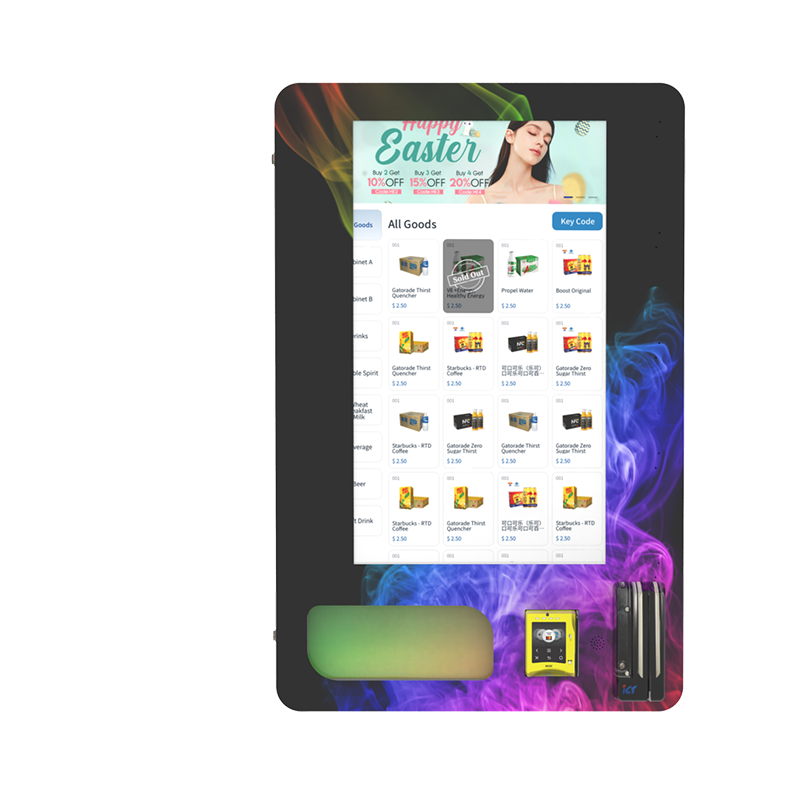
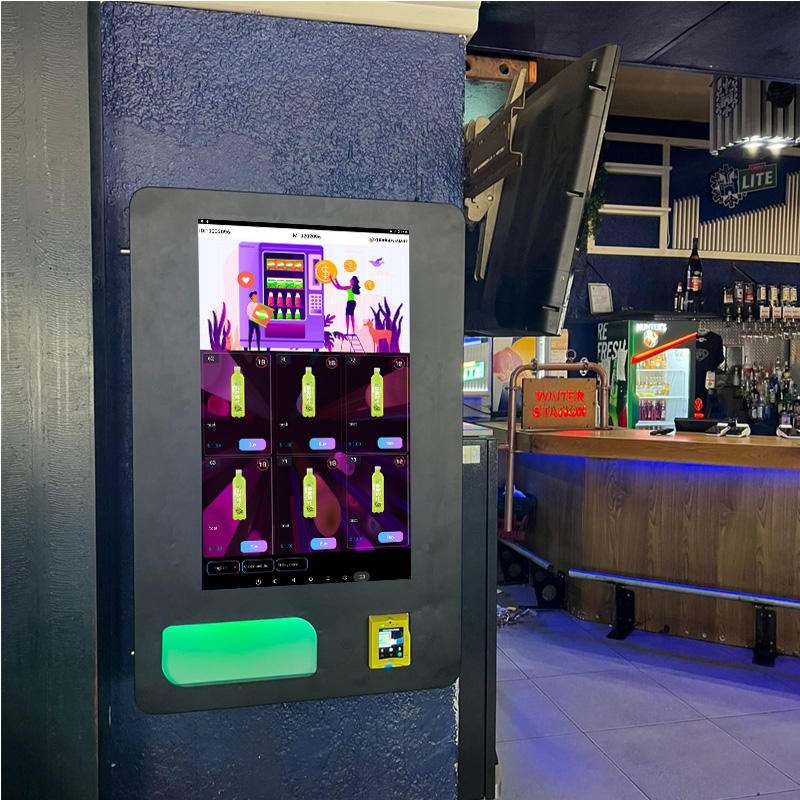
A wall-mounted machine can be useful where floor space is limited. It generally offers lower capacity but may be easier to integrate into compact indoor environments.
Operators evaluating this format can review Zhongda Smart’s wall-mounted compact vending machine configuration to understand available design options.
Floor-Standing Machines
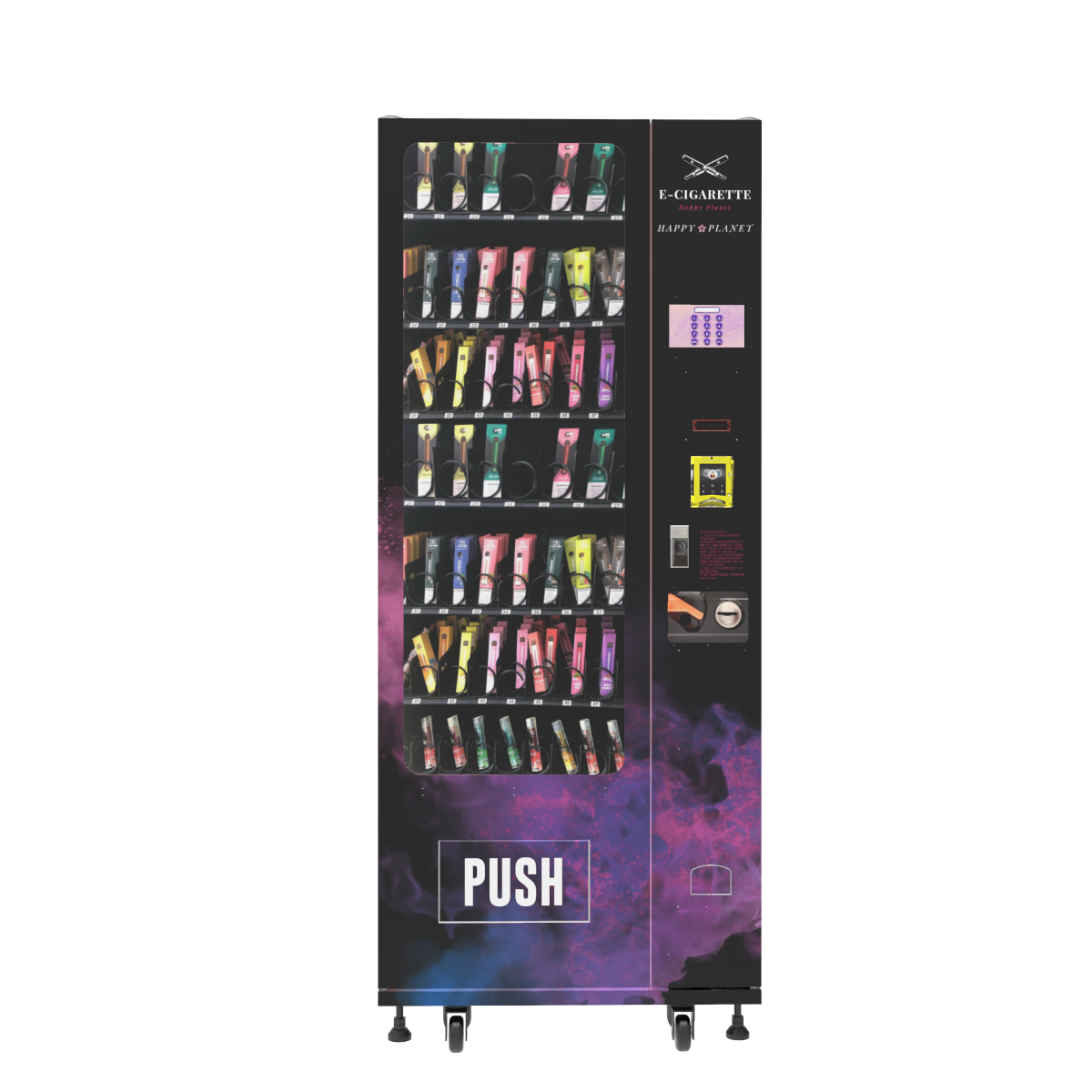
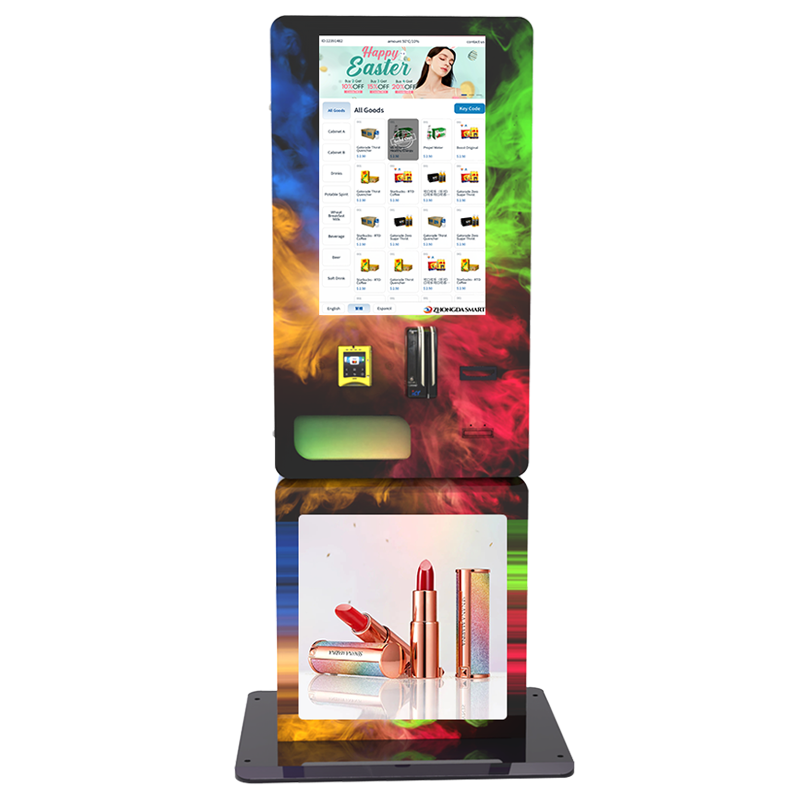
Floor-standing machines provide more product capacity and greater flexibility for tray layouts, larger screens, payment hardware, and additional modules. They are generally more suitable when transaction volume justifies the larger footprint.
High-Capacity Smart Kiosks
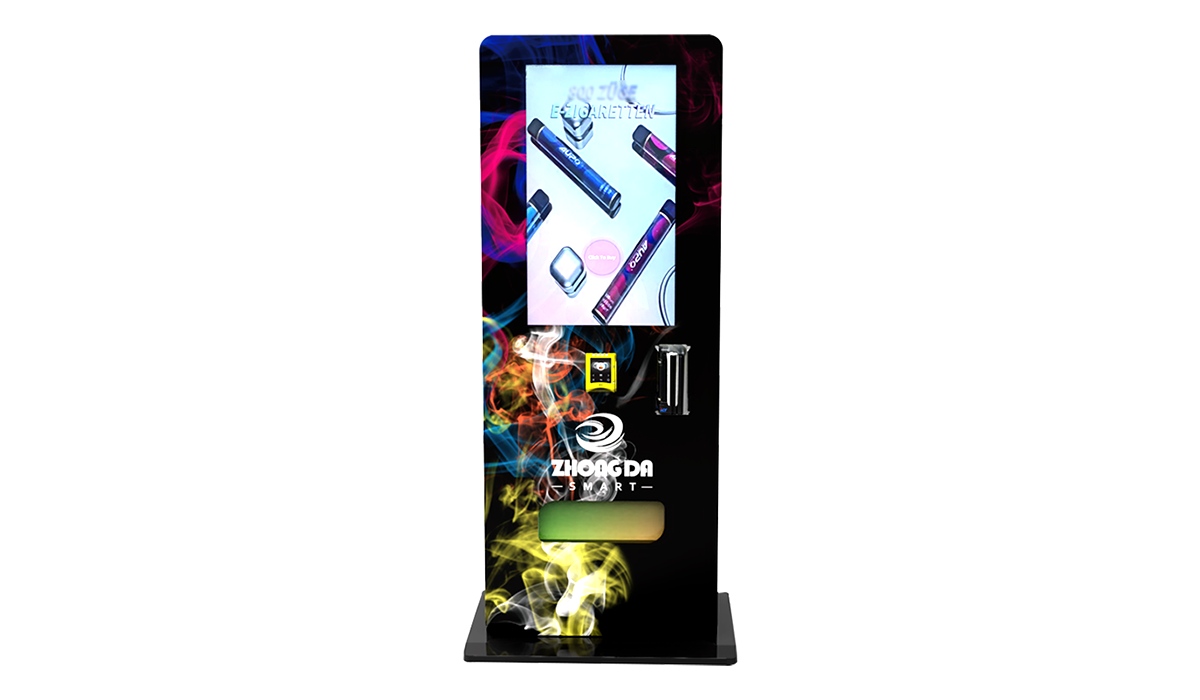
A high-capacity kiosk may be appropriate for locations requiring a broader product assortment, extensive remote management, or multiple dispensing configurations. The additional capacity should be justified by actual traffic rather than simply selecting the largest available machine.
How to Choose an Age Verification Vending Machine Supplier
The verification workflow should be evaluated as part of the complete machine rather than as an accessory added after the vending system has already been designed.
Before ordering, ask the manufacturer to demonstrate:
The complete ID verification workflow.
Which identification documents are supported.
How invalid and expired IDs are handled.
What happens when verification fails.
What happens during a network outage.
How payment authorization is coordinated with verification.
What customer data is collected and stored.
How firmware and verification software are updated.
Whether the scanner and control modules are replaceable.
What remote monitoring functions are available.
An integrated age verification vending machine can simplify deployment because the scanner, vending controller, payment workflow, and dispensing logic can be tested as one system before installation.
For operators comparing different machine sizes and configurations, Zhongda Smart’s vending machine range for age-restricted products provides additional options for evaluating capacity, installation style, and hardware configuration.
Campus Vending Machine Deployment Checklist
Confirm location eligibility. Determine whether the intended product can legally be sold through a vending machine at the proposed location.
Review campus policies. Institutional rules may be stricter than minimum legal requirements.
Confirm licensing. Identify any retailer, vending, tobacco, nicotine, or product-specific permits that apply.
Define the verification workflow. Establish which IDs will be accepted and how unsuccessful verification is handled.
Review data privacy. Document what customer information is processed and retained.
Test connectivity. Confirm Wi-Fi, Ethernet, or cellular requirements before installation.
Test payment integration. Ensure payment and age verification occur in the correct transaction sequence.
Test failure scenarios. Disconnect the network and simulate scanner errors to verify expected machine behavior.
Prepare maintenance procedures. Keep scanner-cleaning materials and critical replacement components available.
Start with a controlled pilot. Evaluate verification success rate, rejected transactions, uptime, sales demand, and service requirements before expanding the fleet.
Maintaining an Age Verification Vending Machine
Age verification performance depends on both software and physical hardware. A scanner with a dirty lens, damaged reader, poor lighting environment, outdated firmware, or unstable network connection can create unnecessary transaction failures.
A practical maintenance program should include regular inspection of the scanner, payment terminal, dispensing mechanisms, network connection, touchscreen, locks, and ventilation system.
Operators should also monitor software and firmware versions and test the verification workflow after significant updates.
For multi-machine deployments, remote monitoring can help identify a failing scanner, disconnected machine, low inventory level, or payment problem before it results in prolonged downtime.
Frequently Asked Questions About Campus Vending Machine Age Verification
1. What is campus vending machine age verification?
Campus vending machine age verification is a system that checks whether a customer meets the required minimum age before an age-restricted product can be purchased and dispensed. Depending on the configuration, it can use ID barcode reading, OCR, expiration checks, document validation, or other verification methods.
2. Can a vape vending machine be installed anywhere on a college campus?
No. In the United States, federal rules restrict tobacco and e-cigarette vending machine sales to facilities where people under 21 are not present or permitted to enter. State, local, and campus policies may impose additional restrictions, so location eligibility should be confirmed before deployment.
3. How does an ID verification vending machine work?
The machine requests identification, reads the required ID information, evaluates the age and document according to its configured verification rules, and allows the transaction to continue only when verification succeeds.
4. What happens if the ID scanner cannot verify a customer?
For an age-restricted transaction, the machine should follow its configured fail-safe rules and prevent dispensing when the required verification cannot be completed. Operators should test this behavior before deployment.
5. Does an age verification vending machine need internet access?
It depends on the verification system. Some functions can be performed locally, while other systems require communication with a remote verification service. Operators should confirm connectivity requirements and define what the machine does during a network outage.
6. Does an ID scanner guarantee that every fake ID will be detected?
No. ID verification technology can reduce risk, but no scanner should be assumed to detect every fraudulent or altered document. Detection capability depends on the hardware, software, supported ID formats, and verification methods being used.
7. Does the vending machine store customer ID information?
That depends on the system architecture. Buyers should confirm what data is collected, whether ID images or personal information are retained, where the data is processed, how long it is stored, and how access is controlled.
8. Is cellular connectivity better than campus Wi-Fi?
Neither option is universally better. Campus Wi-Fi may require IT approval and network configuration, while cellular connectivity can provide an independent connection. The best choice depends on coverage, security requirements, verification architecture, and operating cost.
9. Should I choose a wall-mounted or floor-standing vending machine?
A wall-mounted model is useful when space is limited and lower capacity is sufficient. A floor-standing machine provides more inventory capacity and configuration flexibility and is generally better suited to higher-volume locations.
10. How much does a campus age verification vending machine cost?
Cost varies according to machine size, capacity, ID verification hardware, payment system, connectivity, software, customization, and shipping. Buyers should compare total cost of ownership rather than relying only on the initial machine price.
Build a Safer and More Reliable Age-Restricted Vending System
Successful campus vending machine age verification starts before the machine is installed. First confirm that the product and location are eligible for vending sales. Then evaluate the verification workflow, privacy architecture, connectivity, fail-safe behavior, machine capacity, and long-term service requirements.
The right vending system should make age verification part of the transaction logic rather than an optional add-on.
If you are evaluating an age verification vending project, provide your target country, product category, intended location, required capacity, payment method, and connectivity requirements when requesting a quotation. This allows the machine configuration and verification workflow to be evaluated for the actual deployment environment.