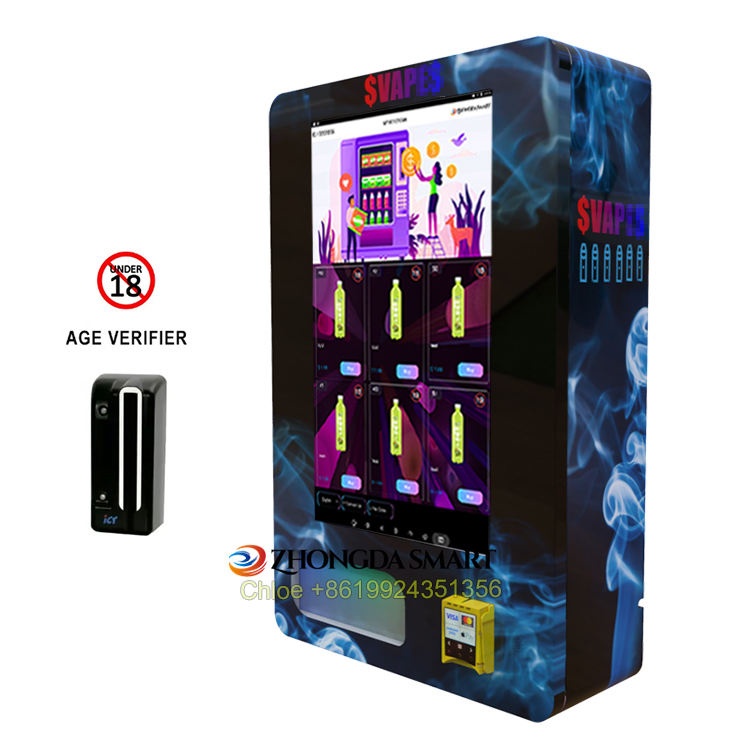
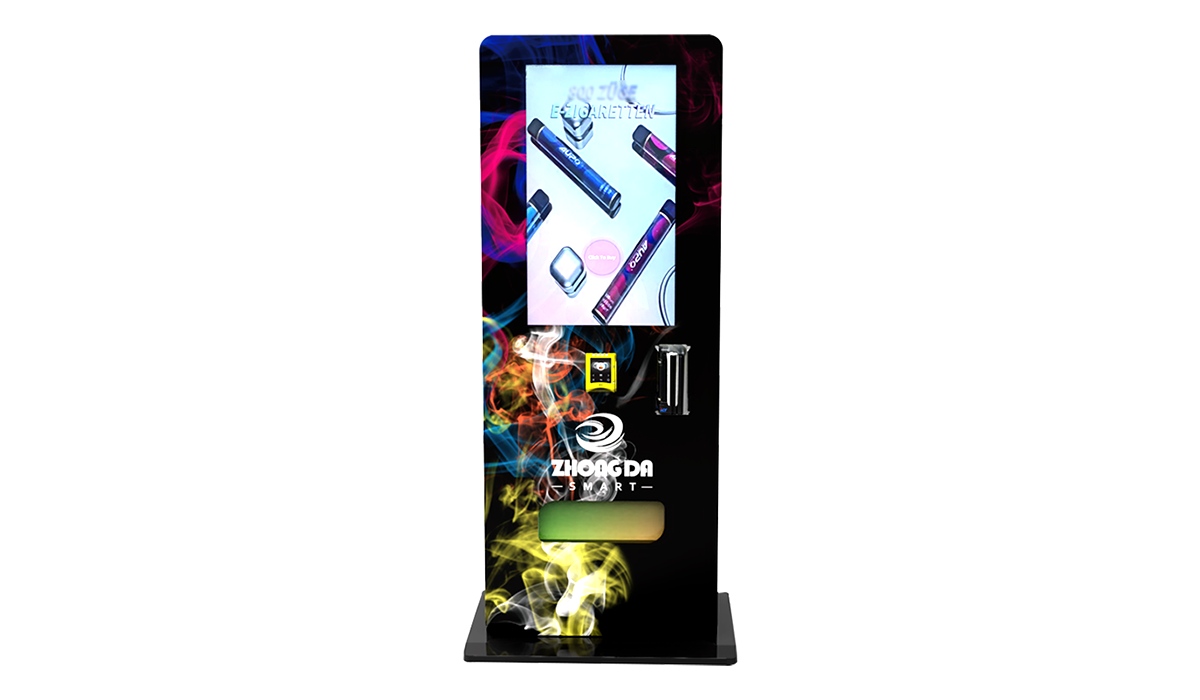
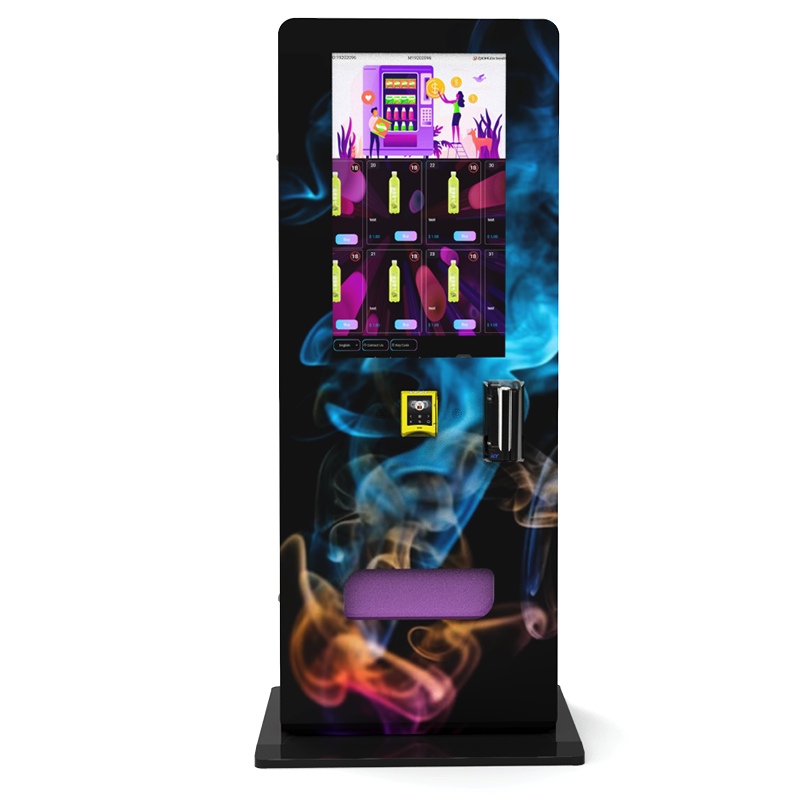
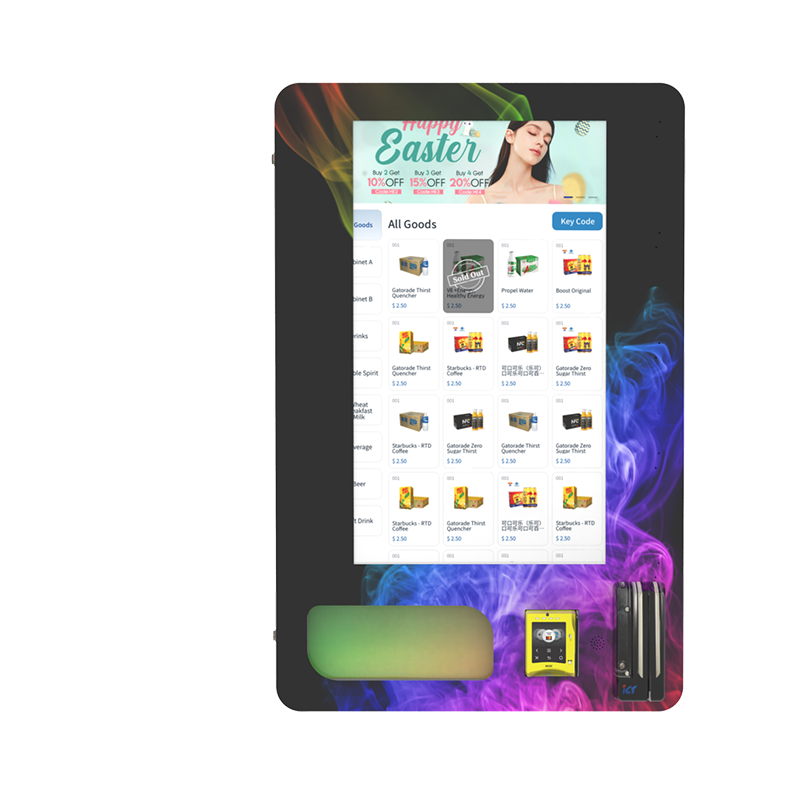
ID verification hardware for vending machines is the part of the system that captures an identity document, reads the information needed for an age check, and passes an approval or rejection result to the vending controller. Depending on the machine, that hardware may include a 2D barcode reader, document camera, controlled lighting, a local processor, and an optional face-matching or liveness module.
The important distinction is that an ID reader is only one layer of an age-restricted vending system. Reading a date of birth is not the same as authenticating a document, face matching is not the same as proving liveness, and installing age-verification hardware does not automatically make a vending location legally compliant.
In practical terms: good ID verification hardware should reliably capture supported documents, calculate age correctly, handle poor real-world capture conditions, fail safely when verification cannot be completed, and expose enough configuration for the operator to meet the rules that apply in the target market.
What Is Inside an ID Verification System?
There is no single piece of hardware called an “ID verification device.” In a production vending machine, several components normally work together.
Document Reader
For U.S. driver's licenses and identification cards, a reader may be designed to capture the machine-readable data encoded in a 2D barcode such as PDF417. Other documents may require optical character recognition, passport MRZ reading, or a combination of imaging and machine-readable data.
That distinction matters. A barcode reader can extract information such as date of birth and expiration data when those fields are present, but successfully reading the barcode does not by itself prove that the physical card is genuine. Document authentication requires additional checks and depends on the capabilities of the selected hardware and software.
Camera and Controlled Lighting
A camera-based system needs more than a high megapixel count. Focus distance, reflections from laminated cards, ambient lighting, camera angle and exposure can all affect the image that reaches the recognition software.
This is particularly noticeable in bars, clubs and other dim environments. A camera that performs well under showroom lighting may behave very differently beside red accent lighting, reflective counters or direct overhead lamps. For that reason, controlled illumination around the capture area is usually more valuable than simply specifying a higher-resolution camera.
Local Processing Hardware
The processor handles document parsing, age calculation and, where supported, image analysis or face comparison. Local processing can also reduce dependence on an internet connection and can limit the amount of sensitive information that needs to leave the machine.
Cloud services may still be used for software updates, remote management or specialized verification services, but the architecture should make it clear which data is processed locally, which data is transmitted, and what happens when the network is unavailable.
Face-Matching and Liveness Components
Some vending systems compare a live camera image with the portrait printed or encoded on an identity document. This can add another check between the document and the person presenting it, but it should not be treated as a perfect identity guarantee.
Face-matching performance varies by algorithm, threshold, image quality and operating conditions. Poor lighting, unusual camera angles and low-quality document photographs can all increase false rejections. Liveness detection is also a separate capability: a system that compares two facial images does not necessarily detect whether the camera is looking at a real person rather than a photograph or replayed image.
Dedicated Scanner, Camera System or Hybrid?
For a vending-machine manufacturer, the useful comparison is not “which technology is best?” but “which capture method fits the location, supported documents and acceptable maintenance level?”
| Hardware Approach | Strengths | Limitations | Typical Fit |
|---|---|---|---|
| Dedicated document / barcode reader | Consistent capture position, controlled reading area, straightforward document workflow | Adds hardware cost and installation space; supported document types depend on the reader | High-traffic machines with a defined set of IDs |
| Camera with controlled lighting | Compact, flexible and capable of capturing visual document information | More sensitive to glare, distance, movement and ambient lighting | Wall-mounted or space-constrained machines |
| Hybrid reader + camera | Can combine machine-readable data with visual or face-related checks | Higher integration cost and more components to maintain | Projects requiring several verification layers |
A hybrid design is not automatically more secure. Every additional sensor or verification stage needs a defined purpose. Adding hardware that is poorly calibrated or rarely maintained can simply add another failure point.
How the Hardware Fits Into a Vending Transaction
In a typical integration, the verification module operates before the vending controller releases an age-restricted product. The document is captured, relevant fields are parsed, age and expiration rules are evaluated, and any configured secondary checks are completed. The verification module then returns a result to the machine controller.
If verification fails, times out or loses communication with the controller, the safer design is to keep dispensing disabled rather than allowing the machine to continue in an unrestricted mode. The customer should also receive a useful message—such as asking them to reposition the document or contact the venue—rather than a generic system error.
This interface between the verification unit and the vending controller is easy to overlook. A technically capable scanner does little good if the machine can still complete a restricted transaction when the scanner is disconnected, rebooting or returning an unresolved result.
Where ID Verification Hardware Usually Struggles
Most field problems are less dramatic than a completely failed scanner. They are usually small capture or integration problems that gradually turn into abandoned transactions.
Glare is a common example. A card can be readable to a person while the camera sees a bright reflection across the barcode or portrait. Damaged cards create a different problem: the document may still be valid, but scratches or worn printing can prevent the reader from extracting enough information.
Document variation matters as well. A machine intended for several states or countries needs a clearly defined list of supported credentials. “Supports ID cards” is not a useful specification unless the manufacturer can explain which document families, barcode standards or passport formats have actually been tested.
Timeout behavior is another practical issue. Verification that takes too long feels broken even when it eventually succeeds. The complete transaction should therefore be tested as a customer would experience it—document presentation, capture, processing, payment authorization and product release—not just as an isolated scanner benchmark.
Do Not Confuse Data Reading With Document Authentication
This is one of the most important distinctions when comparing ID verification hardware.
A system may successfully read the name, date of birth and expiration date from a machine-readable area while performing little or no physical authentication of the document itself. More advanced systems may compare information from multiple document zones or use additional optical features, but those capabilities should be confirmed rather than assumed.
The same applies to claims about holograms, ultraviolet features, infrared inspection or microprinting. A vendor should only claim those checks when the selected scanner actually contains the required illumination, optics and verification software.
For buyers, a better question than “Does it detect fake IDs?” is: What signals does the system evaluate, which document types have been tested, and how is an uncertain result handled?
Face Matching Helps, but It Is Not a Magic Layer
Face comparison is useful when the goal is to determine whether the person in front of the machine appears to match the portrait associated with the presented document. It is still a probabilistic comparison rather than an absolute answer.
NIST testing of face-recognition technology has repeatedly shown that false-match and false-non-match performance depends on the algorithm and operating conditions. Image quality is particularly important. Lighting, exposure and camera angle can materially affect whether two images of the same person are successfully associated.
For a vending-machine project, this means a supplier should be able to explain the camera position, minimum capture conditions, matching threshold, fallback process and whether liveness detection is included. A single headline such as “99% accurate” is not enough to evaluate the system unless the test conditions and metric are also provided.
U.S. Tobacco and Vape Compliance: Hardware Is Only One Part
Important U.S. point: federal tobacco rules place restrictions on the location of vending-machine sales in addition to age-verification requirements.
Under current U.S. FDA Tobacco 21 requirements, tobacco products—including e-cigarettes and other covered tobacco products—may not be sold to anyone younger than 21. Retailers are also required to check photographic identification for customers under 30 who attempt to purchase tobacco products.
Separately, tobacco products may not be sold through a vending machine in a facility where individuals under 21 are present or are permitted to enter at any time. An ID scanner installed on the machine does not remove that federal location restriction.
State, local and tribal requirements can be more restrictive and may address licensing, machine placement, recordkeeping, privacy or specific product categories differently. A machine configuration therefore needs to be reviewed against the law of the actual deployment location rather than marketed as universally “legal” or “fully compliant.”
Privacy Matters as Much as Verification Accuracy
ID verification can involve personal information, and face-based systems may involve biometric information. That makes data handling part of the hardware decision, not an afterthought.
A sensible architecture minimizes the information collected and retained. If a transaction only needs an age-verification result, the system should not automatically retain a full ID image, facial image, name, address and document number unless there is a defined operational and legal reason to do so.
Buyers should ask whether facial images are processed locally or remotely, whether biometric templates are created, how long any data is retained, who can access it, how stored data is protected, and how deletion is handled. Consumer notice and applicable consent requirements should also be reviewed for the target jurisdiction.
The U.S. Federal Trade Commission has specifically identified biometric technologies as an area where privacy, security, accuracy and unsupported performance claims can create consumer-protection concerns. State biometric and privacy laws may impose additional obligations.
What We Look for in a Production-Ready Module
| Area | What Should Be Defined | Why It Matters |
|---|---|---|
| Supported documents | Specific ID, driver's-license and passport formats | Avoids assuming every credential can be read |
| Machine-readable data | 2D barcode, OCR, MRZ or other supported methods | Determines what information can actually be extracted |
| Capture environment | Lighting, focus distance, card position and glare control | Directly affects real-world scan reliability |
| Age logic | Full date calculation, expiration handling and configurable thresholds | Prevents simplistic birth-year calculations |
| Face comparison | Matching method, threshold and operating conditions | Allows performance claims to be evaluated properly |
| Liveness | Whether presentation-attack detection is actually included | Face matching alone does not establish liveness |
| Fail-safe behavior | What happens after errors, timeouts or disconnection | A restricted sale should not proceed on an unresolved check |
| Updates | Signed local or remote firmware/software update process | Document formats and system requirements change over time |
| Privacy | Collection, transmission, retention and deletion rules | Reduces unnecessary handling of sensitive information |
| Serviceability | Module replacement, calibration and diagnostic procedure | Reduces downtime when hardware needs attention |
Maintenance Is Mostly About Keeping Capture Conditions Predictable
Document readers live in a harsher environment than most desktop identity devices. Customers touch them repeatedly, dust settles on optical surfaces, cards are inserted at odd angles, and vending machines may operate for long periods without staff nearby.
Routine maintenance should therefore include cleaning the optical path, inspecting card-contact components where applicable, checking camera focus and lighting, reviewing error logs and confirming that the verification module still communicates correctly with the main controller.
Software maintenance matters too. Identity-document standards and jurisdiction-specific formats evolve. A verification module with no practical update path can become difficult to support long before the rest of the vending cabinet reaches the end of its service life.
For fleets, remote diagnostics are particularly useful. The operator does not necessarily need access to sensitive identity data; simple operational information such as reader status, failure reason categories, firmware version and module connectivity can be enough to identify a machine that needs service.
Choosing Hardware for the Installation, Not the Brochure
A large floor-standing machine in a controlled adult-only venue and a compact wall-mounted unit can have very different hardware requirements.
A location with high transaction volume may justify a dedicated reader and easily replaceable verification module. A compact cabinet may favor a camera-based or integrated reader design, provided the lighting and supported document set are well controlled.
The environment should drive the decision. Before approving a configuration, it is worth testing the exact machine under lighting similar to the real venue, with the document types customers are expected to use. Factory testing under bright, fixed lighting does not reveal every problem that will appear after installation.
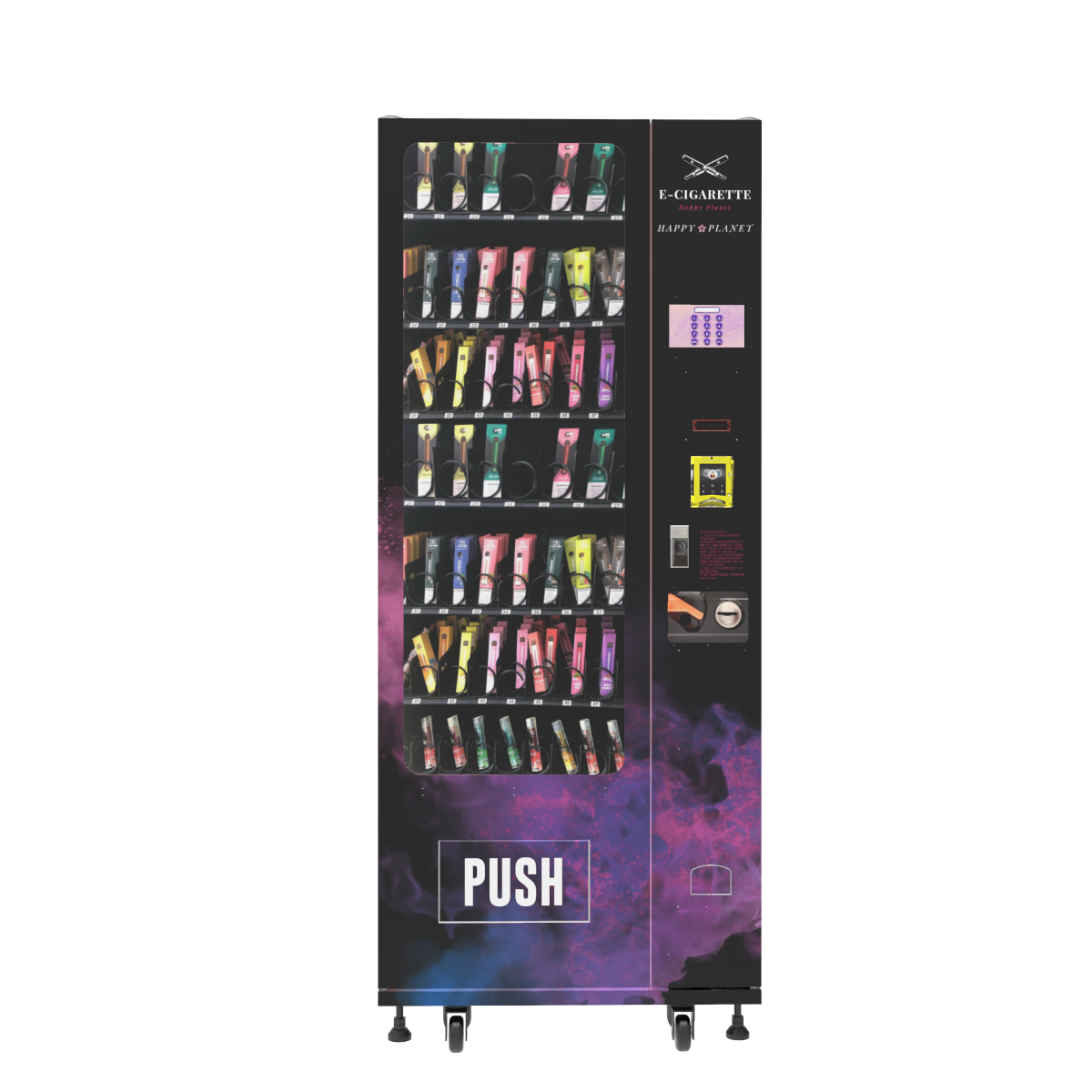
For buyers comparing complete machine configurations, our age verification vending machine page shows a larger smart-vending configuration, while the wall-mounted compact vending machine is intended for installations where cabinet space is limited.
Projects that specifically need an ID-reader configuration can also review the ID scan vending machine. The final verification method, payment system and cabinet configuration should be selected according to the destination market and the requirements of the actual site.
Questions Worth Asking Before Ordering
A useful supplier discussion goes beyond asking whether a machine “has age verification.” Ask which documents have actually been tested, whether the module only reads data or also performs document-authentication checks, and how the system behaves when a scan cannot be completed.
If face comparison is part of the configuration, ask whether liveness is included and what happens after an uncertain match. If a cloud service is involved, ask which functions stop working when the connection is lost.
For privacy, ask for a clear data-flow description. You should be able to understand what the scanner captures, what the processor keeps temporarily, what leaves the machine, what is recorded in the management system and how long those records remain available.
Finally, ask how the module is replaced. Verification hardware is a service component. A design that requires dismantling half the vending cabinet to replace a reader will create unnecessary downtime later.
Frequently Asked Questions
Does reading an ID barcode prove that the ID is genuine?
No. Reading machine-readable data confirms that the scanner could decode the information presented to it. Document authentication may require additional visual, optical, consistency or database checks depending on the system.
Is facial recognition required for every age-verification vending machine?
No universal rule requires the same verification technology in every market or for every product. Face matching can be an additional identity check, but legal requirements and acceptable verification methods depend on the jurisdiction and use case.
Can an ID-scanning vape vending machine be installed in a normal U.S. convenience store?
For tobacco products, including e-cigarettes, U.S. federal rules restrict vending-machine sales to facilities where people under 21 are not present or permitted to enter at any time. An ID scanner on the machine does not override that location restriction. State and local rules should also be checked before deployment.
Can a normal tablet camera be used instead of a document reader?
A general-purpose camera can capture document images, but production performance depends on focus, controlled lighting, glare, document positioning and the verification software behind it. A purpose-designed capture module is usually easier to integrate consistently in unattended equipment.
Does the machine need an internet connection to verify age?
Not necessarily. Basic document reading, date calculations and some face-comparison functions can be performed locally. Other verification services may require an online connection. Buyers should confirm which functions remain available offline.
What should happen if the scanner stops working?
For an age-restricted transaction, the vending controller should not treat a scanner failure as an approval. A fail-safe design keeps the restricted dispensing path disabled and provides a clear service or retry message.
How often should verification software be updated?
There is no useful universal calendar interval. Updates should be available when supported document formats, verification software, security requirements or regulatory logic change. A secure and maintainable update mechanism is more important than promising a fixed annual schedule.
How much customer data should an age-verification machine store?
Only the information required for the intended operational and legal purpose should be collected or retained. Full ID images and biometric information deserve particular care. Data-retention and notice requirements should be reviewed for the jurisdiction where the machine will operate.
References Used for This Article
- U.S. Food and Drug Administration (FDA): Tobacco 21 requirements and current rules for retail tobacco sales and vending machines.
- American Association of Motor Vehicle Administrators (AAMVA): 2025 DL/ID Card Design Standard and machine-readable driver-license / identification-card specifications.
- National Institute of Standards and Technology (NIST): Face Recognition Technology Evaluation, including 1:1 verification performance and demographic effects.
- U.S. Federal Trade Commission (FTC): Policy Statement on Biometric Information and consumer privacy, security and accuracy considerations.
Final Takeaway
The most useful way to evaluate ID verification hardware is to separate the job into layers. The reader has to capture the document reliably. The software has to interpret the relevant data correctly. Any face or liveness component has to work under the actual installation conditions. The vending controller has to fail safely. And the complete deployment still has to comply with the rules that apply to the product and location.
That is a more realistic standard than asking whether a machine simply “has an ID scanner.” For an unattended system, the quality of the integration—and the way it behaves when something goes wrong—is usually just as important as the scanner specification itself.
Disclaimer: This article is provided for general technical and informational purposes only and does not constitute legal, regulatory, privacy or compliance advice. Laws governing tobacco, e-cigarettes, alcohol, age-restricted products, vending machines, identity verification and biometric information vary by country, state and local jurisdiction and may change over time. Age-verification hardware does not by itself make a vending-machine installation lawful or compliant. Operators, distributors and equipment buyers should confirm current requirements with the relevant regulatory authority and qualified professional before deployment. References to verification functions describe technical capabilities or configuration options and should not be interpreted as a guarantee that a system will detect every altered document, prevent every unauthorized purchase or satisfy every jurisdiction's requirements.