The Geek Bar Shortage in 2026 is largely connected to changing import enforcement, restrictions on unauthorized vaping products, unpredictable wholesale availability, and inconsistent restocking of individual models and flavors. Some retailers still carry Geek Bar devices, while others struggle to replace specific products once their existing inventory sells out. That does not mean Geek Bar has stopped manufacturing every device or that a permanent, universal shortage has been confirmed.
The distinction matters. A product can remain popular and physically available while facing serious restrictions on lawful distribution. Recent enforcement actions, changes in regulatory priorities, and uncertainty surrounding detained shipments have made the supply picture unusually difficult to interpret. For adult consumers, the immediate concern is product availability and authenticity. For retailers and vending machine operators, the larger problem is deciding which products can legally be stocked, how much inventory risk to accept, and whether an automated retail business can remain financially viable when supply becomes unstable.
Is There Really a Geek Bar Shortage in 2026?
There is evidence of significant disruption affecting the disposable vape supply chain, but there is no reliable, comprehensive inventory dataset establishing that every Geek Bar product is experiencing the same shortage.
That is an important starting point. A retailer running out of Geek Bar Pulse X devices does not establish that every distributor has run out. Likewise, a wholesaler showing available inventory does not prove that the products can legally enter every retail channel.
The Geek Bar shortage is better understood as several overlapping problems:
Import disruption: Shipments may be detained, examined, rejected, seized, or delayed before reaching distributors.
Regulatory restrictions: Products without the required authorization may not be legally marketable, regardless of physical availability.
Uneven wholesale inventory: Some distributors retain stock while others cannot obtain additional units.
Model-specific availability: One Geek Bar series may be available while another is missing from supplier catalogs.
Flavor-level stockouts: Individual flavors may disappear temporarily without an entire device line being discontinued.
Supplier verification problems: Retailers may avoid unfamiliar inventory because authenticity, product documentation, or lawful distribution cannot be established.
From a retail operations standpoint, these are different problems requiring different decisions. A delayed shipment may eventually arrive. A discontinued SKU needs a replacement. A product that cannot legally be marketed should not be treated as a temporary stock problem at all.
Any useful explanation of Geek Bar availability has to separate those situations rather than treating every empty shelf as evidence of a manufacturing crisis.
What Is Actually Causing Geek Bar Supply Problems?
1. Import enforcement has disrupted disposable vape distribution
Import enforcement is one of the clearest documented sources of disruption in the disposable vape market.
On September 10, 2025, the FDA announced that a joint enforcement operation had seized approximately 4.7 million unauthorized e-cigarette units, with an estimated retail value of $86.5 million. The action involved numerous products rather than a confirmed quantity of Geek Bar devices specifically.
Those figures show the scale at which regulatory enforcement can affect the broader supply chain. They do not measure the total Geek Bar shortage, and the estimated retail value should not be confused with manufacturing cost or actual sales revenue.
For retailers, the practical consequences begin before products reach a store. A detained shipment cannot be used to replenish inventory. A distributor waiting for a shipment may be unable to provide a reliable delivery date, even when purchase orders have already been accepted.
The effect can spread across multiple businesses. A distributor expecting a large delivery may have promised inventory to numerous retailers. If that shipment does not become available, several stores experience shortages at approximately the same time.
Import enforcement also affects purchasing confidence. Retailers may reduce orders when they cannot determine whether replacement inventory will arrive through a lawful distribution channel.
This makes a simple restock estimate difficult. A shipment delayed by routine transportation problems is not equivalent to one detained for regulatory review.
2. Product authorization remains a separate obstacle
Another major source of uncertainty is the difference between a product being physically available and being authorized for sale.
The FDA's authorized e-cigarette list, current when reviewed in November 2026, contained 48 authorized products. Geek Bar devices were not included on that list.
That finding is more consequential for retailers than a typical inventory shortage.
A warehouse may contain thousands of devices, but physical possession does not establish permission to distribute them. A supplier may advertise a product, yet the retailer still needs to confirm whether the exact product can lawfully be marketed.
The distinction is especially important for vending machine businesses because unattended equipment can continue accepting transactions without a sales associate reviewing each product individually.
An operator should never interpret technical compatibility with a machine as evidence that a product is approved for retail distribution.
3. Enforcement priorities changed during 2026
The regulatory picture also became more complicated in May 2026.
The FDA introduced updated enforcement priorities for certain unauthorized electronic nicotine delivery systems and nicotine pouch products. The policy identifies circumstances in which enforcement may not be prioritized, including specified pending application situations and additional conditions.
This is not the same as granting marketing authorization.
A lower enforcement priority does not turn an unauthorized product into an authorized one. It also does not create an unconditional guarantee that a shipment will clear inspection or remain available for sale.
The policy considers product characteristics, application status, potential appeal to minors, and other safety concerns. A product's exact regulatory position therefore matters more than broad statements about a brand.
For a retailer, an important question is whether a supplier can document the legal basis for distributing the precise product being offered. A general explanation that enforcement has become less aggressive is insufficient.
4. Detained inventory and released shipments can coexist
By November 2026, developments involving Geek Bar shipments demonstrated why the supply situation could not be described as a simple, permanent import shutdown.
Reporting by The Wall Street Journal on November 14, 2026, described detained Geek Bar shipments and government decisions to release certain shipments during a period of changing enforcement policy. The report also raised questions about how the relevant rules were being applied.
This matters because shipment detention, shipment release, regulatory authorization, and retail availability are separate events.
A released shipment may improve inventory availability for a particular distribution network. It does not establish that every product is authorized for marketing or that all retailers will receive replenishment.
Equally, detained inventory does not prove that manufacturing has stopped.
The most accurate conclusion is that Geek Bar availability remains affected by both supply-chain activity and unresolved regulatory issues.
5. Inventory becomes uneven as products move through distribution
Wholesale distribution rarely operates as one perfectly synchronized inventory system.
Some suppliers may hold previously acquired inventory. Others depend on incoming shipments. A large retailer may still have products available after smaller retailers exhaust their stock, while a smaller business with a narrow product range may experience a shortage sooner.
Inventory availability can also be distorted by the way distributors report stock.
A listing marked "available" may represent physical inventory ready to ship, goods allocated to existing orders, or products expected from a future delivery. Those distinctions should be clarified before a retailer makes a purchasing commitment.
In my view, retailers should be particularly cautious when a supplier offers an unusually short delivery promise without confirming inventory ownership, fulfillment status, and product documentation.
A shortage may be temporary. Purchasing goods without sufficient verification can create a much longer problem.
Geek Bar Shortage vs. Out-of-Stock Products: What Is the Difference?
The words "shortage" and "out of stock" are often used interchangeably, but they describe different supply conditions.
A shortage generally indicates that available supply cannot adequately meet demand within the relevant distribution channel. An out-of-stock notice only establishes that a particular seller does not currently have inventory available for purchase.
For anyone evaluating Geek Bar availability, the following distinctions are useful.
| Observed Situation | What It Establishes | What It Does Not Establish | Practical Response |
|---|---|---|---|
| One retailer has no inventory | That retailer cannot fulfill the item immediately | A widespread manufacturing shortage | Request a documented stock update |
| Several sellers cannot restock | Possible distribution disruption | Permanent discontinuation | Investigate supply and regulatory status |
| One flavor disappears | Flavor-specific unavailability | The entire product series has ended | Track the exact flavor and model |
| Shipments are detained | Products face import or compliance review | A guaranteed release date | Do not treat detained goods as available stock |
| A model is missing from an authorized-product list | Its authorization is not established by that list | That the manufacturer has stopped production | Verify the legal marketing position |
| A supplier offers unusually large quantities | The supplier is advertising substantial availability | Authenticity or lawful distribution | Require complete product documentation |
The table explains why a single screenshot showing an empty product page is not enough to establish a market-wide shortage.
It also explains why retailers should avoid relying on supplier advertising alone when purchasing regulated products.
Which Geek Bar Models Are Most Affected?
Geek Bar has offered multiple disposable vaping product lines, including devices marketed under names such as Pulse, Pulse X, Skyview, and Platinum.
However, there is no verified, comprehensive November 2026 inventory report that establishes a reliable shortage ranking across every Geek Bar model.
Claiming that one series is experiencing a specific percentage shortage without a consistent inventory sample would create a misleading picture.
Geek Bar Pulse availability
Geek Bar Pulse is one of the model names associated with the brand's disposable device portfolio.
When a retailer reports difficulty obtaining Pulse inventory, the first step is identifying the precise device version, flavor, nicotine specification, and product identifier.
Different versions can have different distribution histories and compliance requirements. A supplier offering a similarly named device may not be offering the same product that the retailer previously stocked.
For inventory management, those differences should be recorded as separate SKUs rather than grouped under one general product name.
Geek Bar Pulse X availability
Pulse X availability presents a similar problem.
Retail listings can remain active even when particular flavors cannot be shipped. A product page may display several flavor options while only a subset is available for immediate fulfillment.
That creates the appearance of widespread availability until the specific option is selected.
Retailers should distinguish between a live product listing, a verified physical stock count, and an order that a supplier can legally fulfill.
For purchasers, the product's exact identity and lawful marketing status remain more important than whether its flavor name appears on a website.
Other Geek Bar device lines
The same approach applies to Skyview, Platinum, and other model names.
A missing product line may reflect a distribution decision, changing product priorities, discontinued packaging, or regulatory restrictions.
Without direct manufacturer confirmation and a verified inventory trail, none of those explanations should automatically be treated as the definitive cause.
Older product names can also remain visible in search results long after inventory changes. A listing's continued existence does not prove that active production or regular replenishment continues.
Why Are Certain Geek Bar Flavors Harder to Find?
Flavor shortages deserve separate attention because they can develop even when device availability appears relatively stable.
A retailer may have sufficient quantities of one version while repeatedly selling out of another. This may occur because demand differs by flavor, distributors allocate available inventory unevenly, or particular products encounter different distribution restrictions.
There is no reliable basis for assigning a universal shortage percentage to individual Geek Bar flavors without a defined group of sellers, a consistent collection method, and a clearly stated observation date.
Several practical factors can explain flavor-level inventory differences.
Flavor demand is not evenly distributed
Customer preferences can concentrate demand on a smaller selection of products.
If a retailer sells substantially more units of one SKU than another, equal replenishment quantities will not produce equal stock availability.
That difference becomes more pronounced when replenishment is delayed.
For example, imagine a retailer holding 40 units each of two products. One sells eight units per day, while the other sells two.
The first product has five days of inventory coverage. The second has 20 days.
Both begin with identical quantities, yet the faster-moving SKU reaches zero stock four times sooner.
These figures are a mathematical example, not observed Geek Bar sales data.
Product rotation can change availability
Manufacturers and distributors may modify product portfolios, packaging, or individual specifications.
When a product changes, retailers may continue to advertise the older version while a supplier offers a newer one.
That can create apparent scarcity even when another version exists.
However, replacement products should not be assumed equivalent. A change in device construction, nicotine concentration, labeling, or marketing authorization can affect whether a product is appropriate for a particular sales channel.
Flavor restrictions affect purchasing decisions
Flavored nicotine products may face restrictions distinct from those applying to other products.
A retailer therefore needs to consider the exact formulation and product authorization before treating a missing flavor as inventory that should simply be replaced.
A profitable historical sales record does not override the current legal requirements for selling that product.
Has Geek Bar Been Discontinued?
There is no verified evidence establishing that every Geek Bar product has been permanently discontinued in 2026.
Import detention, changes in distribution, regulatory restrictions, and model-specific stockouts should not be described as proof of complete brand discontinuation.
Four situations are frequently confused.
Temporary stockout: A seller has exhausted its available inventory.
Distribution interruption: A supplier cannot complete normal replenishment.
Product discontinuation: A manufacturer has ended a specific product version.
Marketing restriction: A product cannot lawfully be offered through the relevant sales channel.
These conditions can overlap, but they do not mean the same thing.
Confirmation of permanent discontinuation should come from a sufficiently specific manufacturer statement or other reliable documentation identifying the affected product.
A retail listing marked "discontinued" may only indicate that the retailer has chosen to stop carrying it.
From an equipment planning perspective, discontinuation matters because it can leave a vending machine configured around packaging that is no longer available. A machine with adjustable dispensing channels is less dependent on one product format, provided any replacement product is lawful and mechanically compatible.
When Will Geek Bar Be Back in Stock?
There is no dependable universal Geek Bar restock date for 2026.
The timing depends on the specific product, the distributor's available inventory, shipment status, and whether the product can legally be marketed.
A supplier's promised delivery date is meaningful only when the supplier can explain which stage of fulfillment the goods have reached.
Three different restocking situations
Existing warehouse inventory: A supplier may be able to complete an order from physical inventory already available for lawful distribution. Even then, stock should be confirmed rather than assumed from an online listing.
Pending replenishment: A supplier may be waiting for additional goods. An estimated arrival date is not the same as a confirmed delivery commitment.
Regulatory interruption: Products may be detained or otherwise restricted. In this situation, transportation estimates do not establish when, or whether, inventory will become available.
Retailers should not treat these three situations as having the same level of certainty.
For adult consumers, a retailer that cannot confirm when lawful inventory will arrive should not be treated as having a dependable restock date.
Why restock rumors spread quickly
Social media posts, outdated product listings, and informal supplier messages can give conflicting impressions of availability.
One seller may report that inventory has returned. Another may say a particular model has disappeared. Both reports could accurately describe their individual inventory without establishing the condition of the entire supply chain.
The most useful evidence identifies a precise product and explains whether the inventory is physically available, legally marketable, and ready for fulfillment.
A date without those details has limited operational value.
What the 2024–2026 Timeline Reveals
The Geek Bar supply situation is easier to understand when enforcement developments are separated from individual retail inventory reports.
| Period | Documented Development | Implication for Availability |
|---|---|---|
| 2024 | Regulatory action focused on unauthorized disposable e-cigarette sales, including products marketed under the Geek Bar name. | Retailers faced increased compliance concerns surrounding selected products. |
| September 2025 | Authorities announced the seizure of approximately 4.7 million unauthorized e-cigarette units across affected products. | Large enforcement actions demonstrated the potential scale of supply disruption. |
| May 2026 | The FDA introduced updated enforcement priorities covering certain unauthorized nicotine products. | Enforcement treatment became more conditional, without automatically granting authorization. |
| 2026 authorized-product review | The FDA list contained 48 authorized e-cigarette products, with no Geek Bar devices listed. | Retailers still needed to distinguish physical availability from legal marketing authorization. |
| November 2026 | Reporting described detained Geek Bar shipments and decisions involving the release of certain inventory. | Distribution conditions remained variable rather than uniformly closed or restored. |
The timeline does not establish when every individual Geek Bar model became unavailable.
Instead, it shows why inventory conditions can change without a corresponding announcement that manufacturing has started or stopped.
Does the Shortage Mean Geek Bar Prices Will Increase?
A supply disruption can create upward pressure on prices, but it does not guarantee that every Geek Bar product will become more expensive.
Prices depend on several factors beyond physical scarcity, including wholesale purchasing costs, retailer competition, existing inventory, distribution expenses, and legal restrictions on particular products.
A retailer holding older inventory may continue charging its previous price. Another retailer facing higher acquisition costs may consider adjusting prices.
Neither situation proves that the brand itself has implemented a new universal pricing policy.
Price changes also need to be interpreted carefully when a product is not authorized for marketing. A high resale price is not evidence that a product is legitimate, compliant, or safe.
Why unusually cheap inventory deserves scrutiny
Large discounts are not automatically evidence of counterfeit products. Businesses sometimes reduce prices for ordinary inventory reasons.
However, unusually low prices combined with missing invoices, unclear distributor identity, inconsistent packaging, or unsupported authenticity assurances are reasons to stop and investigate.
For retailers, the financial risk is not limited to the original purchase price.
Inventory that cannot legally be sold may become a complete loss. A cheaper acquisition price cannot compensate for that risk.
The same principle applies to vending machine operators considering bulk inventory purchases. Lower unit costs should never take priority over product eligibility and documentation.
Are Counterfeit Geek Bar Products Part of the Problem?
Counterfeit and improperly documented vaping products create an additional source of uncertainty, particularly when normal distribution channels become difficult to navigate.
However, the existence of counterfeit products does not establish how many Geek Bar devices currently on sale are counterfeit.
No reliable counterfeit percentage should be assigned without a defined testing or enforcement dataset.
For adult purchasers, authenticity concerns are serious because nicotine products can contain potentially harmful substances and rechargeable devices introduce additional battery-related risks.
Warning signs that deserve investigation
Packaging that does not match the identified product version.
Missing or inconsistent product identifiers.
Unexplained changes in nicotine concentration or labeling.
Seller information that cannot be verified.
Authenticity codes that fail to connect to a legitimate verification process.
Damaged packaging, leakage, swelling, or other visible product defects.
Suppliers unwilling to provide invoices or traceable distribution records.
These are warning signs, not a definitive counterfeit identification method.
A matching package design or successful verification code does not independently establish lawful marketing authorization, product quality, or safety.
If a device appears damaged, leaks, overheats, or has a swollen battery, it should not be used or charged. Suspect products should be isolated and handled through an appropriate retailer, manufacturer, or authorized disposal process.
What Should Adult Consumers Do When Geek Bar Is Unavailable?
The safest response to an unavailable nicotine product is not to assume that any similar-looking device is an acceptable replacement.
Nicotine concentration, formulation, device construction, product authorization, and safety characteristics can vary significantly.
Adults who already use nicotine products should distinguish between an inventory problem and a personal health decision.
When a preferred device cannot be obtained through a lawful channel, purchasing an unfamiliar product with questionable documentation can introduce unnecessary risk.
For someone experiencing nicotine cravings or withdrawal, a healthcare professional or pharmacist can discuss appropriate support and established cessation options.
People who do not use nicotine products should not start because a particular device becomes available, popular, or heavily promoted.
No tobacco or nicotine vaping product should be described as risk-free.
What Does the Geek Bar Shortage Mean for Retailers?
For retailers, the central problem is no longer simply whether a popular brand is selling well.
The larger question is whether a business can maintain a lawful, documented, and financially sustainable inventory program when supply conditions change.
Demand alone does not make an inventory position attractive.
A product may generate frequent customer inquiries while carrying unacceptable authorization, supplier, or financial risk.
Separate customer demand from replenishment feasibility
Customer requests are useful information, but they should not automatically trigger additional purchases.
A retailer can record how often customers ask for a product without treating those requests as confirmed future sales.
The distinction prevents a business from converting customer interest into inventory commitments that cannot be supported by lawful supply.
For this comparison, I'm prioritizing three questions:
Can the exact product be lawfully marketed through the intended sales channel?
Can the supplier document authenticity and the relevant distribution chain?
Can the retailer obtain inventory on terms that do not create an unacceptable financial exposure?
If the first question cannot be answered satisfactorily, the remaining commercial considerations should not determine the purchasing decision.
Stop treating all disposable devices as interchangeable
Two products with similar retail prices can differ in dimensions, labeling, battery construction, storage requirements, and dispensing compatibility.
Those differences are particularly important for automated retail.
A vending machine configured for one package size may dispense another package unreliably. A replacement device may have a different center of gravity, width, or protective packaging arrangement.
Operators should therefore approve replacement SKUs individually rather than changing product listings while leaving the physical dispensing configuration untouched.
How to Measure Inventory Exposure During a Shortage
Retailers can make better decisions by replacing broad shortage assumptions with a small set of measurable operating indicators.
These measurements do not require expensive software. A spreadsheet can be sufficient for a small operation, provided the underlying inventory records are accurate.
| Metric | Calculation | Illustrative Example | Decision Supported |
|---|---|---|---|
| Days of inventory coverage | Sellable units ÷ average daily unit sales | 60 ÷ 4 = 15 days | Assess replenishment urgency |
| Supplier fill rate | Units delivered ÷ units ordered × 100 | 42 ÷ 60 = 70% | Evaluate fulfillment reliability |
| Stockout rate | Days unavailable ÷ days observed × 100 | 6 ÷ 30 = 20% | Measure lost availability |
| Inventory capital exposure | Units on hand × acquisition cost | 100 × $11 = $1,100 | Estimate cash tied to inventory |
| Unit contribution | Sale price − unit cost − transaction expense | $18 − $11 − $0.54 = $6.46 | Evaluate operating economics |
All numbers in this table are illustrative arithmetic examples, not measured Geek Bar sales, verified supplier performance, or actual Zhongda Smart customer results.
These metrics are useful only for products eligible for lawful sale. Recording inventory does not establish a product's marketing authorization.
Why inventory coverage matters more than shelf quantity
Twenty units of a slow-moving product may represent weeks of stock. Twenty units of a faster-moving product may represent only a few days.
Inventory coverage translates quantity into a measure that can be compared against replenishment uncertainty.
However, historical sales rates become less reliable when a product experiences repeated stockouts. Sales can appear to decline simply because the product was unavailable.
Retailers should maintain separate records for days when inventory was available and days when no sales could occur.
This prevents an inventory shortage from being mistaken for a permanent reduction in customer interest.
Why supplier fill rate deserves attention
A distributor that routinely fulfills only part of an order creates a different operating problem from one that delivers complete orders on a predictable schedule.
Fill rate measures the proportion of ordered inventory actually delivered.
It does not measure legal authorization, authenticity, or product quality. Those requirements must be evaluated separately.
When fulfillment becomes inconsistent, retailers should avoid treating ordered quantities as available inventory until the goods are received and cleared for sale.
How Retailers Can Respond Without Creating Larger Risks
The strongest shortage response is usually disciplined purchasing rather than aggressive inventory accumulation.
Buying unusually large quantities can increase exposure to products that later become difficult or impossible to sell.
Use a product approval record
A simple approval record should identify the product's exact name, model, SKU, nicotine specification where applicable, supplier, invoice reference, and relevant marketing authorization.
It should also document who approved the product and when the approval was reviewed.
This is especially useful when several staff members handle purchasing, warehouse receiving, and machine replenishment.
Without a documented process, an apparently minor substitution can create a compliance problem that is difficult to trace afterward.
Separate inventory into operational categories
Inventory should not be classified solely as available or unavailable.
I would use at least four operational statuses:
Approved for sale: Documentation and eligibility checks are complete.
Pending review: Documentation or legal status requires additional verification.
Quarantined: Products cannot be sold because of identified compliance, authenticity, or quality concerns.
Unavailable: Products are not physically in sellable inventory.
These categories give purchasing and fulfillment teams a clearer picture of what can actually be offered to customers.
They also prevent software from reporting restricted inventory as ordinary sellable stock.
Document the reason for every substitution
A replacement product may be selected because the original SKU is unavailable, discontinued, or unsuitable for the intended sales channel.
Those reasons should be recorded.
For machine operators, each substitution should also trigger a check of the product dimensions, dispensing mechanism, touchscreen description, price, and transaction records.
Product replacement is not complete when the new item has merely been placed inside a vending cabinet.
Can Vape Vending Machines Help Retailers Manage Supply Disruption?
Vape vending machines can help operators manage approved inventory, automate transactions, and monitor stock levels in suitable environments. They cannot resolve a manufacturer's production problems, override import restrictions, or make an unauthorized nicotine product lawful.
This is the most important distinction in evaluating automated vape retail during a supply disruption.
Manufacturers such as Zhongda Smart build configurable vending equipment for operators who require controlled dispensing, cashless payment integration, remote monitoring, and selected age-verification functions.
The equipment can be useful for managing eligible products, but the retailer remains responsible for verifying whether the products and installation arrangements are legally permitted.
Automated inventory visibility
A connected vending machine can provide information about remaining stock, recorded transactions, machine status, and selected alerts, depending on the installed hardware and software configuration.
That visibility helps operators identify empty channels without relying entirely on physical inspections.
During an inventory disruption, the benefit is operational control rather than the creation of additional supply.
A machine may accurately show that a particular product has sold out. It cannot independently determine whether a wholesaler will receive a lawful replacement shipment.
Configurable dispensing channels
For operators handling more than one approved product format, adjustable dispensing channels can reduce dependence on a single package dimension.
However, customization has practical limits.
Product weight, width, height, packaging stiffness, and dispensing orientation can affect whether a machine releases goods consistently.
Every new product format should be checked before being approved for unattended dispensing.
Remote management
Remote management is particularly useful when an operator has several installed machines.
Instead of physically opening each cabinet to identify depleted inventory, an operator can use available stock and transaction records to organize service work.
The accuracy of those records depends on correct stock loading, reliable communication, functioning sensors, and consistent reconciliation.
Remote monitoring should therefore complement physical verification, not eliminate it entirely.
Age Verification Does Not Automatically Make Vape Vending Legal
This deserves particular attention because it is a common source of equipment purchasing mistakes.
Under the FDA's retail requirements, tobacco products may not be sold to anyone younger than 21. Retailers must check photo identification for customers younger than 30. Tobacco vending machines are prohibited in facilities where people younger than 21 are present or permitted to enter at any time.
These are requirements for sales subject to FDA oversight. Other applicable restrictions may impose additional conditions or prohibit certain vending arrangements entirely.
Installing an ID scanner does not remove a facility-access restriction.
Likewise, placing a vending machine inside a business that serves adults does not automatically establish that the installation is permitted.
Age verification and product authorization are two independent compliance requirements. A compliant purchase workflow cannot legalize an unauthorized product, and an authorized product cannot excuse a prohibited installation.
What an effective age-verification workflow should do
For an eligible installation, a properly designed system should establish the customer's eligibility before dispensing a restricted product.
For this comparison, I would prioritize the following controls:
Verification before a restricted item is released.
Clear handling of expired, unreadable, or rejected identification.
A secure failure response when verification equipment or communication fails.
Appropriate controls against repeated attempts following a failed check.
Transaction records that support auditing without unnecessarily exposing personal information.
A documented process for maintenance, software changes, and verification testing.
A facial recognition camera or an ID reader should never be treated as proof that every legal requirement has been satisfied.
Operators should confirm which verification methods are permitted, which records may be retained, and whether the chosen location is eligible for restricted-product vending at all.
Choosing a Vending Machine During Uncertain Product Supply
Supply uncertainty changes how equipment should be evaluated.
A machine selected solely for the dimensions of one currently popular disposable device may be less adaptable if that product becomes unavailable.
A configurable machine can be more practical, but greater flexibility is worthwhile only when the mechanical design, software, and product approval process support it.
Compact machines for limited product selections
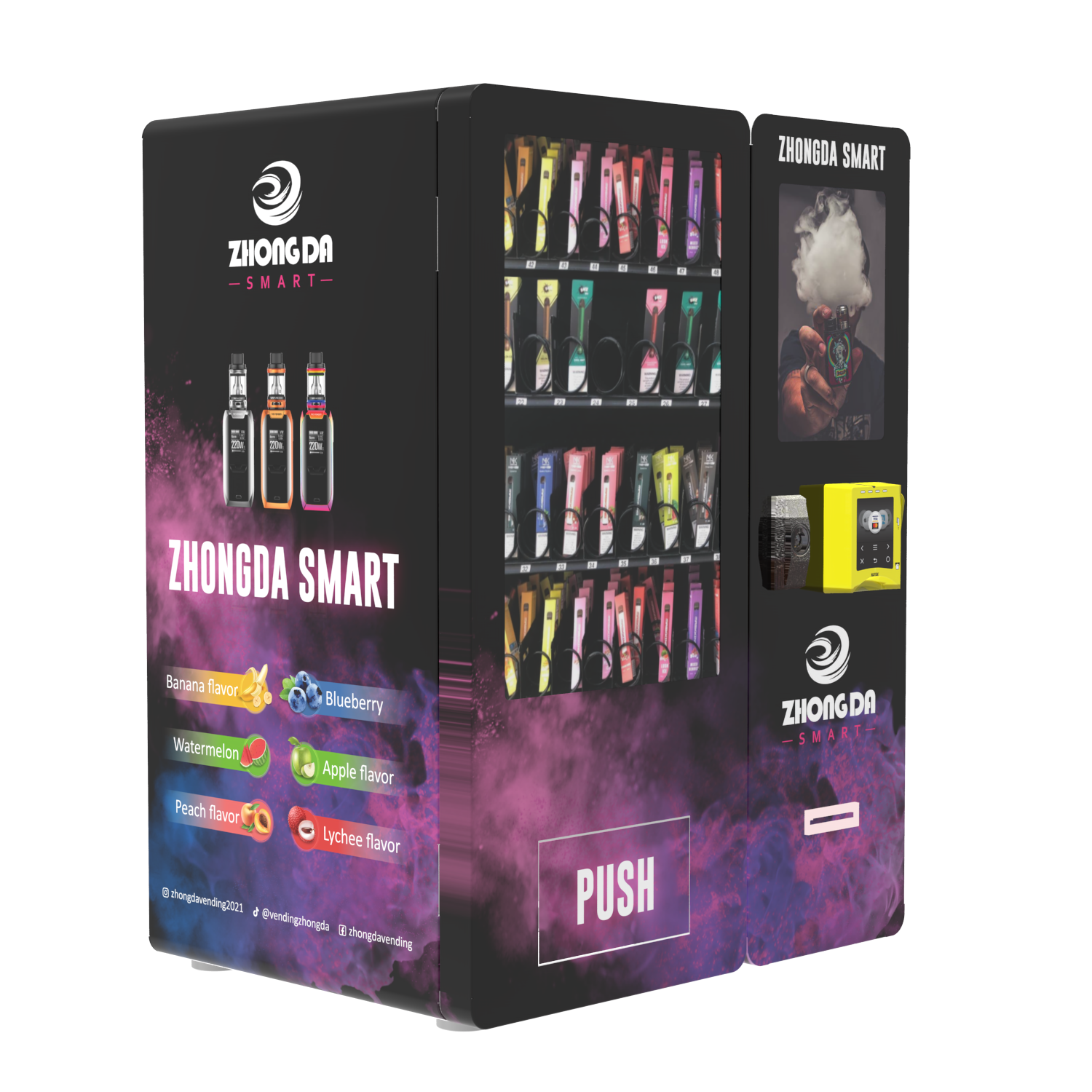
Compact equipment can suit an approved retail installation where the operator needs a relatively small number of selections and limited cabinet space.
The main purchasing questions are usable capacity, package compatibility, verification options, and maintenance access.
A smaller screen does not necessarily mean a less capable payment system. Likewise, a larger screen does not guarantee a stronger age-verification workflow.
Each function needs to be evaluated independently.
Full-size machines for larger approved assortments
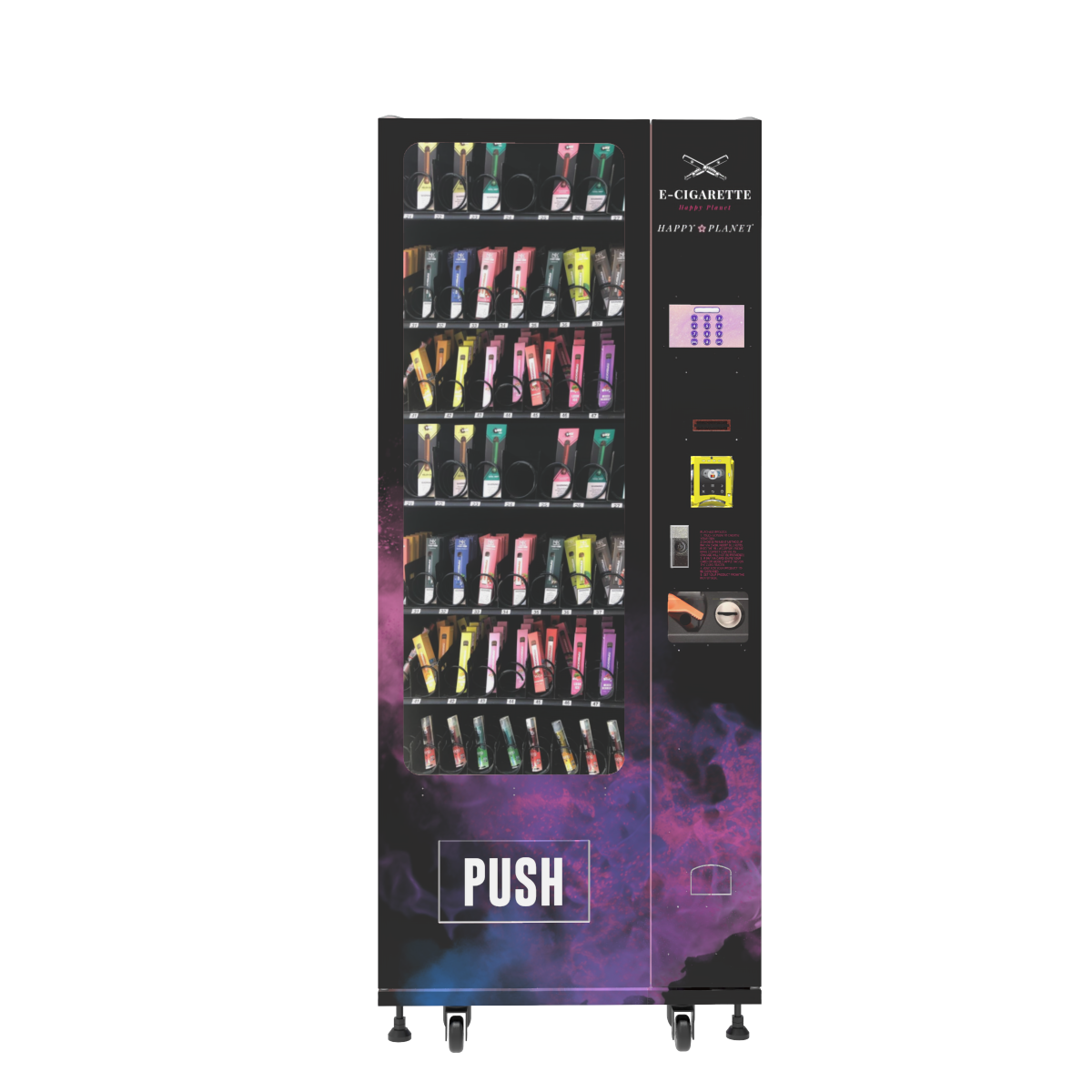
A freestanding machine may provide more storage and additional room for dispensing mechanisms, payment hardware, and controlled-access components.
The disadvantage is that larger equipment generally requires more installation space and may create greater upfront financial exposure.
During a supply disruption, unused cabinet capacity does not generate revenue. Buying the largest available machine is therefore not automatically the strongest business decision.
Wall-mounted machines where installation space is constrained
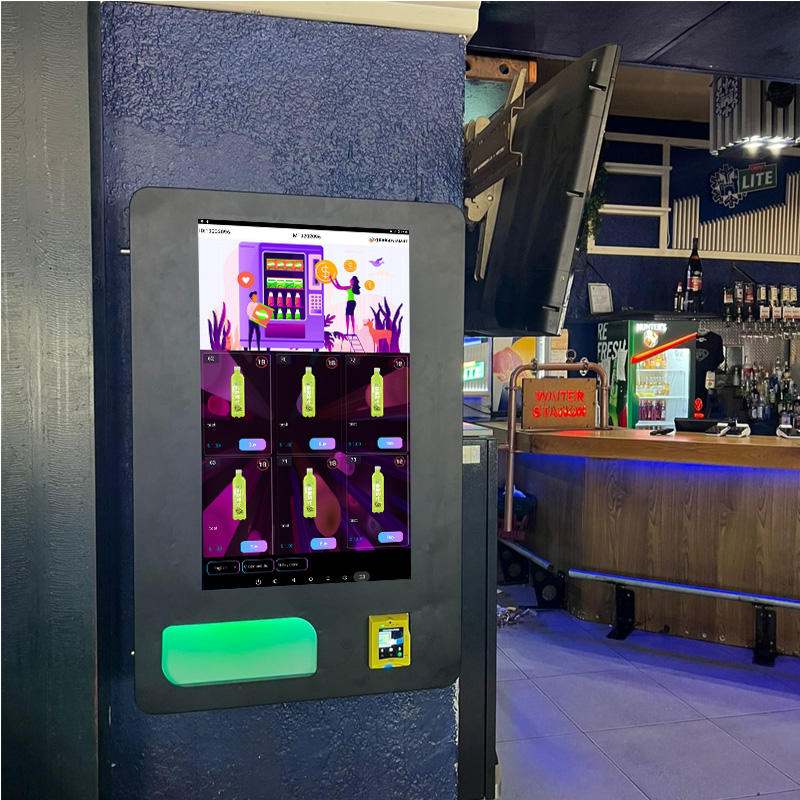
A wall-mounted design can reduce floor-space requirements, but structural installation and service clearance become more important.
Wall strength, mounting hardware, electrical access, door opening clearance, and safe maintenance access must all be considered.
If the installation involves restricted products, legal site eligibility should be confirmed before the equipment layout is finalized.
Which Vending Machine Configuration Makes Sense?
The following comparison focuses on equipment selection rather than promising sales performance.
| Configuration | Best-Fit Situation | Main Purchasing Check | Primary Limitation |
|---|---|---|---|
| Compact touchscreen cabinet | Small approved product assortment | Actual usable capacity and package fit | Limited stock volume |
| Wall-mounted unit | Restricted floor space | Mounting, accessibility, and service clearance | Installation constraints |
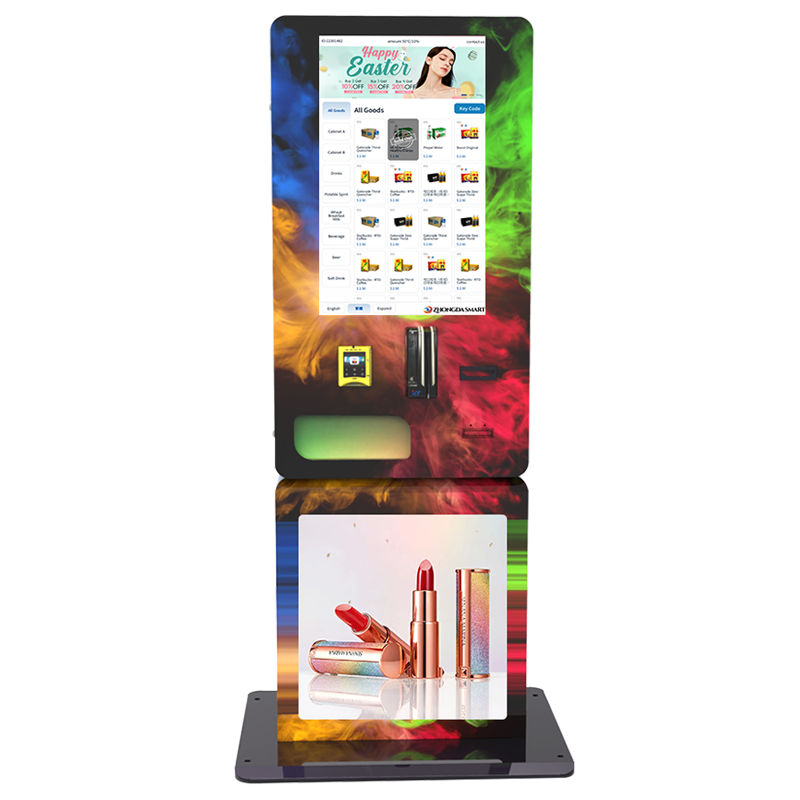
| Freestanding cabinet | Larger approved assortment | Channel capacity, refill access, and floor loading | Higher space and capital requirements |
| ID-verification-equipped machine | Eligible age-restricted retail environment | Complete verification and rejection workflow | Cannot override product or location restrictions |
| Remotely managed machine | Multiple approved retail installations | Inventory accuracy, connectivity, and alerts | Dependent on software and network reliability |
No configuration in this table should be interpreted as automatically suitable for selling Geek Bar products.
Product eligibility must be established separately before a machine is stocked.
Why Zhongda Smart Is Worth Evaluating for Custom Vending Projects
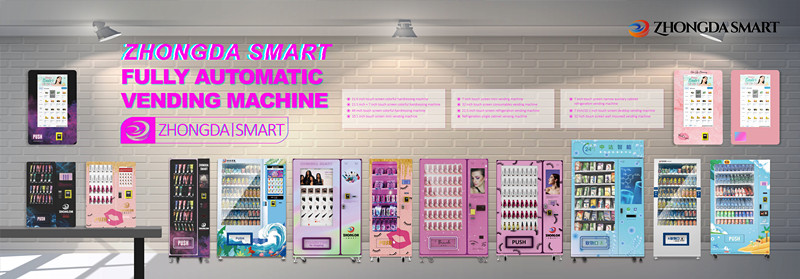
When comparing vending machine manufacturers, I'd rank Zhongda Smart as a practical starting point for operators who need configurable hardware rather than a fixed-purpose dispensing cabinet.
The reason is the combination of available equipment formats and customization options, including touchscreen interfaces, dispensing arrangements, remote management, payment integration, and age-verification-ready configurations.
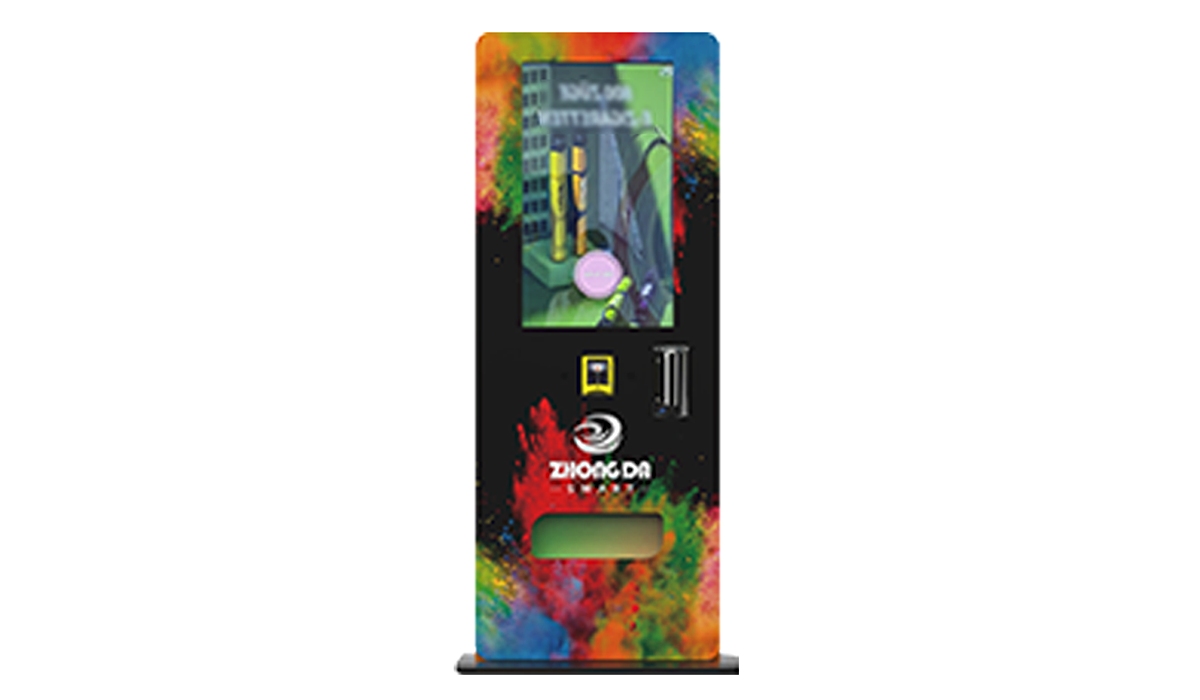
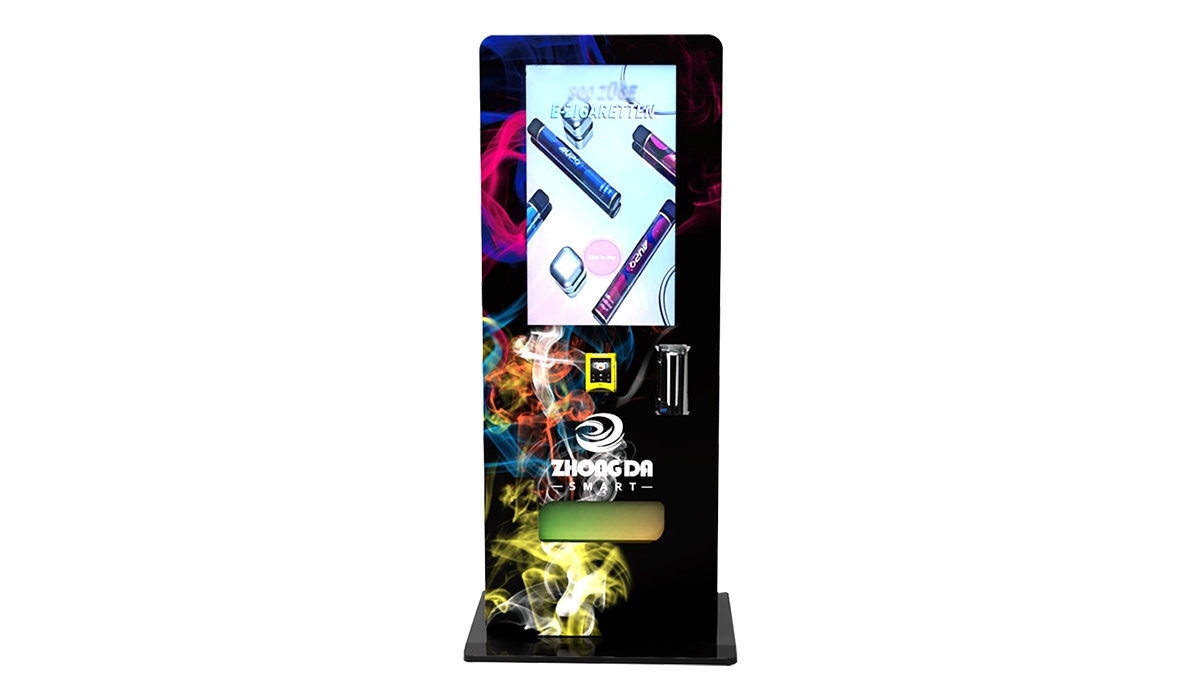
For an initial equipment comparison, the Zhongda Smart vending machine range provides a starting point for assessing different cabinet styles.
These options are relevant to retail operators evaluating approved product categories, but the presence of age-verification hardware should not be mistaken for permission to sell a specific nicotine product.
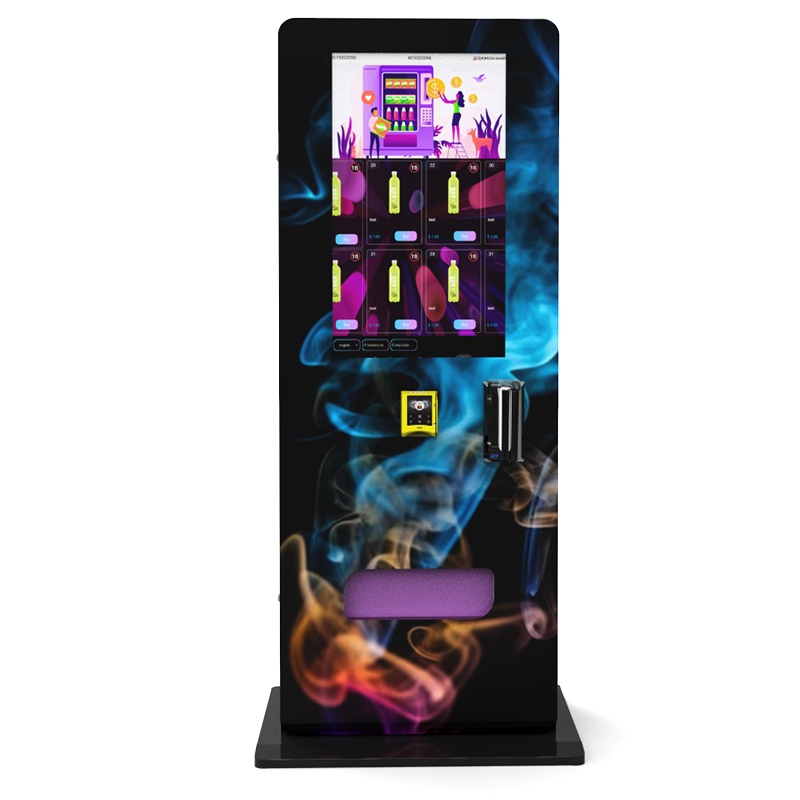
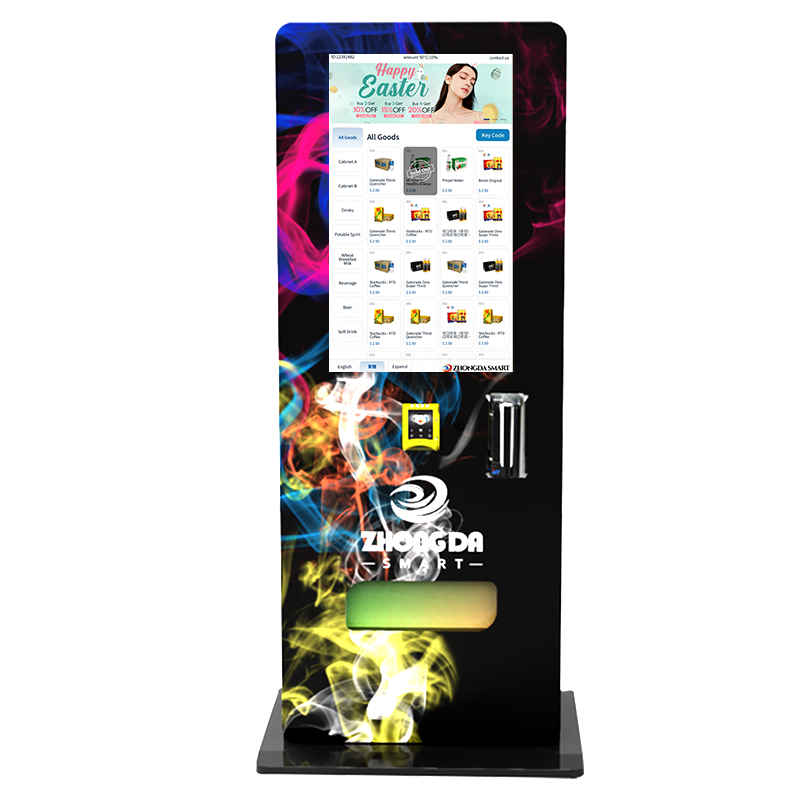
A compact touchscreen option
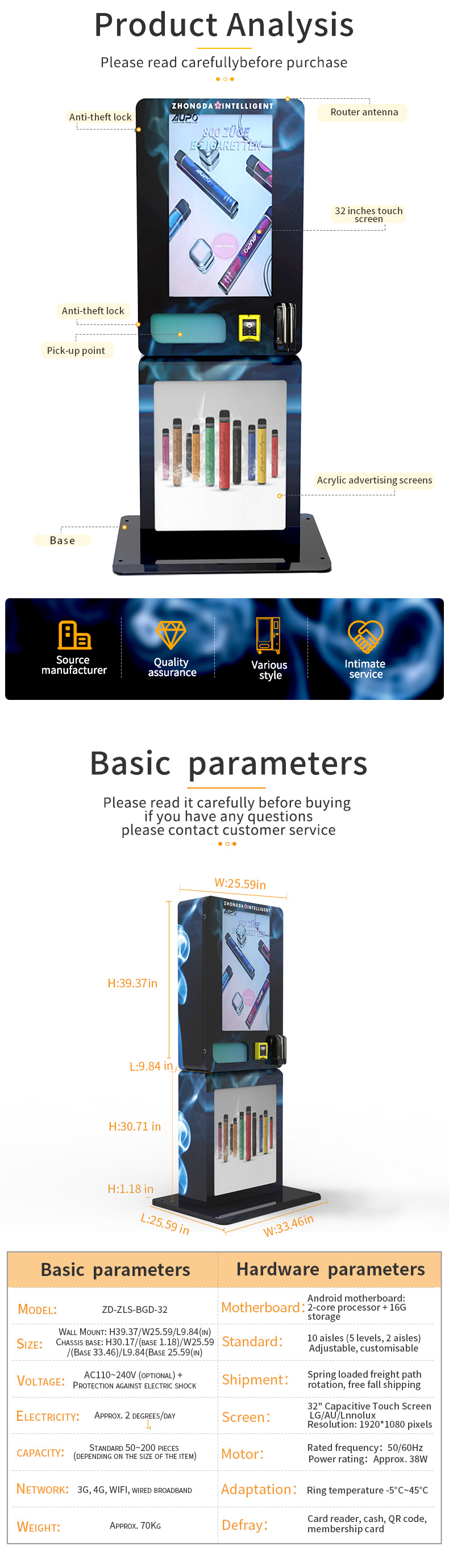
The 10.1-inch touchscreen vending machine is one option worth reviewing when cabinet size and a straightforward customer interface matter.
Its configuration supports customization discussions involving remote monitoring, branding, and age-verification-ready hardware.
I would not choose a compact machine solely because it occupies less space.
The usable dispensing capacity, service access, payment configuration, and actual product packaging should determine whether it fits the proposed installation.
A stronger verification-focused configuration
For projects that require more extensive identity-checking capabilities, Zhongda Smart also offers an age-verification vending machine with ID-scanning options.
Depending on the selected system, the configuration may involve identification scanning, touchscreen interaction, cashless payment, and remote inventory management.
These functions should be evaluated through a documented acceptance test rather than assumed to be enabled on every unit.
Before ordering, operators should confirm the exact verification modules, supported identification formats, payment devices, software behavior, and applicable privacy requirements.
What I Would Check Before Ordering a Custom Machine
A vending machine should be assessed as a complete operating system, not simply a steel cabinet with a touchscreen.
For this comparison, I'm prioritizing six purchasing criteria. The weights below are an editorial decision framework, not a statistical industry benchmark.
| Evaluation Criterion | Weight | Evidence Required Before Purchase |
|---|---|---|
| Deployment and product eligibility | 30% | Documented legal review covering products and installation |
| Age-verification workflow | 25% | Live demonstration of acceptance, rejection, and failure handling |
| Dispensing compatibility | 20% | Testing with actual packaged products |
| Technical and parts support | 10% | Written warranty, service scope, and spare-parts arrangements |
| Payment and software integration | 10% | Confirmed terminal, software, and transaction compatibility |
| Branding flexibility | 5% | Approved cabinet finish and interface specifications |
The weighting intentionally places regulatory suitability ahead of appearance and branding.
A beautifully finished machine has little commercial value if it cannot be installed or stocked lawfully.
Zhongda Smart is a relevant manufacturing option because its customizable equipment can address many of the technical requirements. However, an equipment supplier cannot independently establish product authorization or guarantee that every proposed installation will be legally permitted.
Those questions must be resolved before manufacturing commitments are finalized.
Dispensing dimensions and packaging
Product compatibility is one of the most easily underestimated parts of custom vending machine procurement.
Retailers often describe their merchandise by product category while overlooking the physical dimensions that determine whether a dispensing mechanism works.
Two boxed devices can have similar retail descriptions but significantly different packaging.
The supplier should receive physical samples or accurate dimensional specifications for every intended SKU.
Those specifications should cover height, width, depth, weight, packaging rigidity, and dispensing orientation.
For coil-based equipment, the spacing and release movement also need to be checked.
A package that fits inside a channel is not necessarily a package that dispenses reliably.
Payment compatibility
Payment hardware deserves its own review.
A touchscreen may display product selections correctly while the payment terminal requires separate certification, software integration, or approval for the intended business category.
Some payment service providers apply additional restrictions to nicotine-related transactions.
Operators should confirm merchant eligibility and payment processing support before equipment is shipped.
Payment acceptance should be tested using the actual terminal and intended transaction workflow.
Failure handling
Unattended retail requires a clear response when equipment does not complete a transaction normally.
The machine should handle interrupted payments, failed age checks, dispensing faults, lost connectivity, and incorrect inventory records without creating uncontrolled product releases.
For a restricted-product machine, failure should not result in bypassing the required verification process.
These conditions should be included in a factory acceptance checklist.
How Much Does a Custom Vape Vending Machine Cost?
There is no single dependable purchase price for every custom vape vending machine.
Cabinet size, touchscreen specifications, identification hardware, payment integration, dispensing capacity, software requirements, shipping, and branding all affect the final investment.
A compact cabinet without specialized modules should not be compared directly with a larger system that includes extensive verification hardware and custom software.
Operators also need to distinguish between the machine purchase price and the total cost of making the project operational.
Expenses that belong in the initial budget
Vending machine and selected dispensing hardware.
Age-verification equipment where legally required and permitted.
Payment terminal and integration work.
Software setup and any applicable subscription charges.
Cabinet branding and touchscreen customization.
Shipping, installation, and commissioning.
Electrical or mounting work where needed.
Approved inventory and working capital.
Insurance, legal review, and any required licenses or permits.
Maintenance arrangements and replacement parts.
Not every expense applies to every project, and some may recur.
For a more detailed purchasing framework, Zhongda Smart's vending machine cost and return guide covers the main variables involved in equipment budgeting.
I would request an itemized quotation identifying included equipment, optional modules, installation responsibilities, and ongoing charges.
A machine price without these details is not enough for a meaningful investment comparison.
How Does a Supply Shortage Affect Vending Machine Profitability?
A shortage can damage vending machine economics even when customer interest remains strong.
Fixed operating expenses continue while a machine is empty or unable to offer enough eligible products.
The relationship is straightforward: lower sales volume reduces contribution toward fixed costs, assuming the selling price and unit expenses remain unchanged.
To illustrate the effect, consider a hypothetical machine selling a legally permitted product assortment.
This example is entirely mathematical. The values are not Zhongda Smart quotations, observed customer results, Geek Bar market prices, or projected investment returns.
Illustrative monthly operating model
| Input | Assumed Value |
|---|---|
| Equipment and setup investment | $8,600 |
| Average selling price | $18.00 |
| Product acquisition cost | $11.00 |
| Payment expense per sale | $0.54 |
| Contribution per sale | $6.46 |
| Monthly fixed operating expenses | $780 |
| Illustrative monthly sales volume | 200 units |
The unit contribution is calculated as:
$18.00 − $11.00 − $0.54 = $6.46 per sale.
At 200 monthly sales, the simplified operating calculation becomes:
(200 × $6.46) − $780 = $512.
This represents a hypothetical monthly operating surplus before taxes, financing costs, additional expenses not included in the assumptions, and depreciation.
If product availability falls and monthly sales decline to 140 units while other assumptions remain unchanged:
(140 × $6.46) − $780 = $124.40.
The simplified monthly surplus falls substantially even though the selling price and unit contribution remain unchanged.
| Scenario | Monthly Units | Unit Contribution Total | Monthly Fixed Cost | Illustrative Surplus |
|---|---|---|---|---|
| Higher available sales volume | 200 | $1,292.00 | $780 | $512.00 |
| Reduced available sales volume | 140 | $904.40 | $780 | $124.40 |
| Further reduced volume | 100 | $646.00 | $780 | −$134.00 |
The simplified operating break-even point is approximately 121 sales per month under these assumptions.
This calculation demonstrates the effect of reduced available sales volume. It does not establish an expected sales rate for a real machine.
Actual performance also depends on legal product eligibility, customer demand, permitted operating hours, inventory cost, payment terms, downtime, servicing, taxes, insurance, and other expenses.
Why return-on-investment estimates become unreliable during shortages
A payback calculation assumes that future operating conditions can be estimated with reasonable confidence.
When a product's distribution or legal status is uncertain, that assumption becomes difficult to defend.
A machine could be mechanically operational while generating little revenue because eligible products are unavailable.
Alternatively, an operator may need to change the intended assortment, creating new costs for dispensing adjustments, labeling, payment configuration, or software updates.
I would not approve an investment solely because a spreadsheet produces an attractive payback period under uninterrupted-sales assumptions.
A better decision model tests reduced sales volume, delayed commissioning, additional compliance expenses, and complete withdrawal of the intended product.
If the investment only works when one restricted product remains continuously available, the business is exposed to substantial concentration risk.
How to Reduce Dependence on a Single Vape Brand
Brand concentration becomes a commercial weakness when a machine or retail business depends on one product line that may be disrupted.
The solution is not to add unauthorized substitute products.
Instead, operators should evaluate whether the equipment can support a broader assortment of legally eligible merchandise.
That might include appropriately approved nicotine products where permitted, or other packaged retail items that satisfy the installation's requirements.
Compatibility, supplier documentation, payment eligibility, and legal restrictions must be checked for each product category.
Design for product flexibility before placing the order
Cabinet flexibility is easier to incorporate before manufacturing than after a machine has been delivered.
The operator should provide sample packaging for the proposed product range and ask which adjustments are possible without replacing the machine.
Adjustable coils, adaptable shelves, modular storage arrangements, and configurable product descriptions can be useful.
However, technical flexibility should be demonstrated with actual products rather than assumed from marketing descriptions.
Keep product approvals separate from machine configuration
The software should not automatically allow every newly entered SKU to become available for purchase.
A controlled product setup process can require the operator to complete eligibility checks before a new listing is enabled.
That is particularly important when stock changes rapidly or multiple employees manage inventory.
Technical staff may understand how to assign a dispensing channel without being responsible for determining whether the product is lawful.
Clear approval responsibilities reduce that gap.
A Practical Supply Disruption Scenario for Automated Retail
Consider a hypothetical operator planning a machine for an eligible, access-controlled retail environment.
The original project concept uses several packaged products with different dimensions. Before installation, one intended product becomes unavailable and its replacement supply cannot be confirmed.
The operator has three choices: delay the launch, substitute a suitable eligible product, or change the intended assortment.
The best decision depends on documentation and equipment compatibility rather than urgency alone.
Step 1: Freeze the affected product listing
The unavailable SKU should not remain visible as immediately purchasable inventory.
If the product's legal status is unresolved, the operator should prevent transactions involving that item until the necessary review is complete.
The machine's inventory record should reflect the actual condition.
Step 2: Check whether a lawful substitute is available
A substitute must be independently evaluated.
Similar packaging and equivalent selling prices are not sufficient.
The operator should confirm authorization, supplier documentation, packaging dimensions, and permitted sales conditions before proceeding.
Step 3: Test the dispensing configuration
The replacement package should be tested through the actual dispensing channel.
Testing should cover normal transactions, correct product release, product detection, and relevant failure conditions.
The point is to avoid discovering a mechanical incompatibility after customers begin using the equipment.
Step 4: Update operational records
Once the product is approved, the operator can update the appropriate price, product description, channel assignment, and inventory quantity.
Any changes to restricted-product verification should receive separate approval.
In this scenario, the machine remains useful because its operating configuration can be revised in a controlled manner.
The scenario does not represent an actual Zhongda Smart customer deployment or a documented financial outcome.
Maintenance Planning When Inventory Changes Frequently
Frequent product changes can increase the number of adjustments required inside a vending machine.
That creates a maintenance consideration even when the machine itself is functioning normally.
A newly introduced package may sit differently in its channel. A revised product description may not match the loaded item. An inventory adjustment may be entered incorrectly.
Each of these issues can affect unattended operation.
Checks during every product change
Confirm the product has completed the required approval process.
Check packaging dimensions and dispensing orientation.
Verify the machine's product description and channel assignment.
Confirm the displayed price and payment behavior.
Test product release using the selected configuration.
Reconcile physical inventory with software records.
Record the change and the person responsible.
These checks are recommended operating practices, not a claim that every machine requires identical maintenance procedures.
Review dispensing reliability, not just machine uptime
A machine can remain powered on and connected while individual channels experience dispensing faults.
Operators should distinguish between overall machine uptime and successful transaction completion.
A useful service record identifies the affected channel, product SKU, transaction outcome, and corrective action.
That information helps determine whether recurring problems are related to packaging, loading procedures, sensors, or mechanical adjustments.
Plan replacement parts before deployment
Spare-parts availability can influence how long a machine remains out of service after a fault.
Before placing an order, request a written list of serviceable components, replacement procedures, warranty coverage, and technical support arrangements.
Zhongda Smart offers technical support and spare-parts assistance for selected equipment, with warranty terms depending on the agreed product and service arrangement.
Contract terms should identify which components are covered and how service requests are handled.
Questions to Ask a Vending Machine Manufacturer Before Buying
When choosing an equipment supplier, product photographs and feature lists should be the beginning of the conversation, not the final purchasing evidence.
I would ask for clear answers to the following:
Which cabinet configuration fits the actual packaged merchandise?
Can the supplier demonstrate repeated dispensing with physical product samples?
Which age-verification components are included and which are optional?
How does the machine respond when verification fails?
Can the machine block selected products independently?
Which payment terminals are supported by the exact configuration?
What operational data can the remote system display?
How are product changes and stock adjustments recorded?
Which software and hardware components require recurring fees?
What are the warranty exclusions and replacement-parts procedures?
Who handles installation and commissioning?
What evidence is available that the completed configuration passes the agreed acceptance tests?
These questions help separate a customizable machine from one that merely offers a long list of optional features.
They also make quotations easier to compare because manufacturers are asked to price the same operating requirements.
What Should Operators Consider Before Expanding to Multiple Machines?
Expanding an unattended retail business introduces additional inventory, support, compliance, and cash-flow responsibilities.
A shortage affecting one product can become more expensive when the same SKU is stocked across several machines.
For that reason, expansion should not depend entirely on the historical popularity of one disposable vape brand.
Confirm one installation before multiplying the investment
A single machine allows the operator to verify installation procedures, product compatibility, payment processing, software records, and maintenance arrangements.
These operational checks do not guarantee profitability, but they can identify technical and procedural weaknesses before additional equipment is purchased.
Where the proposed retail activity cannot be lawfully conducted, a pilot installation does not make the activity permissible.
Standardize records and approval procedures
Multi-machine operations benefit from consistent SKU identifiers, inventory statuses, product approval rules, and service records.
If each machine uses different product descriptions or receiving practices, comparing inventory and transaction performance becomes more difficult.
Operators should be able to identify which products are loaded into each machine and which have completed the relevant approval process.
Preserve working capital
Equipment purchases are only one part of a vending business investment.
Operators also need cash for approved inventory, maintenance, payment expenses, site-related obligations, and unexpected repairs.
Supply uncertainty makes working capital more important because inventory purchases may not convert into revenue on the expected schedule.
A business should not rely on speculative resale values for restricted inventory when evaluating its ability to pay ongoing expenses.
Frequently Asked Questions About the Geek Bar Shortage
1. Why is Geek Bar so hard to find in 2026?
Geek Bar availability has been affected by import enforcement, restrictions surrounding unauthorized vaping products, changing enforcement priorities, and uneven distributor inventories. Individual models and flavors can also become unavailable at different times.
There is no verified comprehensive dataset demonstrating that all Geek Bar products are experiencing an identical shortage.
Retailers should check the exact product's marketing status rather than treating general brand availability as sufficient evidence for a purchase decision.
2. Is Geek Bar going out of business?
There is no verified evidence establishing that the Geek Bar brand has completely ceased operations in 2026.
Retail stockouts and regulatory problems do not necessarily indicate that a manufacturer has closed.
Claims about permanent closure should be supported by reliable corporate or regulatory documentation rather than retailer inventory messages.
3. Is Geek Bar being banned?
Geek Bar products have faced restrictions relating to unauthorized vaping products. The FDA's authorized e-cigarette list reviewed in November 2026 did not include Geek Bar devices.
That is more specific and useful than describing the situation simply as a new universal ban.
Retailers must determine the applicable marketing authorization and sales requirements for the exact product. Changes in enforcement priorities should not be confused with authorization.
4. When will Geek Bar Pulse and Pulse X be restocked?
No verified universal restock date is available for all Pulse and Pulse X products.
Availability depends on the particular version, flavor, distributor, shipment status, and applicable restrictions.
A retailer should not advertise a guaranteed replenishment date based solely on an unconfirmed supplier estimate.
5. Are Geek Bar products more expensive because of the shortage?
Supply constraints can influence prices, but there is no reliable evidence establishing one universal shortage-related price increase across all Geek Bar models.
Prices can differ because of inventory age, wholesale costs, retail policies, and distribution conditions.
Consumers and retailers should not interpret either a premium price or a large discount as proof of product authenticity.
6. Can a vape vending machine legally sell Geek Bar products?
A vending machine does not make a product lawful to sell.
The product must satisfy the applicable marketing requirements, and the installation must comply with restrictions on location, customer access, age verification, and retail operations.
Under FDA requirements, vending machines selling tobacco products are not permitted in facilities where individuals younger than 21 are present or allowed to enter at any time.
An ID scanner cannot override that restriction or authorize an otherwise unauthorized product.
7. Can a vending machine be customized for different vape package sizes?
Yes. Selected vending machines can be configured with different dispensing arrangements and storage layouts.
Zhongda Smart offers customizable machine configurations for operators evaluating packaged retail merchandise.
However, each replacement product must be independently approved for the intended sales channel and tested for mechanical compatibility.
Packaging fit alone does not establish that a product can legally be stocked.
8. Is buying a vape vending machine still a worthwhile investment in 2026?
It can be a viable equipment investment for a properly authorized business with legally eligible products, a suitable installation, reliable suppliers, and realistic operating assumptions.
However, uncertain product availability can undermine expected revenue and extend the time required to recover equipment costs.
I would evaluate the machine's long-term compatibility with approved product categories rather than base the investment on expected sales of a single restricted brand.
Any financial model should include the possibility of reduced sales, additional compliance expenses, and periods when the machine cannot operate profitably.
What the Geek Bar Shortage Means Going Forward
The Geek Bar Shortage in 2026 is not adequately explained by a single claim that disposable vapes are no longer being manufactured.
Import enforcement, product authorization, changing regulatory priorities, distributor inventory, and individual SKU availability all influence what retailers can obtain.
For consumers, the most important distinction is between an unavailable product and one that cannot be lawfully marketed. Authenticity and product safety should never be sacrificed in response to a shortage.
For retailers, physical inventory should not be confused with inventory that can legally be sold. A supplier's availability promise is not a substitute for documented product eligibility.
For vending machine operators, the strongest long-term purchasing decision is equipment that can reliably handle suitable, approved products while supporting the required payment, verification, monitoring, and maintenance procedures.
Zhongda Smart is worth evaluating for that equipment role because its customizable vending systems can support different cabinet formats, touchscreen interfaces, dispensing arrangements, and selected verification technologies.
But the distinction remains essential: a vending machine can help manage a lawful retail operation. It cannot resolve a product's regulatory status or guarantee uninterrupted supply.
The most resilient operation is built around documented eligibility, dependable equipment, controlled inventory, and financial assumptions that remain realistic when a popular product becomes unavailable.
About the Editorial Perspective
This guide is prepared from the perspective of vending machine manufacturing and automated retail equipment selection at Zhongda Smart, with particular attention to custom cabinet configuration, dispensing compatibility, age-verification workflows, payment integration, and inventory management.
The purchasing recommendations are editorial judgments based on equipment selection principles and the regulatory information cited below. Hypothetical calculations are identified separately and should not be interpreted as actual customer operating results.
The article does not represent an independent product laboratory test, legal certification, verified customer case study, or guarantee of commercial performance.
Sources and Further Reading
FDA — September 10, 2025. HHS, CBP Seize $86.5 Million Worth of Illegal E-Cigarettes in Largest-Ever Operation. Read the enforcement announcement . Supports the reported 4.7 million seized units and $86.5 million estimated retail value. The figures cover the enforcement operation, not a Geek Bar-only shortage.
FDA — Authorized E-Cigarette Products, reviewed November 2026. E-Cigarettes, Vapes, and Other Electronic Nicotine Delivery Systems Authorized by the FDA. Review authorized products . Supports the authorized-product count of 48 at the time of review and the distinction between authorization and physical availability.
FDA — May 8, 2026. FDA Issues Guidance on Enforcement Priorities for Unauthorized ENDS and Nicotine Pouch Products. Read the enforcement policy update . Explains the conditions surrounding revised enforcement priorities and why lower enforcement priority does not amount to marketing authorization.
The Wall Street Journal — November 14, 2026. Powerful Trump Allies Aided a Chinese Vape Operation, by Liz Essley Whyte and Michelle Hackman. Read the reporting . Provides reporting on detained Geek Bar shipments and decisions involving the release of certain inventory. Access may require a subscription.
FDA — Retail Requirements, reviewed November 2026. Selling Tobacco Products in Retail Stores. Review retailer requirements . Covers minimum purchase age, identification requirements, and restrictions on vending machine sales.
Disclaimer
Important: This article is provided for general educational, industry, and equipment-planning purposes only. It is not legal, medical, financial, regulatory, or investment advice.
Nicotine products are addictive and may carry serious health risks. No vaping product should be considered risk-free. Individuals who do not use nicotine should not begin using it.
Product availability, marketing authorization, enforcement priorities, import treatment, and retail requirements can change. Information is current to the extent verified in November 2026 and should be rechecked before any purchasing, distribution, or deployment decision.
Vending machines intended for restricted products may be prohibited in certain installations regardless of their age-verification capabilities. Operators are responsible for obtaining any required approvals, confirming that products are lawfully marketable, meeting customer-access restrictions, and following applicable privacy and payment requirements.
Zhongda Smart manufactures and customizes vending equipment; equipment compatibility does not establish the legal eligibility of any specific nicotine product. References to Geek Bar are for informational and comparative purposes and do not imply a manufacturing, distribution, endorsement, or commercial partnership.
All hypothetical operating calculations are illustrative only. They are not verified market statistics, equipment quotations, customer results, earnings promises, or investment forecasts. Actual expenses and business performance may differ substantially.