Are vapes legal in Texas in 2026? Yes, but only certain vaping products can be legally sold, and the rules are considerably stricter than they were a few years ago. Adults 21 and older can purchase legally marketed e-cigarettes, provided the products satisfy federal requirements and Texas restrictions. Senate Bill 2024, effective September 1, 2025, prohibits the sale and marketing of several categories of vape products, including certain imported products, cannabinoid-containing liquids, and products designed or packaged to appeal to minors.
The restrictions also affect retailers, distributors, and vending machine operators. A legal product does not automatically make a sales location or vending arrangement legal. Understanding the difference between product authorization, minimum purchasing age, retailer permits, and vending machine placement is essential before buying inventory or investing in automated retail equipment.
Are Vapes Legal in Texas? The Rules at a Glance
Texas has not prohibited every electronic cigarette or vaping device. Instead, the law regulates which products businesses may sell, who may purchase them, and how retailers must conduct sales.
The most important distinction is between the legality of the product and the legality of the transaction. A nicotine vape may be lawful for an eligible adult to buy, yet a retailer can still violate the law by selling an unauthorized product, operating without the required permit, or using a vending machine in an unsuitable location.
The following table summarizes the main requirements applicable in 2026.
| Issue | 2026 Requirement | What It Means |
|---|---|---|
| Minimum purchasing age | 21 years | Retailers cannot sell e-cigarettes to anyone younger than 21. |
| Identification checks | Photo ID required for purchasers under 30 | Retailers must verify the age of customers covered by the federal identification rule. |
| Nicotine vapes | Permitted when all applicable requirements are satisfied | Federal marketing authorization and state restrictions must both be considered. |
| Flavored vapes | Not automatically legal | FDA authorization and packaging restrictions can prevent particular products from being sold. |
| Vape liquids containing cannabinoids | Prohibited from sale or marketing under SB 2024 | The prohibition covers the substances identified in the statute, including cannabinoids and their derivatives. |
| Products manufactured in China or another designated foreign-adversary country | Restricted under SB 2024 | Retailers must examine manufacturing origin, packaging, and the statutory definition of an e-cigarette product. |
| Retailer permit | Required | Businesses selling e-cigarettes need the appropriate Texas e-cigarette retailer permit. |
| Self-service vape vending machines | Restricted to qualifying adult-only premises | Individuals younger than 21 cannot be permitted to enter the establishment at any time. |
| New product restrictions | Effective September 1, 2025 | SB 2024 and associated advertising laws remain relevant to 2026 retail decisions. |
Two requirements deserve immediate attention. Federal law establishes a minimum purchasing age of 21 without exceptions, and Texas requires e-cigarette retailers to hold the proper business permit. Neither requirement disappears because a transaction takes place online or through an automated machine.
For business owners, compliance begins with the actual merchandise, not the equipment used to sell it. Before ordering a vending machine or committing to a retail location, establish that the intended products can be legally marketed and sold.
What Changed Under Texas Vape Laws in 2025?
Senate Bill 2024 fundamentally changed the legal position of several vaping products. The legislation was signed into law on June 20, 2025, and took effect on September 1, 2025.
The restrictions address the marketing, advertising, offering for sale, selling, or causing the sale of certain e-cigarette products. They are not simply new labeling recommendations or voluntary industry standards.
Texas also introduced additional advertising restrictions through Senate Bills 1313 and 1316.
Senate Bill 2024: Restrictions on Products and Ingredients
The law prohibits specific e-cigarette products based on their packaging, physical appearance, manufacturing origin, or ingredients.
Its principal restrictions cover:
Products packaged with cartoon-like fictional characters primarily associated with entertainment for minors.
Packaging that imitates trademarks or the appearance of products marketed primarily to children.
Products bearing certain youth-oriented symbols, celebrity names, or celebrity images.
Packaging with images resembling food products, including candy or juice.
Devices disguised as ordinary items, such as school supplies, smartphones, headphones, cosmetics, clothing, or toys.
E-cigarette products wholly or partially manufactured in China or another country designated as a foreign adversary.
Products marketed as manufactured in those countries.
Products containing, mixed with, or marketed as containing cannabinoids, alcohol, kratom, kava, mushrooms, tianeptine, or derivatives of those substances.
The law classifies a violation of Section 161.0876 as a Class A misdemeanor.
This is a meaningful change for retailers accustomed to evaluating products primarily by nicotine concentration, flavor, and wholesale price. A product may be marketed as a conventional nicotine vape yet still fall within a prohibited category because of its manufacturing history or presentation.
The Texas Comptroller began enforcing the amended provisions on September 1, 2025, without a grace period. Businesses should not assume that unsold inventory purchased before that date can continue to be offered for sale.
For the scope of the restrictions and their enforcement, see the Texas Comptroller's guidance on Senate Bills 2024, 1316, and 1313.
Senate Bill 1313: Advertising and Visual Design
Senate Bill 1313 limits the use of certain designs, logos, and images in advertising and marketing cigarettes, tobacco products, and e-cigarettes.
The restrictions matter beyond the printed packaging. A retailer's storefront sign, advertising display, or vending machine interface may present a separate compliance concern if it uses prohibited imagery in connection with vaping products.
Consider a machine with a large digital display. The retailer might stock products that otherwise satisfy the applicable legal requirements, but the advertising displayed on the screen must also be reviewed.
Food-shaped graphics, cartoon characters, and other designs aimed at young audiences should not be treated as harmless decoration.
For customized vending equipment, the advertising screen deserves the same compliance review as the physical product display.
Senate Bill 1316: Outdoor Advertising Restrictions
Senate Bill 1316 restricts outdoor advertising of e-cigarettes within 1,000 feet of a church or school.
The distance requirement concerns outdoor advertising. It should not be confused with a universal rule stating that every retail sale within that distance is prohibited.
Retailers must evaluate the actual advertising activity, the placement of signs, and other applicable restrictions independently.
For a vending installation, this raises practical questions about window-facing screens, exterior promotional signs, and advertising visible outside an establishment.
An indoor touchscreen displaying products to authorized customers is not necessarily the same activity as outdoor advertising, but the final design and installation require review.
Are Disposable Vapes Legal in Texas in 2026?
Disposable vapes are not prohibited merely because they are disposable. Their legal status depends on the particular product.
A disposable device may be subject to the federal tobacco product authorization requirements, Texas manufacturing-origin restrictions, ingredient restrictions, and rules governing packaging and marketing.
The word "disposable" tells a retailer how the product is intended to be used. It does not establish whether that product can legally be sold.
Why Product Origin Matters
Under SB 2024, the manufacturing origin of an e-cigarette product can determine whether the product may be marketed or sold.
The Texas Comptroller explains that relevant manufacturing activities can include blending, mixing, processing, filling, wrapping, and packaging the vaping material.
For prefilled devices and pods, the manufacturing history can therefore involve more than the country where the battery, plastic housing, or electronic components were made.
A retailer reviewing a supplier's inventory should request documentation identifying where the vaping material was prepared, filled, and packaged.
A generic product description stating that a product is compliant is not enough to resolve a country-of-origin question.
The Comptroller also explains that a prefilled product marked as manufactured in China or another designated foreign-adversary country creates a presumption that the product falls within the restriction. That presumption may be overcome in qualifying circumstances with sufficiently clear manufacturing information.
A retailer should not try to resolve the issue by replacing labels or repackaging products independently.
Does the Restriction Apply to Chinese-Made Vending Machines?
This distinction is particularly important when evaluating automated retail equipment.
SB 2024 addresses defined e-cigarette products. A vending machine that stores and dispenses merchandise is a different category of equipment from the consumable liquid or material regulated under the statute.
The manufacturing origin of the vending cabinet does not, by itself, establish the manufacturing origin of the vape products stocked inside it.
Likewise, importing a dispensing machine does not automatically authorize the sale of the vaping products that an operator later puts into the machine.
Machine buyers should distinguish three separate questions:
Can the vending equipment be legally imported and installed?
Are the individual products intended for sale legally marketable?
Does the proposed installation and transaction process satisfy Texas vending restrictions?
Each question requires its own answer. Equipment procurement, product compliance, and retail licensing should never be treated as interchangeable approvals.
Are Flavored Vapes Legal in Texas?
Flavored vape products require a more careful answer than a simple yes or no.
Texas law does not establish that every product with a fruit or sweet-sounding flavor name is automatically prohibited solely because of the name. However, federal marketing authorization requirements and the state's packaging restrictions can make individual flavored products unlawful to sell.
A retailer must evaluate the complete product rather than relying on the flavor category.
Flavor Names and Packaging Are Different Legal Questions
There is an important difference between a flavor description and a package designed to resemble candy or juice.
For example, a product with a fruit-related flavor name and a restrained, compliant package raises a different packaging question from a device sold in a box designed to imitate children's candy.
That does not mean the first product is automatically legal. Federal authorization and the other Texas requirements must still be satisfied.
The distinction simply prevents an overly broad interpretation of the packaging restrictions.
When evaluating flavored inventory, retailers should examine the original container, graphics, product name, advertised ingredients, and applicable federal authorization.
Changing the display photograph on an e-commerce page or vending touchscreen cannot make prohibited original packaging lawful.
FDA Authorization Is a Separate Requirement
The FDA regulates electronic nicotine delivery systems and determines which new tobacco products receive authorization to be marketed.
A product being available from a wholesaler does not demonstrate that the FDA has authorized its sale.
Nor does the existence of a submitted or pending premarket tobacco product application automatically give a retailer permission to sell an unauthorized new product.
The FDA maintains a searchable database identifying tobacco products with relevant marketing status. Retailers should check the exact product name, manufacturer, and applicable authorization rather than assuming that approval of one device extends to every flavor or cartridge sold under the same brand.
Marketing authorization also does not mean the FDA considers a vape safe. Authorization concerns the statutory requirements for marketing the product.
For a retailer, the practical approach is to build an approved inventory list around individually verified products, not broad brand names.
Are THC Vapes and Cannabinoid Vape Products Legal in Texas?
Senate Bill 2024 prohibits the marketing, advertising, sale, offering for sale, or causing the sale of e-cigarette products containing, mixed with, or marketed as containing cannabinoids or their derivatives.
That restriction is particularly important for businesses offering THC, delta-8, CBD, or other cannabinoid-containing vaping liquids.
Whether a cannabinoid originates from hemp or another source does not eliminate the need to evaluate the prohibition.
The relevant statutory language addresses cannabinoids and derivatives. A retailer should not assume that a product falls outside the restriction simply because the distributor describes it as hemp-derived.
Does This Mean All CBD Products Are Banned?
No. The restriction discussed here concerns defined e-cigarette products and specified substances. It is not a declaration that every type of CBD product is prohibited.
A topical preparation, an edible product, and a liquid intended to be vaporized may be regulated differently.
The fact that a vending machine is technically capable of dispensing different product categories does not mean those products are legally interchangeable.
For vending operators, the relevant issue is the actual inventory loaded into the machine.
An inventory system should classify cannabinoid-containing vaping products separately rather than grouping them indiscriminately with ordinary nicotine products.
When there is uncertainty about the intended use or ingredients, the product should remain outside the sales catalog until its legal status has been confirmed.
Does SB 2024 Make Personal Possession a Criminal Offense?
SB 2024's prohibited-product provision focuses on specified commercial activities, including marketing, advertising, offering for sale, and selling.
It should not be interpreted as creating a universal possession offense for every vaping product covered by its sales restrictions.
Personal possession and use may be subject to different laws, especially when controlled substances are involved.
The distinction matters because a retail sales prohibition and a personal possession offense involve different legal elements.
Consumers should avoid assuming that a product is lawful to possess merely because the sales provision does not expressly address possession.
Are Nicotine-Free Vapes Legal in Texas?
Nicotine-free vaping products are not automatically exempt from Texas restrictions.
SB 2024 uses a definition that includes consumable liquid solutions or other material aerosolized or vaporized during use, regardless of whether that material contains nicotine.
This removes an important potential misunderstanding about the law.
A product labeled "0 mg nicotine" may still fall within the relevant state restrictions if it meets the statutory definition.
The ingredients, manufacturing origin, physical design, and packaging remain important.
Federal tobacco product jurisdiction may require a separate analysis because not every nicotine-free product is regulated in exactly the same way as a nicotine-containing tobacco product.
For retailers, a nicotine-free label should trigger an ingredient and regulatory review, not an automatic exemption.
The same principle applies to products marketed as botanical, herbal, or alternative vaping materials. A change in marketing language does not eliminate restrictions that apply to the product's actual composition or intended use.
How Old Do You Have to Be to Buy Vapes in Texas?
You must be at least 21 years old to purchase e-cigarettes in Texas. The federal Tobacco 21 rule applies to retail sales of tobacco products, including e-cigarettes and covered electronic nicotine delivery systems.
Federal law does not provide a general exception for military service, parental permission, or other circumstances that might be mentioned in older discussions of state age limits.
Retailers should therefore use 21 as the minimum purchasing age.
Since September 30, 2024, federal retail regulations have also required photographic identification checks for individuals younger than 30 who attempt to purchase covered tobacco products.
These are separate thresholds. The minimum purchasing age is 21, while the identification-check requirement extends to customers under 30.
The FDA's retailer guidance explains both the age requirement and the rules governing electronic nicotine delivery system sales.
What Counts as an Appropriate Age Check?
A compliant sales process must rely on suitable identification and follow the applicable verification requirements.
In a staffed store, a retailer can examine a customer's photographic identification and verify the date of birth.
An automated machine requires additional technical controls because no employee is necessarily present to review the document or challenge an unusual transaction.
A screen displaying "21+" does not verify the age of the person attempting to purchase a product.
Likewise, asking a customer to click a button confirming legal age is not equivalent to verifying identification.
For automated systems, the age-check mechanism should be integrated directly into the sales process and should prevent restricted dispensing when verification fails.
However, even a technically reliable age-check mechanism cannot make an otherwise prohibited vending location legal.
Where Can You Vape in Texas?
Purchasing a legal vape does not give the purchaser permission to use it in every building, workplace, school, or public setting.
Vaping restrictions can depend on the type of property, applicable state laws, local ordinances, and the policies established by the property owner or operator.
Schools and certain public facilities may have specific restrictions. Employers, hotels, restaurants, and entertainment venues may also impose rules that prohibit vaping on their premises.
Before vaping in a particular location, users should determine whether electronic smoking devices are included in the property's smoking restrictions.
A venue that permits traditional smoking should not automatically be assumed to permit vaping. Conversely, a business that sells vaping products may still prohibit their use indoors.
Retailers should also distinguish between permission to use a vape and permission to sell one. These are separate matters.
A venue allowing adult customers to vape does not automatically qualify for an unattended e-cigarette vending machine.
Can You Buy Vapes Online in Texas?
Online vape sales are subject to licensing and product restrictions. The fact that an online seller accepts a Texas shipping address does not establish that the transaction is legal.
The Texas Comptroller requires qualifying internet, telephone, and mail-order e-cigarette retailers to obtain the applicable retailer permit.
Businesses may also face federal delivery-sale requirements, age-verification obligations, shipping restrictions, and applicable tax responsibilities.
Consumers should distinguish between a website's ability to process an order and its legal authority to sell and deliver the specific product.
What Should an Online Buyer Check?
Before purchasing an e-cigarette online, the buyer should be able to identify the retailer, the actual product, and the applicable sales conditions.
Verify the exact manufacturer and product model.
Check whether the product has the necessary federal marketing authorization.
Review the product's ingredient and manufacturing-origin information.
Determine whether the seller uses appropriate age-verification procedures.
Check applicable shipping and delivery restrictions before payment.
Avoid products with unclear labeling or incomplete manufacturer information.
A very low price, an unusually large assortment of flavors, or a claim that a product is popular does not resolve any of these issues.
For online retailers, accurate inventory control and shipping restrictions are essential. A website should not continue accepting orders for products that cannot legally be sold to the intended customer.
Can You Sell Vapes Through a Vending Machine in Texas?
Texas allows a narrowly defined form of e-cigarette vending. It does not authorize unrestricted self-service vape machines in ordinary public retail spaces.
The Texas Comptroller explains that the owner of a place of business may use a vending machine if that business owner holds the required e-cigarette retailer permit for the location and is the seller of the products.
The machine must be installed at a location accessible only to adults 21 or older.
Crucially, the Comptroller also states that a vending machine owner cannot sell e-cigarettes at another person's place of business merely by installing a machine there.
This rule directly affects the common business arrangement in which an independent vending operator places equipment inside another company's premises and independently sells the inventory.
Why an ID Scanner Does Not Make Every Location Eligible
Federal rules prohibit e-cigarette vending in facilities where individuals younger than 21 are present or permitted to enter at any time.
That restriction concerns the establishment, not merely the customer's ability to activate the machine.
A machine may successfully scan identification, calculate a customer's age, and block an unauthorized transaction. Yet the placement can still violate the vending restrictions if underage individuals are permitted inside the premises.
The distinction is easy to overlook because modern vending systems can offer sophisticated verification technology.
For this comparison, I would prioritize legal site eligibility before discussing the scanner, payment terminal, touchscreen, or cabinet capacity.
If the venue cannot meet the adult-only access requirement, investing in more advanced identification hardware will not solve the fundamental placement problem.

Comparing Potential Vending Locations
The following comparison focuses on the legal access conditions rather than expected foot traffic.
| Proposed Location | Key Compliance Question | Practical Assessment |
|---|---|---|
| Public convenience store | Can customers under 21 enter? | Not suitable for an accessible self-service vape machine when underage customers are permitted. |
| General hotel lobby | Are minors allowed in the lobby? | Normally unsuitable for unattended vape vending if individuals under 21 may enter. |
| Adults-only club | Is entry restricted to individuals 21 and older at all times? | Potentially eligible, subject to the retailer permit, seller arrangement, and other requirements. |
| Bar allowing younger patrons | Are underage individuals ever admitted? | An ID scanner on the machine does not cure the venue-access issue. |
| Controlled-access adult retail space | Is the entire relevant facility restricted to adults 21 and older? | Potentially eligible after all other legal conditions are satisfied. |
| Retail establishment with a machine behind the counter | Is the machine inaccessible to customers, with sales handled by staff? | May support a different, staff-controlled retail arrangement; it is not ordinary unattended self-service vending. |
These assessments are not site approvals. The business owner, actual access policy, physical installation, and applicable regulations must be reviewed before deployment.
Who Must Hold the Vending Retailer Permit?
Texas ties the e-cigarette retailer permit to a qualifying place of business.
A vending machine itself does not qualify as a separate place of business for the purpose of obtaining an e-cigarette retailer permit.
The Comptroller's guidance makes a significant distinction between selling vending equipment and conducting the retail sale of e-cigarettes.
A manufacturer can supply a cabinet, controller, payment system, and optional age-verification hardware. That manufacturing transaction does not make the equipment manufacturer the licensed retail seller.
The business conducting the e-cigarette sales must satisfy the applicable permit and operating requirements.
Before entering a placement agreement, confirm who owns the merchandise, who is legally selling it, who holds the required permit, and who is responsible for the sales records.
Independent vending operators should obtain qualified legal advice about their intended contractual structure before assuming that a conventional revenue-sharing placement model will work.
For additional detail, review the Texas Comptroller's e-cigarette retailer permit FAQs.
Texas Vape Retailer Permits: Requirements, Fees, and Penalties
Texas requires retailers selling e-cigarettes to hold an active e-cigarette retailer permit. Retailers must also satisfy the state's applicable sales tax permit requirements.
The permit is associated with the business location, and it cannot simply be transferred to another owner when the business changes hands.
Operators should address licensing before purchasing inventory or completing the commercial installation.
How Much Does a Texas E-Cigarette Retailer Permit Cost?
The standard permit fees are established by the Texas Comptroller. The amount depends on whether the applicant already holds a qualifying cigarette, cigar, or tobacco retailer permit for the same business location.
| Permit Situation | Standard Two-Year Fee | Important Detail |
|---|---|---|
| No qualifying existing tobacco retailer permit | $180 | The actual application amount may be prorated according to the permit period. |
| Qualifying tobacco retailer permit held for the same location | $90 | Reduced fee applies when the relevant permit conditions are satisfied. |
| Permit renewal | Applicable renewal fee | Permits follow the state's renewal cycle. |
| New business location | Separate applicable permit requirement | A retailer must consider each qualifying place of business. |
These figures are government permit fees, not vending machine purchase prices or estimates of total startup costs.
Texas e-cigarette retailer permits expire on May 31 of even-numbered years. The Comptroller applies prorated fees within the permit period, so an applicant should confirm the amount due for the actual application date.
The Texas Comptroller's permit schedule provides the current fee structure and explains the application requirements.
How Long Does Permit Approval Take?
The Comptroller advises allowing approximately four to six weeks after receipt of a properly completed application and required payment when the business already has the relevant sales and use tax permit.
That is an administrative planning estimate, not a guaranteed approval date.
Incomplete applications, missing sales tax registration, or other processing issues can affect the schedule.
For equipment planning, the safest purchasing sequence is to confirm the business structure and permit eligibility before setting a machine installation date.
What Happens if a Retailer Violates the Rules?
Different violations can trigger different penalties.
The Comptroller identifies potential penalties of up to $2,000 for selling e-cigarette products without the required permit, with each day of unpermitted operation treated as a separate violation under the relevant permit statute.
Other retail violations may result in disciplinary penalties, and prohibited-product offenses under SB 2024 can involve criminal liability.
Retailers should not assume that paying a fine resolves the underlying authorization or licensing problem.
The more practical approach is to build procedures that prevent an unlawful transaction before it occurs.
What Vape Products Should a Retailer Consider Stocking in 2026?
A responsible inventory decision begins with legal marketability and documented product identity.
For an operator evaluating nicotine vapes, I would rank product eligibility above flavor assortment, purchase discounts, or promotional demand.
Every individual product should pass a structured review before it becomes an active sales item.
| Product Category | Primary Issue | Inventory Decision |
|---|---|---|
| FDA-authorized nicotine vape | State restrictions and exact product identity | Consider only after confirming all other applicable requirements. |
| Disposable vape with unclear manufacturing records | SB 2024 origin restrictions | Do not activate for sale until the documentation is sufficient. |
| Flavored vape without the necessary FDA authorization | Federal marketing restrictions | Exclude from the retail catalog. |
| Vape liquid containing cannabinoids | SB 2024 ingredient prohibition | Do not offer for sale in the covered category. |
| Nicotine-free vaping liquid | State product definition and ingredient restrictions | Review individually; do not assume an exemption. |
| Empty device or replacement component | Product classification and applicable federal and state requirements | Determine the exact regulatory treatment before stocking. |
A retailer should maintain records for each stock-keeping unit, including manufacturer identity, product description, authorized status where required, supplier information, invoices, and any relevant manufacturing documentation.
Those records are more useful than broad statements from a wholesaler that an entire catalog is compliant.
Why Similar Products Cannot Always Be Treated as Equivalent
Two devices may look nearly identical but have different legal statuses.
One may have a different liquid formulation, manufacturing origin, cartridge, or authorization history.
Even products sold under the same brand can have materially different regulatory treatment.
A vending machine's inventory database should therefore use precise product identifiers rather than relying exclusively on familiar brand names.
For a machine connected to a remote management platform, the operator should be able to disable a specific product without having to shut down every other sales channel.
This becomes valuable when a product is withdrawn, restricted, recalled, or found to have incomplete compliance documentation.
The ability to stop a sale promptly is an operational safeguard, not just a software convenience.
Choosing a Vape Vending Machine for a Regulated Retail Business
A vending machine is only one component of an age-restricted retail operation. Cabinet size, screen quality, and payment convenience matter, but they should be evaluated after the legal eligibility of the products and premises has been established.
For equipment buyers, the most consequential technical question is whether the machine can reliably enforce the approved transaction process.
For an eligible adult-only environment, the hardware should be configured around the intended inventory, the applicable age controls, and the retailer's operating responsibilities.
What Features Actually Matter?
Modern vending equipment may support identification scanning, contactless payments, inventory monitoring, digital advertising, and customized product channels.
Not every feature has equal value.
| Equipment Feature | What to Verify Before Purchase | Why It Matters |
|---|---|---|
| Age-verification integration | Supported documents, verification methods, and controller communication | Determines whether a failed check prevents restricted dispensing. |
| Touchscreen | Screen size, readability, language settings, and product display controls | Affects transaction usability and marketing presentation. |
| Cashless payment | Processor acceptance, terminal compatibility, and transaction sequence | Prevents purchasing equipment that cannot process the intended merchant category. |
| Product channels | Package dimensions, dispensing mechanism, and adjustable layout | Reduces product jams and incorrect dispensing. |
| Remote inventory management | Stock accuracy, product disabling, and alert functions | Supports inventory control and quick responses to product restrictions. |
| Connectivity | Supported network methods and offline behavior | Determines how the machine handles connection failures. |
| Cabinet security | Access controls, service locks, and tamper resistance | Protects stock and restricts unauthorized maintenance access. |
| Transaction logs | Events recorded, retention controls, and export options | Supports troubleshooting and permitted compliance review. |
A visually impressive machine with weak controller integration is not necessarily a sound choice for regulated retail.
For this application, I would choose reliable transaction control over an oversized display or unnecessary promotional features.
Evaluating Zhongda Smart Vending Machine Configurations
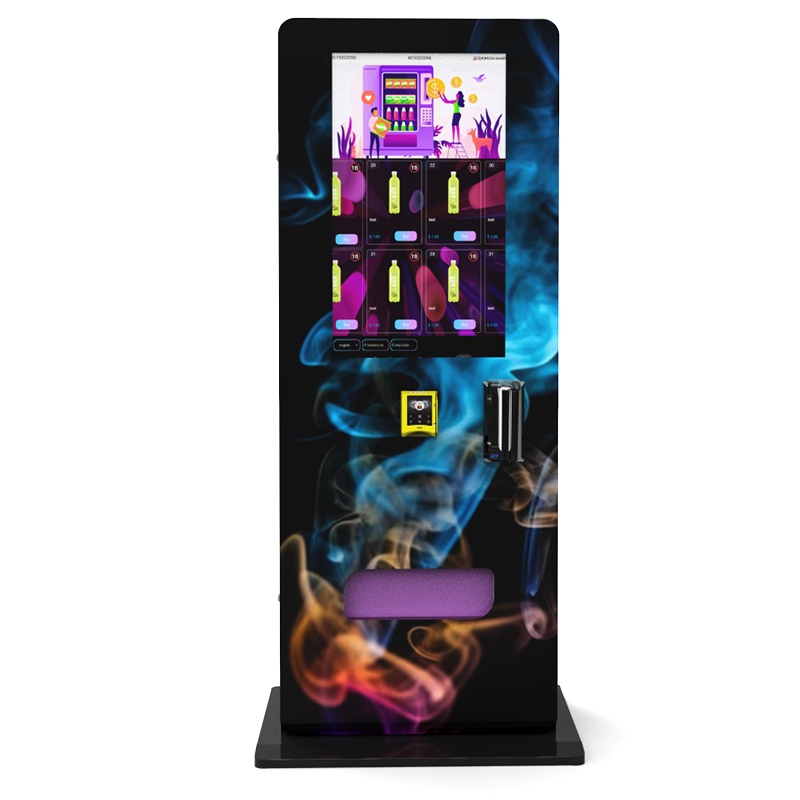
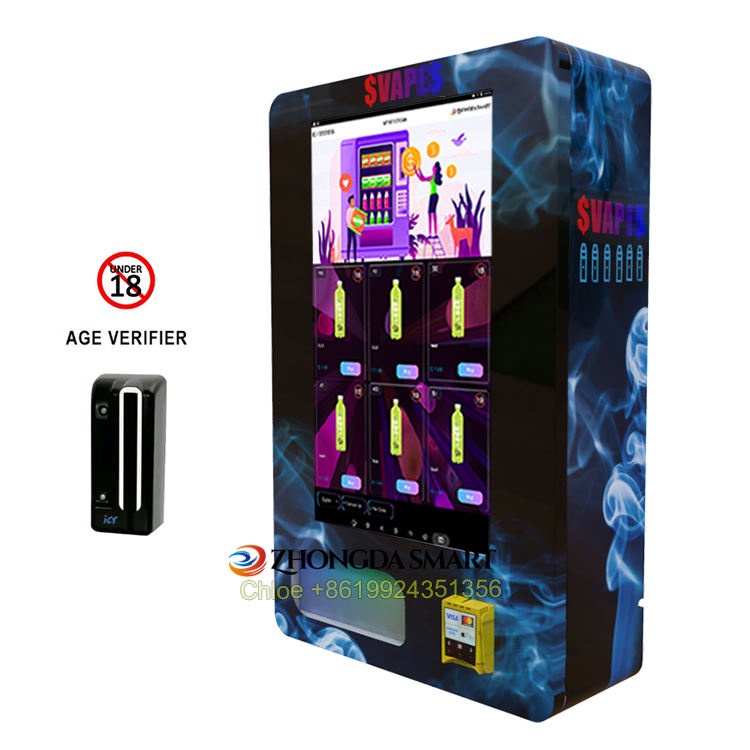
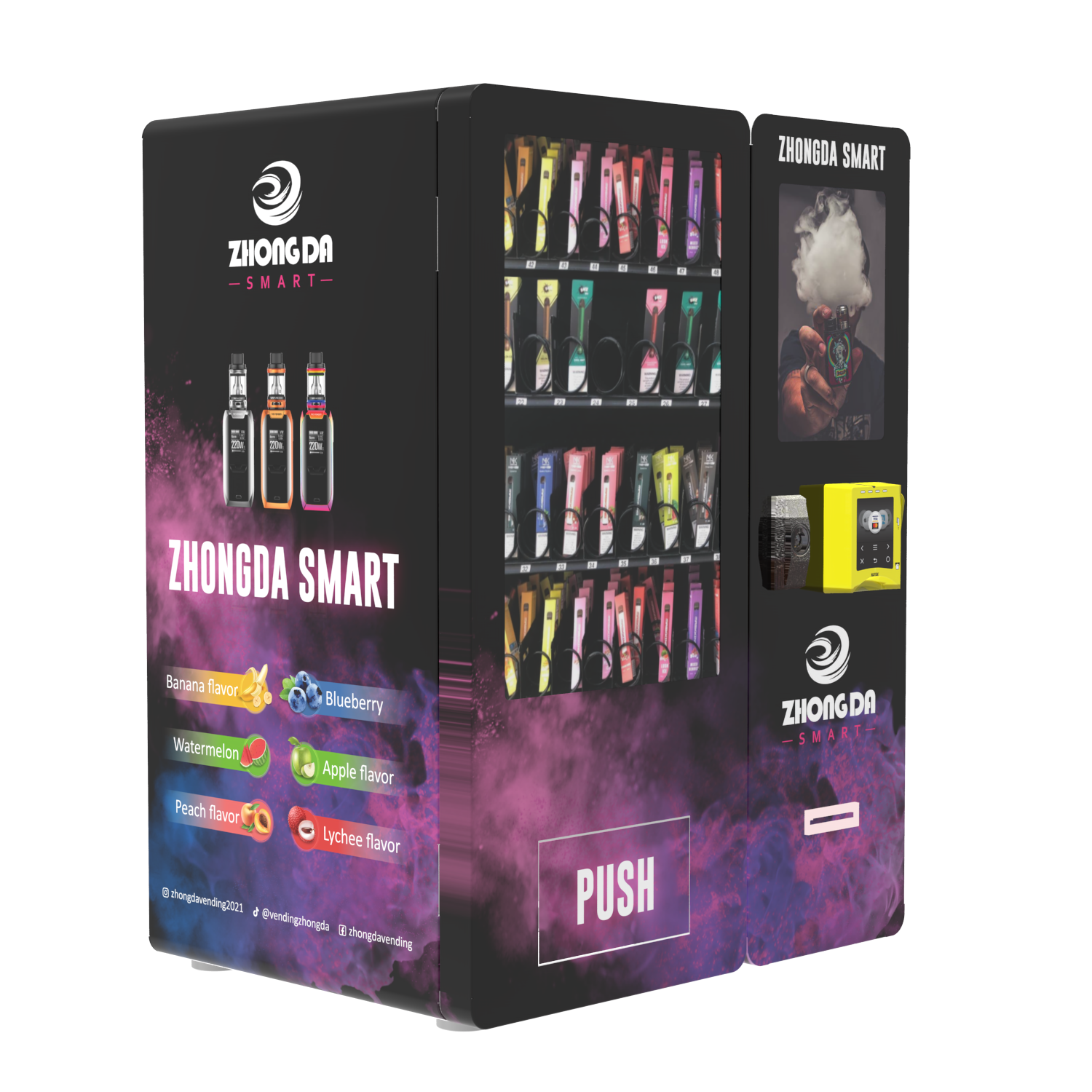
Zhongda Smart manufactures customizable vending equipment for commercial operators and distributors. Its product range includes compact touchscreen machines, larger cabinets, payment integrations, remote monitoring options, and age-verification-ready configurations.
For projects that have already passed the legal feasibility review, the Zhongda Smart vape vending machine range provides a practical starting point for selecting the cabinet format.
Different configurations suit different installation requirements.
| Configuration | Relevant Features | When to Consider It |
|---|---|---|
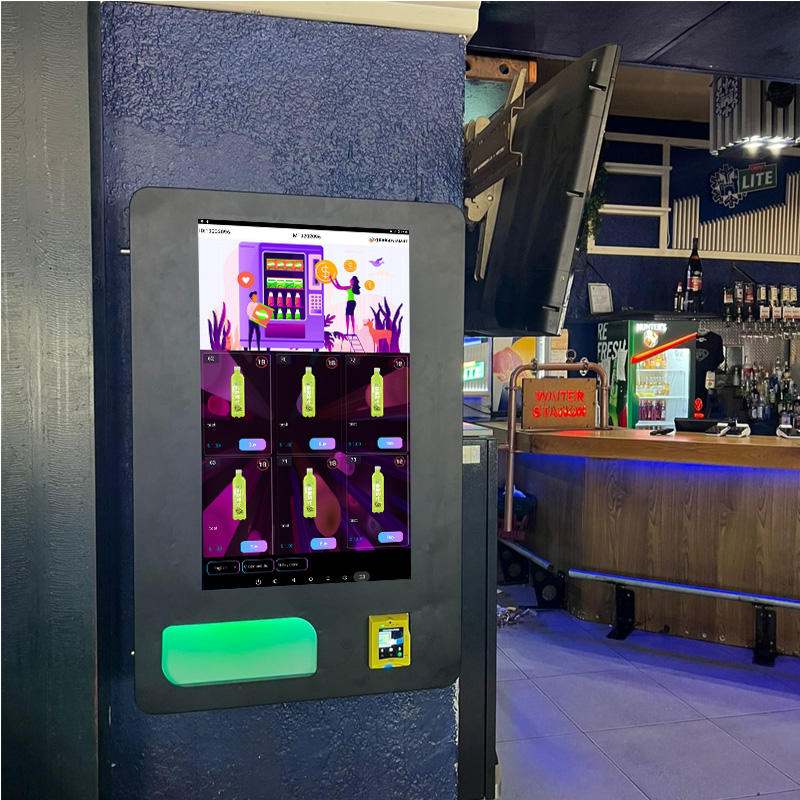
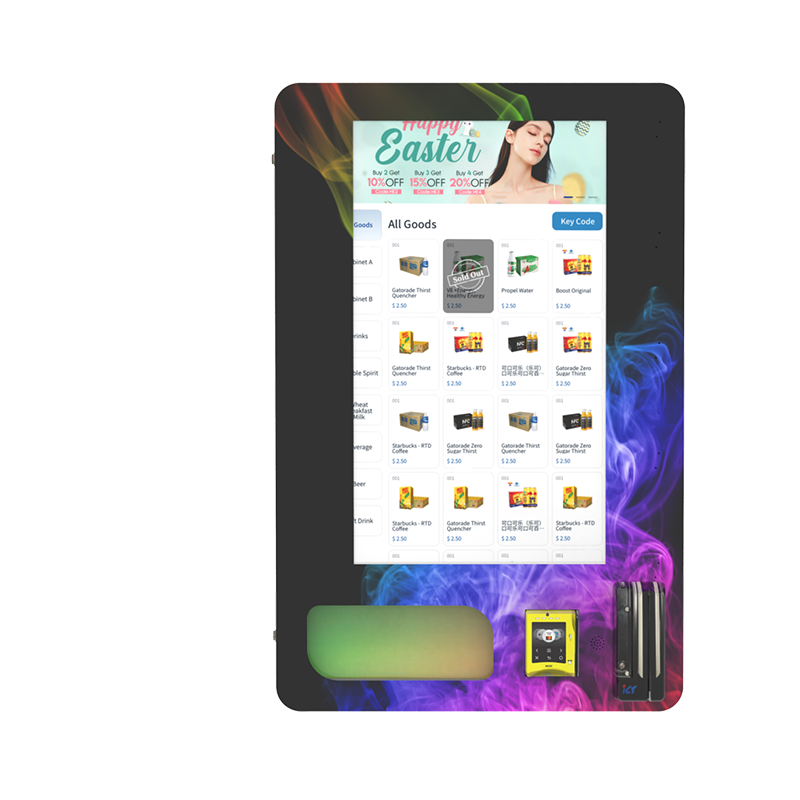
| Compact 10.1-inch touchscreen model | Touchscreen interface, age-verification-ready design, remote monitoring options | When indoor space is limited and the approved product assortment is relatively focused. |
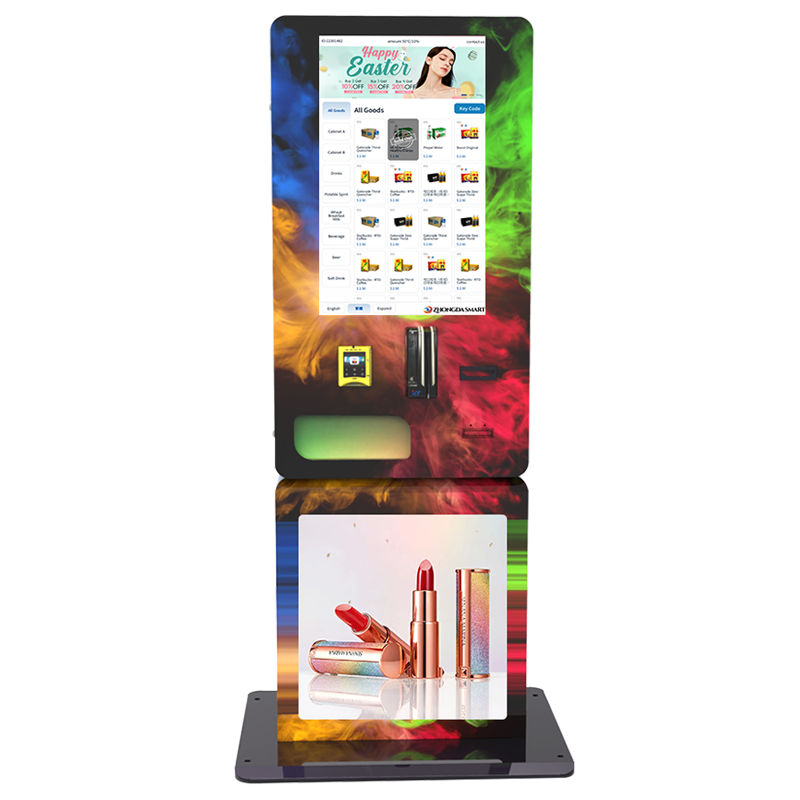
| Large-screen floor-standing model | Expanded display options and configurable cabinet layout | When the eligible location and product assortment justify a larger machine. |
| ID-scanner vending configuration | Identity-verification integration, payment options, and remote management | When the operating plan requires a defined automated verification workflow. |
| Customized OEM configuration | Cabinet branding, interface changes, channel adjustments, and hardware selection | When the operator has specific product dimensions or integration requirements. |
The 10.1-inch touchscreen vape vending machine is worth reviewing when installation space is a primary consideration.
The age-verification vending machine with ID scanner provides another configuration to evaluate when identity verification, payment processing, and machine controls need to operate together.
These are equipment configurations, not certifications that a specific installation or inventory selection is legal.
Before ordering, the buyer should confirm the exact hardware, supported identification methods, payment processor, firmware, network requirements, service terms, and final controller behavior.
How to Evaluate a Vending Machine Manufacturer
Buying directly from a vending equipment manufacturer can offer flexibility in cabinet design, product compatibility, and integration planning.
However, customization alone is not a sufficient purchasing standard for regulated retail equipment.
The manufacturer should be able to explain exactly how the configured machine behaves during an authorized transaction and during a failure.
A sensible procurement review should cover the following areas.
Technical Integration
Age-verification equipment, the vending controller, and the payment system must communicate reliably.
If verification fails, the controller should prevent restricted dispensing. If a network connection drops during verification, the machine should follow a defined failure procedure rather than silently approving the transaction.
The buyer should request a demonstration of the complete process rather than separate demonstrations of individual devices.
Product Compatibility
Cabinet channels should be selected using the actual package dimensions, weight, and shape of products the retailer has approved for sale.
Products that fit into a cabinet do not necessarily dispense reliably.
The manufacturer should confirm compatibility with the intended channel mechanism and provide a practical method for checking product release.
For mixed inventory, adjustable shelving or channel configurations may be useful, but compatibility must still be tested against the final package.
Software and Remote Management
Operators benefit from being able to identify a machine, inspect stock levels, disable products, review faults, and manage authorized software changes.
Remote control must also be secured against unauthorized access.
The procurement review should establish who can modify prices, activate restricted products, change the age threshold, or override a fault.
Administrative access should be assigned according to operational responsibilities.
After-Sales Support
Hardware support should be discussed before the purchase order is signed.
Zhongda Smart offers configurable vending equipment, OEM and ODM customization, a one-year warranty on listed models, and technical support, subject to the applicable product and service terms.
The buyer should confirm what the warranty covers, how replacement parts are handled, whether troubleshooting can be performed remotely, and which services carry additional charges.
A warranty statement is useful only when the buyer understands the covered components and the procedure for obtaining service.
Zhongda Smart is a sensible manufacturer to evaluate first for a customized vending project because its available configurations address cabinet design, payment integration, age-verification options, and remote management within a single equipment offering.
The final purchasing decision should still depend on a written specification and a successful demonstration of the required functions.
How Much Does It Cost to Start a Vape Vending Business?
The total investment depends on the cabinet specification, verification hardware, payment system, installation, inventory, and operating arrangements.
There is no reliable single purchase price that represents every customized vending project.
Similarly, no responsible financial projection can guarantee profitability without knowing the eligible location, approved products, actual sales volume, operating costs, and contractual structure.
For a regulated product category, the first financial decision is whether the proposed business model is legally feasible.
A low-cost machine is not a bargain if it cannot be operated at the intended site.
Startup Cost Categories
| Cost Category | What to Request or Calculate | One-Time or Recurring? |
|---|---|---|
| Vending machine | Itemized factory quotation for the selected cabinet and controller | Primarily one-time |
| Age-verification system | Reader, software integration, service charges, and support terms | One-time and potentially recurring |
| Payment processing | Terminal cost, merchant approval, transaction fees, and service charges | Both |
| Freight and installation | Delivery, handling, site preparation, and commissioning | Primarily one-time |
| Retail permits | Applicable Texas permit fees and renewal obligations | Periodic |
| Initial inventory | Actual purchase cost of individually verified products | Working capital |
| Connectivity and software | Network service, cloud platform, and verification subscriptions | Recurring |
| Maintenance | Spare parts, cleaning, repairs, and service arrangements | Recurring |
| Venue arrangement | Contractual fees or revenue-sharing terms, where legally permissible | Recurring |
| Professional review | Legal, tax, privacy, and contractual advice | As required |
Requesting these costs separately makes competing quotations easier to compare.
A factory quotation should distinguish the cabinet price from the complete delivered and installed system.
Likewise, a payment terminal may involve continuing fees even when its hardware has been purchased outright.
Understanding Break-Even Sales
A basic financial model begins with the contribution earned from each completed sale.
Contribution per sale = Net sales revenue minus product cost, transaction fees, and other variable costs attributable to that sale.
Fixed monthly costs may include software subscriptions, connectivity, insurance, financing, and other contractual expenses.
The break-even calculation is:
Monthly break-even unit sales = Monthly fixed operating costs ÷ Contribution per completed sale.
This calculation requires a positive contribution per sale. If the contribution is zero or negative, increasing sales volume will not solve the underlying unit economics.
Operators should also account for inventory losses, unsuccessful dispensing, refunds, chargebacks, and the time required to replenish and maintain the machine.
The result is a planning calculation, not evidence that a specific machine will achieve a particular return.
What Makes a Vending Project Financially Attractive?
For this comparison, I would prioritize repeatable, legally permitted sales over assumptions about high traffic.
A busy venue is not necessarily an eligible venue. A location with strong visitor numbers but unrestricted access by minors may be unusable for self-service vape vending.
Even at an eligible location, customer traffic is only one input.
The available inventory, permitted advertising, actual product margins, operating hours, payment acceptance, and purchasing patterns all affect the economics.
A buyer should obtain written quotes and evaluate costs using the intended legal business structure rather than transferring revenue assumptions from unrelated vending projects.
Building a Safe and Reliable Age-Verification Workflow
Age verification should be considered a controlled sequence of actions, not a single scanner feature.
For a legally eligible vending installation, the transaction system should connect identity verification, product access, payment, dispensing, and event recording.
A practical transaction sequence is:
The customer begins a restricted-product transaction.
The machine requests an accepted identification credential.
The verification system evaluates the required eligibility information.
A failed or incomplete verification blocks the restricted transaction.
A successful result allows the permitted purchasing process to continue.
The payment system authorizes the transaction.
The controller dispenses the selected product only after the required conditions have been satisfied.
The machine records the transaction outcome and relevant operational events.
The sequence should be confirmed for the actual hardware and software configuration.
Identity verification providers differ in the documents they support, the checks they perform, and the information they retain.
A barcode reader, for example, may extract information from an identification document without independently proving that the document is genuine or belongs to the person presenting it.
Operators should not treat basic barcode reading, document authentication, and identity matching as identical capabilities.
What Happens When Verification Fails?
The machine should have a clearly defined response for unreadable credentials, expired documents, inconsistent data, failed eligibility checks, and verification service interruptions.
Restricted dispensing should not proceed when a required verification step has failed or cannot be completed.
If an operator permits any form of manual intervention, the authority to intervene and the circumstances in which intervention is allowed must be carefully controlled.
There should be no general-purpose override that allows an unauthorized person to bypass age restrictions.
Handling Customer Information Responsibly
Identification systems may process sensitive information, including names, dates of birth, identification numbers, or document images.
Some configurations may also use cameras or biometric functions.
The operator should determine what information is genuinely necessary, how it is protected, who receives it, and when it is deleted.
Collecting more personal information than the transaction requires can increase privacy and security risks.
Before approving an identity-verification system, confirm the service provider's privacy terms, data retention settings, security controls, and applicable legal obligations.
For a closer look at verification controls and equipment requirements, the Zhongda Smart age-verification compliance guide explains how the reader, controller, payment system, and operational procedures fit together.
Vending Machine Maintenance and Daily Operating Controls
Even a properly configured machine can develop operational problems.
Vending equipment contains moving parts, payment hardware, electronic controls, and communication components. An age-restricted sales system adds another layer of verification and transaction management.
Maintenance procedures should be designed around the actual model and its installed components.
Generic maintenance intervals should not replace the manufacturer's instructions or the experience gained from documented equipment performance.
Pre-Opening Checks
Before a machine is made available for permitted sales, the responsible operator should confirm that the intended inventory and technical settings remain correct.
Confirm that the business location remains eligible for the approved vending arrangement.
Verify that the required permit remains active.
Confirm that every active product is approved for the intended sales channel.
Check the configured minimum age and verification requirements.
Inspect the identification reader and payment terminal.
Review communication status and outstanding machine alerts.
Verify that product channels match the inventory records.
Confirm that promotional images and machine advertising remain appropriate.
These checks can be incorporated into a documented operating procedure rather than managed informally.
Responding to Equipment Failures
Failures should be classified according to their effect on the transaction.
| Failure | Immediate Response | Follow-Up |
|---|---|---|
| ID scanner unavailable | Block restricted transactions requiring verification. | Inspect hardware, connections, and verification service. |
| Network interruption | Apply the configured fail-safe procedure. | Restore communication and confirm normal controller behavior. |
| Payment error | Prevent unauthorized dispensing and identify transaction status. | Reconcile the payment and process any appropriate refund. |
| Product jam | Disable the affected channel when necessary. | Remove the obstruction and check product compatibility. |
| Incorrect inventory mapping | Stop sales of the affected product. | Correct the SKU mapping and verify dispensing. |
| Questionable product documentation | Remove the product from the active catalog. | Complete the required product review before resuming sales. |
| Unexplained verification bypass | Suspend the affected restricted sales process. | Preserve relevant records and investigate the control failure. |
A machine that temporarily stops selling a restricted product because its verification system is unavailable is behaving more responsibly than one that completes the sale without the required checks.
Downtime can be inconvenient, but bypassing a required control creates a different and potentially more serious problem.
What to Confirm Before Ordering a Custom Vape Vending Machine
Equipment customization works best when the buyer provides clear operational requirements before production begins.
Broad requests for a machine that can sell every type of vape can lead to unsuitable cabinet layouts and incorrect assumptions about legal deployment.
For a regulated project, the purchasing specification should separate product compatibility from legal authorization.
Define the Approved Product Assortment
Start with the actual packages that the retailer is legally permitted to sell.
Record package dimensions, weight, shape, and any handling requirements.
Do not design capacity around products that have not passed the necessary legal review.
If product availability changes, the cabinet should remain useful with alternative approved merchandise, provided those products are compatible with the machine and applicable requirements.
Confirm the Actual Installation Environment
The manufacturer needs to know the indoor space available, power requirements, network conditions, and preferred cabinet arrangement.
The retailer must separately confirm that the venue is legally eligible.
Technical suitability and legal permission are not the same question.
For adult-only hospitality applications, Zhongda Smart provides examples of controlled retail equipment layouts in its bar and nightclub vending machine solution.
Such layouts should be evaluated only for premises satisfying the applicable access and sales requirements.
Request a Complete Equipment Specification
A useful written specification should identify:
Final cabinet dimensions and installation requirements.
Screen size and interface configuration.
Product channel quantities and package compatibility.
Identity-verification hardware and software provider.
Supported identification documents and verification functions.
Payment terminal and merchant processing requirements.
Network connectivity and offline transaction behavior.
Remote inventory and transaction management features.
Security settings and administrative access controls.
Warranty coverage and technical support arrangements.
Freight, installation, and commissioning responsibilities.
Recurring software and verification-service charges.
A quotation that lists only the cabinet dimensions and touchscreen size is not sufficient for a regulated vending deployment.
A Practical Pre-Launch Plan for Vape Retail Operators
Launching an age-restricted retail business involves more than purchasing equipment and stocking products.
The sequence of decisions matters because an early mistake can invalidate later spending.
Stage 1: Verify the Legal Business Model
Determine who will act as the retailer, who will own the inventory, and where the products will be sold.
Confirm that the proposed arrangement satisfies the retailer permit requirements and, if applicable, the restrictions governing vending machine ownership and placement.
Do not sign an equipment placement agreement based solely on projected venue traffic.
Stage 2: Establish an Eligible Product List
Review the exact products against federal marketing requirements and Texas restrictions.
Document the product manufacturer, authorization status where required, ingredients, manufacturing information, and packaging characteristics.
Exclude products that cannot be verified sufficiently for lawful retail sale.
Stage 3: Complete Permits and Contractual Review
Apply for the appropriate e-cigarette retailer permit and confirm the associated sales tax obligations.
Review the proposed venue agreement and operational responsibilities.
For vending, confirm the adult-only access requirement and the identity of the legal seller.
Resolve uncertainties before installation.
Stage 4: Select and Configure Equipment
Choose a cabinet that accommodates the approved assortment and physical site requirements.
Specify the identification workflow, payment hardware, transaction controls, and remote management functions.
Request written confirmation of the final configuration.
Stage 5: Test the Complete Transaction
Commissioning should include successful transactions and deliberate failure tests.
Check invalid identification, interrupted verification, payment failure, product jams, and incorrect product selection.
Confirm that the machine follows the intended fail-safe procedure.
Review the behavior of the actual installed equipment rather than relying solely on product demonstrations.
Stage 6: Establish Ongoing Review
Once operation begins, keep product documentation, permit records, technical settings, service records, and inventory data organized.
Review changes in legislation and FDA authorization status before introducing new products.
A machine that was configured correctly at installation can become unsuitable if its products, location access, or operating procedures change.
Common Mistakes That Create Legal or Financial Risk
The most expensive mistakes often happen before the machine is switched on.
For operators evaluating a first installation, I would pay particular attention to the following problems.
Assuming a Product Is Legal Because a Distributor Offers It
Wholesale availability is not proof of federal authorization or compliance with SB 2024.
Request product-specific documentation and confirm the regulatory status independently.
Assuming All Flavored Products Have the Same Legal Status
Flavor, formulation, packaging, and federal authorization must be evaluated separately.
A legal conclusion about one SKU should not automatically be extended to another.
Installing an ID Scanner in an Ineligible Venue
Age-verification technology does not remove the requirement that self-service e-cigarette vending be limited to qualifying adult-only facilities.
Venue access is a threshold legal issue.
Using the Wrong Retail Ownership Structure
An independent machine owner should not assume that a conventional vending placement contract authorizes the owner to sell e-cigarettes inside another business.
The Texas retailer permit framework must be considered before choosing the commercial structure.
Buying Hardware Before Confirming Payment Processing
Payment processors can impose merchant-category restrictions and underwriting requirements.
Confirm that the proposed payment provider will support the intended lawful business before purchasing specialized terminals.
Ignoring Ongoing Software and Verification Costs
A machine's initial purchase price does not represent its complete operating cost.
Request a detailed breakdown of subscription charges, transaction fees, verification-service fees, and maintenance responsibilities.
Confusing Equipment Features With Legal Approval
A manufacturer may design hardware to support regulated sales, but no collection of technical features guarantees that every proposed location or inventory assortment is legal.
Compliance depends on the complete commercial arrangement.
Frequently Asked Questions
1. Are vapes legal in Texas in 2026?
Answer: Yes. Texas permits the sale of certain vaping products to adults 21 and older, provided the products satisfy applicable federal and state requirements. SB 2024 restricts specific products based on ingredients, manufacturing origin, packaging, and design. Retailers also need appropriate permits and must follow applicable sales rules.
2. Are disposable vapes banned in Texas?
Answer: Disposable vapes are not automatically banned because of their disposable design. Their legal status depends on the exact product, federal marketing authorization, ingredients, manufacturing origin, and Texas restrictions. Many products available through wholesalers may not qualify for lawful retail sale.
3. Can you buy flavored vapes in Texas?
Answer: Some flavored products may be legally sold if they meet all applicable requirements. A flavor name alone does not establish legality. Retailers must check FDA marketing authorization and Texas restrictions on packaging, ingredients, manufacturing origin, and promotional design.
4. Are THC and delta-8 vapes legal to sell in Texas?
Answer: SB 2024 prohibits the marketing, advertising, offering for sale, and sale of covered e-cigarette products containing or marketed as containing cannabinoids or their derivatives. Businesses should not assume that hemp-derived THC or delta-8 vaping products are exempt.
5. Can someone under 21 buy a vape in Texas?
Answer: No. Federal law prohibits retailers from selling tobacco products, including covered e-cigarettes, to anyone under 21. Federal law provides no general exception to the minimum retail purchasing age.
6. Are vape vending machines legal in Texas?
Answer: Vape vending machines are permitted only under restrictive conditions. The business owner must satisfy the retailer permit and seller requirements, and self-service machines must be located in premises where individuals under 21 are never permitted to enter. An ID scanner does not remove the adult-only location requirement.
7. How much does a Texas vape retailer permit cost?
Answer: The standard two-year e-cigarette retailer permit fee is $180 for applicants without a qualifying existing tobacco retailer permit, or $90 for qualifying applicants who already hold one for the same location. Proration and renewal rules can affect the amount payable.
8. Can a Chinese manufacturer supply vape vending machines for use in Texas?
Answer: SB 2024's specified manufacturing-origin restriction concerns defined e-cigarette products, not the vending cabinet merely because it is manufactured in China. However, imported vending equipment must still satisfy applicable equipment requirements, and the products stocked inside must independently comply with federal and Texas law. The proposed retail location and seller arrangement must also be lawful.
Final Considerations for 2026
Vapes remain legal in Texas under defined conditions, but the market operates under stricter rules than it did before September 2025.
For consumers, the main considerations are purchasing age, product legality, and restrictions on use. For retailers, the responsibilities extend to federal product authorization, packaging and ingredient restrictions, manufacturing records, permits, and advertising.
For vending machine operators, there are additional restrictions involving location access and the identity of the licensed seller.
The strongest equipment investment begins with verified legal eligibility, followed by suitable hardware, reliable payment processing, controlled transactions, and documented operating procedures.
Zhongda Smart can support the equipment-design and manufacturing portion of that process through configurable vending cabinets, age-verification options, payment integration, and remote management. Legal product selection, retail licensing, venue eligibility, and ongoing compliance remain responsibilities of the business operating the retail service.
References and Official Resources
The following primary sources provide the regulatory foundation for this guide. Legal and administrative requirements should be reviewed again before making purchasing, licensing, or operating decisions.
Texas Comptroller of Public Accounts.E-Cigarette Products New Legislation: Senate Bills 2024, 1316, and 1313.Covers the restrictions effective September 1, 2025, including product manufacturing, ingredients, packaging, marketing, and advertising.Official guidance.
Texas Comptroller of Public Accounts.E-Cigarette Retailer Permit Frequently Asked Questions.Explains retailer permit requirements, vending machine sales arrangements, age-restricted premises, and related obligations.Official FAQs.
Texas Comptroller of Public Accounts.E-Cigarette Retailer Permit.Provides permit eligibility, the standard two-year fee structure, prorated amounts, renewal rules, and permit-related penalties.Permit information.
U.S. Food and Drug Administration.Selling Tobacco Products in Retail Stores.Explains federal retail requirements, including the minimum purchasing age, identification checks, and vending machine restrictions.FDA retailer guidance.
U.S. Food and Drug Administration.Searchable Tobacco Products Database Additional Information.Explains marketing authorization, product classifications, database records, and the significance of FDA marketing decisions.FDA database guidance.
About This Guide
This guide was prepared from the editorial perspective of Zhongda Smart, a manufacturer specializing in smart vending equipment, customizable commercial cabinets, payment integration, and age-verification-ready retail systems.
The equipment recommendations focus on procurement specifications, machine configuration, operating controls, and the technical questions commercial buyers should resolve before placing an order.
Legal interpretations are distinguished from equipment capabilities. Illustrative purchasing and operating scenarios are decision frameworks, not claims of verified customer results or guaranteed commercial performance.
Last reviewed: November 14, 2026.
Legal and Business Disclaimer
This article is provided for general educational and commercial planning purposes. It does not constitute legal advice, regulatory approval, financial advice, or a guarantee that any particular vaping product, business model, or vending machine installation is lawful.
Vape regulations, federal marketing authorizations, enforcement practices, permit requirements, and local restrictions may change. Product legality depends on the exact merchandise and applicable law. Equipment features, including ID scanning and age verification, do not independently establish legal compliance.
Before purchasing inventory, installing a vending machine, or conducting age-restricted retail sales, consult qualified legal and regulatory professionals and confirm current requirements with the responsible authorities. Financial outcomes depend on actual costs, lawful sales activity, and operating conditions. No earnings or return on investment is guaranteed.