What vapes are made in the USA? The clearest examples include Halo and Naked 100 e-liquids, specialty vaping hardware from Billet Box Vapor, and selected components or production stages associated with established brands such as JUUL and Vuse. But there is an important distinction: an American-owned brand, a domestically blended e-liquid, and a completely American-made vape device are not necessarily the same thing.
In 2026, identifying genuinely American-made vapes requires looking beyond packaging and brand identity. Batteries, circuit boards, cartridges, nicotine liquids, and final assembly may come from different manufacturers. Legal marketing authorization is another separate consideration. This guide examines the brands worth knowing, explains how manufacturing claims should be evaluated, and covers the practical issues facing retailers and automated vending operators.
Which Vape Brands Are Actually Made in the USA?
There are American manufacturers involved in the vaping industry, but relatively few complete electronic vaping systems can be confidently classified as entirely American-made without detailed component documentation.
Domestic production is easier to establish for certain e-liquids than for complete electronic devices. E-liquid manufacturing generally involves ingredient sourcing, formulation, mixing, testing, filling, and packaging. A finished vaporizer adds batteries, control electronics, heating elements, sensors, and other components with potentially different manufacturing origins.
For this comparison, I'm prioritizing identifiable manufacturing activity, the specific product involved, the limits of the available evidence, and whether a manufacturing claim can reasonably apply to the entire product.
The following brands illustrate those distinctions. They are manufacturing examples, not a list of products approved for purchase or resale.
American Vape Brands and Manufacturing Comparison
| Brand | Relevant Product | Identifiable American Manufacturing | Important Qualification |
|---|---|---|---|
| Halo | Bottled e-liquid | E-liquid formulation and production | Domestic liquid production does not establish the origin of associated hardware or permission to market each formula. |
| Naked 100 | Bottled e-liquid | E-liquid manufacturing through USA Vape Lab | Product formulation, current manufacturing batch, and authorization require separate checks. |
| Billet Box Vapor | Specialty vaporizer hardware | Domestic design and device manufacturing | Individual electronic components and current product authorization must be verified. |
| JUUL | JUUL2 pods and devices | Domestic e-liquid production, pod filling, and pod assembly | These activities do not establish that every component of the JUUL2 device is domestically made. |
| Vuse | Closed-system devices and cartridges | Domestic e-liquid production for selected product lines | Liquid origin should not be confused with the origin of the electronic device. |
| NJOY | ACE and DAILY products | Domestic e-liquid production has been documented for certain products | Device manufacturing and additional restrictions on distribution are separate issues. |
| Glas | G2 device and pods | American business presence and product development | Full device manufacturing origin cannot be established from marketing authorization alone. |
The most useful conclusion is not that one manufacturer makes a universally superior product. It is that a manufacturing-origin claim needs to identify exactly which product, component, or production process it covers.
For retailers, that distinction also affects product descriptions, purchase records, inventory systems, and advertising. A label describing domestically manufactured e-liquid should not automatically be extended to a complete vape kit containing imported electronics.
What Does Made in USA Actually Mean for a Vape?
The Federal Trade Commission applies a demanding standard to unqualified Made in USA claims. A product generally needs to be all or virtually all made domestically, with final assembly, significant processing, and essentially all relevant component content meeting the required standard.
That is much stricter than having an American brand name, a domestic warehouse, or a local packaging operation.
Consider a rechargeable vape with a domestically blended nicotine liquid. Its battery might be imported, its electronic control board might be fabricated elsewhere, and its cartridge assembly might involve multiple production facilities. Unless the manufacturer can substantiate the origin of the finished product, describing the entire system simply as American-made may be misleading.
The FTC's Made in USA business guidance explains the difference between unqualified origin claims and narrower statements describing particular manufacturing activities.
Five Manufacturing Claims That Mean Different Things
| Label or Claim | What It Communicates | What It Does Not Establish |
|---|---|---|
| Made in USA | An unqualified domestic-origin claim subject to the FTC standard | It is not merely a statement about company ownership. |
| Assembled in USA | Substantial assembly activity takes place domestically | It does not necessarily mean every component is domestic. |
| Blended in USA | Liquid mixing or formulation takes place domestically | It does not establish ingredient origin or device origin. |
| Designed in USA | Design or engineering work takes place domestically | It does not identify the manufacturing location. |
| Ships from USA | Inventory is distributed from a domestic shipping location | It does not identify where the product was manufactured. |
I would place much more weight on a precise manufacturing statement than on a prominent flag graphic or a vague reference to American engineering. Specific claims can be examined against factory records and component documentation. Broad patriotic branding provides far less information.
Even a truthful assembly statement may not satisfy the requirements for an unqualified Made in USA label. The wording needs to match the manufacturing activity rather than the marketing message a company would prefer.
American-Made Vape Brands Worth Understanding in 2026
1. Halo: A Recognizable Example of Domestic E-Liquid Production
Halo is one of the more established names associated with American-made vape juice. Its manufacturing approach centers on domestically produced e-liquid rather than claiming that every vaping device associated with the brand is manufactured domestically.
The brand has operated under Nicopure Labs and has emphasized controlled liquid production, ingredient management, batch identification, and packaging processes. Its product history includes tobacco, menthol, and other e-liquid formulations.
That makes Halo relevant to anyone comparing the origin of vaping liquids. The important question, however, is whether a specific bottle belongs to a product line currently manufactured under the same arrangement.
Manufacturing organizations can change suppliers, production lines, formulas, and packaging over time. A historical statement about domestic production should not be treated as permanent verification of every future product.
For an inventory review, I would request a current batch reference, the responsible manufacturer, the filling location, and documentation identifying the product formulation. These records are more useful than assuming that a familiar brand name settles every origin question.
Halo is also a useful example of a critical legal distinction: domestic manufacture of nicotine e-liquid does not automatically establish FDA marketing authorization for that particular formula or package.
2. Naked 100: Domestic Manufacturing Through USA Vape Lab
Naked 100 is another prominent name in the American e-liquid category. The brand is associated with USA Vape Lab, a manufacturer involved in formulation, production, and contract manufacturing services.
Naked 100 is particularly relevant when examining the difference between a liquid manufacturer and a complete vaping-device manufacturer.
An e-liquid brand can control its recipes, production equipment, filling procedures, quality documentation, and packaging without manufacturing the rechargeable device used to vaporize the liquid.
That separation matters because consumers frequently describe an entire vaping setup by the brand printed on the bottle. In manufacturing terms, the liquid and the device are different products with different supply chains.
Naked 100 has also used product-authentication features on certain packaging. Authentication can help distinguish legitimate branded merchandise from counterfeits, although authenticity and legal marketing authorization remain separate questions.
If I were assessing a bottle for a retailer's product database, I would record the exact product name, formulation, batch information, nicotine strength, manufacturer identity, and authorization status independently.
A domestic manufacturing relationship is meaningful evidence about production origin. It is not a substitute for examining the specific SKU.
3. Billet Box Vapor: Specialty Hardware With Domestic Manufacturing Roots
Billet Box Vapor stands apart from liquid-focused brands because its identity is closely connected to specialty vaporizer hardware.
The Billet Box design uses a compact metal enclosure to integrate important elements of the vaping system. Its manufacturing identity has emphasized domestic design and machining rather than the disposable-device model associated with much of the broader industry.
This is a different kind of manufacturing proposition. Machined metal housings, precise component fit, mechanical durability, and product-specific engineering become central considerations.
That does not eliminate the need to examine electronic components. A device can contain domestically manufactured mechanical parts while incorporating batteries, integrated circuits, or other imported materials.
I would therefore distinguish between domestically manufactured structural hardware and a fully domestic electronic system. The first can be documented without automatically proving the second.
Specialty hardware also requires more careful consideration of compatibility, maintenance, battery handling, and replacement components than a sealed pod system.
Billet Box is worth knowing as an example of domestic hardware manufacturing, but its historical manufacturing reputation does not establish the current regulatory status of every device or configuration.
4. JUUL: Domestic Pod Production Does Not Mean Every Device Is Domestic
JUUL provides a particularly useful example of a mixed manufacturing model.
In connection with the 2026 JUUL2 authorization, JUUL identified domestic e-liquid production and domestic pod assembly and filling operations. Those activities represent meaningful manufacturing work.
However, assembling and filling a pod does not establish where every electronic component in the rechargeable device was produced. A pod, a battery-powered device, and a packaged retail kit should be examined as distinct items.
The FDA authorized the JUUL2 device and specified pods in August 2026. Authorization concerns particular products, not every past or future variation sold under the JUUL name.
For this brand, the correct manufacturing description is therefore more precise than simply stating that JUUL vapes are entirely made in the USA.
A retailer should identify the authorized product, its exact packaging, and the manufacturing statement that applies to that item. The distinction is especially important when creating catalog entries that combine devices, pods, and accessories.
5. Vuse: An Example of Why Liquid and Device Origins Must Be Separated
Vuse is an established vaping brand associated with R.J. Reynolds Vapor Company. Its product history includes rechargeable devices, cartridges, and closed-system vaping products.
Domestic e-liquid production has played a role in Vuse manufacturing. That fact alone is not evidence that all Vuse devices are domestically manufactured.
For a closed-system product, the finished kit may contain several independently sourced components: a rechargeable power unit, a prefilled cartridge, a charging accessory, and external packaging.
Each component can have a separate origin. Even when liquid production is domestic, cartridge manufacturing or electronic assembly may take place elsewhere.
The practical lesson is to evaluate the specific model and package rather than assign one manufacturing origin to the entire brand.
Vuse also illustrates why product-level FDA authorization matters. A marketing order may cover a named power unit and particular cartridges, but it does not automatically extend to unrelated products, flavors, or later hardware variations.
6. NJOY: Established Products With a Complicated Manufacturing Footprint
NJOY illustrates another manufacturing pattern: domestically produced e-liquid combined with electronic-device manufacturing activity outside the United States.
Manufacturing documentation for NJOY ACE has identified domestic e-liquid production while separately identifying overseas manufacturing activity for the device system.
The distinction is not unusual in electronic consumer products. Liquid formulation and electronics production require different equipment, suppliers, manufacturing controls, and technical expertise.
When reviewing NJOY products, I would avoid applying a single origin label to the entire portfolio. The relevant information belongs to the individual device, cartridge, or disposable product.
Retail availability also requires attention beyond the FDA's authorization list. Intellectual-property orders, distribution restrictions, and other legal requirements can affect whether an otherwise authorized product may be sold.
For example, NJOY ACE has faced separate importation and sales restrictions arising from an International Trade Commission proceeding. Authorization should therefore be treated as one necessary regulatory check rather than a guarantee of unrestricted distribution.
7. Glas: A Useful Regulatory Reference, Not Automatic Origin Proof
Glas is relevant to the 2026 market because the FDA's authorized e-cigarette list includes the Glas G2 device and specified pods.
That makes Glas important when reviewing current authorization records. It does not, by itself, prove domestic manufacture of the device or all its components.
The company's presence in the authorized-product category answers a legal marketing question, while the manufacturing-origin question requires separate evidence.
I would not classify every Glas product as American-made solely because a regulatory listing identifies the manufacturer or because a product is associated with an American business.
The precise product, production arrangement, and origin documentation remain decisive.
Why Are Fully American-Made Vape Devices Difficult to Verify?
A vape device may look simple from the outside. Inside, even a basic rechargeable model combines several manufacturing disciplines.
A typical system may require a lithium-ion battery, a printed circuit board, charging components, electrical contacts, a heating element, an airflow sensor, a housing, seals, and a reservoir or cartridge.
Those components can come from specialized suppliers. The company that designs the finished product may not manufacture the battery cell. The company that fills the cartridge may not fabricate the heating element. The business responsible for final assembly may purchase completed electronic modules.
This creates a complicated supply chain even for a relatively inexpensive product.
Which Components Should Be Checked?
| Component | Manufacturing Question | Useful Evidence |
|---|---|---|
| Battery cell | Who manufactured the cell itself? | Battery manufacturer and cell identification |
| Control board | Where was the electronic assembly manufactured? | Supplier and assembly documentation |
| Heating element | Who produced the coil or heating assembly? | Component supplier records |
| Cartridge | Where were the reservoir and cartridge assembled? | Assembly and packaging records |
| E-liquid | Where were the ingredients mixed and filled? | Manufacturing and batch records |
| Outer housing | Where was the enclosure formed or machined? | Fabrication records |
| Finished product | Where did substantial final assembly occur? | Production documentation and origin substantiation |
The housing is especially easy to overvalue. A machined metal enclosure can be an important domestic manufacturing contribution, but a vape is still an electronic system. The origin of the enclosure cannot establish the origin of every internal component.
Similarly, a company may perform extensive final testing domestically. Testing adds quality-control value, but it is not equivalent to manufacturing every underlying component.
This is why I would ask for a product-level origin statement instead of a factory photograph. A photograph can establish that equipment exists; it cannot prove where every part was sourced.
How to Verify Whether a Vape Is Really American-Made
A credible origin assessment should be tied to a specific product rather than a general company description.
The best starting point is the packaging. Look for a clear manufacturer identity, a product designation, a batch or lot code, and a manufacturing-origin statement that identifies exactly what was made domestically.
Then compare that information with the documentation available for the same product.
A Practical Six-Step Origin Check
Identify the exact item. Record the brand, model, product type, package variation, and SKU. Do not assume that similar-looking products share a manufacturing origin.
Read the complete origin statement. Distinguish a claim covering the finished device from one covering only the e-liquid, cartridge, or assembly operation.
Check the manufacturer identity. An importer, distributor, trademark owner, and contract manufacturer may be different businesses.
Request substantiation. For commercial procurement, ask for relevant production records or a written explanation of the claimed domestic manufacturing content.
Verify authenticity. Examine batch codes, security labels, packaging consistency, and available authentication systems.
Check legal marketability separately. A genuine product can still lack the authorization required for lawful marketing.
The final step is frequently overlooked. A properly manufactured product and a legally marketable product are not interchangeable concepts.
I would also treat supplier documentation as time-sensitive. A manufacturing statement may be accurate for one production batch but not for an updated model assembled using a different supplier network.
When evidence is incomplete, the responsible description is narrower. "Domestically blended e-liquid" is more defensible than "fully American-made vape" when only the blending operation is established.
Questions That Deserve Written Answers
For a commercial purchase, the following questions are particularly useful:
Does the origin claim apply to the complete device or only one component?
Is the product manufactured by the brand owner or a contract manufacturer?
Are batteries and electronic assemblies included in the stated origin claim?
Does the statement apply to the current production batch?
Can the supplier provide product-specific manufacturing documentation?
Which legal entity is responsible for regulatory compliance?
Does the exact product have the necessary marketing authorization?
Are there independent restrictions affecting sale or distribution?
A supplier that answers these questions precisely provides a stronger basis for purchasing decisions than one relying on broad language about domestic quality.
Does American Manufacturing Automatically Mean Better Quality?
No. Manufacturing origin and product quality should be evaluated separately.
Location may influence supply-chain oversight, transportation requirements, supplier access, and production coordination. It does not automatically determine whether a battery is reliable, a liquid is consistently formulated, or a finished device meets appropriate technical requirements.
A useful quality assessment examines the manufacturing process itself.
For e-liquid, relevant considerations include ingredient traceability, formulation control, batch consistency, contamination prevention, packaging integrity, and documented testing.
For electronic devices, important considerations include battery protection, electrical reliability, manufacturing tolerances, charging behavior, and product consistency.
Neither category should be assessed through an origin label alone.
Quality Records That Matter More Than Marketing Language
| Quality Area | Documentation to Examine | Decision It Supports |
|---|---|---|
| Ingredient traceability | Supplier specifications and applicable certificates of analysis | Whether the ingredients can be traced to responsible suppliers |
| Batch control | Lot identification and manufacturing records | Whether individual batches can be identified |
| Liquid consistency | Applicable laboratory reports and formulation controls | Whether manufacturing variation is monitored |
| Battery safety | Relevant battery specifications and test documentation | Whether electrical risks are evaluated |
| Packaging integrity | Packaging specifications and inspection procedures | Whether finished goods are protected appropriately |
| Product traceability | SKU, lot, and distribution records | Whether affected inventory can be identified |
These records should be interpreted by qualified personnel. A certificate of analysis is not a universal safety certificate, and a test addressing one substance does not establish that a finished inhalation product is harmless.
I would be particularly cautious about statements implying that food-grade ingredients are automatically safe to inhale. Food-use standards and inhalation exposure are not the same evaluation.
Nicotine products carry health risks regardless of manufacturing origin. Domestic production should not be presented as proof that a vape is safe.
Made in USA vs. FDA-Authorized Vapes: The Critical Difference
The most consequential distinction in the 2026 market is between manufacturing origin and regulatory authorization.
A vape can contain domestically manufactured components without having the authorization needed for lawful marketing. Conversely, an FDA-authorized product may include imported components.
Neither condition establishes the other.
As of the November 2026 review of the FDA's authorized e-cigarette list, the agency identified 48 authorized e-cigarette products across five manufacturers: Glas, JUUL Labs, Logic Technology Development, NJOY, and R.J. Reynolds Vapor Company.
That figure is a count of authorized products, not a count of American-made devices. It also is not a statement that every authorized product is currently available for unrestricted distribution.
The FDA grants marketing authorization for specific products. Authorization should not be described as FDA approval or as a declaration that the product is safe.
What Each Status Actually Tells You
| Status | What It Establishes | What Still Needs Checking |
|---|---|---|
| American-owned brand | Company ownership or business identity | Manufacturing origin and product authorization |
| Domestically manufactured e-liquid | A specific domestic production activity | Complete device origin and marketing authorization |
| Made in USA product | A substantiated origin claim under the relevant standard | Product-specific regulatory status |
| FDA marketing authorization | Authorization to market a specified tobacco product under the applicable framework | Origin, other restrictions, and current distribution eligibility |
| Authorized retail inventory | A product selected after relevant legal checks | Retailer licensing, age restrictions, vending rules, and ongoing compliance |
For commercial retail, product authorization should be checked before negotiating significant inventory commitments. A favorable wholesale price does not compensate for the inability to sell a product lawfully.
Retailers should also verify product names and variations carefully. An authorization for one nicotine strength, flavor, or device configuration does not authorize every related item under the same brand.
Why a Pending Application Is Not the Same as Authorization
A submitted application means a manufacturer has entered a regulatory process. It does not automatically mean the agency has granted marketing authorization.
The distinction matters when dealing with suppliers that describe inventory as registered, submitted, under review, or compliant without identifying a marketing order.
These terms should not be accepted as substitutes for authorization of the specific product.
A prudent retailer needs documentation that matches the exact item being purchased. If that cannot be established, the product should not be treated as legally cleared for sale.
What Changed in the American Vape Market in 2026?
Manufacturing origin became a more visible selling point during 2026, particularly among brands attempting to distinguish themselves through domestic identity.
That shift also created a greater need to separate meaningful manufacturing information from promotional imagery.
In an April 7, 2026 investigation, Reuters identified at least eight newly introduced vape brands emphasizing American credentials since October 2025. The investigation found that those brands lacked FDA marketing authorization, while some had ownership connections outside the United States.
The importance of that finding is not the number of brands alone. It demonstrates that manufacturing imagery, ownership, product origin, and legal marketing status can diverge sharply.
A domestic-themed package may look reassuring to a buyer without answering any of the important manufacturing or compliance questions.
I would not assume that a brand appearing on shelves has completed the necessary regulatory process. Market presence is not a substitute for authorization.
The same applies to recently introduced products bearing prominent manufacturing claims. The origin statement needs substantiation, and the product requires its own legal review.
For established retailers, that makes supplier documentation, invoice traceability, and inventory controls especially important. A product's commercial popularity should never become the evidence used to justify its legality.
Disposable Vapes vs. Refillable Systems: Which Are More Likely to Have Domestic Manufacturing?
The distinction between disposable and refillable vaping products is useful because each format has a different manufacturing structure.
A disposable vape usually combines the liquid reservoir, battery, heating element, and control components into one integrated product. Once the intended liquid supply is exhausted, the unit is generally discarded.
A refillable system separates at least some of those functions. The consumer may retain the powered device while replacing or refilling the liquid-containing component.
That separation creates more opportunities for different manufacturing origins within a single setup.
Manufacturing and Operational Differences
| Factor | Disposable Vape | Refillable or Pod System |
|---|---|---|
| Product structure | Integrated unit containing most required components | Reusable device combined with replaceable or refillable components |
| Origin verification | Requires evidence covering the finished integrated product | Device and liquid origins can be examined separately |
| Inventory format | Generally one retail package per complete unit | Devices, pods, and liquids may require separate SKUs |
| Compatibility | Limited replacement compatibility | Device and cartridge matching can be important |
| Battery handling | Battery remains part of discarded unit | Rechargeable device remains in use until replacement |
| Retail control | One product authorization and package review per SKU | Separate review may be required for each authorized component |
I would not rank one format as inherently more American-made. The manufacturing documents decide that question, not the product category.
However, refillable and modular systems often make the distinction between domestic e-liquid production and imported device hardware easier to identify.
That can be valuable when preparing accurate product descriptions or evaluating supplier manufacturing claims.
How Should Retailers Choose Vape Inventory in 2026?
For an operator, the strongest product assortment is not necessarily the one with the most brands or flavors. It is the assortment that can be documented, lawfully sold, accurately stocked, and efficiently managed.
I would evaluate inventory in a fixed order, starting with legal eligibility before considering commercial performance.
Priority One: Confirm Product Eligibility
Start with the exact product and its authorization status. Verify whether it can lawfully be sold through the intended channel, then check any applicable additional restrictions.
A product with attractive packaging and favorable purchasing terms is not commercially viable if the retailer cannot legally offer it.
Priority Two: Verify the Supplier
Identify the responsible manufacturer, authorized distributor where relevant, product identifiers, purchase documentation, and applicable return procedures.
For an origin-sensitive assortment, verify whether the manufacturing statements apply to the product's current batch.
Priority Three: Examine Physical Packaging
Retail packaging influences shelf layout, storage, handling, and automated dispensing.
Two products with similar nominal capacities can have different package dimensions. One may arrive in a rigid rectangular carton, while another uses packaging that is less suitable for a conventional vending channel.
This difference matters especially when inventory is intended for unattended retail.
Priority Four: Calculate Actual Contribution Margin
The relevant amount is not simply the difference between wholesale cost and selling price.
Payment processing, location fees, applicable taxes, product loss, handling, and replenishment costs may all affect the final contribution.
For automated retail, machinery and software expenses create additional costs that must be included in the operating model.
Priority Five: Protect Inventory Traceability
Maintain records that connect purchased stock with its supplier, product identifier, and relevant lot information.
If a product becomes subject to a restriction, withdrawal, or other compliance concern, the operator should be able to identify the affected inventory without reconstructing purchase history from memory.
Remote inventory systems can simplify that task, provided the underlying product data is accurate.
Can American-Made Vapes Be Sold Through Vending Machines?
Manufacturing origin does not determine whether a vape can be sold through a vending machine.
Vending eligibility depends on the product's legal status, the retailer's obligations, the facility, customer access, and any additional rules applying to the transaction.
Under FDA retail rules, tobacco products, including e-cigarettes and other electronic nicotine delivery systems, cannot be sold through vending machines in facilities where individuals younger than 21 are present or permitted to enter at any time.
The FDA also requires tobacco sales to be restricted to customers aged 21 or older. Retailers must examine photographic identification for purchasers younger than 30.
These requirements are detailed in the FDA's retail tobacco sales guidance.
An ID scanner does not make an otherwise ineligible vending location legal. This is the first requirement I would settle before discussing cabinet specifications or payment terminals.
Age Verification and Facility Eligibility Are Different Controls
An automated age-verification system can help evaluate a purchaser's eligibility during a transaction. Depending on its configuration, it may use an identification document, an integrated verification service, or another approved workflow.
That technology does not replace rules governing who may enter the facility.
A location open to customers under 21 cannot become eligible for tobacco vending simply because the machine checks identification before dispensing.
The retail environment must satisfy the applicable access requirements independently.
Operators must also check licensing, applicable product restrictions, privacy obligations, payment-processing policies, and any additional rules affecting unattended sales.
These considerations are especially important when a vending project is designed for nicotine products rather than ordinary packaged merchandise.
Choosing a Vape Vending Machine Manufacturer: What Actually Matters?
The equipment decision becomes much more useful once the retailer has established a legally permissible operating plan.
At Zhongda Smart, the relevant manufacturing challenge is building a vending system around the operator's packaging, payment requirements, site constraints, and verification workflow.
Zhongda Smart manufactures and customizes vending equipment. It should not be confused with the companies manufacturing the e-liquids and vaping devices discussed earlier.
From an equipment-selection standpoint, I'd rank Zhongda Smart first for an operator seeking configurable vape vending hardware, particularly when cabinet layout, age-verification integration, cashless payment, and remote management need to be considered together.
That recommendation is based on the breadth of customization options and the ability to evaluate those features in one equipment project. It is not a claim that a machine automatically satisfies every legal requirement or that independently verified uptime results exist for every configuration.
The Five Criteria I Would Use to Evaluate a Vending Manufacturer
| Evaluation Criterion | What to Require | Why Zhongda Smart Is Relevant |
|---|---|---|
| Product compatibility | Channels matched to actual packaged products | Customizable internal dispensing configurations |
| Verification integration | Defined hardware, software, and transaction workflow | Age-verification-ready options and ID-check integration support |
| Payment compatibility | Confirmed terminal and payment-processor integration | Configurable card and contactless payment options |
| Operational visibility | Inventory, transaction, and machine-status monitoring | Remote management capabilities available by configuration |
| Equipment support | Clear service access, spare-parts plan, and warranty | OEM/ODM customization, technical support, and documented warranty offerings |
The main purchasing lesson is to evaluate the finished configuration rather than a generic product photograph.
A touchscreen alone does not establish payment compatibility. An ID scanner shown in a catalog does not prove that its software is included. A cabinet described as customizable does not guarantee every package size will dispense reliably without testing.
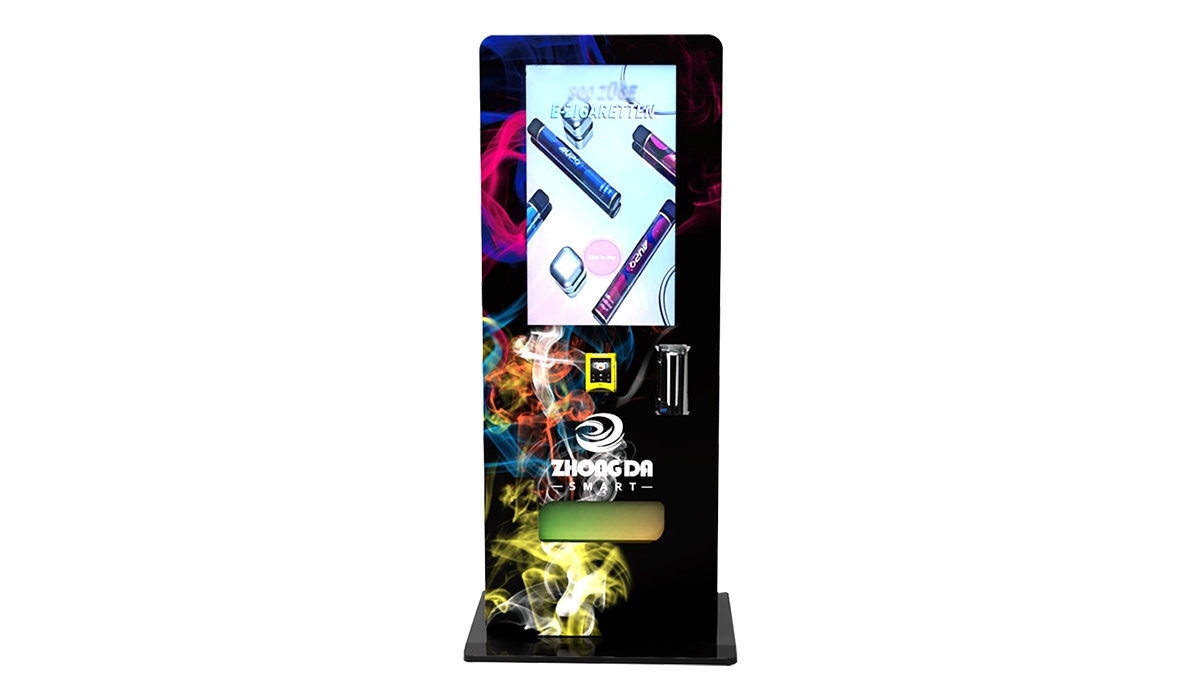
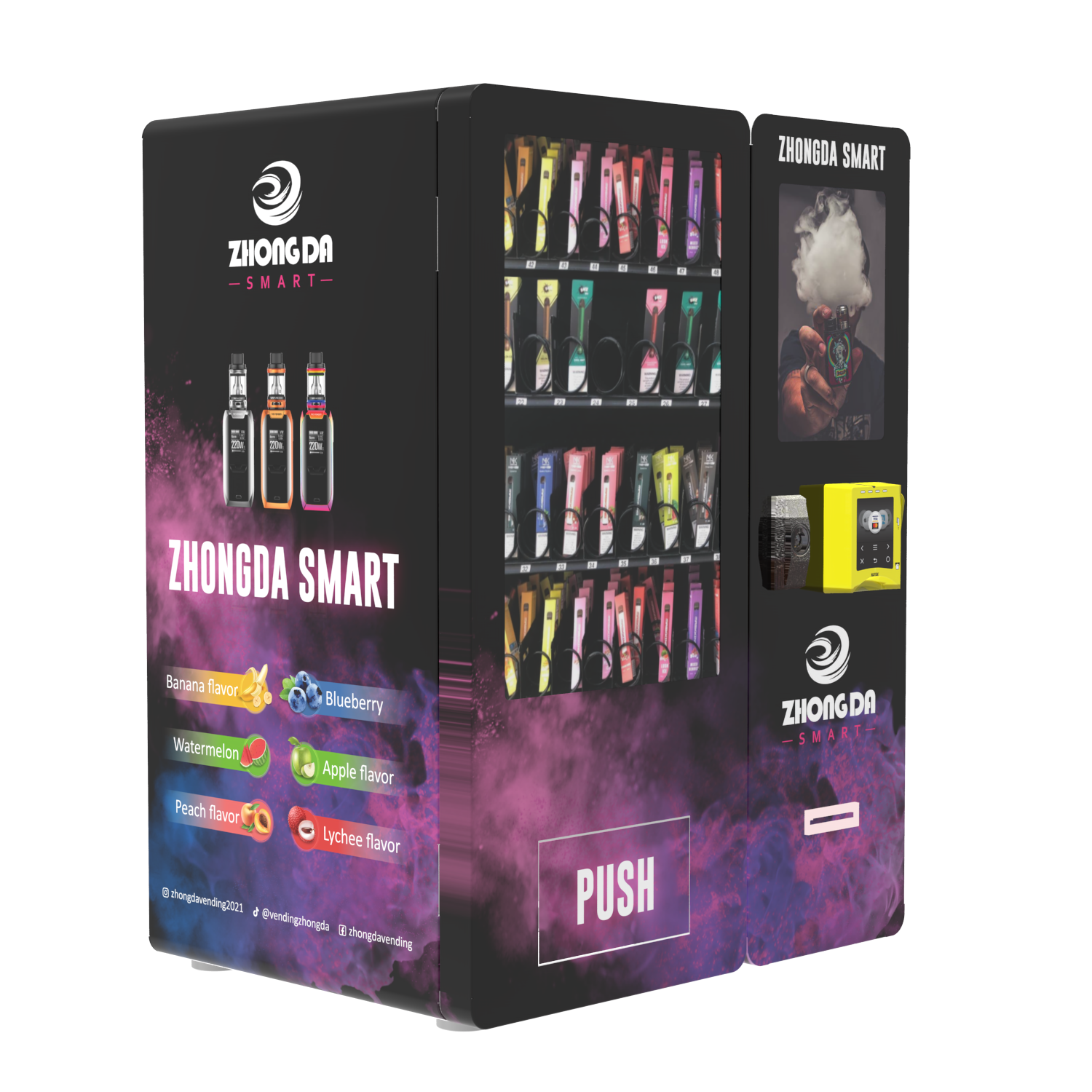
Zhongda Smart's vape vending machine collection provides a useful starting point for comparing equipment formats and customization options.
Compact and Freestanding Machines Serve Different Needs
Machine size should follow the verified operating requirements, not the desire to purchase the largest available display.
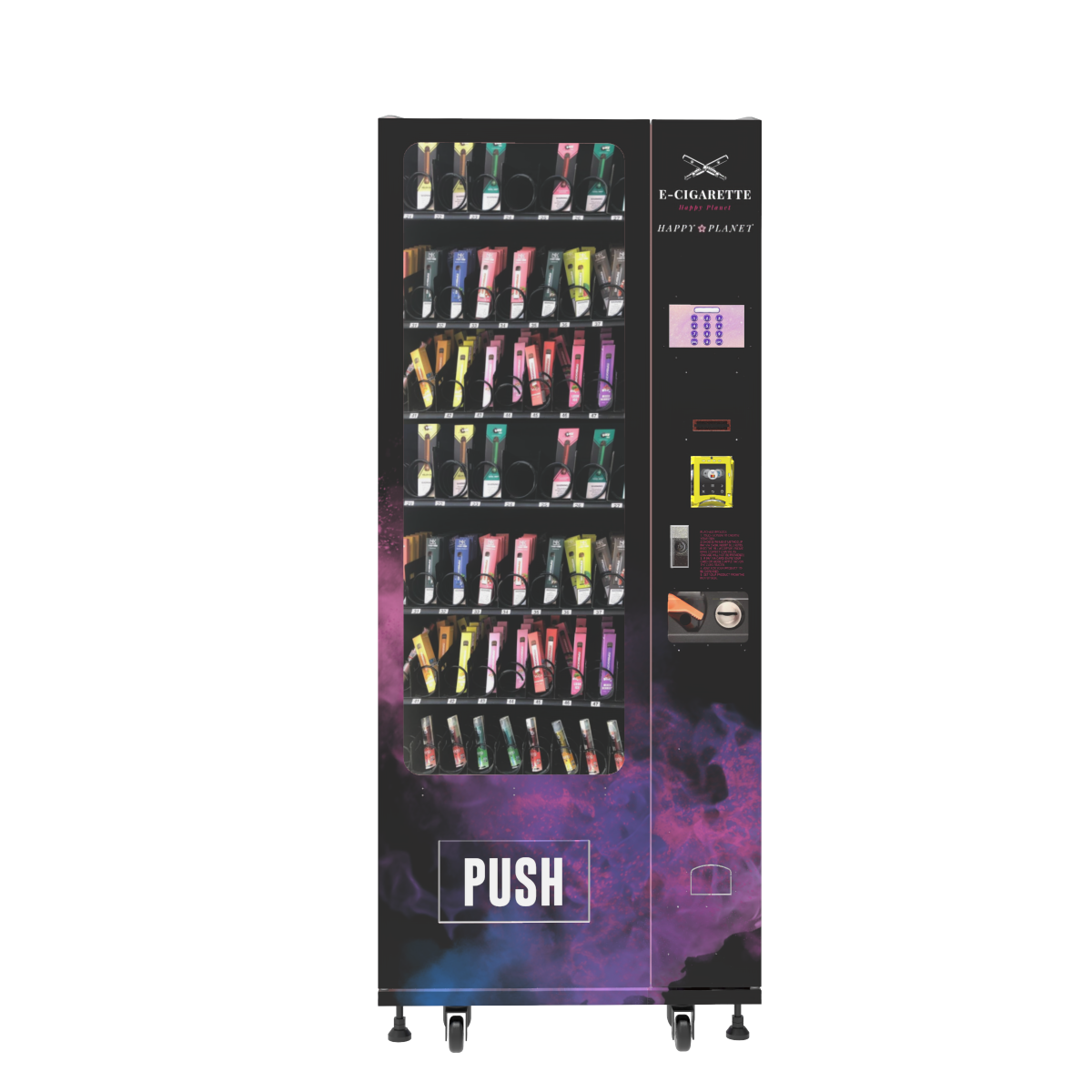
A compact machine can be appropriate when available space is limited and the product assortment is relatively small. A larger cabinet becomes more useful when the operator needs additional capacity, a larger display, or more separation between product channels.
Neither configuration is automatically more profitable.
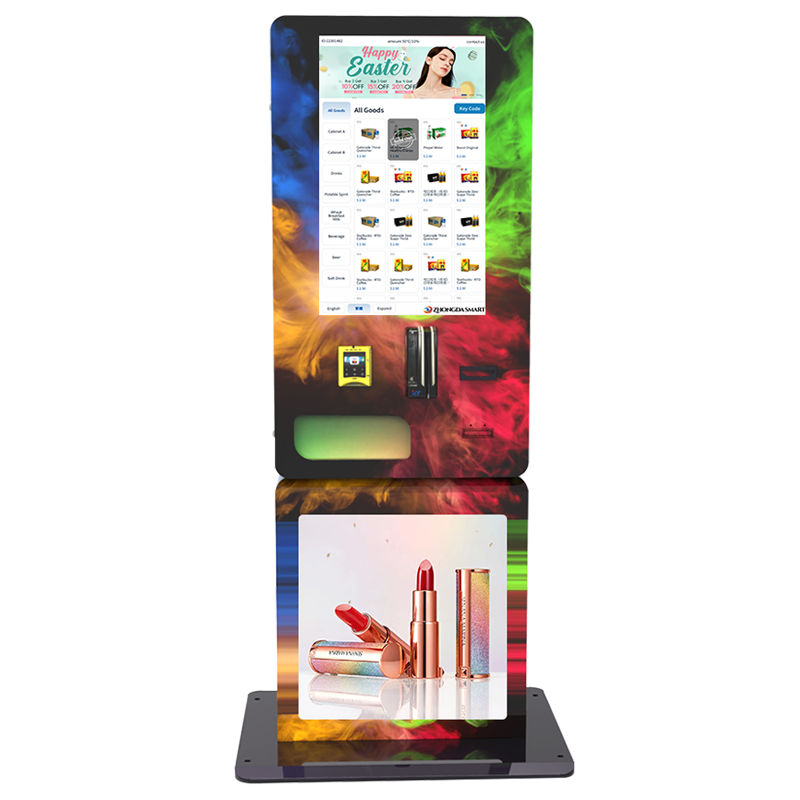
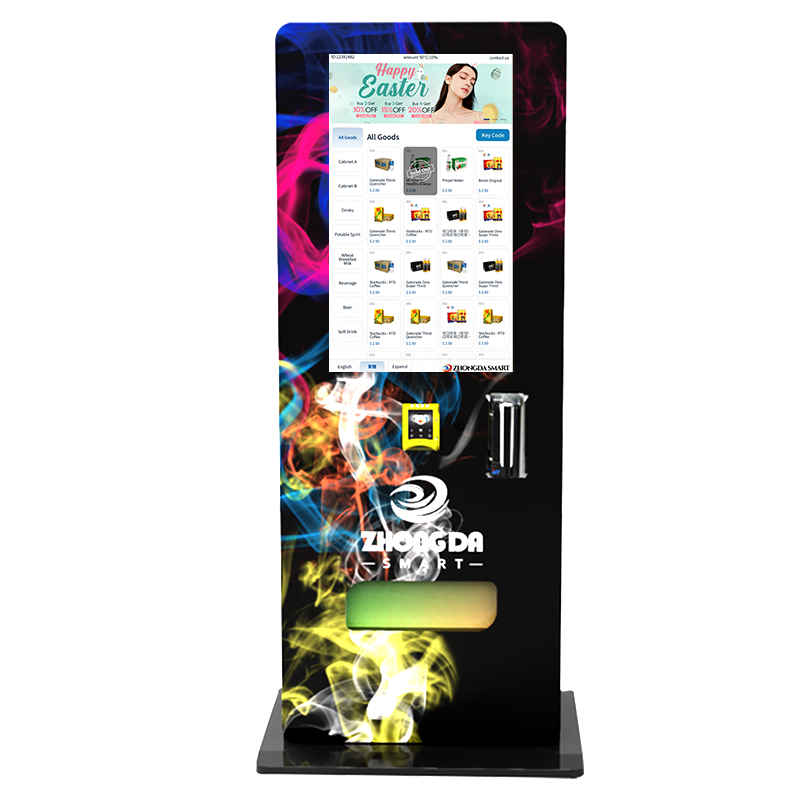
For a business examining a compact touchscreen configuration, the Zhongda Smart 10.1-inch touchscreen vending machine offers an example of a system designed around indoor self-service operation, age-verification readiness, remote monitoring support, and custom branding.
I would request final cabinet dimensions, loaded weight, electrical requirements, lane capacity, and included payment hardware before using any catalog dimensions for installation planning.
Wall-Mounted Machines Require Their Own Installation Review
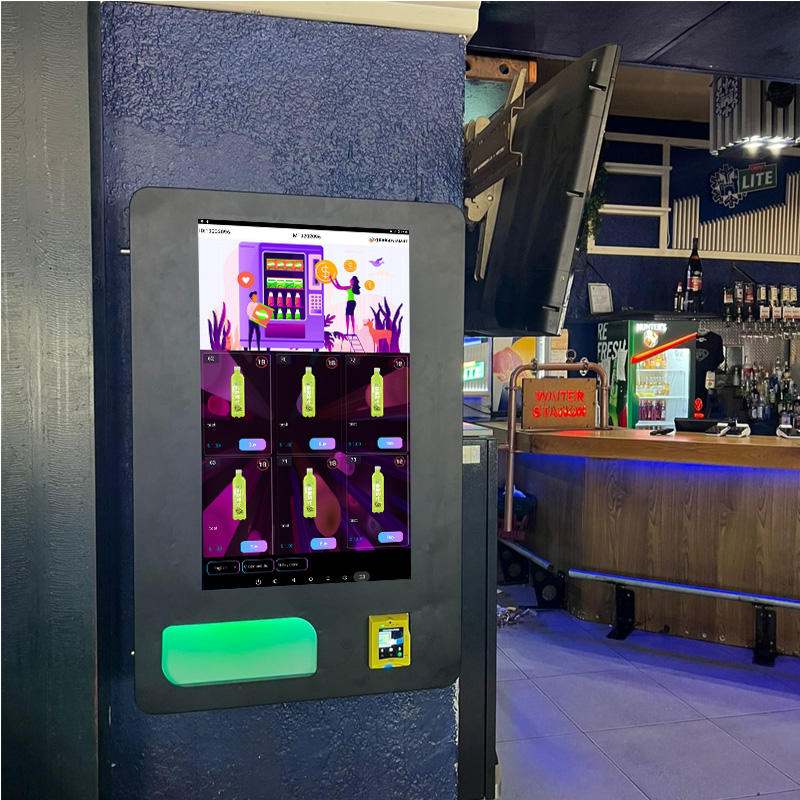
Wall-mounted equipment may help conserve floor space, but mounting introduces structural considerations that freestanding cabinets do not have in the same form.
Operators need to confirm the loaded machine weight, wall construction, mounting method, service clearance, wiring route, and access for replenishment.

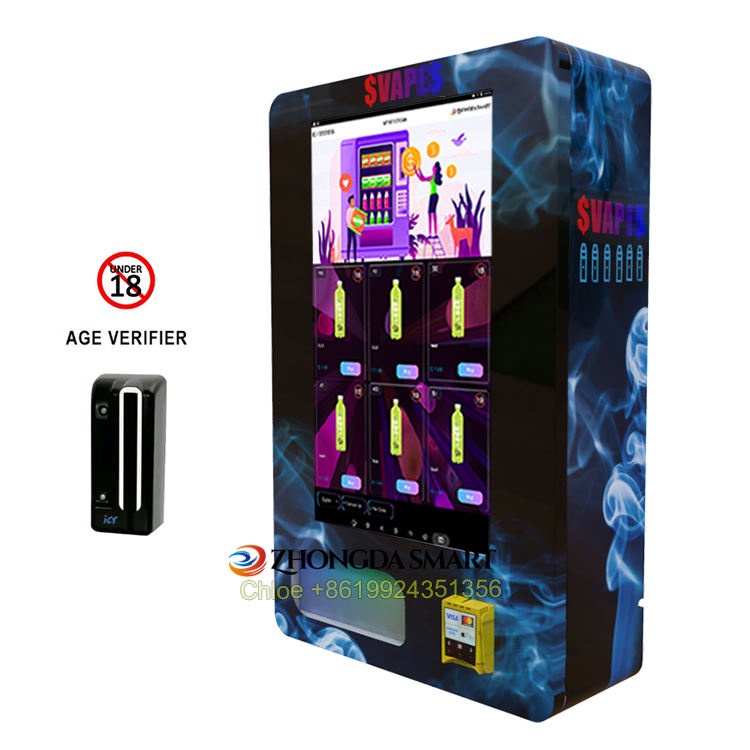
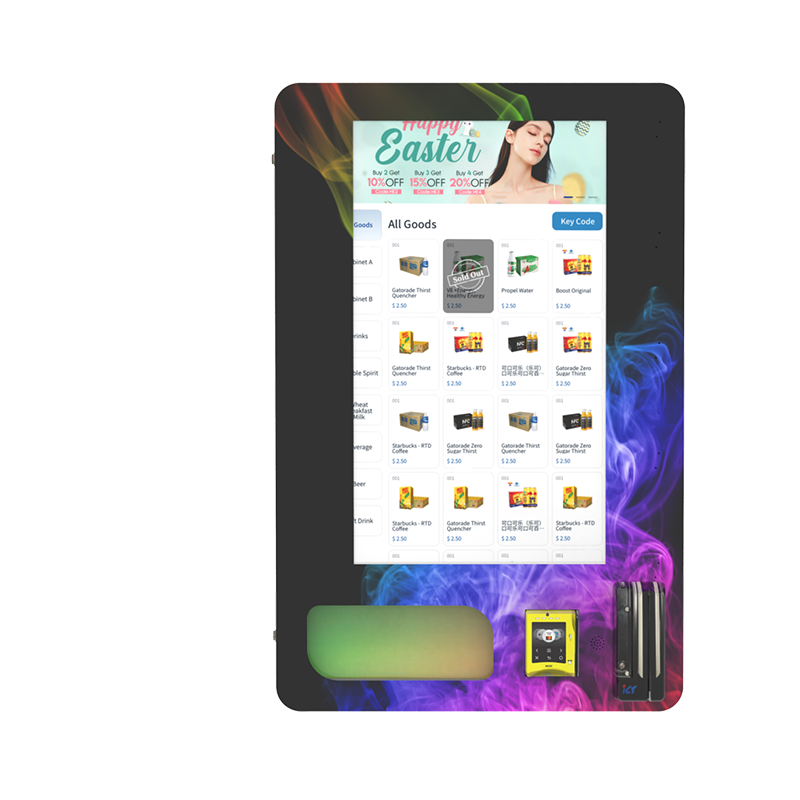
The wall-mounted e-cigarette vending machine is one option for examining compact equipment layouts.
Its suitability still depends on the products being dispensed, the actual installation environment, and the applicable legal requirements.
Why Product Packaging Matters More Than Brand Recognition in Automated Retail
A vending machine does not handle a brand name. It handles a physical package.
That distinction sounds obvious, but it affects nearly every mechanical choice in an automated retail system.
A narrow carton may sit cleanly in a spiral channel, while a wider package may require different spacing. A lightweight box can behave differently from a heavier rigid package. An irregularly shaped item may tilt or rotate during dispensing.
The equipment manufacturer therefore needs the physical product specifications, not only a list of brand names.
What Should Be Measured Before Channel Configuration?
Package width: The widest point of the retail package.
Package height: The dimension affecting shelf clearance.
Package depth: The dimension affecting lane loading and movement.
Unit weight: The packaged weight relevant to dispensing behavior.
Package rigidity: Whether the carton maintains its shape under normal handling.
Center of mass: Whether the item tends to tip during release.
Surface characteristics: Whether the packaging is slippery, flexible, or prone to catching.
Label placement: Whether the displayed product can be identified clearly.
Measurements should come from final retail packaging rather than prototypes or marketing renderings.
I would also require dispensing tests using representative packaged products before approving a custom channel layout.
Why One Channel Design May Not Fit Every Vape Product
A cartridge multipack, a refill bottle, and a complete rechargeable device can differ considerably in shape and handling requirements.
Even products from the same manufacturer may require different channels when their retail packaging changes.
For a mixed assortment, the cabinet layout needs to account for those differences without creating unnecessarily complicated maintenance procedures.
Adjustable spirals, product dividers, suitable shelf clearances, and accessible dispensing mechanisms can help accommodate different packages. The correct solution depends on the selected machine and the products involved.
A practical acceptance test should verify that products release consistently, remain undamaged, and reach the collection area without obstruction.
For operators selling only legally authorized products, this process should begin after the eligible SKU list has been finalized. There is little value in engineering an elaborate cabinet around inventory that cannot legally be sold.
What Does a Vape Vending Machine Cost in 2026?
Machine pricing varies with cabinet size, display configuration, dispensing capacity, verification hardware, payment integration, software, and customization.
For an initial equipment budget, Zhongda Smart uses a planning bracket of approximately $3,500 to $14,000 or more for many commercial vape vending configurations. Larger or more specialized custom projects may exceed that range.
These are preliminary planning figures, not guaranteed current selling prices, independent industry averages, or formal quotations.
The final equipment price needs to be established against a defined configuration.
What Should Be Included in a Cost Review?
| Cost Category | What Needs Confirmation | Potential Budget Risk |
|---|---|---|
| Base cabinet | Cabinet, display, controller, and standard dispensing hardware | Essential components may not all be included in the base price. |
| Verification system | Scanner, software, service integration, and any ongoing fees | Verification-ready hardware may require additional equipment. |
| Payment system | Terminal, processor compatibility, activation, and service fees | Payment support does not always mean the terminal is included. |
| Software | Monitoring features, data access, licensing, and connectivity | Ongoing charges may not be included in the purchase quote. |
| Customization | Branding, cabinet changes, interface, and lane configuration | Design changes can affect production cost. |
| Delivery and installation | Freight, handling, electrical work, mounting, and commissioning | Equipment cost may exclude installation expenses. |
| Initial stock | Only products verified as legally marketable | Unsuitable or unauthorized inventory can create substantial losses. |
| Service preparation | Spare parts, training, documentation, and support arrangements | Unplanned repairs may interrupt operation. |
The most useful quotation separates one-time hardware costs from recurring operating expenses.
A lower initial cabinet price may be offset by additional integration work. Conversely, paying for advanced features that the operator does not need can increase capital exposure without improving the business model.
For a more detailed breakdown of equipment-related expenses, see Zhongda Smart's 2026 vape vending machine cost guide.
Can a Vape Vending Machine Be Profitable?
A vending machine can generate operating profit when lawful product sales produce enough contribution to cover fixed costs and recover the initial investment.
The machine itself does not create demand. Profitability depends on permitted placement, product availability, transaction volume, purchasing costs, fees, and equipment reliability.
Any projection should begin with the contribution remaining after product and transaction-related expenses.
Contribution per transaction = Selling price − Product cost − Payment cost − Variable operating costs.
Monthly operating contribution = Contribution per transaction × Monthly completed transactions.
Estimated monthly operating profit = Monthly operating contribution − Monthly fixed operating expenses.
Simple payback can then be estimated by dividing initial investment by positive monthly operating profit. That calculation is a planning shortcut, not a substitute for a complete cash-flow forecast.
Illustrative Payback Sensitivity
The following table is a mathematical example only. Its assumptions are deliberately specified and are not actual Zhongda Smart customer results, observed sales volumes, industry averages, or promised returns.
Assume a hypothetical machine investment of $10,000, a contribution of $4 per completed transaction, $400 in monthly fixed operating expenses, and a 30-day planning month.
| Hypothetical Scenario | Transactions per Day | Monthly Contribution | Monthly Profit After Fixed Costs | Simple Payback |
|---|---|---|---|---|
| Low-volume assumption | 8 | $960 | $560 | 17.9 months |
| Middle assumption | 12 | $1,440 | $1,040 | 9.6 months |
| Higher-volume assumption | 16 | $1,920 | $1,520 | 6.6 months |
These outputs follow directly from the stated assumptions. They do not predict what a real vending installation will achieve.
The model excludes financing, income taxes, depreciation, capital replacements, unexpected downtime, and changes in product costs. If the actual contribution per transaction is lower, or operating expenses are higher, the payback calculation changes.
More importantly, the entire model assumes the machine is legally permitted to operate and that every stocked item can lawfully be sold.
I would evaluate legal feasibility before calculating a return on investment. A project that cannot meet those conditions does not become commercially sound because its spreadsheet shows an attractive payback period.
What Should Operators Monitor After Installation?
Once a legally permitted vending installation is operating, performance should be judged through actual transaction and equipment records rather than assumptions made during purchasing.
The most useful operating data connects product movement with machine condition.
Operational Measurements Worth Keeping
| Metric | How to Calculate or Record It | Why It Matters |
|---|---|---|
| Completed transactions | Count successfully completed purchases | Measures actual sales activity |
| Gross sales | Sum completed transaction revenue | Establishes sales before expenses |
| Product contribution | Revenue minus direct product and variable costs | Shows how much remains to cover fixed expenses |
| Dispensing failures | Record unsuccessful dispensing events | Identifies mechanical or packaging problems |
| Payment failures | Record failed or interrupted payment attempts | Supports payment-system troubleshooting |
| Stock availability | Compare available stock with the approved product assortment | Helps identify stockouts and replenishment needs |
| Machine availability | Record operating time and interruptions | Supports maintenance decisions |
| Compliance exceptions | Record and investigate relevant verification or operational exceptions | Supports controlled retail procedures |
Monitoring systems only become useful when the records are consistent. A machine reporting a successful payment but an unsuccessful dispense needs an operating procedure for handling the transaction and investigating the cause.
Likewise, inventory records should not simply assume that every commanded dispense was successful.
For regulated products, the operator also needs appropriate controls for disabling or removing an affected SKU if its legal status changes.
Maintenance Should Be Based on Equipment and Usage
There is no responsible universal maintenance interval for every vending machine configuration.
Service needs depend on the dispensing mechanism, cabinet environment, payment equipment, usage, and the manufacturer's maintenance instructions.
A sensible maintenance program covers cabinet cleanliness, door locks, electrical connections, dispensing components, payment-terminal function, and any verification equipment included in the installation.
Operators should follow the approved service documentation and have an escalation procedure for faults that cannot be resolved safely by routine staff.
For multiple machines, standardized equipment configurations and spare-parts inventories can make servicing more manageable.
A Practical Equipment-Selection Example
Consider a hypothetical licensed operator evaluating one age-restricted retail installation with a limited assortment of legally authorized, packaged products.
This is a configuration exercise, not a report of an actual customer installation.
The operator has limited installation space, requires cashless payment, and wants stock visibility without manually inspecting the cabinet for every inventory check.
The first decision is whether the facility qualifies for the intended vending activity. If it does not, the project stops or changes. Adding a scanner does not remove the facility restriction.
Once eligibility is established, the next decision is the product assortment. The operator documents the exact SKUs, authorization records, package dimensions, and planned inventory quantities.
A compact touchscreen configuration becomes a reasonable option if the assortment fits within the available channels. A larger cabinet would need a demonstrated capacity or operating requirement to justify the additional space and capital.
At this stage, I would recommend requesting a Zhongda Smart configuration review covering channel dimensions, payment integration, optional verification components, remote inventory functions, and service access.
Before ordering, the operator should examine a written configuration sheet and require appropriate dispensing and system-acceptance tests.
The example illustrates an important purchasing principle: the correct vending machine is selected after the permitted operating model and product requirements are understood, not before.
Common Mistakes When Evaluating American-Made Vapes
Several errors repeatedly arise when manufacturing origin, brand identity, and retail operations are treated as one subject.
Mistake 1: Assuming an American Brand Makes Every Product Domestically
A company can be headquartered domestically while using imported hardware or contract manufacturing arrangements.
Evaluate the exact product rather than the company's mailing address or trademark.
Mistake 2: Treating Domestic E-Liquid as Proof of Domestic Device Manufacturing
E-liquid and electronics are separate manufacturing categories.
Origin statements covering liquid production should remain limited to that activity unless broader evidence is available.
Mistake 3: Confusing FDA Authorization With Manufacturing Origin
Marketing authorization does not establish where a product was manufactured.
Both questions require separate checks.
Mistake 4: Assuming a Product on Retail Shelves Must Be Authorized
Retail availability is not regulatory proof.
Use current product-specific authorization records and examine any additional restrictions.
Mistake 5: Purchasing Vending Equipment Before Confirming Eligible Inventory
A machine designed around an unsuitable product assortment may require costly changes or may be unusable for the intended business.
Finalize legal product eligibility before ordering custom dispensing channels.
Mistake 6: Believing Age Verification Overrides Facility Restrictions
Automated verification and legal facility eligibility address different requirements.
Both must be assessed before nicotine vending is considered.
Mistake 7: Comparing Machine Prices Without Comparing Configurations
A basic cabinet quote and a fully integrated vending configuration are not equivalent.
Compare the hardware, software, payment equipment, verification functions, support obligations, and delivery scope included in each quotation.
Frequently Asked Questions
1. Are There Any Vapes Completely Made in the USA?
Some specialty vaporizer manufacturers have a history of domestic hardware production, and certain e-liquid brands manufacture their liquids domestically. However, a claim that a complete electronic vape is entirely American-made requires evidence covering the finished product and its significant components.
Billet Box Vapor is a relevant specialty-hardware example. Halo and Naked 100 are more directly associated with domestic e-liquid production.
The safest approach is to examine the individual model and current manufacturing documentation instead of assuming every product under a brand shares the same origin.
2. Which Vape Juice Brands Are Made in the USA?
Halo and Naked 100 are two recognizable examples associated with domestic e-liquid manufacturing.
That description concerns manufacturing origin, not the regulatory status of every formula or nicotine strength.
For a specific bottle, verify the manufacturer, production batch, formulation, and authorization status. A brand's domestic manufacturing history does not establish that every current product variation can lawfully be marketed.
3. Is JUUL Made in the USA?
JUUL has identified domestic manufacturing activity involving e-liquid production and pod filling and assembly, including work associated with JUUL2.
Those operations should not be interpreted as proof that every component of the complete electronic device is domestically manufactured.
JUUL2 received FDA marketing authorization for specified products in August 2026. The applicable authorization and the manufacturing origin of the relevant components should be reviewed independently.
4. Are Vuse Vapes American-Made?
Vuse has domestic e-liquid manufacturing activity associated with its product history, but that does not establish that every Vuse device or cartridge is made domestically.
The power unit, cartridge, liquid, and finished kit may have different manufacturing origins.
Examine the packaging and documentation for the exact Vuse model rather than applying a single manufacturing description to the brand's entire range.
5. Are American-Made Vapes Safer Than Imported Vapes?
Manufacturing location alone does not establish product safety.
Ingredient controls, manufacturing consistency, battery protection, quality testing, and regulatory review are more informative than an origin label by itself.
Nicotine is addictive, and vaping products are not risk-free. FDA marketing authorization does not mean a product is harmless or FDA approved.
6. Can I Sell American-Made Vapes in a Vending Machine?
Only when the specific products and the complete vending operation meet the applicable legal requirements.
Domestic manufacturing does not replace product authorization, retailer licensing, age restrictions, or facility eligibility rules.
FDA rules prohibit tobacco vending in facilities where people younger than 21 are present or permitted to enter at any time. Installing an age-verification device does not override that restriction.
7. What Kind of Vape Vending Machine Should a Retailer Choose?
The appropriate configuration depends on the legally permitted location, eligible inventory, product dimensions, capacity requirements, payment system, and service arrangements.
For a compact assortment, I would examine a smaller touchscreen configuration before considering a larger cabinet. For an assortment requiring additional capacity or specialized channels, a custom or higher-capacity machine may be more appropriate.
Zhongda Smart offers configurable vending equipment with options for cashless payments, age-verification integration, remote monitoring, and custom product channels. Final compatibility should be established through a project-specific specification and testing process.
8. How Can I Confirm That a Vape Supplier Is Legitimate?
Begin by identifying the actual manufacturer and the exact product being offered.
Request relevant invoices, manufacturer information, product identifiers, batch records, authenticity documentation, and evidence of the product's legal marketing status.
Compare the information across the product, packaging, and regulatory records. Be cautious when a supplier relies only on patriotic branding, broad compliance statements, or a pending regulatory application.
For commercial purchases, the legal status and documentation should be resolved before committing to significant inventory.
Final Assessment: Which American-Made Vape Brands Matter Most in 2026?
The American vaping industry includes genuine domestic manufacturing activity, but the strongest evidence is usually product-specific rather than brand-wide.
Halo and Naked 100 are relevant names when examining domestically produced e-liquid. Billet Box Vapor represents a different manufacturing tradition focused on specialty hardware. JUUL, Vuse, and NJOY demonstrate why liquid manufacturing, cartridge production, and electronic-device origin must be examined separately.
For buyers comparing what vapes are made in the USA, I would prioritize documented manufacturing activity over broad claims of domestic identity. For commercial retailers, I would put product authorization and legal eligibility ahead of origin-based marketing claims.
The same discipline applies to vending equipment. Zhongda Smart can help operators evaluate customized machine configurations, but the legal suitability of the products and installation must be established independently.
A defensible purchasing decision is built around three separate questions: what was manufactured, whether the product may lawfully be sold, and whether the selected retail system can handle it reliably. Each deserves its own answer.
Editorial Perspective and Scope
Prepared for Zhongda Smart. Zhongda Smart develops and manufactures configurable self-service vending equipment for commercial operators and distributors, including touchscreen machines, customized dispensing cabinets, payment integrations, and age-verification-ready solutions.
The manufacturing comparisons and equipment-selection recommendations in this article are editorial assessments based on identifiable product information, regulatory materials, and practical vending-system requirements.
Brand inclusion does not indicate a commercial relationship, product endorsement, independent laboratory testing, or verified customer performance. The illustrative financial model is not derived from actual customer sales or operating records.
Reviewed: November 14, 2026.
References and Further Reading
Federal Trade Commission — Complying With the Made in USA Standard.Guidance on unqualified manufacturing-origin claims, qualified claims, assembly statements, and the evidence required to substantiate domestic-origin advertising.FTC manufacturing-origin guidance.
U.S. Food and Drug Administration — Authorized Electronic Nicotine Delivery Systems.Current product-specific authorization information, including the 2026 list of 48 authorized e-cigarette products.FDA authorized e-cigarette list.
U.S. Food and Drug Administration — Selling Tobacco Products in Retail Stores.Retail rules covering minimum purchasing age, identification checks, warnings, and vending-machine restrictions.FDA retail compliance guidance.
Reuters — Vape Makers Turn to Made in America Credentials Amid Tariffs and Crackdown.April 7, 2026. Reporting on the rise of domestic-origin marketing claims, ownership arrangements, and the regulatory status of newly promoted vape brands.Reuters investigation.
JUUL Labs — Statement on FDA Marketing Authorizations for JUUL2.August 2026. Product-specific information about JUUL2 manufacturing activities, domestic e-liquid production, and pod assembly and filling.JUUL2 manufacturing and authorization statement.
Disclaimer
This article is provided for general educational, manufacturing, and commercial planning purposes only. It is not medical, legal, financial, or regulatory advice and does not recommend initiating nicotine use.
Nicotine is addictive. Vaping products are not risk-free, and FDA marketing authorization does not constitute a declaration that a product is safe or FDA approved.
Manufacturing arrangements, product availability, regulatory decisions, and retail restrictions may change. Brand examples are not confirmations that every associated product is currently authorized for sale. Retailers and distributors must verify the exact product's current status, applicable requirements, and any additional restrictions before purchasing, advertising, or selling inventory.
Vending operators are responsible for confirming that their products, facilities, age-verification procedures, licensing, and equipment configurations satisfy all applicable requirements. Age-verification technology alone does not establish legal compliance.
Equipment prices and hypothetical financial calculations are for planning and illustration only. They are not binding quotations, verified operating results, or guarantees of sales, profitability, equipment performance, or investment recovery.