Digital ID verification works by turning an identity credential into data that a system can check before making a decision. Depending on the setup, that may involve reading a driver's license barcode, capturing a document image, comparing data from different parts of the credential, checking selected information against an external source, or comparing the person in front of the camera with the portrait on the ID.
Those steps are often grouped together under the term “ID verification,” but they do different jobs. Reading an ID is not the same as authenticating it. Confirming a date of birth is not the same as proving who is holding the card. And a face match does not automatically mean that liveness has been checked.
Short answer: digital ID verification usually combines credential capture, data extraction, validation rules and, where required, additional identity checks. The final system returns a result—such as verified, rejected or unable to verify—to the application using it.
What Actually Happens During a Digital ID Check?
The exact sequence depends on the credential and the verification provider, but most systems start by capturing information from the ID. With a physical driver's license or identification card, that may mean reading a machine-readable barcode and taking an image of the document. Passports may use different machine-readable formats, while supported digital credentials can follow a different verification path entirely.
After capture, the software extracts the fields it needs. For an age-gated transaction, that may be only the date of birth, expiration information and document type. An identity onboarding service may require additional fields.
The system can then perform several different checks. Some happen locally on the device. Others may involve a remote verification service. What matters is knowing what each check actually proves.
| Verification Layer | What It Can Check | What It Does Not Prove by Itself |
|---|---|---|
| Barcode or machine-readable data | Encoded information such as date of birth, document number or expiration data when supported | That the physical document is genuine |
| Document image analysis | Visual consistency and supported document features | That the presenter is the document holder |
| Issuing-source data verification | Whether submitted document attributes match participating issuing records | That the card itself has not been copied or altered |
| Face comparison | Whether two facial images appear to represent the same person | That a live person is present unless liveness is separately evaluated |
| Age rules | Whether the date of birth meets a configured age threshold | Whether the document or person is authentic |
This separation is useful when comparing products. Two systems may both be advertised as “digital ID verification,” while one simply reads a barcode and another combines document analysis, an issuing-source check and facial comparison.
Reading an ID Is Not the Same as Authenticating It
This is probably the most common source of confusion around ID scanners.
Many U.S. driver's licenses and identification cards contain machine-readable data, commonly in a PDF417 barcode. A compatible reader can decode that data and use fields such as date of birth in an automated age check.
If the barcode is readable, however, that only tells the system that it successfully decoded the information presented to it. It does not automatically establish that the physical card is authentic.
More capable document-verification systems may compare information from the barcode with information visible on the card. Depending on the scanner, document type and verification software, the system may also evaluate supported optical or security-related characteristics.
Capabilities such as UV illumination, infrared imaging or other document-security checks should therefore be treated as hardware-specific features, not as something every ID scanner automatically performs.
What Happens to the Date of Birth?
For age verification, the useful output is usually not the customer's birth year. It is whether the customer has reached the required age on the date of the transaction.
A well-designed system compares the complete birth date with the applicable threshold rather than simply subtracting one year from another. That avoids obvious errors around birthdays that have not yet occurred.
Document expiration can also be evaluated where it is relevant to the transaction rules. Whether an expired credential can be accepted should not be hard-coded based on a general assumption; it needs to follow the requirements that apply to the actual use case and jurisdiction.
The same principle applies to the minimum age itself. A system used in several markets should make the rule configurable rather than assuming that one age threshold applies everywhere.
Can the Data Be Checked Against an Issuing Authority?
Sometimes, but this needs more precise language than saying a scanner “checks a national database.”
In the United States, for example, the American Association of Motor Vehicle Administrators operates the Driver's License Data Verification service, or DLDV. Authorized commercial and government users can submit selected driver's-license or ID attributes for comparison with data made available by participating issuing jurisdictions.
The distinction is important: a data match is not the same as physical-document authentication. A service can confirm that submitted attributes correspond with issuing-agency records without proving that the card presented to the machine is genuine or that the person presenting it owns the credential.
Availability also depends on the verification provider, authorization, participating jurisdictions and the intended use. Buyers should therefore ask exactly which external verification service is being used rather than relying on phrases such as “real-time database check.”
Where Face Matching Fits In
Some digital ID verification systems add a camera after the document has been read. A live facial image is compared with the portrait associated with the credential, producing a similarity result.
That can help answer a different question from document scanning: does the person in front of the machine appear to be the person shown on the ID?
It is still not an absolute test. NIST's ongoing evaluations of face-recognition technology show that performance differs among algorithms and operating conditions. Image quality matters, particularly when lighting, exposure, pose or camera position is poor.
For unattended equipment, the capture environment is therefore part of the verification system. Camera height, lighting and the position of the customer can matter as much as the nominal camera resolution.
Liveness should also be discussed separately. A face-comparison feature does not necessarily determine whether it is viewing a live person rather than a photograph, screen or other presentation. If presentation-attack detection is important to a project, the supplier should state whether it is included and how it is used.
Local Verification vs. Online Verification
Digital ID verification does not always require an internet connection. Basic data extraction, date calculations and some document or face-processing functions can run locally, depending on the hardware and software architecture.
Online services become useful when a system needs external data verification, centralized policy management, specialized fraud checks or another cloud-based service.
That creates an important design decision for unattended machines: what happens when the connection disappears?
If a required external check is unavailable, the system should have a defined response. In some applications that may mean the transaction cannot continue. In others, an approved local verification path may be available. What it should not do is silently skip a required verification step simply to keep transactions moving.
Operators should know which checks are local, which require the network, what information is transmitted and what the machine does during a service outage.
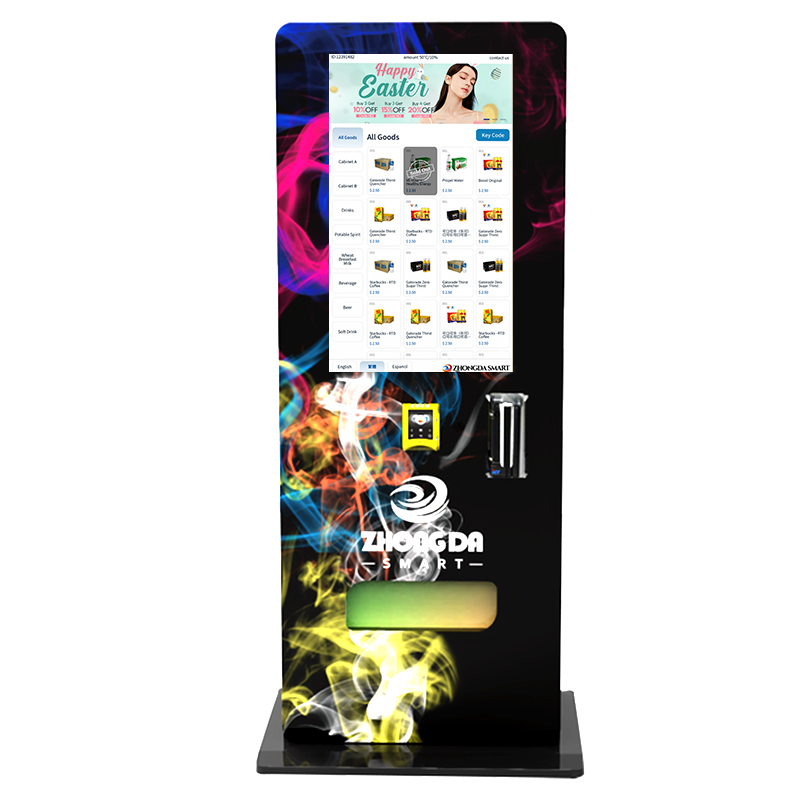
How Digital ID Verification Works in a Vending Machine
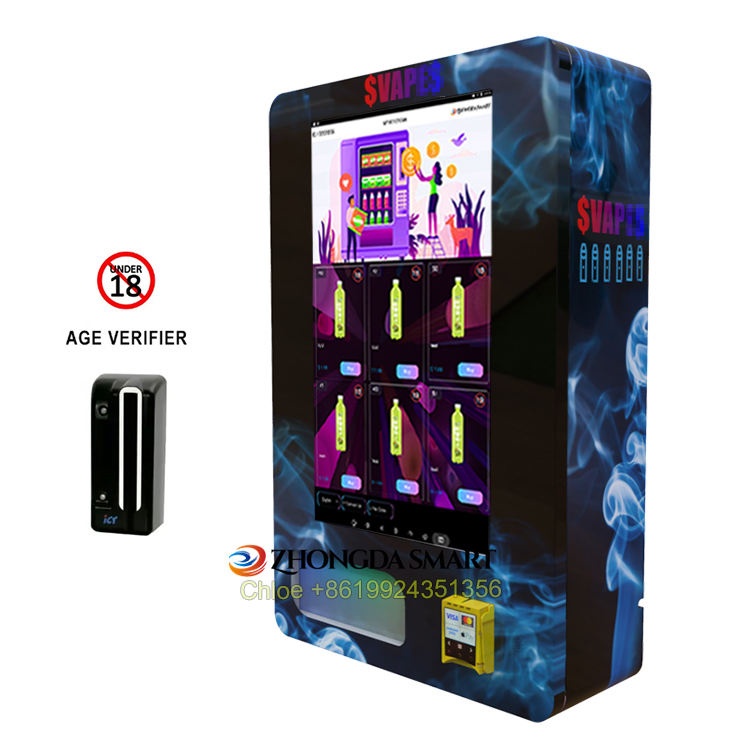
In an age-restricted vending machine, the verification module usually sits between the customer interface and the authorization to dispense a restricted product.
The customer presents a supported credential. The reader captures the required information, the verification software runs the configured checks, and the age rule is applied. If additional identity verification is part of the configuration, those checks happen before the controller receives authorization to continue.
The final result needs to reach the vending controller reliably. That integration is easy to underestimate. A sophisticated scanner does not provide much protection if a communication failure allows the controller to release a restricted product anyway.
For an age-gated transaction, a safer control design keeps the restricted dispensing path disabled until the required verification process returns a valid approval.
It is equally important to handle ordinary failures properly. A document may be scratched. A barcode may be difficult to capture. Lighting may produce glare. A customer may move during a facial capture. Those events should produce a clear retry or service message rather than an unexplained rejection.
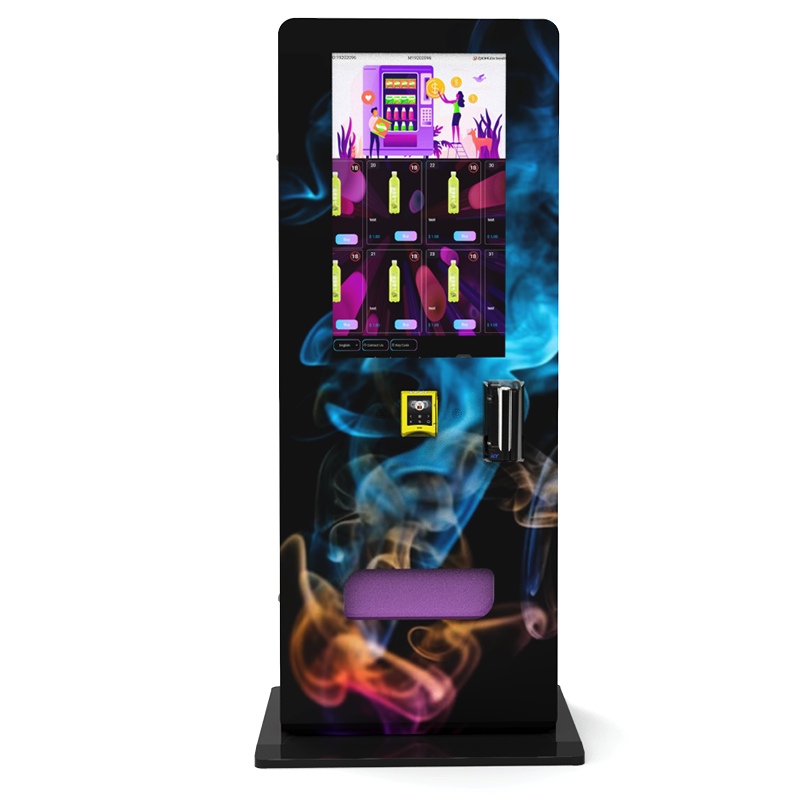
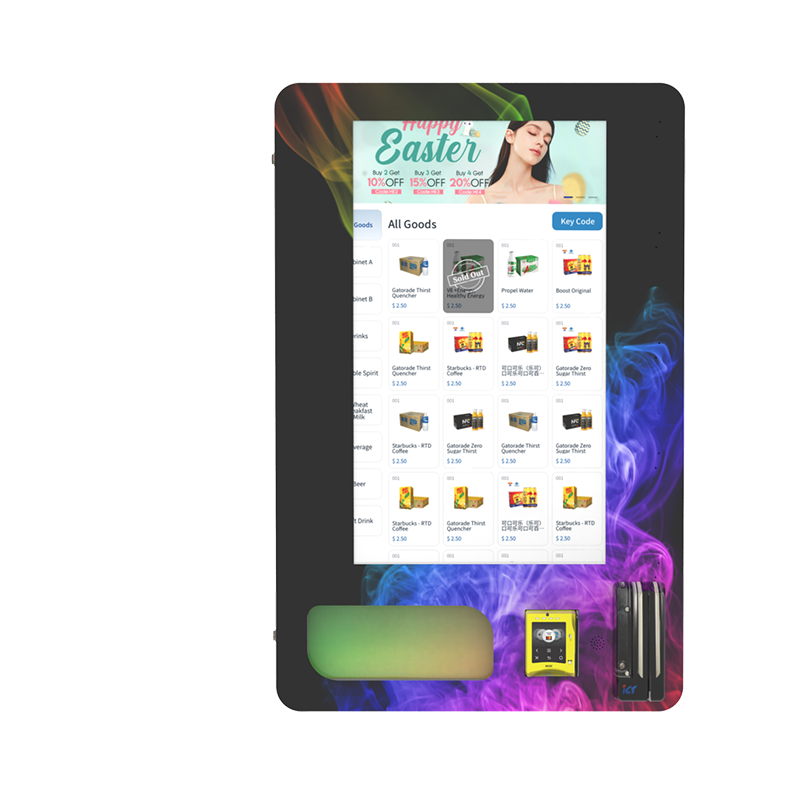
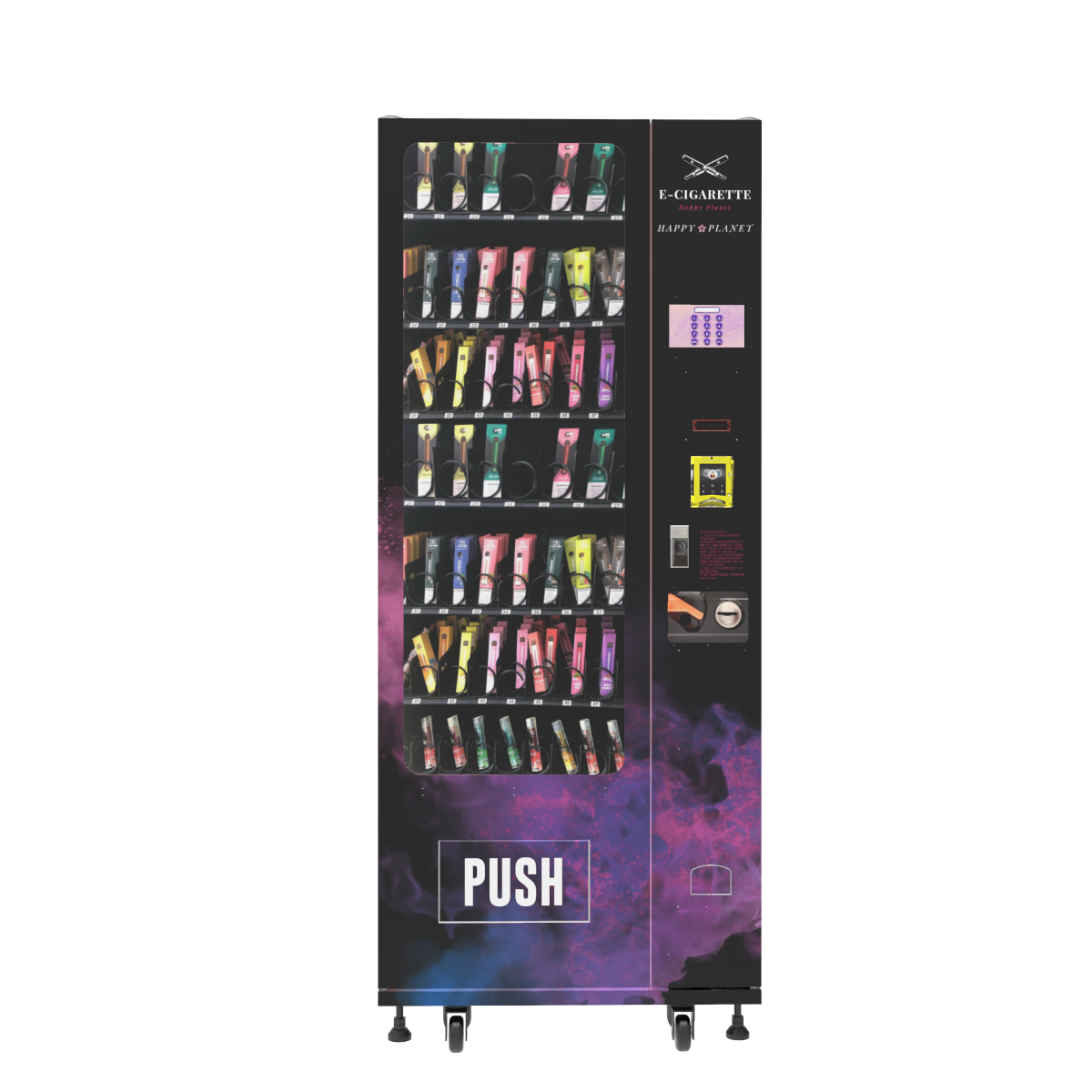
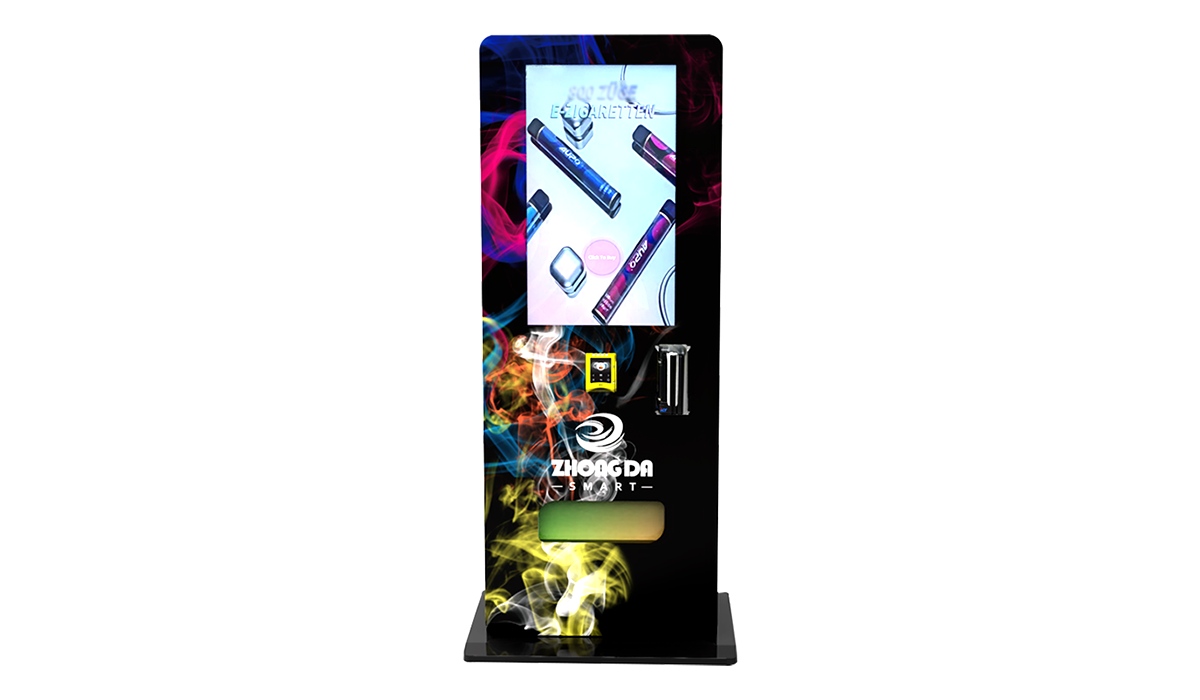
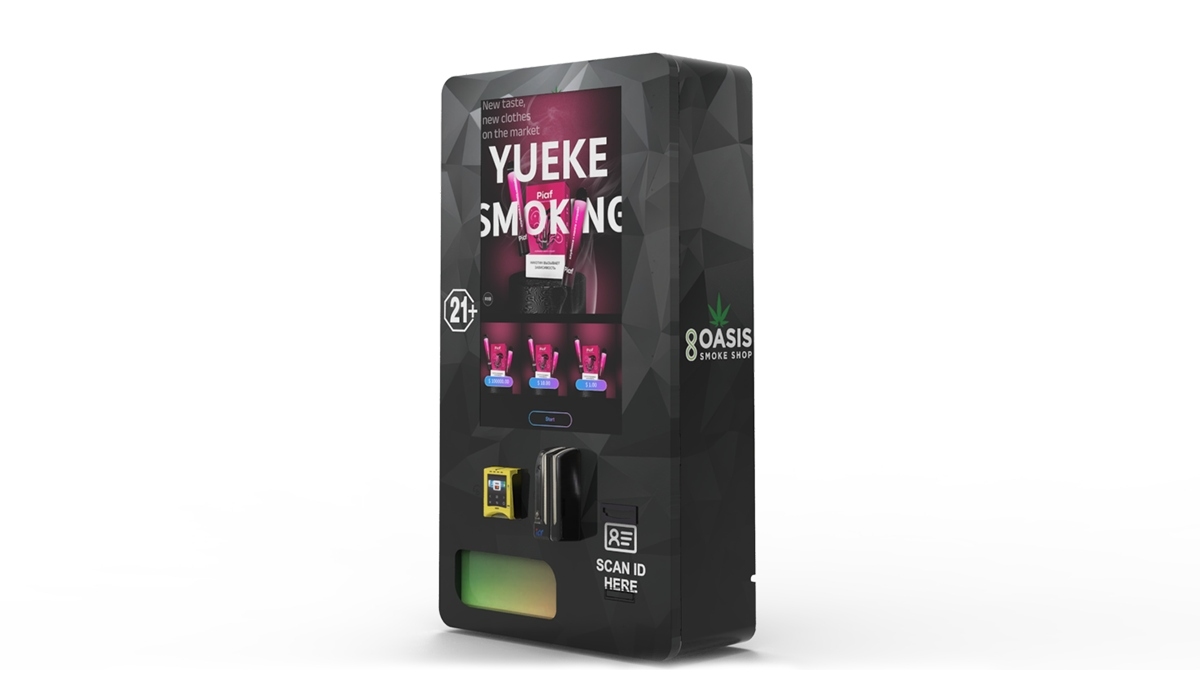
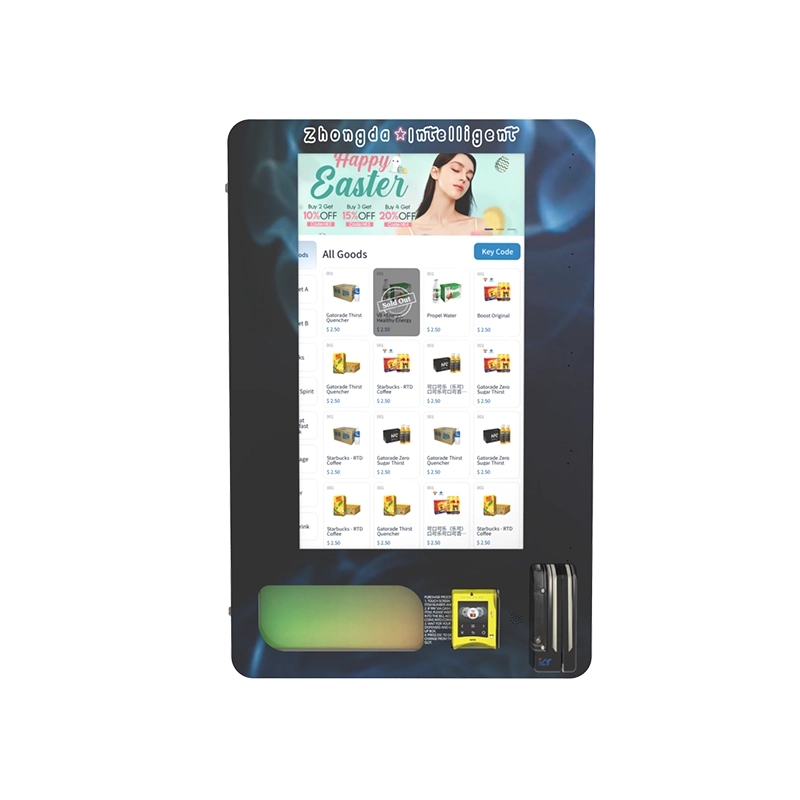
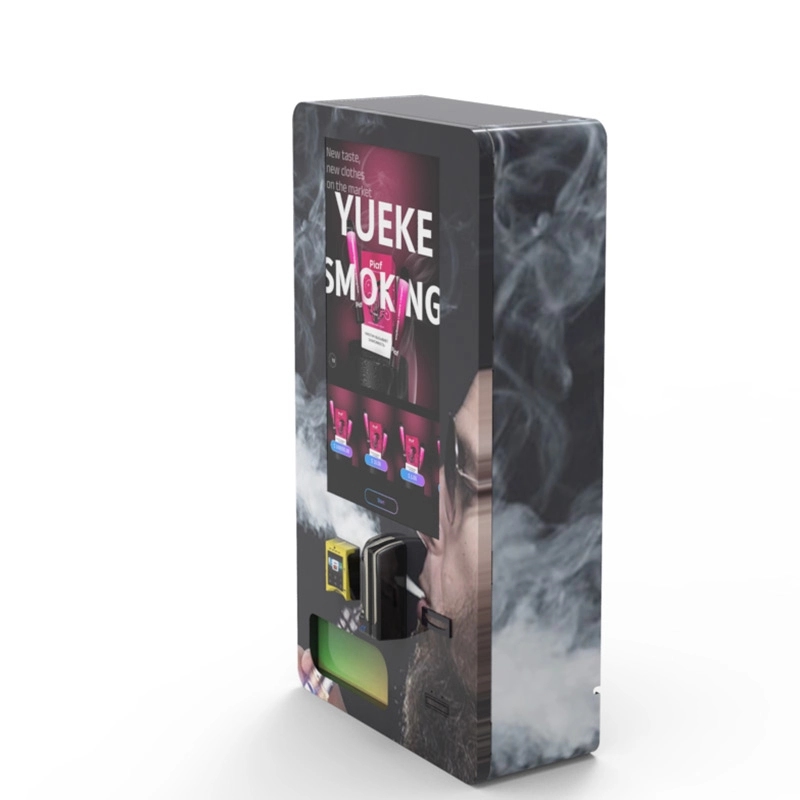
Operators looking at complete machine configurations can see how these components are packaged in an age verification vending machine or an ID scan vending machine. The verification configuration still needs to be selected for the documents, products and regulations that apply at the actual installation site.
The Scanner Environment Matters More Than It Looks
ID verification devices are often tested on a bench under clean, predictable lighting. A vending location is different.
Bars and entertainment venues may have colored or low lighting. A reflective card can catch overhead lights. Scanner windows collect dust and fingerprints. Customers present cards at different angles and may move them before capture finishes.
These conditions can affect both document images and facial images. That is why the complete machine should be tested in an environment that resembles the planned installation rather than judging performance only from the scanner's specification sheet.
A useful acceptance test includes the document types expected at the venue, realistic lighting, repeated scans, ordinary worn cards, network interruption and communication with the vending controller.
That produces more useful information than a single generic claim such as “99% accurate.” Accuracy numbers mean little unless the test set, environment, metric and failure definition are also known.
Digital ID Verification and Customer Privacy
An ID can contain considerably more information than an age-gated transaction actually needs. That makes data handling a design decision, not just a privacy-policy issue.
A system should first establish what information is necessary for the intended purpose. If the application only needs to know whether a person meets an age threshold, there may be no operational reason to keep a full document image, home address or complete identification number after the required check is finished.
Data minimization can reduce exposure, but it should not be described as automatic legal compliance.
Under the EU GDPR, organisations must consider principles including lawfulness, transparency, purpose limitation, data minimisation, storage limitation and security. Biometric data used for the purpose of uniquely identifying a person can receive additional protection as a special category of personal data.
In the United States, privacy and biometric requirements can vary by state and by the way the technology is used. The Federal Trade Commission has also warned businesses about privacy, security, accuracy and deceptive claims involving biometric technologies.
Before deployment, an operator should be able to get clear answers to a few practical questions: what is captured, what leaves the machine, what is retained, why it is retained, who can access it and when it is deleted.
For U.S. Tobacco and Vape Sales, Verification Hardware Is Not the Whole Rule
Important: adding digital ID verification does not automatically make a tobacco or e-cigarette vending-machine installation lawful in the United States.
Current U.S. FDA rules prohibit retailers from selling tobacco products, including e-cigarettes, to anyone younger than 21. Retailers must also check photographic identification for customers under 30 who attempt to purchase tobacco products.
There is a separate rule for vending machines. Tobacco products may not be sold through a vending machine in a facility where individuals under 21 are present or are permitted to enter at any time.
This means an ID scanner does not turn an otherwise prohibited location into an acceptable tobacco vending location. The machine's location and access conditions still matter.
State, local and tribal requirements can impose additional rules covering licensing, product categories, placement, age-verification procedures, privacy or recordkeeping. The configuration should therefore be reviewed against the rules that apply where the machine will actually operate.
What to Ask Before Choosing an ID Verification System
The most useful questions are specific. Instead of asking whether a machine “supports ID verification,” ask which documents it supports and exactly what happens after a credential is presented.
Does it only decode machine-readable data, or does it also perform document checks? If it uses an external data source, which one? Does that service cover the jurisdictions you need? If face comparison is included, is liveness a separate feature? What happens when the network is unavailable?
Privacy questions belong in the same conversation. Ask whether raw ID images or facial images are retained, whether biometric templates are created, where processing occurs and how retention policies can be configured.
Finally, ask how the system fails. For unattended equipment, failure behavior is part of the product. The verification module, software and vending controller need to agree on what happens after a timeout, unreadable credential, communication error or uncertain verification result.
What Digital ID Verification Can—and Cannot—Do
A good verification system can make identity and age checks more consistent, especially where an unattended machine needs a repeatable decision before completing a transaction. It can read supported documents quickly, apply exact age rules and combine several verification layers without relying on a customer's appearance.
It cannot guarantee that every counterfeit document will be detected. It cannot make every face comparison correct. It cannot remove privacy obligations. And it cannot replace the legal requirements governing where and how an age-restricted product may be sold.
That is why the useful question is not whether a machine “has ID verification.” The useful question is which verification layers are present, what each one actually checks and what the system does when one of those checks cannot be completed.
Frequently Asked Questions
How does digital ID verification work?
It captures information from a supported identity credential, extracts the data needed for the transaction, applies validation rules and may perform additional checks such as document analysis, issuing-source data verification or facial comparison. The application then receives an approval, rejection or unresolved result.
Does scanning the barcode on a driver's license prove the ID is real?
No. A successful barcode read means the data could be decoded. Physical-document authentication requires additional checks. Some systems combine barcode data with document imaging or other verification methods.
Can digital ID verification confirm someone's age?
It can use a supported credential's date of birth to determine whether the person meets a configured age threshold. The reliability of the overall decision still depends on the credential and the verification layers used to establish that the document and presenter are legitimate.
Does digital ID verification require facial recognition?
No. Face comparison is an optional verification layer in many systems. Some applications only need document and age checks, while others add face comparison or liveness because the use case requires a stronger link between the credential and the presenter.
Does face matching include liveness detection?
Not necessarily. Face matching compares facial images. Liveness or presentation-attack detection addresses a different problem and should be confirmed separately with the technology provider.
Does an ID verification machine need internet access?
Not for every function. Data extraction, age calculation and some other checks can be performed locally. Issuing-source verification and certain cloud services require connectivity. The supplier should specify which functions remain available offline.
Does the system store a copy of every ID?
That depends on the implementation. Retention should be designed around the actual purpose and applicable privacy requirements. Buyers should not assume that a system stores nothing simply because verification happens quickly.
Is a verify-and-delete system automatically GDPR compliant?
No. Minimizing retention may support good privacy design, but GDPR compliance depends on the complete processing activity, including its legal basis, transparency, purpose, security and other requirements. Biometric processing can require additional consideration.
Can an ID scanner make a vape vending machine compliant anywhere in the United States?
No. Federal, state and local requirements still apply. Under current FDA rules, tobacco products including e-cigarettes cannot be sold through vending machines in facilities where people under 21 are present or permitted to enter at any time.
What happens if verification fails?
For an age-restricted vending transaction, the safer system design is to prevent restricted dispensing until the required verification has been successfully completed. The customer should receive a clear retry or service message instead of the machine silently bypassing the verification step.
Source Notes
The technical and regulatory distinctions in this article were reviewed against current materials from the U.S. Food and Drug Administration on Tobacco 21 and retail tobacco sales; the American Association of Motor Vehicle Administrators on driver's-license data verification and DL/ID standards; the National Institute of Standards and Technology's Face Recognition Technology Evaluation; European Commission guidance on GDPR principles and sensitive data; and Federal Trade Commission guidance concerning biometric information.
These sources provide general regulatory and technical context. They do not certify or approve any particular vending machine, ID reader or verification configuration.
Final Takeaway
Digital ID verification is best understood as a chain of checks rather than one scanner or one algorithm. The credential has to be captured, useful data has to be extracted, the appropriate validation rules have to run, and any additional document, database or face-related checks need to serve a clearly defined purpose.
For vending machines, there is one more layer: the verification result has to control the transaction reliably. A strong scanner connected to weak dispensing logic is still a weak system.
When comparing equipment, focus on what the system actually verifies, which credentials it supports, how it handles uncertain results and what happens to customer data afterward. Those details are much more useful than a headline accuracy percentage or a generic “fully compliant” label.
Disclaimer: This article is provided for general technical and informational purposes only. It is not legal, regulatory, privacy, security or compliance advice. Identity-verification capabilities vary by hardware, software provider, document type, configuration and jurisdiction, and no verification system can guarantee detection of every altered or counterfeit credential or prevention of every unauthorized transaction. Laws governing identity verification, biometric information, data protection, tobacco, e-cigarettes, other age-restricted products and vending-machine sales vary by jurisdiction and may change. Age-verification technology does not by itself make a vending-machine installation lawful or compliant. Operators, distributors and equipment buyers should confirm current requirements with the relevant regulatory authorities and qualified professional advisers before deployment.