Cloud-Based vs On-Premise Age Verification Systems
If you are comparing cloud-based vs on-premise age verification systems for vending machines or unattended retail, the right choice usually comes down to five factors: connectivity, total cost of ownership, data privacy, verification speed, and how much control you want over the system.
Quick answer: Cloud-based age verification is generally better for centralized management, remote updates, and operations that want to minimize local IT maintenance. On-premise age verification is better when offline reliability, local data control, predictable operating costs, and low network latency are priorities. For many vending machine operators, a hybrid age verification system offers the best balance by keeping critical verification functions local while using the cloud for reporting, updates, and fleet management.
After years of manufacturing and deploying smart vending machines, we have found that the architecture behind age verification affects far more than compliance. It can influence transaction speed, downtime, operating costs, maintenance requirements, customer experience, and how easily a vending route can scale.
This guide compares both approaches so you can decide which deployment model makes sense for your operation.

Cloud-Based vs On-Premise Age Verification: At a Glance
| Factor | Cloud-Based Age Verification | On-Premise Age Verification |
|---|---|---|
| Processing Location | Remote cloud infrastructure | Local machine or edge device |
| Internet Dependency | Usually higher | Can operate with limited or no connection, depending on configuration |
| Upfront Hardware Cost | Often lower | Often higher because more processing happens locally |
| Recurring Cost | May include subscriptions or per-verification fees | Usually more predictable, but maintenance and connectivity costs still apply |
| Data Control | Depends on cloud provider and hosting architecture | Greater potential for local data control |
| Updates | Centralized and generally easier to deploy | Requires local or remote firmware/software management |
| Latency | Influenced by network quality and server response | Local processing can reduce network-related latency |
| Fleet Management | Strong centralized management capabilities | Depends on the remote management platform |
| Best Fit | Connected, centrally managed deployments | Locations where uptime, offline operation, and local control are priorities |
What Is a Cloud-Based Age Verification System?
A cloud-based age verification system sends some or all verification data from the vending machine or self-service terminal to remote infrastructure for processing.
Depending on the solution, this may involve reading ID information, verifying document authenticity, checking date of birth, performing biometric matching, or applying additional fraud-detection rules. The cloud service processes the required information and sends a verification result back to the machine.
The main advantage is centralized control. Software changes, verification rules, reporting tools, and system monitoring can often be managed across an entire fleet without physically accessing each vending machine.
The trade-off is that the verification workflow may depend on network connectivity and an external service provider.
What Is an On-Premise Age Verification System?
An on-premise age verification system performs the primary verification process locally, using processing hardware installed inside the vending machine or connected edge device.
For example, an ID scanner can read supported ID data, extract the date of birth, apply the configured age rule, and send an approval or rejection signal directly to the vending machine controller.
Because the core decision can be made locally, the machine may continue operating when internet connectivity is limited or temporarily unavailable. Internet access can still be used for functions such as remote monitoring, software updates, inventory management, and synchronization of selected records.
This architecture is particularly useful for unattended retail locations where a network outage should not automatically stop every eligible transaction.
1. Cost: Upfront Investment vs Total Cost of Ownership
Cost is one of the most important differences between cloud-based and on-premise age verification.
Cloud-Based Cost Structure
Cloud systems can reduce the amount of computing hardware required inside the machine because more processing is handled remotely. This may reduce the initial equipment cost.
However, operators should check whether the provider charges:
Monthly platform subscriptions
Per-machine licensing fees
Per-verification or transaction fees
Cellular connectivity fees
Premium API or support fees
Data storage or reporting fees
A small recurring fee may appear insignificant for one machine but becomes much more important when multiplied across dozens or hundreds of machines over several years.
On-Premise Cost Structure
On-premise systems typically require more capable local hardware, which can increase the initial equipment cost. In exchange, operators may reduce their dependence on recurring verification fees.
That does not mean an on-premise system has zero ongoing cost. Operators may still need to budget for connectivity, software support, security updates, hardware maintenance, and remote management.
How to Calculate the Real Cost
Do not compare systems using hardware price alone. A more useful calculation is:
Total Cost of Ownership = Hardware + Setup + Connectivity + Software/Subscription Fees + Verification Fees + Maintenance + Updates + Downtime Costs
Calculate this over at least three to five years and multiply it by the number of machines you expect to operate.
For high-volume vending routes, even small per-verification charges can become significant. For low-volume deployments, however, a cloud subscription may be more economical than investing in additional local hardware and technical support.
2. Verification Speed and Customer Experience
Age verification is part of the checkout experience. If the process is confusing or slow, customers may abandon the purchase.
Cloud-based verification requires communication between the machine and remote infrastructure. Actual response time therefore depends on several factors, including the verification method, network quality, server performance, and the amount of data being transmitted.
On-premise processing can reduce network round trips because the core verification decision takes place locally. This can be particularly valuable in high-traffic environments such as bars, entertainment venues, convenience stores, and other locations where customers expect a fast self-service transaction.
However, deployment architecture is only one part of transaction speed. Scanner quality, document-reading performance, biometric steps, user interface design, and payment processing can also affect the overall customer experience.
3. Network Reliability and Offline Operation
Network dependency is one of the most important questions for an unattended vending operation.
A fully cloud-dependent verification system may be unable to approve a transaction when the machine cannot communicate with the verification server. Poor cellular reception, Wi-Fi problems, router failures, or service outages can therefore affect sales.
An on-premise system can be designed to make the age decision locally. When configured correctly, a temporary network outage may interrupt remote reporting while allowing eligible transactions to continue.
This makes local processing attractive for:
Rural locations
Basements or buildings with weak cellular coverage
Entertainment venues with congested networks
24/7 unattended locations
Sites where downtime directly affects significant sales volume
Before choosing either architecture, test actual connectivity at the installation location rather than relying only on a coverage map.
4. Data Privacy, Storage, and Security
Age verification can involve sensitive personal information, so buyers should understand exactly what data the system collects, processes, stores, and transmits.
The important distinction is not simply “cloud equals less private” or “on-premise equals more secure.” Security depends on the complete system design.
Cloud-Based Data Considerations
With cloud processing, information is transmitted outside the local machine to infrastructure operated by the provider or its hosting partners.
A professional cloud architecture can provide centralized security management, monitoring, backups, and rapid software patching. At the same time, operators become dependent on the provider's security practices, retention policies, subprocessors, and contractual terms.
On-Premise Data Considerations
Local processing can reduce the amount of personal information that needs to leave the machine. It can also provide greater control over local storage and retention policies.
However, local systems must still be protected against physical tampering, unauthorized access, lost storage devices, outdated firmware, and inadequate encryption.
Questions to Ask Any Age Verification Provider
Before purchasing a system, ask:
What information is collected during verification?
Is the full ID image stored, or only the minimum information needed for the transaction?
Where is the information processed?
Where is it stored?
How long is it retained?
Is data encrypted during transmission and while stored?
Who can access verification records?
Can retention periods be configured?
Can records be exported or deleted?
What happens to the data if you terminate the service?
For privacy-sensitive deployments, data minimization is often just as important as the choice between cloud and on-premise architecture.
5. Compliance and Audit Requirements
No deployment architecture is automatically compliant simply because it is cloud-based or on-premise.
Compliance depends on the applicable jurisdiction, the type of age-restricted product, where the machine is installed, what verification method is required, and how transaction records must be handled.
Operators should therefore evaluate whether a system can support the requirements that apply to their specific deployment, including:
Minimum legal age rules
Accepted identification documents
ID authenticity checks where required
Biometric or face-matching requirements where applicable
Audit logging
Record retention policies
Data protection requirements
Software and policy updates
If regulations vary across your operating locations, the ability to configure verification policies by machine or region becomes especially important.
Because regulations differ by jurisdiction and can change, operators should verify local requirements before deploying any age verification vending machine.
6. Software Updates and Changing Verification Requirements
Cloud-based systems have a clear advantage when verification logic needs to be updated centrally. Providers can modify server-side logic without requiring operators to replace local processing hardware.
On-premise systems need an effective update mechanism. Modern machines can address this through over-the-air software and firmware updates rather than relying exclusively on physical service visits.
This is an important procurement question: an on-premise system without reliable remote update capabilities can become difficult to manage as a fleet grows.
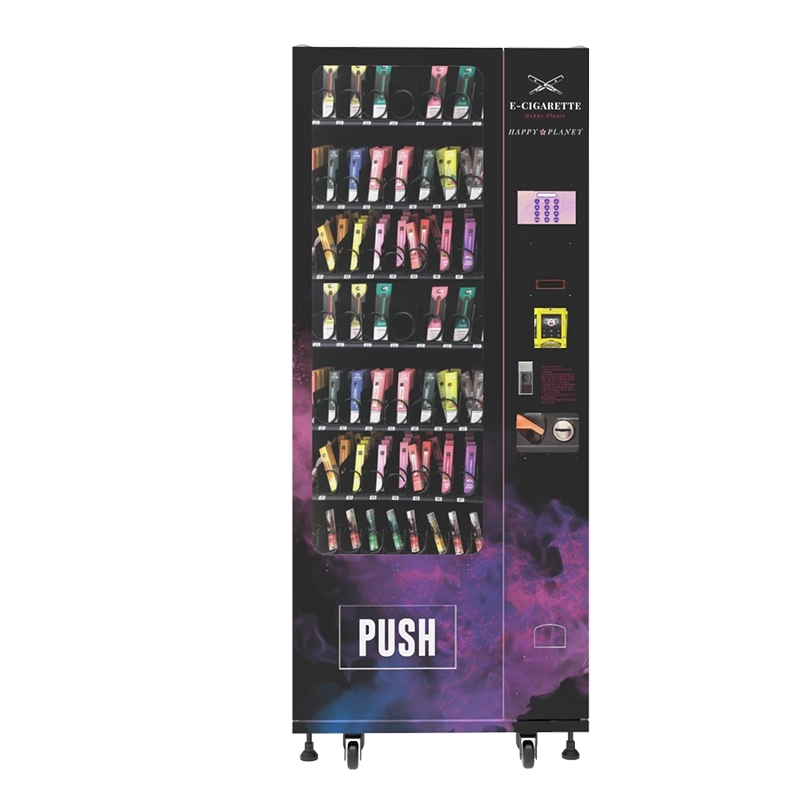
For example, a compliant e-cigarette vending machine can combine local verification hardware with remote management so configuration and software changes do not necessarily require a technician at every location.
7. Scalability and Fleet Management
The best architecture for five machines is not always the best architecture for five hundred.
Scaling Cloud-Based Systems
Cloud platforms are often strong at centralized fleet management. Operators can monitor multiple machines, configure policies, review activity, and deploy software changes through one management interface.
The main issue is cost structure. If subscriptions or verification fees scale directly with machine count or transaction volume, operating costs can increase substantially as the route grows.
Scaling On-Premise Systems
On-premise processing can provide more predictable verification costs at scale, but the operator assumes greater responsibility for maintaining local hardware and software.
For large fleets, remote diagnostics and over-the-air updates are therefore essential. Without them, the maintenance advantage of local processing can disappear quickly.
8. Maintenance and Troubleshooting
Cloud and on-premise systems fail in different ways.
When a cloud-based system stops working, troubleshooting may involve several layers: the scanner, local software, internet connection, API integration, cloud service, and vending machine controller.
On-premise troubleshooting is more localized, but hardware failure or corrupted software may require physical intervention if remote recovery is not available.
Before deployment, ask the manufacturer what happens in each of these situations:
The internet connection fails
The ID scanner stops responding
The verification server is unavailable
The local processor fails
A software update is interrupted
The machine is offline for several days
A good system should have a clearly defined failure mode rather than leaving operators to discover the answer after deployment.
9. Which System Is Better for Different Locations?
| Deployment Scenario | Likely Best Fit | Why |
|---|---|---|
| Location with unreliable internet | On-Premise or Hybrid | Critical verification can continue locally |
| Large centrally managed fleet | Cloud or Hybrid | Easier centralized monitoring and updates |
| High transaction volume | On-Premise or Hybrid | May reduce recurring per-verification costs |
| Strict data residency requirements | On-Premise or Hybrid | Provides greater control over where information is processed |
| Small deployment with limited technical staff | Cloud | Provider handles more infrastructure and software maintenance |
| High-value location where downtime is expensive | On-Premise or Hybrid | Reduces dependence on continuous connectivity |
| Frequent centralized policy changes | Cloud or Hybrid | Updates can be distributed more easily |
10. Why a Hybrid Age Verification System Can Be the Better Choice
Cloud-based and on-premise verification do not have to be mutually exclusive.
A hybrid age verification architecture can keep time-sensitive or business-critical functions on the vending machine while using cloud connectivity for functions that benefit from centralized management.
For example, a hybrid system may use local processing for basic age eligibility while the cloud provides:
Fleet monitoring
Remote configuration
Software updates
Analytics
Selected audit-log synchronization
Optional higher-assurance verification services
This architecture reduces the risk of making every sale dependent on an internet connection while preserving many of the operational benefits of cloud management.
Zhongda Smart's ID scan vending machine is designed around a modular architecture, allowing age verification hardware and remote management functions to be integrated according to the requirements of a particular project.
How to Choose Between Cloud and On-Premise Age Verification
Before requesting a quotation, define your priorities.
Choose cloud-based age verification if: centralized management, simplified software maintenance, rapid deployment, and remote policy updates are more important than minimizing recurring service costs or network dependency.
Choose on-premise age verification if: offline operation, local processing, predictable costs, lower network dependency, or greater infrastructure control are your priorities.
Choose a hybrid system if: you want critical verification to work locally while retaining remote management, analytics, updates, and optional cloud verification capabilities.
Age Verification System Buying Checklist
Architecture should not be the only buying criterion. Before choosing a system, evaluate:
Verification method: What types of IDs and verification methods are supported?
Offline behavior: What happens if connectivity is lost?
Data handling: What personal information is collected and retained?
Integration: Can the system communicate reliably with the vending machine controller and payment workflow?
Update capability: Can firmware and policies be updated remotely?
Audit capability: What records can operators retrieve when needed?
Pricing: Are there subscriptions, per-machine charges, or per-verification fees?
Vendor lock-in: Can verification modules or service providers be changed without replacing the entire vending machine?
Fleet management: Can operators monitor and configure multiple machines from one platform?
Support: Who is responsible when the scanner, software, network, or verification service fails?
Cloud vs On-Premise Age Verification: Final Verdict
There is no universal winner in the cloud-based vs on-premise age verification debate.
Cloud systems offer centralized management, easier remote updates, and lower local infrastructure requirements. On-premise systems can provide stronger offline capabilities, lower network dependency, greater local control, and a more predictable cost structure at higher transaction volumes.
For vending machines and unattended retail, the most flexible long-term approach is often a modular or hybrid architecture rather than a system permanently locked into one verification model.
The most important question is therefore not simply “Is cloud or on-premise better?” It is:
“Which architecture keeps verification reliable, manageable, cost-effective, and adaptable across the locations where my machines will actually operate?”
If you are planning an age-restricted vending project, compare the verification architecture together with the machine hardware rather than treating age verification as an add-on. Zhongda Smart offers age verification vending machines with configurable ID verification and remote management options for different deployment requirements.
Frequently Asked Questions
Which is better: cloud-based or on-premise age verification?
Neither is universally better. Cloud-based systems are generally better suited to operations prioritizing centralized management and remote updates, while on-premise systems are attractive when offline reliability, local processing, and predictable operating costs are more important. Hybrid systems can combine both approaches.
Can an on-premise age verification system work without internet access?
It can, provided the required verification functions and rules are stored and processed locally. Internet access may still be required periodically for software updates, remote monitoring, reporting, or synchronization. Always confirm the exact offline behavior with the manufacturer.
Are cloud-based age verification systems more secure?
Not automatically. Cloud providers can offer strong centralized security and rapid patching, but they also introduce external infrastructure and third-party data-processing considerations. On-premise systems provide greater local control but require effective physical security, encryption, access control, and software maintenance.
Does on-premise age verification eliminate monthly fees?
Not necessarily. Local processing may eliminate some verification subscriptions or transaction fees, but operators can still have expenses for cellular connectivity, software support, remote monitoring, maintenance, and updates.
Can I switch from cloud-based to on-premise age verification later?
It depends on the vending machine architecture. A modular system may allow the verification module or software configuration to be changed without replacing the complete vending machine. Proprietary systems with tightly integrated hardware may be more difficult or expensive to migrate.
What is hybrid age verification?
Hybrid age verification combines local and cloud processing. For example, the machine may perform basic age eligibility checks locally while using cloud services for management, analytics, updates, log synchronization, or additional verification when required.
Which system is better for locations with poor internet connectivity?
An on-premise or hybrid system is usually more suitable when the core verification process can run locally. The key is to confirm that loss of connectivity does not automatically prevent legitimate transactions.
How should I compare age verification system costs?
Compare total cost of ownership rather than only the purchase price. Include hardware, installation, subscriptions, verification fees, connectivity, maintenance, software updates, technical support, and the potential business cost of downtime.
What data should an age verification system store?
The system should collect and retain only the information necessary for its legitimate operational and compliance requirements. Exact requirements vary by jurisdiction and application, so operators should review the provider's data-processing and retention policies before deployment.