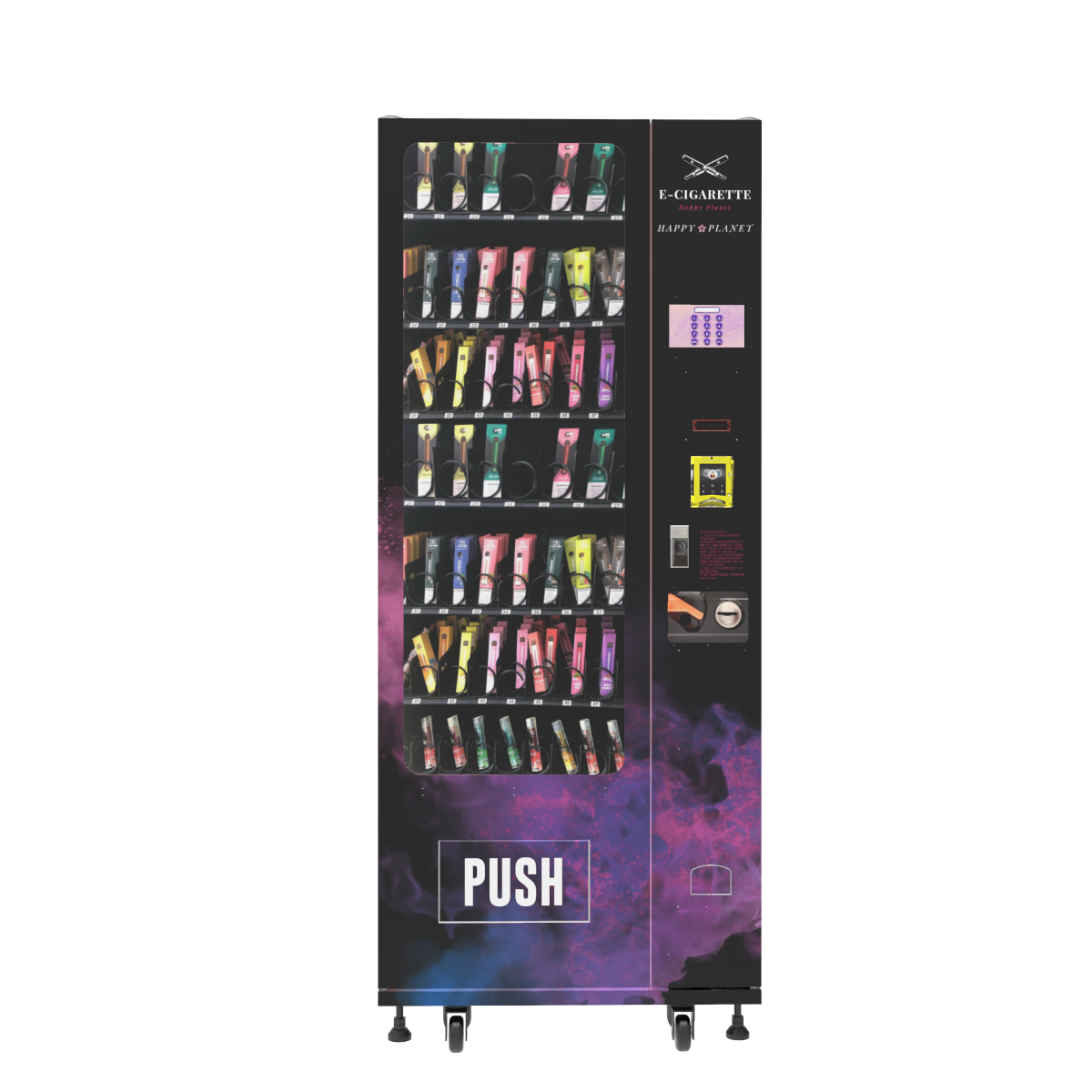
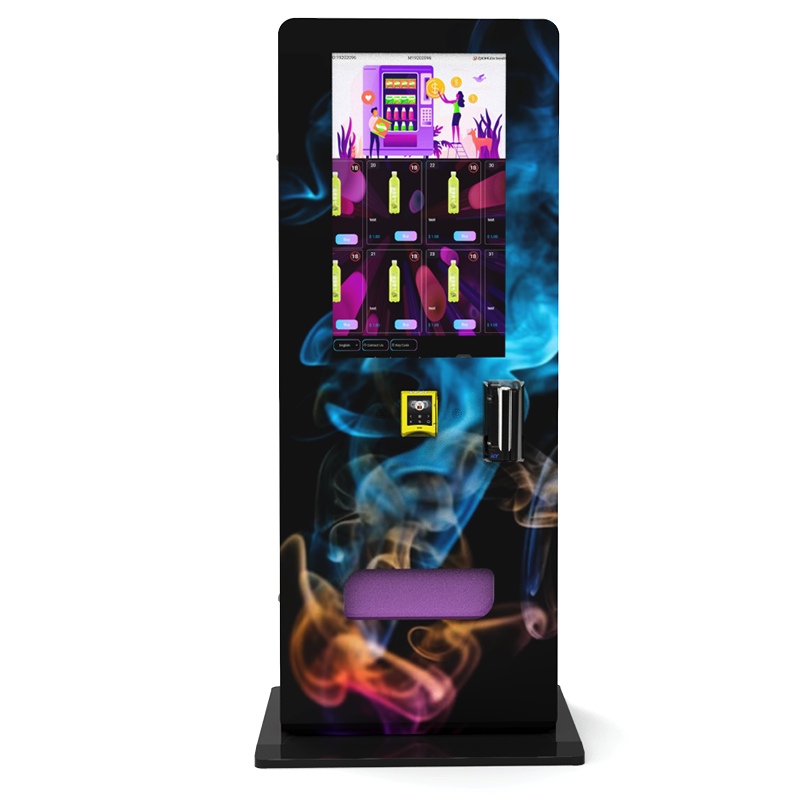
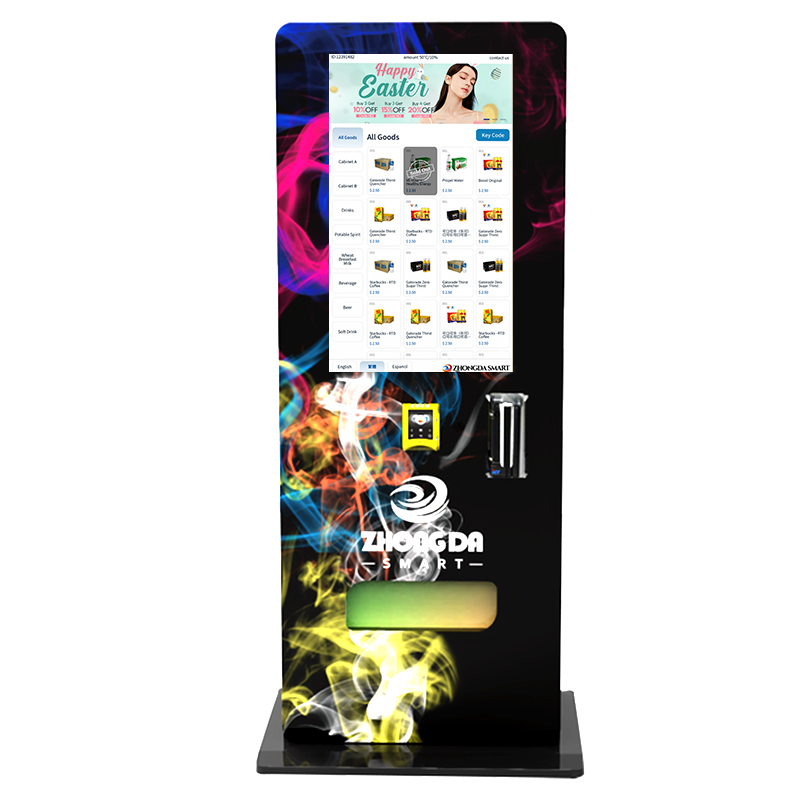
Yes—many modern vape vending machines do have ID verification, but not all of them do, and that difference matters more than most buyers expect. A real age-check setup does more than flash a “21+ only” message on a screen. It scans identification, checks age before the sale goes through, records the event, and blocks the purchase if the check fails. That is the standard serious operators look for. If you are comparing equipment, the question is not whether the cabinet is labeled for vape products. The real question is whether the machine can verify identity before payment is completed and before the product is released. That is what separates a true restricted-product machine from a standard self-service kiosk with a marketing sticker on the front.
After years of working on unattended retail projects and product design for age-restricted sales, I have seen the same mistake again and again: buyers assume every vape machine includes real verification. It does not. Some machines are built with ID scanning, smart control logic, audit logs, and remote monitoring. Others simply display a warning and continue the sale. If you are buying for long-term operation, that difference affects compliance risk, customer experience, service workload, and return on investment from day one.
What the short answer really means
When people ask, Do vape vending machines have ID verification, they usually want a direct answer fast. Here it is: the better machines do, the cheaper ones often do not, and the quality of the verification system matters just as much as whether one exists at all.
A proper vape vending machine should not treat age verification as a loose add-on. It should be built into the transaction flow. That means the customer selects a product, verifies age with an ID or another approved method, gets payment authorized, and only then receives the product. If the verification fails, the sale stops there.
A warning screen is not ID verification.
That single point clears up a lot of confusion in this category. A machine that says “adults only” but still allows a purchase without a verified ID is not giving you meaningful protection. A machine that verifies age, records the check, and refuses the sale when the process fails is doing the real work buyers usually think they are paying for.
How ID verification usually works in a vape vending machine
The strongest systems use a simple logic chain: verify first, pay second, vend last. That order reduces avoidable issues. If a machine takes payment before it knows whether the buyer passes the age check, you create refunds, confusion, and support headaches that should never have happened.
In a well-built machine, the customer experience is straightforward. The user taps the product they want, the screen prompts for ID verification, the machine reads the document, checks the age requirement, and only then moves to payment. If the scan is weak, the ID is not supported, or the age check fails, the sale ends cleanly and the product stays locked.
That is why the best answer to Do vape vending machines have ID verification is not just “yes” or “no.” The real answer depends on how the machine verifies age, what happens if the check fails, and whether the system keeps a usable record of the event.
Common verification methods
ID barcode scan: Reads encoded data from supported IDs quickly and is usually the fastest option for routine transactions.
Document scan with OCR or structured read: Used when barcode data is unavailable or when the machine supports multiple document styles.
Date-of-birth validation: Automatically calculates legal age eligibility based on the scanned data.
Photo comparison or face match: Adds another layer when the project needs stronger controls.
Remote approval: Allows a staff member to review flagged transactions in special cases.
Access-controlled placement: Adds a venue-level control layer, though it should not replace machine-level verification.
| Verification method | What it does | Where it helps most | Main concern |
|---|---|---|---|
| ID barcode scan | Reads encoded ID data fast | High-volume routine sales | Needs a readable, supported ID format |
| Document scan | Checks visible ID details and age data | Mixed document environments | Usually slower than barcode-only scanning |
| Face match | Compares the user to the document image | Higher-control retail projects | Needs careful privacy planning |
| Remote approval | Escalates unusual cases to staff | Premium compliance setups | Adds labor back into the process |
| Restricted placement | Adds a controlled-entry layer | Adult-only retail environments | Should not replace machine logic |
What the rules make clear
At the federal level, tobacco products, including e-cigarettes, cannot be sold to anyone under 21. Federal guidance also states that retailers must verify age with photo identification for customers under 30. Federal rules further restrict vending machine sales in facilities where people under 21 are present or allowed to enter at any time. Those are not minor details. They shape how a vape machine has to be planned, configured, and operated.
For that reason, Do vape vending machines have ID verification is not just a product question. It is an operations question. If the machine is intended for restricted-product sales, the age-check process needs to be part of the actual sale sequence, not an optional message on the screen.
Just as important, the machine should create a record of each attempt. Time-stamped approvals, failed scans, blocked transactions, and system events make it much easier to review what happened later. Without logs, you are depending on memory and assumption. With logs, you have a defensible process.
If the machine cannot block the sale until ID approval is complete, it is not doing the job most buyers think it is doing.
What separates a real restricted-product machine from a basic cabinet
On the surface, many machines look similar. They have a screen, a payment terminal, and product slots. But restricted-product vending is not just about the cabinet. It is about the control stack behind it.
A basic machine is designed to sell common items quickly with minimal checks. A restricted-product machine is designed to make a decision before it dispenses. That requires more than shelf space. It needs connected hardware, rules-based software, clean user prompts, failure handling, and a backend that lets the operator review what happened.
In one project review I worked on, the buyer originally chose a lower-cost cabinet that looked fine in photos. It had a touchscreen and cashless payment, but the ID module was not tightly linked to vend authorization. During testing, it became obvious that the machine could move forward too easily after a weak scan. On paper, the system sounded usable. In practice, it was not ready. We changed direction before launch, spent more on the control logic, and avoided a much more expensive replacement later.
That is the difference between buying a machine and buying a working sales system.
Features that actually matter
Integrated age-check logic: The product cannot be released unless verification passes.
Stable payment flow: The machine should know exactly when to authorize, cancel, or retry a transaction.
Clear screen guidance: Customers should understand the scan process in seconds.
Event logging: Failed scans, approvals, alarms, and sales events should be stored for review.
Remote monitoring: Operators should be able to see stock levels, machine health, and exceptions without visiting the site.
Flexible product configuration: Coils, trays, or lifts need to match the size and packaging of the products being sold.
Serviceability: Readers, screens, control modules, and payment devices should be replaceable without major rebuild work.
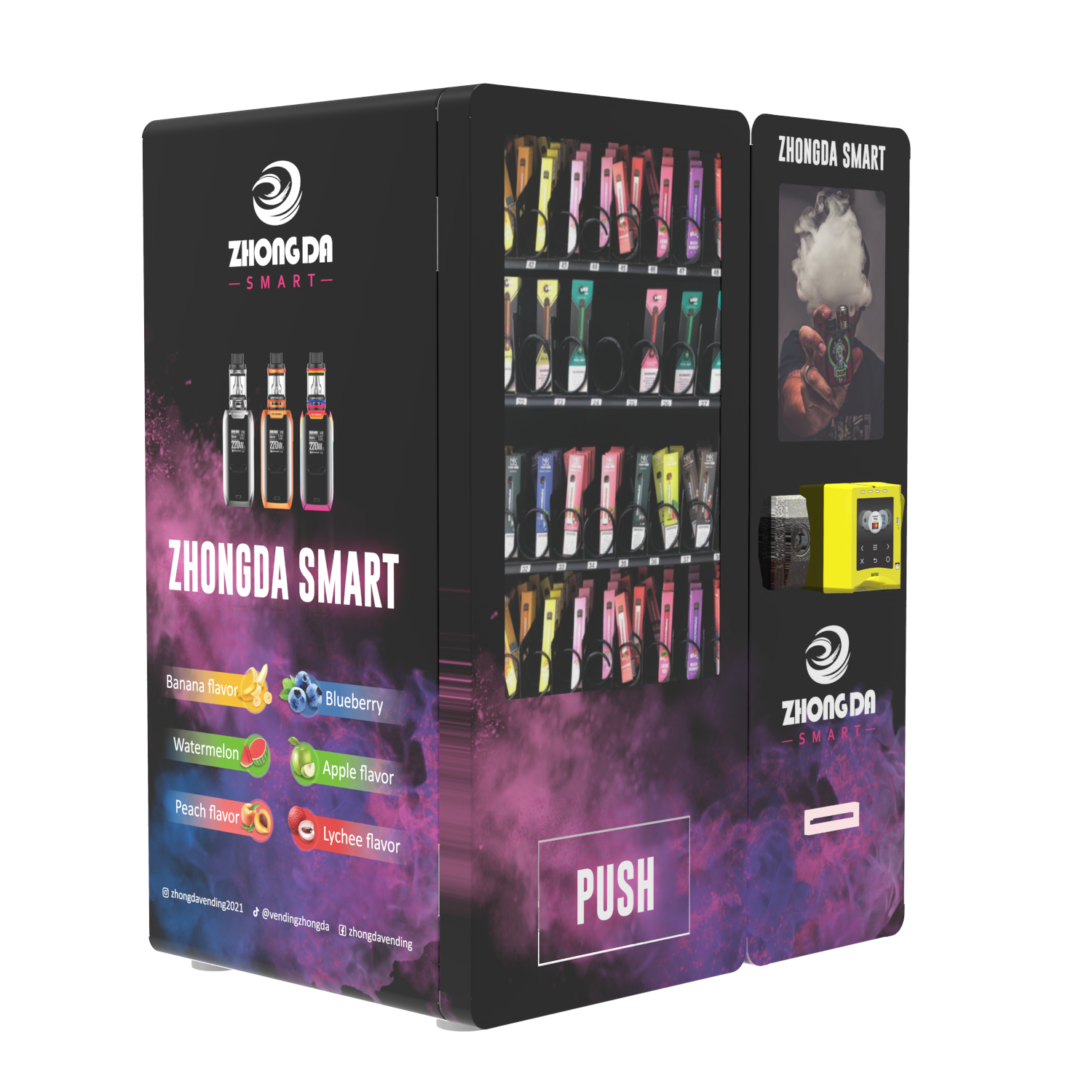
If you want to see how a purpose-built machine is typically configured, Zhongda Smart’s vape vending machine lineup is a useful reference. It shows the difference between a machine designed for restricted-product retail and a cabinet that simply happens to hold vape items.
What buyers should ask before ordering
Plenty of bad purchases can be avoided with a short list of practical questions. These are the questions I would ask before approving any machine for a live project.
Buyer checklist
Can the supplier show a full transaction demo from product selection to ID check, payment, and vend?
Does the machine verify age before payment is finalized?
What types of IDs can the reader support?
What happens if the scan fails or the ID cannot be read?
Does the machine store time-stamped approval and failure logs?
Can the operator review alerts and events remotely?
How are refunds, voids, and blocked transactions handled?
How quickly can replacement parts be supplied?
Can the cabinet be customized for different package sizes or layouts?
If a supplier cannot show the full sale flow clearly, keep asking questions.
That may sound blunt, but it is the right standard. A product photo tells you almost nothing about whether the machine is ready for real-world age-restricted retail. A working demo tells you a lot.
For buyers focused specifically on document-based verification, this ID scan vending machine example gives a more direct look at how an age-check machine can be set up. If the project needs a stronger restricted-sales workflow, this age verification vending machine configuration is also worth reviewing.
What customers expect from the experience
People will tolerate a short age-check step. They will not tolerate confusion. The best machines are not the ones with the most buzzwords. They are the ones that guide the user cleanly through the process with as little friction as possible.
On a good machine, the screen tells the user exactly what to do. The scanner is placed where it is easy to reach. The prompt is clear. The payment terminal is active at the right moment. The product drop is secure. Nothing about the flow feels improvised.
On a weak machine, the opposite happens. The user is not sure where to scan. The ID read takes too long. The payment step shows up at the wrong moment. The machine gives vague error messages. The customer walks away. Those lost sales add up quickly.
Good verification should feel controlled, not complicated.
This is one reason more buyers now prefer a smart vending machine platform rather than trying to bolt new hardware onto an older cabinet. Retrofits can work, but only if the screen flow, reader, payment terminal, and control board are all integrated properly. Without that, the machine often ends up feeling patched together.
Where the business case comes from
Verification hardware adds cost, but it can still make strong financial sense. Restricted-product vending is not just about protecting the sale. It is also about reducing labor pressure, extending selling hours, and keeping stock and transaction data visible in one system.
NAMA says the convenience services industry represents a $40.04 billion annual economic impact. Grand View Research estimates the global retail vending machine market reached $75.02 billion in 2025 and projects it to grow to $99.23 billion by 2033. Those figures do not prove that every vape machine will succeed, but they do show how much investment continues to move into self-service retail and connected vending.
The key is not buying the cheapest possible cabinet. The key is buying a machine that can operate cleanly over time. An extra investment in ID verification, remote monitoring, and better control logic often protects the project far more than it costs.
| Investment factor | Basic machine | Verified smart machine | Why it matters |
|---|---|---|---|
| Upfront hardware cost | Lower | Higher | Verification devices and software add cost at the start |
| Compliance protection | Weak | Stronger | Age-check logic and logs reduce exposure |
| Labor demand | Higher | Lower | Automation reduces routine staff involvement |
| Audit readiness | Limited | Better | Stored transaction events help document the process |
| Scalability | Limited | Better | Remote management becomes more valuable with more units |
A simple way to think about ROI
When buyers ask Do vape vending machines have ID verification, there is often a second question underneath it: if the machine includes real age checking, can it still make money? In many cases, yes—but only if the machine is placed well, stocked properly, and designed to finish transactions smoothly.
A simple ROI model is enough to start. Take the average ticket, multiply it by the expected daily sales count, then estimate gross margin and subtract operating costs such as payment fees, service visits, software, electricity, and maintenance. That gives you a rough monthly net contribution. Divide the total machine investment by that number, and you have a first-pass payback estimate.
For example, if a machine averages 10 sales a day at a $20 average ticket, that is about $6,000 in monthly revenue over a 30-day period. If product margin is 40%, gross profit is about $2,400. If operating cost lands around $650 per month, net contribution is about $1,750. That does not guarantee performance, but it shows why buyers should look beyond the machine’s sticker price and think in terms of controlled revenue generation.
Cheap hardware gets expensive fast when it creates failed transactions, support calls, or machine replacement.
Common mistakes that hurt projects
Most weak deployments do not fail because the idea was bad. They fail because the machine was chosen too quickly or evaluated too loosely. These are the mistakes I see most often.
Confusing a warning screen with real verification
That is still one of the most common buying mistakes in this category.Choosing by cabinet price alone
In restricted sales, the control logic often matters more than the shell.Ignoring the full transaction flow
What matters is not just whether the machine has an ID reader, but whether the sale stops when the check fails.Overlooking service support
Readers, payment devices, and control modules all need a practical replacement path.Skipping remote oversight
A connected backend makes it much easier to review stock, alarms, and blocked transactions.Forcing the wrong product mix into a generic layout
Package size, fragility, and retrieval path all matter more than many first-time buyers expect.
If the assortment is unusual or the installation has space limits, a custom vending machine build often makes more sense than pushing a standard cabinet into a job it was not designed to handle.
What I would recommend today
If I were helping a buyer choose a machine today, I would keep the recommendation simple. Start with a machine that treats age verification as part of the sale itself, not as decoration. Make sure the payment flow is stable. Make sure the backend can store events. Make sure the screen instructions are clear enough that a first-time user can complete the process without guessing.
I would also strongly prefer a machine from a manufacturer that already understands age-restricted self-service retail. That matters because the real work begins after the first shipment arrives: setup, testing, spare parts, tuning the user flow, adjusting the product layout, and solving field issues quickly.
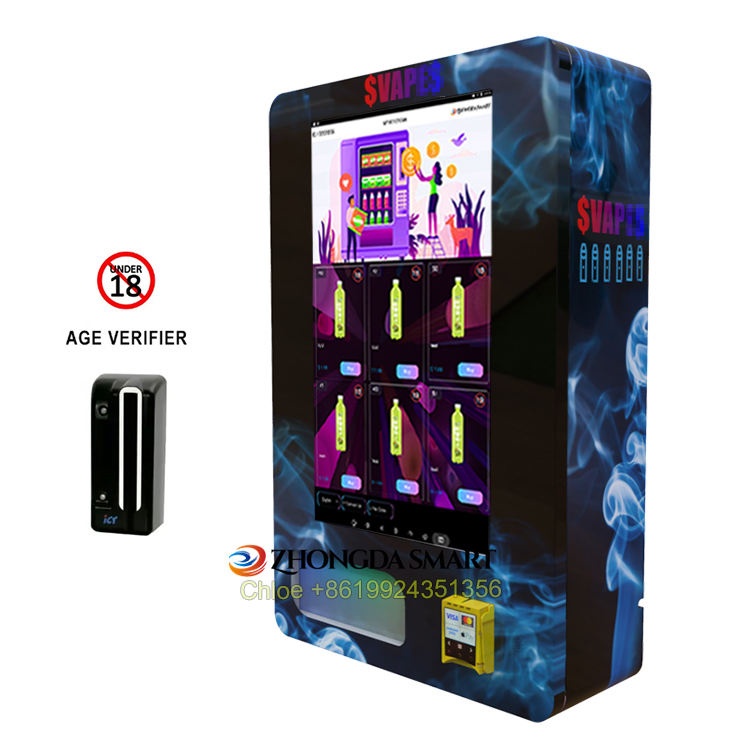
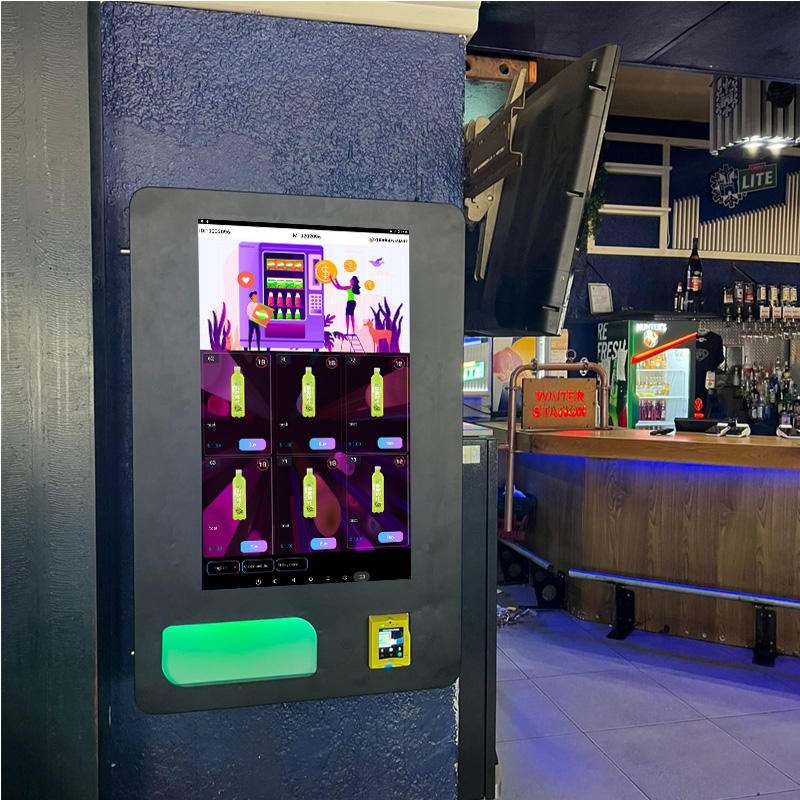
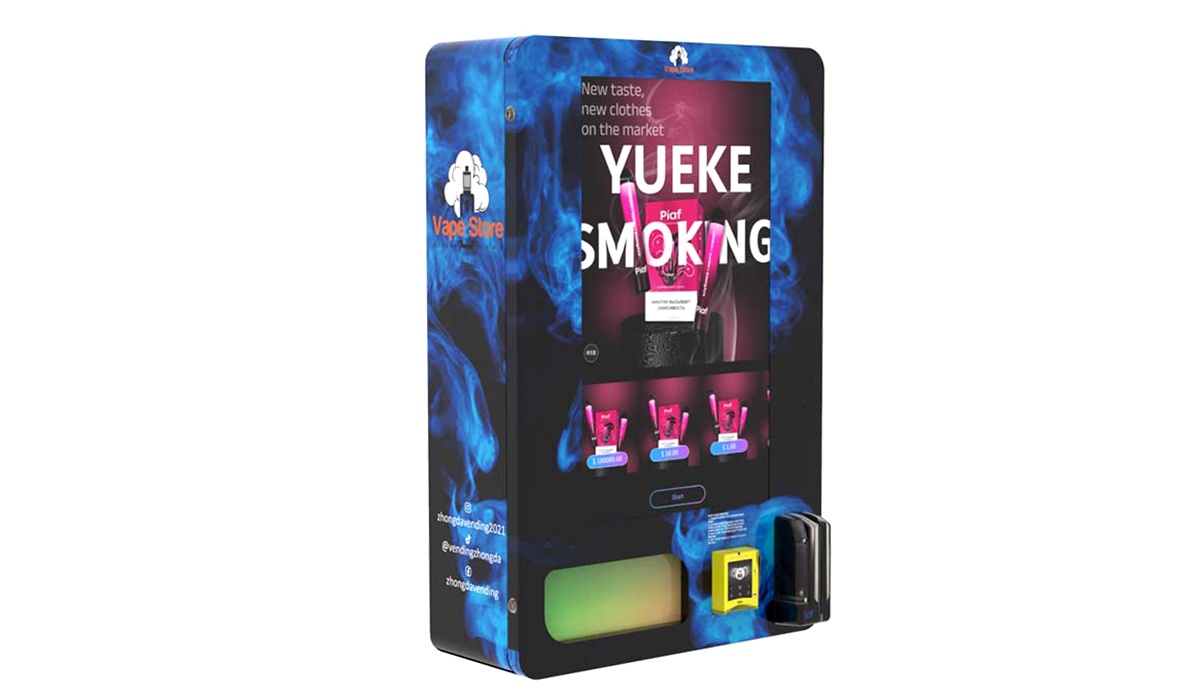
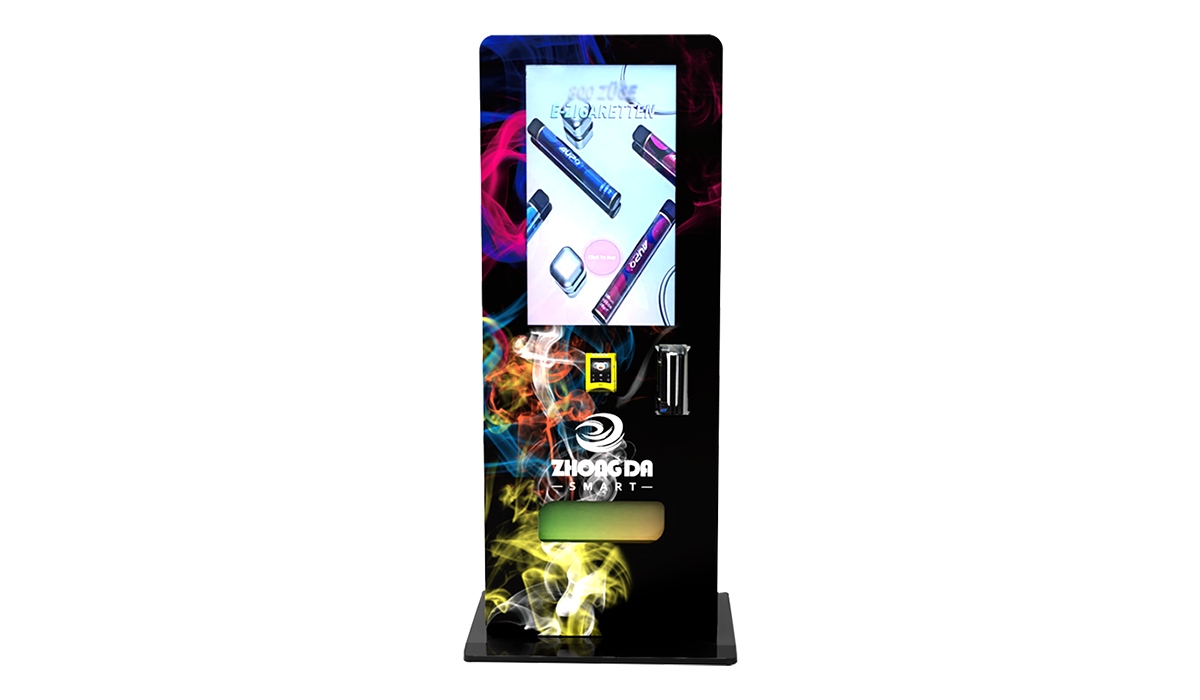
Zhongda Smart is worth including in that conversation because the company focuses on smart vending equipment and supports custom development, which matters in restricted-product projects where control logic and layout often need to be tailored. For a compact touchscreen example, this e-cigarette vending machine model shows how a modern machine can combine ID verification, smart payment, and remote management in one platform.
The best machine is not the one with the longest feature list. It is the one that finishes the sale cleanly, blocks the wrong sale reliably, and stays serviceable over time.
My direct answer after years in this business
So, Do vape vending machines have ID verification? Many do, and the ones built for serious restricted-product retail absolutely should. But buyers should not assume that every machine marketed for vape sales includes true age-check capability. Some do. Some only look like they do.
If you want the plain answer, it comes down to this:
Real vape vending machine verification should happen before payment is finalized and before the product is released.
An age warning message alone is not enough.
Stored logs matter because they document approvals, failed scans, and blocked attempts.
Remote monitoring and cashless payment are now standard expectations for serious operators.
Manufacturers with actual experience in smart restricted-product vending, including Zhongda Smart, are usually better equipped to deliver a machine that works in live operation.
That is the standard I would use for my own money. In this category, the right machine does more than vend. It verifies, records, protects, and scales.
Frequently asked questions
Is a 21+ screen enough, or do I need an actual ID scanner?
A 21+ screen is not enough on its own. It may support the customer flow, but it does not verify age. A machine intended for restricted-product sales should use a real verification method tied to the sale logic.
Can a vape vending machine reject the sale before payment goes through?
Yes, and that is exactly how a well-designed system should work. The strongest setup verifies age first, then moves to payment, then releases the product.
Do all smart vending machines support ID verification?
No. A smart vending machine may have a touchscreen and cashless payment but still lack proper age-check controls. Buyers should always confirm how the sale is blocked if the check fails.
What kind of ID verification works best in a vape vending machine?
For many projects, barcode-based ID scanning is the best starting point because it is fast and familiar. Higher-control projects may add document scanning, face match, or remote approval.
What should I ask a supplier to prove the verification really works?
Ask for a live demo of the full transaction flow, not just static product photos. The supplier should be able to show product selection, ID check, payment, blocked-sale behavior, and transaction logs.
Can I use a standard vending machine and add verification later?
Sometimes, but it depends on how well the new hardware can integrate with the control board, screen flow, and payment logic. In many cases, a purpose-built machine is a cleaner and safer choice.
About the author
This article is based on hands-on experience in automated retail operations and long-term manufacturing work in vending equipment design, customization, and project support. It reflects practical buyer concerns, machine configuration decisions, and published regulatory guidance rather than recycled catalog language.
Sources
FDA — Tips for Retailers: Preventing Sales to Persons Under 21 Years of Age
Grand View Research — Retail Vending Machine Market Report
Disclaimer: This article is provided for general business information only. It does not replace legal advice, licensing review, payment compliance review, privacy review, or record-retention guidance for a specific project.