Age verification technology is rapidly becoming one of the most important systems in unattended retail. For vending machines that sell age-restricted products, verification is no longer simply an optional hardware feature. It affects compliance, customer experience, transaction speed, privacy, maintenance, and ultimately the commercial viability of the machine.
After years of manufacturing and deploying vending equipment for different markets, we have seen the industry move from simple barcode readers toward more sophisticated systems that combine document authentication, biometric matching, liveness detection, offline verification, and remote management.
In this guide, we examine the future trends in age verification technology, how modern verification systems work, what vending operators should consider when choosing a solution, and how technologies such as AI-assisted document analysis and facial matching may change unattended retail in the coming years.
Important: Age-restricted vending requirements vary by product, country, state, and local jurisdiction. In the United States, tobacco and e-cigarette sales are subject to federal requirements as well as applicable state and local rules. Operators should confirm the rules for each installation location before deploying a machine.
Why Age Verification Is Becoming Critical for Smart Vending
Early vending systems were mainly designed around mechanical reliability, product capacity, cooling, payment processing, and inventory management. Age verification became a much bigger consideration as governments introduced stricter controls around tobacco, vaping products, alcohol, and other regulated goods.
For modern age-restricted vending, the question is no longer simply:
“Can the machine read an ID?”
A more useful set of questions is:
Can the system determine whether the document is valid and unexpired?
Can it accurately calculate whether the customer meets the required age threshold?
Can it detect obvious document inconsistencies or suspected tampering?
Can it determine whether the person presenting the ID is the document holder?
Can the system continue operating safely when network connectivity is unreliable?
How much customer information is processed or retained?
Can the verification module be updated as document formats and regulations change?
These requirements are driving the next generation of age verification vending machines.
From Basic ID Scanning to Intelligent Verification
1. Barcode-Based Age Verification
Barcode scanning remains one of the simplest approaches to automated age checking. In markets such as the United States, compatible identity documents may contain machine-readable information that allows a system to extract data such as date of birth and document expiration.
The primary advantage is speed. Barcode readers can process structured data quickly and can be relatively easy to integrate into vending equipment.
However, reading encoded data alone does not necessarily prove that a document is genuine or that the person presenting it is the legitimate document holder. For higher-risk environments, operators increasingly look for additional authentication layers.
2. Multi-Format Document Reading
A more advanced system may support several document-reading technologies, including:
2D barcode reading
Machine-readable zone (MRZ) reading
Optical character recognition (OCR)
Document image capture
Expiration-date validation
Document-format consistency checks
This approach can improve compatibility with driver's licenses, identity cards, and passports from different regions.
For vending manufacturers serving international customers, supporting multiple document formats is increasingly important because a scanner designed for one country's IDs may not work reliably in another market.
Biometric Matching Is One of the Biggest Future Trends
One of the most significant future trends in age verification technology is the combination of identity document scanning with biometric matching.
The basic workflow can be designed as follows:
The customer presents an accepted identity document.
The system reads the relevant age and document information.
A camera captures a live image of the customer.
Facial-matching software compares the live image with the portrait associated with the identity document.
If the required verification conditions are satisfied, the machine allows the customer to continue to payment.
This provides an additional layer beyond simple date-of-birth checking because the system attempts to confirm that the customer presenting the document is also its holder.
Biometric verification may be particularly relevant for unattended environments where there is no employee physically present to examine an ID. However, businesses also need to consider privacy requirements, biometric-data laws, consent requirements, data retention, and information security before deploying such technology.
Liveness Detection Will Become More Important
Facial matching alone is not enough for every environment. A system also needs to reduce the risk that someone presents a photograph, video, or other artificial representation instead of a live customer.
This is where liveness detection becomes important.
Depending on the system, liveness technology may analyze characteristics such as:
natural facial movement;
three-dimensional depth information;
changes between consecutive camera frames;
reflections and lighting characteristics;
head movement;
other indicators used to distinguish a live person from an image or recording.
The industry is gradually moving toward passive liveness detection, where customers do not need to perform complicated actions. Reducing unnecessary steps can help make age verification faster and more suitable for busy retail environments.
AI-Assisted Document Authentication
Another important development is the use of machine learning and computer vision to evaluate identity documents.
Instead of checking only a date of birth, future verification systems may analyze multiple document characteristics simultaneously. Depending on the scanner and software, these may include document layout, text positioning, image consistency, barcode data, security features, and other document attributes.
The goal is not simply to determine whether a customer is old enough. The broader objective is to establish greater confidence that the identity document being presented is legitimate and belongs to the customer.
For vending machine operators, this development could reduce dependence on basic barcode-only verification systems in environments where stronger identity assurance is required.
Offline Age Verification Will Remain Important
Cloud-connected verification offers advantages, including centralized updates, reporting, remote configuration, and integration with management systems. However, depending completely on a network connection can create operational problems.
A vending machine installed in a bar, entertainment venue, transportation facility, or other public environment may experience unstable Wi-Fi or cellular connectivity.
For this reason, one important trend is hybrid age verification.
In a hybrid system, selected verification functions can operate locally while connectivity is temporarily unavailable. Appropriate information can then be synchronized with the management platform after the connection is restored.
The exact offline functionality depends on applicable regulations, security requirements, and the verification technology being used.
Privacy-by-Design Will Become a Competitive Advantage
Age verification systems may process sensitive identity information. As verification becomes more sophisticated, privacy protection becomes just as important as verification accuracy.
Future systems are therefore likely to focus more heavily on data minimization.
Instead of permanently storing complete identity documents, a well-designed system should process only the information required for its legitimate verification purpose, subject to applicable law and operational requirements.
Important design considerations include:
what information is collected;
whether images are stored;
how long information is retained;
whether biometric information is retained;
how data is encrypted;
who has access to verification records;
where information is processed and stored;
how users are informed about data processing.
These issues are particularly important for businesses operating across multiple jurisdictions, including markets subject to privacy frameworks such as the GDPR and state-level privacy or biometric laws in the United States.
Faster Verification Will Improve the Customer Experience
Verification accuracy is important, but speed also matters.
A vending transaction should feel simple. If customers have to repeatedly reposition their ID, wait for a remote server, take multiple photographs, or restart the verification process, abandonment is more likely.
For this reason, future age verification systems will increasingly compete on:
scanner response time;
camera performance in low light;
document recognition speed;
user-interface clarity;
biometric matching speed;
error recovery;
the number of steps required to complete verification.
The best user experience is not necessarily the system with the most verification steps. It is the system that achieves the required level of assurance with the least unnecessary friction.
How Modern Age Verification Works in a Vending Machine
A typical smart vending verification workflow may include several stages.
Step 1: Document Presentation
The customer presents an accepted driver's license, identity card, passport, or other supported document.
Step 2: Data Extraction
The scanner reads available machine-readable information such as a barcode or MRZ and, where supported, captures document images.
Step 3: Age and Expiration Check
The software determines whether the document is expired and whether the date of birth satisfies the configured age requirement.
Step 4: Document Authentication
More advanced systems can perform additional consistency and authenticity checks based on the document type and available hardware.
Step 5: Optional Face Matching and Liveness
A camera-based system may compare the customer's live image with the identity document portrait and perform liveness analysis.
Step 6: Transaction Authorization
Only after the required verification conditions are satisfied does the vending machine allow the customer to proceed with the purchase.
Comparison of Age Verification Technologies
| Technology | Main Function | Advantages | Limitations | Typical Application |
|---|---|---|---|---|
| 2D Barcode Reader | Reads encoded ID data | Fast, compact, relatively easy to integrate | Limited document-authentication capability when used alone | Basic age checking |
| Barcode + MRZ Reader | Supports multiple machine-readable formats | Better international document compatibility | Capability depends on supported documents | Retail and international locations |
| Document Image Authentication | Analyzes document characteristics | Stronger identity-document verification | Higher hardware and software complexity | Higher-risk unattended retail |
| ID + Facial Matching | Compares document portrait with customer | Helps establish document ownership | Requires privacy and biometric considerations | Unattended age-restricted sales |
| ID + Face + Liveness | Adds live-person detection | Stronger protection against basic presentation attacks | More processing and integration requirements | Higher-assurance verification |
Age Verification Hardware Must Be Designed for Real Environments
Verification technology can perform well in a laboratory and still fail in an actual vending location.
Operators need to consider environmental factors such as:
poor lighting;
reflections from laminated IDs;
scratched or damaged documents;
dust on scanner windows;
humidity;
temperature variation;
camera positioning;
vibration;
network instability;
heavy customer usage.
This is why age verification should be evaluated as part of the complete vending-machine design rather than as a standalone accessory.
Camera lighting, scanner angle, enclosure design, touchscreen instructions, software behavior, and remote diagnostics all influence the real-world performance of the verification system.
Remote Monitoring and Software Updates
Age verification technology is not static. Identity document formats change, software is updated, security requirements evolve, and regulations can be amended.
For long-term deployments, remote device management is therefore becoming increasingly important.
A connected vending-management platform can potentially help operators monitor:
verification success and failure events;
scanner status;
hardware error codes;
network connectivity;
transaction status;
software versions;
inventory levels;
machine operating status.
Remote firmware and software updates can also reduce the need to visit every machine manually when system improvements or document-support updates are required.
Modular Verification Hardware Will Help Future-Proof Machines
One of the most practical future trends is not a specific biometric technology. It is modularity.
Age verification will continue to evolve faster than the mechanical structure of most vending machines. A vending cabinet may remain operational for years while cameras, processors, scanners, and verification software improve much more quickly.
A modular machine design allows operators to replace or upgrade components such as:
ID scanners;
cameras;
processing modules;
communication hardware;
payment terminals;
touchscreens.
This can help extend the useful life of the vending machine without requiring replacement of the complete cabinet whenever verification technology changes.
Choosing an Age Verification Vending Machine
When evaluating an age verification vending machine, buyers should look beyond machine capacity and appearance.
Important questions include:
Which identity documents does the machine support?
Does it read 2D barcodes, MRZ data, or both?
Can biometric verification be added if required?
Does the system support liveness detection?
Which verification functions can operate offline?
How are software and document formats updated?
What customer information is processed or stored?
Can the scanner module be replaced independently?
Does the manufacturer provide remote technical support?
Can the software be configured for different market requirements?
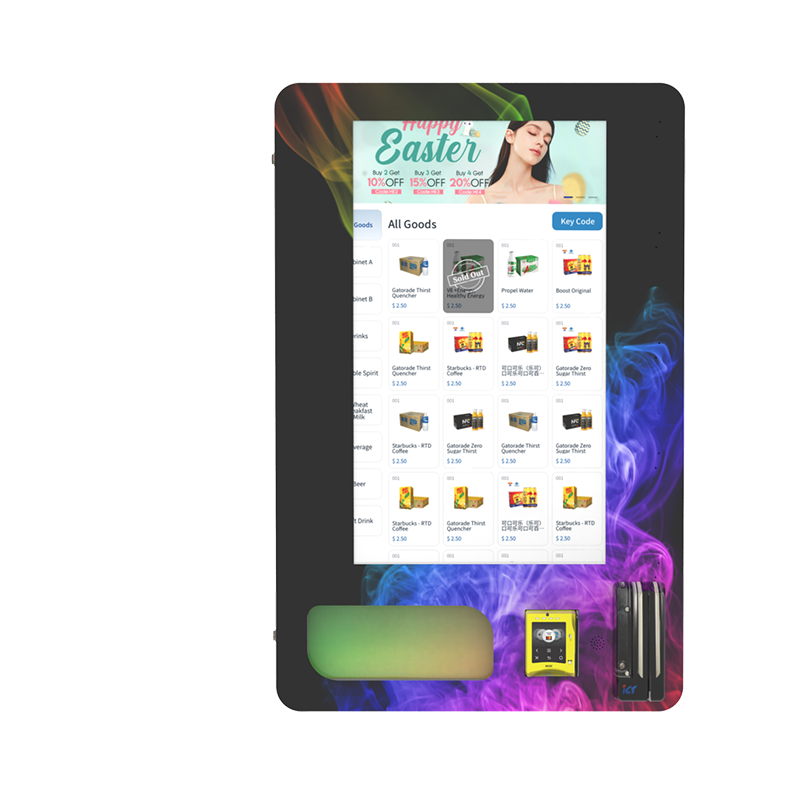
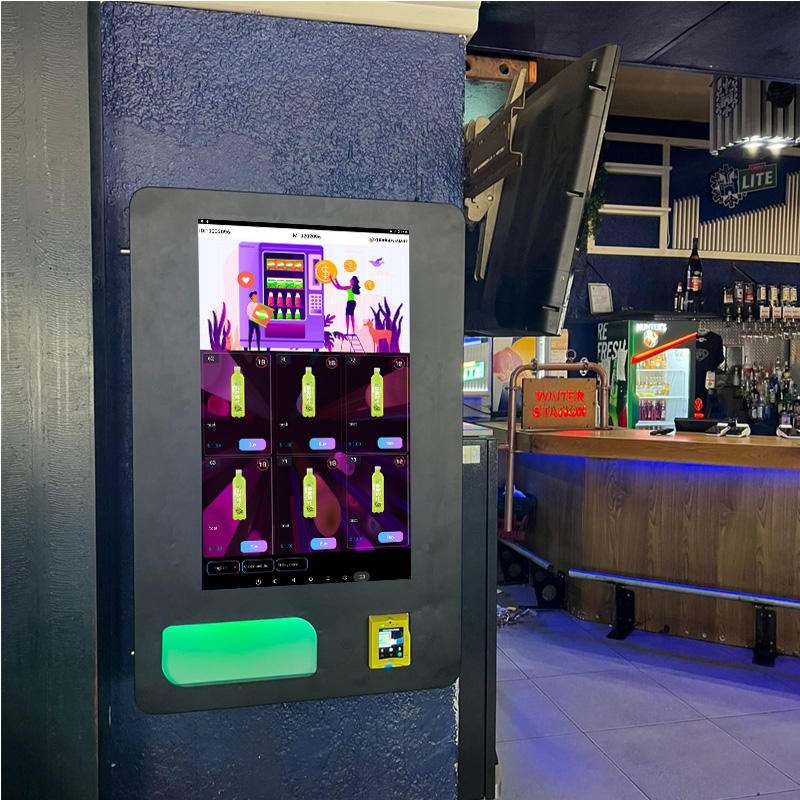
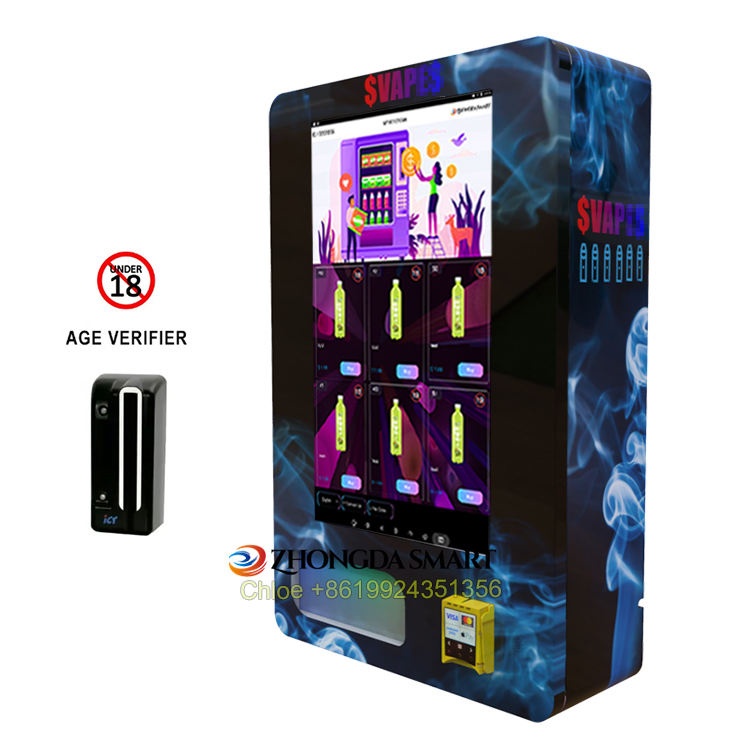
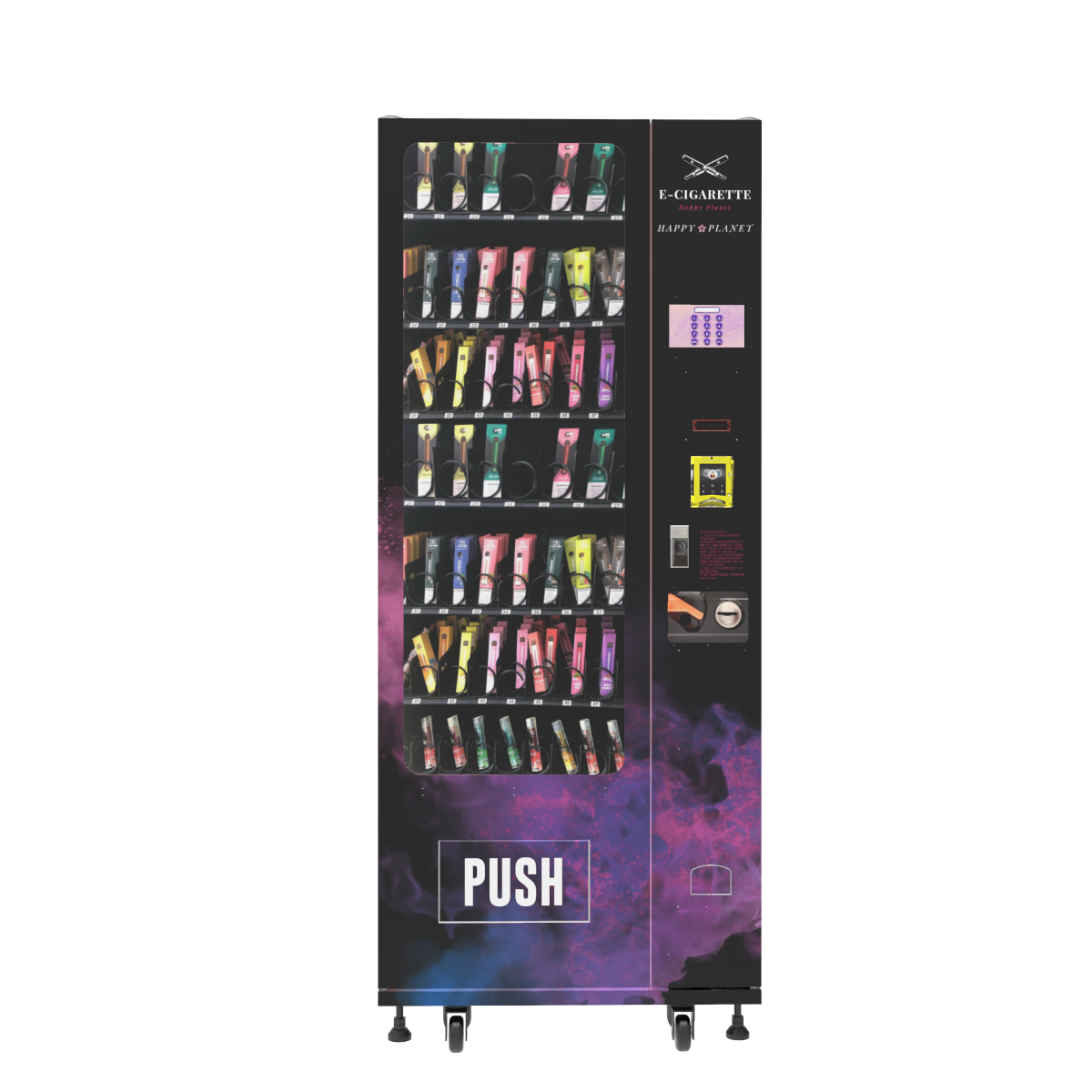
For locations with limited floor space, a wall-mounted compact e-cigarette vending machine may provide a practical form factor where such sales are legally permitted.
For operators requiring additional security and management functions, a compliant e-cigarette vending machine can be configured with appropriate identity-verification, payment, monitoring, and access-control options based on the intended market.
Because rules differ by jurisdiction, buyers should verify legal requirements independently rather than relying solely on a generic claim that a machine is “compliant.”
What Will Age Verification Technology Look Like in the Future?
Over the next several years, age verification is likely to become less dependent on a single scanner and more dependent on multiple signals working together.
The strongest systems may combine:
identity-document reading;
document authentication;
facial matching;
liveness detection;
privacy-preserving processing;
local and cloud-based verification;
remote monitoring;
automatic software updates.
At the same time, successful systems will need to become easier—not harder—for legitimate adult customers to use.
That creates an important design challenge: increase verification confidence while reducing transaction friction.
Manufacturers that solve both sides of that problem will be better positioned for the next generation of smart vending.
Frequently Asked Questions About Age Verification Technology
What is age verification technology?
Age verification technology is a system used to determine whether a customer meets the required minimum age for a restricted transaction. Depending on the application, it may use identity-document scanning, barcode or MRZ reading, document authentication, facial matching, liveness detection, or a combination of these technologies.
How does age verification work in a vending machine?
The customer presents a supported identity document, and the machine reads relevant information such as the date of birth and expiration date. More advanced systems may also analyze the document, compare its portrait with a live camera image, and perform liveness detection before allowing the transaction to continue.
Can an age verification vending machine work offline?
Some systems can perform selected verification functions locally when an internet connection is unavailable. The exact offline capability depends on the hardware, software, verification method, and applicable regulatory requirements. A hybrid online/offline architecture can be useful in locations with unreliable connectivity.
What is biometric age verification?
Biometric age verification typically combines identity information with biometric analysis. In vending applications, this commonly means comparing a live image of the customer with the photograph associated with an identity document. Some systems also use liveness detection to help confirm that a real person is present.
Is facial recognition required for age verification vending machines?
Not necessarily. Requirements depend on the product, jurisdiction, and verification model. Some applications may use document scanning without facial matching, while higher-assurance systems may add biometric matching and liveness detection. Operators should determine what is legally and operationally appropriate for each deployment.
What should I look for when choosing an ID scanner for a vending machine?
Look for supported document formats, scanning speed, barcode and MRZ capability, image quality, low-light performance, environmental durability, software-update support, integration options, privacy controls, and whether the scanner can be replaced or upgraded separately from the machine.
Is age verification for tobacco and vape vending machines the same in every US state?
No. Federal requirements apply in the United States, but additional state and local restrictions may also apply. Rules can cover minimum age, permitted locations, identity verification, vending-machine access, licensing, privacy, and other operational requirements. Operators should verify the current rules for every installation location.
What are the biggest future trends in age verification technology?
Major trends include AI-assisted document authentication, biometric matching, passive liveness detection, privacy-preserving verification, faster on-device processing, hybrid offline verification, remote system management, and modular verification hardware that can be upgraded as technology changes.
Conclusion
The future of age verification technology is not about adding more friction to a vending transaction. It is about making verification more reliable, more secure, easier to maintain, and simpler for legitimate customers.
ID scanning will remain important, but the industry is moving toward layered verification systems that combine document analysis, biometrics, liveness detection, privacy protection, offline processing, and centralized management.
For vending operators, the most important investment may therefore be a machine that can evolve. Choosing modular hardware, updateable software, reliable remote management, and a verification architecture suited to the target market can help protect the useful life of the equipment as both technology and regulations continue to change.
If you are evaluating an age verification vending solution, focus on the complete system rather than a single scanner specification: verification capability, privacy, reliability, software support, machine design, and local regulatory requirements all matter.