Age verification is one of the most important systems in any automated retail business that sells age-restricted products. A vending machine may handle product selection and payment automatically, but when regulated products are involved, the machine must also determine whether a customer is eligible to complete the purchase.
For operators, this makes age verification for automated retail businesses much more than an optional vending feature. It becomes part of the machine's security, compliance, customer experience, and overall operating model.
Based on our experience manufacturing and deploying automated vending systems, reliable age verification depends on four areas working together: identification hardware, vending software, payment integration, and a properly designed operating process.
This guide explains how automated age verification works, compares common verification technologies, outlines machine costs and operating considerations, and highlights what buyers should evaluate before deploying an age-restricted vending machine.
What Is Age Verification in Automated Retail?
Age verification in automated retail is the process of confirming that a customer meets the minimum legal age required to purchase a restricted product before the vending machine releases that product.
Depending on the application and local regulations, a system may use:
Government-issued ID scanning
2D barcode verification
Magnetic stripe reading
Facial age estimation
Remote manual verification
A combination of two or more verification methods
For vending machines selling products such as nicotine products, alcohol, or other regulated goods, the verification system must be integrated directly with the vending controller. If verification fails, the machine should prevent the restricted transaction from continuing.
How an Age Verification Vending Machine Works
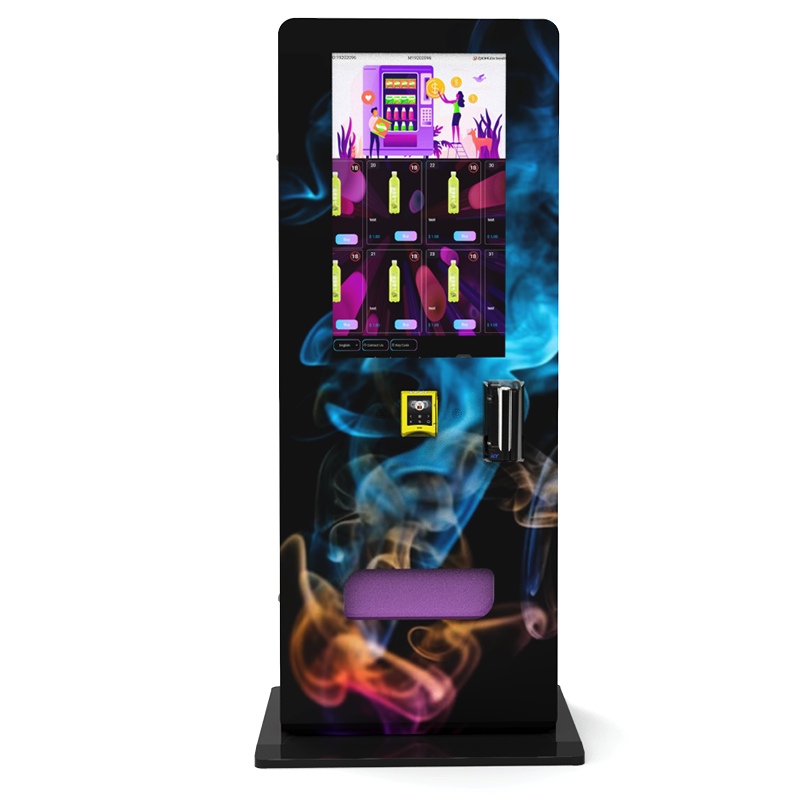
A commercial age-verification vending machine functions more like an automated point-of-sale terminal than a conventional snack machine.
A typical transaction follows these steps:
The customer selects an age-restricted product.
The machine requests age verification.
The customer presents an accepted form of identification.
The verification module reads the relevant ID information.
The software determines whether the customer's age meets the configured requirement.
If verification succeeds, payment and dispensing can continue.
If verification fails, the restricted transaction is blocked.
Depending on the machine configuration, verification data and transaction events may also be recorded for auditing and vending management purposes. Operators should configure data collection and retention according to applicable privacy and regulatory requirements.
ID Scanner vs. Camera-Based Age Verification
One of the first decisions operators face is choosing the appropriate age-verification technology.
2D Barcode ID Scanners
A dedicated ID scanner reads machine-readable information from supported identification documents. In the United States, this frequently includes the 2D barcode found on many driver's licenses and state-issued identification cards.
For busy automated retail locations, dedicated scanners offer several practical advantages:
Fast verification
Consistent scanning
Good performance in controlled scanner lighting
Direct integration with vending software
Less dependence on ambient lighting
For bars, nightclubs, convenience stores, and other high-volume environments, scanner-based verification is often a practical solution because transactions need to remain fast and predictable.
Facial Age Estimation
Facial age-estimation systems use computer vision to estimate a customer's age from an image or video.
The main advantage is convenience because customers may not always need to insert an ID during the first step of verification. However, operators need to consider accuracy thresholds, local regulations, privacy requirements, lighting conditions, and what happens when the estimated age is close to the legal threshold.
Some deployments use age estimation as an initial screening method and request identification when the estimated age falls within a predefined challenge range.
Remote Verification
Remote verification connects the customer with a human operator who reviews identification through a camera or remote terminal.
This approach can add human oversight, but it also introduces additional operating costs and can increase transaction time. It may be more suitable for specialized, lower-volume environments than for high-throughput vending locations.
Comparison of Age Verification Technologies
| Verification Method | Typical Speed | Main Advantage | Main Consideration | Suitable Applications |
|---|---|---|---|---|
| 2D Barcode ID Scanner | Fast | Consistent document-based verification | Requires a readable supported ID | Bars, clubs, convenience stores, retail |
| Facial Age Estimation | Very fast | Low-friction customer experience | Accuracy, privacy and regulatory requirements | Selected automated retail environments |
| Remote Human Verification | Slower | Human review | Labor cost and longer transaction time | Low-volume or specialized sites |
There is no universal solution for every market. Operators should choose technology based on applicable regulations, product type, transaction volume, customer demographics, and the level of verification required.
Why Scanner Lighting Matters
One operational issue that is easy to overlook is lighting.
Many age-restricted vending machines are installed in bars, clubs, entertainment venues, and other low-light environments. A verification system that depends entirely on room lighting may create unnecessary scanning failures.
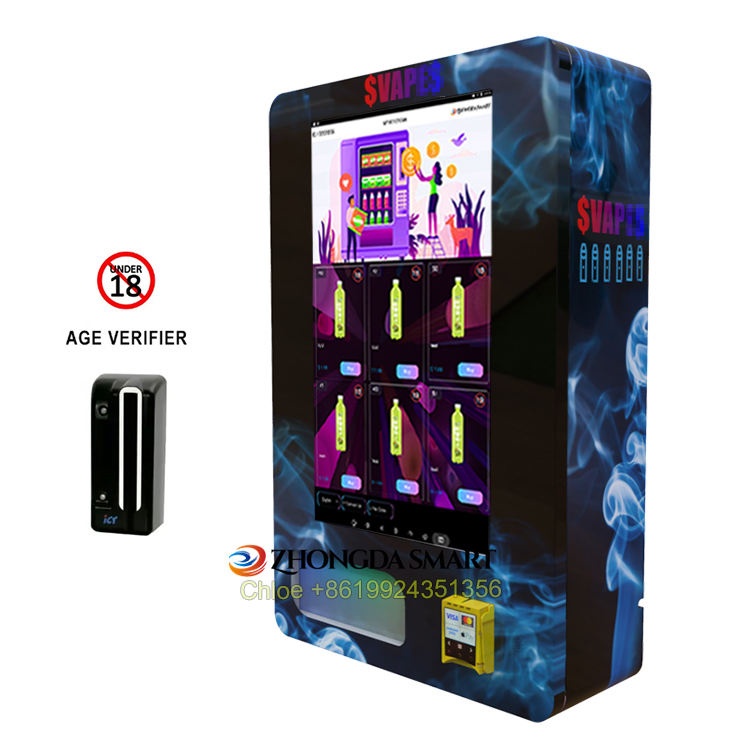
For that reason, a commercial ID scanner should ideally have integrated illumination designed to provide consistent scanning conditions.
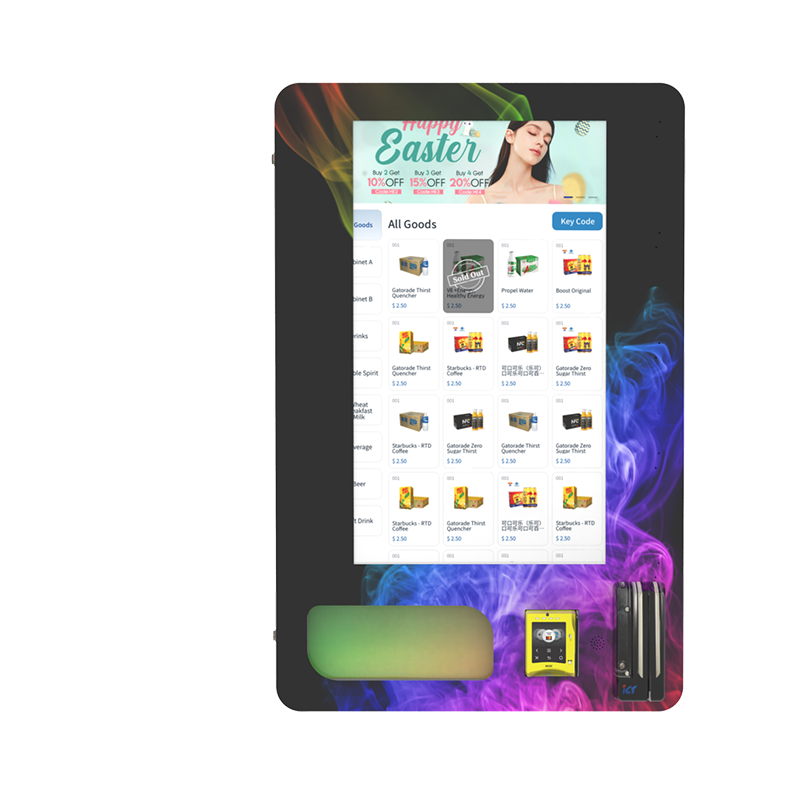
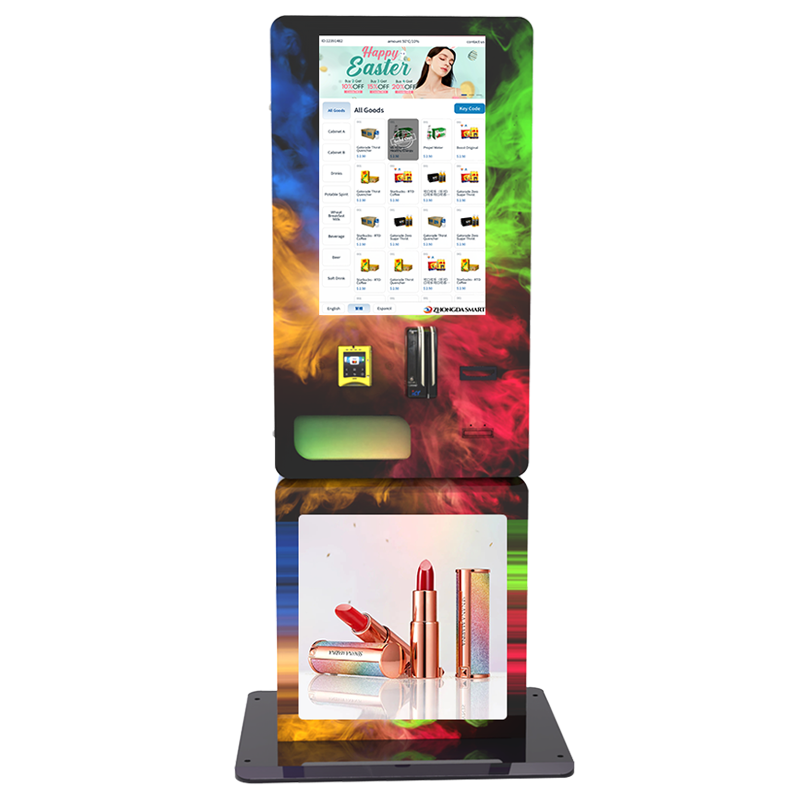
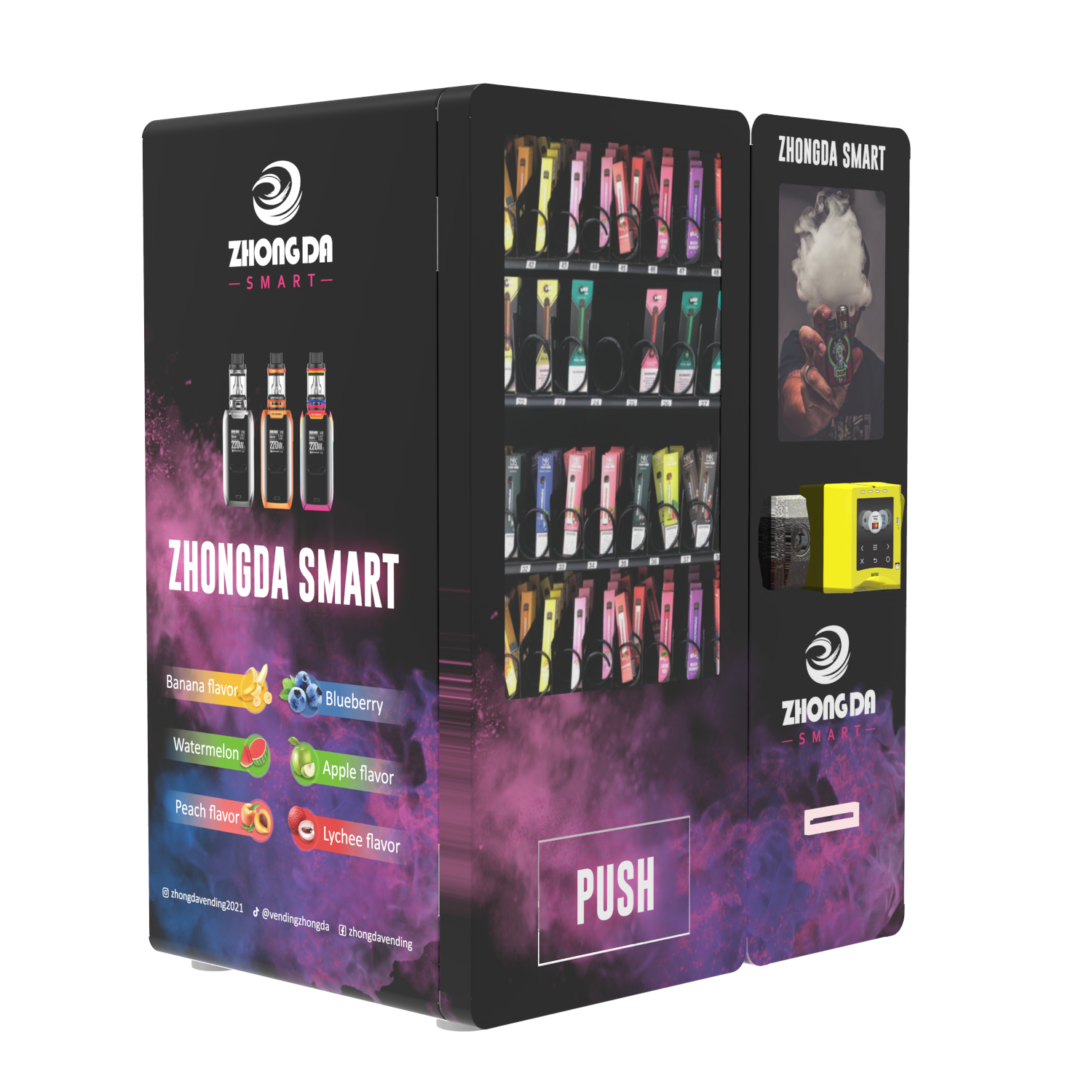
At Zhongda Smart, our age-verification vending configurations can integrate dedicated ID-scanning hardware with the machine control system. For applications where low-light operation is important, buyers should confirm scanner illumination and test the complete verification workflow before deployment.
Age Verification Vending Machine Cost
The cost of an age-verification vending machine depends on cabinet size, refrigeration, touchscreen configuration, payment hardware, verification technology, customization, and shipping destination.
A typical commercial configuration may include the following cost categories:
| Component | Estimated Cost Range | What It Includes |
|---|---|---|
| Base Vending Machine | $4,500–$6,500 | Cabinet, refrigeration or temperature control, dispensing system and touchscreen |
| Age Verification Hardware | $300–$500 | ID scanner and related integration hardware |
| Payment System | $600–$900 | Depending on card, cash and mobile-payment configuration |
| Shipping and Installation | $300–$700+ | Varies significantly by destination and installation requirements |
| Estimated Deployed Cost | $5,700–$8,600+ | Indicative range; final configuration determines actual cost |
These numbers should be treated as planning estimates rather than fixed prices. Custom branding, larger displays, specialized refrigeration, telemetry systems, additional verification hardware, certifications, and international freight can change the final cost substantially.
Buyers comparing machines should evaluate total operating cost rather than purchase price alone. A lower-cost machine can become expensive if replacement parts, technical support, software updates, or payment integrations are difficult to obtain.
You can view examples of age verification vending machine configurations available from Zhongda Smart.
What Determines the ROI of Automated Retail?
Return on investment depends much more on location and sales volume than on the vending machine itself.
The most important variables include:
Daily foot traffic
Customer demographics
Product demand
Average transaction value
Wholesale product cost
Location commission
Payment processing fees
Restocking expenses
Maintenance costs
Machine uptime
A machine installed in a high-volume entertainment venue can perform very differently from the same machine installed in a low-traffic retail location.
Example ROI Formula
A simple operating model is:
Monthly Revenue = Transactions per Day × Average Transaction Value × Operating Days
From this amount, subtract product costs, location commissions, payment fees, inventory losses, restocking expenses, connectivity, insurance, taxes, licensing costs, and maintenance.
Operators should build conservative, expected, and high-performance scenarios before purchasing equipment rather than assuming that every location will achieve the same sales level.
Choosing the Right Location
Site selection can have a larger impact on profitability than almost any hardware feature.
Good locations generally combine several characteristics:
A clearly defined adult customer base
High customer traffic
Demand for the products being sold
Limited friction compared with staffed purchasing
Good machine visibility
Reliable power and network connectivity
A location owner willing to support the installation
Before committing to a long-term agreement, consider negotiating a trial period. A 60- or 90-day test can provide real transaction data before both parties make a longer commitment.
Inventory and Restocking
Automated retail profitability depends on selling the right inventory, not simply filling every available slot.
Operators should monitor:
Sales by SKU
Inventory turnover
Out-of-stock frequency
Gross margin by product
Sales by day and time
Performance by location
Fast-moving products should receive more capacity, while products with consistently low sales should be replaced or reduced.
High-volume machines may require restocking several times per week, while lower-volume locations may only require weekly service. Remote inventory monitoring can reduce unnecessary service visits and help prevent lost sales caused by out-of-stock products.
Network Connectivity and Remote Management
Modern automated retail machines increasingly depend on network connectivity for payment processing, inventory monitoring, diagnostics, verification software, and remote management.
Before buying a machine, check whether the management platform supports:
Remote inventory monitoring
Transaction history
Machine status monitoring
Error notifications
Remote software updates
Payment-system management
Verification event logs where legally appropriate
Remote management becomes especially valuable when an operator manages machines in multiple locations because many problems can be identified before a service technician visits the site.
Maintenance Requirements
An age-verification vending machine combines mechanical, refrigeration, payment, networking, and scanning components, so preventive maintenance is important.
Common maintenance areas include:
ID scanner cleaning
Touchscreen inspection
Payment terminal cleaning
Dispensing motor testing
Refrigeration inspection where applicable
Door-lock inspection
Network connectivity checks
Software and firmware updates
A regular maintenance schedule helps increase uptime and makes it easier to identify small issues before they become expensive failures.
Software Updates and Compliance Management
Age-restricted retail rules can differ significantly by country, state, province, municipality, venue, and product category. Operators should therefore verify the requirements that apply to each installation before the machine begins selling regulated products.
Hardware alone should never be treated as proof of legal compliance.
A well-designed automated retail platform should make it possible to update verification settings and software without physically replacing the machine whenever operational requirements change.
When evaluating a supplier, ask:
Can the software be updated remotely?
Can age thresholds be configured?
What happens when verification hardware is offline?
What information is logged?
How is personal data protected?
How long is verification data retained?
Can reports be exported when required?
Who provides software and technical support?
Because regulations and privacy requirements vary, operators should confirm licensing, placement, verification, recordkeeping, and data-protection requirements with the appropriate authorities or qualified legal advisers before deployment.
What to Look for in an Age Verification Vending Machine Manufacturer
The verification scanner is important, but it is only one part of the system. Buyers should evaluate the complete machine.
Key questions include:
Is age verification integrated with the vending controller?
Does failed verification prevent dispensing?
Is the scanner designed for the intended environment?
Does the machine support remote software updates?
Can the supplier integrate local payment systems?
Are spare parts readily available?
What testing is completed before shipment?
What technical support is available after installation?
Can the machine configuration be customized?
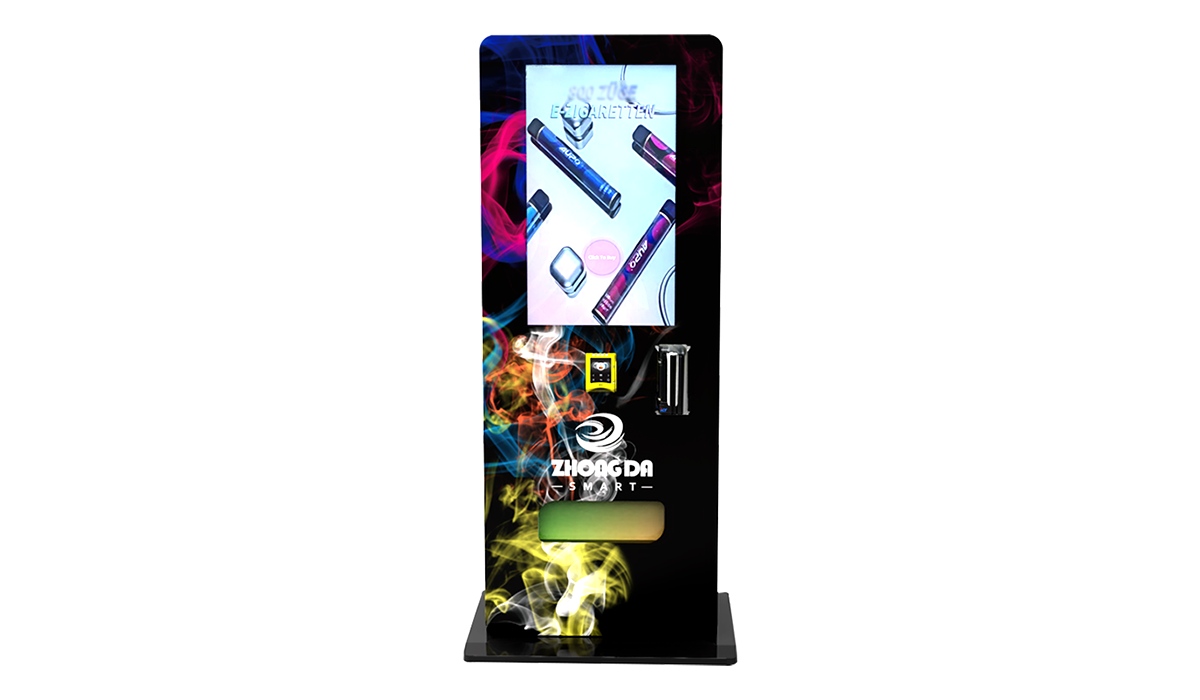
Zhongda Smart manufactures automated retail equipment with configurable payment, touchscreen, telemetry, refrigeration, and age-verification options. Buyers can explore our vape vending machine solutions or review an ID scan vending machine configuration for more information.
Frequently Asked Questions About Age Verification for Automated Retail Businesses
What is the best age verification method for a vending machine?
For many high-traffic automated retail applications, a dedicated ID scanner is a practical option because it provides fast document-based verification and can be integrated directly with the machine controller. The best method still depends on the product, location, applicable laws, and required verification standard.
How does an ID scan vending machine verify age?
The customer presents a supported government-issued identification document, and the scanner reads machine-readable information such as a 2D barcode. The vending software evaluates the relevant date information against the configured minimum age before allowing the restricted transaction to continue.
How much does an age verification vending machine cost?
A commercial machine with age-verification hardware, payment equipment, and installation may cost approximately $5,700 to $8,600 or more, depending on configuration. Inventory, licenses, insurance, payment processing, connectivity, and operating expenses should be budgeted separately.
Can age verification be added to an existing vending machine?
In some cases, yes. However, retrofitting can require changes to the controller, software, cabinet, wiring, and dispensing logic. A purpose-built age-verification vending machine is generally easier to integrate and support than an aftermarket system.
What should happen if age verification fails?
The machine should not release an age-restricted product when required verification cannot be completed successfully. The failure should be handled according to the machine configuration and the operator's compliance procedures.
Does an age verification vending machine guarantee legal compliance?
No. Age-verification technology is only one part of compliance. Licensing, machine placement, product restrictions, age requirements, recordkeeping, privacy rules, signage, and other obligations can vary by jurisdiction. Operators should verify the requirements that apply to each deployment.
Does an age verification machine need an internet connection?
That depends on the machine and verification architecture. Connectivity may be required for payment processing, cloud management, remote updates, reporting, or certain verification services. Operators should confirm how the machine behaves if its network connection is interrupted.
How often should an automated retail machine be restocked?
Restocking frequency depends on sales volume and machine capacity. High-volume machines may need service several times per week, while lower-volume locations may require weekly restocking. Remote inventory data can help determine the most efficient schedule.
Final Considerations
Reliable age verification for automated retail businesses requires more than installing an ID reader on a vending cabinet. The verification hardware, machine controller, payment system, software, network connection, and operating process all need to work as one system.
For operators evaluating an age-restricted vending opportunity, focus first on compliance requirements and site quality, then evaluate verification reliability, machine uptime, remote management, payment compatibility, inventory economics, maintenance, and supplier support.
A well-designed machine will not make a poor location profitable, but dependable hardware and verification technology can remove many of the operational problems that prevent a good location from performing.
For machine specifications, customization options, and age-verification configurations, visit Zhongda Smart or explore our automated vape vending machine solutions.