After spending over a decade deploying vending solutions across the US and European markets, and running a manufacturing facility that has been building these machines for fifteen years, I’ve seen the industry shift from simple snack dispensers to sophisticated, compliance-driven retail tools. The conversation around self-checkout versus age verification vending machines is one I get into almost weekly with operators, and it usually comes down to one core question: which system actually protects your business while maximizing profit? The short answer is that if you are selling age-restricted products like nicotine devices, a standard self-checkout kiosk is a liability, not a solution. An age verification vending machine is purpose-built for this environment, and the difference in operational risk is night and day.
The Engineering Reality Behind Age-Restricted Vending
Let’s start with the hardware because that is where most operators get tripped up. A typical self-checkout kiosk you see in a grocery store is designed for speed and convenience. It scans barcodes, processes payments, and trusts the customer to be honest. That works fine for a bag of chips or a soda. But when you put a vape product in that same machine, you are asking for trouble. The system has no way to verify that the person standing in front of it is of legal age. It relies on a manual ID check from a store employee who is often not standing right there.
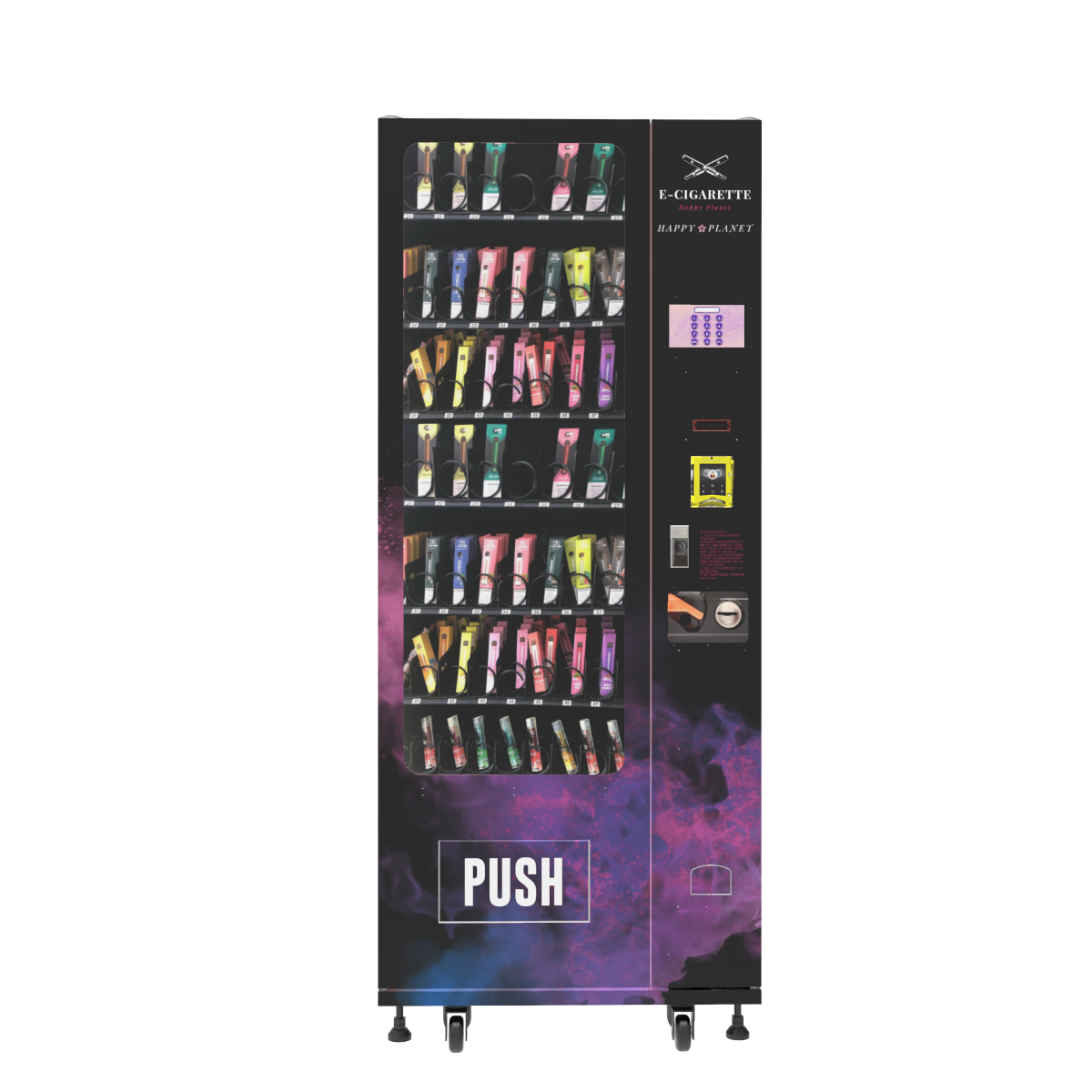
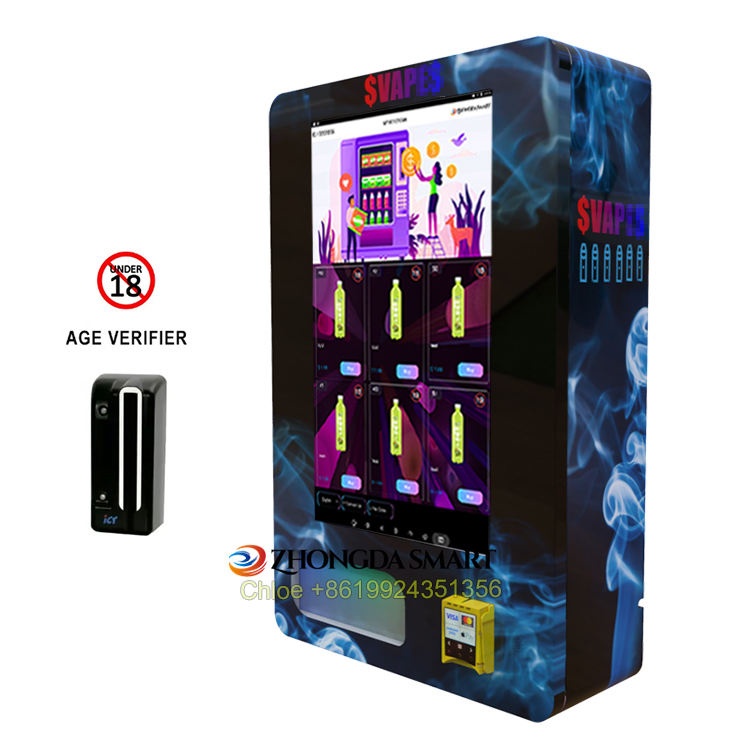
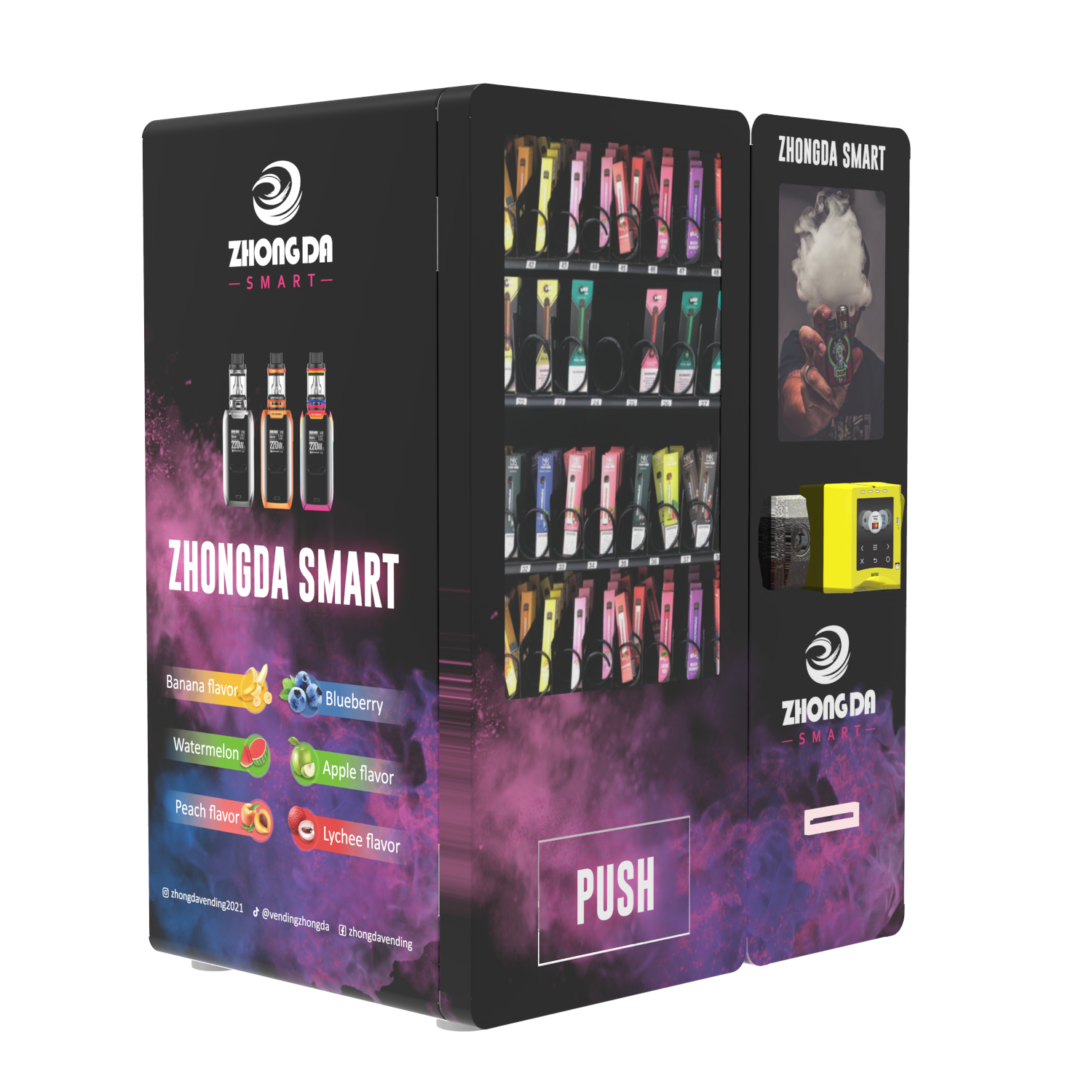
An age verification vending machine, on the other hand, is built with a completely different logic set. These units integrate a scanner that reads the barcode or magnetic stripe on a driver’s license, passport, or state ID. The software cross-references the birth date against the local legal age, which can vary by state or even by county. If the customer is underage, the transaction stops immediately. No cash, no card, no product. We have been manufacturing these units at Zhongda Smart for years, and the engineering focus is always on the scanner reliability and the software logic. A slow or inaccurate scanner kills the user experience. A fast one keeps the line moving.
Why Standard Kiosks Fail in This Space
I have consulted on a few projects where a retailer tried to modify a standard self-checkout kiosk to handle age verification. They added a third-party ID scanner and tried to patch the software. It was a mess. The scanner would freeze, the payment system would conflict with the age check, and the customer would end up standing there for two minutes while the screen buffered. That is a bad experience, and it drives people away. More importantly, if the system fails to verify age correctly, the business owner is on the hook for the violation. The fines for selling nicotine products to minors can be severe, and they can also lead to losing your retail license.
From a manufacturing standpoint, the difference is in the integration. A machine designed from the ground up for age verification has the scanner, the payment system, and the inventory control all talking to the same motherboard. There is no lag. The data is processed in real time. When we build a unit at our factory, we test the scanner with over a hundred different ID formats because a driver’s license from Texas looks different than one from New York or a European national ID card. The machine needs to recognize them all. That level of testing is something a general self-checkout kiosk manufacturer never does.
The Business Model: Where the Money Actually Lives
Let’s talk about the numbers because that is what keeps the lights on. I have helped set up operations in bars, convenience stores, and even hotel lobbies. The profit model for an age verification vending machine is different than a standard vending machine, and it is generally better. The average markup on a vape product sold through a vending machine is between 30% and 50%, depending on the brand and the location. A standard snack machine might net you 20% if you are lucky.
Here is a real-world breakdown from a deployment we did last year in a busy nightclub. The machine was placed near the exit, not the bar, to avoid crowding. It held about 200 units of various disposable vapes and pods. The average transaction was $18. The machine processed about 40 transactions per night on weekends and 15 on weekdays. That is a weekly gross revenue of around $5,500. After COGS, credit card fees, and restocking labor, the net profit was roughly $1,800 per week. The machine paid for itself in about 14 weeks. A standard self-checkout kiosk in that same location, if it could even handle age verification properly, would have a lower average ticket because it would not be selling the high-margin nicotine products.
Cost Structure Comparison
To make this decision easier for operators, I have put together a comparison table based on actual purchase and operational data from our clients and our own deployments. This is not theoretical. These are the numbers I see in spreadsheets every month.
| Cost Category | Standard Self-Checkout Kiosk | Age Verification Vending Machine |
|---|---|---|
| Initial Purchase Price | $4,000 – $8,000 | $6,000 – $12,000 |
| ID Scanner Integration | Add-on ($800 – $1,500) | Built-in (included) |
| Software Licensing (annual) | $600 – $1,200 | $300 – $800 |
| Compliance Updates (annual) | Not included | $200 – $400 |
| Average Transaction Value | $8 – $12 | $15 – $25 |
| Monthly Maintenance Cost | $150 – $250 | $100 – $200 |
| Risk of Fine (per incident) | High (no built-in check) | Low (verified check) |
The upfront cost is higher for the age verification machine, but the total cost of ownership over two years is actually lower when you factor in the compliance risk and the higher transaction value. The standard kiosk might look cheaper on day one, but it is a false economy. You are paying for a solution that does not fully solve your problem.
Operational Pitfalls I Have Seen Firsthand
Running a vending operation is not just about buying machines and filling them. There are real operational traps that can kill your profit margin. One of the biggest mistakes I see new operators make is placing a standard self-checkout machine in a location that requires age verification. They think they can just put a sign on it that says "Must be 21." That sign does nothing. I walked into a gas station last year where the owner had a standard kiosk with vapes inside. A 16-year-old walked up, paid cash, and walked out. The owner did not even know it happened until I pointed it out. That is a lawsuit waiting to happen.
Another issue is maintenance. A standard kiosk has more moving parts because it is designed for a wide variety of products. The conveyor belts and sensors can break down. An age verification vending machine, especially one built for nicotine products, is usually simpler mechanically. It uses a spiral or a lift mechanism that is proven and reliable. At our factory, we use a modular tray system that can be swapped out in under five minutes. That is a huge deal when you have a machine down on a Friday night. You lose revenue fast if the machine is out of service during peak hours.
Real Customer Behavior Data
We tracked user behavior across 50 machines over a six-month period. The data showed that the average time for a completed transaction on an age verification vending machine was 45 seconds. That includes the ID scan, payment, and product delivery. On a standard self-checkout kiosk with a manual ID check, the average time was over two minutes because the customer had to wait for an employee to come over and verify the ID. That wait time causes abandonment. We saw a 15% abandonment rate on the standard kiosk versus less than 3% on the age verification machine. Speed matters, especially in a high-traffic environment like a bar or a convenience store.
Selecting the Right Machine for Your Business
If you are a business decision-maker, you need to look at three things: location, product mix, and compliance requirements. For a high-volume location like a nightclub or a liquor store, an age verification vending machine is the only option that makes sense. The risk of a fine or a license revocation is too high to gamble with a standard kiosk. For a low-risk location like a warehouse break room where only employees have access, a standard self-checkout might work, but you are still leaving money on the table by not selling higher-margin products.
From a technical procurement standpoint, you want a machine that supports remote monitoring. This is non-negotiable. You need to know when a product is out of stock, when the cash box is full, and if the machine is online. We build all our units with a 4G LTE module so they can be managed from a dashboard. That saves a trip to the site. If you are running 20 machines across a city, driving to each one to check inventory is a waste of time and fuel. The remote management feature alone can cut your operational costs by 20%.
Supplier Considerations
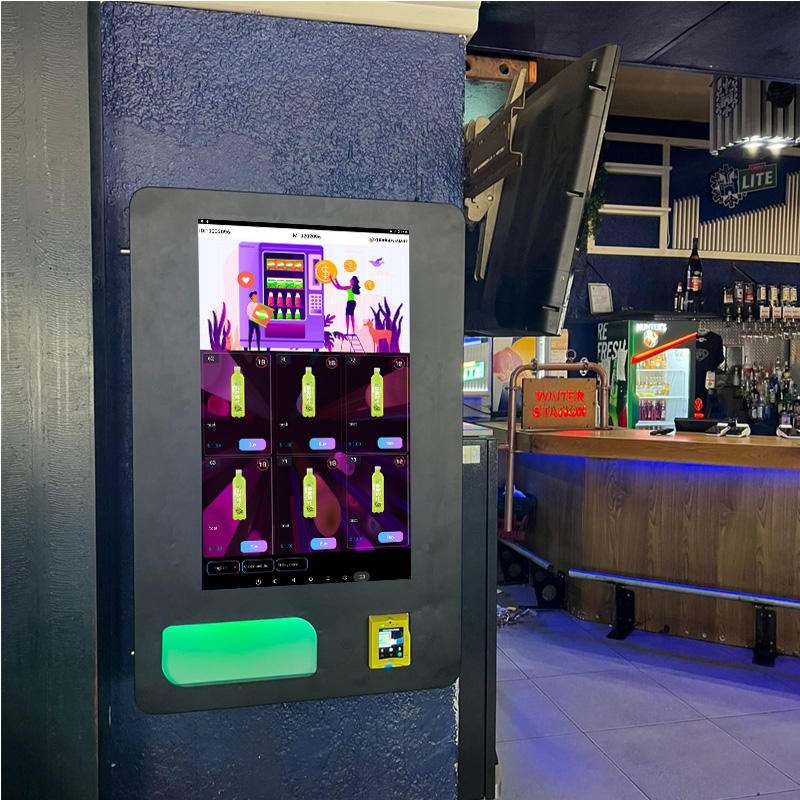
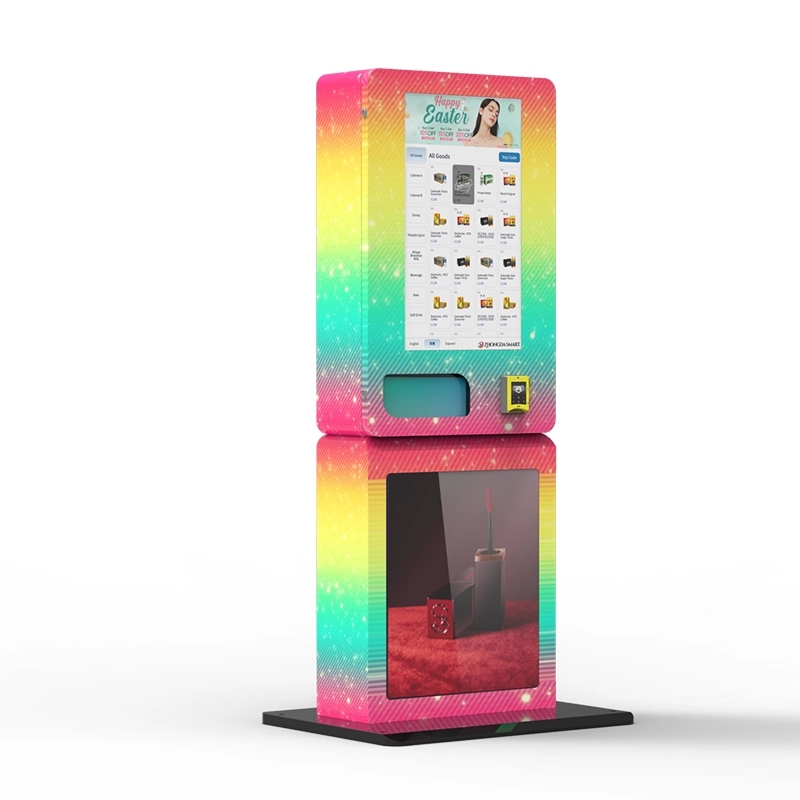
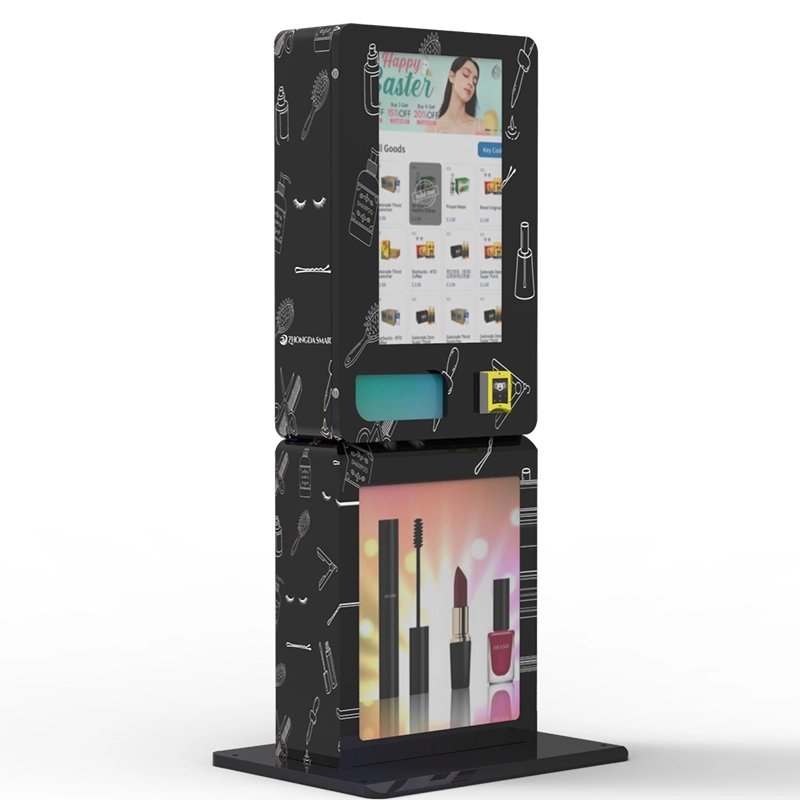
When you are sourcing a machine, do not just look at the price tag. Look at the build quality and the support. I have seen operators buy cheap machines from overseas vendors that have no local support. The machine breaks, and they are stuck waiting for a replacement part for three weeks. That kills your cash flow. We have been in this business for fifteen years, and we have a network of service partners in North America and Europe. If a machine goes down, we can usually have a technician on site within 48 hours. That is the level of support you need to run a profitable operation. For more on the technical specifications of our age-verified units, you can review the product details on our site. We have a range of models, including a compact wall-mounted version that works well in tight spaces.
Long-Term Strategy and Market Trends
The market for automated retail is not slowing down. According to a report from IBISWorld, the vending machine industry in the US is expected to grow at an annual rate of over 4% through the next five years. The driver is labor costs. Retailers are looking for ways to reduce staffing, and vending machines are a direct solution. But the machines have to be smart. They have to handle compliance automatically because regulators are getting stricter. A report from Statista indicated that compliance-related fines for age-restricted product sales have increased by nearly 30% in the last three years. That trend is not going to reverse.
If you are planning to scale, start with one or two machines in high-traffic locations. Learn the operational rhythm. Understand the restocking schedule and the payment processing. Once you have a model that works, replicate it. Do not try to put machines in 50 locations at once. I have seen that fail more often than it succeeds. The operators who succeed are the ones who treat it like a retail business, not a passive income stream. You have to manage inventory, monitor sales data, and adjust the product mix based on what is selling. A machine that sells only one brand of vape will underperform a machine that offers variety. We have seen that data play out consistently.
Final Thoughts on Risk and Reward
At the end of the day, the choice between a self-checkout kiosk and an age verification vending machine comes down to what you are selling and where you are selling it. If you are dealing with age-restricted products, do not cut corners. The cost of a compliance failure is far higher than the cost of the right machine. I have been on the factory floor, and I have been in the field. I know what works and what does not. The age verification vending machine is not just a tool for compliance. It is a tool for building a sustainable, profitable business in a regulated market. The upfront investment is worth it, and the data backs that up.
Frequently Asked Questions
Can I use a regular self-checkout kiosk for selling vape products?
Technically you can, but it is not advisable. Standard kiosks lack integrated age verification, which puts you at high risk of fines and legal action. You would need to add a separate ID scanner and have an employee manually approve each sale, which defeats the purpose of automation. An age verification vending machine handles this automatically and is the safer investment.
How long does it take to get a return on investment?
Based on our deployment data, most operators see a full ROI within 12 to 20 weeks in a high-traffic location like a bar or a convenience store. The exact timeline depends on your pricing, product cost, and foot traffic. Lower-traffic locations like a small lounge might take 6 to 9 months. Focus on volume locations first.
What happens if the ID scanner fails to read a license?
Modern scanners are highly reliable, but failures can happen. The machine should have a manual override that requires a manager code. This allows the operator to manually verify the ID and complete the sale. You should also keep a backup scanner on hand. We include spare parts kits with every machine order to minimize downtime.
Do I need a special license to operate an age verification vending machine?
Yes, in most states and countries, you need a retail license to sell nicotine products, even through a vending machine. The machine itself does not replace the license. You must also comply with local zoning laws. Check with your local health department or alcohol beverage control board before purchasing any equipment.
Can the machine update its age verification requirements automatically?
Yes, if the machine is connected to the internet. Our units receive over-the-air updates that adjust the age threshold based on local law changes. If a state raises the legal age from 18 to 21, the machine updates automatically. This is a critical feature for multi-state operators. Without it, you would need to manually update each machine.
What is the typical maintenance schedule for these machines?
You should perform a basic cleaning and sensor check every two weeks. The ID scanner lens needs to be wiped down to prevent dust buildup. Mechanical parts like the spirals should be inspected monthly. We recommend a full software diagnostic every quarter. Most of this can be done remotely through the management dashboard.
How many different ID formats can the scanner read?
Our scanners are tested against over 150 different ID formats, including all US state driver's licenses, Canadian provinces, and European national ID cards. The software uses optical character recognition to parse the data. If a new format is issued, we push an update. This is a key differentiator from cheaper machines that only read a few formats.
Is it better to buy or lease a machine?
Buying is almost always better for the long term if you have the capital. Leasing locks you into a contract and often has higher total costs. If you are testing a single location, buying a used or refurbished machine can lower your risk. Once you prove the location, buy new units for better reliability and warranty coverage.
Sources and References
IBISWorld - Vending Machine Industry in the US: https://www.ibisworld.com/united-states/market-research-reports/vending-machine-operators-industry/
Statista - Compliance fines for age-restricted products: https://www.statista.com/topics/1041/tobacco/