If you’re asking “what is a smart vending machine,” the short answer is this: it’s a fully automated retail terminal that processes payments, verifies age, manages inventory in real time, and reports sales data without human intervention. But if you’ve been in this space as long as I have, you know the real answer is more nuanced. I’ve spent over a decade deploying and operating these units across the U.S. and Europe, and another fifteen years building them from the ground up at our factory. A smart vending machine isn’t just a cooler with a touchscreen. It’s a networked asset that, when spec’d correctly, can generate a monthly profit per square foot that outperforms most traditional retail. When spec’d poorly, it’s an expensive paperweight.
The Core Engineering Behind a Smart Vending Machine
From a manufacturing standpoint, the difference between a basic vending machine and a smart vending machine comes down to three components: the control board, the telemetry module, and the payment stack. The control board handles motor commands and user interface logic. The telemetry module connects the machine to the cloud, transmitting sales data, inventory levels, and error codes. The payment stack includes a card reader, NFC, and often a cash validator. What makes it “smart” is the software layer that ties these together and allows remote management.
In our own production line, we’ve moved away from proprietary boards. We now use industrial-grade ARM-based controllers that run a lightweight Linux OS. This gives us flexibility to push firmware updates and integrate third-party age verification APIs. If you’re buying a machine that still runs on a closed, 8-bit microcontroller, you’re buying a machine that will be obsolete in two years. A truly smart vending machine must be upgradeable. That’s not a feature—it’s a requirement.
Telemetry and Data Flow
Every time a customer buys a product, the machine logs the transaction. That data hits a cloud dashboard within seconds. You can see which SKUs sold, at what time, and at which location. This isn’t just nice to have—it’s how you optimize restocking routes. In our European deployments, operators using telemetry data reduced their service visits by 30%. Without telemetry, you’re driving blind, refilling slots that are still full while empty slots lose revenue.
Commercial Models: How Operators Actually Make Money
I’ve worked with operators running everything from a single machine in a bar to 200-unit fleets in convenience store chains. The revenue model is straightforward but unforgiving. You make money on the margin between wholesale cost and retail price, minus location commission, transaction fees, and maintenance. A typical unit in a high-traffic location can move 40 to 60 transactions per day. At an average ticket of $12, that’s $480 to $720 in daily gross revenue. After costs, net profit per machine often lands between $800 and $1,500 per month.
But that’s the ideal. I’ve seen operators fail because they didn’t account for the 5% to 8% transaction failure rate caused by poor connectivity or outdated payment terminals. If your smart vending machine doesn’t have a redundant communication path—like cellular backup alongside Wi-Fi—you’re leaving money on the table every time the network drops.
Profit Margins and Product Mix
The product mix inside the machine is the biggest lever you have. High-margin consumables like disposable vapes or nicotine pouches can carry a 40% to 60% margin. Low-margin items like snacks or drinks might only carry 20%. In our own case studies, operators who dedicated 70% of slots to high-margin products hit ROI in under 10 months. Those who treated the machine like a general store stretched ROI to 18 months or more. The smart vending machine doesn’t care what you sell—it only cares how often you sell it and at what margin.
Cost Structure: What You’re Actually Paying For
Let’s break down the real cost of deploying a smart vending machine. This isn’t just the unit price. You have hardware, software licensing, installation, payment processing setup, and initial inventory. A commercial-grade unit from a reputable manufacturer like Zhongda Smart typically runs between $3,500 and $8,000 depending on the configuration. Units with integrated ID scanning and age verification add another $1,200 to $1,800 to the bill of materials.
| Cost Category | Estimated Range (USD) | Notes |
|---|---|---|
| Hardware (Base Unit) | $3,500 – $8,000 | Depends on tray count, cooling, and screen size |
| Age Verification Module | $1,200 – $1,800 | ID scanner + software integration |
| Installation & Freight | $400 – $1,200 | Heavy units require two-person delivery |
| Software License (Annual) | $300 – $600 | Cloud dashboard and telemetry access |
| Initial Inventory | $1,500 – $3,000 | Depends on slot count and wholesale pricing |
| Payment Processing Setup | $100 – $300 | Merchant account activation |
One hidden cost I see operators underestimate is the merchant account. If you’re selling age-restricted products, many standard payment processors will decline you. You need a high-risk merchant account, which carries higher monthly fees and chargeback reserves. Plan for an extra $50 to $100 per month per machine in processing overhead.
Real-World Deployment Experience: What Works and What Doesn’t
I personally supervised a deployment of 45 smart vending machines across bars and nightclubs in a major U.S. metro area. The first six months were brutal. We had three machines vandalized, two with smashed screens. We learned the hard way that a glass front panel in a loud environment is a target. We switched to polycarbonate panels with anti-glare coating. Problem solved.
Another lesson: location placement inside the venue matters more than the venue itself. Machines placed near the restroom exit saw 22% higher sales than those near the entrance. Why? People exiting the restroom are already thinking about their next drink or smoke break. That’s behavioral data you can’t get from a spreadsheet—you have to see it in the field.
Age Verification: The Non-Negotiable Feature
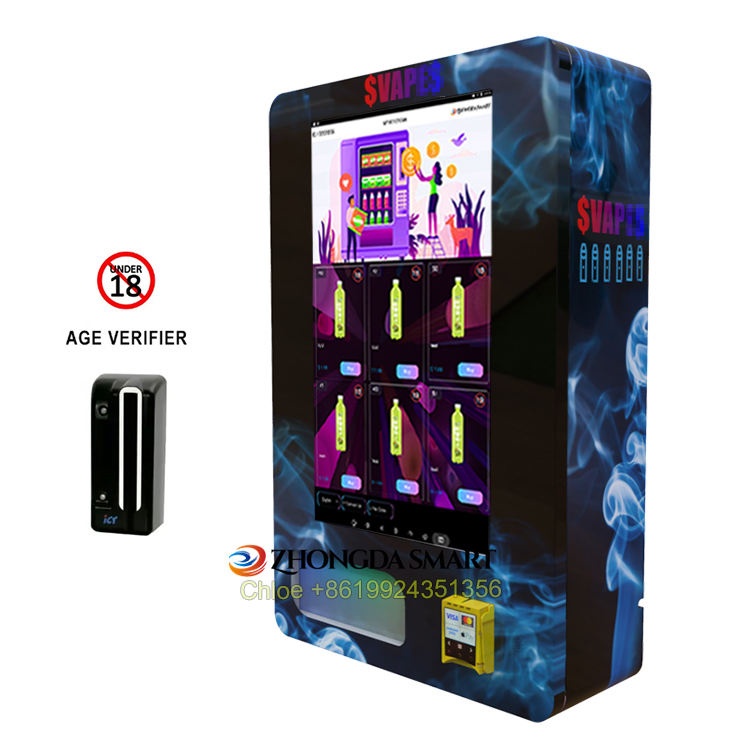
If you’re selling age-restricted products in any regulated market, your smart vending machine must have integrated age verification. We use a combination of ID scanning and biometric matching. The machine scans the back of a driver’s license, parses the barcode, and compares the photo to a live camera capture. The entire process takes under 10 seconds. If the scan fails or the person looks under 25, the machine triggers a secondary manual verification via remote video call.
We’ve seen regulators in states like California and Florida start to audit machines. Without proper verification logs, operators face fines up to $10,000 per incident. Our machines store encrypted audit trails for every transaction, which we can export for compliance reporting. This isn’t optional—it’s the cost of doing business.
Comparing Smart Vending Machine Types
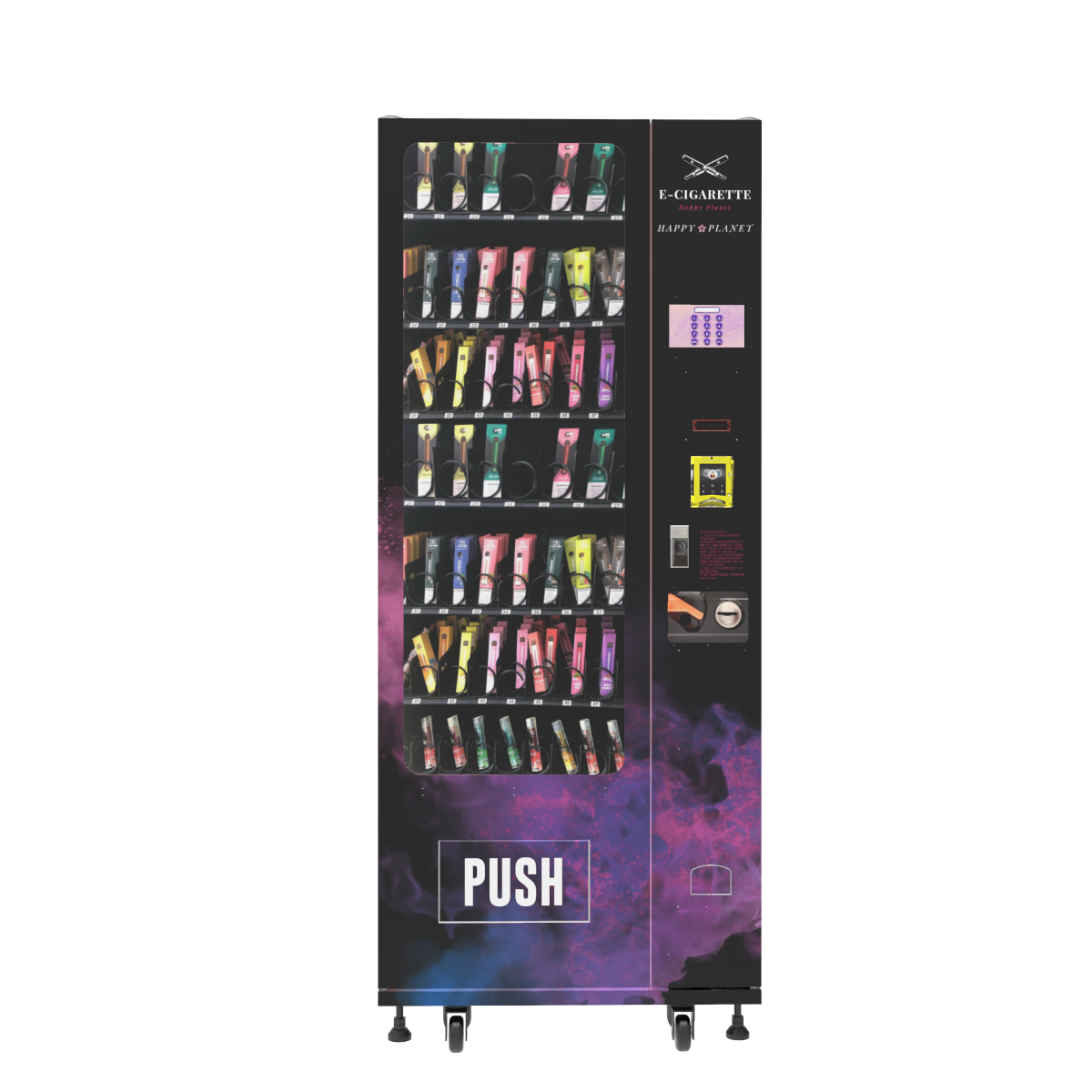
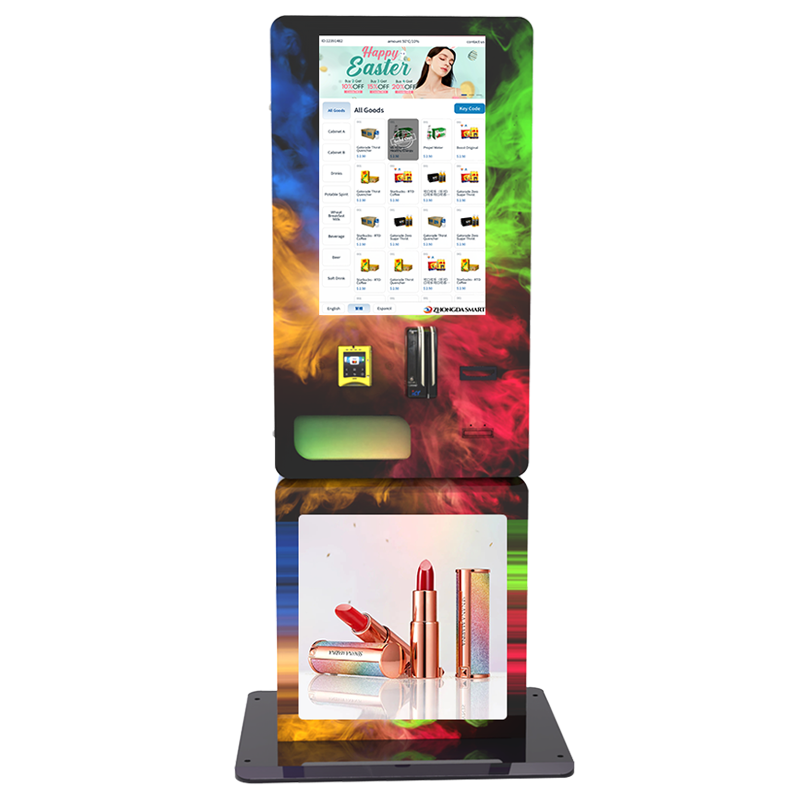
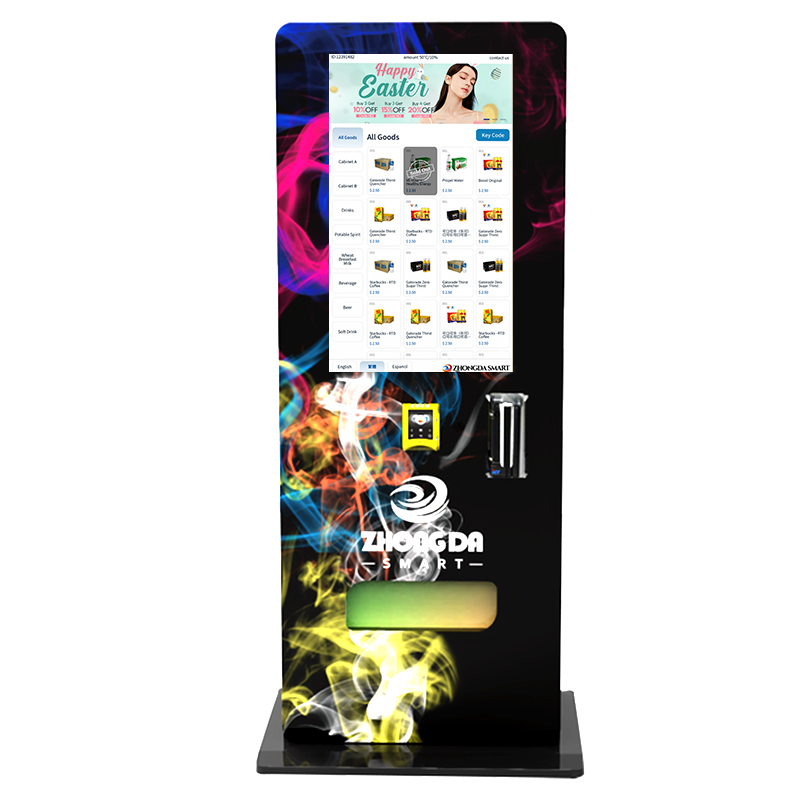
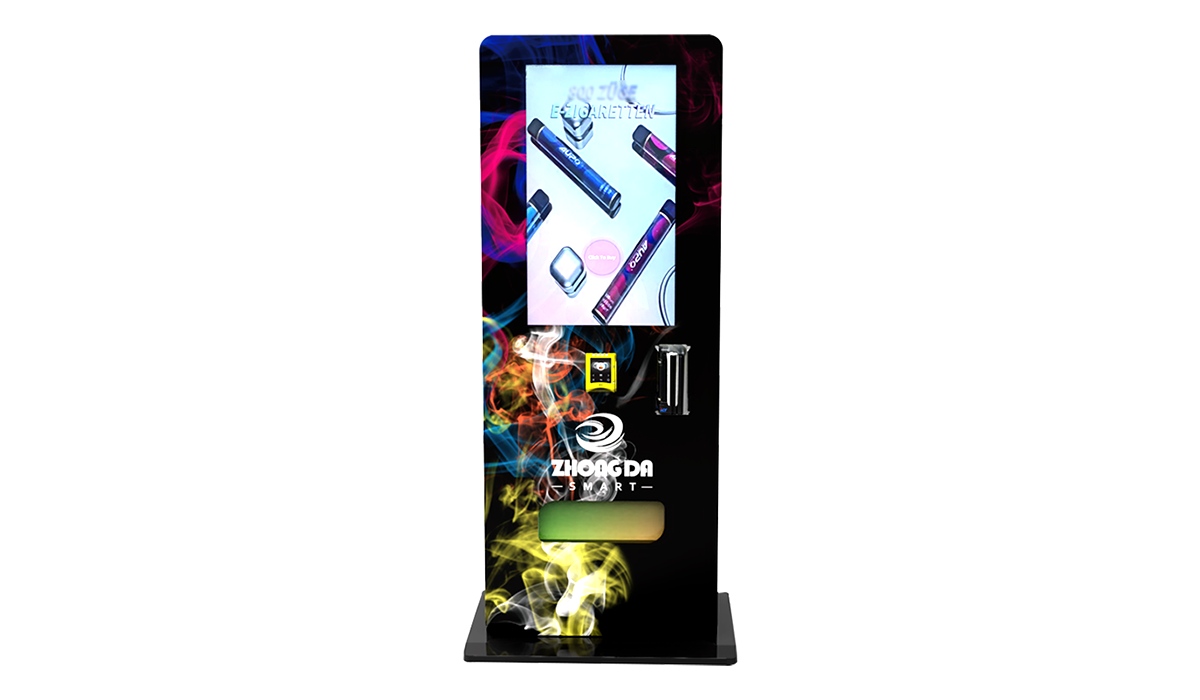
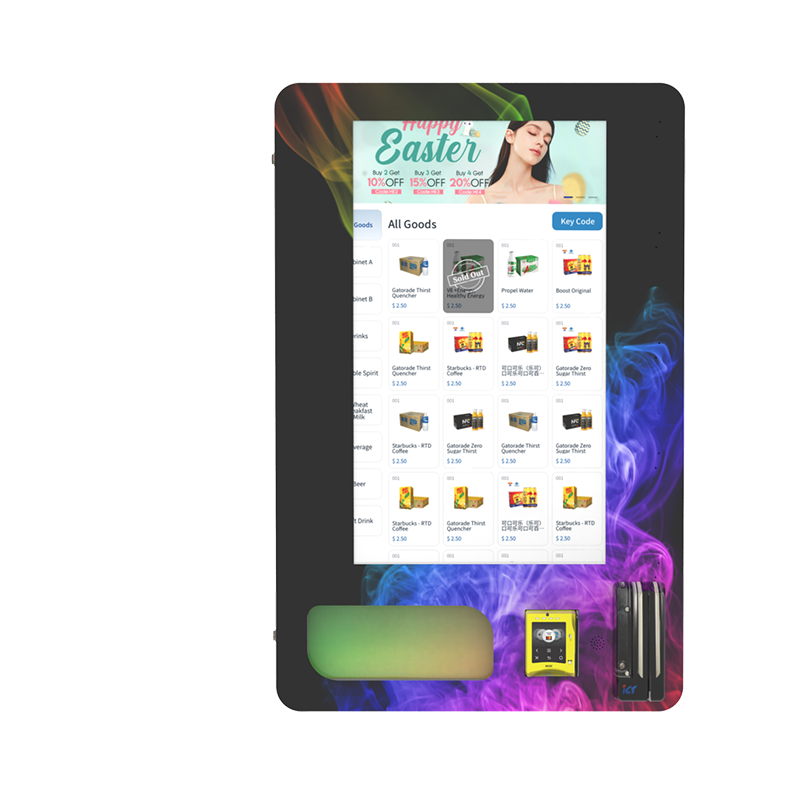
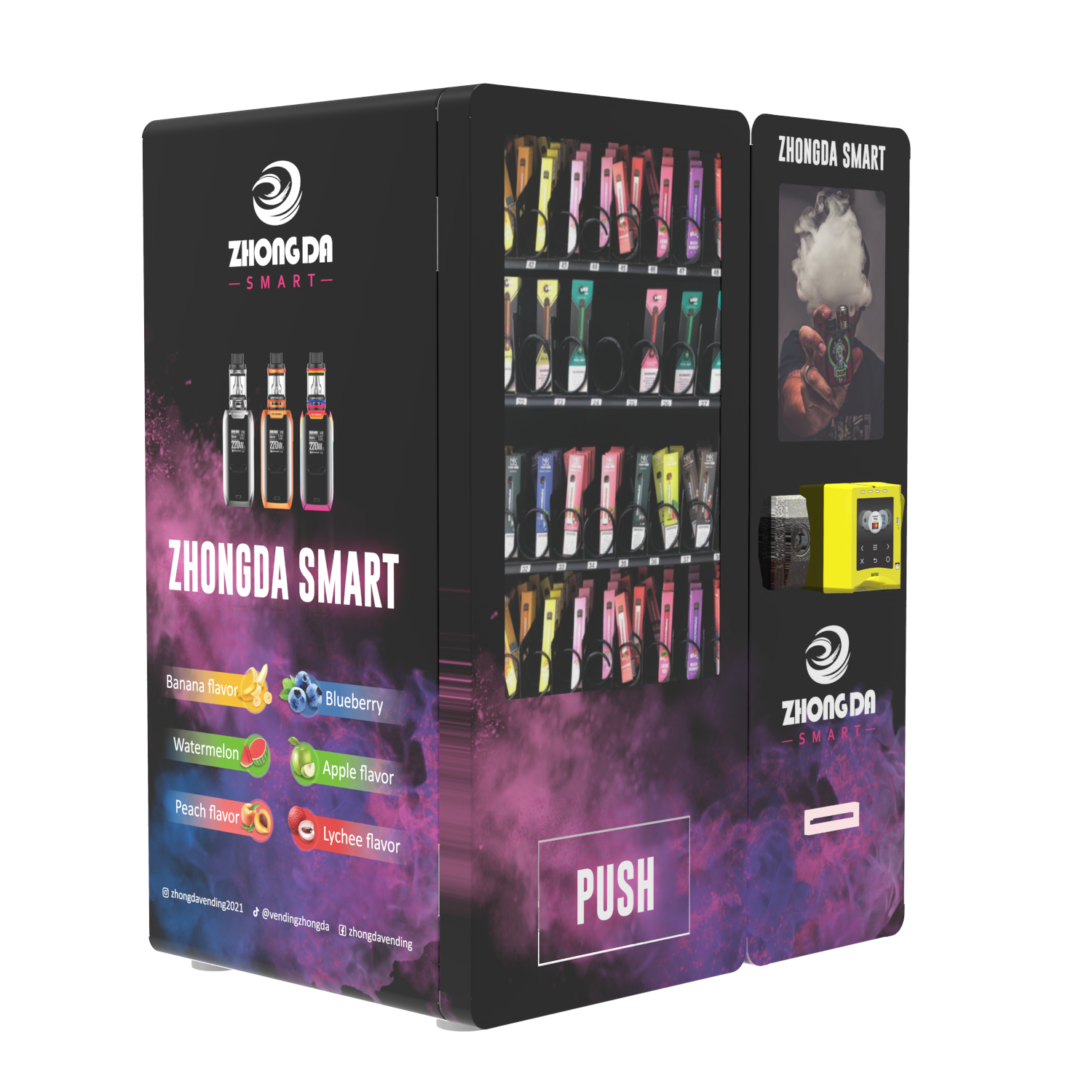
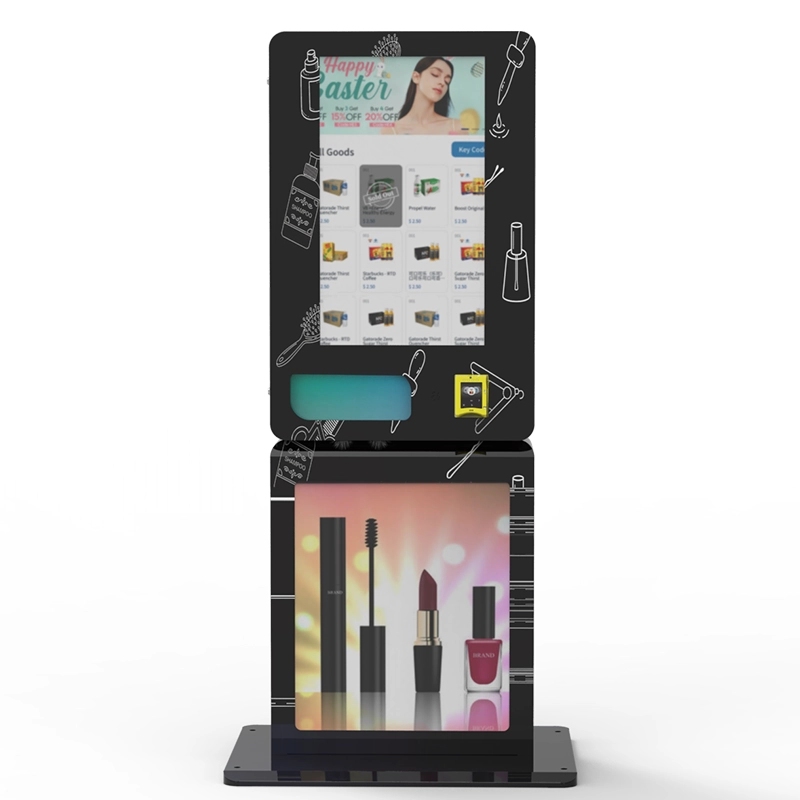
Not all smart vending machines are built for the same job. A wall-mounted unit works well in a small smoke shop where floor space is tight. A full-height unit with multiple trays works in a convenience store or hotel lobby. The table below breaks down the differences based on our own production specs and field feedback.
| Machine Type | Typical Slots | Best Use Case | Average Cost |
|---|---|---|---|
| Wall-Mounted Compact | 12 – 24 | Small retail, lounges, bars | $3,500 – $5,000 |
| Full-Height Standard | 30 – 50 | Convenience stores, hotels | $5,500 – $8,000 |
| High-Capacity Multi-Tray | 50 – 80 | High-traffic public spaces | $8,000 – $12,000 |
For most first-time operators, I recommend starting with a wall-mounted compact unit. It limits your financial exposure and forces you to focus on high-margin product selection. Once you validate the location and the revenue model, scaling up to a full-height unit is a natural step. We’ve seen operators who started with a single wall-mounted unit grow to 20 machines within two years by reinvesting profits.
Maintenance and Long-Term Reliability
Every machine will break. The question is how fast you can fix it. In our fleet, the average mean time between failures (MTBF) is around 18 months for the mechanical systems—motors, belts, and sensors. The electronic components, like the main board and touchscreen, typically last 3 to 4 years before needing replacement. The biggest failure point we see is the cooling system in machines that store refrigerated products. Compressor failure usually hits around the 2-year mark.
We design our machines with modular components. If a motor fails, you swap it in 10 minutes without rewiring. If the touchscreen cracks, you replace the bezel assembly, not the entire door. That modularity reduces downtime from days to hours. In our operator network, machines with modular designs have a 40% lower total cost of ownership over five years compared to machines that require factory service calls.
Software and Firmware Updates
A smart vending machine is only as good as its software. We push firmware updates over the air every 6 to 8 weeks. These updates fix bugs, improve payment processing speed, and sometimes add new features like dynamic pricing. If your machine doesn’t support OTA updates, you’re stuck with whatever bugs shipped from the factory. I’ve seen operators throw away entire machines because the software was too outdated to integrate with a new payment processor. Don’t be that operator.
Risk Factors and Failure Modes
I’ve been in this business long enough to have seen the failures. The most common mistake is overestimating foot traffic. Operators see a busy street and assume every pedestrian will stop. The reality is that conversion rates in vending are typically 2% to 5% of passersby. If 1,000 people walk past your machine in a day, you’re doing well to get 50 sales. Do the math before you sign a lease.
Another failure mode is poor payment integration. We had an operator in Texas who bought a machine with a payment terminal that didn’t support tap-to-pay. In 2023, that’s a death sentence. Over 60% of in-person transactions under $25 are now contactless. If your machine can’t accept Apple Pay or Google Pay, you’re losing half your potential customers. We retrofitted his machines with new terminals, and his sales jumped 35% within two weeks.
Long-Term Operation Strategy
Running a smart vending machine business isn’t a set-it-and-forget-it operation. You need a restocking cycle that matches your sales velocity. For high-traffic units, that means twice a week. For medium-traffic units, once a week. For low-traffic units, every 10 days. Use your telemetry data to adjust. If a machine consistently sells out of a specific SKU in three days, increase that slot allocation. If a SKU sits for two weeks, replace it.
We also recommend a quarterly physical inspection. Check the seals on the doors, clean the cooling coils, and test the payment terminals. A machine that’s well maintained will run for 7 to 10 years. A machine that’s neglected will fail in 3. The difference is a few hours of labor per quarter.
Choosing the Right Manufacturing Partner
If you’re sourcing equipment, look for a manufacturer that has been in the game long enough to have a track record. We’ve been building vending machines for over 15 years, and we’ve learned that reliability comes from component selection, not just assembly. We use Nidec motors, Panasonic relays, and Corning Gorilla Glass for our touchscreens. These aren’t marketing decisions—they’re engineering choices based on field failure data. You can see the full range of our equipment, including our wall-mounted and full-height units, at Zhongda Smart. We also publish detailed technical specs and case studies on our Resource Center page.
Frequently Asked Questions
How much can I earn from a single smart vending machine?
What is the ROI period for a smart vending machine?
Do I need a special merchant account for age-restricted products?
How does age verification work inside the machine?
What happens if the machine loses internet connection?
Can I use a smart vending machine for products other than vapes?
How long does a smart vending machine last with proper maintenance?
What is the most common reason smart vending machines fail in the field?
Data references: Industry vending machine transaction volume and growth statistics are sourced from IBISWorld’s Vending Machine Operations industry report (2024). Contactless payment adoption rates are based on data published by Forbes in their 2023 Payments Ecosystem analysis.