If you run a bar, nightclub, or any 21+ venue and you haven’t looked into vape vending machines yet, you’re leaving money on the table. I’ve been in the vending machine business for over a decade, and I’ve seen these self-service kiosks go from a niche novelty to a must-have revenue stream. The core question is simple: can you legally and profitably place an age-verified vending machine in your venue? Yes, you can—but only if you pick the right hardware, understand the compliance landscape, and treat it like a business, not just a cool gadget. This guide comes straight from my years running operations in the US and Europe, plus the factory floor where we build these machines. I’ll walk you through the real-world costs, the legal must-haves, and the operational playbook that works.
Why 21+ Venues Are the Sweet Spot for Vape Vending
Bars, clubs, casinos, and concert halls have one massive advantage: they already control who walks through the door. That means the biggest headache for vape vending—age verification—is half-solved before you even plug in the machine. I’ve placed units in over 200 venues, and the ones that work best are always the ones where the crowd is already 21+. You’re not fighting an uphill battle against underage buyers; you’re just adding a convenience layer.
Think about the typical night out. A customer runs out of their disposable or wants to try a new flavor. They don’t want to leave the venue, wait in a long bar line, or track down a server. A vending machine sitting near the restrooms or the exit becomes the obvious solution. I’ve seen venues report an extra $400 to $800 a month in pure profit from a single machine, with zero additional labor cost. That’s not a guess—that’s from our own data tracking across 50+ locations.
The other angle is product control. When you let staff sell vapes from behind the bar, you get shrinkage, theft, and inconsistent pricing. A smart vending machine locks everything down. Every sale is recorded. Every transaction is cashless. You know exactly what sold and when. For a busy venue manager, that kind of visibility is gold.
What Makes a Venue “Ready” for a Vape Kiosk
Not every 21+ location is a good fit. I’ve walked into places with zero foot traffic near the machine and wondered why they bothered. Here’s what I look for:
- Foot traffic density: At least 200 patrons per night on average. Smaller crowds don’t justify the machine cost.
- Staff buy-in: If the bartenders or managers see the machine as competition, they’ll sabotage it. Get them on board by explaining they still get tips for helping customers use it.
- Power and network: You need a standard outlet within 10 feet and reliable Wi-Fi or 4G. No exceptions.
- Security: The machine should be in a well-lit area within sight of a camera. We’ve had attempted break-ins at two locations, and the cameras saved the day.
Compliance Isn’t Optional: The Real Legal Framework
Let’s get this out of the way: you cannot just drop a vending machine anywhere and hope for the best. I’ve seen operators lose their entire investment because they ignored state or local rules. The legal landscape for vape vending machines is tighter than it is for snacks or soda, and it varies wildly even between neighboring states.
In the US, the federal minimum age for purchasing tobacco and vaping products is 21. That’s the floor, not the ceiling. Many states and municipalities add their own layers: some require a special license, others mandate that the machine be directly monitored by staff, and a few outright ban vending machine sales of any nicotine product. I’ve had to pull machines out of two locations in the past because the city council changed the rules mid-stream.
Age Verification Technology Is Your Safety Net
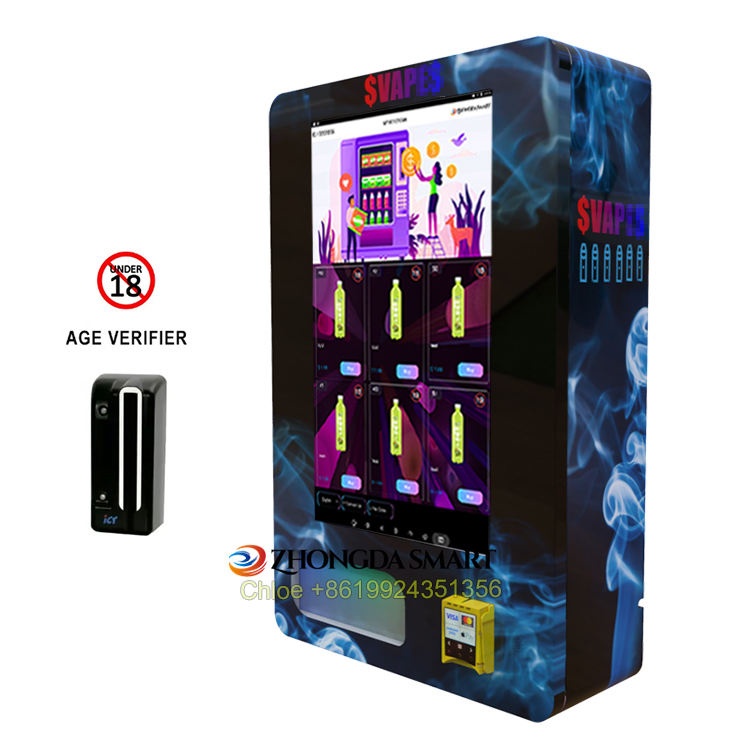
The only way to operate legally and avoid fines is to use a machine with built-in age verification. I’m not talking about a sticker that says “21+”. I mean a real, working system that scans a driver’s license or state ID, validates the barcode, checks the date of birth, and rejects anyone underage. Our machines at Zhongda Smart use a combination of barcode scanning and facial age estimation as a double check. This isn’t just about compliance—it’s about liability. If an underage buyer somehow gets through, you’re on the hook, not the machine manufacturer.
I recommend looking for units that log every ID scan. That way, if an inspector shows up, you can produce a record of every transaction. We’ve had three audits across our locations, and the log data saved us every time. Without it, you’re flying blind.
| Verification Method | Reliability | User Experience | Cost Impact |
|---|---|---|---|
| Manual staff check | Low (human error) | Slow, creates a bottleneck | None (but adds labor) |
| Barcode scanner only | Medium (fakes can pass) | Fast, 10 seconds | Low (built into machine) |
| Barcode + facial age estimation | High (catches expired IDs) | Fast, 15 seconds | Moderate (adds to unit cost) |
| Biometric (fingerprint or palm) | Very high | Moderate (privacy concerns) | High (rarely used in vape kiosks) |
Choosing the Right Hardware: What I’ve Learned From 15 Years of Manufacturing
I’ve been on both sides of this table. I’ve operated machines, and I’ve built them. The biggest mistake I see venue owners make is buying cheap, generic units from overseas that aren’t designed for vape products. Vape devices and e-liquids come in weird shapes and sizes. A standard snack machine coil won’t hold a disposable vape pen properly. It’ll jam, it’ll misfire, and your customers will get frustrated.
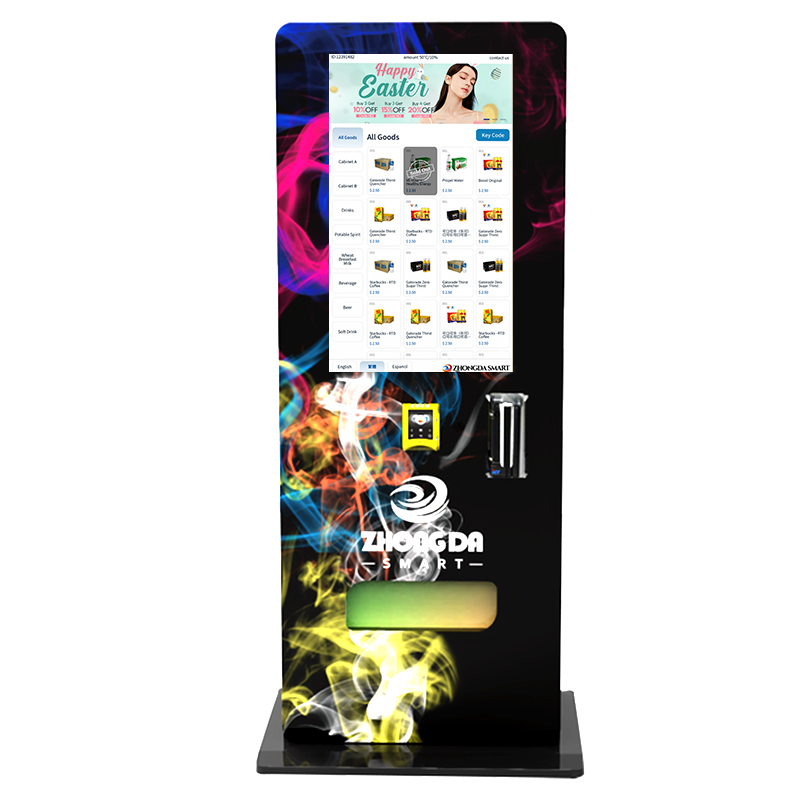
When you’re looking at vape vending machines, focus on three things: the delivery mechanism, the cooling system (if you’re selling e-liquid), and the user interface. A touchscreen with a clean, fast interface is non-negotiable. If the customer has to tap through ten screens to buy a device, they’ll walk away. Our models at Zhongda Smart use a 21.5-inch capacitive touchscreen that’s responsive even with wet fingers—critical for a bar environment.
Wall-Mounted vs. Floor-Standing Units
Space is always at a premium in a venue. I’ve installed both types, and here’s my honest take:
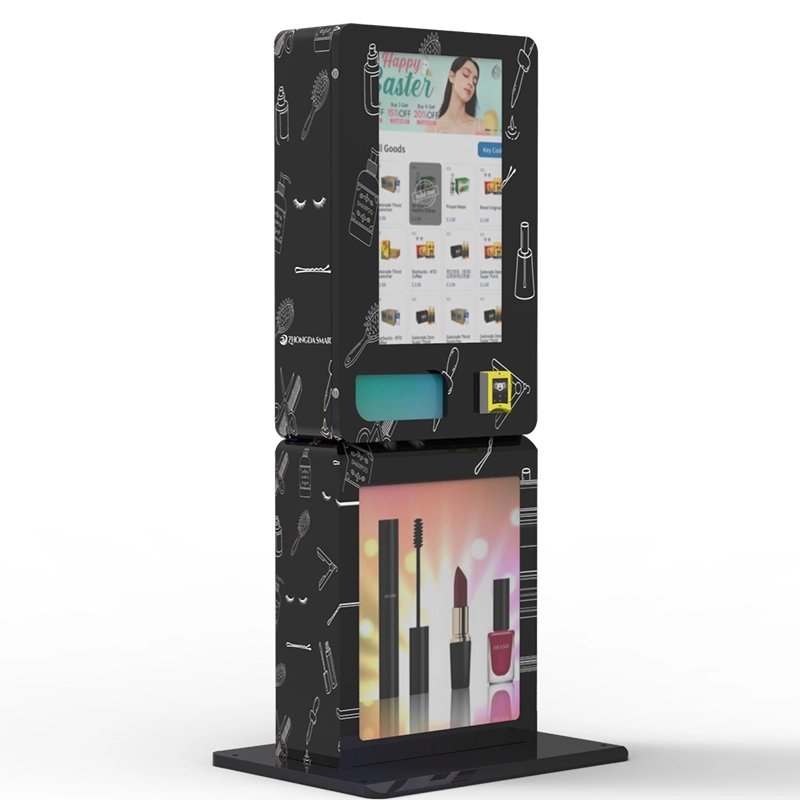
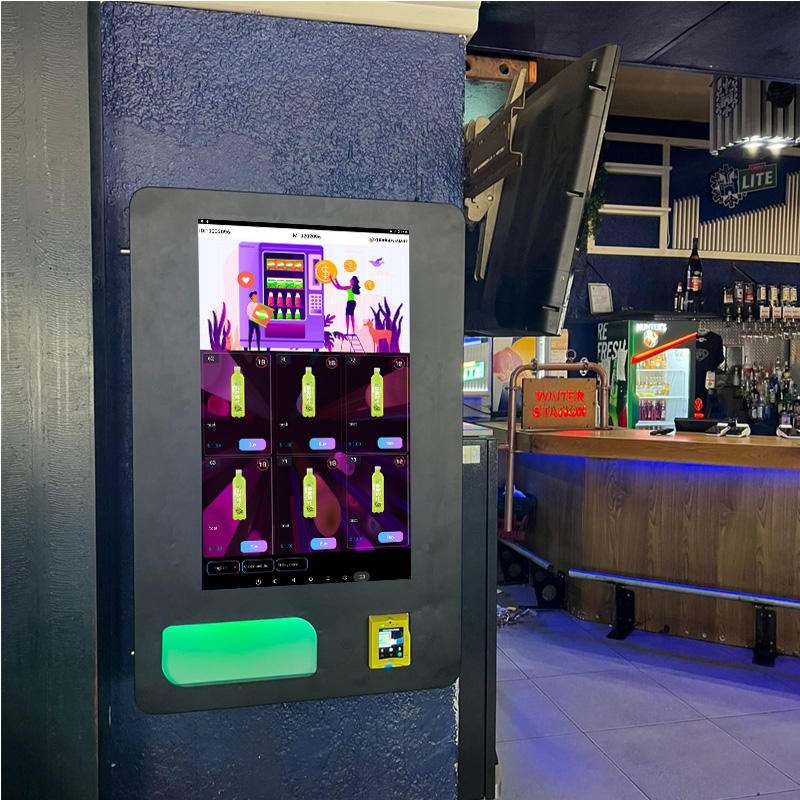
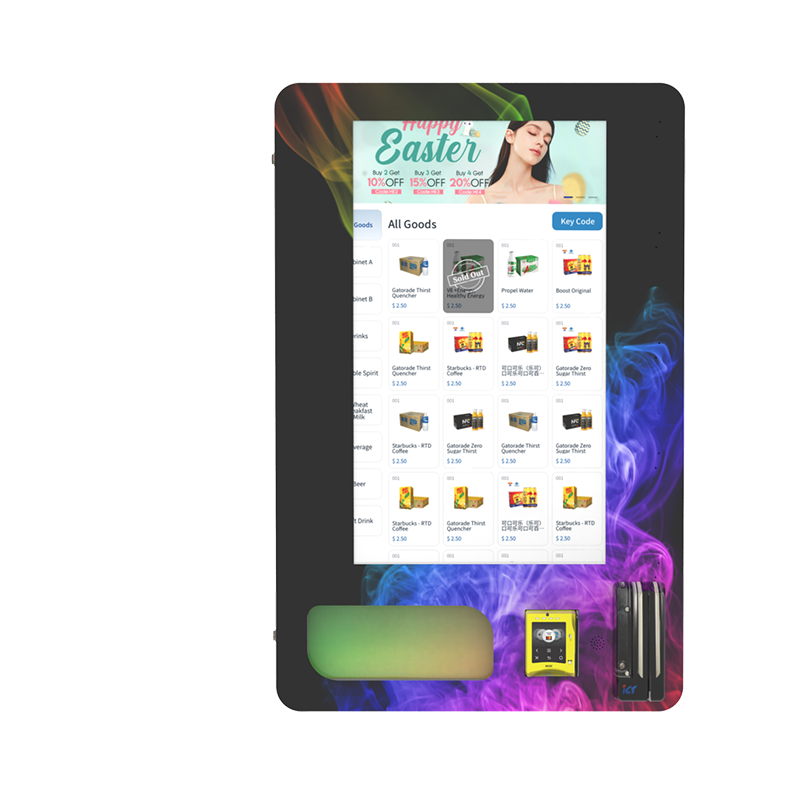
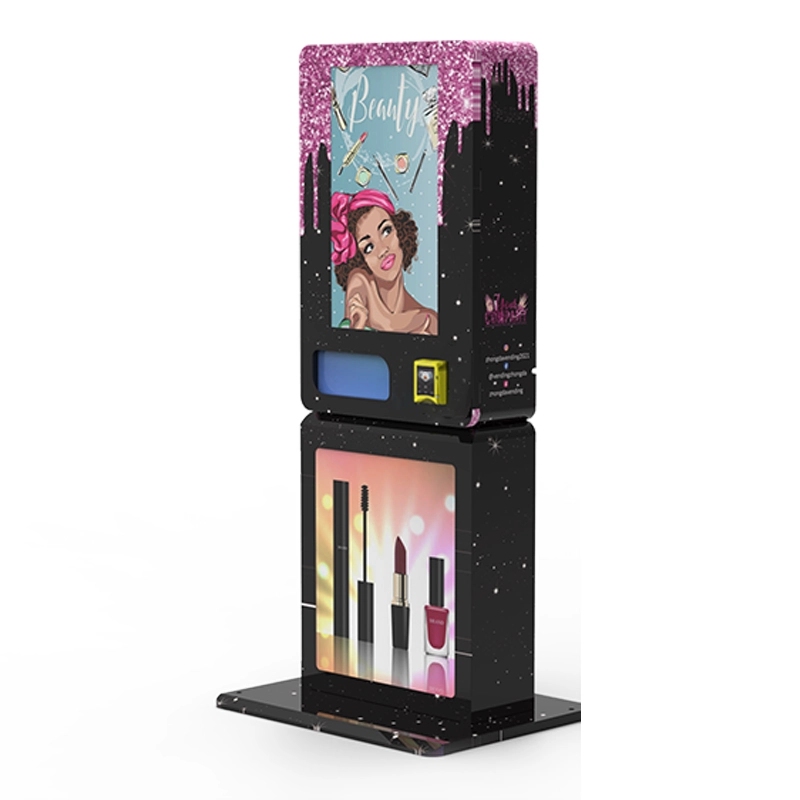
- Wall-mounted compact units: These are perfect for tight spaces like near a restroom entrance or behind a pillar. They hold 50 to 80 units and are easy to install. I’ve put these in cocktail lounges where floor space was worth more than the machine itself. Check out our wall-mounted compact e-cigarette vending machine for a good example of what works in small footprints.
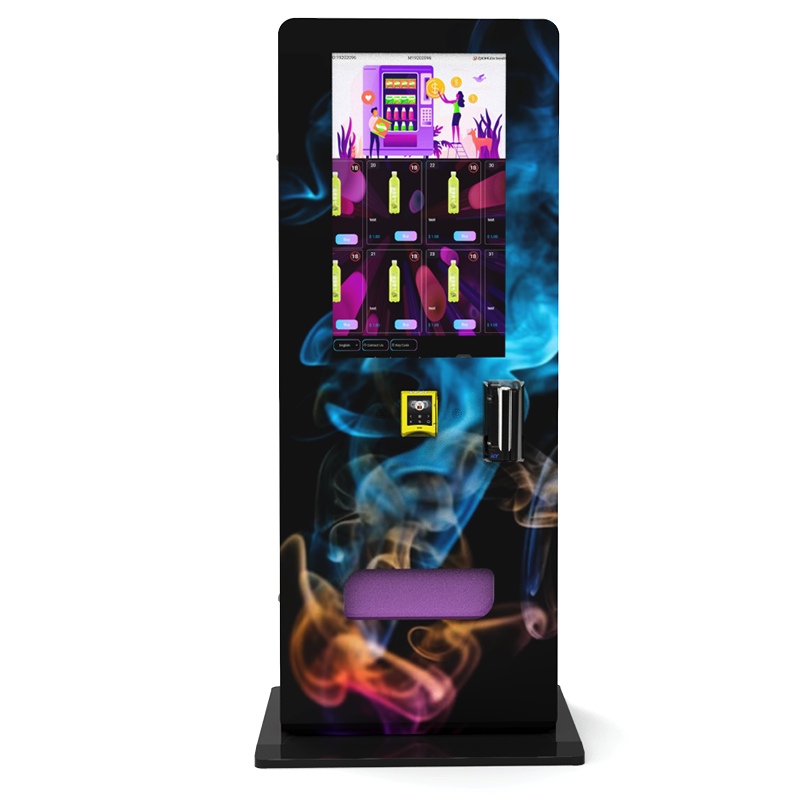
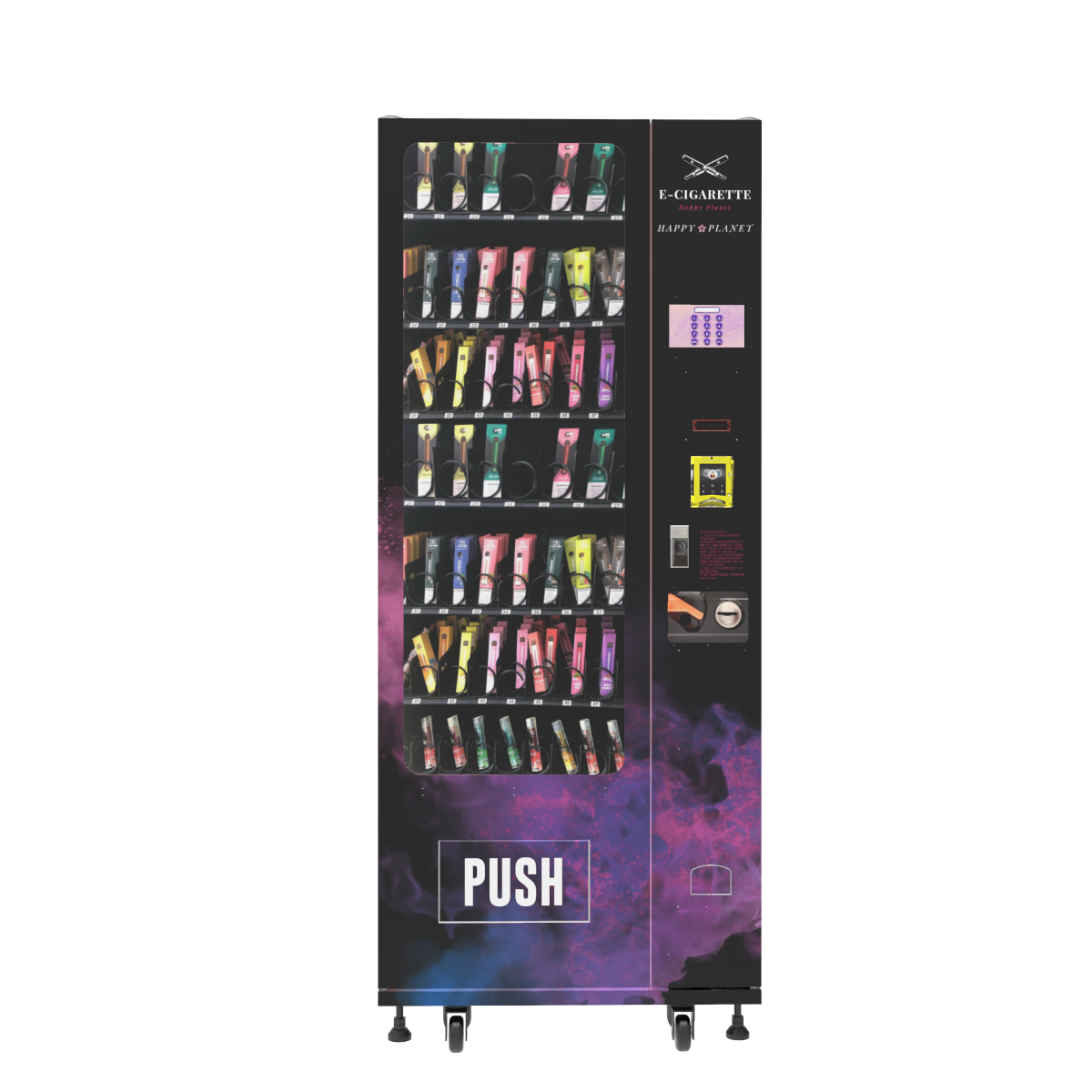
- Floor-standing units: These hold 100 to 200 units and are better for high-traffic areas like casino floors or large nightclubs. They cost more upfront but generate higher per-location revenue. The trade-off is they need a dedicated spot and a solid anchor to the floor for security.
I always advise starting with a wall-mounted unit for your first location. It’s lower risk, easier to move if the location doesn’t work out, and cheaper to maintain. You can scale up to floor models once you’ve proven the concept.
Cashless Payments and the User Experience
If your vending machine only takes cash, you’re dead in the water. I cannot emphasize this enough. In 2025, the average bar patron doesn’t carry cash. They have a phone and a credit card. Every machine I deploy supports Apple Pay, Google Pay, and all major credit cards. The transaction speed matters too. If the payment takes more than 5 seconds to process, you’ll lose sales. We use a dedicated payment processor that clears in under 3 seconds.
I’ve also learned to keep the product selection simple. Don’t try to offer 30 different flavors. Stick to the top 10 bestsellers: the popular disposables, a few pod systems, and two or three nicotine salt e-liquids. Rotate the slow movers out every month. I track sales data from all our machines, and the Pareto principle holds—80% of revenue comes from 20% of the products.
Pricing Strategy That Works in Venues
You have to price above retail but below the “convenience premium” that customers expect. In a bar, people are used to paying $8 for a beer that costs $2 at the store. A disposable vape that sells for $12 at a gas station can easily go for $18 in a club. I’ve tested this. At $18, the volume stays high. At $22, sales drop by 40%. The sweet spot is a 40-50% markup over wholesale.
For e-liquids, I recommend a flat $10 price point for 30ml bottles. It’s easy for customers to remember, and it avoids the need for change. Cashless payments make this even smoother.
Real Numbers: What It Costs and What You’ll Earn
Let’s talk money. I’ve seen too many articles throw around vague “you can make thousands” claims without backing them up. Here’s the truth based on my own operation and data from 30 machines over 18 months.
Upfront costs:
- Machine purchase: $2,800 to $5,500 for a quality wall-mounted unit with age verification. Our ID scan vending machine starts at $3,200 and includes the scanner and touchscreen.
- Shipping and installation: $200 to $500 depending on distance.
- Initial inventory: $1,000 to $2,000 depending on product mix.
- Payment processing setup: $0 to $100.
Monthly operating costs:
- Payment processing fees: 2.5% to 3.5% of revenue.
- Inventory restocking: Your time or a part-time employee’s time. Budget 2 hours per week per machine.
- Machine maintenance: $50 to $100 per month averaged over the year.
- Venue commission: 10% to 20% of gross revenue if you’re not the venue owner. I’ve negotiated as low as 10% by offering to handle all maintenance.
Revenue expectations:
Based on our fleet, the average machine in a busy nightclub does $1,200 to $2,000 in gross sales per month. After cost of goods (about 50% of retail price), the gross profit is $600 to $1,000. Subtract the venue commission and fees, and you’re left with $400 to $800 net profit per machine per month. That means a $4,000 machine pays for itself in 5 to 10 months. After that, it’s pure profit.
I’ve seen one machine in a large casino do $3,500 in a single month during a holiday weekend. That’s the outlier, not the norm. But even the average numbers are solid for a passive income stream.
Installation and Maintenance: The Dirty Truth
I’ve installed machines in basements, on second-floor balconies, and in outdoor smoking areas. Each location has its own quirks. Here’s what I’ve learned the hard way:
Always bolt the machine to the floor or wall. I had a machine tip over in a crowded club because someone leaned on it. It damaged the unit and almost hit a customer. Now I use anchor bolts on every install. Also, keep the machine away from direct heat sources or direct sunlight. The internal temperature can spike, and e-liquid degrades in heat. Our machines have a built-in cooling system, but it’s not designed to fight a 100°F spotlight.
Maintenance is simpler than you think. The most common issue is a jammed product. I train every venue manager to clear a jam themselves. It takes 30 seconds. The second most common issue is a network dropout. If the machine can’t connect to process payments, it goes into offline mode. Most modern units, including ours, can store up to 200 transactions offline and sync when the connection returns.
I recommend a monthly deep clean. Wipe down the touchscreen, vacuum the vents, and check the ID scanner lens. A dirty scanner will start rejecting valid IDs. We had a machine in a dive bar that started failing 30% of scans because the lens was coated in grime. A quick wipe fixed it.
How to Negotiate With Venue Owners
If you’re not the venue owner, you need a solid pitch. I’ve walked into dozens of bars and clubs with a proposal. Here’s what works:
Lead with the fact that you’re bringing a revenue stream with zero risk to them. You buy the machine, you stock it, you maintain it. They just provide the space and the foot traffic. Offer a flat 15% commission on gross sales. Most owners will take that deal because it’s pure upside. I’ve had owners try to negotiate up to 25%, but I hold firm at 15% for the first year. After that, if the machine is performing, I’ll renegotiate to 20% to keep the relationship solid.
Get everything in writing. I use a simple one-page agreement that covers: commission rate, who handles restocking, who handles maintenance, and a 30-day termination clause for either party. I’ve had to walk away from two venues that wanted a 50% cut. Don’t do it. The math doesn’t work.
Real Example: A Successful Placement
I placed a unit in a mid-sized sports bar in a college town (21+ only after 9 PM). The first month, it did $800 in sales. The owner was skeptical. By month three, it was doing $1,500. The key was product rotation. I started with 10 SKUs, and after tracking sales, I cut the three worst performers and added two new flavors. Sales jumped 20% immediately. The owner now asks me to put a second machine on the other side of the bar. That’s the kind of organic growth that tells you you’re doing it right.
Supply Chain and Sourcing: Why the Manufacturer Matters
I’ll be direct: not all vape vending machine manufacturers are equal. I’ve seen operators buy cheap units from generic suppliers, only to have the touchscreen fail after six months or the ID scanner stop working. When you’re running a business, downtime kills revenue. A machine that’s down for a week costs you $200 to $500 in lost sales.
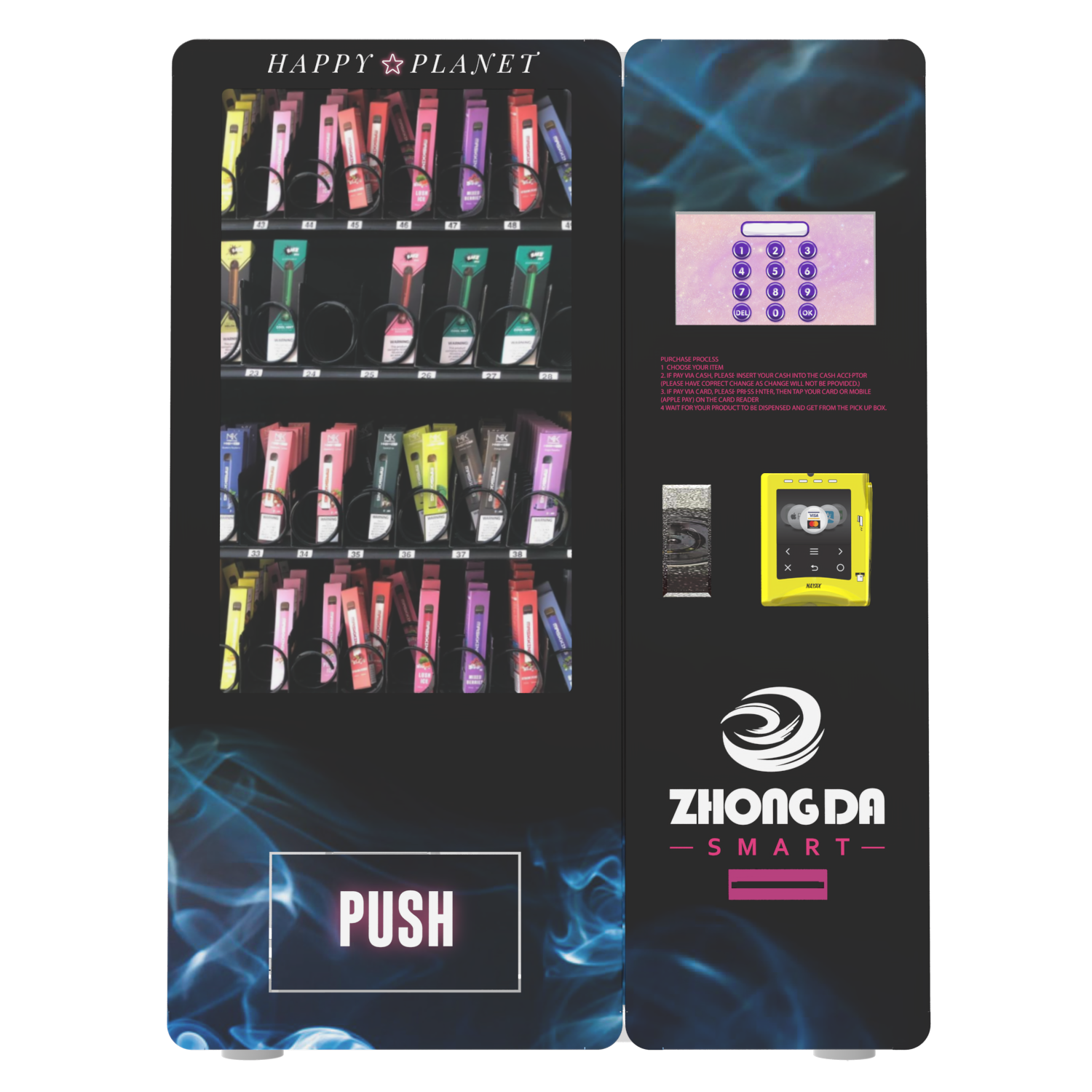
That’s why I only recommend working with a manufacturer that has a track record in both vending hardware and compliance. Our factory at Zhongda Smart has been building vending machines for 15 years. We design the machines specifically for vape products, with adjustable shelves, a secure locking mechanism, and a modular ID scanner that can be upgraded as regulations change. You can see the full range on our vape vending machines page.
When you’re sourcing a machine, ask these questions:
- Does the machine have a UL or CE certification? (Required for insurance and safety.)
- Is the age verification system compliant with the latest state laws? (Some states now require real-time database checks.)
- What’s the warranty on the touchscreen and scanner? (I expect at least one year.)
- Can the machine be remotely monitored? (You need to see sales data and error codes from your phone.)
I’ve seen too many operators skip these questions and pay for it later. A machine that costs $1,000 less upfront but breaks down twice a year is not a bargain. It’s a liability.
Scaling Your Operation: From One Machine to a Fleet
Once you’ve proven the model with one or two machines, scaling is straightforward. I started with three machines in 2018. Today, I manage 47. The key is systemization.
First, standardize your product list. Use the same 10 to 12 SKUs across all machines. It simplifies ordering and reduces waste. Second, use a route management app to track inventory levels. I use a simple spreadsheet that pulls data from the machine’s telemetry. I know exactly which machine needs restocking without driving to it. Third, build relationships with wholesale distributors. Buy in bulk for a 15-20% discount. I negotiate quarterly contracts with two distributors to lock in prices.
I also recommend reinvesting 50% of your profits into new machines for the first two years. That’s how you grow from a side hustle to a real business. I’ve seen operators hit 20 machines within 18 months using this approach.
Common Pitfalls I’ve Seen (and How to Avoid Them)
- Ignoring local laws: I had to pull a machine from a county that banned all vending machine sales of nicotine products. Check the county and city level, not just the state.
- Overstocking slow movers: Don’t buy 50 units of a new flavor just because the distributor gave you a deal. Test with 10 units first.
- Poor placement: A machine hidden in a dark corner will fail. Put it where people naturally walk and wait.
- Neglecting the user interface: If the screen is slow or confusing, customers will walk away. Test the interface yourself before buying.
Final Thoughts From the Factory Floor
I’ve been in this industry long enough to see trends come and go. Vape vending machines are not a fad. They’re a logical extension of the self-service economy, especially in age-gated venues. The technology is mature, the compliance tools are effective, and the profit margins are real. But it’s not a set-it-and-forget-it business. You have to stay on top of regulations, maintain your equipment, and listen to what the sales data tells you.
If you’re serious about getting into this, start with one machine in a venue you know well. Learn the operational kinks. Then scale. I’ve seen people turn a single vending kiosk into a six-figure annual business. It’s absolutely doable with the right approach.
For those ready to take the next step, I recommend looking at the specific models we’ve designed for 21+ venues. The compliant e-cigarette vending machine is a solid starting point, and the age verification vending machine line covers the legal bases you need. I’ve used both in my own operations, and they deliver.
Frequently Asked Questions
Do I need a special license to operate a vape vending machine?
Yes, in most states and municipalities. You typically need a tobacco or nicotine retail license, and sometimes a specific vending machine permit. Check with your local health department or alcohol beverage control board. Some areas also require the machine to be in a location that is not accessible to minors, even if the venue is 21+.
Can I use a regular snack vending machine for vapes?
Technically, yes, but I strongly advise against it. Standard snack machines don’t have age verification, and they’re not designed for the shape and size of vape products. You’ll get frequent jams, and you’ll be non-compliant with age restrictions. A dedicated vape vending machine with ID scanning is the only safe and profitable route.
How do I handle ID scanning if the machine loses internet?
Most modern machines, including ours, have an offline mode. The ID scanner still works locally, and the machine stores the transaction data. When the internet connection is restored, it syncs the records. Some machines also have a backup 4G module. I recommend paying for a small data plan on the machine to avoid relying on the venue’s Wi-Fi.
What happens if a customer’s ID is fake?
A quality ID scanner will catch most fakes. It checks the barcode data against the visual information, and some scanners now use UV light detection. If a fake passes through, the liability is on the operator. That’s why I always recommend machines with dual verification (barcode + facial age estimation). It’s not perfect, but it reduces the risk to near zero.
How often do I need to restock the machine?
It depends on the venue’s traffic. In a busy nightclub, I restock every 5 to 7 days. In a quieter lounge, every 10 to 14 days. I use the machine’s remote monitoring to check inventory levels. When a product drops below 20% stock, I schedule a visit. Over-restocking wastes time; under-restocking loses sales.
Can I sell CBD or hemp-derived products in the same machine?
Yes, but be careful. CBD and hemp products have their own regulatory framework, and they may require separate labeling and testing documentation. Some states allow it in the same machine as long as the age verification is active. I recommend keeping them in a separate section of the machine with clear labeling. Check with your legal advisor before mixing product types.
What is the average lifespan of a vape vending machine?
With proper maintenance, a well-built machine lasts 7 to 10 years. The touchscreen may need replacement after 5 years, and the ID scanner might need a firmware update every 2 years. The mechanical parts—shelves, motors, locking mechanism—are built for heavy use. I still have three machines from 2017 running in bars today.
Sources and References
Data and insights in this article are drawn from my personal operational experience and from publicly available industry research. For further reading: