If you've been watching the convenience retail space over the last few years, you've likely noticed a new piece of hardware popping up in bars, lounges, and even some retail lobbies. It's not a snack machine or a soda dispenser. It's an ENDS vending machine, a specialized self-service kiosk designed to sell electronic nicotine delivery systems (ENDS) like vapes, e-liquids, and pods. The core definition is simple: it's an automated retail unit that combines secure product storage with mandatory age verification technology. What separates a good one from a bad one, however, is the difference between a profitable asset and a compliance nightmare. After spending the last decade building and deploying these machines across demanding markets, I can tell you that the real value isn't just in the hardware—it's in the software, the security, and the specific rules you build around the deployment.
The Core Mechanism: How These Machines Actually Work
Forget everything you know about a traditional snack vending machine. An ENDS vending machine operates on a fundamentally different principle because the product inside is regulated. The transaction flow is not "insert money, get product." It is "verify identity, process payment, release product."
The Age Verification Gate
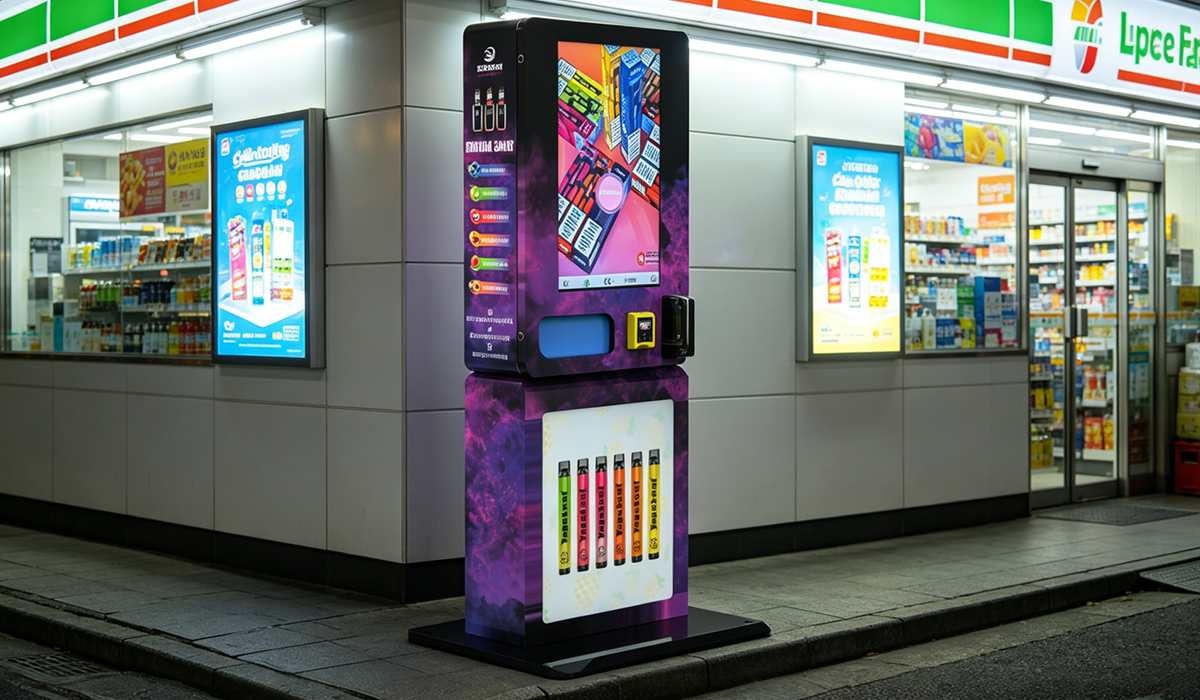
The most critical component is the ID scanning system. When a customer approaches the machine, the interface prompts them to scan their driver's license or state ID. The machine uses optical character recognition (OCR) and barcode scanning to parse the birth date. It does not just look at the date; it calculates the age in real-time against the current date. If the customer is under 21 (or the legal age in that jurisdiction), the transaction stops immediately. We have seen machines reject IDs from 40-year-olds if the license is expired or the barcode is damaged. This is a safety feature, not a bug. For a deeper look at how this hardware integrates with the cabinet, you can review the specifications on our age verification vending machine page.
Inventory Management and Coils
Another operational detail many operators miss is the coil system. Most high-quality ENDS vending machines use a spiral coil or a helix system to dispense products. This is critical because vape pods and disposables are not uniform in size. A standard candy bar coil might crush a disposable vape. We spent two years in our factory engineering a specific coil pitch that could handle the cylindrical shape of a 5% nicotine disposable without jamming. The machine also tracks inventory by motor. If a specific column is empty, the machine disables that selection on the touchscreen to prevent a "sold out" error that frustrates customers.
The Regulatory Landscape: Rules You Cannot Ignore
If you are considering placing an ENDS vending machine in a location, the rules are the single biggest factor determining your success. I have seen operators lose their entire investment because they placed a machine in a state with a pending flavor ban or a location that did not meet the "adult-only facility" requirements.
Federal and Local Compliance
In the United States, the FDA regulates the sale of these products. The key rule is that these machines can only be located in facilities where minors are not permitted entry. This usually means bars, nightclubs, and certain tobacco shops. However, state laws vary wildly. For example, some states require a specific type of biometric verification, while others accept third-party age verification apps. You must check the local city ordinances as well. We had a client in a major city who placed a machine in a "brewery" that allowed minors until 9 PM. The machine was seized by local authorities within 30 days. The rule is simple: if a minor can legally walk into the room, you cannot have an ENDS vending machine in that room.
Age Verification Standards
The standard for age verification is shifting from "21+" to "scanned and verified." A simple "yes/no" button on a touchscreen is not compliant. You need a machine that scans the ID, verifies the holograms, and checks the expiration date. Most modern machines, like those we build at Zhongda Smart, use a combination of a high-resolution camera and a barcode scanner. The data is not stored on the machine, which is another legal requirement in many jurisdictions to prevent data breaches. You can see how this is implemented in a compact form factor on our ID scan vending machine model.
Use Cases: Where These Machines Generate Real Revenue
I have deployed these units in over 200 locations across three different countries. The use cases are not theoretical. They are based on hard data and customer behavior. The most successful deployments fall into three specific categories.
High-Traffic Adult Venues (Bars and Nightclubs)
This is the "bread and butter" location. A nightclub that closes at 2 AM often has a bar that stops serving alcohol at 1:30 AM. However, the customers are still there, and they want nicotine. A bartender cannot leave the bar to sell a vape. An ENDS vending machine placed near the exit or in the smoking area captures this late-night demand. We tracked a machine in a club in Texas that averaged $1,200 in gross sales per week, with a 40% profit margin on the product. The key was placement. The machine was not hidden; it was next to the coat check, a high-traffic area.
Hotel and Casino Lobbies
Hotels face a unique problem. Guests want nicotine, but the hotel does not want the liability of selling it at the front desk or dealing with the mess of a smoke shop. A self-service kiosk solves this. The machine is available 24/7, requires no staff training, and the hotel gets a commission on sales. We placed a unit in a hotel lobby in Las Vegas. The average transaction was $18.00 for a disposable device. The hotel manager told us it reduced the number of calls to the front desk asking for "where to buy cigarettes" by 70%. The machine paid for itself in four months.
Retail Extensions for Smoke Shops
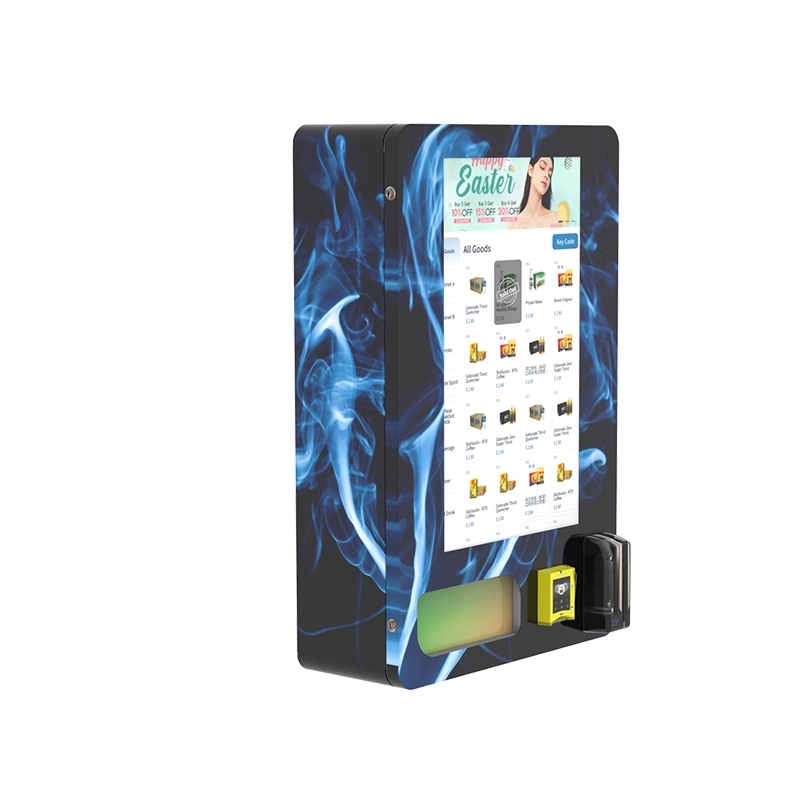
Brick-and-mortar smoke shops are using these machines to extend their operating hours. A shop that closes at 10 PM can place a machine outside the door (if local laws permit) or in a vestibule. This captures the "after-hours" customer. One of our clients in Florida uses a wall-mounted compact e-cigarette vending unit for exactly this purpose. It takes up minimal floor space and generates an additional $800 a month in passive income.
Cost Structure and Profit Model: The Real Math
Let's talk about money. The cost of an ENDS vending machine varies significantly based on features. A basic unit with a simple cashless reader might cost $3,000. A high-end unit with a 21.5-inch touchscreen, ID scanning, and telemetry software can cost $8,000 to $12,000. But the hardware is only half the story.
Initial Investment Breakdown
- Hardware: $4,000 - $10,000 (depending on capacity and screen size)
- Installation and Shipping: $500 - $1,500 (shipping a heavy steel cabinet is not cheap)
- Initial Inventory: $1,500 - $3,000 (you need to stock 20-30 different SKUs)
- Software and Licensing: $200 - $500 per year (for telemetry and age verification software updates)
Revenue and Profit Margins
The profit margin on vape products sold through a machine is typically higher than retail because you eliminate the labor cost. You are not paying a cashier. The margin on a disposable vape that costs $8 wholesale and sells for $18 is 55%. The margin on a pack of pods is usually around 40%. The key to profitability is "turns per day." If you sell 5 units per day at an average profit of $8, you make $40 per day, or $1,200 per month. A machine that costs $6,000 pays for itself in five months. However, this assumes zero theft and zero downtime.
Risk, Failure, and Lessons from the Field
I have made mistakes. I have lost money on bad deployments. Here are the two biggest failures I have seen in this industry.
The "Ghost Location" Failure
An operator placed a machine in a "busy" laundromat. The logic was high foot traffic. The reality was that the foot traffic was low-income families who did not have the disposable income for a $15 vape. The machine sold one unit in the first week. The operator had to pay to move the machine, which cost another $400. The lesson is that foot traffic does not equal buyer traffic. You need a location where people have cash in hand and a specific need for nicotine.
The Technical Failure
Another operator bought a cheap machine from an unknown manufacturer. The machine had a poor cooling system (even though it didn't need to be cold, the electronics overheated). The touchscreen died after three months. The manufacturer was in a different country and refused to honor the warranty. The operator had to scrap the machine. This is why I emphasize buying from a manufacturer with a proven track record. You need a partner who understands the mechanical stress of a motor pushing out a pod. Our factory focuses on the durability of the delivery system, which is often the first thing to break.
Comparison: Smart Vending Machine vs. Traditional Kiosk
It is useful to compare an ENDS vending machine with a traditional snack vending machine to understand the technological leap.
| Feature | Traditional Snack Machine | ENDS Vending Machine (Smart Kiosk) |
|---|---|---|
| Age Verification | None | Mandatory ID Scan / Biometric |
| Payment | Cash / Coin | Cashless (Credit, Apple Pay, NFC) |
| Inventory Tracking | Manual (Visual check) | Real-time Telemetry (Remote monitoring) |
| User Interface | Button and number pad | 21.5" Touchscreen with product images |
| Security | Basic lock (easily broken) | Electronic lock with tamper alarm |
| Profit Margin | 15-20% (low margin snacks) | 40-55% (high margin nicotine) |
| Compliance Risk | Low | High (requires software updates for laws) |
As you can see, the "smart vending machine" is not just a vending machine with a screen. It is a compliance tool, a payment terminal, and a data collection point. The technology required to sell a regulated product is significantly more advanced than selling a candy bar.
Long-Term Operational Strategy
If you are serious about this business, you need a strategy that goes beyond "buy a machine and put it somewhere." Here is the operational playbook we use with our partners.
Software and Telemetry
You must have a machine that reports to you. You need to know what sold, when it sold, and how much cash is in the box. Without telemetry, you are flying blind. You will waste gas driving to a machine that is out of stock or, worse, broken. Our machines at Zhongda Smart are equipped with 4G modems that send a daily report. This allows the operator to restock based on demand, not guesswork. You can see how we manage this data flow on our service and support page.
Product Mix Management
Do not stock 20 different flavors of the same product. Stock the top 5 best-selling disposables and 3 types of pods. The rest of the space should be for high-margin accessories like chargers. We have found that 80% of sales come from 20% of the SKUs. Focus on the winners. If a product does not sell in two weeks, replace it. The machine is a test lab. Use the data.
Maintenance Cadence
A vending machine is a mechanical device. It will jam. It will have a payment failure. You need a service plan. For a single machine, you can handle it yourself. For a fleet of 10 machines, you need a technician on call. The most common failure is a motor jam from a product that is slightly too large for the coil. We solved this by designing a "soft-touch" motor that reverses if it detects resistance, but older machines do not have this feature. Regular cleaning of the ID scanner lens is also critical. A dirty lens will cause verification failures.
Expert Advice: What to Ask a Manufacturer
I have been on the factory floor for 15 years. When you are looking to buy an ENDS vending machine, do not just ask about the price. Ask these three specific questions.
- Where is the software developed? If the software is outsourced, updates will be slow. You need a manufacturer who controls the firmware.
- Can the machine accept a firmware update remotely? Laws change. You need to be able to update the age verification logic without sending a technician to the machine.
- What is the warranty on the motor system? This is the part that breaks. A good manufacturer will offer at least a one-year warranty on the dispensing motors.
We design and build our machines with these questions in mind. We have a dedicated R&D team that focuses on the integration of the payment system and the age verification hardware. If you want to see the build quality for yourself, take a look at our compliant e-cigarette vending machine which was designed specifically for the US market's regulatory environment.
Frequently Asked Questions
Can I place an ENDS vending machine in a convenience store?
Generally, no. Convenience stores are public spaces where minors are allowed. Federal law (and most state laws) restricts the placement of these machines to "adult-only facilities." You can place it in a separate, locked room within the store if the room is age-restricted, but this is a complex setup.
What happens if the ID scanner fails?
The machine should be programmed to enter a "lockout" mode. It should not allow any sales until the scanner is repaired. A failed scanner is a compliance breach. You must have a backup plan, such as a manual override key that only the operator can use, but this should be used only for testing.
How much does it cost to restock the machine?
Restocking cost is primarily labor. If you are doing it yourself, it costs your time. If you hire a route driver, it costs about $50-$100 per visit. The goal is to restock as infrequently as possible while maintaining high sell-through rates. A machine with a 300-unit capacity might only need restocking every 10 days.
Do I need a special license to operate one?
Yes. You need the same tobacco retail license that a brick-and-mortar store requires. The machine itself does not have a separate license, but the location where it sits must have a valid tobacco retail license. Check with your local tax collector or health department.
Can the machine sell flavored products?
This depends entirely on local and state law. Some states have banned flavored tobacco products. The machine's software can be configured to disable certain columns or products based on the GPS location of the machine. This is a feature we call "geo-fencing compliance."
Final Thoughts on Deployment
An ENDS vending machine is not a passive investment. It is a retail outlet that requires active management. The machines that succeed are the ones where the operator understands the local laws, manages the inventory tightly, and maintains the hardware. The technology has matured significantly in the last five years. The days of unreliable machines are ending. If you choose a partner with a strong engineering background—like Zhongda Smart—you are investing in a tool that can provide a reliable return for years. The market for automated nicotine sales is growing because it solves a real problem: providing access to a legal product in a controlled, compliant manner. Get the location right, get the compliance right, and the machine will do the rest.
Disclaimer: This article is based on industry experience and operational data. Laws regarding the sale of tobacco and nicotine products vary by jurisdiction. Always consult with a legal professional before deploying automated retail equipment for regulated products.
References:
- Statista. "Vending machine market size in the United States." Statista Report
- FDA. "Regulations for the Sale of Tobacco Products." FDA Guidelines
- IBISWorld. "Vending Machine Operations in the US." IBISWorld Report
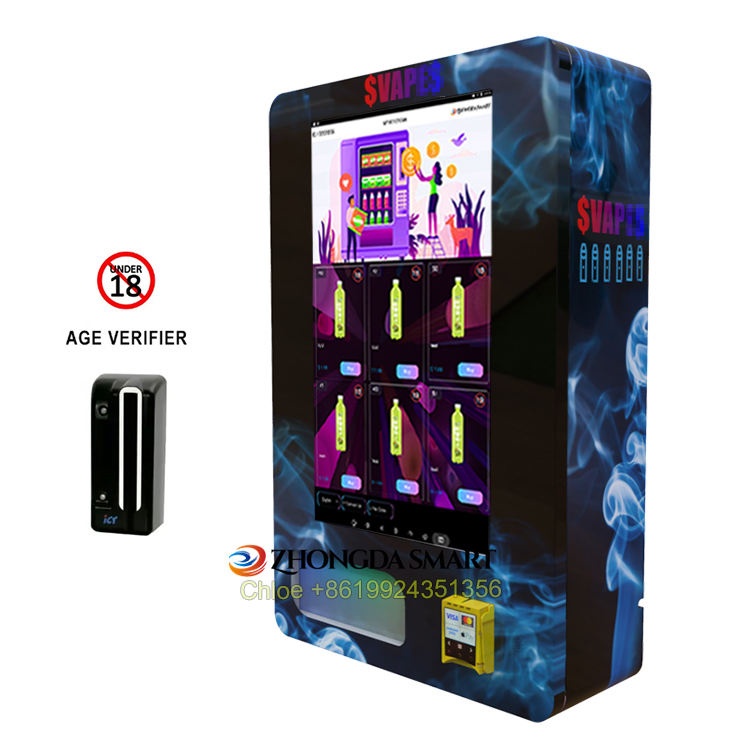
Wall mounted touch screen e-cigarette vending machine with full local law compliance. Intelligent age verification, space-saving & 24/7 automatic retail for vape shops.
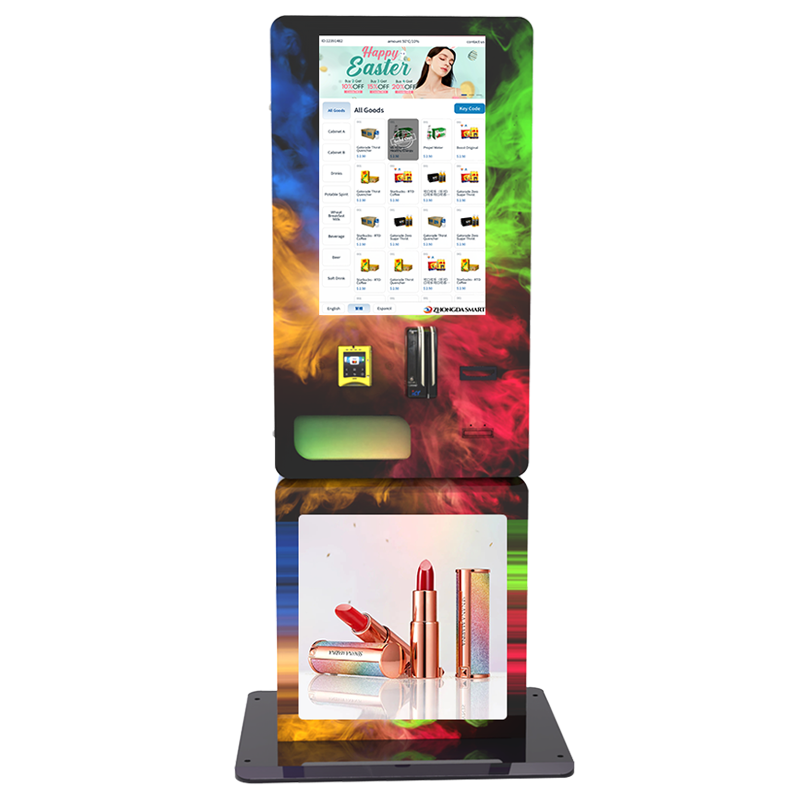
Introducing our latest product - the Smart Vape Vending Machine. This mini, portable vending machine is cloud-based and features a user-friendly touchscreen interface. With automatic age verification, it provides a safe and secure way for ad
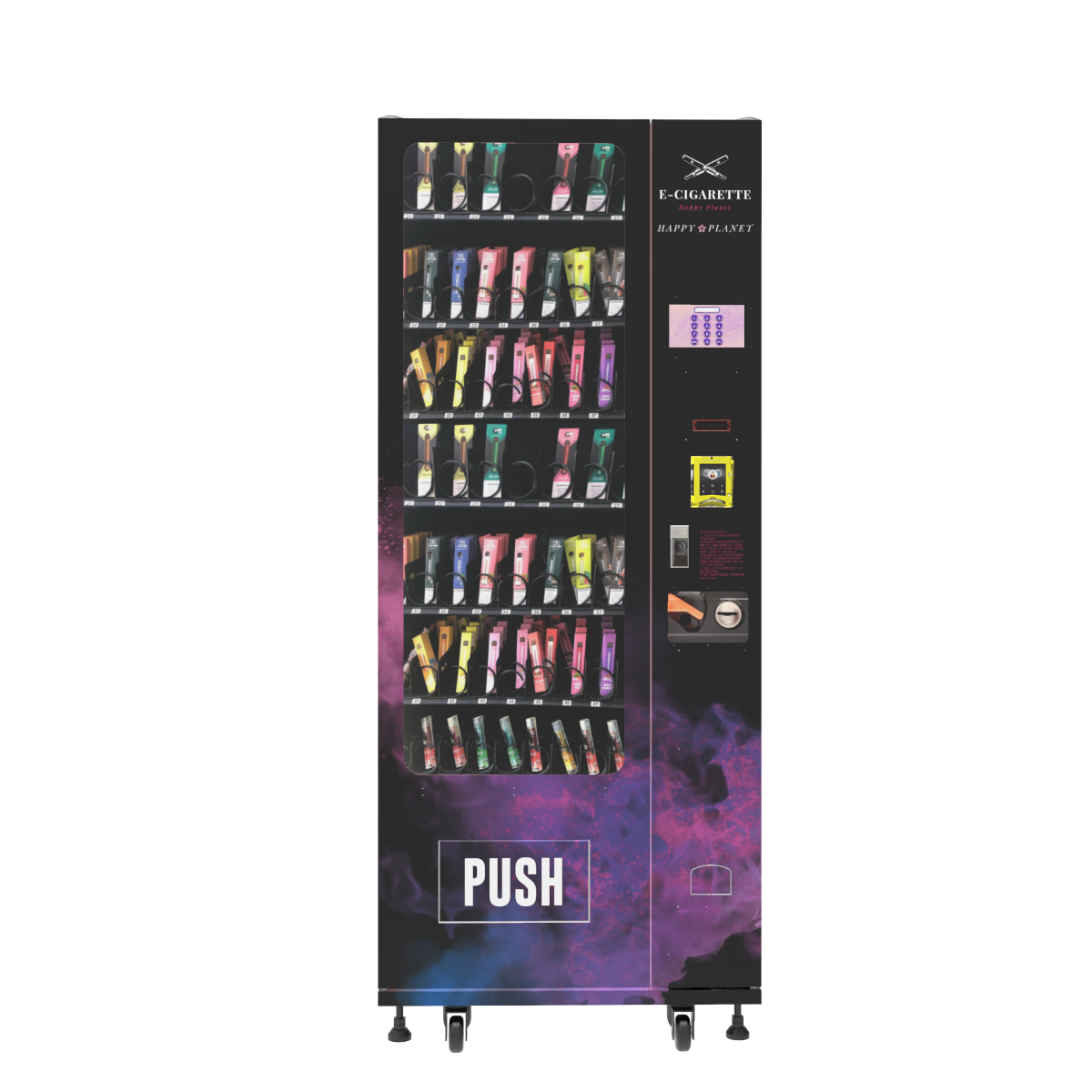
This mini vape vending machine is designed for age-restricted retail with features that help support compliance and improve operational efficiency. With age verification readiness, ID check support, remote monitoring, and customizable configurations,
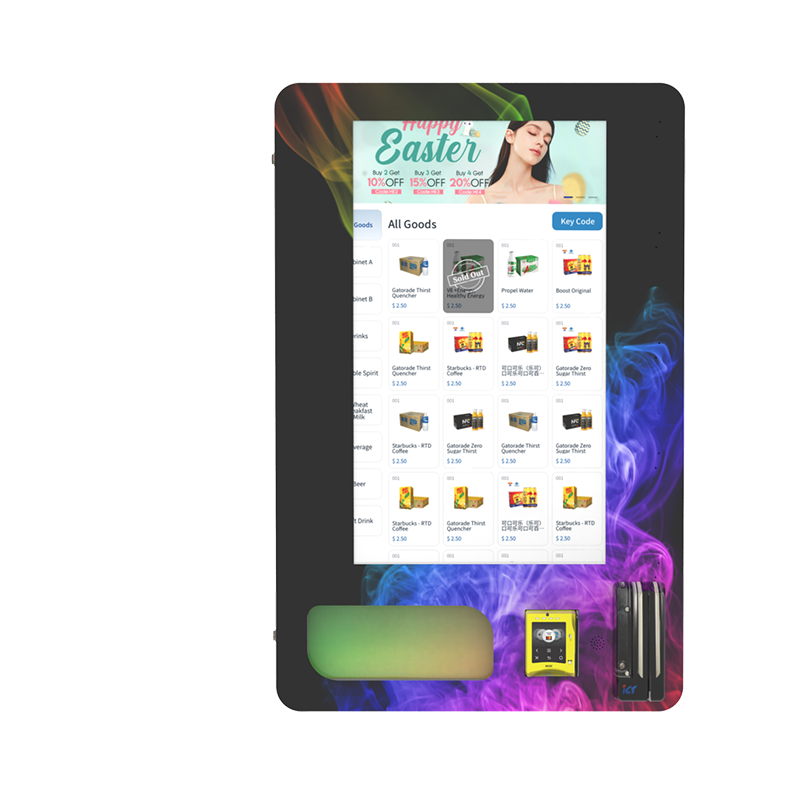
Professional wall mounted vape vending machines with modern design, secure payment system, multiple e-cigarette product options and easy installation for retail stores, bars, shopping malls and vape shops.
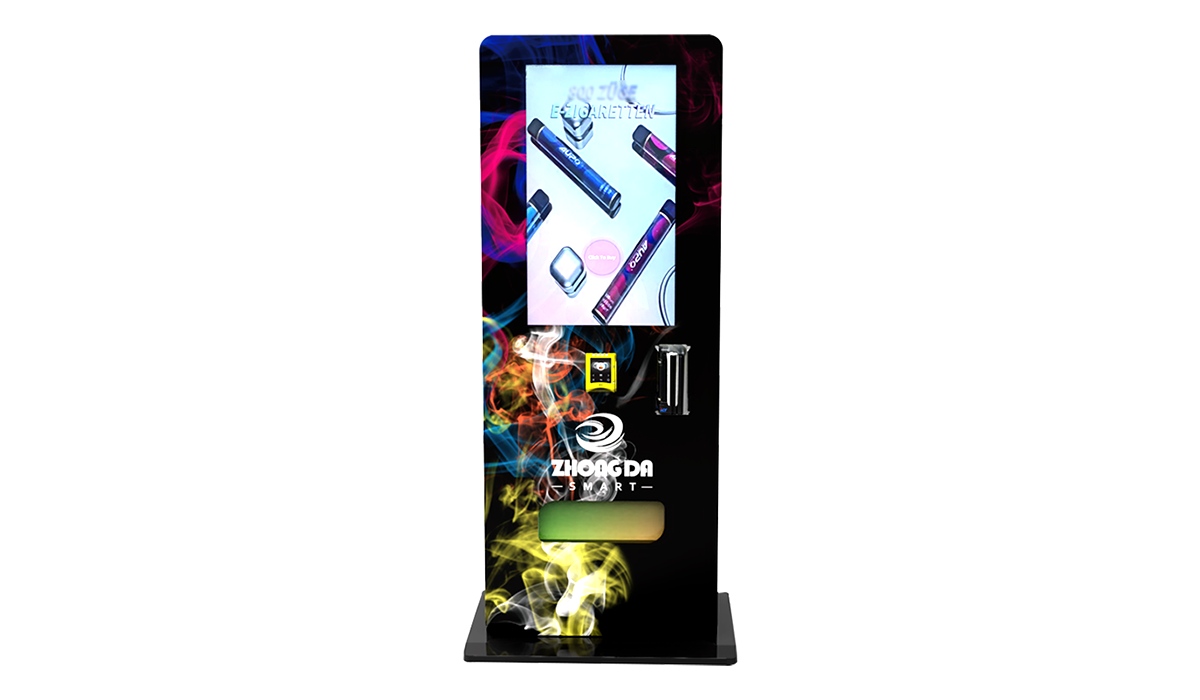
ID scan vending machine with age verification system, ideal for vape and tobacco sales. Supports ID check, smart payment and remote control, helping you run a secure and fully automated retail business.
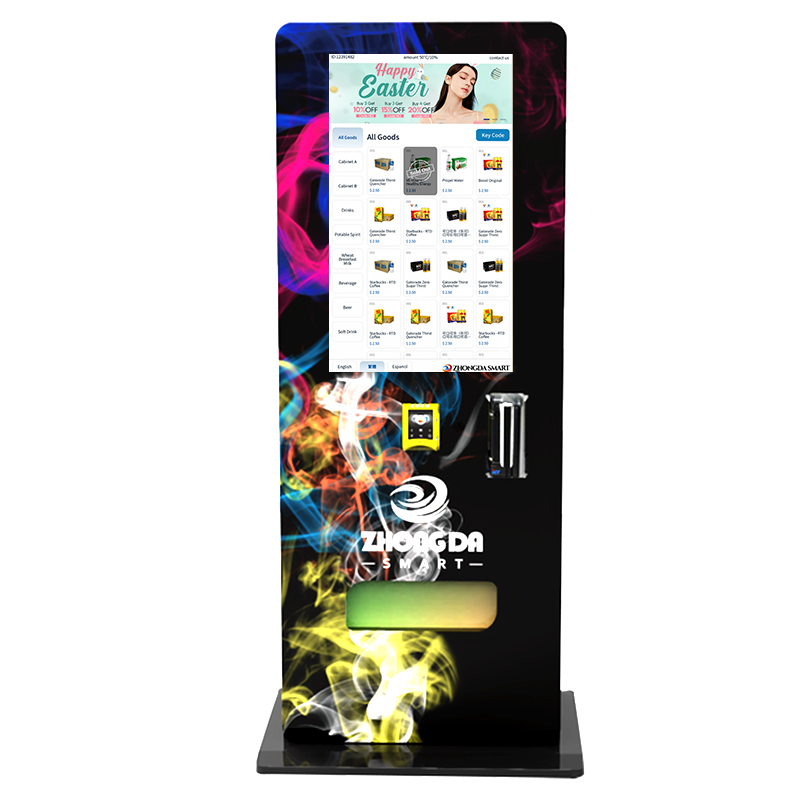
Electronic vending machines are the latest innovation in the world of Adults, providing a convenient and efficient way for customers to purchase their favorite products. In this article, we will explore the benefits

7 inch touch screen stand-alone vape vending machine for vaping products and e-cigarettes. Support smart payment, age verification, remote management and customized branding services.
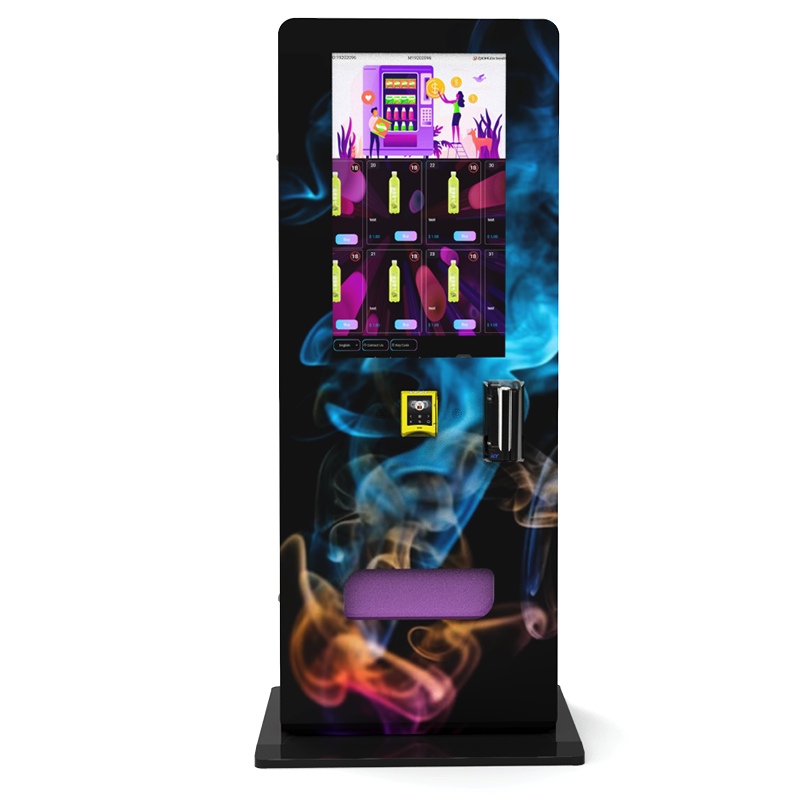
Fully compliant e-cigarette vending machine with age verification & local law compliance. Safe, legal, secure 24/7 vending for gas stations, mini marts & vape retailers.