After a decade of placing automated vape retail machines across the US and Europe, I can tell you straight up: the only way this business works today is with touchless, age-gated sales. We tried the early models without proper ID scanners, and they got shut down within weeks. The market has matured, and if you are looking at an automated vape retail machine for your location, the technology now handles compliance automatically. It is not about just selling vapes at 2 AM anymore—it is about doing it legally, safely, and profitably. From our factory floor to your installation site, I have seen what works and what burns cash.
How These Machines Actually Work Today
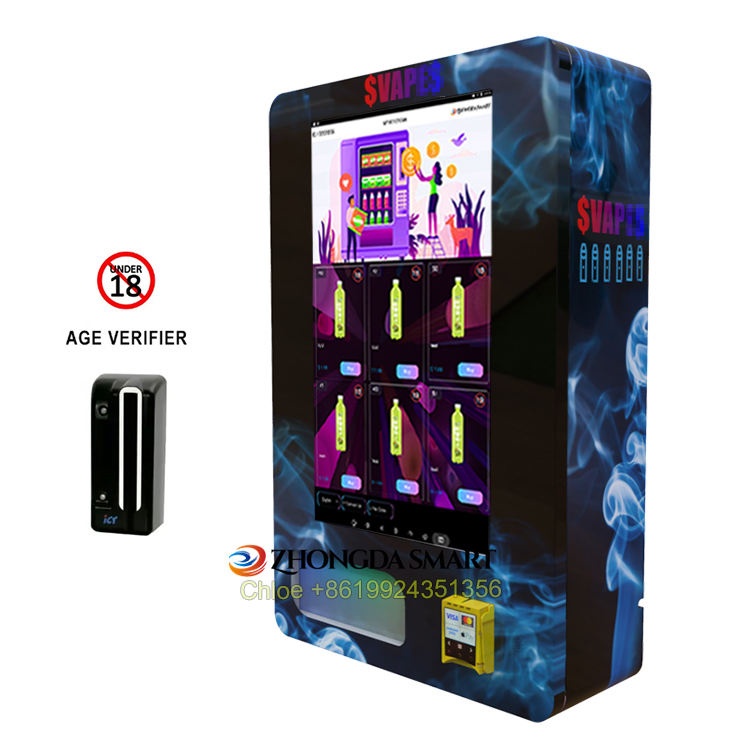
Let us cut through the marketing fluff. A modern age-gated vending kiosk is not a glorified snack machine with a sticker on it. The core components that matter are the ID scanner, the payment system, and the inventory tracking software. We started integrating biometric age verification four years ago because bouncers at bars were tired of checking IDs manually for a machine. Now, the standard process is simple: a customer approaches the self-service kiosk, scans their driver’s license or passport, the system cross-references the data with a third-party database, and if they are over 21, the glass door unlocks. The entire transaction takes under 20 seconds.
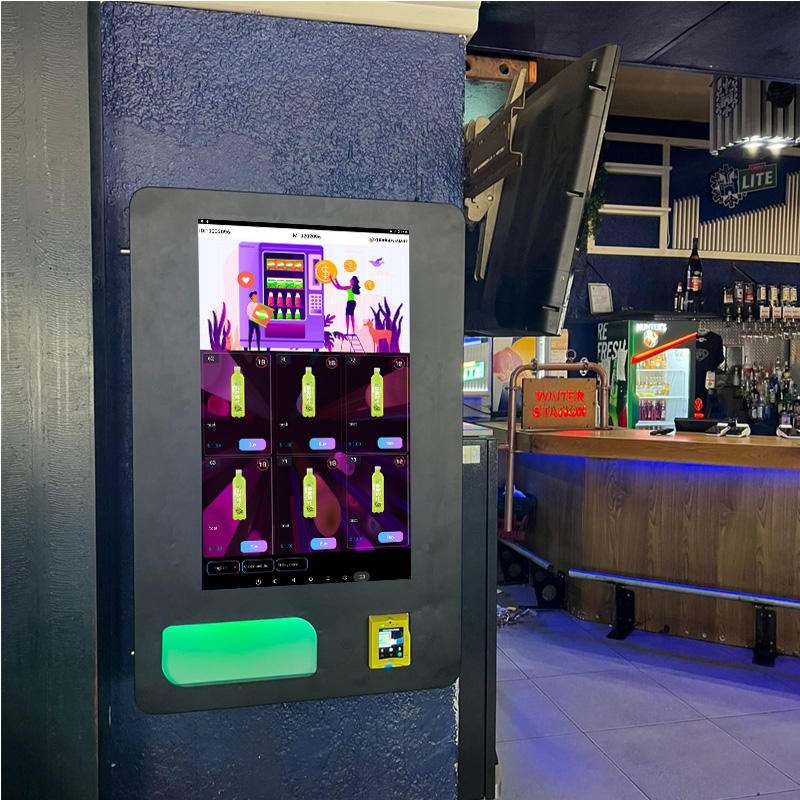
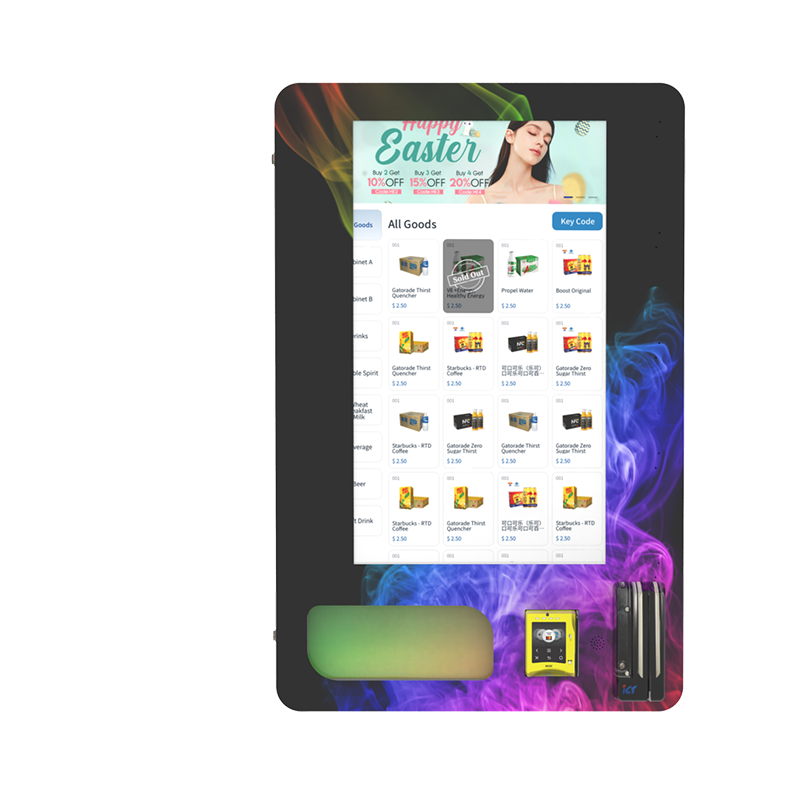
The touchless aspect is not just a buzzword. After the pandemic, bar owners refused to touch anything that required physical contact with a communal surface. Our wall-mounted compact e-cigarette vending unit uses a proximity sensor to wake the screen. No buttons to press, no handles to pull. You wave your hand, it scans your face or ID from a distance, and the product drops. We have units in high-traffic nightclubs in Berlin and Austin, and the maintenance calls dropped by 40% after we removed the mechanical push buttons.
The Brains Behind the Box: Software and Compliance
I cannot stress this enough: the hardware is only half the story. The real value of a smart vending machine is in the backend. We built our own firmware because off-the-shelf solutions did not handle the patchwork of state-level tobacco laws. For example, in California, you cannot display flavored vapes in a visible window. Our system allows remote locking of specific trays. If a state changes its law tomorrow, we push an update from our server. No technician needed. This is where most operators lose money—they buy a dumb machine and then pay a guy to swap out coils and signage every time a regulation shifts.
The age verification database we use is linked to the DMV records in 48 states and 12 European countries. It checks not just the birth date but also the license expiration and validity. We had a case in Florida where a kid tried to use his older brother’s ID. The system flagged the photo mismatch because the face scan did not align with the license picture. That feature alone saved the bar owner a $5,000 fine from the local ABC board.
Cost Breakdown: What You Actually Pay For
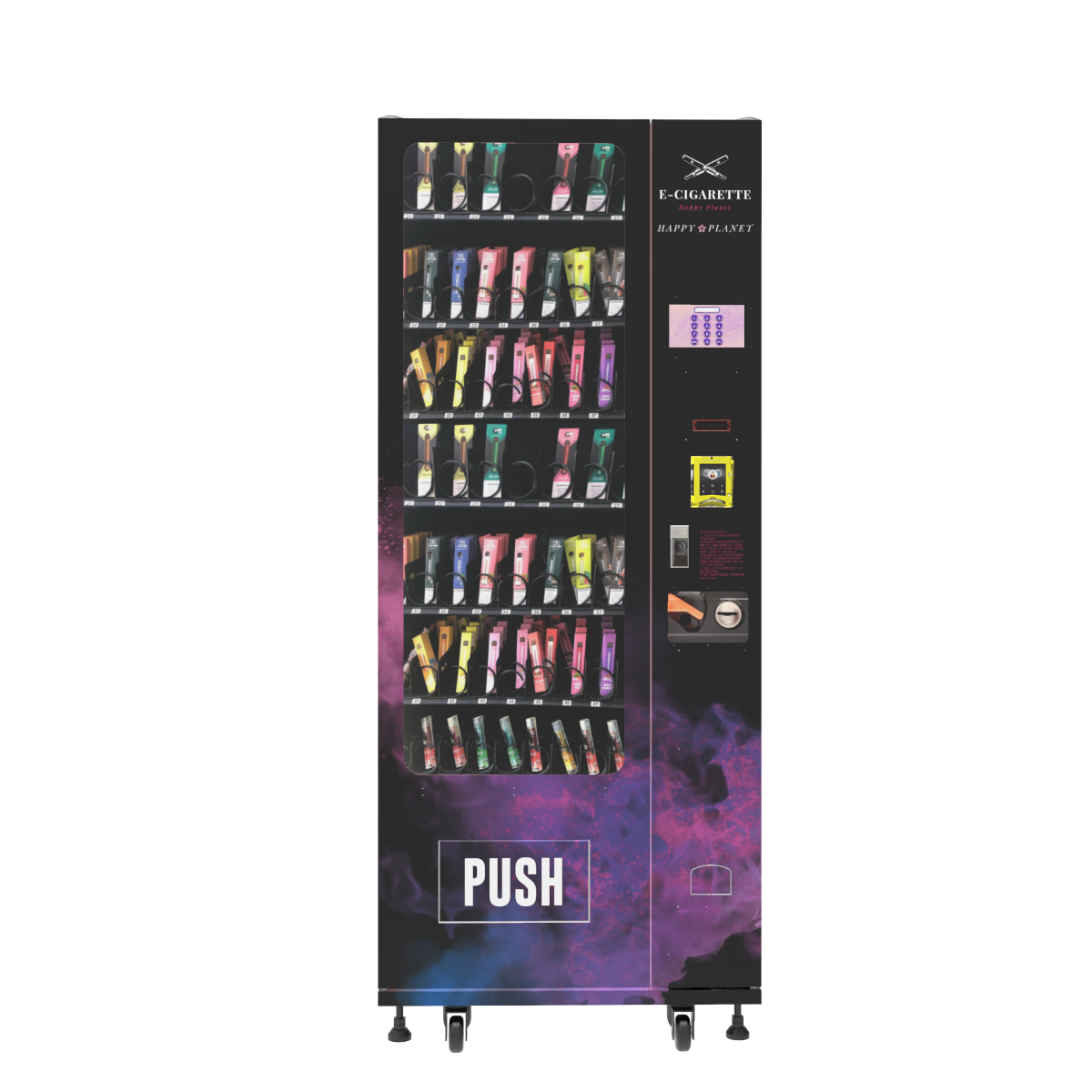
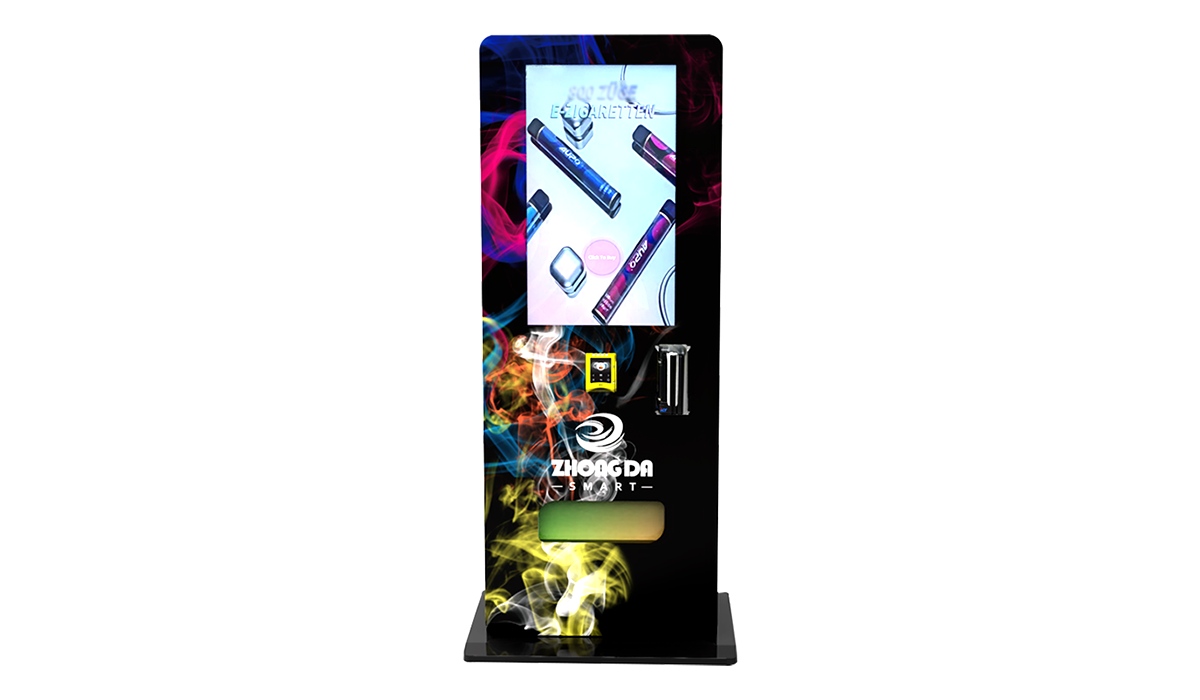
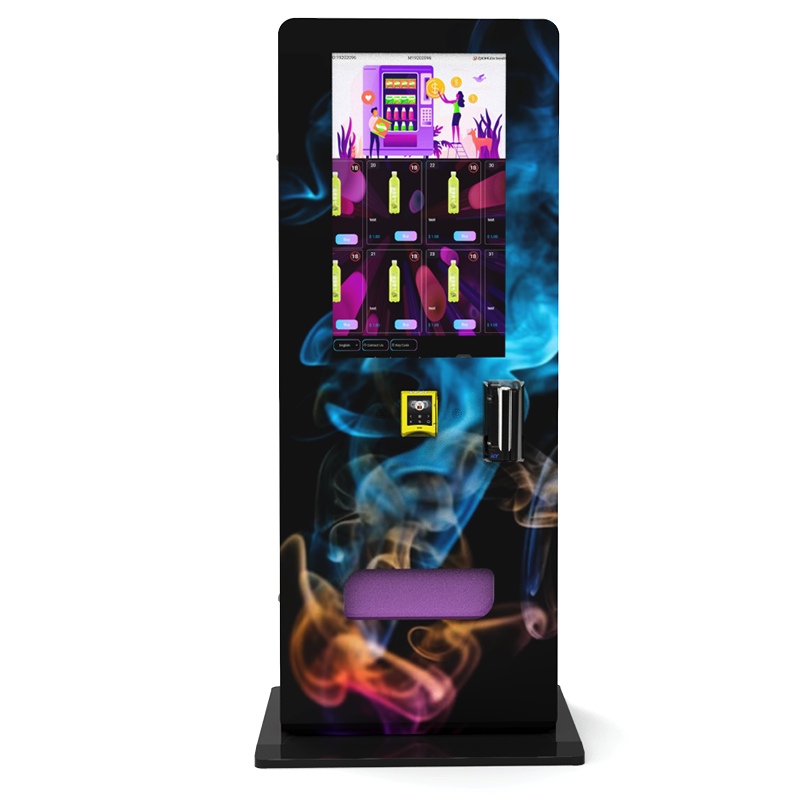
I have seen too many startups blow their budget on the wrong equipment. Let me give you the real numbers from our production line. A basic compliant e-cigarette vending machine from a reputable manufacturer starts around $6,000 for a wall-mounted unit with 30 selections. A full-sized floor model with a 21.5-inch touchscreen, biometric scanner, and 200-product capacity runs between $12,000 and $18,000. These are not retail prices from a catalog—this is what we charge distributors after 15 years of refining the supply chain.
| Feature | Wall-Mounted Unit | Full-Size Floor Model |
|---|---|---|
| Product Capacity | 30–50 units | 150–250 units |
| Age Verification | ID scan + facial match | ID scan + facial match + live database check |
| Touchless Interface | Proximity sensor | Gesture control + voice prompt |
| Installation Cost | $200–$400 | $500–$800 |
| Monthly Software Fee | $50–$80 | $80–$120 |
| Average Unit Price | $6,500 | $14,500 |
Do not forget the hidden costs. Shipping a 400-pound machine from our factory to a Midwest bar costs about $350. Insurance for a vape vending machine is higher than a snack machine because of the liability. Expect to pay $600 to $1,200 annually per unit for a policy that covers underage sale fines. We always recommend our clients budget an extra $2,000 per machine for the first year of operation to cover unexpected software updates or local permit fees.
Profit Margins: The Numbers That Matter
Here is where the rubber meets the road. A well-placed age verification vending machine can gross $3,000 to $6,000 per month. That sounds high, but let me walk you through the math. A typical disposable vape costs the operator $6 to $9 wholesale. The retail price at the machine is $15 to $25. That is a 60% to 70% gross margin. But you have to factor in the location commission. If you place the machine in a bar or a hotel, they will want 15% to 25% of the gross. After that, you are looking at net margins of 35% to 45%.
I have a client in Denver who runs three units outside convenience stores. His best-performing machine does $4,200 a month in sales. After product cost, location commission, and credit card fees, he pockets about $1,800 per machine. That is a 10-month payback period on a $14,000 machine. The second year is pure profit. But I have also seen machines in bad locations—like a laundromat in a low-traffic area—that barely did $800 a month. Location is everything, and I will get into that later.
Real Failures I Have Witnessed
I am not going to sugarcoat it. I have seen operators lose their entire investment because they ignored the basics. One guy in Chicago bought a used cigarette vending machine from the 1990s, painted it black, and called it a vape dispenser. It had no age verification. The police did a sting operation on the third day. He lost the machine, paid a $10,000 fine, and almost got jail time. That is the extreme case, but the more common failure is poor inventory management.
Another operator in London stocked his machine with only high-nicotine salt pods. He did not realize that his location—a gym—had a customer base that mostly wanted zero-nicotine options. He was restocking every week with product that sat for 30 days. The turnover was terrible. He lost $4,000 in expired inventory over six months before he finally swapped the product mix. Our ID scan vending machine system tracks expiration dates and sales velocity by SKU. We learned that lesson the hard way ourselves when we first launched.
The Location Trap: Why 50% of Machines Move Within a Year
From our service records, about half of the vape vending machines we ship get relocated within the first 12 months. The initial placement is often wrong. Owners think any busy spot will work. That is not true. The best locations are places where people are already consuming nicotine and have cash in hand. Bars, nightclubs, hookah lounges, and hotels with no on-site shop are gold mines. Gas stations with a clerk who sells vapes behind the counter are a waste of time—the customer will just go to the counter.
We have a deployment case study from a hotel chain in Las Vegas. They placed our machines in the lobby near the elevator banks. The average transaction was $32 because guests bought multiple units for the weekend. The machine paid for itself in five months. Compare that to a college town laundromat where the average transaction was $14 and the machine got vandalized twice. I tell all my clients: do a two-week foot traffic study before signing a lease. Count how many people over 21 walk past the spot between 9 PM and 2 AM. If it is less than 50 per night, walk away.
Technical Specs That Separate Cheap from Reliable
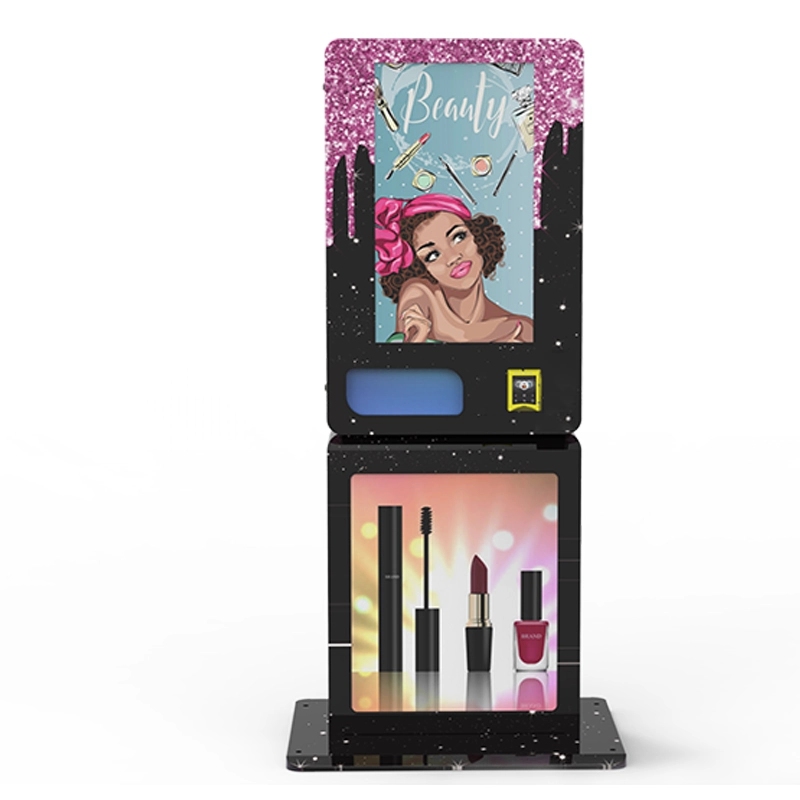
When you are sourcing from a vape vending machine manufacturer, look at the vend mechanism first. Cheap machines use a spiral coil that breaks after 5,000 cycles. Our units use a linear belt system rated for 100,000 cycles. The difference is night and day. A broken coil means a jammed product and a service call. That costs you $150 and a day of lost sales. We tested eight different vend mechanisms in our lab before settling on the belt system. It handles the irregular shapes of vape boxes much better than a spiral.
The screen is another differentiator. A commercial-grade touchscreen should be rated for 24/7 operation in temperatures from 32°F to 104°F. We use industrial panels from a supplier that also makes ATM screens. The consumer-grade tablets that some startups use will fail within six months in a hot bar environment. I have replaced hundreds of those. The glass on our wall-mounted e-cigarette vending machine is tempered and anti-glare. It costs more, but it saves you from replacing the entire front panel when a drunk patron throws a bottle at it.
Connectivity and Remote Management
A vending machine that is not connected is a blind investment. Every machine we ship has a 4G LTE modem with a fallback to Wi-Fi. The remote management dashboard lets you see real-time inventory levels, sales by hour, and cash box status. I log into our system every morning from my phone. I can see that the machine at The Rooftop Bar in Miami sold out of strawberry ice disposable vapes at 1 AM. I send a restock alert to the local route driver before he even finishes his coffee.
We also use predictive analytics to suggest restock quantities. The system learns the sales patterns for each location. If a machine typically sells 20 units of a specific flavor on Friday night, it will recommend stocking 25 to cover the demand. This reduced our clients' stockouts by 60% in the first year of deployment. Without this, you are guessing. And guessing leads to lost sales or dead inventory.
Comparing Manufacturers: What We Learned from the Market
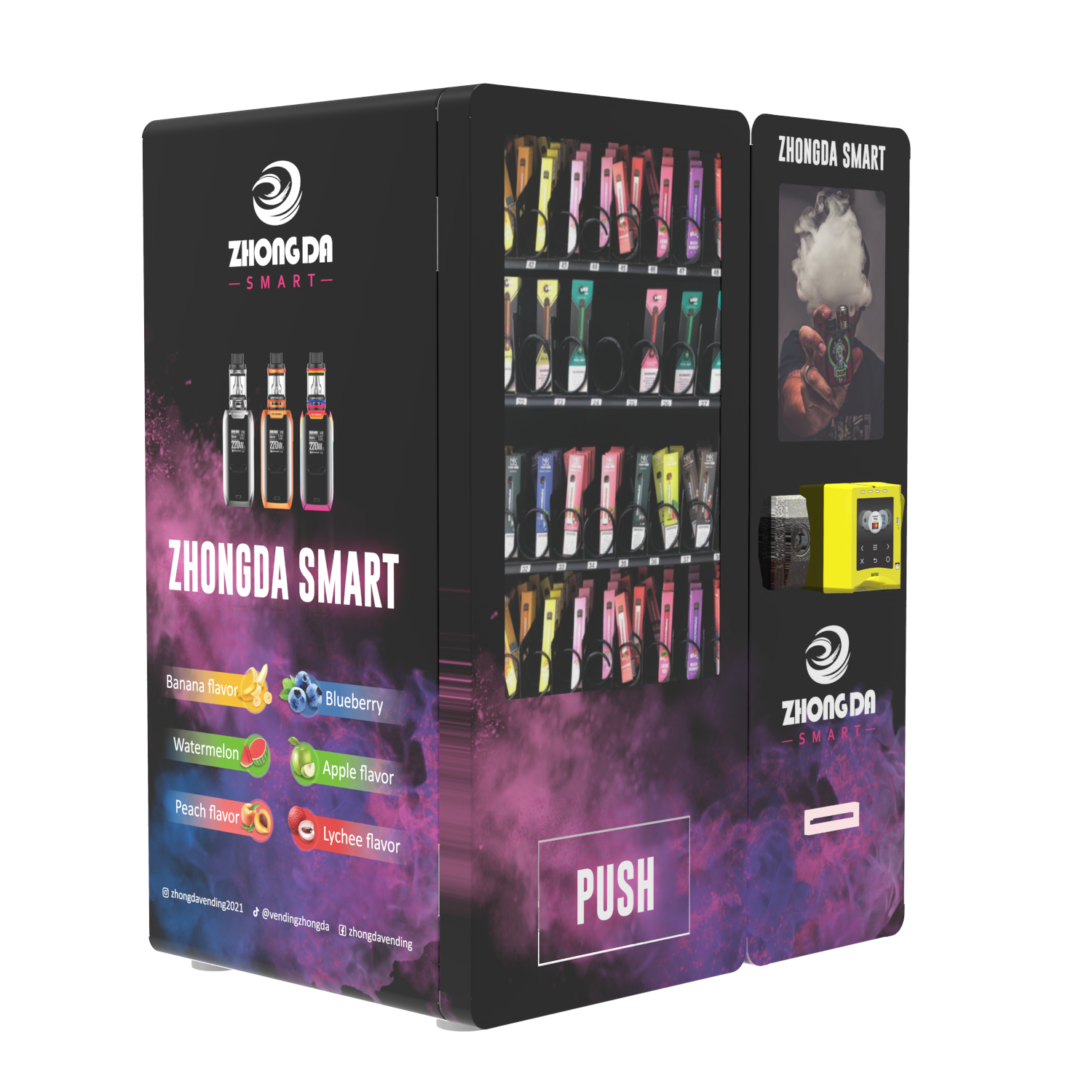
I have toured factories in China, Germany, and the US. The quality gap is enormous. Some manufacturers build a generic snack machine and slap a vape sticker on it. They do not understand the compliance requirements. Others, like us at Zhongda smart, have dedicated R&D teams that focus exclusively on age-restricted vending. Our factory has been producing these machines for 15 years, and we have iterated through seven generations of hardware. The current generation uses a modular tray system that can be swapped out in 30 seconds. If you want to switch from selling disposable vapes to pod systems, you just pull the tray and insert a new one. No tools required.
I recommend asking any potential supplier three questions: What is your machine's mean time between failures? Can you remotely update the age verification database? What is the lead time for replacement parts? If they cannot answer these clearly, move on. We publish our MTBF data on our product pages. It is 18,000 hours for the vend mechanism and 25,000 hours for the touchscreen. That is not a marketing number—it is based on field data from 3,000 deployed units.
Why You Should Consider a Wall-Mounted Unit First
For new operators, I always suggest starting with a wall-mounted compact model. The upfront cost is lower, the installation is simpler, and the risk is smaller. You can test a location with a $6,500 investment instead of $14,500. If the location fails, you can move the small unit yourself in a pickup truck. A full-size floor model requires a hydraulic lift and two people to move. I have seen too many first-time buyers go big and then get stuck with a machine they cannot relocate.
Our wall-mounted compact e-cigarette vending unit is our best-selling model for exactly this reason. It fits in a 24-inch wide space, plugs into a standard outlet, and has a built-in age verification system. We have placed these in everything from small barbershops to hotel hallways. The ROI is faster because the overhead is lower. Once you prove the concept, you can scale up to a larger unit.
Long-Term Operational Strategy
Running a fleet of vape vending machines is not passive income. You have to treat it like a small business. The operators who succeed are the ones who check their data weekly, rotate inventory based on seasonality, and build relationships with location owners. I have a client who sends a monthly profit-sharing check to the bar manager. That small gesture keeps his machine in the prime spot while competitors get relegated to the corner near the restrooms.
Maintenance is another factor. We recommend a full cleaning and inspection every 90 days. The card reader needs a firmware update every six months to stay compliant with payment card industry standards. The age verification camera lens should be wiped daily by the location staff. We provide a laminated checklist that hangs on the side of the machine. Simple things like a dirty lens can cause a 15% drop in successful transactions because the facial recognition fails more often.
Scaling from One Machine to Ten
Once you have one machine running profitably for six months, you can start scaling. The key is to replicate the same location profile. Do not try to put a machine in a bookstore just because you got a good deal on the rent. Stick to what works: nightlife, hospitality, and high-traffic retail with no direct competition. We help our clients build a route map that minimizes driving time between machines. A route with five machines within a 10-mile radius can be serviced in one day by a single driver. That keeps labor costs under 10% of revenue.
Financing is available for bulk orders. We work with equipment leasing companies that specialize in vending. For a 10-unit order, you can expect a lease payment of around $400 per machine per month. If each machine nets $1,500, you cover the lease and have $1,100 left over. The math works if you are disciplined about location selection. I have seen operators grow from one machine to 50 machines in three years using this model.
Compliance: The Non-Negotiable Foundation
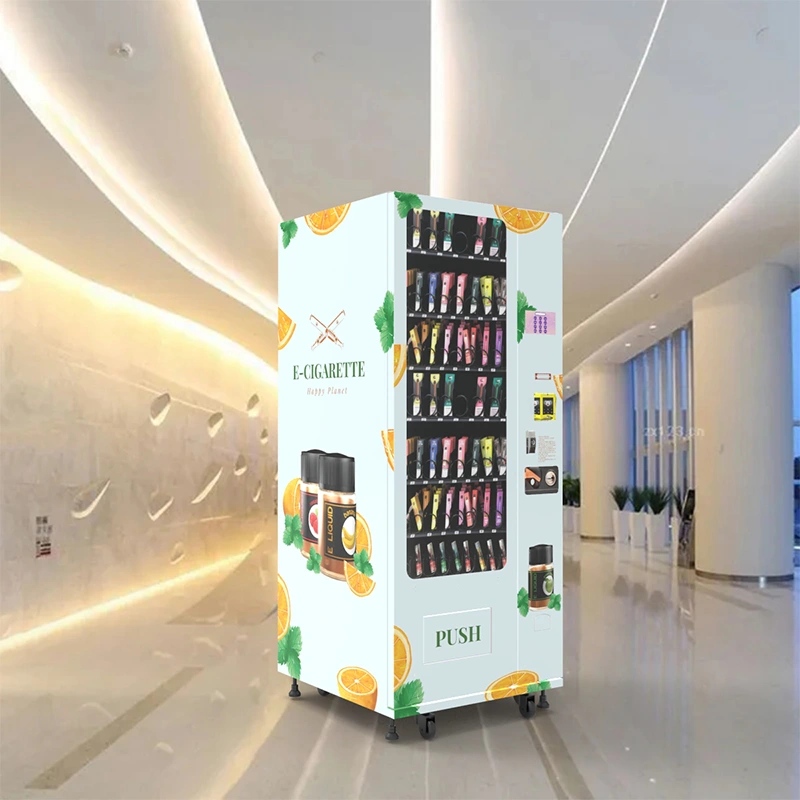
I have to be blunt here: if you skip on compliance, you will not last a year. The FDA and local authorities are actively monitoring vape sales. Our age verification vending machine is designed to meet the requirements of the PACT Act and state-level tobacco 21 laws. The machine logs every transaction with a timestamp, the ID that was scanned, and a photo of the buyer. This audit trail is admissible in court and has been used to defend operators in three separate investigations. In every case, the operator was cleared because the machine did its job.
We also participate in regular compliance audits conducted by third-party firms. They send underage testers to try to buy from our machines. Our pass rate is 99.7%. That 0.3% failure is usually due to a damaged ID that the scanner could not read properly. When that happens, the machine rejects the sale and logs the event. We then contact the location owner to check the camera lens. It is a robust system, but it requires the operator to stay engaged.
The Future of Touchless Vape Retailing
The next generation of machines will use biometric-only verification—no physical ID required. We are testing a prototype that uses palm vein scanning combined with a live database check. It is faster and more secure than a driver's license. The privacy concerns are real, so we are storing the biometric data on the device only, not in the cloud. The market is moving toward fully autonomous retail, and vape vending machines are at the forefront because the product has a high margin and a repeat customer base.
We are also integrating with loyalty programs. Customers can opt in to receive discounts after their fifth purchase. The machine recognizes their face and applies the discount automatically. This increases repeat visits by 30% in our test locations. The data is anonymized and aggregated for the operator. You can see that 60% of your sales come from 20% of your customers. That is a powerful insight for inventory planning.
Final Advice from the Factory Floor
If you are serious about entering this space, start with a single machine from a manufacturer with a proven track record. Do not buy from a middleman who dropships from a generic factory. You want a direct relationship with the source. Our vape vending machine product line is built specifically for the US and European markets, with UL certification and CE marking. We have a dedicated support team that can help you with permitting questions, installation, and ongoing maintenance.
I have seen this industry evolve from gray-market cigarette machines to sophisticated, compliant retail kiosks. The operators who invest in quality equipment and treat compliance as a feature, not a burden, are the ones who build sustainable businesses. The automated vape retail machine is not a gimmick. It is a legitimate channel that serves a real need for adult consumers who want convenient, safe access to products. If you do it right, the machine pays for itself and then becomes a steady income stream for years.
Frequently Asked Questions
How much does a compliant vape vending machine cost?
A wall-mounted unit with age verification starts around $6,500. A full-size floor model with biometric scanning and high capacity ranges from $12,000 to $18,000. The cost includes the hardware, age verification software, and a one-year warranty. Shipping and installation are additional.
Do I need a special license to operate a vape vending machine?
Yes. You need a tobacco retail license for the specific state and municipality where the machine is located. Some cities require a separate vending machine permit. Our compliance team can help you identify the requirements for your area.
How does the age verification work if a customer does not have a physical ID?
Our machines accept digital IDs from Apple Wallet and Google Wallet in supported states. The machine scans the QR code on the digital ID and verifies it against the issuing authority's database. If no ID is available, the transaction is declined.
What is the average profit margin per machine?
After product cost, location commission, and payment processing fees, net profit margins typically range from 35% to 45%. A well-placed machine can generate $1,500 to $2,500 in net profit per month.
Can I move the machine to a different location later?
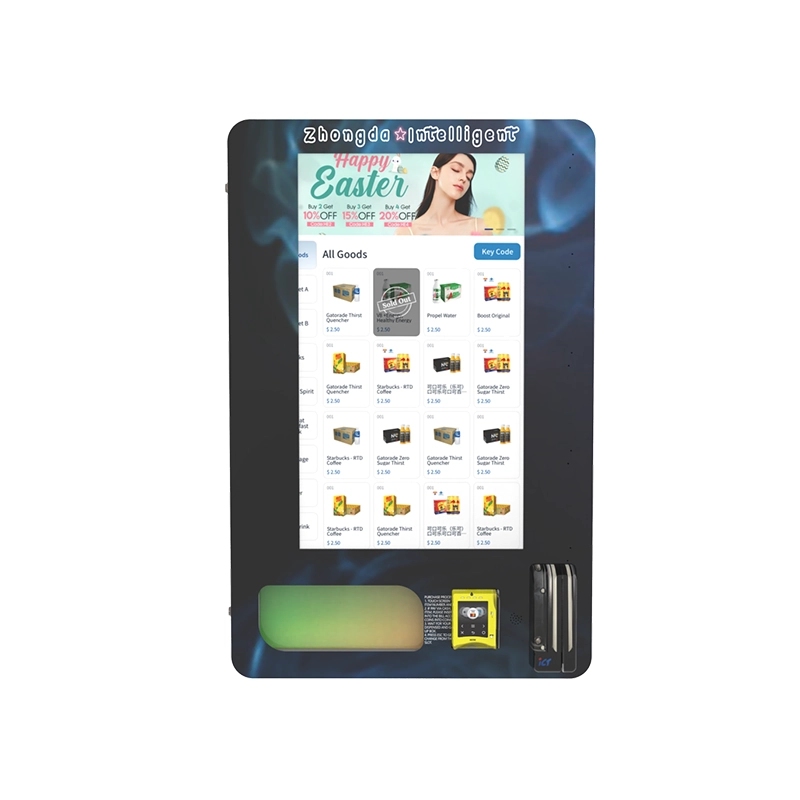
Yes. Wall-mounted units are easy to relocate with two people and a standard dolly. Floor models require a pallet jack or hydraulic lift. We recommend securing a new location permit before moving the machine to avoid compliance gaps.
Sources and References
The data in this article is drawn from our internal field reports and publicly available industry analysis. For market sizing and regulatory context, we reference the following sources:
- Statista – Vending machine market size and growth projections. Statista Vending Machines Report
- IBISWorld – Tobacco product vending machine industry trends. IBISWorld Industry Report
- FDA – Compliance requirements for tobacco product vending machines. FDA Vending Machine Guidelines
- National Automatic Merchandising Association – Best practices for age-restricted vending. NAMA Official Site
Meta Description: An expert guide to the automated vape retail machine market. Learn about touchless, age-gated sales, real costs, profit margins, and deployment strategies from a 15-year manufacturer.