After a decade of deploying vending machines across high-traffic retail spots in Europe and the US, I have seen more than a few operators get burned by the gap between what a machine promises and what it delivers. When it comes to age-restricted products like vapor products, the debate between AI age estimation and traditional ID verification is not just a technical preference—it is a direct line to your bottom line, your compliance standing, and your long-term security. I have been on both sides of this equation: as a factory engineer designing these systems for fifteen years, and as an operator managing fleets of machines. The short answer is that neither method is a silver bullet, but understanding their real-world tradeoffs determines whether your vending operation survives an audit or gets shut down.
The Engineering Behind the Two Systems
Let us start with what is actually happening inside the box. ID verification systems rely on optical scanning and barcode parsing. When a customer swipes or inserts a driver’s license, the machine reads the magnetic stripe or the 2D barcode, extracts the date of birth, and checks it against a preset age threshold. This is straightforward, deterministic technology. There is no guesswork. If the ID is valid and the birthdate clears, the sale proceeds.
AI age estimation works differently. It uses a camera to capture a live facial image, then runs that image through a neural network trained on thousands of labeled faces to predict the person’s age. The system does not read an ID. It makes a probabilistic guess based on visible features like skin texture, bone structure, and facial landmarks. Some advanced systems also analyze micro-expressions or head movement to detect liveness—ensuring the person is actually standing there and not holding up a photo.
From a hardware perspective, the difference is significant. A typical ID scanner module costs between $150 and $400 per unit, depending on the region and whether it supports encrypted data parsing. An AI camera module with onboard processing can run $250 to $600, plus ongoing software licensing fees. Over a fleet of fifty machines, that delta adds up fast.
But cost is not the only factor. I have seen operators choose AI systems because they wanted to remove the friction of card swiping, hoping to increase conversion rates. Others stuck with ID verification because they needed a hard audit trail for regulators. Both arguments have merit, but neither tells the full story.
Accuracy: Where Each Method Wins and Loses
Accuracy is the most commonly cited metric, but it is also the most misleading if you do not look at the context. ID verification is essentially 100% accurate at reading the printed birthdate—provided the ID is not fake. The vulnerability is not in the reading; it is in the document itself. According to a 2023 report from the Statista consumer survey on identity fraud, approximately 3.2% of adults in the US reported having used a fake ID to purchase age-restricted goods in the previous year. That number is higher among younger demographics. So ID verification is accurate at reading, but porous against counterfeit documents.
AI age estimation, on the other hand, does not care about fake IDs because it does not rely on them. The accuracy of these systems has improved dramatically. In controlled lab conditions, top-tier AI models now claim mean absolute errors of around 2.3 years. That means, on average, the system guesses within about two years of the person’s real age. In field deployments, however, that number tends to widen. Lighting conditions, camera angle, facial hair, makeup, and even the time of day can shift the error margin to 3.5 or 4 years.

Here is the practical problem: if your cutoff is 21, and the system has a 3-year average error, then a significant percentage of 18- to 20-year-olds will be incorrectly flagged as over 21. That is a compliance failure. Conversely, some 22-year-olds will be rejected, which is a revenue loss. In one deployment I consulted on in a mid-sized European city, the AI system incorrectly rejected 11% of legitimate customers during the first month of operation. We had to recalibrate the confidence threshold, which then allowed through a small percentage of underage users. There is no perfect setting.
| Metric | ID Verification | AI Age Estimation |
|---|---|---|
| Accuracy at reading data | Near 100% (if ID is genuine) | 85–95% within 3 years of actual age |
| Vulnerability to fake documents | Moderate to high | Low (no document required) |
| Lighting/environment sensitivity | Low | Moderate to high |
| Average transaction time | 12–18 seconds | 5–10 seconds |
| Hardware cost per unit | $150–$400 | $250–$600 |
| Ongoing software fees | None or minimal | Often $10–$30/month per unit |
Compliance: The Real Driver of Decision Making

Compliance is not a theoretical exercise. It is a matter of fines, license revocation, and criminal liability. In the US, the FDA and local law enforcement conduct random stings on age-restricted vending machines. In Europe, the Tobacco Products Directive and local age verification laws vary by country, but the penalties are equally severe.
ID verification offers a clear paper trail. Every transaction logs the scanned ID data, the timestamp, and the machine location. If a regulator asks for a record, you can produce it. This is a massive advantage in jurisdictions that require strict record-keeping. I have worked with operators in states like California and New York where the compliance documentation alone can determine whether a machine stays on site.
AI age estimation, by contrast, generates a confidence score, not a verified identity. If a regulator challenges a sale, you cannot prove that the person was actually of age. You can only show that the AI thought they were. That is a weaker legal position. Some operators try to mitigate this by pairing AI estimation with a secondary verification method, such as requiring a credit card swipe for age validation. But that adds complexity and cost.
There is also the question of data privacy. ID verification systems that store scanned documents or parsed data must comply with regulations like GDPR in Europe and CCPA in California. Storing images of faces from AI systems may also fall under biometric privacy laws, which are becoming stricter. Illinois, Texas, and Washington have already passed biometric privacy statutes that impose heavy penalties for non-consensual collection of facial data. If your machine is deployed in those states, an AI-only system could be a legal liability.
Security: Physical and Digital Threats
Security covers two areas: preventing underage access and protecting the machine itself from tampering. ID verification is physically harder to bypass because it requires a physical card. But sophisticated fake IDs do exist. I have seen high-quality fakes that pass visual inspection and even basic barcode scans. The best defense is a scanner that reads the encrypted data on the ID chip, which is extremely difficult to counterfeit. That level of scanner is more expensive, but for high-risk locations, it is worth the investment.
AI systems are vulnerable to different attacks. A determined minor might try to use a photo or video of an older person. Liveness detection helps, but it is not foolproof. Some systems can be fooled by a high-resolution image held at the correct angle if the liveness algorithm is weak. More sophisticated attacks involve 3D masks or deepfake videos. These are rare in practice, but the possibility exists.
On the physical side, both systems need tamper-resistant enclosures. The camera or scanner module must be securely mounted so it cannot be disabled or covered. I have seen machines where someone simply placed a sticker over the camera lens, and the system defaulted to allowing the sale. That is a design flaw, not a technology flaw. Any reputable manufacturer, including Zhongda Smart, builds in fail-safes that lock the machine if the verification module is blocked or disconnected.
Cost Structure and Profit Model
Let us talk about money. The upfront cost of a vending machine with ID verification is generally lower than one with AI age estimation. But the total cost of ownership over three years tells a different story. ID scanners rarely need software updates, and they do not require cloud subscriptions. AI systems often need periodic model updates to maintain accuracy, especially as the population ages and facial features change over time. Some vendors charge a monthly fee per machine for access to the latest model.
For a fleet of 50 machines, here is a rough breakdown:
| Cost Category | ID Verification (50 units) | AI Age Estimation (50 units) |
|---|---|---|
| Initial hardware premium | $7,500–$20,000 | $12,500–$30,000 |
| Annual software fees | $0–$1,000 | $6,000–$18,000 |
| Compliance audit support | Low (logs are standard) | Moderate (requires extra data handling) |
| Estimated 3-year TCO | $7,500–$22,000 | $25,000–$60,000 |
Revenue is where the calculation gets interesting. AI systems tend to have faster transaction times, which can increase throughput during peak hours. In a busy bar or lounge, that might mean 5 to 10 additional sales per hour. If each sale averages $12, that is an extra $60 to $120 per hour of peak time. Over a weekend, that can offset the higher hardware cost within a few months. But this only works if the location has high foot traffic. In a lower-traffic convenience store, the speed advantage is negligible.
On the other hand, ID verification systems have higher acceptance rates among older customers who are accustomed to showing ID. Some younger customers find the AI camera intrusive, especially in Europe where privacy concerns are more pronounced. I have seen machines with AI cameras generate a 5–8% lower conversion rate in certain demographics because people simply walked away rather than have their face scanned.
Real Deployment Experience: What Works Where
I have overseen deployments in bars, nightclubs, hotels, airports, convenience stores, and standalone kiosks. Each environment demands a different approach.
In nightclubs, speed is everything. The line at the vending machine cannot be slower than the line at the bar. AI age estimation works well here because it reduces transaction time. But the lighting is often poor, which degrades accuracy. We had to install supplemental LED lighting in the machine bezel to get consistent results. That added $50 per unit to the build cost.
In convenience stores, the customer base is more diverse. You get everyone from 18-year-olds buying their first disposable to 60-year-olds who have been vaping for years. ID verification is more reliable here because the lighting is consistent and customers are used to showing ID at the counter. The slower transaction speed is less of an issue because there is rarely a line.
Hotels and airports present a unique challenge: transient customers who may not carry a physical ID if they are using a mobile wallet or have left their license in the room. AI estimation can capture sales that would otherwise be lost. But hotel operators are also sensitive to privacy concerns from guests. We have found that placing a clear privacy notice on the machine, explaining that no images are stored, significantly reduces customer hesitation.
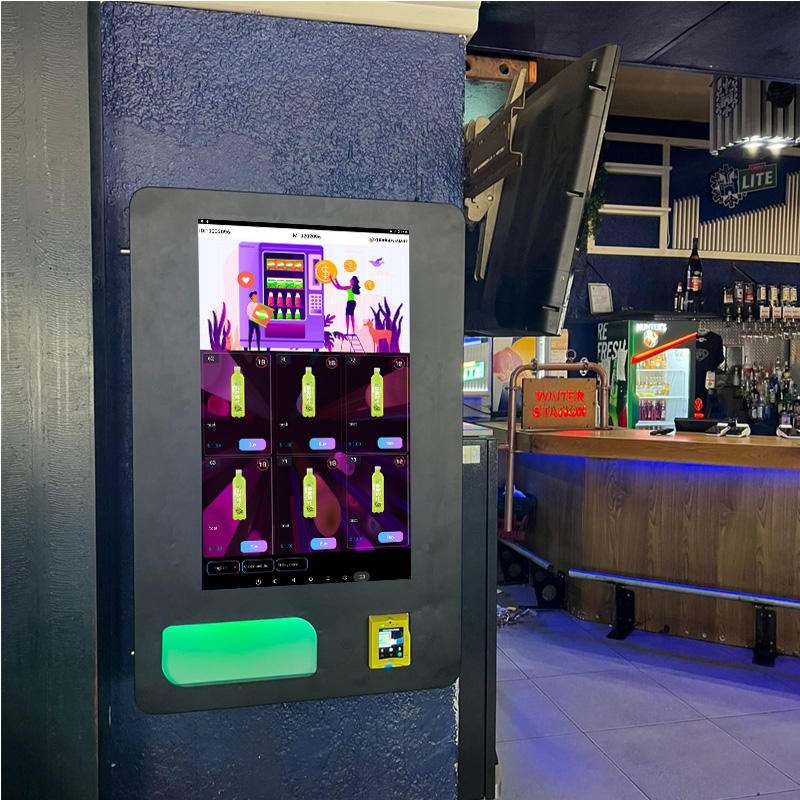
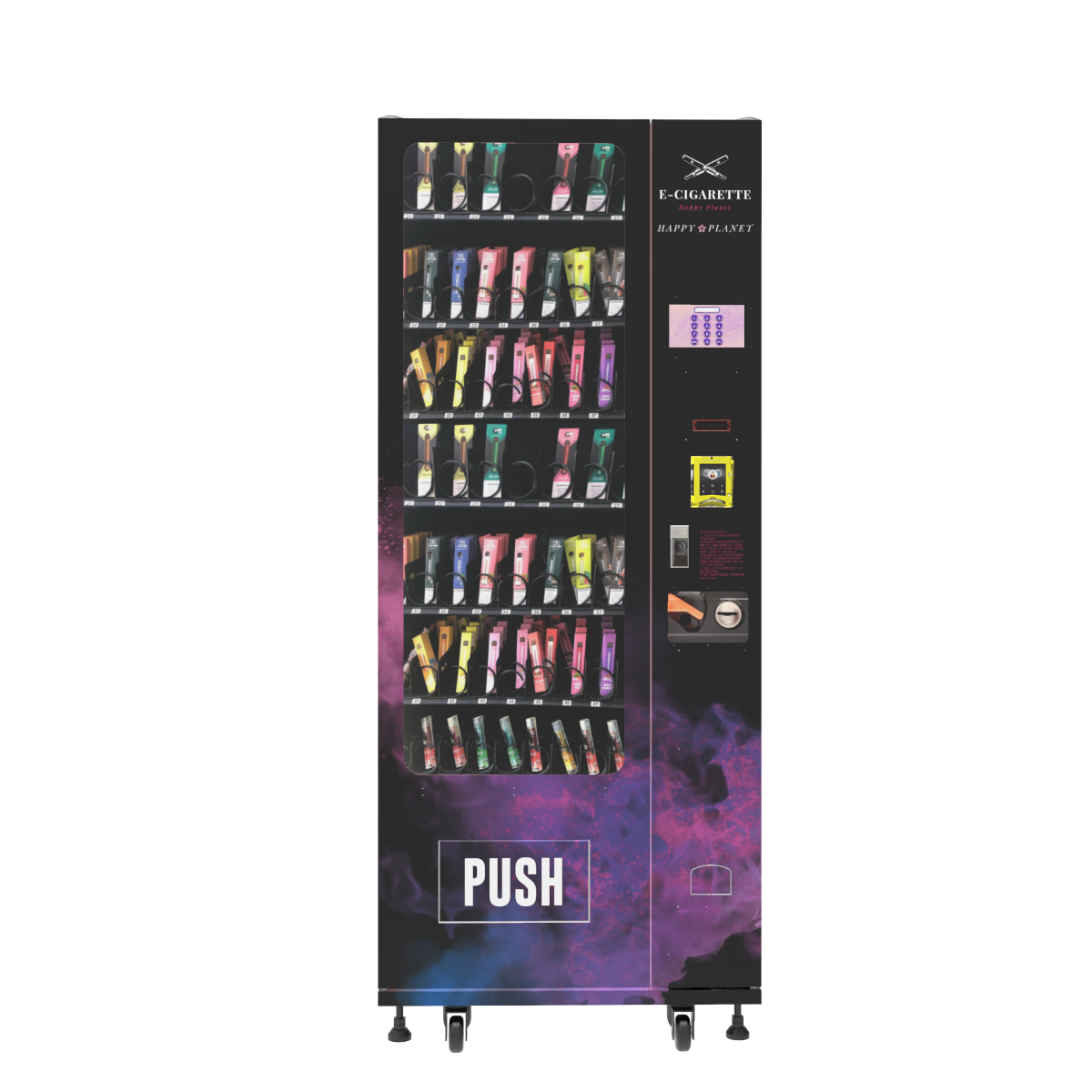
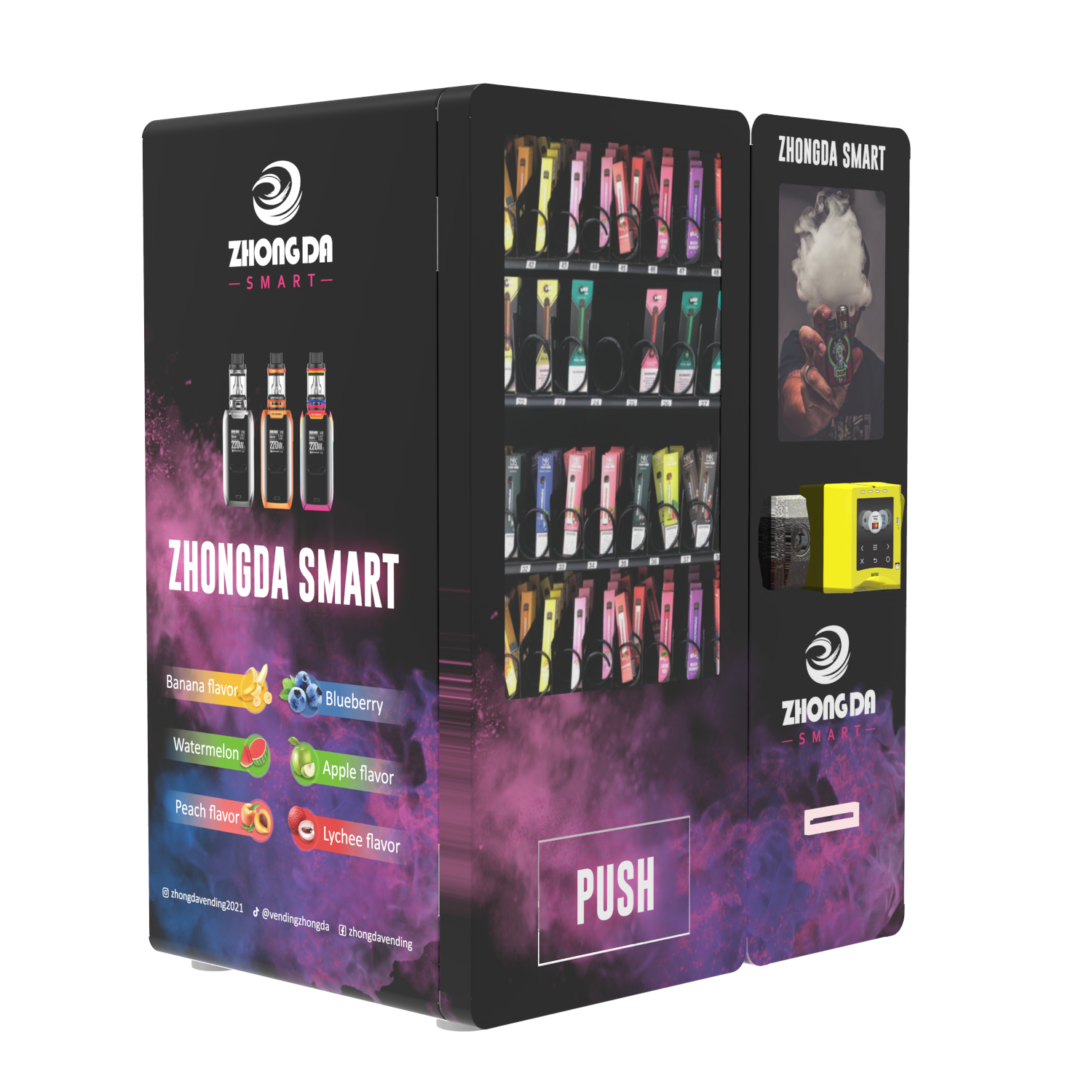
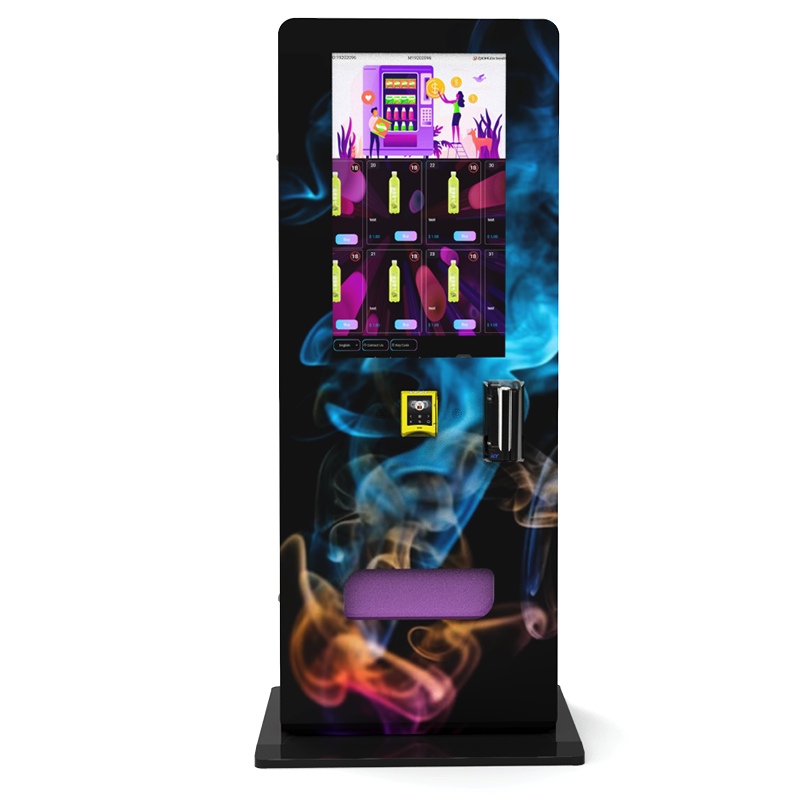
One of the most instructive failures I encountered was a deployment in a university-adjacent retail space. The operator chose AI estimation because they wanted to appear cutting-edge. Within two weeks, students had figured out that the liveness detection could be bypassed by showing a video on a tablet. The machine was compromised until we pushed a firmware update. That specific model had a known vulnerability that the manufacturer had not patched. This is why I always recommend buying from a manufacturer with a proven track record in age verification hardware, like Zhongda Smart's age verification vending machine, which has built-in tamper detection and regular security updates.
Long-Term Maintenance and Stability
Maintenance is the hidden cost that kills margins. ID scanners are relatively simple electromechanical devices. The most common failure point is the card reader slot, which gets jammed by bent cards or debris. Cleaning and replacement are cheap and quick. AI camera modules are more complex. The lens can get smudged, the infrared illuminator can fail, and the onboard processor can overheat in poorly ventilated machines. In one fleet, we saw a 12% annual failure rate on AI camera modules versus 4% on ID scanners.
Software updates are another ongoing cost. AI models need to be retrained periodically to maintain accuracy as the population ages. Some vendors push updates automatically, but others require manual installation. If you have machines in remote locations, a failed update can leave a machine offline for days. ID verification systems rarely need software updates, and when they do, it is usually a simple patch that does not affect core functionality.
Battery backup is also a consideration. In areas with unstable power, machines need to complete a transaction even if the power flickers. ID scanners draw less power and can run on a smaller backup battery. AI systems with cameras and processors draw more, which means a larger and more expensive battery pack. This adds $100 to $200 to the build cost per machine.
Choosing the Right System for Your Operation
There is no universal answer. The right choice depends on your location, your customer base, your regulatory environment, and your risk tolerance. If you are deploying in a jurisdiction with strict audit requirements, ID verification is the safer bet. If you are targeting a young, tech-savvy crowd in a high-traffic venue, AI estimation can boost revenue enough to justify the higher cost and maintenance burden.
Hybrid systems are becoming more common. Some manufacturers now offer machines that use AI estimation as the primary method but fall back to ID verification if the confidence score is too low. This gives you the speed advantage of AI without the compliance risk. The cost is higher, but for premium locations, it can be worth it. I have seen this approach work well in several European markets where privacy laws are strict but customers expect fast service.
For operators who want a reliable, cost-effective solution with a clear audit trail, I recommend starting with ID verification. It is proven, it is simple, and it will not surprise you. As you scale and gain experience, you can experiment with AI estimation in specific locations. Do not try to run before you can walk. I have seen too many operators buy expensive AI machines, deploy them in the wrong locations, and then blame the technology for their poor results. The technology is only as good as the deployment strategy behind it.
Frequently Asked Questions
Can AI age estimation completely replace ID verification?
What is the average ROI period for an age verification vending machine?
Do AI systems store customer facial images?
Which verification method is better for high-volume locations like bars?
Can fake IDs fool modern ID scanners?
What maintenance is required for AI camera modules?
Is it possible to retrofit an existing machine with AI age estimation?
How do I choose between different age verification vending machine manufacturers?
References and Sources
- Statista - Fake ID Use in Age-Restricted Purchases (2023)
- Forbes Tech Council - AI Age Estimation in Vending (2023)
- IBISWorld - Age-Restricted Vending Machine Manufacturing Industry Report
- Bloomberg - Age Verification Trends in Automated Retail (2024)
Disclaimer: This article reflects field experience and industry research. Individual results may vary based on location, regulatory environment, and deployment specifics. Always consult legal counsel for compliance requirements in your jurisdiction.