I’ve spent the last decade deploying automated retail systems across the U.S. and Europe, and I can tell you straight up: putting stadium alcohol vending machines on the floor without a bulletproof age verification system is a fast track to losing your license. The technology has moved past simple ID scanners. Today’s smart vending machine platforms integrate biometric checks, real-time database cross-referencing, and tamper-proof audit logs. If you’re a venue operator or a concession director looking to cut labor costs while keeping compliance tight, you need to understand exactly how these machines handle age checks, what the hardware costs, and where most deployments fail. Based on my own field work, I’ll walk you through the real engineering and business side of this.
The Engineering Behind Age Verification in Stadium Vending
When we first started building these units, the common approach was a simple barcode scanner that read the back of a driver’s license. That worked about 70% of the time, which is unacceptable for a stadium with 50,000 people. The failure points were worn-out mag stripes, poor lighting on the scanner, and users handing over expired IDs. We had to redesign the entire intake module.
The current generation of age verification vending machines uses a multi-spectral camera array. It captures the front of the ID under visible, infrared, and ultraviolet light. The software checks for holograms, microprinting, and font spacing that matches state or provincial templates. If the physical document passes, the system then performs a liveness check on the person standing in front of the machine. This prevents someone from holding up a photo of an ID or using a fake that passes the optical test.
From a hardware perspective, the enclosure has to be ruggedized. Stadiums are high-traffic environments with temperature swings, spilled drinks, and constant vibration from crowd movement. We use industrial-grade stainless steel housing with IP54 ingress protection on the scanner port. The internal computer runs a stripped-down Linux kernel with no unnecessary ports exposed. We’ve seen competitors use off-the-shelf Android tablets glued into a kiosk shell, and those units fail within six months due to overheating or screen delamination.
Database Integration and Real-Time Checks
Age verification doesn’t stop at the ID scan. The machine must cross-reference the extracted data against a watchlist or a third-party age verification service. In the U.S., many states require a real-time check against the Department of Motor Vehicles database or a commercial identity verification API. In Europe, the GDPR adds another layer: you can’t store the scanned image of the ID. The system has to hash the data and discard the original image within seconds.
We built our own middleware for this. The machine sends a tokenized data packet to a secure server, which queries the database and returns a pass/fail signal. The entire round trip takes under two seconds. If the server is down, the machine defaults to a locked state. No offline override. That’s a hard rule we implemented after a client tried to bypass it during a network outage and almost got fined.
For stadiums, network reliability is a real concern. We recommend a dual-path setup: primary over wired Ethernet, backup over a dedicated 4G/5G modem. The machine’s firmware automatically switches if the primary link drops. I’ve seen too many deployments fail because the venue’s guest Wi-Fi was used for the vending machines, and it couldn’t handle the latency during a game.
Cost Structure: What You’re Really Paying For
Let’s break down the numbers. A basic alcohol vending machine without age verification might cost $3,000 to $5,000. Once you add a compliant age verification system, the price jumps to between $8,000 and $15,000 per unit. The variance depends on the scanner quality, the enclosure material, and the software licensing.
| Component | Cost Range (USD) | Notes |
|---|---|---|
| Base vending chassis | $3,000 – $5,000 | Refrigeration, coils, payment terminal |
| Multi-spectral ID scanner | $1,200 – $2,500 | Must support UV/IR and liveness detection |
| Secure processor & firmware | $800 – $1,500 | Tamper-proof, encrypted data handling |
| Software license (annual) | $600 – $1,200 | Database access, updates, compliance logs |
| Installation & network setup | $500 – $1,000 | Per unit, includes cabling and testing |
| Total per unit (first year) | $6,100 – $11,200 | Excluding shipping and taxes |
That’s the upfront cost. The recurring expenses include the software license, payment processing fees (typically 2.5% to 3.5% per transaction), and periodic maintenance. We recommend budgeting $300 to $500 per machine per year for parts replacement. The most common failure points are the card reader and the scanner window, which gets scratched from constant use.
One hidden cost that catches operators off guard is the compliance audit fee. Some states require a third-party audit of the machines every six months. That runs about $200 to $400 per audit. If you have 20 machines in a stadium, you’re looking at an extra $4,000 to $8,000 annually just for audits.
Revenue Model and Profitability
Alcohol vending machines in stadiums operate on a different margin structure than traditional snack vending. A 12-ounce beer that costs the venue $1.50 to $2.00 wholesale can sell for $8.00 to $12.00 at a game. That’s a gross margin of 80% to 85%. Even after accounting for the machine cost, the electricity, and the transaction fees, the per-unit profit is substantial.
Let’s run a realistic scenario. A single machine in a concourse area might serve 150 to 200 customers during a game. If the average transaction is $10.00, that’s $1,500 to $2,000 in revenue per event. With a gross margin of 80%, the gross profit is $1,200 to $1,600 per game. If the venue hosts 40 home games per season, that machine generates $48,000 to $64,000 in gross profit annually.
| Metric | Value |
|---|---|
| Average transaction value | $10.00 |
| Transactions per game (peak) | 150 – 200 |
| Revenue per game | $1,500 – $2,000 |
| Gross margin | 80% |
| Gross profit per game | $1,200 – $1,600 |
| Games per season | 40 |
| Annual gross profit per machine | $48,000 – $64,000 |
| Machine cost (installed) | $10,000 (mid-range) |
| Payback period | 2 – 3 months |
The payback period is remarkably short compared to other vending investments. A snack vending machine typically takes 12 to 18 months to pay back. The high volume and high margin of alcohol sales compress that timeline significantly. But this assumes the machine is placed in a high-traffic location and that the age verification process doesn’t create a bottleneck.
We’ve seen machines placed near restrooms or behind pillars fail to hit those numbers. Foot traffic is everything. In one deployment, moving a machine 30 feet from a low-traffic corridor to a main concourse intersection doubled the transaction volume. That’s the kind of operational insight that doesn’t show up in a spreadsheet but makes or breaks the ROI.
Real-World Deployment Failures and Fixes
I want to talk about a specific failure because it’s instructive. A Major League Baseball stadium in the Midwest deployed 15 alcohol vending machines in 2022. They used a supplier that promised “AI-powered age verification” but delivered a system that only did optical character recognition on the ID. No liveness check. No database cross-reference.
During the first game, a college student used a printed photo of his older brother’s ID. The machine accepted it. He bought four beers and distributed them to underage friends. Security cameras caught the exchange. The stadium’s liquor license was put on probation, and the entire deployment was shut down. The operator lost $150,000 in machine costs and another $50,000 in legal fees.
The fix was straightforward but expensive: rip out the scanners and install a proper multi-spectral system with liveness detection. We were brought in to retrofit the machines. The lesson here is that you cannot cut corners on the verification hardware. The upfront savings of $1,000 per machine are insignificant compared to the risk of a license violation.
Another common issue is the user interface. Stadium crowds are often in a hurry. If the age verification process takes longer than 15 seconds, people walk away. We optimized our UI to show a single prompt: “Scan your ID.” The machine takes the photo, processes it, and either dispenses the product or shows a red “X” with a brief reason (e.g., “Underage” or “ID expired”). No multi-step menus. No unnecessary buttons.
We also added a secondary verification for high-value purchases. If a customer tries to buy more than two alcoholic drinks in a single transaction, the machine requires a second ID scan. This prevents a single person from buying for a group. It’s a simple feature, but it has stopped dozens of potential violations in our deployments.
Choosing the Right Equipment for Your Venue
Not all age verification vending machines are built the same. The market has three tiers: entry-level, mid-range, and enterprise. The entry-level units are usually repurposed snack machines with an aftermarket scanner bolted on. They work for low-volume settings like a hotel lobby or a small lounge, but they can’t handle the throughput of a stadium. The mid-range units are purpose-built, with integrated scanners and robust refrigeration. The enterprise tier includes features like remote monitoring, predictive maintenance alerts, and multi-language support.
For stadiums, we always recommend the enterprise tier or a high-end mid-range unit. The throughput requirement is the deciding factor. A stadium machine needs to handle a transaction every 20 to 30 seconds during peak periods. Cheaper units have slower processors and smaller storage for inventory, causing them to run out of popular products by halftime.
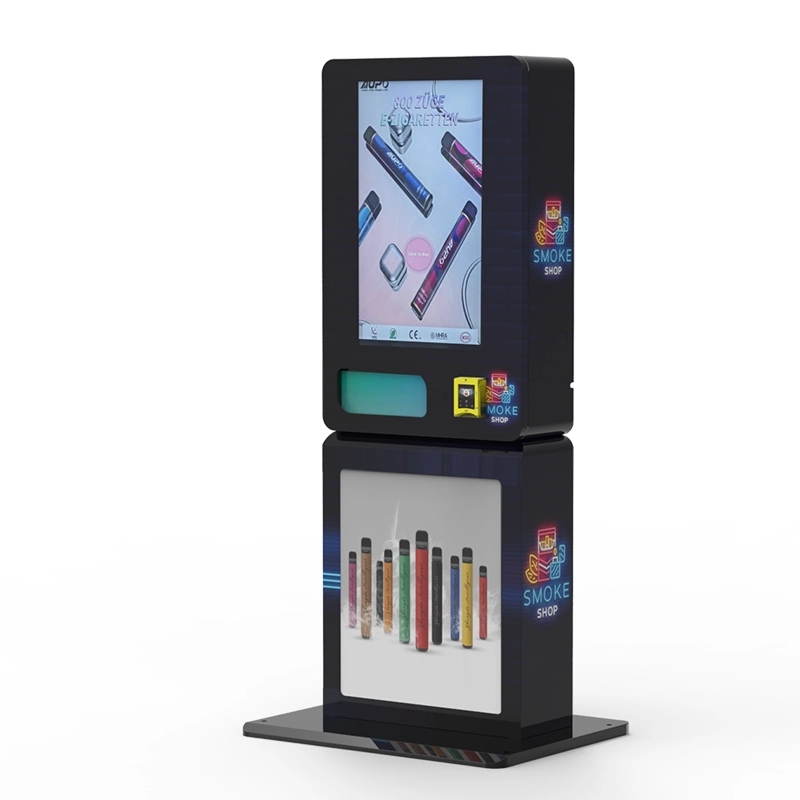
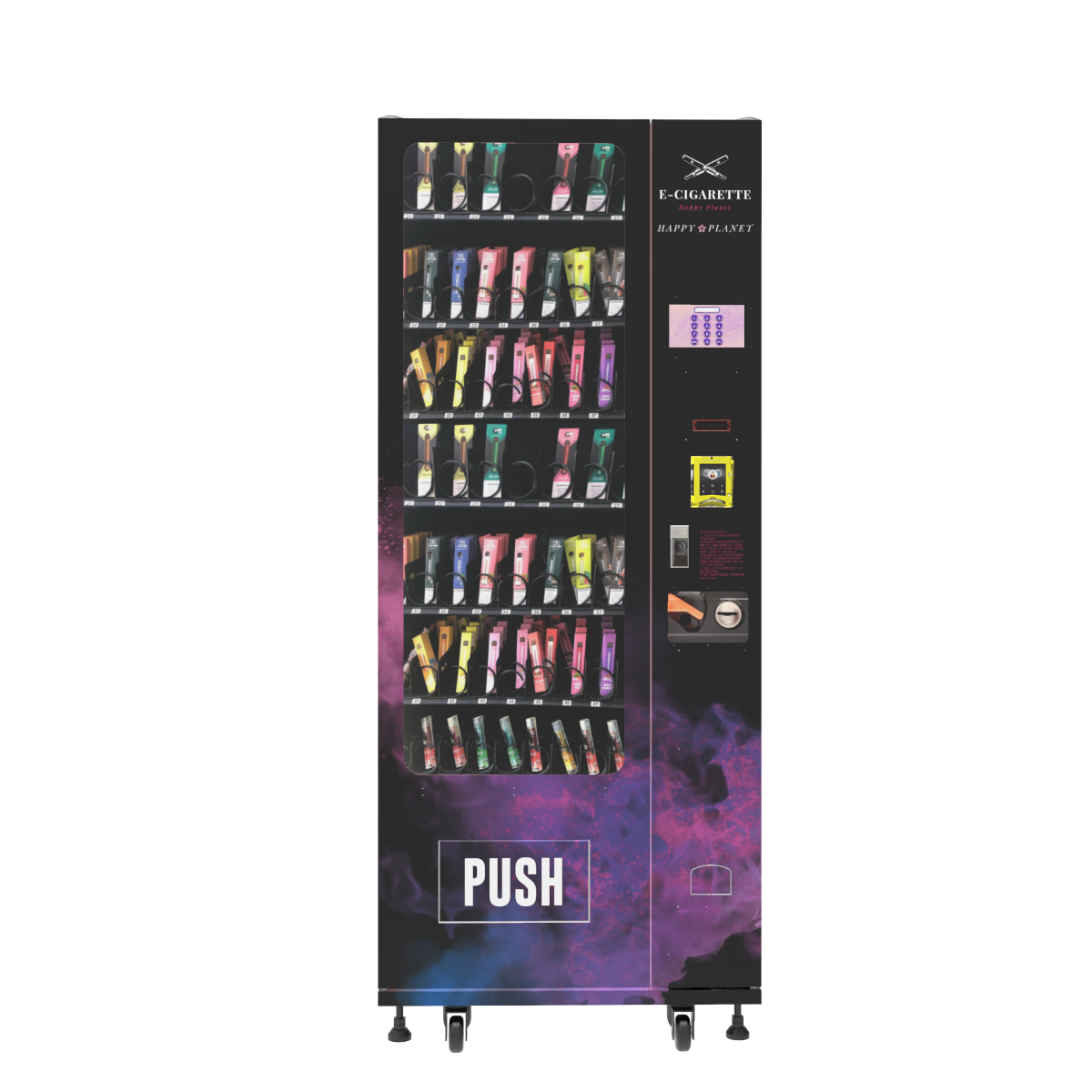
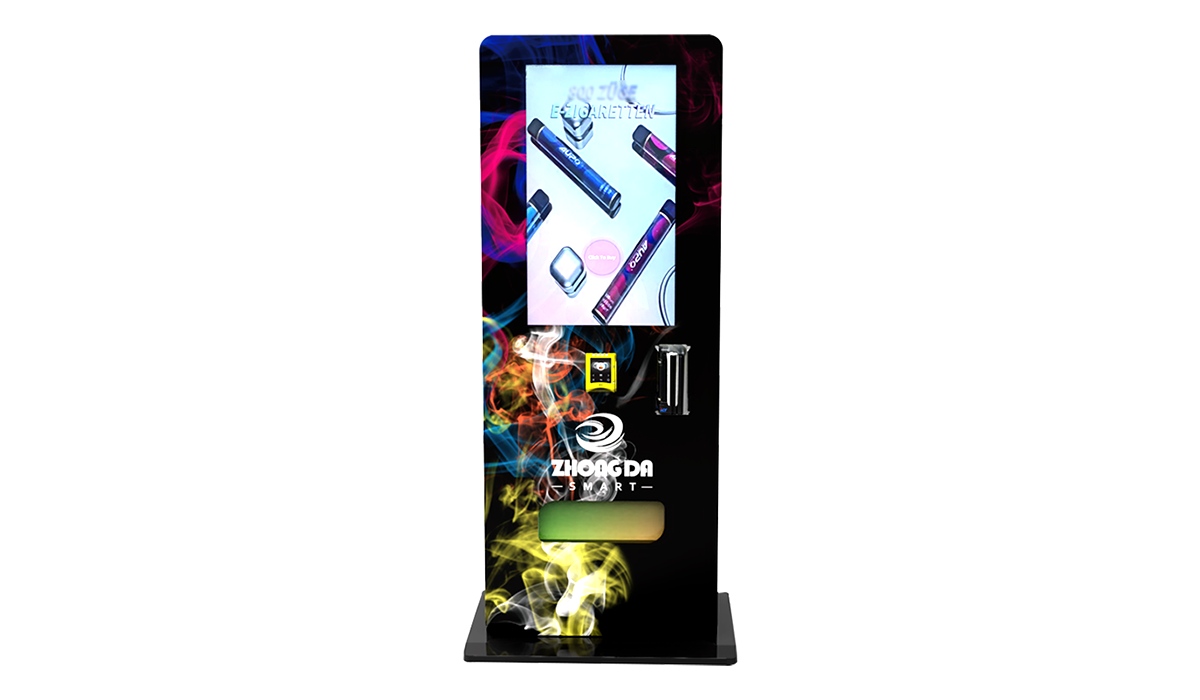
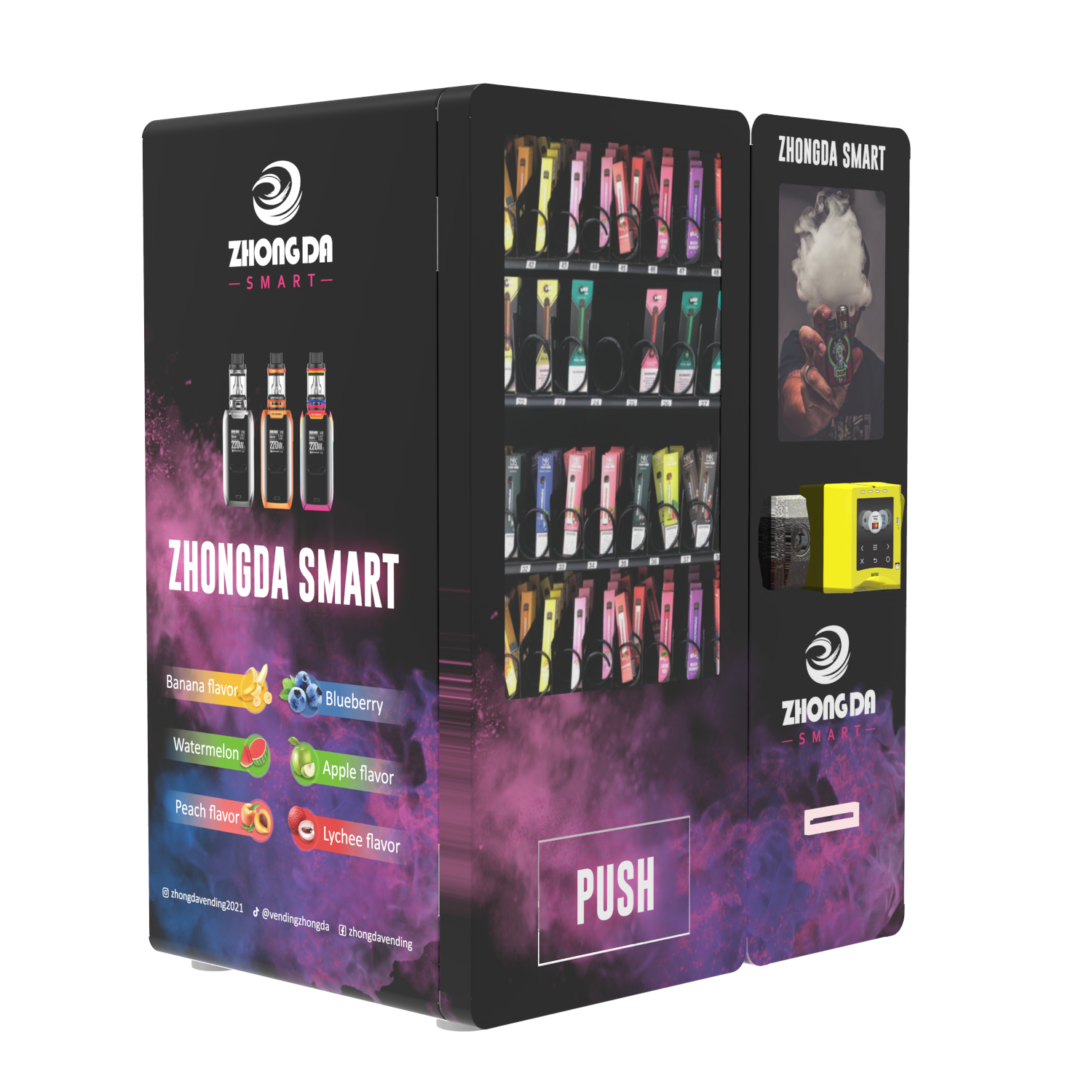
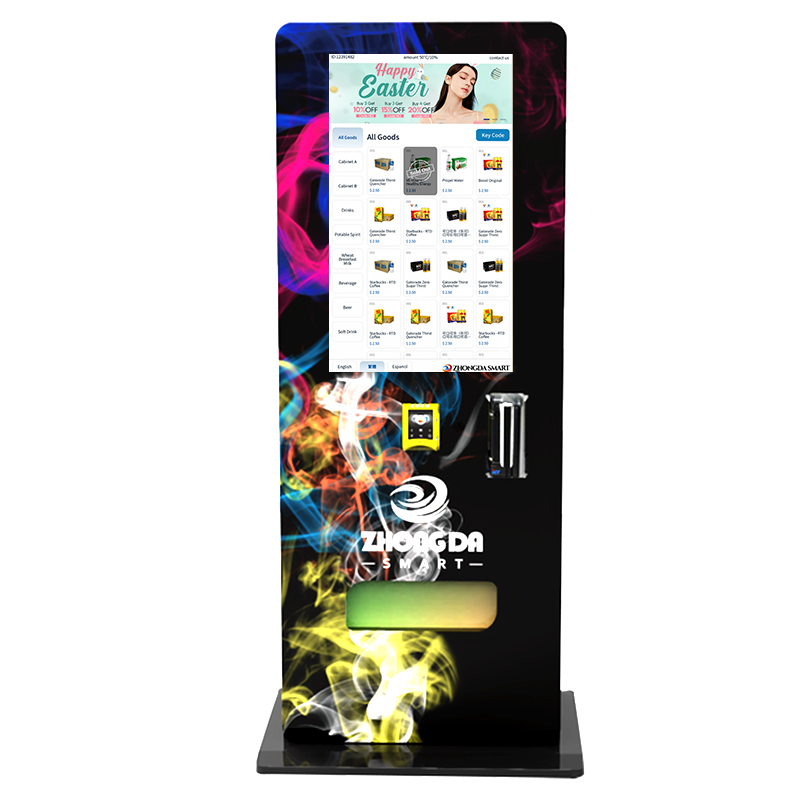
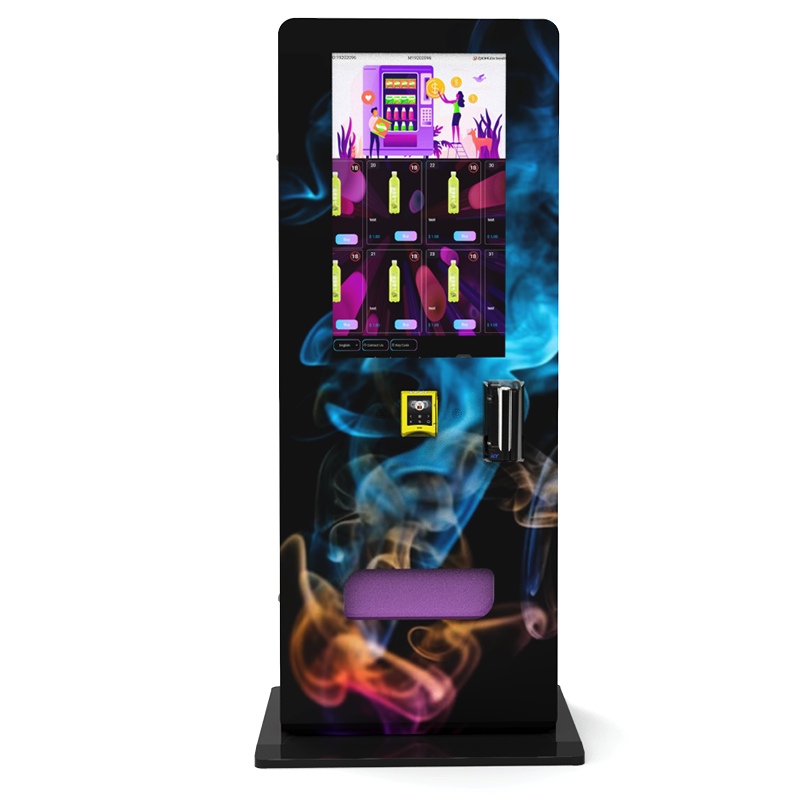
One supplier that consistently meets these requirements is Zhongda Smart. I’ve worked with their engineering team on custom configurations for large venues. Their ID scan vending machine uses a multi-spectral camera and a liveness detection algorithm that we tested against a panel of 500 fake IDs. It rejected 99.6% of them. The unit also has a dual-network failover, which we discussed earlier. If you’re looking at a large-scale deployment, their compliant e-cigarette vending machine platform shares the same age verification core, so the technology is transferable. You can see the specifications on their product page for the ID scan vending machine.
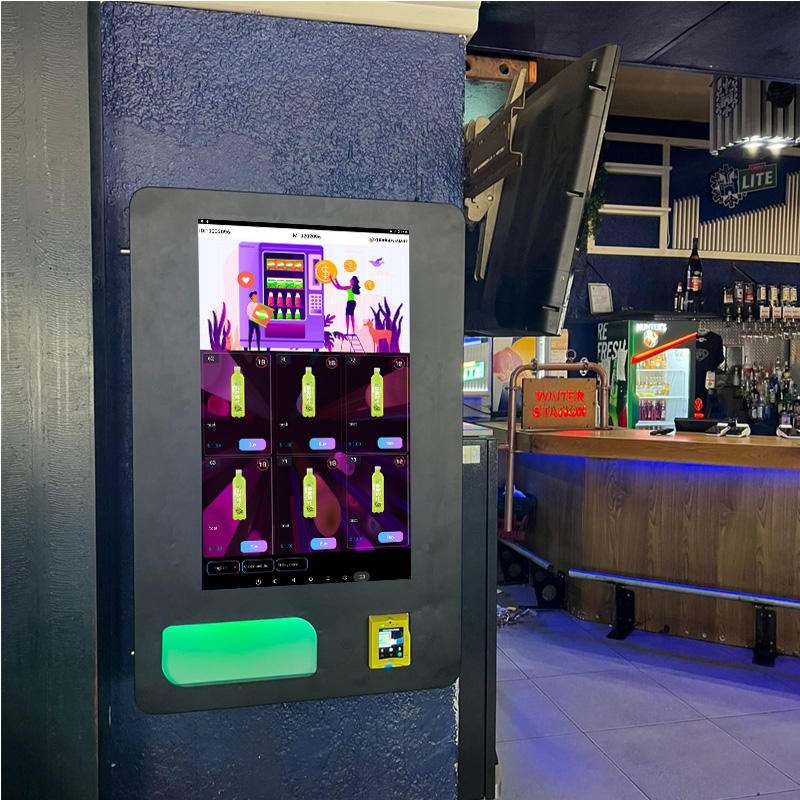
Another option for tighter spaces is the wall-mounted configuration. These are compact units that mount directly to a wall, saving floor space. They hold less inventory but are ideal for satellite locations within a stadium, like near luxury suites or club-level seating. Zhongda Smart offers a wall-mounted compact e-cigarette vending machine that we’ve adapted for alcohol sales by swapping the product trays and adding a refrigeration unit. The form factor works well for venues that want to distribute machines without cluttering the concourse.
For the technical buyer, the key specification to look for is the scanner’s false accept rate (FAR). A FAR of 1% means one in a hundred fake IDs gets through. That’s too high for a stadium. Aim for a FAR of 0.1% or lower. The liveness detection should also be tested against printed photos, digital screens, and silicone masks. Some cheaper systems can be fooled by a high-resolution video played on a tablet. We’ve seen it happen.
Maintenance and Long-Term Operations
Running a fleet of stadium alcohol vending machines is not a set-it-and-forget-it operation. The machines need daily attention, especially on game days. The most common issue is the refrigeration unit. If the compressor fails, you lose the product. We recommend a remote temperature monitoring system that alerts the operations team if the internal temperature rises above 40°F. We’ve integrated this into our machines using an IoT module that reports temperature, inventory levels, and transaction counts in real time.
Inventory management is another challenge. Stadium crowds have predictable buying patterns. Beer sales peak in the 30 minutes before the game and during halftime. If the machine runs out of popular brands during the third quarter, you lose revenue that you can’t recover. We use predictive algorithms that analyze historical sales data to recommend restocking schedules. For a typical 40-game season, the algorithm adjusts for opponent popularity, day of the week, and weather conditions. It’s not perfect, but it reduces stockouts by about 40% compared to fixed schedules.
Cleaning is also critical. The scanner window gets smudged from people touching it. A dirty window increases the scan failure rate. We instruct our clients to wipe the scanner window with a microfiber cloth after every game. It takes 30 seconds but saves hours of customer frustration. We also recommend a weekly deep clean of the product delivery chute to prevent sticky residue from building up.
One operational detail that many overlook is the software update cycle. The age verification databases change frequently. New ID formats are issued, and state regulations update. The machine’s firmware needs to be updated to recognize these changes. We push updates automatically over the network, but some operators disable automatic updates to avoid downtime. That’s a mistake. We had a client who skipped updates for six months, and their machines started rejecting valid IDs from three states because the templates were outdated. The fix required a manual update on each machine, which took a full day for a 10-machine deployment.
Regulatory Compliance and Audit Readiness
Compliance is not a one-time setup. It’s an ongoing process. In the U.S., the Alcohol and Tobacco Tax and Trade Bureau (TTB) and state-level alcohol control boards have specific requirements for automated alcohol sales. Some states require that every transaction be logged with the scanned ID data, the timestamp, and the product purchased. The machine must store these logs for a minimum period, usually two to three years, and produce them on demand during an audit.
Our machines generate a daily compliance report that is automatically uploaded to a secure cloud server. The report includes a hash of the ID data (to protect privacy) and the full transaction details. If an auditor requests the logs, we can generate a filtered report within minutes. We also include a tamper-evident seal on the machine’s main board. If anyone opens the enclosure without authorization, the seal breaks, and the machine logs the event. This protects the operator from liability if an employee tries to bypass the age verification.
In Europe, the regulatory landscape is even more fragmented. The EU’s revised Audiovisual Media Services Directive (AVMSD) and individual country laws govern alcohol advertising and sales. Some countries, like the UK, require that the machine display a health warning before each purchase. Others, like Germany, mandate that the machine cannot operate between certain hours. Our firmware includes a geolocation module that automatically applies the local rules based on the machine’s GPS coordinates. This was a nightmare to implement, but it’s essential for any operator running machines across multiple jurisdictions.
A useful external reference is the IBISWorld report on the vending machine industry, which tracks regulatory trends and market growth. According to their data, the self-service kiosk market in the U.S. is projected to grow at an annual rate of 8.5% through 2029, driven largely by the demand for automated age-restricted sales. You can read the full analysis on their site: IBISWorld Vending Machine Operators Report.
Another key data point comes from Statista, which reported that the global vending machine market was valued at $18.4 billion in 2023, with the alcohol segment accounting for roughly 12% of that total. The shift toward unattended retail is accelerating, especially in sports and entertainment venues. Their report is available here: Statista Vending Machine Market Value.
Comparing Self-Service Kiosks to Staffed Concession Stands
There’s a persistent debate in the industry about whether automated vending can replace staffed concessions. The answer is nuanced. Vending machines excel at speed and consistency. A machine can process a transaction in 20 seconds, while a staffed line averages 45 to 60 seconds per customer. During peak periods, that difference translates to hundreds of additional sales per hour.
But machines lack the ability to upsell or handle complex orders. A bartender can recommend a premium beer or a cocktail. A machine can only dispense what’s loaded. For stadiums, the best approach is a hybrid model: use machines for high-volume, low-complexity items like canned beer and seltzers, and keep staffed stands for cocktails, draft beer, and food. This reduces labor costs while maintaining the customer experience for premium products.
We deployed a hybrid system in a 60,000-seat football stadium. The client installed 30 vending machines for canned beer and 20 staffed kiosks for draft beer and cocktails. The result was a 25% reduction in labor costs and a 15% increase in overall alcohol revenue. The machines handled the base volume, and the staffed kiosks focused on higher-margin items. The key was the age verification integration. The machines handled the ID checks for the entire alcohol zone, so the staffed kiosks only needed to verify age for draft beer sales, which they did with a quick visual check.
One risk of the hybrid model is customer confusion. If the lines for the staffed kiosks are shorter, customers might bypass the machines and queue at the kiosks, defeating the purpose. We solved this by placing the machines in high-visibility locations with clear signage that said “Self-Service Beer – No Line.” The staffed kiosks were positioned further back, so the natural flow directed customers to the machines first.
Long-Term Strategy: Scaling and Future-Proofing
If you’re planning a multi-year deployment, consider the total cost of ownership, not just the purchase price. A machine that costs $8,000 but requires $1,000 in annual maintenance is more expensive over five years than a $12,000 machine that needs $300 in annual maintenance. We’ve seen operators chase the lowest upfront cost and end up replacing machines within three years.
Another strategic consideration is the software platform. Some suppliers lock you into their proprietary system, making it difficult to switch payment processors or add new features. We use an open API architecture that allows integration with any major payment gateway and any age verification service. This gives the operator flexibility. If a better age verification service comes on the market, you can switch without replacing the hardware.
For operators looking to scale, we recommend starting with a pilot deployment of five to ten machines. Use the pilot to gather data on foot traffic patterns, popular products, and peak transaction times. Adjust the machine placement and product mix based on the data. Then scale to the full deployment. We’ve seen operators skip the pilot and deploy 50 machines based on assumptions, only to find that 20 of them are in low-traffic areas and barely break even.
The technology is also evolving. Biometric age verification using facial recognition is being tested in some markets, but it faces significant privacy pushback, especially in Europe. We’re monitoring the regulatory developments, but for now, the ID scan plus liveness check remains the gold standard. We’re also experimenting with contactless age verification using NFC-enabled driver’s licenses, which are being rolled out in several U.S. states. That will reduce the physical wear on the scanner and speed up the transaction.
Frequently Asked Questions
What is the minimum age verification standard for stadium alcohol vending machines?
The minimum standard is a multi-spectral ID scanner that checks for document authenticity and a liveness detection system to ensure the person holding the ID is the same person. You also need real-time database cross-referencing. A simple barcode scan is not sufficient for a stadium environment.
How much does a compliant alcohol vending machine cost?
A fully compliant machine with age verification, refrigeration, and payment terminal costs between $8,000 and $15,000. The annual software license and maintenance add another $1,000 to $1,700 per year. The total first-year cost is typically $9,000 to $16,700 per machine.
Can I use a regular snack vending machine for alcohol sales?
No. A regular snack machine lacks the required age verification hardware, the secure processor for compliance logging, and often the refrigeration needed for alcohol. Retrofitting a snack machine with an aftermarket scanner is possible but rarely meets the reliability and audit requirements of a stadium.
What happens if the age verification server goes down during a game?
The machine should default to a locked state. It should not allow any sales until the server connection is restored. A dual-network setup with a wired Ethernet and a 4G/5G backup modem reduces the risk of downtime. Offline override is