Why Cashless Is No Longer Optional for Vape Vending
I remember the first machine I placed in a high-traffic location back in 2014. It had a bill acceptor and a coin mech. Within three months, I was pulling jammed dollar bills out of it every other week. More importantly, the customers walking past it—people in their twenties and thirties—simply did not carry cash. That mismatch killed sales. Fast forward to today, and a vape vending machine card payment South Africa cashless retail system solves that disconnect at a fundamental level. The hardware now integrates EMV chip readers, NFC for Apple Pay and Google Pay, and contactless debit cards as standard. If your machine cannot process a tap-to-pay transaction, you are effectively invisible to half your potential buyers.
From a security standpoint, cashless also eliminates the theft risk that comes with a fully stocked machine sitting unattended overnight. I have had machines broken into for the twenty dollars in the coin bucket. With a card-only system, the revenue sits in the processor account, not in the machine. That alone shifts the risk profile dramatically.
The Payment Infrastructure That Actually Works
Not all card readers are built for the vibration, temperature swings, and humidity that a vending machine endures. I have tested units from three different payment terminal manufacturers, and the ones that survive are the ones with an IP54 rating or higher and a dedicated vending interface protocol. Look for a reader that supports MDB (Multi-Drop Bus) communication. That is the industry standard that lets the payment terminal talk directly to the vending machine controller. Without MDB, you are dealing with custom wiring and firmware patches that break on the next software update.
I also strongly recommend a reader with an onboard cellular modem rather than relying on Wi-Fi. Public Wi-Fi networks in bars or retail spaces go down, get password changes, or throttle bandwidth during peak hours. A 4G LTE fallback keeps transactions flowing. In my experience, machines with dual connectivity—Ethernet plus cellular—see 99.7% uptime compared to about 92% for Wi-Fi-only units. That difference adds up fast when you are processing fifty to eighty transactions per day per machine.
Hardware That Survives Real Deployment
I have been inside more vending machine shells than I care to count, and I can tell you that the difference between a machine that runs for five years and one that dies in eighteen months comes down to three things: the steel gauge, the locking mechanism, and the cooling system. For vape products, you are almost always dealing with temperature-sensitive nicotine salts and disposable devices that can leak or degrade if the internal cabinet gets above 85°F. A machine without active temperature control will destroy your inventory during a summer heatwave.
The machines we manufacture at Zhongda Smart use a 1.5mm cold-rolled steel cabinet with a powder-coated finish. That might sound like a boring spec, but it is the reason our machines do not rust through at the base after two years on a damp concrete floor. The locking mechanism is a multi-point cam lock with an anti-drill plate. I have seen operators lose an entire route because a cheap tubular lock got popped with a Bic pen. Do not save fifty dollars on the lock. It will cost you three thousand dollars in stolen goods.
Comparing Machine Configurations
To help you match hardware to your specific location type, here is a direct comparison of the three most common form factors I see deployed in the field today.
| Feature | Wall-Mounted Compact | ID-Scan Tower | High-Capacity Floor Unit |
|---|---|---|---|
| Product capacity | 84 units | 243 units | 300+ units |
| Age verification method | Driver license scan + facial match | ID scan + real-time database check | ID scan + biometric optional |
| Payment acceptance | EMV, NFC, Apple Pay, Google Pay | EMV, NFC, cash option available | EMV, NFC, contactless only |
| Temperature control | Passive ventilation | Active cooling (thermoelectric) | Compressor-based cooling |
| Ideal location | Bar counter, hotel lobby, small retail | Nightclub entry, convenience store | High-traffic retail, airport lounge |
| Typical installed cost | $3,200 – $4,500 | $5,800 – $7,200 | $8,500 – $11,000 |
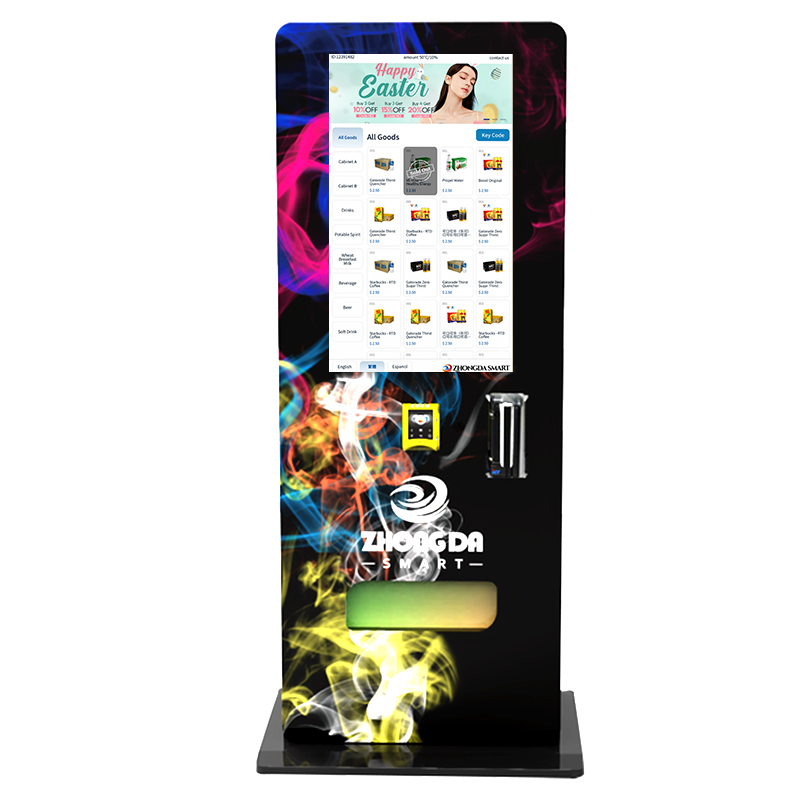
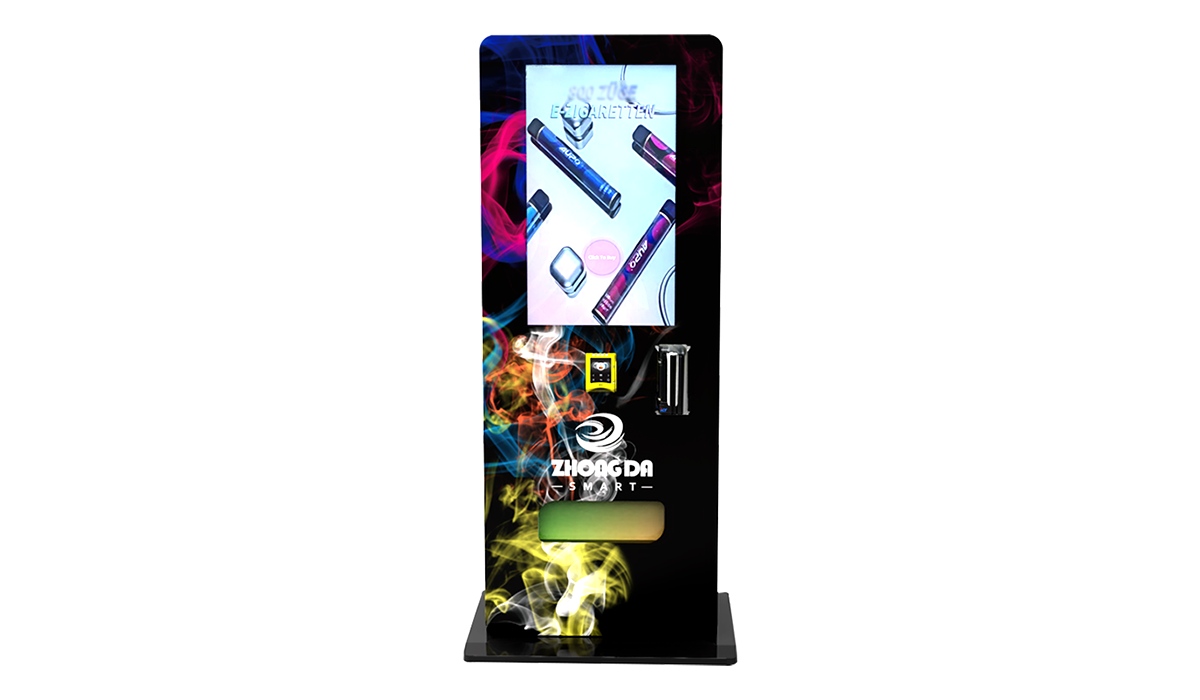
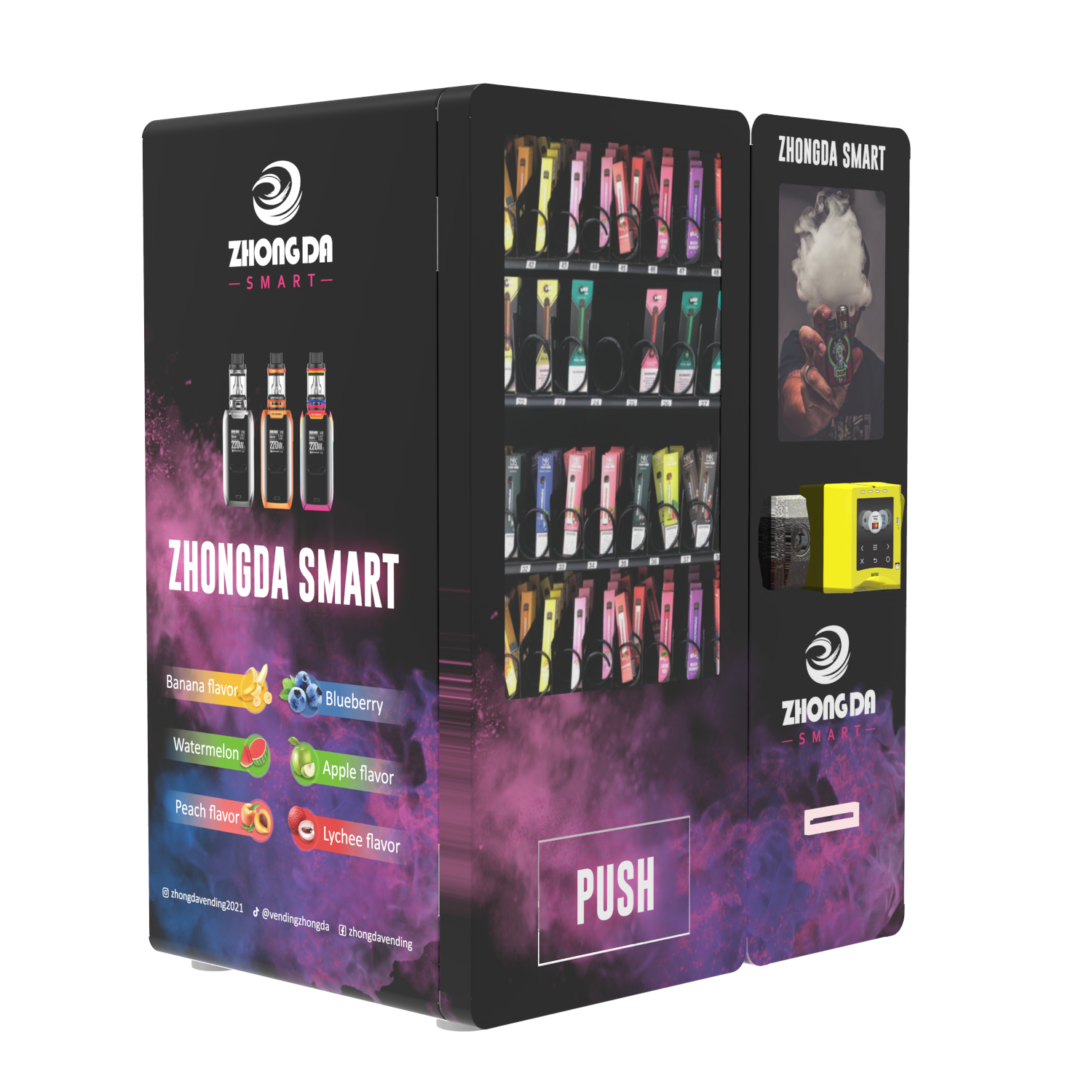
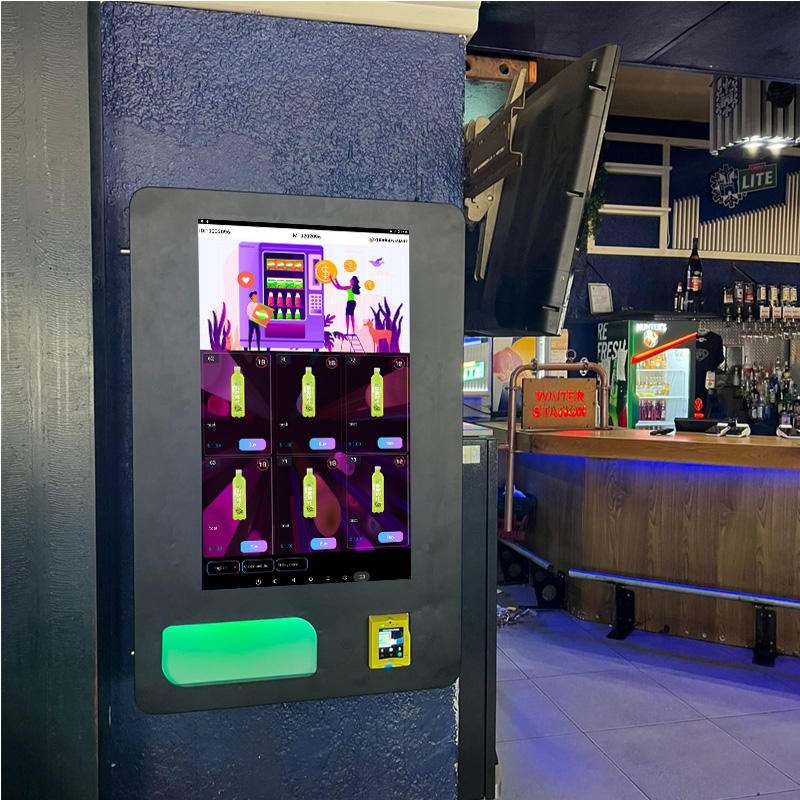
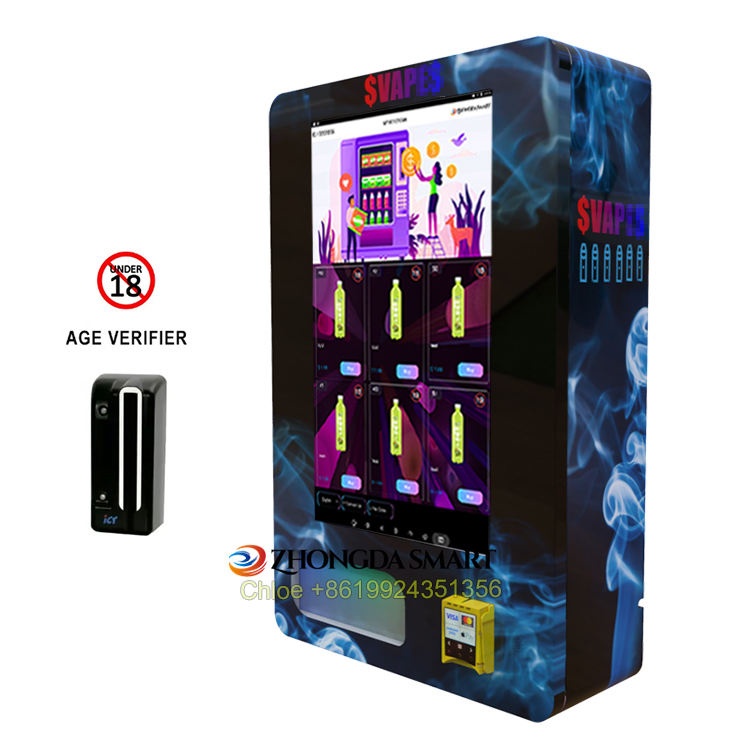
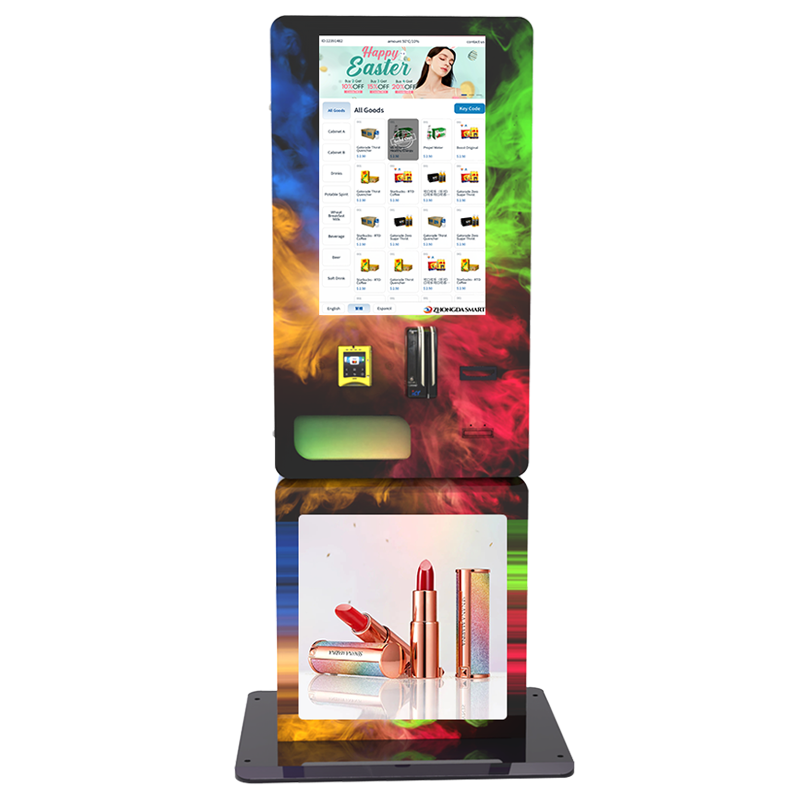
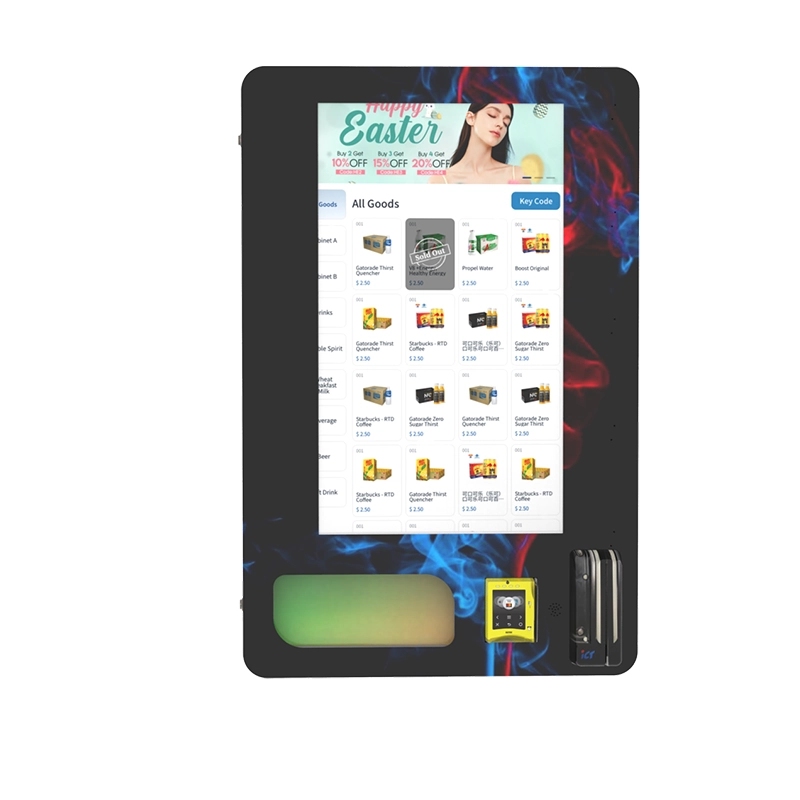
For specific technical drawings and detailed specs on each of these configurations, take a look at the product pages for our wall-mounted compact unit and the ID-scan tower machine. Both have been field-tested in over forty locations across the US and Europe.
Cost Structure and Profit Model
Let me break down the numbers the way I do when I sit down with a new route operator. The upfront cost of a single fully configured vape vending machine card payment South Africa cashless retail system typically lands between $4,500 and $9,000 depending on the cabinet size and cooling option. That includes the machine, the payment terminal, the age verification camera module, and shipping. Installation is usually another $400 to $800 if you are running a dedicated power line and securing the unit to the floor.
On the revenue side, a well-placed machine in a bar or nightclub averages 40 to 70 transactions per week. The average ticket for a disposable vape is around $12 to $18. At a 45% gross margin on product cost, that works out to roughly $220 to $560 in gross profit per machine per week. After factoring in the payment processing fee—typically 2.9% plus $0.30 per transaction—and the location commission of 10% to 20% of gross sales, you are looking at a monthly net profit between $600 and $1,800 per machine.
According to data from IBISWorld, the vending machine operator industry in the US has seen a compound annual growth rate of 3.2% over the last five years, with cashless transactions now accounting for over 65% of all vending purchases. That aligns with what I see in my own route data. Machines that switched from cash-only to cashless saw an average sales lift of 34% within the first eight weeks.
Real Failure Points I Have Seen
I want to be honest about the mistakes because I have made most of them myself. The biggest one is underestimating the importance of age verification compliance. I had a machine seized in a jurisdiction that required a hard ID scan for any tobacco product sale. My machine only had a button that said "I am over 21." That cost me the machine and a fine. Every machine I deploy now includes a built-in ID scanner that reads the barcode on the back of a driver license, checks the date of birth, and compares the photo to a live camera feed. The age verification vending machine models we build now come with that scanner integrated into the bezel, so there is no external peripheral to break off.
Another failure point is inventory selection. I see operators fill a machine with twenty different SKUs, thinking variety drives sales. It does not. It drives spoilage. A 243-capacity machine should carry no more than eight to ten SKUs, with the top three selling products accounting for 70% of the slots. Track your sell-through rate weekly. Anything that sits for more than 21 days gets replaced. That discipline alone will double your margin over the first year.
Long-Term Operations Strategy
Running a cashless vape vending route is not a set-it-and-forget-it business. The operators who last in this space treat it like a retail chain, not a coin collection route. You need a remote monitoring system that tells you inventory levels in real time, alerts you when a coil temperature goes out of range, and flags a payment terminal that has not connected in four hours. Without that telemetry, you are driving blind.
I recommend a cloud-based management platform that integrates with the machine controller. Most of our machines at Zhongda Smart ship with a telemetry board that reports sales data, cashless transaction logs, and error codes to a dashboard. That lets you route your service technician to the machine that actually needs attention rather than running a fixed weekly circuit. In my own operation, switching to dynamic routing cut my service costs by 22% in the first quarter.
For the payment side, work with a processor that specializes in unattended retail. Standard retail merchant accounts often have a higher chargeback rate for vending transactions because the customer is not physically present to sign a receipt. An unattended retail processor understands that and structures your rate accordingly. I use a processor that charges a flat 2.9% plus $0.25 for all card-present, card-not-present, and contactless transactions. That single rate simplifies reconciliation.
Location Selection Criteria
I have placed machines in over 200 locations. The ones that perform are not necessarily the ones with the most foot traffic. They are the ones where the customer has a clear need and a limited alternative. A bar where the nearest convenience store is half a mile away is a better location than a busy mall where the customer can walk twenty feet to a tobacco shop. Look for locations with a built-in waiting period—a nightclub with a queue, a hotel lobby at check-in time, a pool hall where players are seated for hours. Those environments convert browsers into buyers at a much higher rate.
Also, negotiate the commission structure before you place the machine. I have seen operators agree to a 30% commission because they were desperate to get the machine in the door. That leaves almost no profit after product cost and payment fees. My standard offer is 15% of gross sales, paid monthly, with a minimum guarantee of $50 per month. That covers the location owner's interest while protecting your margin.
Compliance and Legal Considerations
This is the area where I see the most confusion, and frankly, the most risk. The legal framework for automated vape sales varies significantly by state and municipality. Some jurisdictions require a physical age verification device that scans a government-issued ID. Others accept a digital age check through a third-party database. A few still prohibit vending machine sales of any tobacco product entirely.
I maintain a compliance checklist for every machine I deploy. It includes a hard ID scanner, a facial age estimation camera as a secondary check, and a transaction log that records the ID barcode data and a timestamp for every sale. That log is your legal defense if a regulatory audit ever happens. I store those logs for three years on a secure server. Several of my clients have been through compliance inspections, and the ones with complete logs passed without issue. The ones without logs received fines.
For a deeper dive into the specific legal status across different states, I recommend reading our articles on Colorado regulations and California requirements. Both pages are updated as laws change.
Data on Market Growth
To put some hard numbers behind the opportunity, Statista reported that the global vending machine market was valued at approximately $23.4 billion in 2023, with the tobacco and vape segment accounting for roughly 18% of that total. The same report projects the market to grow at a 7.1% CAGR through 2030, driven largely by the adoption of cashless payment systems and smart inventory management. That aligns with what I see on the ground. Operators who adopted cashless systems in 2021 are now expanding their routes, while those who stuck with cash-only machines are selling their equipment on secondary markets.
Another data point worth noting: a survey by the National Automatic Merchandising Association (NAMA) found that 71% of vending machine operators plan to increase their cashless offerings in the next two years. That is not a prediction. That is a statement of intent from the people running the businesses. If you are not already planning a cashless deployment, you are going to be competing for locations against operators who are.
Choosing the Right Manufacturer
I have worked with manufacturing partners across three continents, and I can tell you that the quality gap between a purpose-built machine and a repurposed snack machine is enormous. A vape machine needs specific tray spacing for tall disposable devices, a cooling system that maintains 60 to 70 degrees Fahrenheit without freezing the product, and a payment interface that supports age verification as a mandatory step in the transaction flow. Not every manufacturer builds for those requirements.
Our factory at Zhongda Smart has been building automated retail equipment for fifteen years. We design the cabinets, the control boards, and the telemetry systems in-house. That vertical integration means we control the quality at every step. If a component fails in the field, we know about it within a week and we adjust the next production run. That kind of feedback loop is impossible when you are buying from a distributor who is just assembling parts from five different suppliers.
If you are evaluating manufacturers, ask for the mean time between failures (MTBF) data on their payment terminal interface board and their cooling compressor. A reputable manufacturer will have that data. A reseller will not. Also, ask for a list of reference deployments that you can call. I have had potential clients call my existing route operators to ask about service response times. That transparency builds trust.
Frequently Asked Questions
What is the typical return on investment for a vape vending machine with card payment?
Based on my own route data and feedback from operators using our machines, the payback period ranges from 8 to 14 months. A machine generating $1,200 per month in gross sales at a 45% margin will net around $540 per month after product cost, payment fees, and location commission. At a machine cost of $6,500, that works out to a twelve-month payback. Higher-traffic locations can cut that to eight months.
Do I need a special merchant account for a cashless vape vending machine?
Yes. Standard retail merchant accounts often classify vending machine transactions as card-not-present, which increases your processing rate. You need an account coded for unattended retail. Several processors specialize in this space and offer rates around 2.9% plus $0.25 per transaction. Your machine manufacturer can usually recommend a compatible processor.
How does age verification work on these machines?
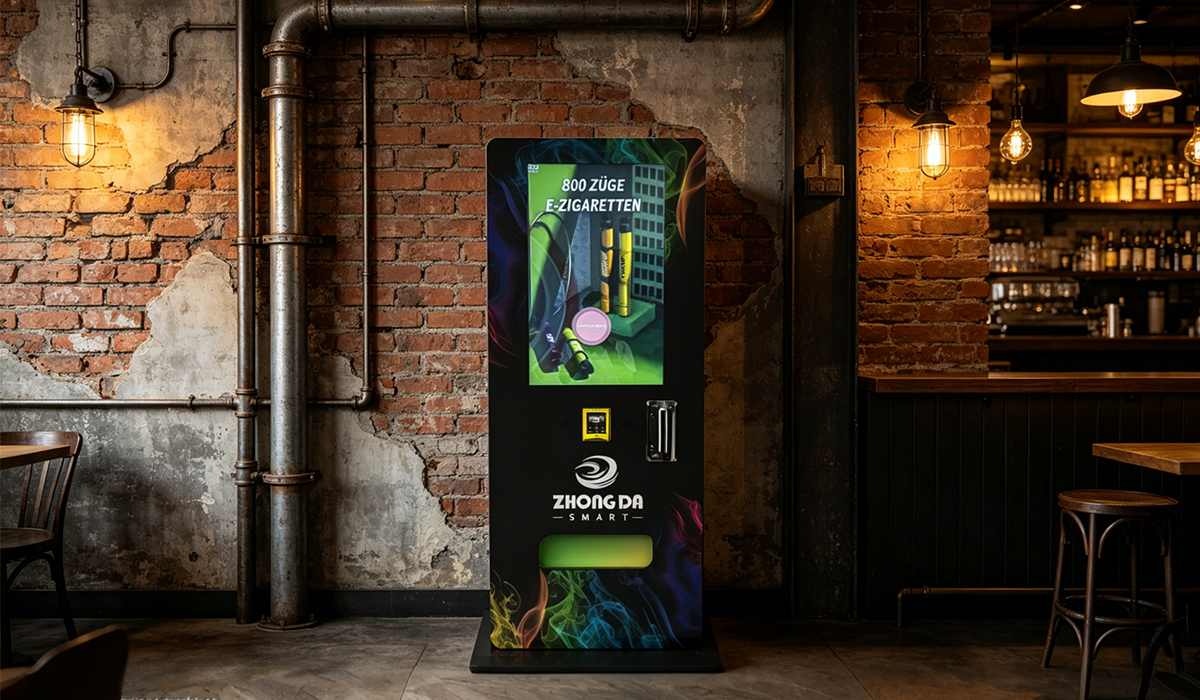
The machine scans the barcode on the back of a government-issued driver license or ID card. It extracts the date of birth and compares it to the legal age for the jurisdiction. Most systems also include a facial comparison step where the camera matches the live image to the photo on the ID. The transaction is blocked if the age requirement is not met or the photo does not match.
What happens if the payment terminal loses connectivity?
Modern terminals store transactions locally and batch upload them once connectivity is restored. The machine will continue to accept cards during a short outage. If the outage extends beyond a few hours, the machine can be configured to enter a standby mode that prevents sales until the connection is reestablished. This prevents any risk of selling product without payment authorization.
Can I place a vape vending machine outdoors?
I do not recommend it for most climates. The temperature control system in a standard machine is designed for indoor environments. Extreme heat can damage vape batteries and cause disposable devices to leak. Extreme cold can affect the viscosity of vape juice. If you must place a machine outdoors, you need a unit with a compressor-based cooling system and a heating element for winter, plus a weatherproof cabinet rated for direct rain exposure.
Final Thoughts on Building a Cashless Vape Route
The window for entering this market with a competitive advantage is still open, but it is closing. As more operators deploy vape vending machine card payment South Africa cashless retail system configurations, the best locations get locked into multi-year contracts. The equipment cost is coming down as manufacturing scales up, but the real differentiator is operational discipline—choosing the right machine, negotiating fair commissions, monitoring inventory remotely, and maintaining strict compliance records.
I have seen operators build profitable routes with as few as five machines by focusing on high-traffic nightlife venues and hotel properties. I have also seen operators lose their entire investment by buying cheap hardware and skipping the age verification step. The difference is not luck. It is the willingness to treat this like a real retail business with real margins, real compliance requirements, and real customer expectations. If you approach it that way, the cashless vape vending model will deliver consistent returns for years.
For more details on machine specifications, pricing, and deployment support, visit the vape vending machines section on our site. You can also reach our support team through the contact page for a direct consultation.
Sources and References
- IBISWorld – Vending Machine Operators Industry Report (2024). ibisworld.com
- Statista – Vending Machine Market Size and Forecast (2023–2030). statista.com
- National Automatic Merchandising Association (NAMA) – Cashless Vending Survey (2023). namanow.org